Home Blog Page 2

NTKNTG: Events to go in early 2026

0
PHOTO: Ann H. / Pexels

By: Maya Barillas Mohan, Staff Writer

Clothing Swap

1661 Napier St, Vancouver

Saturday, February 7, 10:00 a.m.1:00 p.m.

Cost: Free

Revamp your style in the new year while keeping textiles out of landfills. Bring up to 10 items to the swap after filling out a brief survey. The swap is hosted by Threading Change, a youth-led organization “created to address systemic injustices and inequities” in the fashion industry. Fashion and education are coalesced in this event to promote sustainable shopping habits. If you are looking to define your personal style by resisting fast fashion microtrends and taking inspiration from those near you, this clothing swap is right up your alley!

Owl Information Session

Online 

Thursday, January 8, 7:30–9:00 p.m.

Cost: Free

On January 8, Nature Vancouver, a natural history society, will be hosting a Rocky Point Bird Observatory (RPBO) online presentation, presented by Ann Nightingale, former RPBO president and an expert on bird migration. Those interested can request a Zoom link via email a few days in advance. The presentation will cover owl identification, ecology, and seasonal presence for spotting in the region. The audience can also learn about volunteer programs, such as the Nocturnal Owl Monitoring program, which might give some inspiration to partake in owl conservation in the region. 

Studio Session – Free Acting Workshop 

640 West Broadway, Vancouver

Sunday, January 11, 12:00–2:00 p.m. 

Cost: Free

Get your first (and free) taste of acting in a two-hour session at the Studio for Actors acting workshop on January 11. This workshop will cover acting techniques and training approaches used in full-length acting courses, including scene study fundamentals that may prove useful for increasing your emotional range and reducing nervousness or tension. This workshop might even instill confidence for a presence on the stage and even contribute to your professional development, whether you are a hobbyist or a professional!

Creative Writing Open House 

Online

Thursday, January 15, 5:00–7:45 p.m.

Cost: Free

Get a range of expert advice from highly accomplished authors across multiple styles of writing. Choose between honing non-fiction skills, like research and interviews from editor and former journalist Christina Myers, or learning fiction writing techniques like crafting characters and scenes from award-winning author Carleigh Baker. The workshop also invites participants to uncover either strategies to dismantle writer’s block and get words on the page with Loghan Paylor, author of The Cure for Drowning, the third-bestselling queer novel in Canada in 2024, or learn how to infuse contemporary experiences and personality into poetry with award-winning poet Raoul Fernandes


Quantum Fish School explores our indeterminate futures

0
PHOTO: Audrey Safikhani / The Peak

By: Clara Xu, SFU Student

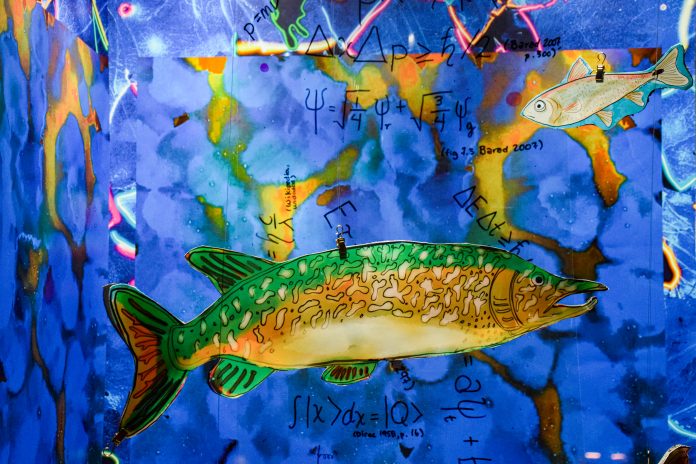
The fourth floor of SFU’s Goldcorp Centre for the Arts is currently home to a small school of paper fish, swimming in a glass cabinet at the intersection of two hallways. These fish are part of Quantum Fish School, an art exhibition created by researcher-artist and SFU Indigenous studies professor, Dr. Zoe Todd. As the founder of the Institute for Freshwater Fish Futures, Todd studies the relationships between “Indigenous sovereignty and freshwater fish futures and freshwater fish well-being in Canada,” using Indigenous knowledge, science, and art to “re-centre freshwater fish in the collective imagination and governance of our communities across the country, with an explicit focus on honouring Indigenous legal-ethical relations.”

Quantum Fish School explores the relationship between fish and their ability to survive throughout times of high indeterminacy, times when the future is uncertain and subjected to numerous possibilities. The exhibition features various foam and paper cut-outs of illustrated freshwater fish found in Canada, including the brook stickleback, the northern pike, and the bull trout. On the back walls are splotches of blue, layered on one another, and some yellow-orange lines glowing in the background. Between the hanging fish cut-outs and the wallpaper is a plastic sheet covered in formulae. Upon further research, these are formulae used in quantum mechanics, a brand of mechanics that describes physics theories at atomic and subatomic levels. It cannot predict atomic results with certainty, but gives probabilities of what might happen — what Todd refers to as indeterminacy.

It was a quiet afternoon in the building when I went to see the exhibition, given that it was a couple days away from Christmas. Quantum Fish School felt like a pillar of calm amongst the concrete walls of the Goldcorp Centre for the Arts. The wallpaper gave the exhibition a feel that is whimsical, oceanic, fluorescent, and futuristic all at the same time. I felt a sense of peace when observing the fish, but the more I observed, the more questions I had. My first few questions involved the formulae written on the plastic sheet. What were they about? What was the relationship of these formulae to the fish? How were these formulae derived from the fish? 

Then I began to reflect on the fish, as I could not name any of them from a glance. I wanted to know why they were chosen to be displayed in this exhibition. Were these ancient species of fish that survived various extinction events? Were these fish local to the Lower Mainland, or generally to BC? Quantum Fish School made me realize I felt out-of-touch with not just fish, but with nature in general. It would be easier to name company logos than what freshwater creatures reside in the Lower Mainland.

Quantum Fish School successfully prompted me to reflect on my knowledge on local nature and my values regarding climate change and the rapid loss of biodiversity across the world.

This fish school serves as a reminder for all not to lose our crucial connection to our environment, and to stay vigilant to the knowledge that nature provides us, whether that be from Indigenous ways of learning or from observational science.

The exhibition will be open until January 31, 2026, at the Goldcorp Centre for the Arts.


A conversation with Lucien Durey

0
PHOTO: Courtesy of Lucien Durey

By: Katie Walkley, Peak Associate

On January 22, SFU MFA alum Lucien Durey will perform his show, So Many Feelings, at Djavad Mowafaghian World Art Centre, joined by singers Caroline Ballhorn, Chance Lovett, Amanda Sum, and Mark Wolf. This show goes beyond the norms of performance with a call-and-response between the call of the silent lip-syncing videos of the performers and the response of them singing live to the audience. The footage spans over 12 years and was all filmed on the same camera, and so, along with the live concert, audience members get to watch a seamless progression of Durey aging a decade. In the following interview, he discusses his openness to include personal and humorous elements into his art.

The following interview has been edited for concision.

Do you intentionally aim for a feeling of intimacy in your work?

In my work in general, I really have tried to not shy away from the personal. Sometimes there is a feeling in art that you are not supposed to talk about your personal relationships or things that are not grounded in academic or concrete ideas. Details from my personal life always creep into my personal work and I am not afraid of that.

What are the visuals in your performance?

The piece itself is like a reverse lip-sync. Everyone who is singing live in the space is singing to their own image pre-recorded. So it’s a silent video of people mouthing the songs. It creates a weird feeling as an audience because you are conflicted about where your attention is supposed to go. So the experience is that they’re watching a figure mouthing words in various settings, but meanwhile there’s a live singer moving around the room singing what they’re seeing on screen. It’s disorienting as a viewer to see.

What made you want to create that disorienting feeling?

It was an evolution. I started the project when I was a grad student at SFU in 2013. The first iteration of it was singing a song in a bathtub, as it filled with water. It was experimenting with ideas of performance and giving myself physical challenges while singing. 

What kinds of songs do you perform?

In the past I’ve had original songs. In this iteration it will all be cover songs. It’s lots of cheesy, retro songs like Marvin Gaye’s Sexual Healing and ABBA’s Knowing Me Knowing You.

“The whole project tries to straddle sincerity and comedy at the same time”

 — Lucien Durey, Producer and Performer of So Many Feelings

So there are these poignant emotional moments, but they’re not where you expect to see them. There’s kind of a melancholy feeling to the whole thing. Because of that disorientation where you’re choosing between the live and recorded performer, something happens where you are affected in ways you weren’t expecting. 

When using cover songs, everyone has their personal associations, which is also why I gravitated towards using cover songs more than my own compositions. You hear Bruce Springsteen’s Tougher Than the Rest and it has a very specific association for people. Then you hear it performed differently in a kind of a cappella way and it changes the performance, but it still has the personal associations that we each put on songs that we know by heart.

Why do you think that humour is important in performance art?

It’s more honest. It’s more palatable. There’s something about a full scope of feeling that feels more true. We only really know what pain feels like because we know what laughter feels like. 

Catch this 45-minute show for $10 on the evening of January 22, and stay updated on Durey’s future endeavours by following him on Instagram @luciendurey.

Chaiiwala of London comes to SFU Burnaby

0
PHOTO: Courtesy of Elaine Quan

By: Noeka Nimmervoll, Staff Writer

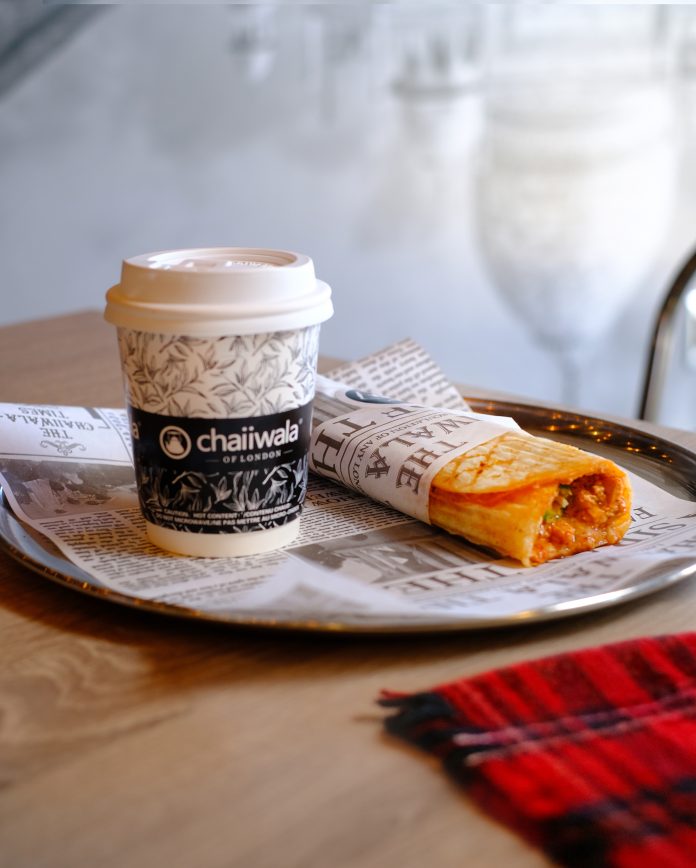
Chaiiwala of London, a fast-growing chai enterprise, is coming to SFU Burnaby. A chai café serving a wide variety of South Asian street food, this franchise entered Canada in 2021 under the ownership of Shiraj Kothiwala and Ajmal Gundhra, and now has 22 locations across Canada. Chaiiwala strives to provide an environment of community and connection. Located on Burnaby Mountain at 9055 University High St, Unit 5, the café will officially open on January 9. From January 10, they are offering an ongoing 10% off for all students that frequent the café, applicable with their student ID. The Peak conversed with Ali Alogaili, franchisee for Chaiiwala SFU Burnaby, via email to learn more. 

“Chaiiwala is all about warmth and inclusivity. We want students to feel comfortable coming in, staying a while, and making it their spot. It’s a place where you can study, catch up with friends, or just take a break,” said Alogaili. Chai culture of South Asia is rooted in these everyday rituals of conversation and community connection over an affordable and delicious beverage. The shop specializes in karak chai, an authentic cup of chai made with black tea, milk, sugar, ginger, and select whole spices, taking a lot of practice to make the drink just right. 

Chaiiwala’s opening day will boast a 50% off deal on masala chips, samosa chaat, aloo tikki chaat, all wala wraps (meat and veggie wraps with naan or paratha) and toasties, butter chicken roll, and butter chicken poutine. Chaiiwala’s full menu, blending of East Indian, East African, and British cuisines, aims to bring accessible culinary delights to Canadians — and now SFU students — who want something different than traditional café foods. 

The seeds of Chaiiwala began as a single chai stand in New Delhi in 1927. Decades later, in 2016, the recipes and passion of the original founders were revived by their ancestors, starting from a single UK shop in Leicester called Sip of East. They went on to develop their franchise, and opened a shop in Dubai in 2018 before their expansion to Canada in 2021. The company currently has ambitions to open 100 Chaiiwala locations across Canada by 2030.

“Even as we grow, the focus stays on quality, consistency, and creating a great experience. Each location still feels connected to its local community, and that’s something we take seriously,” — Ali Alogaili, Franchisee for Chaiiwala SFU Burnaby


Survival guide: post-holiday edition

0
ILLUSTRATION: Angela Shen / The Peak

By: Noeka Nimmervoll, Staff Diva

After the holidays, everything sucks. I love the part of winter when all I do is stuff my face with carbs and cocktails, because, well, it’s carbs and cocktail time. However, now that the holiday season is over, my cranberry-gin-fizz-coloured glasses are coming off and I’m realizing that I have to lock in for the new semester. 

I’ve got a secret weapon for getting my shit back together: a survival guide for classes after winter break. Buckle up with me. Or don’t. I couldn’t care less. 

Create an unsafe space

Once your morning alarm hits you like an angry bull running havoc on a Santa parade, get up and throw a sheet of spikes on your duvet. A setup like this is foolproof because you can’t crawl back into bed and fall back asleep. I suggest upgrading this setup to include an eject button, simulating a violent transition from between being asleep and awake. I’m personally volunteering my sister as the test dummy. 

Play with your heart

Don’t get more sleep; let caffeine do the work for you. Mix an energy drink, coffee, and Baileys for a daily morning drink. Coffee and Baileys are the perfect flavour combo, and an energy drink adds a wild zing that will perk you right up. If it curdles, just drink it fast. Start your day with a heartbeat that could power a portion of France. Don’t be surprised if you need medical attention after a while. 

Grinch it up

Don’t make any new friends or keep up with old ones in January — it’s a total waste of energy. You need to focus your efforts on the things that matter: reading textbooks in a dark room for many hours without seeing the sun. If someone asks you about your holidays, tell them you hate Christmas and you believe it’s capitalist propaganda that only the weak-minded fall for — you’ll gaslight yourself and forget all about the jolliest time of year. Ruin all new friendships by being yourself: strange and off-putting. 

Last (ski) resort

I might need some rest at some point, and I know I can’t combat my energy deficiency with brute force forever. For this scenario, I have an airtight plan that has actually done me a great service in the past. I tell my professors that I fell off a cliff while skiing and I’m in critical condition. That usually gives me a few extra days on all my assignments. If they require proof, I’ll head on over to Blanche Macdonald and get one of their students to doll me up in special effects makeup. Then, I’ll send my prof a cute little selfie! I’ve done this a few times in my undergrad, and luckily, I get more hospital time each time my ankle sprains. Last time it even shattered, so I recommend this one if you need a break and don’t mind a little surgery. 

OK, that’s it. Good luck this semester . . . follow the plan and you’ll be fine. If you see me, don’t talk to me. 

Ice Spice deserves an Oscar for “Big Guy”

0
ILLUSTRATION: Cliff Ebora / The Peak

By: Mason Mattu, Humour Editor and Official Song Reviewer

Stop playing with ’em, Riotare the last words that moviegoers hear before being blessed with the lyrical mastery of American rapper Ice Spice in the latest SpongeBob movie, “The SpongeBob Movie: The Search for SpongeBob.” It is with great admiration that The Peak writes to the Oscars with the simple request that the song “Big Guy” gets the recognition it deserves via the Academy Award for best original song.

Big guy, big guy, big, big guy, big guy

SpongeBob, big guy pants, OK (Grrah)

In the first two lines of the song, Spice juxtaposes the big concepts of “big guy” and “big guy pants.” In a bold rejection of narrative excess, Spice tells us that Mr. SquarePants wears “big pants” and is indeed a “big guy.” These concepts are raw, unexplored, and big. For example, why does a big guy need to wear big pants? Is he conforming to societal expectations of tall people? What if he wants to wear small pants? Mr. SquarePants is divided between his external self, a sponge perforated unhealthily, and his internal self, the “riot” that Ice Spice eloquently raps about. 

Spice’s line “stop playing with ’em, Riot” is a reminder to Mr. SquarePants that his true self cannot escape his internal bounds. He must remain a “big guy” to preserve the SquarePants’ legacy in Bikini Bottom — one of utter foolishness and gallavantism. Mr. SquarePants’ experience is not exclusive to anthropomorphic sea sponges; it can be felt within each person who wants to defy societal expectations by skinnydipping in SFU’s non-existent pool. 

SpongeBob, big guy pants, OK (Grrah)

Big guy, big guy, big, big guy, big guy, grrah

SpongeBob, big guy pants, OK (Grrah)

SpongeBob, big guy pants, OK

In the next part of the opening lines, Spice once again remains steadfast to her central thesis — that our inner souls are sacrificed at the expense of external appearances. This time, her interjects “grrah’s” are the sound of Mr. SquarePants’ soul cracking under tightly-fitted khaki pants. They serve as society’s way of keeping Riot, his alter-ego, from having a literal riot. 

At the end of the song, the previous groundbreaking and philosophical pattern is followed . . . except for a major exception: 

Big guy, big guy, big-big guy, big guy

SpongeBob, big guy pants, OK (Grrah)

SpongeBob, big guy pants, OK (Grrah)

Big guy, big guy, big-big guy, big guy

SpongeBob, big guy pants, OK (Like)

SpongeBob, big guy pants, OK

Spice uses the word “like” after “OK” in the second to last line of the song. This disrupts the very common flow that listeners come to know throughout the song, as if SpongeBob’s alter-ego (Riot) is finally breaking through his shell and being exposed to the world. Forget “Beautiful” by Christina Aguilera, or “Unstoppable” by Sia,” Ice Spice has successfully created the self-loving anthem of 2026. She wants us all to know that we don’t have to be big guys. We can all embrace our inner “Riot.” 

It’s time for the Oscars to recognize the true artistic beauty that is “Big Guy.” If it doesn’t win, we will expose Mr. SquarePants’ alter-ego ourselves and RIOT!!!!! God bless Ice Spice for this absolute masterpiece. 

The Peak rates this masterpiece 500/10 raccoons. 

Burnaby apologizes for historic discrimination against people of Chinese descent

0
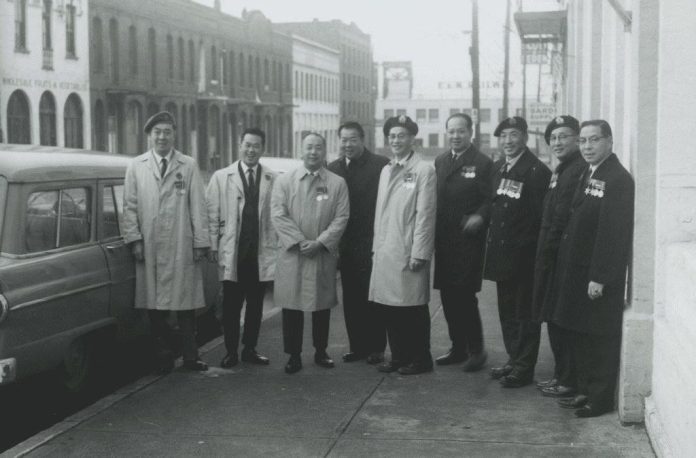
Nine Chinese Canadian veterans stand side-by-side in a black and white photograph from 1981.
Chinese Canadian veterans in Victoria in 1981. / PHOTO: [Unknown] / UBC Open Collections

By: Heidi Kwok, Staff Writer

On November 15, community members gathered at the Hilton Vancouver Metrotown as the City of Burnaby offered a formal apology for its historic discrimination against people of Chinese descent. This included policies that deprived them of employment and business opportunities. The “goals of these actions was exclusion,” Burnaby mayor Mike Hurley said. 

“Today, we shine a light on the historic wrongs and systemic racism perpetuated by Burnaby’s municipal government and elected officials between 1892 and 1947, and commit to ensuring that this dark period of our city’s history is never repeated,” he stated. “I’ll say that again, because it’s important — never repeated.”

The earliest recorded Chinese settlers arrived in Nuu-chah-nulth territory (known colonially as Nootka Sound) in 1788 from southern China’s Macau and Guangdong province. In the 1850s, a larger flux of Chinese migrants landed in BC due to the Fraser River Gold Rush. Canada’s Chinese population boomed in 1881, when over 17,000 Chinese railway workers were recruited to help construct the Canadian Pacific Railway. Many also laboured in the mining and forestry industries, while others established flourishing businesses, including laundromats, restaurants, and most famously, Kwong Lee & Co., a major merchant surpassed only by the Hudson’s Bay Company

When Burnaby became a municipality in 1892 on unceded Indigenous lands, Chinese residents were among the earliest inhabitants. They built the dikes and ditches bordering the Fraser River, grew produce and raised livestock that sustained communities across the province, and worked in other industries that facilitated Burnaby’s economic growth.

In 1885, when Chinese labour was deemed no longer necessary after the completion of the Canadian Pacific Railway, the federal government imposed a $50 head tax on Chinese immigrants, a fee which increased to $500 by 1903. $500 was equivalent to “about two years’ salary or the purchase of two homes.” Rising anti-Chinese sentiment eventually culminated in the Chinese Exclusion Act of 1923. This act effectively halted all Chinese immigration to Canada for more than two decades. 

The recent apology comes after city staff found three remaining discriminatory bylaws, though inactive and unenforced. Council officially repealed these during the November 15 meeting. Bylaws 14775 and 14776 prohibited the employment of people of Chinese or Asian race with the municipality or its partner contractors. Bylaw 14777 restricted the operation of piggeries, disproportionately affecting Chinese farmers’ livelihoods. These bylaws were originally adopted in 1917, 1929, and 1921, respectively. 

A ceremonial service was also held to honour Chinese Canadian veterans who served in the First and Second World Wars, and whose actions and advocacy were foundational in granting full citizenship rights for people of Chinese descent. 

“We accept responsibilities for Burnaby’s role in perpetuating racism and exclusion. And we commit to actions to address the ongoing legacies of historic discrimination to build a brighter future for all of our community,” said mayor Hurley.

“We denounce the actions of the past that discriminated against the people of Chinese descent.”

“We denounce the racist ideology that treated some categories of people as superior to others. Those ideas created harmful legacies that continue to shape present day racism in Canada and in our community.”

— Mike Hurley, mayor of Burnaby

“Our actions made life harder for them (first-generation Chinese Canadians) and for all community members of Chinese descent. For that, we are deeply sorry. Today, we learn from the past to forge a more inclusive future where all community members are safe, welcome, and valued.”

“Burnaby’s greatest strength is its diversity,” Hurley stated.

The City promised to promote “awareness of Chinese Canadian contributions to Burnaby’s history, including commemorating significant people, places, and events, and sharing educational resources” and foster intercultural education to “learn about each other’s cultures, histories, and traditions.” They likewise committed to promoting inclusion and accessibility by having city staff undergo cultural competency training and encouraging greater diversity of public participation “in the development of city policies and programs.” As well, “core community safety programs” will also be delivered in Chinese languages. They added that city planning policies will be guided by principles grounded in anti-racism and inclusion.


Environmental concerns lead Burnaby to reject off-campus student residence

0
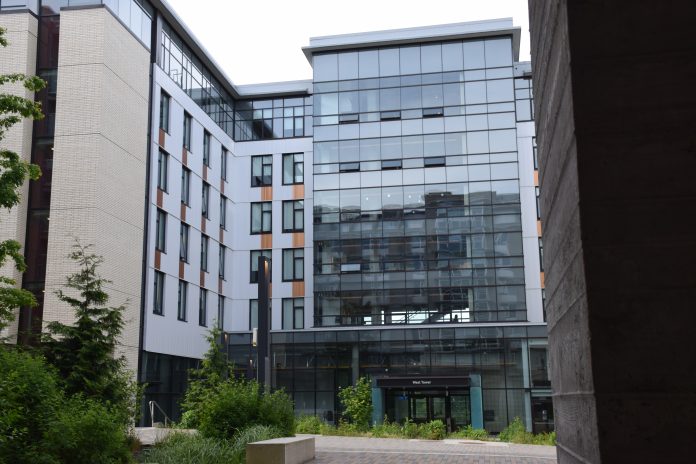
The outside of West Tower (SFU Residence building) stands tall on a cloudy day.
PHOTO: Audrey Safikhani / The Peak

By: Lucaiah Smith-Miodownik, News Writer

Securing housing can be a serious struggle for university students, and those at SFU are no exception. SFU recently broke ground on a new residence building, with the additional 445 beds increasing the university’s housing capacity to around 8% of the student population. The project represents phase three of the university’s Residence and Housing Master Plan, with more housing construction in phases four and five to follow.

Still, SFU continues to seek opportunities to expand student residence. Recently, a proposal from Forum Asset Management, an “investor, developer, and asset manager,” represented such a possibility. The Toronto-based company sought to build a privately owned residential complex off campus at the base of Burnaby Mountain, at 98099998 Rathburn Drive. SFU said “the university has no affiliation with the recent application” and “has not endorsed individual projects.” However, “it remains supportive of off-campus student housing developments and recognizes the housing challenges faced by students.” 

However, the project was denied primarily due to environmental concerns, among other issues.

On October 28, Burnaby city council voted “against authorizing city staff to continue working with Forum on preparation of a development plan.” The new development would have included “950 dedicated purpose-built student housing units and 450 secured purpose-built rental housing units for general rental uses,” reported Daily Hive. The student housing would be intended for those in the “latter stage post-secondary” category, since “the availability of on-campus student dormitory accommodation is significantly limited for these students.”

The land Forum Asset Management hoped to use currently comprises 16 single-family homes, and would require rezoning as part of its transformation.

While all members of city council, except Pietro Calendino, voted no on exploring the proposal further, general city staff felt differently. The group, separate from city council, put out a report supporting the “continuation of work with the applicant on the development concept,” reported the Daily Hive. The report acknowledged “the need for additional student housing options in the area,” and “the contribution purpose-built student housing has on overall housing affordability.”

The Peak corresponded with city councillor Alison Gu for more information on the decision to deny the proposal.

“I have concerns that are related to wildfire risk and flooding in this area, which a budgeted-for but not yet completed hazards mapping strategy is supposed to provide recommendations on — this was a motion that was passed in January of 2025,” she said. The proposed area is next to Stoney Creek, which contains some endangered fish species and has already suffered “ecological damage from increased sediment caused by nearby building construction,” reported the Daily Hive.

“I am all for student housing and density in transit-oriented areas, but we need to have certainty that the people who move there are not then put at risk of flooding and fire.” 

— Alison Gu, Burnaby city councillor

“Not only could those who move there then be put at risk of these hazards that are increasingly likely due to climate change, they can also create an additional risk of wildfire, as the vast majority of wildfires are started by human activity. With drier forests and hotter summers, these risks are substantially elevated, even if their starts are accidental.

“The recommendation we voted on was to provide staff authority to work on advancing an application, not to approve a rezoning application outright,” Gu clarified. “There was no finalized rezoning application put in place. At this time, given the early stages of the project, my vote was a direct reflection of not wanting to presuppose any outcomes of the hazard mapping or grandfather in applications that may not ultimately are not in the best interest of the community or the future residents who will live there.

I do not operate with a black/white approach to housing, as I believe that the nuances and details matter. As such, all my decisions are measured carefully, with considerations for economics, affordability, tenure, unit distribution, environment, and more,” she added.

Carney’s budget triggers national outcry

0
Mark Carney speaks behind a podium. The tone of the photo is serious.
PHOTO: Dr. Frank Gaeth / Wikimedia Commons

By: Ashima Shukla, Staff Writer 

Prime Minister Mark Carney’s government tabled its first federal budget on November 4. 

A few months ago, he remarked that Canada is facing a moment of “rupture” — seeing “the arrival of a ‘new age of economic nationalism and mercantilism’ and described the current moment as an ‘age of adversity.’” Much of the growing economic instability stems from the ongoing US-Canada trade tensions and American tariffs. To confront these challenges, Budget 2025 proposes a major shift in Canada’s financial strategy by targeting investments at enhancing competitiveness, self-sufficiency, and resilience

To that end, it outlines “$141 billion in new spending over the next five years,” along with “$60 billion in cuts and savings.” Major investments include expanded military funding, support for artificial intelligence (AI) infrastructure, and capital investments into projects for new ports, mines, and LNG terminals. The budget also introduces investments for youth training and employment, while reducing targets for temporary foreign worker and international student programs. Projecting a $78-billion deficit this fiscal year, the budget has faced widespread backlash across the political spectrum. This piece outlines the key criticisms of the budget. 

Unions say job cuts will hurt essential services and workers 

A main point of criticism is the government’s plan to eliminate between 40–57,000 public-sector jobs. The Public Service Alliance of Canada, one of the country’s largest unions, said the proposed cuts would “eliminate vital programs and services,” “weaken Canada’s social safety net,” and “hurt workers, families, and communities across Canada.” Leaders from the Professional Institute of the Public Service of Canada, the Canadian Association of Professional Employees, and the Association of Justice Counsel also argue that the plan does not protect jobs in sectors already vulnerable to automation, privatization, and foreign investment pressures.

Additionally, the Canadian Union of Public Employees warned that sharp reductions in staffing will exacerbate the pressure on front-line workers and “provincial and municipal services where waitlists, resource and staffing shortages, and burnout rates are already severe.” Similarly, the Canadian Labour Congress president Bea Bruske stated in a press release that “workers and their families will need more support, not less. Slashing public services in the middle of an economic downturn will only make things worse.”  

The lack of funding for public healthcare, programs for the unhoused, and a national caregiving strategy for seniors has also sparked concerns. Founder and CEO of Canadian Women’s Chamber of Commerce Nancy Wilson told Rabble,

“Cuts to the federal service will hit women, Indigenous, and racialized workers the hardest.”

— Nancy Wilson, founder and CEO of Canadian Women’s Chamber of Commerce 

Profit over climate commitments and Indigenous rights 

Students and climate advocacy groups have also raised concerns about plans to scale back on existing environmental protections. In a press release by Change Course, students across eight campuses have criticized the proposed increases in defence spending and industrial expansion, calling on Canada’s big five banks “to stop financing fossil fuel expansion and respect Indigenous Free, Prior, and Informed Consent, particularly by rejecting new LNG projects such as the Prince Rupert Gas Transmission, which the Gitxsan and Gitanyow Nations oppose.”

In the press release, Natasha Ivkov from SFU350 said, “The federal budget is doubling down, watering down climate plans, putting billions into making it easier to build fossil fuels infrastructure like pipelines, while RBC keeps financing new pipelines like PRGT. Together they’re locking us into more climate chaos, more danger, and fewer futures.” 

Meanwhile, Indigenous leaders and organizations like Inuit Tapiriit Kanatami and National Association of Friendship Centres have spoken out on impending funding “sunsets” on key programs. Yellowhead Institute specifically criticized the lack of transparency regarding funding for Indigenous affairs: “Just six months into his term as Prime Minister, Carney has shown exactly who he plans to befriend, and it’s not Indigenous people.”

Immigration services and refugee support scaled back 

The budget also unveils a major shift in immigration planning: reducing over 10,000 humanitarian spots for permanent residence, potentially cutting support for refugee healthcare, and reducing study permits in half. Doctors without Borders and Cooperation Canada warn that proposed cuts for international assistance and global health programs would “cause long-term, irreversible harm, leaving vulnerable communities without essential medical care, food, and protection at a time when global needs have dramatically risen.”  

Syed Hussan, spokesperson for Migrant Rights Network, has also called attention to the budget proposing over 3,300 job cuts for Immigration, Refugee and Citizenship Canada while hiring 1,000 Canada Border Services Agency officers and raising the recruit stipend.

“Slashing immigration numbers won’t make housing more affordable or improve services — and the data from the last year proves this.”

— Syed Hussan, spokesperson for Migrant Rights Network 

Despite these wide-ranging concerns and mixed reactions from opposition parties, the minority Liberals won the confidence vote on the budget (170 to 168) on November 17, averting a winter election. As AP News noted, “the Liberals don’t have a majority of seats in the House of Commons and must rely on an opposition party to pass legislation” moving forward. “The last time a budget vote triggered an election in Canada was in 1979.”

The coverage of Global South’s news is biased

0
a black and white image of CBC journalists in Montreal 1944. The image depicts journalists in suits performing various production tasks.
PHOTO: Conrad Poirier / Wikimedia Commons

By: Niveja Assalaarachchi, News Writer

A few months ago, two news stories caught my attention. On September 3, a funicular in Portugal’s capital Lisbon derailed, killing 16 people. This horrible tragedy, caused by a steel wire breaking, was reported across the world, with sympathies pouring in for the victims. The very next day, a bus travelling near the mountainous town of Wellawaya in Sri Lanka careened off a cliff, killing 15 people and injuring 16. Two accidents, happening within days of each other, with a nearly identical death toll. Yet, I would bet that most in the West would not know about the accident in Sri Lanka. Tragedies in Western countries often get more media attention and sympathy than ones elsewhere. Why is this? Are we all not human? Do our lives not matter the same? The truth is that the way that news stories are picked up is fundamentally biased. In fact, we might not get coverage of certain stories, all together. Western bias in news coverage of the Global South (GS) sensationalizes human suffering and further aids in the marginalization and misrepresentation of the GS. This actively contributes to the continued economic harm and devaluation of non-Western life. 

According to the European Journalism Observatory, the three most popular news channels in Austria, Germany, and Switzerland, each dedicated more time to sports news than any GS news story in 2022. This amounted to 8.9%, 10.5%, and 10.8% of airtime from the Australian, German, and Swiss channels to the GS. As the report notes, having news reporting focus on local counties is normal, but the level to which it is skewed is staggering. It is also disgusting, when you consider these channels covered Will Smith slapping Chris Rock more than they covered stories like the Tigray war and the Sri Lankan economic crisis, which happened in the same year. While pop culture moments are notable events, clearly moments of war and socioeconomic collapse, which affect the livelihoods of many millions, should take precedence. 

Even when the GS does get covered, it can be harmful as it does not accurately represent current events. According to The Guardian, media coverage on countries in Africa disproportionately report on conflict, corruption, and criminal activities, instead of something like elections — which can help readers fully understand the political landscape abroad. 

This bias in reporting economically damages places in the GS, like some countries in Africa, to the tune of £3.2 billion (equivalent to CAD $5.9 billion) in additional debt repayment costs, according to the article. This is because countries that are perceived to be high risk are usually granted loans with a heightened risk premium — which is what financial institutions have been doing with GS countries at a disproportionate rate. And, as you have probably inferred, not only does this lead to a higher dependency on debt — as well as further fiscal instability — but it can severely harm the reputation of groups of people, because words matter. In some cases, the only things Western viewers know about a place are the negative eco-sociopolitical instabilities that it experiences. When a situation is reported poorly, it can often harm the economic sector of the country, as people outside will now not wish to interact with it. Of course this does not yield just negative outcomes. For example, it can be pointed out that such a situation will provide an incentive for those in the GS to start their own media networks, which allows them to be truly heard. Unfortunately, there is an issue that arises from this, as those individuals might be doing so with limited resources — ultimately, making this endeavor hard to get off the ground. But even in the Global North (GN), representation of people of colour (POC) is abysmal, where according to the Media Diversity Institute, only 5% of journalists in the UK are POC. So really, news reporting discriminates in various ways. And we, the viewers, experience a multi level integration of this bias: bias in the stories covered, and in those reporting on the stories. 

It’s apparent that the contemporary news cycle follows a neo-colonial cycle. Economic and political colonial systems still control plenty of facets of the societies of former colonies. In the context of the news cycles, information usually flows towards the GN’s media outlets for the consumption of sensationalistic stories, which often does not depict the full picture of the situation. And harps on details that make the GS appear in an unfavorable light, while also portraying issues in a flat manner. 

Some might wonder, what’s the point of caring about the events taking place in another spot on this planet? Because these stories are just as valid and deserve to be shared.

By having biased news coverage we miss out on knowing what’s truly happening in the world; which is the whole point of the news cycle — to keep us, viewers, informed.

We should demand that the news sources we use try to break with its biases and cover subjects from throughout the world. By doing this, we all can gain a more authentic viewpoint on what’s happening and not engage in harmful, misinformed stereotypes.