Home Blog Page 198

What’s next after the gondola? Walkways along Gaglardi and the Parkway

0
Bike and pedestrian lanes
PHOTO: Robert Ruggiero / Unsplash

By: Vee Babbar, SFU Student

Content warning: mentions of car accidents and assault.

After a decade of lobbying by students, the BC TransLink Board announced plans to construct a gondola system to provide easier access to the SFU Burnaby campus when the city council voted in favour. This gondola will connect the main campus to the Production Way-University SkyTrain station, and is expected to be completed within five years.

That’s all amazing, but now’s not the time to let up. With the gondola, Burnaby Mountain is one step closer to year-round reliable commuting. The next step is to enhance the safety of Burnaby Mountain walkers, runners, and cyclists by adding lit walkways up the sides of Gaglardi road and the Burnaby Mountain Parkway. 

These walkways would be safer and more direct than the current trails, providing security for cyclists and runners who already use the roads as their primary means of transportation. In 2019, 53-year-old Charles Masala was struck by a car while commuting by bicycle on Burnaby Mountain. His death shook the mountain’s many cyclists. In the wake of the accident, a petition called for a separated bike lane on Gaglardi Way. 

Dr. Amarpreet Rattan, an SFU math professor, finds the mountain uniquely dangerous. In response to Masala’s death, he previously told The Peak, “The place where I feel least safe is actually on [Burnaby Mountain]. There’s a few spots when you’re going up the hill, where traffic comes quite close to you.” But nothing’s changed. No bike lane for SFU’s commuters.

Traffic isn’t the only worry for Burnaby Mountain’s commuters. Burnaby Mountain, boasting a massive network of walking, running, and biking trails, is an oasis for active Lower Mainlanders. But those trails aren’t always the safest option for commuters. The mountain’s conservation zone is home to sometimes unfriendly animals, from bears to, well, bears. Over the last decade, serious assaults have taken place on the forest’s trails, too. A well-lit, protected bike lane and walking path up the side of Gaglardi and the Parkway would offer commuters a safer alternative by bringing them out of the forest and towards a populated area that’s less attractive to wildlife. 

It’s been done before. After Masala’s death in 2019, walkways were added to a particularly treacherous stretch of the Parkway. That’s great. But we need more. 

Fortunately, SFU’s gondola success story provides students with a potential path forward. It starts with students getting SFU on board. It was the SFU Community Trust that initiated the gondola project back in 2009. Since then, a combination of student pressure and school lobbying has gotten the project off the ground. If students are interested in securing cyclists’ and walkers’ safety on Burnaby Mountain, it starts with petitions, emails, and letters to the school. 

The gondola is a good step forward for SFU, but it’s not the only solution to students’ transportation woes. By investing in a separated, illuminated walkway along the side of Gaglardi and Burnaby Mountain Parkway, SFU can provide a safer and more direct route for commuters. 

Need to Know, Need to Go: Black History Month in Vancouver

0
Illustration of a blue calendar, with "Need to Know, Need to Go" written on top
Arts & Culture events to catch around the city. Image courtesy of Brianna Quan

By: Vee Babbar, SFU Student and Petra Chase, Arts & Culture Editor

Issamba Showcase: A Journey through the depths of African-rooted rhythms
When: February 19, 7:30 p.m.–10:30 p.m.
Where: 1882 Adanac Street, Vancouver 
Get transfixed by world-famous Malian artist, Mamadou Diabate, and their formation of African instrumentation: Percussion Mania. Percussion Mania is Diabate’s ensemble led by balafons, and other invigorating instruments. The concert also features Naxx Bitota, an artist with classical music and traditional Congolese influences, including Congolese rumba. This is the perfect event to experience a range of African genres, melodies, and instrumentations. Tickets range from $25–$40 per person and can be purchased on the event page.

The Black Business Association of BC’s “Meet the Vendor”
When: All month long (check out the link for each event’s timing)
Where: 1666 Johnston St. / U.E.L Store, Granville Island
Unity. Excellence. Legacy. (U.E.L.) is BC non-profit Black Business Association of BC’s Granville Island storefront, displaying a range of Black businesses’ products. Their “Meet the Vendor” networking event takes place throughout the month. Stop by anytime to discover and support local Black businesses and network with entrepreneurs.

The BHM Film Festival at the VIFF Centre
Various times and locations throughout the month. Find more information on the “What’s On” page on their website.
According to Vancouver International Film Festival (VIFF), just like any other month, February is a time to support “Black film artists, Black thinkers and activists, and to highlight the legacy of slavery, white supremacy, colonization, and capitalism that underpins our unjust society.” Their catalogue includes two themes: Icons and Dispatches. The former “spotlights the accomplishments of American movie stars like Denzel Washington [and] Viola Davis.” The latter focuses on documentaries and social justice work. Learn about important figures in Black history while also discovering award-winning cinema. Buy tickets on their website, including student prices, group rates, or ticket packages starting at $10.

Memoirs of a person who thinks we should know less about each other

0
A photo of a woman looking shocked at her phone
PHOTO: Pixahive

By: C Icart, Staff Writer

Excerpt from my long awaited memoir, Queen of Christmas.

I still remember my first day on the job as a [redacted]. What? My job is none of your business! It was a warm day, the weather was between 20 and 30 degrees. No, I can’t be more precise, or you might look it up. I was so excited to show everyone what I could do. Now, you, reader, will be a lamb and stop being nosy about what I could do. I walked right into that room, in that workplace, and I did that job. I was so proud of myself. Every single one of the unspecified number of people present were blown away. I knew from that day that everyone would know my name. Well, except everyone reading this. Last man on the earth, and they still couldn’t get this information.

My [redacted] approached me afterwards and told me [redacted]. And honestly, they were so right. We went to lunch together to keep discussing and we ate delicious [redacted] What? You want to know what I eat? What’s next? My blood type? My credit card information?

Years later, I still have the [redacted] I wore that day. I keep it in my [redacted] with my [redacted] as a reminder of [redacted]. I know it’s confusing, yo, you’re confused. But I’m confused about why you’re all up in my George Foreman grill. This is a new type of autobiography! Everyday as a part of my morning routine I try it on and show it to [redacted]. Why are you wasting your time on the details? I know how to keep my private life private.

This is truly a story I thought I would never tell. But this far into my career, I want to let up and coming [redacted] know what my experience was like. Everyone thinks they know me but they don’t. In fact, I see you using this memoir to learn more about me! In fact, I’m seeing right through you like you’re bathing in Windex.

Being open is so freeing. No more secrets! I want people to know everything, except it’s a little silly that you would want to right? Anyways, that’s the story about how I [redacted] with [redacted] despite [redacted]. Don’t judge me! I’m not trying to commit a memoir faux pas. We should all know less about each other . . . right?

Dear Peakie

0
A photo of someone looking prim in an office chair with a thick book in their hands.
PHOTO: Pexels

By: Nercya Kalino, Staff Writer

Dear Peakie,

This question has drawn curtains upon my complexion, colouring my world a bland shade of . . . Blah. I rely on you to tell me the answer, and to free me at last from my haunting, yet, beautiful prison. Yes, I need you to tell me what kind of sharpener you use for #3 pencils!!

Sincerely,

Drawing Blanks

Dear Drawing Blanks, 

Thank you for reaching out to me about the bittersweet feeling of your complexion, blah. I simply do not agree that this is your complexion, I think you are more blue than blah. What you are feeling is the constant grey skies of Vancouver and the lack of sunny days. You are wanting to be free from the chill and loneliness. I suggest you go for a walk and read a book — free your mind. 

Now, on the topic of the sharpeners, I must confess I know nothing about this. Back in the day, we had the manual ones with the handle that would rotate to sharpen your pencil. As for #3 pencils, you might want to go to Staples and ask them.

But of course, I simply do not require a pencil in this day and age. I have since abandoned the necessity of a pencil. I see no use in erasing my mistakes. I recently adopted the habit of writing these letters with a Tibaldi N60 Fountain pen. That my friend is a taste for the few. So no, I would simply not have an idea as to what sharpener you need for your #3 pencils.

  1. I use the classic HB2 if I absolutely must. Not that it matters, but now you know.

Sincerely, 

Peakie

Dear Peakie,

Why can’t we have nap time in classes again? I am very sleepy. I am sleepy all the time. I think it is so mean that in this perilous winter, I have to get out of my cozy little bed, out of my cozy little pyjamas, and into “school clothes.” It’s nonsense. I should be able to sleep anywhere, anytime! What do you think? Is there a solution for a person like me?

Sincerely,

Sleepless in SFU

Dear Sleepless in SFU, 

I hear you but your problem is that you are justifying how you need to sleep more than you already are. Come summer, will you complain about how there is no cold air to sleep through? Maybe it’s time to WAKE UP.

You have to ask yourself, has there ever been a time for an SFU student to sleep deeply and comfortably without the constant anxiety of assignments and transit hours to get to campus? If you sleep all the time, anywhere, then you might as well be a zombie. Look at you, dragging yourself through the AQ looking for your classroom because you would rather be asleep than look alive! I suggest you take naps in between classes. Do not forget to set an alarm.

P.S. I know all the good spots for a quick nap. 

Sincerely, 

Peakie

Dear Peakie (if that’s who you really are) . . .

I know your type. You take in the questions that we submit here as a way to survey SFU student life! Yeah, that’s right. This isn’t some innocent advice column existing in the Humour section, it is state surveillance at its most obvious. Tell me I’m wrong! I bet your real name isn’t even Peakie.

Sincerely,

Suspicious Student

Dear Suspicious Student, 

Do you not have anything better to do? I mean, the audacity to question my identity and good intentions. If you will excuse me whilst I make my case on this matter. First of all, you did not even use your own real name, Suspicious, yet you have the unmitigated gall to call me out! Ha! 

You really think I have all the time in the world to survey SFU students? If we are being real, you lot are not that interesting, you know. Maybe your little club days and events get you all riled up with a sense of importance, but I just don’t see it. 

I do this out of the kindness of my heart, because that is the type of person I am. Surveillance? Do you even know what that word means? You probably go about your day using Tik Tok and Instagram, the most surveillanced apps on your phone. 

Look, if I wanted to monitor and collect information, writing letters during my lunch breaks would not be the way to do it.  

Peakie is the name!

Yours truly, 

Peakie

Marie Doduck’s memoir launches a week before International Holocaust Remembrance Day

0
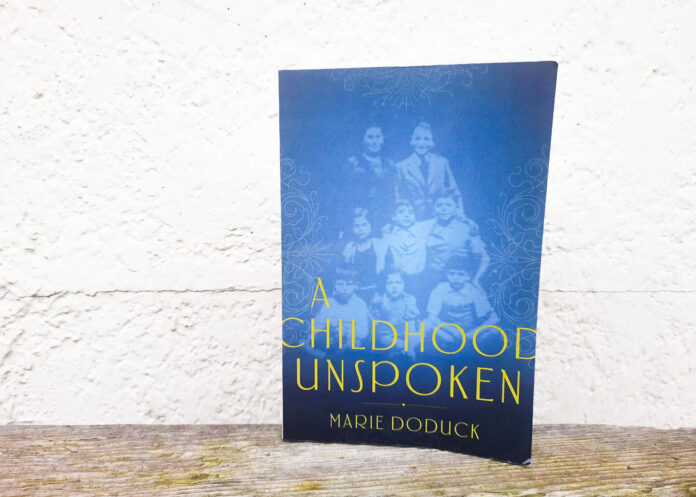
This is a photo of the front cover of Marie Doduck’s memoir. The cover is blue and has a faint photo of Marie Doduck’s siblings as children.
PHOTO: Aditi Dwivedi / The Peak

By: Aditi Dwivedi, News Writer

The Azrieli Foundation’s Holocaust Memoirs Program in collaboration with the Vancouver Holocaust Education Centre, organized a book launch of Marie (Mariette) Doduck’s memoir A Childhood Unspoken. The book launch was held on January 22 at the Jewish Community Centre of Greater Vancouver.

Doduck was born in 1935 to a Jewish family in Brussels, Belgium. Doduck is a child survivor of the Holocaust. After the German invasions of Poland and subsequently Belgium during World War II, Doduck was separated from her mother and seven siblings. She lived in hiding with a foster family until she was reunited with four of her surviving siblings in 1945. She was one of 1,123 orphaned Jewish children who were brought to Canada through the War Orphans Project, started by the Canadian Jewish Congress in 1947. Well known in the community for her leadership and activism, Doduck is actively involved in Holocaust education and is also the co-founder of the Vancouver Holocaust Education Centre

A Childhood Unspoken is a record of her survival in the Holocaust, and the aftermath of being separated from her family and home. Doduck believes “survival is a coat you never take off.” 

Lauren Faulkner Rossi, assistant professor from the department of history at SFU, approached Doduck to co-write her story. She said it allowed her to revisit the painful memories of her past and share her story with the world. She also received support from the Holocaust Survivor Memoirs Program, which was launched in 2005 by the Azrieli Foundation to collect, preserve, and share the memoirs and diaries written by survivors of the Holocaust who came to Canada.

In her introduction to A Childhood Unspoken, Rossi wrote, “The act of preserving an eyewitness story like Mariette’s is important for many reasons: it becomes part of and builds on the historical record. It makes available that perspective to current and future readers.” She noted Doduck’s account of her life is not only part of the history surrounding the Holocaust and World War II, but also a significant piece of local history. Like countless survivors who came to Canada, Doduck had to “fight against Holocaust denial, antisemitism, and racial intolerance, which are still active threats around the world, including Canada.”

During the book launch, Doduck shared the process of writing her story with Rossi. She said it was “a very painful trip,” as she recalled not only her difficult transition from Europe to Canada but also the separation of her identity from her childhood self: “I was an old woman trapped in a twelve-year-old body.” To write the memoir, she had to put aside her life as Marie Doduck to revisit her childhood as young Mariette. “This Marie Doduck is who I created to fit-in in Vancouver, because we weren’t accepted. We were from outer space, we didn’t speak the language.” 

The book launch was followed by a book signing event and was attended by an overwhelming audience, exceeding the seating capacity of the venue. Many members of the close-knit Jewish community of Vancouver attended the event; one audience member, whose mother was also a child survivor, spoke to The Peak about why it was important for her to attend the event. “Someone has to carry on these memories [ . . . ] It was important to me to be there, support her, and also support the community, and support my mom.”

A Childhood Unspoken is available for sale at Massy Books. Find out more about other memoirs published under the Holocaust Survivor Memoirs Program on their website.

A Strathcona gallery guide

0
Cedar Sage and Sweetgrass Indigenous Art exhibition at Massy Arts Society Gallery showing various portraits and paintings on display.
PHOTO: Poonam Sharma / The Peak

By: Petra Chase, Arts & Culture Editor

Massy Arts Society Gallery
Where: 23 E Pender St, Vancouver
Hours: Saturday–Sunday, 12:00 p.m.–5:00 p.m.

Located in Chinatown, Massy Arts Society is a “community hub dedicated to supporting the practices of Indigenous and over-excluded artists.” They currently have their Cedar Sage and Sweetgrass Indigenous Art Show display in their front window. The exhibit features striking portraits, paintings, and carvings from 13 artists from the BC-based artist collective. In addition, enter the gallery for free (masks mandatory) to see “Chinatown Looks,” a disposable camera photography exhibit in which Chinese seniors and youth take part in documenting their experiences of Chinatown. Organized by the Yarrow Intergenerational Society for Justice, an organization supporting youth and low-income immigrant seniors, the photography will make you want to explore Chinatown’s historic sites and shops with a new appreciation. Both exhibitions are on until March 16.

Audain Gallery
Where: 149 W Hastings St, Vancouver
Hours: Tuesday–Saturday, 12:00 p.m.–5:00 p.m.

Goldcorp Centre for the Arts, SFU’s School for the Contemporary Arts downtown campus currently has an art installation titled Please Meet the Geese Who Have Lived Here Forever.” The elaborate sculptures and set consists of objects found in thrift stores, alleyways, and backyards. Based on the artist’s recent film of the same name, which is about “a family of wild geese who seek refuge along the foreshore of Burrard Inlet (səl̓ilw̓ət).” Meant to emphasize the consequences of the climate crisis, the installation is described as having an “intentional awkwardness,” which symbolizes the artist’s “irreverence toward conventional ‘high art’ value systems and her repudiation of settler culture’s rapacious overconsumption.” Just a couple blocks from Harbour Centre, this is an inspiring after-class activity. This exhibit is free and open until March 13.

The Chinatown Storytelling Centre
Where: 168 E Pender St, Vancouver
When: Friday–Monday, 11:00 a.m.–4:00 p.m.

Learn about Chinese Canadian history and Chinese Canadian contributions in Vancouver at this new permanent exhibit. With an emphasis on sharing stories through “storytelling, unique artifacts, recordings, and photos,” this is the perfect way to discover Chinatown through a new lens. They also have a theatre in the exhibit where they screen “archival films, in-house productions, and short films by community partners.” After your visit, I recommend stopping by scenic Dr. Sun Yat Sen Chinese Classical Garden, which is just a few minutes walking distance. Tickets range from $10–$12.50 and can be purchased on their website.

Happy Seollal!

0
ILLUSTRATION: Jill Baccay / The Peak

By: Gem Yelin Lee, Copy Editor

It’s January 21, and I come home to my mother on her eighth consecutive hour in the kitchen, preparing ingredients and cooking time-consuming dishes. The apartment is cold from windows being left open to air out the cooking smells, and the burners are hot from a tireless onslaught of 전 (jeon) being made in heaping batches. My father is somewhere simultaneously helping tidy the apartment and obsessively rummaging through old bins, looking for Korean folk games. This is a scene that only happens once a year: during 설날 or Seollal, the Korean celebration of Lunar New Year.

Lunar New Year is a momentous cultural holiday celebrated by several Asian countries; each country has their own name for it and unique traditions, too. The date changes every year as it follows the lunar or lunisolar calendar, and the twelve zodiac animals are cycled through. This year, the day landed on January 22, and we celebrated the beginning of the Year of the Rabbit: a year of peace and good fortune

In South Korea, Lunar New Year is called Seollal (better phonetically spelled as seol-nal) a national holiday lasting four days. It is “one of the most important traditional holidays of the year,” where many businesses close up shop to join others in returning to their hometowns for a family-oriented celebration. Dressed in traditional clothes, 한복 (hanbok), you honour your late ancestors with 차례 (charye), deep bow to your elders with 세배 (sebae), and play traditional games like 윳놀이 (yut-nori) to bond with your family. The whole event is packaged in a bucketload of delicious, traditional foods and drinks which take at least a full day and many helping hands to prepare. 

It had been almost a decade since my family had properly and intentionally celebrated Seollal with its traditions. Throughout my childhood, we would celebrate from morning till 3:00 a.m. the next day by inviting our family friends over to our home. It would be the most fun any of us had since the previous year we met, and the year before that. However, as we moved more times than I could count on my hands, and endured poverty, health crises, and isolation, somewhere along the way we let each Seollal pass by with just the simple holiday greeting. “새해 복 많이 받으세요 (Sehaebok-manibadusaeyeo),” I would say to my parents while dashing out the door for work or school, “May you receive many blessings/lots of luck this year.” 

This year, I proposed we celebrate Seollal again. I used the excuse of wanting to invite my partner and share this cultural experience with them, but even more than that, I wanted to experience the joyous, family-oriented holiday again. Even though we all live together in a two-bedroom apartment, we hardly see each other or spend meaningful time together as a family. But this year, we all marked it on our calendars and made sure we were free — it was a smashing success. Here are some of the traditional elements that make celebrating Seollal so special:

차례 (Charye)

Charye is “a memorial service for one’s ancestors,” where a ritual table is set with special dishes, ancestral tablets, and incense. Your family members would gather at your family shrine or one of your relative’s homes and all take part in the set-up of the ritual table. You then deep bow to your ancestors, who are believed to be present at the time the ritual table is complete, and then eat the food you prepared with your family members. The service is held predominantly on Seollal and Chuseok (Korean Thanksgiving), but resembles a more common practice called Gijesa: “the annual memorial service held on the date of an ancestor’s death.” Nowadays, Gijesa is usually prepared for a person you were close to who has passed away and not necessarily just your ancestors, but for very close friends and partners, too. Charye is more of a general memorial service to your late ancestors, rather than a specific individual. Both traditions are ways to honour and show gratitude to your late ancestors. My family hasn’t taken part in charye as we aren’t in Korea with our extended family, but we did hold Gijesa for my grandfather for several years. My father once explained to me that the foods laid out are offered to the ancestor to eat, and therefore blessed with their love and presence when we finish our greetings and eat the food ourselves. This importance placed on sharing a meal with loved ones, or showing we care by making sure our loved ones are fed, is an ideology that is carried in modern, everyday Korean society.

세배 (Sebae)

Sebae is to honour your ancestors who are alive! Sebae is the name of the specific traditional bow you give to your family members who are generationally older than you. I have fond memories of putting on my hanbok as a child and frolicking through the countryside between my elder relatives’ homes. You would be invited inside, and there you would perform the bow and tell them the Seollal greeting. In response, your elders respond with the same greeting or something more specific, like “May you be healthy and happy this year,” or “May your career kickstart this year,” or the dreaded: “May you get married this year.” They also are likely to give you an envelope of money, 세뱃돈 (sebaetdon), in return to symbolize their well wishes for your luck and prosperity

Traditional foods 

According to the traditional system, Seollal meant it was everybody’s birthday, and the moment you turn a year older would be marked by eating 떡국 (tteokguk) on this day: a rice cake soup symbolizing purity. Thanks to a new law, Koreans will be reverting to their international age starting June 2023, making their documented age bump down one or two years. We, of course, had tteokguk, and tend to have it multiple times a year as it is one of my dad’s favourite foods and is simple to make. 

My mom spent most of the food preparation time making various kinds of 전 (jeon), which are basically various sliced vegetables, meats, and seafood dipped in flour and egg, and then fried in a pan. I’ve seen Koreans use this method to make jeon out of basically any ingredient to a comical extent, and it’s a delicious way to make sure those sad root vegetables sitting in your fridge get consumed. Some jeon are prepared slightly differently and these are shaped like round flat pancakes, filled with kimchi, green onion, or seafood. My mom made eggplant jeon, zucchini jeon, wanjajeon, and daegujeon. The latter two are more time consuming to make as wanjajeon needs to be individually handshaped into little circular disks first, and daegujeon requires proper fish preparation methods. As my mom cooked, she reminisced over memories of making these foods in a much grander extent, growing up in the ’80s. All the women in the family gathered to make everything, including the dumpling wrappers and sikke, from scratch, while the men of the family secured the meats and seafood and entertained the children. She said celebrating Seollal again lifted these wandering memories to the surface. Jeon goes super well with a Korean rice-based liquor called makgeolli or a non-alcoholic sweet rice beverage called Shike.

One of the main activities we partook in on Seollal was to make mandu (Korean dumplings) together, as more hands make lighter work. Each mandu is individually assembled by hand, placed in a steamer in batches, and consumed, frozen, or panfried. We made over a hundred mandu this year to circulate around to our friends’ homes — I find the shaping of the mandu a tedious but therapeutic experience. I was dismayed to find my partner making beautiful mandu right away, whereas mine looked like garbage no matter how many times I was taught. 

There are many other traditional foods that can be prepared and eaten on Seollal like japchae (glass noodle stir fry), sweet tteok (sweet ricecakes), or various fruits including asian pears, but these are the main big three our household focused on this year.

Traditional games

At various points throughout the day, we sat down and played 화투 Hwatu and 윳놀이 (Yut-Nori). One aspect of Seollal I really love is that these games can keep you entertained for hours, and are activities that help you disconnect from screens and connect with your family members. Hwatu, also referred to as Godori, Go-Stop, or in translation: “War of the Flowers,” is a card game based on the Japanese Hanafuda. The game was brought to Korea during the Japanese occupation during the 1900s. Although there is painful colonial history associated with that time and with Japan, this game is still a widely popular game in Korea. Perhaps too widely popular, as it is often a game associated with gambling. The game is too complicated to explain here but basically it’s like the poker of go-fish, and is almost guaranteed to bring out your competitiveness. 

Yut-Nori is a traditional Korean folk game that is much more accessible and playful than Hwatu. Whereas Hwatu is mainly played by adults with its complicated rules, yut-nori can be played and enjoyed by everyone! It involves tossing four, marked, wooden game sticks instead of dice to see how many moves you get to make on the board. You are split up in two teams, and the goal is to get all your pieces across the board faster than your opponent. If Hwatu is the poker of go-fish, Yut-Nori is like the games chess and Sorry! combined. My father always said Yut-Nori is the “game representative of life,” because depending on strokes of luck, you can turn the game in your favour. If you’re unlucky enough, you can also get completely fucked by your opponent in one turn when you were on the brink of winning. When playing Yut-Nori, you can’t help but laugh, especially when these huge shifts happen, and my father always said that applies to life too. When things go horribly wrong, let’s just laugh, because you never know when the tides will turn just as dramatically in your favour. 

Happy Seollal, and may you receive many blessings this year! 새해 복 많이 받으세요!

The SFSS Council protests gender-based violence in post-secondary education

0
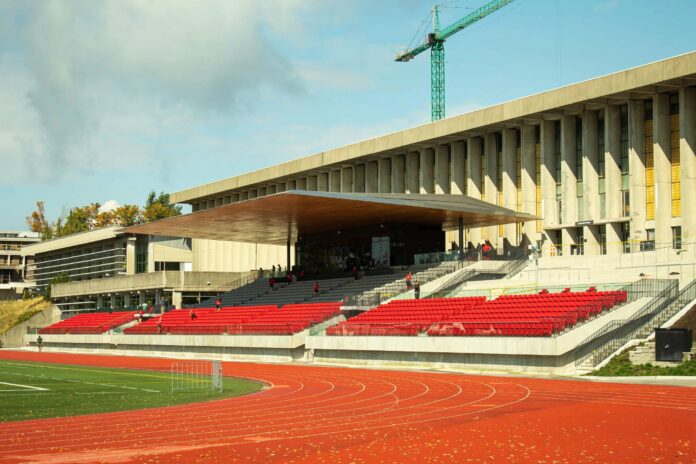
This photo is of the SFU stadium at the Burnaby Campus. The stadium is empty but it is a sunny day.
PHOTO: Krystal Chan / The Peak

By: Aditi Dwivedi, News Writer

Content warning: This article contains mentions of sexual and gender-based violence.

On January 25, The Peak attended the Simon Fraser Student Society’s (SFSS) bi-weekly Council meeting. The highlights from the meeting include SFSS unanimously agreeing to sign the Alliance of BC Students’ (ABCS) open letter and discussing budgetary requirements for the 2023 Science Undergraduate Society Winter Formal.

Alliance of BC Students’ Open Letter: Urgent Call for Action against sexualized and gender-based violence

The vice-president of external and community affairs, Eshana Baran, proposed a motion for the Council to sign on to an open letter shared by the Alliance of BC Students (ABCS). ABCS is a student-led coalition of five post-secondary student associations from across BC, which advocates for a “barrier free post-secondary system.” Representing over 80,000 students, their work and efforts are aimed towards advocating for the BC students’ rights, interests, and the promotion of accessible post-secondary education.

According to Baran, “For years, students have been advocating for funding for sexualized violence prevention offices and support for survivors.” She encouraged the Council to join the ABCS in calling on the government to take action against the growing sexualized and gender based violence in post-secondary education institutions.

According to ABCS, one in five women will “experience sexual assault during their time at post-secondary.” Their campaign is working to update provincial legislation as there are little requirements for what a university must include in their sexual assault and misconduct policies. “The Alliance of BC Students believes that there are minimum standards that every institution should be required to adhere to.”

When acting president, Abhishek Parmar, introduced the motion, it was passed unanimously by Council. Executive director of ABCS, Joshua Millard, who was invited to the meeting, said, “We appreciate your full support on this.”

Science Undergraduate Society’s Winter Formal 2023

The president of the Science Undergraduate Society, Jessie Shen, and the vice-president internal, Ananga Bajgai, gave a presentation on their annual Winter Formal. The presentation included an event overview and outlined safety and accessibility measures such as designated drivers, wheelchair ramps, on-site security, dietary accommodations, emergency transportation, and lowered ticket prices for students. They were seeking approval for a budget of $10,000.

The Science Undergraduate Society aims to support students in the faculty of science by providing networking opportunities through social events. According to Shen, the Winter Formal is a “time for science students to not wear lab coats, and enjoy their time and meet new people.” The event also allows science students from different disciplines to connect with one another and establish a sense of community, she added. 

The Science Undergraduate Society received unanimous approval for the proposed budget of $10,000 from Council. The budget included aforementioned costs of safety and accessibility measures, in addition to venue, food, and staff.

SFU Burnaby fog’s top tips

0
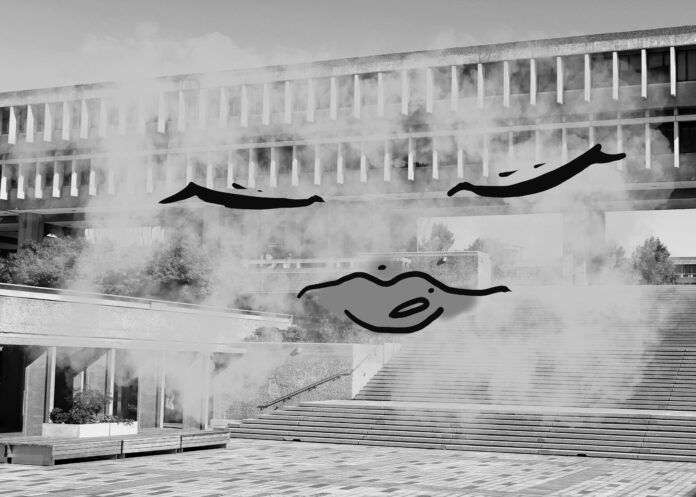
The SFU fog, with a handsome Squidward-face doodled on top
PHOTO: Gudrun Wai-Gunnarson, illustration by Kelly Chia / The Peak

By: Saije Rusimovici, Staff Writer

A misty winter fog drifts through the winding roads that lead to the top of Burnaby Mountain, collecting at the bus loop. Without warning, a frosty breeze blows a collection of dried up leaves across the Cornerstone sidewalk. The aroma of freshly brewed coffee snakes through the door as someone makes their way out of Starbucks, hot coffee in hand. 

Your eyes follow them as they bring the coffee to their lips. They wear big, nearly opaque sunglasses even though it hasn’t been sunny in weeks. You try to meet their gaze, but it’s impossible. As they walk by you, they offer a thin lipped smile, tucking a spiral bound notebook into their oversized tote bag. For reasons you can’t explain, all you want to do is read their mysterious journal. 

Sensing your gaze, the wispy figure drops the journal on your tiny table and whisks away. Literally. So let’s see what they have to say:

1. Purchase a thrifted trench coat

Let’s be honest — we all wanted an Alison DiLaurentis style redcoat during our Pretty Little Liars phase in early 2013. For on-campus purposes, and to fit the more modern, dark academic look, pair either a vintage Burberry, camel coloured coat with a sharp long sleeve button up, subtle pearl earrings, and a pressed, pleated pant. Look like you’ve jumped off the pages of The Secret History and onto SFU campus. It’s okay to give the east coast scholar vibe even though we’re much closer to California than New England. For all anyone knows, you’re visiting from Cambridge. Keep them guessing.

2. Carry around a thick, slightly worn paperbackthe vaguer the title, the better

Find a tree to read under, in true Rory Gilmore fashion. Honestly, any inconspicuous location works as long as people can see you. There’s no point in hiding between the stacks in the library. Maybe the outdoor seating at West Mall Starbucks. Or, on the upper floor of the dining hall, dressed too nice and out of place in comparison to the other kids wearing Pillow Slides and pyjama pants. Appear both smart and secretive at the same time. Top picks include Bunny, Dead Poets Society — but make sure it doesn’t have the movie as its cover — or Wuthering Heights.

3. Give a pseudonym at Starbucks

Maybe you feel like being a Claire today. Or an Esmeralda. A Gerard? Make up a personality to go with them, and their beverages. Claire is quiet and polite. Always asks for her drink extra hot, usually a variation on a tall, nonfat, vanilla latte. Esmeralda always gets the latest drink with a cake pop (the flavour depends on the day), offering a little attitude to the barista. Gerard refuses anything but an americano with room, despite never adding any cream to it. Makes you wonder what he pours in there as he makes his way to 18th century lit. 

4. Be one with the fog 

Take a stroll through campus enjoying the hazy mist settling over the pond on your way to the AQ. Take your time — it never hurts to be fashionably late to class (you’re ahead of the reading list anyways). 

5. Sit near the back, but raise your hand the most

Your art history professor isn’t sure who is speaking, but your voice carries clear across the lecture hall. Keep comments concise, yet thought-provoking, answers vague, yet intriguing, and counterarguments bold, yet civil. Respond to prompts with an incontrovertible “wherever the wind blows,” keeping a neutral expression. People may look over at you and think: who even talks like that? That’s the point. 

Let’s Do Breakfast brings free meals to elementary students

0
Table of eggs, sausage, and hashbrowns
PHOTO: Gudrun Wai-Gunnarsson / The Peak

By: Hannah Kazemi, Staff Writer

Editor’s Note: The article was updated to reflect there are 70 breakfast programs in Surrey, following an update from Mehra. Originally the article mistakenly noted there were only 27.

A group of SFU students started a program with the goal of providing elementary school students with a healthy breakfast each morning. The program is called Let’s Do Breakfast, and  serves breakfast to students at Strawberry Hill Elementary in Surrey each day between 7:30 a.m.8:30 a.m.

The Peak sat down for an interview with Ritu Mehra, one of the co-founders of Let’s Do Breakfast, to learn more about the program. Mehra started this program alongside fellow SFU students Harbir Dhaliwal and Muskan Jammu. Let’s Do Breakfast became operational on February 1, 2023, but the idea began in 2021. However, due to the COVID-19 pandemic, the founders postponed the launch of their program. “We didn’t have much of an option. We just had to see it through and keep in contact with the Surrey School District,” Mehra said. 

During the last two years, the founders prepared to launch their program. “We got to volunteer at an elementary school which had a breakfast program so we could get to learn about the breakfast program, learn about the food groups, and learn about what kind of breakfast we should give to children and what’s essential for them.”

After two years of working with the district, the Let’s Do Breakfast team was given their own school and funding from the Surrey School District to operate within.

Mehra described the way her and her co-founders’ upbringings inspired the program. All three of them came from immigrant families and “growing up in elementary school, we saw there wasn’t that much food provided to people who, you know, forgot their breakfast or forgot food, just didn’t have enough money to get breakfast, or didn’t have enough money for food in general.” In their volunteer experience, Mehra said they could “see the different attitudes” between students who had access to a healthy breakfast each day versus those who did not. 

Mehra also noted there is a shortage of breakfast programs in Surrey, with 70 breakfast programs out of 101 elementary schools in the district. Let’s Do Breakfast aims to bridge that gap. “We’re going to be starting our breakfast program [at] Strawberry Hill Elementary [ . . . ] then slowly we want to expand and go to other elementary schools,” said Mehra.

“Breakfast provides us with lots of nutrients and energy to help kick start our day. It is the most important meal of the day — and I can’t stress this enough — because you do break a fast,” said Mehra. “When we’re sleeping we are sleeping for about eight to nine hours [ . . . ] Your body has rested but now it needs nutrients and needs energy to wake up and get started with the day.” 

Let’s Do Breakfast aims to spread the message that breakfast is important and is an essential part of both a child and an adult’s day. In Mehra’s experience coming from an immigrant family, she understands that in “some cultures, breakfast is not really seen as an important meal.” She hopes to change attitudes on the importance of breakfast. 

“We wanted to create this program to give back and also give breakfast to kids so they can start off their day right, start out their day with energy and positivity [ . . . ] They want to learn. They [just need to] have the energy to learn and be good learners.”

When asked about the future of the program, Mehra described their hopes to roll out a stamp program and pamphlet, similar to that of the Summer Reading Club in Surrey Libraries. “Every single time the student [ . . . ] comes to the breakfast program in the morning, they get stamped,” said Mehra. “Within that pamphlet they have breakfast ideas, little ways where they can implement breakfast into their life, and also why breakfast is important.”

Let’s Do Breakfast is currently looking for volunteers to help support the program. Mehra said, “We’re looking for leaders at SFU that want to make that positive impact and want to create change in their community.” All volunteers will have to complete a Criminal Record Check before working with vulnerable individuals.

To learn more about Let’s Do Breakfast and to submit an application, please email [email protected] with your resume.