Home Blog Page 195

SFU students organize Vancouver’s first annual International Women’s Day March

0
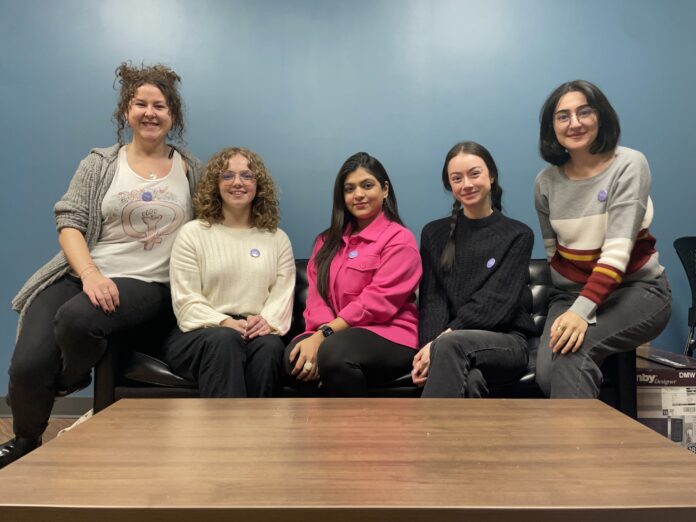
This is a photo of five of the organizers of the event. They are sitting on a couch smiling at the camera and behind them is a blank blue wall
PHOTO: Yasmin Vjes Simsek

By: Natalie Cooke, News Writer

Editor’s note: Yasmin Vejs Simsek, who was interviewed for this piece, is a former Peak employee. Karissa Ketter, a current editor who worked on the article, is also an organizer. The Peak acknowledges and has taken steps to prevent conflicts of interest or potential bias from influencing the article.

A group of six students from SFU are gearing up as they prepare to host the first annual International Women’s Day March in Vancouver. The event will take place on March 5, from 12:00 p.m.–4:00 p.m., and includes a 1.5 kilometer rally that will begin at the Vancouver Art Gallery’s North Plaza. There will be many speakers, including speakers from the Abortion Rights Coalition Canada and Canadian Women for Women in Afghanistan, among others. Solidarity Notes, a local choir, will also be performing songs that relate to social justice.

Chair of the IWD Vancouver organization team, Yasmin Vejs Simsek discussed the importance of starting this march in Vancouver with The Peak. As an SFU student completing her masters in gender, sexuality, and women’s studies, she realized that much of what she was learning was not making its way outside of academia. “My goal was to create an actual difference for women, so when I realized this march was missing, I thought it was a good place to start.”

Simsek shared, “I’ve always wanted to do what I can to amplify women’s voices and as a woman of Turkish heritage, it’s important for me to fight for the women suffering there as well as celebrate their incredible resilience to the violence they face.

“We have the human right to protest here and with so many injustices worldwide, isn’t it our duty to do what others aren’t able to do — what others have been imprisoned for?”

Simsek noted the event is inclusive to trans women and non-binary or gender-diverse folks who also face gender-based discrimination.

Simsek emphasized the need to shed light on women’s equality since major differences between men and women still exist. “The default male, the gender pay gap, sexual assault statistics, gendered poverty, barriers to women’s healthcare [ . . . ] is happening right here in Canada.” She added, “There’s still a deep need to keep fighting for women’s equity internationally and this is the one day where we all come together to do just that.”

Simsek noted the importance of having an intersectional lens when organizing the event; while everyone faces their own unique disadvantages, it’s important that women unite to fight the same battle. “We don’t roar as loudly when we’re standing in small groups in opposite corners of the world, as we would if we were all together, singing in unison [ . . . ] We need to fight together, and we can only do that if we know, support, and respect what each other’s reasons for fighting are.” 

There are a variety of ways in which International Women’s Day can bring awareness to women’s equality. Simsek noted learning from the variety of speakers will help others understand the struggles other women face all over the world. 

The students hope there will be a strong turnout of attendees, which will only raise awareness and increase the scale of the event for the following year. “The bigger it is, the more people will know about it. And the more people know about it, the more women’s voices we will be able to amplify, celebrate, and fight alongside of.” 

Simsek also commented on the ways in which SFU can support women’s equality. “To me, SFU’s main task is to ensure the safety for all their students as we live and learn here on these stolen lands. Realizing that safety looks different depending on which groups of students you look at, is the first step towards supporting women’s equity.”

Simsek noted the importance of supporting women in STEM, leadership roles, and on executive boards in an effective way to support women in places that have been known to be dominated by men. As well, working with the Sexual Violence Support & Prevention Office (SVSPO) to take action against sexual harassment and violence will create a safer campus community. “There should be mandatory training for faculty and staff, that the SVSPO knows how to provide, to ensure every student feels safe on our campuses. 

 “I am grateful to be at an institution that is doing much more than other universities are doing, but I believe we need more. I hope that after this International Women’s Day, action will be taken to ensure women’s equity for all of SFU.” 

To learn more about the International Women’s Day March in Vancouver, visit their Instagram @iwdmarchvan.

Canada should rethink how much it wants to expand MAiD

0
a medical professional wearing a white coat and putting on gloves
PHOTO: cottonbro studio / Pexels

By: C Icart, Staff Writer

Content warning: ableism, assisted dying.

Medical Assistance in Dying (MAiD) has caused remarkable distress for disabled people since it was implemented in Canada in 2016. Despite concerns over inadequate medical support resulting in assisted dying, the policy is intended to expand and include more categories of eligible candidates. For instance, the government wants to include those “whose sole underlying conditions are mental disorders” as well as “mature minors.” Medical professionals have voiced that the healthcare system may not be ready for this due to underfunded palliative care and “a lack of public education on suicide prevention.” As a result, the change that was set to be in place this coming March has been pushed back to a later date that’s yet to be announced. If and when this change occurs, it must follow a substantial reform of our medical system.

The concern with MAiD’s expansion is that many will be offered assisted dying in place of proper medical care. Or, that they will eventually consider MAiD because of previous failures in their care. Everyone deserves to die with dignity, but investing in MAiD before fixing our already broken medical system will likely cause unnecessary and untimely deaths. People with chronic illnesses and disabilities deserve to have all options exhausted before resorting to assisted dying, but this isn’t happening. Patients face access barriers such as dismissive doctors, long wait times, and treatments that don’t fall under their Medical Services Plan (MSP). Many want to live, but are not being offered sufficient care from our healthcare system — this is where our attention should be turning towards. 

The expansion of MAiD has also sparked concerns from disability justice advocates. 53 disability and human rights organizations signed a letter to David Lametti, the Minister of Justice and Attorney General of Canada, calling for the government to make MAiD unavailable to people who are not terminally ill. According to these advocates, “As a country we cannot provide state-assisted death to people who are not terminally ill, without ensuring a legislated right to a decent life for all.” They’re right. 

That’s not to mention the fact that doctors are now “encountering patients who cite poverty as the primary driver for their wish to die” — despite those same MAiD representatives saying that “nobody is getting approved for assisted death due to housing.” It is time for MAiD advocates to acknowledge that there may be some unintended consequences to proposed policy changes. This is what disability advocates are warning against. The lack of financial support in place for disabled individuals results in a situation that Al Mills from Extend-A-Family Waterloo Region describes asa prescription for poverty.” In other words, it’s easier for the medical system to offer MAiD than it is to undergo reforms that address access and funding issues. 

If the Canadian government actually cares about helping chronically ill and disabled people, it needs to invest in better long-term and palliative care, and make disability assistance a living wage. As of 2022, BC’s Persons with Disabilities (PWD) program offers around $16,300 yearly to its recipients. This is nearly $10,000 below Canada’s poverty rate. Providing MAiD without improving the living conditions of disabled people is not a solution. Instead, it will exacerbate existing inequalities without ever addressing the reasons that may lead to someone’s need for assisted dying. 

Why SFU should rename the Goldcorp building

0
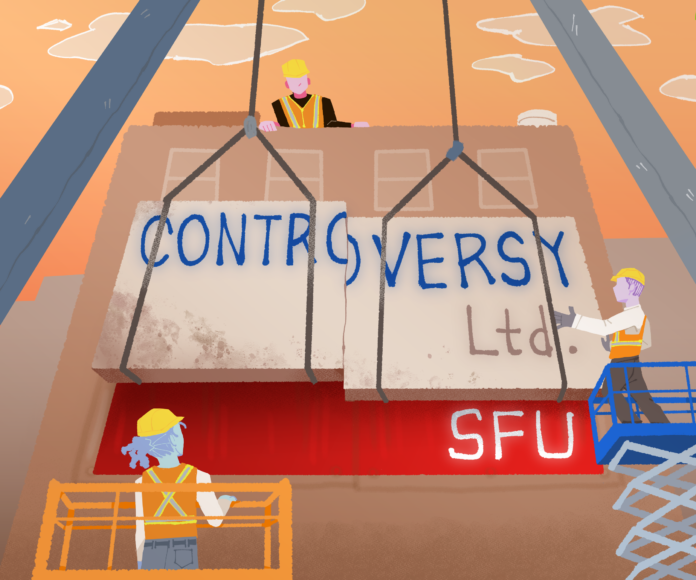
construction workers placing a giant sign on an SFU building that reads controversy ltd.
ILLUSTRATION: Jill Baccay / The Peak

By: Safiya Shah, SFU Student

In 2011, SFU students protested against the university accepting a $10-million donation from the mining company, Goldcorp. At the time, students and staff were concerned about accepting donations from a company that has had environmental and human rights controversies. The SFU Board of Governors ignored their concerns about the donation, resulting in letters and protests. However, these efforts were unsuccessful. The Board was not willing to discuss concerns surrounding the donation, and today there is still a building named the Goldcorp Centre for the Arts. It needs to be renamed.

Goldcorp is a Canadian mining company, which has since been renamed to Newmont in an attempted “rebrand.” There have been human rights violations carried out by Goldcorp, including circumstances where Indigenous consent was not given at certain mining sites. The OAS human rights commission has asked them to stop mining at their Marlin site in Guatemala, to no avail. They have also been involved in the forceful displacement of families so they could expand their mining projects. Others have accused them of not treating workers fairly, and using their desperation for money to take advantage of them. Goldcorp has employed locals who lack the proper training and experience with mining operations in order to work safely. Moreover, their sites have contaminated the environment around them, impacting surrounding Indigenous communities. Water contamination has caused health issues for those around the mining site. Goldcorp’s mining is not safe for Indigenous peoples surrounding their sites, nor the workers, nor the environment. 

What business does SFU have naming buildings after corporations like Goldcorp? Often, large companies focused on making a profit will take steps to look appealing to the public. However, many of these companies take advantage of extracting resources — in this case, mining in countries without strict regulations. This allows them to get away with not ensuring the safety of their workers, or accounting for the cost that the surrounding environment and communities pay. Hence, does SFU really want a building named after them? Twelve years later, this building still reflects SFU’s refusal to listen to those who voiced genuine concerns. It reflects poorly on the university.

Naming one of SFU’s buildings after the company not only helps them achieve positive public opinion, but it also contradicts what we stand for. As a university that works to be a safe space for all, SFU should not allow a building to be named after a company that does not cater to those same values. Goldcorp doesn’t seem to care about how their mining sites affect the safety of those around them. Is SFU a place that’s okay with ignoring their donor’s human rights violations, environmental harm, and the dismissal of Indigenous consent and well-being? Whether intentional or not, SFU has indirectly accepted what Goldcorp has done to the communities surrounding their mining sites, and this helps them cover that up. It’s past time we rename the building to something that genuinely reflects the principles SFU proclaims.

Contests and opportunities for writers

0
An open notebook with many pages opened to show cursive writing in black ink on the pages. A pen and a tea cup are in the background.
PHOTO: Yannick Pulver

By: Payal R., SFU Student

CBC 2023 Literary Prize: Non-fiction
Website: cbcliteraryprizes.submittable.com/submit
Submissions close Feb 28, 2023
Fee: $25

The CBC 2023 Literary Prize’s non-fiction competition is open to all Canadian citizens and permanent residents to submit non-fiction works in English and French ranging from personal essays, humour writing, travel, and feature articles that are up to 2,000 words. The winner will have their work published, receive $6,000, and attend a two-week writing residency at Artscape Gibraltar Point, a “community cultural hub” in Toronto. The four finalists will have their work published and receive $1,000. David A. Robertson, Eternity Martis, and Merilyn Simonds are set to judge the shortlist. Watch out for their poetry and fiction prize categories, which open later in the year.

2024 Bridge Prize: Short story
Website: ulethbridge.ca/liberal-education/2024-bridge-prize
Submissions close January 22, 2024
Fee: $20

The University of Lethbridge welcomes post-secondary students across Canada to submit an original short story in English up to 7,500 words. The winner will receive $7,500 and the three finalists will receive $1,000 as well as a $200 Munro Books gift card. Michelle Good, Nicholas Herring, Sheena Kamal, George Murray, Danny Ramadan, and Madeleine Thien are set to judge.

EVENT Magazine: Poetry, Non-fiction, and reviews
Website: eventmagazine.ca/submit
Submissions ongoing
Fee: Free

EVENT Magazine is a BC based literary poetry and prose magazine and Western Canada’s longest-running magazines in the genre. They accept worldwide submissions in fiction, non-fiction, poetry, and reviews. Writers are allowed to submit eight poems up to 5,000 words. Published works will receive $40 per page of poetry. They prefer poems with “arresting imagery, polished language, emotional impact, and lyricism without pretension.” Writers wanting to submit must not be affiliated with Douglas College in the previous two years. 

PRISM International: 2023 Grouse Grind Prize Short Form (fiction or non-fiction)
Website: prisminternational.submittable.com/submit
Submissions close April 15, 2023
Fee: $15, free for “self-identifying Indigenous and Black writers” and low-income writer

PRISM International is a quarterly magazine based out of UBC’s creative writing department where they are seeking literary short form works either in fiction or non-fiction or a hybrid of the two. This could be “flash fiction, micro-memoir, poetic hybrids, and everything in under 300 words.” The winner will receive $500. The first finalist will receive $150 and the second finalist will receive $50. This competition is open to anyone from the world. Writers must not be affiliated with UBC’s creative writing department in the previous two years.

The Dalhousie Review 
Website: ojs.library.dal.ca/dalhousiereview/pages/view/contribute
Submissions ongoing
Fee: Free

The Dalhousie Review is a tri-annual Halifax based literary magazine. Founded in 1920, it is “one of the oldest and most prestigious literary journals in Atlantic Canada” with an international reputation. They are seeking poetry (up to five poems), fiction (8,000 words), and non-fiction writing (4,000 words). Writers wanting to submit should send their work to [email protected] in a Google Doc or PDF format. The submissions can cover any subject and entries are open to anyone around the world.

SFSS Council is launching their own breakfast program for SFU students

0
This photo is of the SFU stadium at the Burnaby Campus. The stadium is empty but it is a sunny day.
PHOTO: Krystal Chan / The Peak

By: Natalie Cooke, News Writer 

On February 8, The Peak attended the Simon Fraser Student Society’s (SFSS) bi-weekly Council meeting. The highlights from the meeting include discussing the new SFSS breakfast program, the Applied Science formal, and the Computer Science Student Society Silicon Valley trip.

SFSS begins new breakfast program for students on campus, calling for volunteers 

The SFSS is starting a free, weekly breakfast program for all SFU undergraduate students. The breakfast will offer toast, fruits, and a beverage. The first breakfast will begin on February 17. Volunteers will work from 9:45 a.m.11:45 a.m. and students can access this free breakfast from 10:00 a.m.11:30 a.m. The program will be held at the Social Stage, which is the lounge on the third floor of the Student Union Building at the SFU Burnaby campus. 

To volunteer for the breakfast program, email the SFSS vice-president of external and community affairs, Eshana Baran, at [email protected]

Faculty of Applied Science Formal 

The SFSS has begun preparing for the Faculty of Applied Science Formal this year. This event has not been held since before the pandemic, and Shariq Ahsan, the computing science councillor, said they are ready to “bring it back this year.” 

The student groups participating in the event are the Computing Science Student Society, the Software Systems Student Society, the Engineering Science Student Society, the Mechatronics System Engineering Student Society, the Sustainable Engineering Student Society, and the Women in Computing Science

This presentation was conducted in hopes to receive $10,000 to support the event. With adequate funding, the Formal can be hosted in a reputable venue, with the inclusions of accessibility needs. The motion to fund the formal was approved unanimously by Council.

This year, the event will be held at the Anvil Centre in New Westminster. The SFSS Accessibility Committee has a checklist of accessibility needs that will be met at the event. The venue is across the street from the New Westminster skytrain station to accommodate transportation requirements. Additionally, the venue is wheelchair accessible, the SFSS will regard dietary restrictions, and there are quiet spaces if people need to step away.

Faculty of Applied Science Silicon Valley Trip

The Computing Science Student Society is preparing for the Silicon Valley Trip in California to meet with technology companies. It is a four day trip, beginning on April 25, 2023, and students will meet with two tech companies per day. 

Ahsan explained learning about the atmosphere, alumni, and employees of each company will give students the experience and awareness of what this career path can produce. This trip is ideal for students who are preparing for graduation and entering the workforce.

Google, Apple, Intel, Auro, Adobe, Oracle, and Zoom are examples of companies they will visit. Ahsan said, “Our students always seem to love the [company] selections.” 

Ashan was requesting a $8,500 subsidy from the SFSS to lower the costs for the 30 students who will attend the trip. Vice-president finance Rastko Koprivica suggested the SFSS instead offered the Computing Science Student Society $12,000. Koprivica said the additional funds would allow more students the chance to go on the trip. The motion to grant the Computing Science Student Society $12,000 was granted unanimously. 

New Music: Young Fathers releases new album, Heavy Heavy

0
Young Fathers in a black and white polaroid photo.
PHOTO: Press

By: Jerrica Zabala, SFU Student

Young Fathers is back from a four-year hiatus and their style is as avant-garde as ever. The well-anticipated album, Heavy Heavy, has listeners captivated by the band’s euphoric electro-gospel. But not even that category does their music production justice. Alloysious Massaquoi, Kayus Bankole, and “G” Hastings furnish their recordings with hue and cries, unpredictability, and symbolism through their peculiar beats and lyrics. I find it hard to compare this record to anything mainstream or categorize their genre.

Starting off the album, in “Rice,” the singer acknowledges their power and reach within their community with lyrics like, “These hands / can heal / clean hands / can heal.” Metaphors of “coming around a bend” and being “caught in the light” depict overcoming the woes that cling to our identities. This sets up the cataclysmic themes for the following tracks. Fun fact: If you have played the new FIFA 23 recently, you’ll notice this song is on their official soundtrack.

I Saw” and “Drum” are the scorchers of the album. Even with the dissonance heard in these tracks, bittersweetness is felt, with the lyrics, “Buried in between justice / Holier than thou / I saw what I saw / I keep walking on the line.” The song takes on the point of view of a person aware of the disparities embedded in their surroundings but chooses to stay silent in order to live peacefully. This artistry can be a reflection of life’s current political and socio-economic tribulations around the world. In “Drum,” Kayus Bankole pays tribute to his mother tongue, Yoruba, expressing himself in spiritual and cultural ways that English can’t. Close your eyes. Listen to how each rhythm speeds up, slows down, and see if your pulse syncs up.

Got enough to think about as it is? Skip over to tracks “Ululation” and “Sink or Swim.” The light piano melodies, upbeat claps, South African chanting, and instrument layering offers a sense of optimism and sanguineness to light up sorrows. It brings a feeling of relief from the competing thrashes of noise and brooding meanings as the album climaxes.

This album tells the stories of adversity and the contrasts between light and dark. Heavy Heavy carries on stories from past records containing a rich history of the band’s upbringing. As always, Young Fathers’ genre non-conformity welcomes all kinds of musical tastes.

Decriminalization isn’t enough — drug stigma needs to go

0
Various drugs and paraphernalia surrounding a large marijuana leaf. Includes pills, cocaine, a joint, heroin, and a bong
ILLUSTRATION: Ananya Singh / The Peak

By: Vee Babbar, SFU Student

Content warning: mentions of drug use and addiction.

BC’s new drug decriminalization laws are a considerable step forward. While some may view this change as too “liberal,” let’s clarify that decriminalization differs from legalization. Essentially, it exempts the province of British Columbia from the Controlled Drugs and Substances Act. This exemption helps reduce the barriers that prevent people from accessing lifesaving medical support and services associated with using the included drugs, such as opioids, cocaine, methamphetamine, and MDMA. That said, the BC government states decriminalization doesn’t mean these drugs will be permitted for commercial sale. Most concerns over these new changes overlook the reality of the situation. Stigma around drug use is widespread in the media, and in common perceptions surrounding addiction. Decriminalization doesn’t do enough to address this stigma. 

The assumption that certain drugs are nothing but addictive and harmful for users is very prevalent today. Some people who need drugs like opioids for medical treatments refuse or hide their use due to societal pressure, and the fear of a damaged reputation. The uncontrolled and unprescribed exploitation of these drugs through illegal sources has also contributed to stigma. However, drugs like LSD, mushrooms, alcohol, and cannabis do not receive the same judgment within society, even though they can still be linked to mental health conditions like psychosis and addiction for some people.

The media has a significant impact on shaping public perception of drug addiction. The way that substance use disorders are portrayed on screen can either reinforce negative stereotypes or challenge viewers to address them. Such negative portrayals in films and TV shows often exploit people who use drugs by depicting them as criminals and failures. For instance, the movie Requiem for a Dream sensationalizes people who use drugs, and portrays them as unredeemable. On the other hand, media that takes a more nuanced and empathetic approach can reduce stigma by highlighting the complex nature of addiction and contributing factors such as mental illness, houselessness, and trauma.

One media analysis from 2022 suggested ways to address and discuss addiction without stigmatizing it. They recommend the use of person-first language, which means not using words like “tippler” or “addict” and instead describing individuals as a “person with alcohol use disorder” or a “person with an addiction.” Moreover, they encouraged the media to preserve anonymity and have a “dispassionate, fact-based, balanced discussion on substance use.” These discussions should extend beyond the media we consume, as stigma is shaped by the way we view substances and those who use them.

The National Post wrote about BC’s drug crisis by arguing that shaming people for drug use would make them “change for the better.” This couldn’t be further from the truth. A Harvard Medical School publication states that stigma “can lead to unnecessary suffering and more overdose deaths” by discouraging people from asking for help, and impacting the quality of medical care they receive. We need to recognize these barriers and actively work against the shame associated with drug use.

Shifting the way we perceive drug use as a whole will lead to a greater understanding of addiction as a chronic illness rather than a personal failure. It will increase support for evidence-based treatment involving recently decriminalized drugs. People who use drugs are just that — people. Decriminalization is only the starting point in addressing the barriers faced by those who use substances.

People who mock those without their driver’s license

0
PHOTO: Harsahil Dhillon / The Peak

By: Jeeya Parasbhai Khavadia, SFU Student

“Ohh! You don’t own a car? But you’re an adult how do you get around!?” 

I get a lot of comments like this, and they’re exhausting. First and foremost, I choose not to travel by car, and this has nothing to do with my maturity. Maybe your uncalled for remarks say something about yours, though. It says more about your character when you look down on those without a driver’s licence. There are numerous reasons why someone may choose not to drive. Everyone has different circumstances and priorities in life, so it’s pointless to pass judgement on someone based on something as insignificant as a driver’s licence. 

Some people may have health issues, financial constraints, environmental concerns or they might simply prefer the freedom of not maintaining a vehicle. Driving a car is just one mode of transport, and not the only way of getting around. In fact, using public transportation, cycling, or walking is a much cheaper and more environmentally sustainable option. Yes, my decision not to pour cash into a costly, coal-rolling hunk of metal actually serves a purpose: benefiting the greater good! 

Mocking someone for their personal choice is unkind and reveals a lack of empathy. We’re not getting any closer to a respectful society by preoccupying ourselves with whether or not someone has their N. I don’t judge you for your choice to drive a car, so please leave your assumptions about my decisions to yourself.

The effects of COVID-19 on sex workers

0
This is a photo of two people kissing each other through the face masks they are wearing.
PHOTO: Gustavo Fring / Pexels

By: Natalie Cooke, News Writer

Ahmed Al-Rawi, an SFU Communication professor, recently published a study outlining the effects of COVID-19 on sex workers, including their stigmatization in society and representations on social media. He said in an interview with The Peak, I believe that the stigma surrounding sex work made many people overlook its true impact during the pandemic, despite the fact that sex workers are and should be considered frontline workers, too.” 

By analyzing Twitter posts of sex workers from different gender groups, the researchers found sex workers “mostly expressed a variety of health concerns due to the lack of regulations on their work, even when there is no pandemic.” Further, “Concerns were also expressed about immunocompromised and racialized sex workers whose health has been impacted by COVID-19.”

Al-Rawi explained the challenges that were faced while conducting this research. “We had great difficulty finding sex workers on social media like Twitter.” This is because social media platforms will often restrict the activities of sex workers, which means that they must find other sites to use. He explained, “Sex work is often treated as a taboo topic that should be avoided in public discourses.”

Sex workers use social media to market themselves, just as entrepreneurs or artists do. Ramona Flour, a sex worker, told MTV, “Because of my visibility as a sex worker, companies have blatantly, without consideration for my business, removed me from their platforms.” This ultimately affected her business, income, and livelihood. Al-Rawi noted deplatforming sex workers “only increases the risks involved in this type of work.”

Al-Rawi also discussed the widespread stigma associated with sex work and how it affects them. He shared, “Sex work has existed since the beginning of time, and it is part of human civilization. Hence, it is called the oldest profession. However, many religions tried to ban or restrict sex work, though this never worked.” Despite the long history of the sex work industry, the work is still associated with guilt and negativity. 

Al-Rawi shared that in recent years, “sex work is increasingly viewed as another profession that requires regulations, something that sex workers urgently need to protect themselves from exploitation, security, and health risks.” While it is important that sex workers are being recognized, the risks they face are still prevalent. 

Human trafficking and modern slavery are risks of the industry that sex workers do not consent to, but are continuously exposed to. They often don’t get to decide who they are having sex with, and their basic human rights are often ignored by clients. 

Further, safe sex practices may not always be occurring during sex work, which can lead to poor health effects such as sexually transmitted infections, or HIV.

While there is increasing social acceptance associated with sex work, Al-Rawi emphasized the need to combat stigmas surrounding the topic. “This should start with introducing some government policies that offer clear regulations of sex work and acknowledging the stigma associated with this profession.” As well, “NGOs can play another role in spreading awareness about the importance of regulating this profession to protect everyone.”

To read Al-Rawi’s study “Sex Workers’ Lived Experiences With COVID-19 on Social Media: Content Analysis of Twitter Posts,” visit JMIR Publications

Hold music isn’t fun enough

0
An illustration of a person staring at their phone speaker as it plays smooth jazz.
Photo: Pexels

By: C Icart, Staff Writer

Hear me out, we have seen a number of industries be disrupted, leading to unprecedented innovation. But there is one area where we have not seen much progress, which is a shame, and that is hold music. Do you think waiting in customer service limbo is a little annoying? Not as annoying as listening to boring music. Or not being afforded the opportunity to finish the dance party that inevitably ensues. This is a legitimate complaint I think Alexander Bell should have considered.

First, we should bring back the TikTok trend of vibing to hold music. For one brief time in history, all the cultured people like me who enjoy being subjected to tunes instead of timely service were highly visible online. Where have all my people retreated to? I need to reconnect with them. 

Second, the music needs to be better. If I can press one for English and deux for français, I should also be able to press three for hyperpop and four for escape room (yes, that’s a music genre! It was on my Spotify Wrapped, go argue with the wall). Also, where are the visuals? I’m looking at you, Beyoncé. Do you mean to tell me we’re in 2023 and hold music does not come with visuals? Everyone is talking about AI and ChatGPT but all I want is a good old-fashioned hologram coming out of my cellular device. Why is it even called a smartphone if it can’t animate my Pixel Perfect fantasy?

Hold. Music. Karaoke. I know it was very brave of me to express such a revolutionary thought. You’re welcome. 

No, no. Forget everything I have previously said. I was young and silly. Hold music lip-sync for your spot. That’s the next big thing. People love asinine competition. If you disagree, go check out all the new Netflix originals reality shows and then come back to me. Presumably, I’m on hold because there are people ahead of me in line. I should be able to compete in live lip sync battles to move ahead in line. This is a genius idea! I will salsa to very neutral jazz music! How wonderful would that be: to showcase my best moves and talent as an entertainer, destroy the competition, make it to the front of the line, get rewarded with being able to talk to a real employee and not a robot voice, all to be told I can only cancel my gym membership in-person! That would be so slay.