Home Blog Page 192

Whose safety is prioritized by clearing encampments?

0
A traffic light on East Hastings street.
PHOTO: Gudrun Wai-Gunnarsson / The Peak

By: Izzy Cheung, Staff Writer

During the spring term, I spent most of my semester at SFU’s Harbour Centre, which made me familiar with the atmosphere around Waterfront Station. Seeing the street performers play instruments outside the station’s doors and watching the bustling city while heading to classes at Harbour Centre became comfortable. I never questioned my own safety — but maybe it wasn’t my safety I should have been questioning. 

On the morning of April 5, Vancouver workers and police began removing encampments located in the Downtown Eastside. This included disposing of the belongings of those who call these tents their homes. Surrounding areas were blocked off, with buses rerouted to keep people out. That morning, the streets seemed emptier than usual, and the performers disappeared from their usual perches. The city shouldn’t have cleared these encampments, especially at the hostility and rate they did it at. Clearing these encampments abandons the safety of those living within them, and only leaves them more vulnerable. 

The city encouraged those affected by the decampment to seek shelters for help, despite many already being full prior to the clearing. There wasn’t anywhere else to go. Even if there were, there have been multiple reports that these spaces are ridden with pests, crime, and abuse — issues that need to be fixed for shelters to be a viable alternative. 

One of the key justifications for the sweep is that the Downtown Eastside will be “safer” without the encampments. The city predicts that without unhoused people living in these areas, crime and fire hazards will be reduced. However, tent cities themselves have not been shown to correlate with crime. Instead, the unhoused are “more likely to be victims of violent crime than they are to commit such crimes.” Further, the size of these spaces “are not associated with increases in property crime, on average.” 

Disposing tents plays into a game of power and control. The city claims the removal of those who live in encampments and their belongings will create better public safety — but the people that live here still exist. If the Downtown Eastside is prohibited as their living space, unhoused people will find somewhere else to set up — and this often pushes them into even less safe areas. Women are being left especially vulnerable as tents themselves have been confiscated.  

Instead of putting efforts towards clearing encampments every few years, the city should seek to develop long-term housing solutions. Creating safe spaces for the unhoused to live would ensure the people who find shelter here can get the help that they need. And the federal government should help fund this — the weight of systemic issues can’t be solved solely by non-profits. Small steps towards this plan have been taken, as 89 housing units for the unhoused are undergoing construction. But who decides who gets to live in these units? It’s far from a permanent solution. 

When we imprint on a home, we make it our own — whether that space is a house or a tent. Exercising power by forcibly removing someone from their shelter is devastating. Listening to my professor lecture about power and politics while hearing faint police sirens in the background — I thought about how I was safe behind closed doors — but the people outside weren’t. 

To access resources for the unhoused, please go to the online version of this article. 

Resources for the unhoused: 

Shelter directory: View available shelters across BC, with the ability to specify women-only and family shelters. 

Downtown Eastside Women’s Center: Drop-in centre provides access to meals, clothes, phone/internet, washrooms, menstrual products, and harm reduction supplies. Welcome to cisgender, transgender, and Two-Spirit women. 

WISH Drop-In Centre Society: For current or former sex workers, WISH provides access to a meal, shower, first aid, and menstrual products, among others. They also have a 24/7 emergency shelter.  

This is me . . . Period: Distributes menstrual products for those who are unhoused or are at-risk of being unhoused.

Vancouver Aboriginal Friendship Centre Society: Provides a variety of programs to Indigenous peoples, such as the Homelessness Prevention Program, Weekly Bread Delivery, Reaching Home Program, and SKEENA Transition House Program.

SFU professor discusses migrant and plant displacement

0
Darkly lit photo of a floating globe resting on top of a hand.
PHOTO: Greg Rosenke / Unsplash

By: Olivia Sherman, News Writer

Author and SFU English professor Stephen Collis commonly makes a pilgrimage across England in the summer months. These walks, known as the Refugee Tales, inspired by The Canterbury Tales, have occurred since 2015. They walk in solidarity against immigrant detention, focusing on the endless cycle of rejection, transience, and uprootedness immigrants face. To explain, Collis uses the term, “the middle,” to showcase the status of immigrants. He explains that the middle is “a space of almost perpetual mobility, where the go between — goes between — as well as the space of possibility [ . . . ] but we so rarely stop to consider what we are in the shifting middle of.” 

Collis explored the importance of the Refugee Tales in a recent lecture, Middle of the Middle, hosted by SFU. He described the “complete redistribution of life on earth,” immigration, climate change, war, and violence, while using allusions to Dante’s Inferno, The Divine Comedy, and his own family’s history with migration. 

The concept of “middleness” is central to Collis’ lecture. “Where we are is in the middle of a crisis, or smack in the middle of the intersection of several compounding crises.” He cites climate change, a staggering amount of displaced peoples, and strict policies that are “doubling down on even more authoritarian and nationalist forms of exclusion — at a point when planetary collaboration is most desperately needed. 

“There could be as many as 1.2 billion climate migrants in the next thirty years,” Collis said. “But it is not just human beings that are on the move: all planetary life is currently in motion, fleeing the rising heat, heading north or south, towards the poles, at measurable rates.” 

Collis showcased the connection between plant migration and human migration, despite its “less obvious partnership in mobility. 

“The nationalist who wants to keep the borders of their sacrosanct nation closed and the conservationist who wants to keep ‘invasive’ species out, and restore or preserve an ecosystem’s historical integrity, meet here at the frightful borderlands of mobility,” he said. 

Collis discussed the story of one returning member of the Refugee Tales, Osman, who experienced a brutal and tumultuous journey to make it to the UK. From his experiences, Osman said he often felt like “a stray dog among humans,” a common expression among immigrants.  Collis elaborated on this: “the processes of dehumanization are so difficult to counter because the very notion of the ‘human’ as a privileged category apart is predicated on the difference and debasement of the nonhuman.”

Osman often carried sprigs of lavender with him on this journey, which naturally grow along the coasts of the Mediterranean, the Canary Islands, and the Red Sea. “The entirety of Osman’s journey, from Africa and across the Mediterranean and Europe, was a walk through lavender’s expanding biome.” 

Collis tied in Osman’s migration with plant life: “Plants join themselves to people as much as people to plants [ . . . ] the point is to work with and within the stretching biocommons to which we properly belong [ . . . ] What is clear is that our fate is tied up with the whole of life — a new definition of the term Holocene: one planet, one fate.

“Whenever I refer to ‘human activity’ I actually mean ‘capitalism’ — the ‘human’ in this equation kept in focus in order to think relationally, one species with another. For capital, there are only ‘resources,’ human or natural, thus it is less a question of dehumanization than it is the commodification of life, although the end result is often the same [. . . ] Human exceptionalism got us into this mess, and it cannot, formulated in the same way at least, get us out of it.”

Partnership between SFU and UVIC strives to address climate change

0
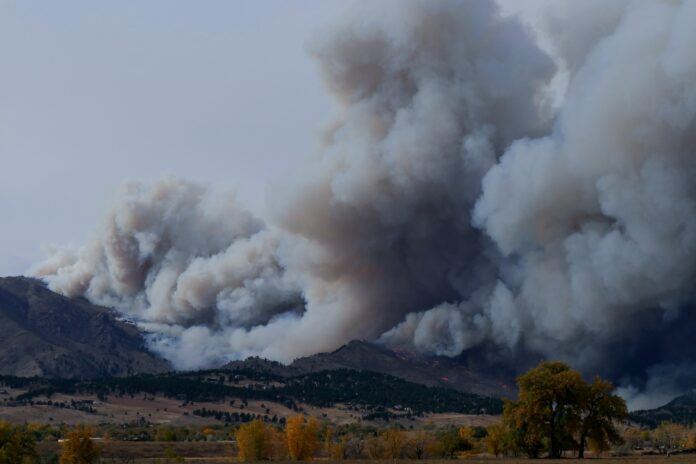
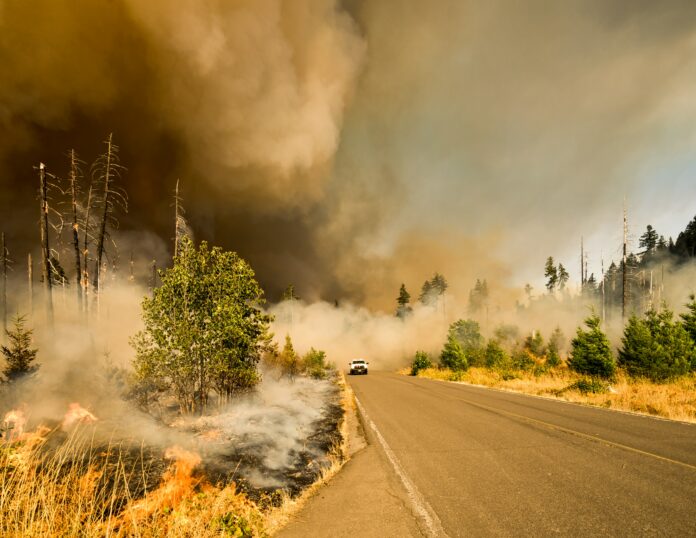
A stock photo of a forest on fire.
PHOTO: Matt Palmer / Unsplash

By: Eden Chipperfield, News Writer

Interdisciplinary teams from SFU and the University of Victoria (UVIC) will partner to study climate challenges and solutions. They will specifically focus on solutions for remote, rural, and Indigenous communities in BC. To do this, they received a grant of $1 million from the Pacific Institute for Climate Solutions (PICS). The team includes professors with health science and civil engineering backgrounds from both institutions. 

Their research aims to understand and address issues regarding how these communities are impacted by climate change. Project partners will investigate different policies within specific housing practices that aid isolated communities to fashion climate-friendly solutions while addressing the damage these communities face due to climate change. 

The project focuses on remote regions in BC due to the lack of attention these areas receive as opposed to densely populated major cities. Disasters such as wildfires and floods threaten the lives of the people living in these areas, as professor Nancy Olewiler discussed. These communities are being prioritized because of their smaller population size, as they may not have the resources or capacity to address the effects of these risks. 

Michael Sadler, executive director of the First Nations Housing and Infrastructure Council, added: We know we need to assist our Nations in creating housing that’s resilient and responsive to climate change.” 

Over the next four years, the project will focus on “designing practical frameworks to build climate resilience and capacity in these communities.“ In addition, the team will host a workshop for rural Indigenous communities occurring in May to introduce the purpose of the project. Rob Hill, acting director of Indigenous asset management at BC Housing, says they plan to share interests and goals such as to “amplify the voices of Indigenous peoples, by enabling communities and community members to articulate, in their own words, the climate changes happening in their territory. 

The project is also taking input from these rural communities to update building legislation and requirements to ensure future infrastructure is built with climate change in mind.

Ian Mauro, executive director of the PICS, highlighted the importance of Indigenous knowledge and how the solutions will be created using the combined knowledge of Indigenous peoples and academics. “We’re building knowledge that is holistic, integrative and respectful,” Mauro said.

Moooooom, people are making fun of Twitter Blue again!

0
PHOTO: greenwich _ / Pexels

By: C Icart, Humour Editor

Somewhere in the world, tracked by ElonJet, a vocal free speech advocate takes time off from complying with authoritarian governments censorship requests to call his mommy.  

Mom, you don’t get it! It’s almost as embarrassing as that time users voted on my own poll to tell me to quit my CEO job! Sure, the company is now worth half of what I paid for it, but that doesn’t mean I’m not still a genius! 

No, mom! The only people who say my current valuation is high are haters! IT’S NOT FAIR! I’ve been busting my ass trying to make big changes to the company, and no one even wants to subscribe. I had to use Daddy’s emerald mine money — I mean, my own money that I earned from building all my companies from the ground up from nothing, to buy subscriptions for other people. And did they thank me??? No! They’re all going out of their way to clarify to their followers that they haven’t paid for it. A simple thank-you would be nice. 

What do you mean, what do I want you to do? I want you to make them stop! Everyone’s acting like I’m trying to give them cooties. I don’t have cooties, mom. I’m cool! Everyone knows I’m cool. They all saw the gun replicas and diet coke on my bedside table. 

THEY’RE. NOT. TOYS. They’re replicas. They make me feel strong, mom!

Yeah, I put the cans in the recycling . . . Can we please get back on topic? I’m basically being bullied for no reason. 

Oh my god, no, it’s not the same as when I made fun of the disabled worker. That wasn’t even my fault; how was I supposed to know he was actually disabled? You know what this is? It’s the “woke mind virus” that’s making people think they shouldn’t pay the price of one Starbucks latte per month so they can have NFT profile pictures. All these woke journalists just don’t get it! I’m so tired of explaining it to them that I changed my press email auto-reply to a poop emoji. Isn’t that clever, mom? It’s funny, right? 

No, no, it’s hilarious because — never mind . . . 

Yeah, I can bring some of the kids over for dinner this week . . . Yeah, yeah whatever, I can’t pronounce their names either. I gotta go; I just thought of another low-quality meme to post. 

There Are Hierarchies of Grief honours lost loved ones

0
A photo of Smokii illuminated by the sun in a field behind a blurred background of leafy trees. He is wearing a plaid Carhart button-up over a sweater with a white zipper. They are smiling calmly while looking into the camera.
@sweetmoonphoto on Instagram

By: Petra Chase, Arts and Culture Editor

There Are Hierarchies of Grief plunges into the way grief suddenly swallows you. The five-minute short film is part of the CBC Gem series, How to Lose Everything, which features five short films about loss. There Are Hierarchies of Grief was a collaborative project centred around Smokii Sumac’s poem, with the help of Indigenous creatives and elders with translation, music, and animation. 

Sumac’s spoken word poem begins with drawings fading in and out of blue hues, notebook lines, and a gentle guitar riff. Backed by a hopeful heartbeat, Sumac’s words and anecdotes tug on deeply universal experiences, like “the kitchen is the best place to cry.” The poem tackles the complexity and spectrum of grief with resilience, love, and acceptance.

Sumac is a trans two-spirit author and poet from the Ktunaxa Nation, which has resided in southeastern BC for more than 10,000 years. He’s currently pursuing a PHD at Trent University in the area of Indigenous studies. He’s also an SFU alumnus, having majored in English and minored in Indigenous studies. We chatted over Zoom about their latest project.

While Sumac honours all forms of grief, which can range from moving, to divorce, to a pet dying, there are some griefs that are “unimaginable.” There Are Hierarchies of Grief is dedicated to “mothers who lost children,” holding “space for the power and weight of that grief.”

Narrated by Indigenous poets, each film in the CBC Gem series is also spoken by the author in their Indigenous language. Sumac hopes that non-Indigenous people also listen to the Indigenous language versions of each film to “experience something new.” 

A Cree translator who worked on one of the films, How to Lose Everything: A Field Guide, spoke on how when speaking or listening to a language, “there’s a spirit of that language and it grows,” Smokii recalled.

Ya·qaqa’ki na ’a·kinmiyit. is the name of Sumac’s film in Ktunaxa, which is a cultural isolate language, meaning it has no genetic link to other languages. It’s also “critically endangered.”  

“In Ktunaxa, we say there’s no word for extinct in our language, so let’s keep it that way,” he said. It took two years of consulting with around 20 elders to produce the final product, many of them mothers who’ve lost children. Getting to work with them and make them proud was a “gift,” said Sumac. “Many of them still have fluency, but there’s not one authority on the language.”

The animation was made by self-taught Atikamekw artist, Meky Ottawa, and the instrumentals were produced by Juno award-winning Anishinaabe and Métis musician, G. R. Gritt, each bringing their own creative touch. Sumac sent them the poem, leaving it up for their interpretation. He emphasized the trust involved in this process, saying, “As a writer, it’s a very solo kind of career [ . . . ] To bring my work into this process was, at first, really nerve wracking.” 

“The first few times I saw the images I was overwhelmed with gratitude at my work being honoured in this way,” they said. “It created a whole new piece really; the poem, when you read it on the page, versus when you witness it in this way, there’s so much more happening and I think the visual allows for different audiences as well.” As for the instruments, Sumac said hearing those first bars brought tears to his eyes.

There was one particular moment in the film that felt deeply personal: Ottawa animated a polaroid photo of Sumac and their younger cousin, who passed away when they were young, swimming outside with mountains in the backdrop. It was an important moment for their family members to see. The sound of children laughing that accompanies the scene demonstrates the happiness that they felt in the moment. “Every time that comes on the screen, I feel like I’m honouring him,” they said.

It’s easy to dwell on the tragedy of grief and let it consume you. There Are Hierarchies of Grief reminded me of the importance of appreciating the good times, too. It showed me that happiness and sadness are not mutually exclusive; grief wouldn’t sting the way it does without love and joy.

“I know from experience that when we’re in grief, we can feel very alone,” they said. “And I hope that [the film] helps people who are in grief, that something touches them and allows them to recognize that they’re not alone.”

Watch There Are Hierarchies of Grief in English and Ktunaxa for free on CBC Gem’s website, where you can also watch the full series. Follow Smokii on Instagram at @smokiisumac and check out their website. Stay tuned for their upcoming podcast, ?asqanaki, which will feature other Indigenous creatives.

SFU has failed its student athletes

0
The SFU Stadium
PHOTO: Victor Tran / The Peak

By: Isabella Urbani, Staff Writer

SFU varsity teams have been making headlines this year for all the wrong reasons. Between scrapping the football program, to negligent management preventing swimmers from attending the National Collegiate Athletic Association (NCAA) championships — it’s clear SFU has left the future of their athletes as an afterthought. 

In February, SFU Athletics quietly issued a press release about the Lone Star Conference’s decision to forgo another contract with SFU’s football team. SFU was forced to move into the Lone Star Conference last season after their previous conference folded due to a lack of teams

But the biggest shock was still yet to come. Last month, president Joy Johnson announced “the end of SFU’s varsity football program” after the team was unable to find themselves a new conference — essentially, a group of teams to play with. Johnson referred to the decision as “difficult” and said “football is no longer a feasible sport for SFU.” 

What I find difficult is how the announcement was a trivial statement just longer than a Canvas discussion post. What Johnson said would be an adequate response if SFU had to cancel a few games — not an entire program.

The statement shows no regard for the dilemma SFU has put its students in. It only exposes the clear disconnect and apathy SFU has for the lapses in judgment it continues to make. If I didn’t know any better, I’d think it was a eulogy. More sentences were dedicated to talking about the program’s history than taking ownership over the reason why it’s not operating next year. 

If it had not been for the hard work of the 97 impacted football athletes and alumni reaching out to BC MPs, lawyers, and Hall of Famers, SFU wouldn’t have done the bare minimum of reaching out to a special advisor to “review future football opportunities for SFU” at a varsity and non-varsity level. 

SFU recently appeared in court on May 1, after a series of football players sued the school for a breach of contract. Athletes say SFU failed to provide players with the opportunity to play football and go to school like they were promised. Had SFU also chosen to tell players about the program ending earlier, they would have had more time to make a decision about their futures. If SFU is found liable, it will be forced to reinstate the program. 

Assuming SFU was made aware of Lone Star’s decision to forgo their contract ahead of time, why wasn’t there a better backup plan? This is an NCAA program, not a recreational team. Instead of forcing others to involve themselves, SFU should have reached out to USPORTS —  the league they previously occupied before becoming an NCAA school. 

While USPORTS’ current policy requires all members’ varsity teams to compete in the league, which SFU wouldn’t be able to do, SFU hasn’t even bothered to reach out to USPORTS to fill out a formal application to see if they’d make an exception. And until they do so, USPORTS’ hands are tied. At professional levels, teams have received exceptions for contract disputes. The Arizona Coyotes, a team in the NHL, was forced to play out of a college arena this season after the city where the arena was located declined to extend its contract. In the meantime, the Coyotes are in the process of finding a new rink. 

The BC Lions, the province’s professional football team, has even publically stated that if money is the issue, they will gladly offer assistance. However, even they are fed up with SFU. The owner of the team, Amar Doman, says he’s been unable to “get a response from SFU that is anything other than political.”

At this point, it’s pure negligence. SFU even hired a new special teams coach and offensive coordinator a few weeks before the program shut down. Why would you put someone else’s job security at risk if you were unsure whether or not you were even going to operate next year? 

SFU’s reluctance to cooperate with people who are trying to save the program feels as if they were looking for a reason to cancel the program altogether. If SFU can’t play this year, they should look for another conference and prepare themselves for next season. 

If the football team is reinstated at SFU, I can’t see how players could be happy, let alone trust the current athletic executives. The hastiness of SFU to even relay the news to athletes speaks to the need for a middleman. SFU football already has its own society made up of former alumni who work together to raise money and support athletes. It would be great to have alumni representation on the athletic governing board to represent student interest — because SFU isn’t. The university did what was best for themselves in this situation, forcing athletes to fend for the future they trusted SFU to take care of.  

Acting vice president finance and student services resigns

0
Photograph of the Student Union Building at SFU.
PHOTO: Kriti Monga / The Peak

By: Isabella Urbani, Staff Writer

Editor’s note: Rastko Koprivica, who was interviewed for this piece, is a former Peak contributor. The Peak has taken steps to prevent conflicts of interest or potential bias from influencing the article. 

Rastko Koprivica, the acting vice president finance and student services, resigned one day before the end of his term in protest. Koprovica cites a “severely flawed governance structure” and “hostile work environment,” among other complaints. 

Koprivica is not the first former SFSS executive to accuse the administration of harassment. In his resignation letter, Koprivica said he was a victim of “bullying and intimidation tactics,” and a “witness to other instances of bullying and harassment both in the Executive and outside.” 

In an interview with Koprivica, he reflected on how he was pressured by executives to vote in a certain favour. “If you disagree with folks on policy, you can expect to be singled out and made an example of. Members of council, including myself, would be told ‘If you don’t vote ‘X,’ bad things would happen.’”

To try to combat toxicity in the workplace, Koprivica said he attempted to suggest the SFSS executive committee involve SFU or a third-party specialist tomediat[e] relations,” but was unable to make anything happen.

Koprivica is also very critical of the SFSS’s governance model, referencing the resignation letter of a former vice president internal. Quoting her, she wrote, “popularity contest, disguised as an election.

“The SFSS Governance model is flawed as it expects, with little to no training, that Executives manage staff and the entire organization directly instead of just focusing on goals and advocacy,” Koprovica said.

He added that a “return to the standard model of student union governance where an executive director takes care of legal and HR issues would free up the Board to pursue advocacy positions that could benefit students; instead of getting tied up with staffing issues and legal problems with no experience.” Some of the advocacy issues Koprovica believes the SFSS should spend more time looking at are tuition costs, affordable housing options, and food security. 

Another allegation Koprivica is levelling against the SFSS is the mishandling of money. “Board members do not seem to understand that money doesn’t grow on trees,” he stated in his resignation letter, following up with on in his interview. 

“The SFSS would constantly doll out donations all while exceeding the budget and asking external organizations to donate to the SFSS,” he said.

He said if the SFSS would have “been more responsible and applied and planned long term, they would have never been in this financial position right now, which is such a shame as students need funding for services such as the legal clinic and clubs.” The SFSS has made new budget cuts to several committees including the equity, BIPOC, and academic affairs committees. 

In light of this information, Koprivica “forwarded all instances of financial transactions of a questionable nature to the Society auditors.” 

As of right now, Koprovica said the auditors have “escalated their investigations into financial misconduct” and “hopes the SFSS membership gets to see this report when it is done.”

In his resignation letter, Koprovica also mentions he was not made aware of a motion to recommend his censure two weeks earlier. Instead, he found out through public records, despite his attendance earlier in the meeting. The reason behind the censure recommendation was for “not respecting other executives. 

“People are required to be notified of any censure proceedings targeting them, and legal advice is supposed to be sought as well as the reasons communicated clearly. This did not happen at all,” said Koprovica, who believed members were being “deceitful.” 

He added that the recommendation was retracted and he received an apology. 

To close out his letter, Koprivica urged more students to vote in elections and is excited for when the “SFSS isn’t run by those only seeking a position to launch their future political careers but ran by those that truly care about the reason student unions exist.”

The Peak reached out to acting vice president Abhi Parmar for an interview, but did not hear back by the publication deadline. Vice president internal and organizational development Leonarda Ognjenovic declined to comment. 

The Teaching Support Staff Union votes in favour of strike action

0
A photograph of SFU’s Academic Quadrangle.
PHOTO: Gudrun Wai-Gunnarsson / The Peak

By: Saije Rusimovici, Staff Writer

With a vote of 94%, the Teaching Support Staff Union (TSSU) has decided in favour of taking strike action to improve working and learning conditions on campus. The TSSU represents over 3,500 workers “who teach and conduct research at Simon Fraser University” but are not considered faculty. This includes research assistants (RAs) and teaching assistants (TAs). 

Despite the fact that RAs are key contributors to SFU’s research endeavours, bringing in $171.6 million dollars worth of grants in 2021, SFU administration does not agree that RAs are entitled to employment and union protections. Similarly, TAs, who often play a large role in ensuring the academic success of students, are struggling to make a living wage. Some of the issues to be addressed through the strike action are: class sizes, workloads, benefits, pensions, and the rising cost of housing. 

“It is really disappointing how SFU has been dealing with the strike,” said an international student. “I wasn’t assigned any TA positions for the summer term, even though I should have priority. TAing is my main source of income and it is so sad to see my strike vote to be completely delegitimized by the university.” According to TSSU, SFU forced the union to meet at the Labour Relations Board in downtown Vancouver to avoid strike action, asserting “tired talking points” that are referred to as “objectively absurd,” such as “students cannot also be workers.” 

SFU has commented on the current situation, stating that while negotiating collective agreements is a complex process, they are “committed to reaching a fair agreement with TSSU.” The university intends to present a monetary proposal that will provide more support for graduate students and “fulfills [their] commitment to becoming a living wage employer.”

Bargaining will continue until May 19, 2023. If a deal has not been reached by May 19 at 4 p.m., the TSSU may take a second strike vote. If the TSSU decides to strike, they may notify the University after the May 19 date. Traditionally, during a job action, if an employer wishes to place pressure on a union while bargaining a collective agreement, they may decide to initiate a lockout which “occurs when the employer closes a place of employment or suspends the work to be done by employees in the bargaining unit.” 

Deep-dive into the Peakflix cinematic universe

0
ILLUSTRATIONS: Alyssa Umbal / The Peak

By: C Icart, Staff Writer

The Burnaby campus at Simon Fraser University is home to more than just asbestos, raccoons, and the avocado-egg. It’s also used as a movie set. But the true cultured people like me already knew that. Actually, I know so much about the movies filmed on this mountain, I have a fan theory: all the films shot on the Burnaby campus coexist in what I call the PCU (Peakflix Cinematic Universe). 

So, instead of studying for finals, I have completed the deepest of dives into the PCU. It’s time to show y’all what I discovered (and also fully made up. What? Theorizing requires imagination!)

The doctors
The PCU is full of high achieving scholars. At least eight movies filmed on the mountain have at least one character who’s a doctor. Coincidence? I think not! For all we know, they’re all colleagues. You cannot convince me that Dr. Connors from Agent Cody Banks and Dr. Lane from Underworld: Awakening have never run into each other at a conference.

He’s a 6 but used SFU as a filming location
Another key piece of evidence that connects various films in the PCU is their mediocre IMDb ratings. With a combined average rating of 5.6/10, it’s clear as day that I Still Dream of Jeannie, The Day the Earth Stood Still, and The 6th Day all share a universe. Hear me out: the space mission that Colonel Nelson is on in I Still Dream of Jeannie is probably to investigate the aliens responsible for the spaceship landing in The Day the Earth Stood Still. On top of that, the cloning technology used in The 6th Day is probably the exact same used by the alien in The Day the Earth Stood Still. I have no evidence of this, but how many cloning methods can actually exist? 

Change-makers
The PCU is full of fearless activists. For example, in Antitrust, Milo and Lisa pump their own gas in Oregon. That’s a crime. No, seriously, that’s a felony. But thanks to their unwavering commitment to standing up for what they believe in (the right to pump your own gas), on March 20 of this year, 22 years after the film was released, The Oregon House “overwhelmingly approved a bill to allow self-service options at every gas station in Oregon.”

Honorable mention 
If you squint real good while watching the car chase in The 6th Day, you can see people running. They aren’t running from Arnold Schwarzenegger’s reckless driving through the reflection pond, over the stairs, and across Convocation Mall (this part is true. Check it out here) — they’re running towards Nickelback. True story (or not). 

Suggested For You:

0
PHOTOS: Gudrun Wai-Gunnarson

By: Kelly Chia, Humour Editor

In the Mood for Reflection

The koi in the AQ pond have had enough of SFU students’ ignorance. One day, a kid looks down at the pond — really takes a look at it. Suddenly, they find the answers to the universe in the koi’s eyes. This beautiful debut film will leave you in tears salty enough to make your own reflection pond.

Illustration: A student staring down at the koi in the AQ pond.

Walk Like a Penguin

In this informational short series, learn to stay safe on the ice at SFU! Be sure to walk like a penguin, and hop like . . . an animal that doesn’t hop, ‘cause you shouldn’t jump in the winter. See? What did we tell you? Impeccable safety tips! For more tips, please check out our Road Reports and practice your calm breathing skills as you watch the snow pile on the road with no announcements from SFU. 

Illustration: Picture like, an airplane manual illustration, but with a person in a penguin pose, and a penguin right beside them.

Exploring the Mystery Sounds in AQ Lecture Halls

Have you ever wondered what the sounds above your lecture hall are? So have we! Watch this documentary on the mysterious sounds students hear above them as they sit during lecture. Just a janitor doing their work, or something more sinister?

Illustration: Student with a question mark bubble, looking up as the ceiling above them rumbles

Mask On and Off

In this fun film based on SFU’s half-hearted — I mean, full-hearted — COVID-19 measures, we explore the reality of having such efficient mandates. Thorough methods of protection, like the vaccination surveys no one needed to verify their answers with, the lack of training with Zoom, and more are featured in this creative film.

Illustration: Two halves of a person’s face. One side has a mask, one does not.

Constructing My Heart

Do you believe love constructs itself with cement? We do. In this film, Sally Needsavalentine gets stuck in the scaffolding on campus — but like, in a fun way — and finds herself appreciating the architecture of SFU. Along the way, she finds the metal scaffolding winking at her! What?! Watch this creative love story unfold, brick by brick.

Illustration: A rom-com style illustration, a person smirking as they lean back against scaffolding. Their eyes are on the scaffolding, which is also blushing.

Hot and Cold

This is a story about tenacity. About willpower. And twenty sweaters . . . have we sold you yet? This quirky film stars Jiminy Jacket, a young man determined to get through four seasons in a day at SFU. Jacket is, of course, an exemplary student, and all should follow his lead. Just wear 20 jackets, and be prepared to take them off at a moment’s notice. We don’t have a temperature problem!

Illustration: A student with a determined face, wandering through SFU, wearing like, several jackets

The Real Advising was in You All Along

In this motivational film, Yu Onlyu determines that he, in fact, does not need the help of SFU Advising to get through the term. No, it’s fine if he doesn’t know whether he will ever get into his graduation course requirements! Because . . . the answer was inside him all along. And that’s the best answer of all, students!

Illustration: A student, looking starry-eyed, as they turn away from a monitor with the MySchedule screen.

143 Means I Love You

Wow. These two will make you shed a tear. After waiting for the 143 and realizing for the ???-th time that it isn’t running, Bonnie Bus and Clyde Crash forge a bond that could only be broken by . . . something like, really, really strong. Watch these two fall in love under the clandestine lights of Burquitlam station. 

Illustration: Two students holding hands. Behind them, the 143 whizzes by.

Tuition Tommy’s Tell-all

Hey folks! Tuition Tommy here! Tommy (he says you can call him that because you are friends!) has many things to tell you about your tuition. TL;DW? It’s all going to a good place, and it’s all good for you! Look, Tommy said so. No, that’s not secretly McFogg

Illustration: McFogg, but in a bowlcut wig, giving a thumbs up to the viewer with the title in Comic Sans.

Dear Member

Have you ever read an email and felt like throwing up rainbows? That’s exactly how we want you to feel after reading your inbox emails! Watch this exciting documentary tell-all about the passion we put into our communications. We’re transparent! Except when we’re not.

Illustration: A person staring lovingly at their computer, typing the words, “Dear member . . .”