Home Blog Page 178

Soak up spice n’ umami with this cold noodle salad

0
A photo of a bowl of noodle salad on a wooden table. The bowl has lettuce, tofu, mushrooms, and more vegetables.
PHOTO: Petra Chase / The Peak

By: Petra Chase, Arts & Culture Editor

This cold noodle salad exists in the middle of a venn diagram of everything you might look for in the perfect recipe. There’s NO COOKING involved (except for boiling the noodles), it’s easy to prep in bulk (add freshly-cut vegetables to serve), and it follows an easy formula that you can customize to your liking or whatever produce you have available! When I first made this, I was craving the cold noodles and sesame flavours of the Korean dish, japchae, but didn’t want to eat out, so I improvised with the ingredients I had on-hand. I’ve tweaked it a tinge over time, and now it’s one of my go-to’s!

The sponge-like ingredients, like tofu and mushrooms, steep in the tangy, umami flavour to make each bite mouth-watering. The texture of sticky sesame-seed coated rice noodles paired with hydrating cucumber and a kick of mint brings a refreshing touch perfect for hot summer days. This is such an easy way to get a variety of veggies in your system. Plus, it’s got plant-based protein and iron sources!

Ingredients (Makes 2–3 servings)

Base

Sauce

  • Sriracha (3–5 tbsps, depending on desired spice level)
  • Soy sauce (3 tbsp)
  • Sesame oil (1–2 tbsp)
  • Rice vinegar or lemon juice (1 tbsp)

Toppings

  • Sesame seeds
  • Mint leaves
  • Spring onion (also known as scallion)

Additional suggested components

  • Avocado
  • Tomato
  • Lettuce
  • Other vegetables as desired

Recipe

  1. Combine and mix ingredients in a large bowl. Add a few tablespoons of water, enough to coat the base ingredients.
  2. Cut your tofu puffs into quarters and separate mushrooms into individual pieces by cutting them from the base. Then, add to the sauce bowl. Make sure everything is coated in the sauce and let them soak while you continue the recipe.
  3. Boil the vermicelli noodles according to the package instructions. You may want to stir occasionally to avoid them sticking to the bottom of the pan. Once soft, strain and immediately run cold water over them to avoid clumping or sticking. Add them to the rest of the base ingredients with sauce once they’re no longer hot.
  4. Crush peanuts into small pieces using a mortar and pestle, or you can crush them under a can. Julienne the cucumber by cutting it into thin, long slices (almost like cucumber noodles — of course, this just makes for a cohesive texture but you can cut your cucumber any way you like). Add to and mix the peanuts and cucumber to the base ingredients, making sure to coat everything.
  5. Optional — add additional suggested components according to your preference. You may find you need to add more sauce to coat more ingredients. If you’re prepping this to eat for a  later time, you should add freshly-cut vegetables closer to the serving time.
  6. Serve with chopped mint leaves and spring onion, and sprinkle (or drench if you’re like me) with sesame seeds.

MP Patrick Weiler proposes M-83 to end old-growth logging

0
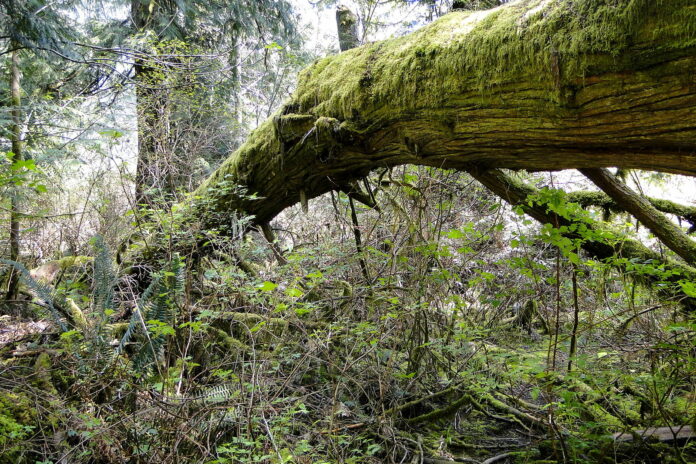
This is a photo of an old growth tree in a BC provincial park.
PHOTO: Wikimedia Commons

By: Isabella Urbani, Staff Writer

On May 3, Liberal MP Patrick Weiler initiated a private member’s motion, or M-83, to make forestry more sustainable in BC. The motion calls for three demands: the end of old-growth logging on federal lands, a ban on the selling of its exports, and a $27 million increase in the environmental and sustainability budget from $55 million to $82 million. 

Weiler, who represents West Vancouver, Sunshine Coast, and Sea to Sky Country, has been passionate about protecting old-growth forests ever since he took a camping trip to Carmanah Walbran Provincial Park when he was seven years old.

In an interview with The Peak, Weiler said it’s been “hard” to watch the federal and provincial governments cut down old-growth trees — trees 250 years and older — for the past 30 years. He noticed old-growth logging becoming a topic of concern in BC after the Fairy Creek protests in 2021. 

“I feel kind of powerless as a federal MP,” said Weiler. “So much of this is really up to the provinces, given that old growth, and forests generally are on provincial crown lands. But there are things that the federal government can do.” 

In 2019, the federal government promised that 25% of federal lands will be considered conservation areas by 2025, and 30% by 2030. Currently, only 13.5% of federal land is protected. 

Private member motions are the only way non-cabinet members, like Weiler, can have their motions debated in the House of Commons. All private member motions are ordered through a lottery. Motions can only move up if adopted by an MP higher on the list. With 70 motions already seen by the cabinet, Weiler’s M-83 motion, picked 144th, is 74 spots away from the front of the line. However, Weiler remains optimistic that the “cross-party support” his motion has received so far, will move him closer down the list.

Weiler referred to old-growth forests as, “integral to who we are as Canadians, but also, especially, for Indigenous peoples.” 

According to Weiler, Indigenous communities will be consulted on old-growth forests residing on Indigenous lands, and will receive compensation if said land becomes permanently protected under M-83. 

“This is not an issue where you have unanimity across Indigenous peoples,” said Weiler. “There are many nations that are involved in the forestry sector, where this is a key source of livelihoods, and then there are many others that are wanting to do everything they can to protect these old-growth forests.”

Aside from “natural heritage,” Weiler explained how old-growth trees are home to at-risk species like the marbled muralists and spotted owls, and are a “nature-based solution to climate change” because they absorb carbon. A study conducted at the University of Hamburg in Germany found almost 70% of carbon absorption occurs later in a tree’s life. So old-growth trees “are worth way more standing than they can ever be when they’re cut down.” 

The increase in sustainability government spending, also a part of the motion, is meant to transition companies dependent on old-growth logging to second and third-growth forests, which are forests that have been previously logged and grown back. M-83 will also stop the export of old-growth trees. 

It’s incumbent upon us to make sure the type of products we’re shipping are not contributing to the type of environmental degradation that is increasingly of concern for countries all around the world.”  

When a forest degrades, it’s unable to provide the same benefits it previously supplied to an ecosystem. “We have governments, particularly the European Union, that are very concerned about the imports of products that are leading to forest degradation,” said Weiler. 

But some forestry workers aren’t seeing eye-to-eye with Weiler’s vision. Joe Namath, project manager for the BC Pulp and Paper Coalition, said M-83 would “sink the industry” and “[destroy] rural communities” if passed. Weiler said otherwise, calling the response “emotional” and a “little bit ridiculous.” 

“To make the case that the only way the forestry industry can survive in BC, is by harvesting areas that are, by their very nature, finite and increasingly being lost, is to say that there is no sustainable forest industry in BC. And I reject that premise,” said Weiler. 

How to accept you will always be a passenger

0
Person standing in front of a terribly parked car smiling and giving a thumbs up
ILLUSTRATION: Hailey Gil / The Peak

By: Izzy Cheung, Staff writer

So, you’re a new driver looking for some advice. I’m here to let you know you’ve come to the right place. As a two-time learner’s license holder, I’ve been on the road lots of times these past few months — as a passenger, of course. Do you seriously think I’m going to drive? On these roads? 

My advice comes from the place of a certified passenger princess and observer of all things road. I’ve sat in many different cars, from friends’, to parents’, to Ubers — and lucky for you, I’ve collected the most extensive and thorough advice from a multitude of different vehicles. Here are a passenger princess’ tips on how to survive the daunting Metro Vancouver roads.

Driving means you either make it or BRAKE it

During my two stints with a learner’s license, one of the biggest problems I had was remembering which pedal was the brake and which was the gas. Don’t make the same mistakes that I did. To remember that the GAS pedal is on your LEFT, and the BRAKE is on your RIGHT, find a clear spot on both of your legs where you can write which pedal is which. 

Another tip: when you want to hit top speed, make sure you’re not pressing the brake. The result may be a vehicle malfunction — a real BRAKE-down, if you will. 

Parking is always a problem

Ever been to an event only to find that the allotted parking spaces are all taken up, forcing you to drive over a block away to park? Keep in mind, you’re the one with the vehicle — to you, any space is free space. Need to park in the middle of a ridiculously busy street? Park it there. Intersection stuck on a red light for a long time, and you want to duck into the nearby store to use their bathroom? Park it there. Tired and need a nap, but you’re stuck bumper-to-bumper on the freeway? Park it there. Anywhere can be a parking spot if you put your mind to it. Just be sure to put your vehicle in “park.” 

Red does not mean go 

Colours can take on many different meanings. The colour red symbolizes unbridled anger, fiery passion, and stop. Green stands for fertility, the lushness of nature, and go. Yellow means you’ve got to stop being indecisive. 

What to do when you start crying 

We’ve all been there before — you’re practicing driving with your parents, and you accidentally hit a curb or turn when you aren’t supposed to. Like Achilles during the Trojan War, all hell breaks loose. Your parent is berating your driving skills, and you’re sitting in the driver’s seat, hands clutching the steering wheel like you’re going to float away if you let go (dad, if you see this, I’m exaggerating — so please don’t get mad at me). If you’re going to cry, make sure you’re not driving while doing it. The tears will blur your vision, making it even harder to do an already impossible task. 

Face it, driving is tough. It’s not for everyone, but why not just bite the bullet? Fight through the tears and get your license now, or be like me and strap yourself to the passenger’s seat for the rest of your life. 

Horoscopes May 29–June 4

0
An illustration of a girl with long flowing hair. Astrological signs and stars shine around her.
ILLUSTRATION: Marissa Ouyang / The Peak

By: C Icart, Humour Editor

Aries: Like a true fire sign, you will burn if you do not forward this message to everyone on your contacts list. As in, you will get a sunburn with embarrassing tan lines because you will fall asleep on the beach with your book on your tummy. 

Taurus: Co-star says Tauri “just [want] to cuddle.” But if you don’t forward this message, all the cuddles you’ll give your Squishmallows will feel just a tiny bit off for the next 7 years.  

Gemini: You’re such a little social butterfly, aren’t you? Well, if you don’t forward this message, your coworkers will start hitting reply all on emails that definitely don’t need to be sent to everyone. Hope you have fun with all the extra people in your inbox!

Cancer: I hope this won’t make you too crabby, but if you don’t forward this message, your hands will get a little clammy every time you try to open a jar for the rest of your life. Wouldn’t that be annoying when you’re in a pinch!

Leo: Leo, Leo, Leo . . . You know what to do, just share this message with 10 friends! It’s that easy. But if you don’t, you will run out of toilet paper in every public bathroom you use for the next month. 

Virgo: Did you know your sign is “historically represented by the goddess of wheat and agriculture?” You know what this means, right? That’s correct. If you don’t forward this message, every loaf of bread you buy for the next year will be a little bit stale. 

Libra: It just now occurred to me that Libra rhymes with zebra. What does that have to do with anything? Well, if you don’t send this to 7 friends, all the shirts in your closet will develop stripes overnight.  

Scorpio: Are you looking for a new place to direct your passion? Consider forwarding email chains as your new hobby! After all, if you don’t, you will accidentally step on something wet while you’re wearing socks.

Sagittarius: Please show a little compassion and share this with all your chosen family. I would not like to alarm you, but if you don’t, you will hit snooze in your sleep and be late for class this week. 

Capricorn: Capricorn, you would be the GOAT if you sent this to your grandmother, who learned how to use social media just last week. I’m not quite sure what will happen if you don’t oblige, but I have a feeling it would be baaaaaad (get it?). 

Aquarius: You probably think you’re so clever. Riddle me this, then. Who’s going to constantly find themselves stuck behind slow walkers taking up the entire sidewalk for the next three months if they don’t share this with at least 11 friends? That’s right, it’s you! 

Pisces: Justin Bieber is a Pisces, and baby, baby, baby, you can make one of your besties feel like one less lonely girl by forwarding this to her. If you don’t, there’s a chance you’ll be transported to a 2010 Belieber’s bedroom, complete with a cardboard cutout and an assortment of Bieber-themed pillows.

SFU films to watch at the Vancouver Short Film Festival

0
A collage of a photo stills from each of the short films.
PHOTOS: Courtesy of Anastasia Itkina, Catherine Huynh, and Sean Brennan

By: Isabella Urbani, Staff Writer

Content Warning: mentions of pet death  

Cathy Huynh, Sean Brennan, and Anastasia Itkina were some of the SFU film graduates selected from over 250 submissions to be featured in the 13th annual Vancouver Short Film Festival from June 2–11. The event, which can be enjoyed online or in-person at the Vancity Theatre for the first two days, consists of 57 short films. By purchasing a ticket — which is $12 for students — attendees will be able to watch all the short films that are featured for that day’s screening. More SFU graduates’ work can be viewed online. 

The Peak had a chance to interview Huynh and Brennan about the inspiration for their films, the directorial process, and the months of preparation that went into their end products. 

Cathy Huynh, Adrift (2022)

Huynh began writing the script for the film in fall 2021. The thesis film debuted in May of last year alongside her SFU classmates, which included Itkina

The film, titled Adrift, tells the story of two best friends reconnecting after one of them returns home from school. Now in completely different places from where they were before college started, the duo try to rekindle their friendship by attending some of their favourite hang-out spots. As the night draws to a close, viewers come to see that the former friends have more in common than they once believed. 

Huynh said the film is both a personal ode to the “female friendships” in her life and a reminder of the “sad, yet normal, by-product of growing up, which unfortunately includes drifting apart from your friends.” She said it was her love for storytelling that led her to pursue filmmaking. She took inspiration from the Vancouver area for the film and was able to shoot scenes at Roundel Café and Fantacity, which the friends visit on their list of nostalgic comfort spots. 

Huynh’s favourite scene to film was done at Fantacity, a karaoke bar downtown. “Our team breaking out into song with “I Want It That Way” was definitely a set highlight! I’m super proud of this scene in particular, since it was one of those fulfilling moments where you get to see something you’ve been visualizing in your head for so long actually come to life.”

Huynh hopes viewers will be “affirmed” by watching the two leads in the film come to terms with how their lives have panned out. “It’s more than okay to not have your whole life figured out,” said Huynh. “Feeling like youre stuck in limbo is a collective experience that almost everyone experiences as a young adult.” 

As someone who has watched a best friend turn into a stranger in a matter of months, Huynh perfectly captures the silent battle between wanting to salvage a friendship and leaving things best unsaid. One of the more moving scenes in the film happens when the two main characters meet up for the first time at dinner and can barely hold a conversation, when just moments ago, in a memory sequence, they were planning their future together. 

Adrift will be a part of the final day of in-person screenings on June 4 at 4:15 p.m. More information about Huynh, including her 2021 film Caleidoscope, which appears on the CineAsian Films website, can be found online.

Sean Brennan, Holly (2019)

Brennan’s film Holly also taps into the intrinsic human experience: losing a loved one. The film, completely shot in black and white in 2019, begins with Holly’s owner, Olga, reminiscing about her pet’s life as she goes about her morning routine without her animal companion. To cope with the loss, Olga visits a therapist named Arlo, who goes to unconventional lengths to keep Holy’s memory alive, in more ways than one. When Olga comes to, she turns to a new coping method with the help of a newfound friend. 

Although Brennan began making films with his sister when he was 10 years old, and continued to do so with friends during high school, he originally was a sociology major at UVIC. Brennan says the loneliness and desperation Olga feels when her pet Holly passes away mirrors how he felt when he first moved to Vancouver to attend SFU. “That kind of isolating experience can make people more okay with maintaining toxic relationships,” said Brennan. 

He also shared how the inception of the film took twice as long to come up with than the filming itself. “What you don’t see when you watch this project are the endless notebooks filled with rejected ideas.” He explained the feeling of wanting to do something special, and being frustrated while thinking of ideas. “Eventually, I had to pick a project and ‘Holly’ had a script that got a really good response from readers.”

Shot in downtown Vancouver, the film has a montage of actual dog walkers Brennan saw on the street and asked to be included in the movie. Not only is it super endearing, but it illustrates the unique character of each dog, its owner, and the bond they share. As sweet as this moment is, Brennan’s film touches on the unsettling nature of the stages of grief, particularly focusing on denial, demonstrating just how blissful ignorance can be. 

Holly will be a part of the “After Dark” screenings on Saturday, June 3 at 8:15 p.m. All films featured in this screening will include unsettling themes that may be triggering, and or stories with dark elements and horror. You can learn more about Brennan and his projects through his Instagram, @hellothisissean.

Anastasia Itkina, A Week to Rosh Hashanah (2022)

The longest of the trio of films is Itkina’s A Week To Rosh Hashanah. Leading up to Rosh Hashanah, “the calendrical New Year” of the Jewish religion, David, the film’s main character, “develops an unusual disorder and becomes determined to put an end to it.” 

The Peak reached out to Itkina for an interview but did not receive a response in time for publication. 

A Week To Rosh Hashanah will be a part of the 5:30 p.m. screening on Saturday, June 3. More information about Itkina and her extensive producing projects, including Huynh’s film Adrift, can be found online.


Top 10 tips to be happy in Vancouver

0
Woman holding a cup and making a peace sign with her hand beside a red car
PHOTO: Bii Photography / Pexels

By: Saije Rusimovici, Staff Writer

  1. Don’t root for the Vancouver Canucks 

I get it your grandfather’s grandfather was a fan. You spent your childhood looking up to FIN, watching the playoff games in the background during dinner (though those days are long gone). You can’t help but feel the itch to wear the team’s merchandise even though the jersey you have in the back of your closet is from 1991 (oh, how we miss dear Pavel). I think we all feel inclined to want to root for our home team (or maybe we just want something somewhat interesting to do on a Saturday night). Still, the continuous letdowns make it difficult to continue to do so — wait, was 2011 really over 10 years ago? 

2. Get comfortable in the 1,000 sq ft apartment you’ll be renting out for the rest of your life 

Housing costs in Vancouver are outrageous. So, prepare yourself to still live in the apartment you thought you would temporarily rent while you finish your graduate degree long after you’ve baby-proofed things. I suggest looking up video tutorials like: “Maximize use of your small space,” and, “how to keep your small home organized.” Unless, of course, you plan on moving to Abbotsford (AKA Abbots-FAR) . . . 

3. Don’t live in Abbotsford  

Unless you’re making frequent US trips, there’s absolutely no reason one would want to go there. Aside from visiting the pumpkin patch every fall, there isn’t much to see. You’ll spend the entire drive there asking are we there yet? And the whole ride back, asking, why did we go there? You might even get torticollis from craning your neck out the window for any signs of modern civilization: a Cactus Club, a Starbucks drive-through, give me something! Don’t plan any trips to downtown Vancouver unless you feel like making it a staycation. 

4. Gas cards are the new currency 

Ah, inflation. Filling up my little FIAT 500 for nearly $70 leaves a bitter taste in my mouth. One of the main reasons I bought this car was to save a little money on gas. If you find someone who gifts you gas instead of flowers, that’s how you’ll know they’re the one. I’m adding gas cards to my wedding registry, my baby registry, my Monday, Tuesday, and Wednesday registries . . . and you should too. Still, I don’t think I’m driving out to any pumpkin patches any time soon . . . 

5. Dress for the weather 

As cliché as it may sound, an essential part of living in Vancouver is dealing with the constant rain. And spontaneous heat waves. And frosty snowstorms (is it really the holidays if the entire city hasn’t been shut down due to road conditions?) So make sure you have at least one waterproof jacket in your wardrobe (make it a SuperPuff if you really want to fit in) and a pair of clothes that are easy to change into in the back of your car. That way, you’ll be prepared if the forecast says it will be cold and windy, but half of the city has gone out to tan in the afternoon heat. 

6. Don’t apply to UBC 

There’s no need to go here. Seriously. I know, I know it’s a top research facility, or something or other. They have their own hospital there. They throw a few good parties. But hear me out. I know people who go to UBC who don’t even like their school. You practically have to drive across campus to get from one class to another. Not to mention that attending this school becomes your only personality trait.

7. Go to as many lakes as you can this summer (there’s nothing else to do) 

Since happy hour prices are what regular-priced items used to be two years ago, spend this summer by a lake of your choice: Cultus, White Pine, Buntzen — we’ve got them all, and the ocean too. This is a cheaper alternative to sipping a spicy margarita at an overpriced and overhyped restaurant. This is BC, after all. It’s time to explore the great outdoors (also, it’s the cheapest activity you’ll find in this city). 

8. Make friends with the wildlife 

There’s nothing like stopping at a red light on Burnaby Mountain and coming face-to-face with a deer (I swear they try to make eye contact just to freak me out even more). I’m all for embracing nature, but I have to admit, Bambi got a little too close for comfort there. Vancouver has so many wild creatures running around that it shouldn’t be too unexpected. My suggestion is to befriend as many animals as you can — leave some nuts for the squirrel circling your porch, offer a polite wave at the black bear sifting through your garbage, and take some time to introduce the family pet to the raccoon family that seems to have made up its lodging in your yard. What, did I take being friendly to your neighbours too far?

9. Grow your own produce (groceries are so expensive)

Want to start a herb box this summer? You’re going about this the wrong way. Herbs are relatively inexpensive to get at the store. What you really need to do is figure out how to maintain some strawberry plants (but do they even grow here??), or you’ll have more debt from grocery shopping than your post-grad education. Some fruit trees would probably be a good idea too . . . maybe you could consider farming life. I hear there are some great properties available in Abbotsford . . .

10. Wear a glass helmet like Sandy from SpongeBob

Not only will this offer protection from the wildfire smoke and the virus that shall not be named, but it’s also a stylish alternative to a mask! No more smudged makeup. PRO TIP: the helmet can double as a container when you inevitably forget to bring reusable bags to the grocery store and as a mug when you want to avoid the cup fee at cafés still charging it (sneaky, sneaky). 

CONFESSIONALS: I’ve been reading the same book for over two years

0
Pensive girl reading book in cafe holding a lollipop
PHOTO: Hải Nguyễn / Pexels

By: C Icart, Humour Editor

Hey! Don’t look at me like that. Yeah, that’s right, I can feel you judging me like my ex judged me, and my previous ex, and my previous ex . . . damn, I’ve been reading this book for a while. Listen, the book is good, and I refuse to DNF (meaning, Did Not Finish, if you’re not a pro reader, like me). I have simply been booked and busy. And by booked and busy, I mean the rise of short-form content has decimated my attention span. That does not mean I don’t remember what I’ve read. I do, at least I think I do; I’m not flipping the pages back to go check . . . 

Sure, the Queen was still alive when I started the book, and people still used vaccine cards. Sure, I started and completed a master’s degree since I first began reading the book. Suuure, Biden had recently been inaugurated when I started. Now he’s preparing to run again (Alexa, play Biden by Bo Burnham). But still, I read. 

All I have to do is open the book and read one word at a time. Rome was not built in a day, people! What’s the rush? I like to think I’m really getting to know the characters, soaking in all that world-building. How do you think authors feel when they pour their heart and soul into a manuscript for months, sometimes years, and you little overachievers read it in an afternoon and then harass them for a sequel? 

Yes, that’s right! Not only am I refusing to be shamed for my reading pace, but I’m also going to start shaming all of you little book-ish nerds. Oh, how the turntables! You don’t get a cookie when you read the book really fast! The author doesn’t give you a high five at the end when you finish an 800-page brick without closing your eyes a single time. 

Anyways, speeding is dangerous. Think about how many paper cuts I’ve avoided by taking my time. Don’t quote me on this, but I’m sure there’s a Harvard study out there confirming it’s a lot. And if there isn’t, maybe I should go to Harvard and do the study myself. What? Like it’s hard? The point is, I’m right. 

Hear me out. Some people have been reading the Bible their whole lives and still haven’t finished, so . . . everything happens in time. The sun is out, and the air quality is sometimes okay, so I will sit outside this summer and work on this page-turner. It’s true, I’m going to — fuck it, let me get the audiobook. 

Immigrants don’t need to “assimilate”

0
Two older women of colour laughing, while sitting on a park bench.
PHOTO: Dario Valenzuela / Unsplash

By: Michelle Young, Opinions Editor 

Content warning: mentions of colonialism

As far back as I can remember, I pushed down my Spanish. Whenever my mom picked me up from school in first grade and spoke Spanish, I quickly looked around to make sure no one was listening. Then, embarrassed, I would respond in English. I’m angry that I ever felt this way. When my aunt and uncle immigrated here years later, I understood what they were saying but could barely communicate with them. I had forgotten everything and I only learned to speak once again with years of practice. I felt sad I could barely speak to my own family, and it didn’t feel right to make them speak English to me. In the years I made an effort to relearn Spanish among my friends and family, I became increasingly frustrated with conversations around “assimilation.” 

Overhearing other people talk about immigrant groups and how they “don’t try hard enough” to merge into so-called “Canadian” society never fails to make me think of all the other hardships immigrants face here. People who have often uprooted their entire lives to come to Canada for an ounce of opportunity don’t need to earn the approval of those born here. There are many reasons immigrants come to Canada: it could be as a refugee, coming to Canada for a better quality of life, or simply looking for different work or opportunities. 

Something I would like to note is the politics around how we define immigrants, refugees, and undocumented people. The refugee and immigration process can take years, as the state judges whether someone is valuable or in crisis enough to “legally” migrate. These labels and definitions are often based on technicalities and shouldn’t be used to moralize anyone who is moving from their home. In this piece, I use “immigrant” as an umbrella term, but don’t want to discount the various experiences and reasons someone might come to Canada.

I’ve heard Canadian-born people point their fingers at groups of ethnic grandmas and grandpas, international students, or large families and complain about how speaking their native language is somehow exclusionary. Even in my own high school, speaking Spanish among my friends made people desks away, turn their heads and shame us about how we are excluding them and “should speak English.” I’m sorry, but if you’re not even sitting with me, you weren’t a part of the conversation to begin with. What’s the eavesdropping about? Why are you assuming I care enough to gossip about you in Spanish? 

There is a poor conception that immigrants have certain obligations to seamlessly blend into Canadian society. Stories in media and pop culture around immigration often revolve around hardworking immigrants who are struggling to make ends meet — and how that’s not fair because they were educated in their home country and since they are hard workers, Canada should welcome them with open arms. Part of this struggle often includes immigrants trying their best to learn English and fit in with “the culture” they are immigrating to. There are many things to dissect in how we view immigration, but the first thing I would like to examine is — what culture? 

According to Statistics Canada, “Vancouver had the second-largest proportion of immigrants, at 41.8%. Within the large urban centre of Vancouver, immigrants accounted for three-fifths (60.3%) of the population of Richmond and half (50.4%) of Burnaby’s population.” Some would argue Canadian culture is defined by influences of the British and French — but how can that be entirely accurate when Indigenous peoples, all who have different languages and traditions, were forcefully displaced? Culture changes over time, and that’s largely due to how people and populations change over time. We ourselves are currently changing the landscape of Canadian culture, and that’s a good thing. 

Despite the evident changes in demographics over time, there is a clinging to the idea that immigrants do not automatically “deserve” to come to Canada, but rather, have to work hard to come here and find their place in society. I would like to ask any settlers who hold this belief — why do you “deserve” to be here? Because you were lucky enough to be born into a country where your ancestors killed so many people they were able to establish themselves centuries ago? Indigenous families have been arbitrarily separated and split due to colonial borders and they are the only people who have a genuine right to this land. Yet, their culture was violently ripped away from them to “assimilate” into “Canada” too. 

Though it hasn’t been thoroughly studied, existing research shows Indigenous perspectives in opposition to Westphalian sovereignty, which “refers to the governance of bounded territory over which the nation state has supreme authority.” As immigrants, we are not bound to assimilation — but we do have a responsibility to learn about reconciliation and engage in Indigenous knowledge and learning. 

A person’s value is not equivalent to how hard they work or how much they could potentially contribute to society. The points system — which ranks someone’s education and skills — likes to pretend otherwise, but settlers are no more entitled to life in Canada than immigrants are. Immigrants typically need to work hard out of necessity, but their value shouldn’t be defined by that. Immigrants are inherently valuable, as people. Society holds immigrants to a standard of whiteness and capitalism which doesn’t acknowledge the colonial history behind this country. 

Immigrants shouldn’t need to abandon their entire language and culture to thrive here. If you’ve ever been to Richmond or Chinatown, these are wonderful examples of immigrant communities building spaces for themselves here. For me, watching other immigrant kids speak in their home language with their family was so much more comforting than watching white kids speak English. Doesn’t being “integrated” in society imply comfort in the people around you? That can’t happen if we are forcing people to whitewash themselves. We shouldn’t be pressuring immigrants to forget all the different aspects of their culture. Theres nothing wrong with holding onto traditions, customs, and languages and trying to find a space for that in your new home. Immigrants connecting with one another should be celebrated — not looked down upon. 

Little-known library resources at your fingertips

0
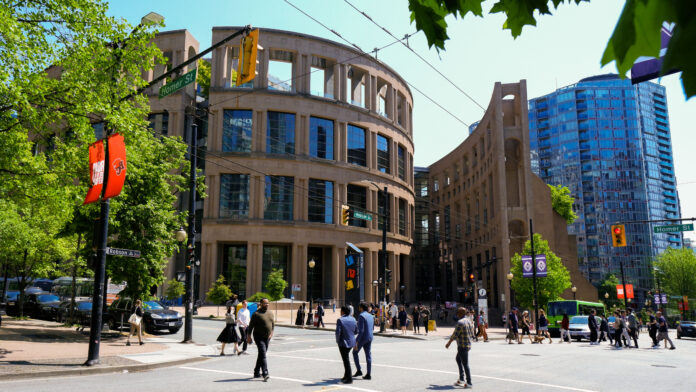
Photo of the exterior of Vancouver Public Library on Homer street on a sunny day with many pedestrians outside. The building’s architecture is a brown “rectangular box surrounded by a free-standing, elliptical, colonnaded wall.”
PHOTO: Manmeet Sagri / The Peak

By: Izzy Cheung, Staff Writer

Books, articles, and study spaces are the things that come to mind when saying the word “library.” However, the libraries around us have many more resources that often get buried beneath the piles of books. From board games to courses on Adobe programs, our local libraries have a wide plethora of resources ready for anyone to use, both online and in-person.

Vancouver Public Library 

Signing up for a Vancouver Public Library (VPL) card is as simple as can be: either register online for a temporary card, or go in-person to sign up for a full membership. A temporary card will give you access to books and digital media, while a full membership opens you up to additional resources, such as creation spaces, musical instruments, and internet and computer access. 

Inspiration Lab — a place to bring out your inner content creator  

Did you know that the VPL is home to the Inspiration Lab, a space dedicated to media creation? Here, you’ll be able to record, digitize, and create any sorts of media or content you wish. Along with the bookable sound booths, you can also borrow from their musical instrument collection, from acoustic bass guitars to glockenspiels. Perfect for budding musicians!

The VPL’s resource supply for digital media doesn’t stop there. Their Creation Stations provide users with access to animation and VFX programs, such as Adobe Creative Cloud, audio software like REAPER, graphic design and photoshop, self-publishing tools, and video editing programs. There’s simply too many to count! If you’re a newcomer to these programs, VPL also has online courses to help you learn the ins-and-outs of the programs. 

Picture-perfect publishing 

Looking to self-publish? No problem — the VPL can help you out. From their collection of websites to help you familiarize yourself with manuscript submission, to their publishing and self-publishing events, VPL leaves no page unflipped. Their publishing resources make it possible for anyone’s writing to end up on their shelves. 

A guide on guides 

Finally, the VPL’s guide on — well, guides — hosts an array of resources for various topics. Here, you’ll find information on Asian Canadian, British Columbian, and Indigenous history. They also have career and job searching information and sample citizenship tests to use for practice. The library provides  guides for book clubs, starting and running a small business, and a collection of resources to support displaced Ukrainian newcomers to BC. I could list the rest of the guides, but I recommend that you take a look instead at vpl.ca/guides

SFU Library 

As a student, I can’t tell you the number of times I’ve tried looking up articles to help with my research papers and gotten ones that don’t help at all. I tend to have problems finding the perfect route for my scholastic endeavors  — but after reaching out to SFU library for advice, I no longer have to!

Who better to consult for academic resources than the people who compile them? 

As students, we’re lucky to have free access to SFU’s vast stock of information and technology. However, physical appliances aren’t the only valuable tools included with library access. “The people who work at the library are such a huge resource,” Chloe Riley, SFU library’s communications officer told The Peak. “I always encourage students to come to the library (whether physically or virtually) for help with finding resources, doing research, citing, writing, and study strategies. We know some students feel intimidated or like they should ‘already know’ how to use the library — so I want to emphasize that we are not here to judge your level of knowledge or experience.” 

SFU library also has liaison librarians who cater towards specific faculties or departments, such as computing science or molecular biology and biochemistry. “They have deep knowledge and expertise with your discipline,” said Riley. “So you can reach out to them with your subject-specific research questions.” 

You can borrow anything

Being a student provides you with access to rent various equipment to suit your needs, including  phone and laptop chargers

The Fraser Library at the Surrey campus has a large collection of video games and board games that are available for a 21-day loan. 

The Media and Maker Commons at Burnaby campus “offers folks the opportunity to try out technology such as 3D printers, laser-cutter[s], podcasting and video studios, and embroidery machines.” Other equipment available for loan include laptops and hard drives, cameras and their accessories, tablets and game consoles, and even hand tools. Next time you feel the urge to help finish building the new residences on Burnaby Mountain, you know where to go for tools! 

Anti-procrastination research tools 

SFU library also has a wide variety of research tools to help you complete assignments. The assignment calculator lets you plan out the steps of completing assignments through an intensive, date-based research schedule. You can conduct research using the extensive list of research softwares, all of which you can download for free. Python tutorials and instructions on how to install it are also offered, as well as a citation finder to make compiling reference lists so much easier. 

Be a student — watch n’ learn!    

Using the curated programs provided by the library is a great way to improve your writing skills and learn more about your academic discipline. Workshops and consultations on academic disciplines such as writing, studying, and learning are a great asset provided by the Student Learning Commons. Additionally, the library’s Research Help team is always available to help you find resources, cite sources, or answer any questions you may have about the library itself. 

Finally, the library’s Criterion on Demand provides access to a variety of films from studios like Paramount Pictures, DreamWorks SKG, Sony Pictures Classics, and Warner Brothers. The next time you want to stream a movie, chances are that Criterion on Demand has it. 

“In the library, we are often the link between people and the information they need,” said Riley. “Finding useful and accurate information can be challenging in a world where the amount of information keeps growing and when there is such a huge amount of dangerous and misleading misinformation. A critical part of our work is to enable and empower students and researchers to be able to find information, to critically assess and engage with that information, and to create and share their own work — I feel really strongly about how important that is.” 

SFU celebrates 11-year anniversary as Canada’s leading fair trade campus

0
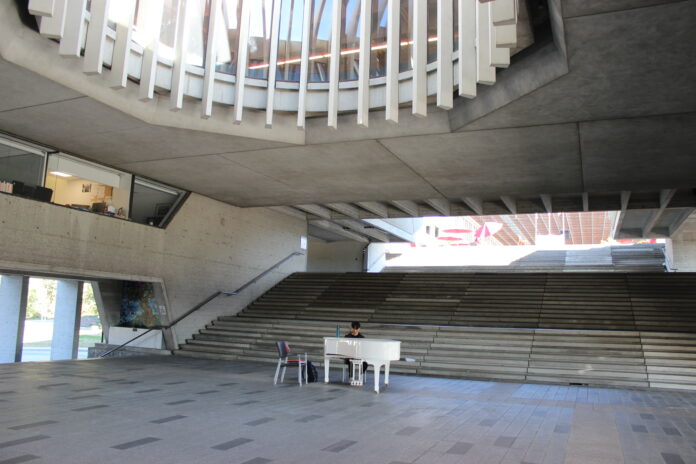
This is a photo of the SFU Burnaby campus. The staircase leading up to the convocation mall is shown where a piano sits. A student sits at the piano.
PHOTO: Gudrun Wai-Gunnarsson / The Peak

By: Eden Chipperfield, News Writer

SFU is the only public university in Canada to achieve Fairtrade Gold Status recognized by Fairtrade Canada and Canadian Fairtrade Network. A partnership between an educational institution and fair trade means having a liaison between farmers and consumers to facilitate dialogue, transparency, and respect between the SFU community and the farmers. 

The Peak interviewed chief commercial services officer Mark McLaughlin to learn more about being a fair trade campus. Being fair trade “requires that all your coffee shops on campus have fair trade products.” The first fair trade coffee shop on campus was Higher Grounds, an SFSS café, which inspired the first conversations regarding fair trade coffee being available on campus. 

However, the following challenges, including getting Starbucks on board, was a lengthy and challenging task: “It took many months. Two representatives from the university had to go down to Seattle a couple of times. And it was a long process. We needed to be more confident. And we said, ‘Look, we drew the line.’ We said, ‘To come on our campus, you have to serve fair trade coffee,’” McLaughlin expressed. 

Finally, in October 2012, Starbucks agreed to serve fair trade coffee on SFU campuses. McLaughlin accredits this thanks to the persistence of the commercial services team and SFU students on social media. 

“Fair trade [Starbucks] now is on all Canadian campuses.” McLaughlin declared this a win for the fair trade initiative and for the SFU community. Today, coffee shops on campus that serve fair trade coffee include Starbucks, Renaissance Coffee, and Blenz. 

According to McLaughlin, Tim Hortons, with one location operated by SFU Burnaby, is not certified Fairtrade. SFU commercial services have been in frequent conversation with the chain regarding how to make the switch. McLaughlin expressed how it is disappointing that Tim Hortons hasn’t transitioned to fair trade. He noted how “they’re trying to put on a front that they hold these Canadian values, [but] Canadian values are about the farmers, and equity with employees, and equity at the firm level.” The hope for these conversations is to continue with Tim Hortons and move forward with introducing fair trade coffee and tea on campuses. 

To achieve Gold Status, a university must meet baseline criteria, including standards for product availability, visibility, and education. McLaughlin expressed how the students involved in the Fairtrade Ambassador Program have wrought a ton of outreach to encourage coffee providers to switch or offer fair trade coffee. 

Recently, the ambassadors visited Highlands Elementary School and talked to students about the importance of fair trade products, farming, and farmers in the southern hemisphere. 

The Peak inquired how students become more aware of their consumption habits and purchases to include more fair trade products in shopping. He suggested keeping an eye out for the Fairtrade logo. “You’re actually making an impact for those farmers,” McLaughlin said. “Make an impact in your shop by looking for that fair trade.”