Home Blog Page 179

Who is exploited under the development of AI?

0
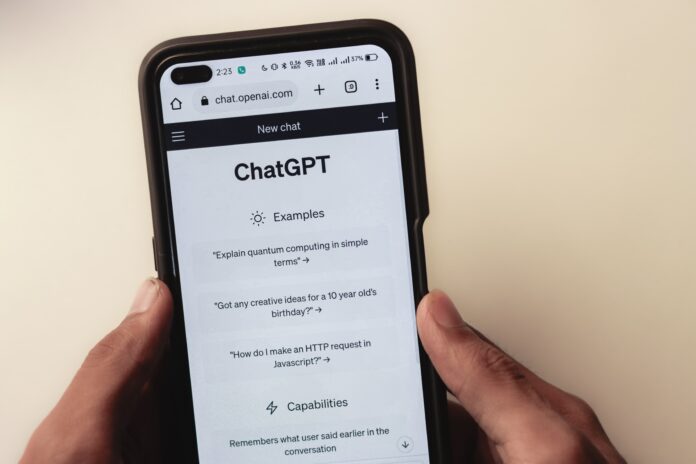
A screen with ChatGPT open.
PHOTO: Sanket Mishra / Unsplah

By: Kelly Chia, Editor-in-Chief

Content warning: mentions of sexual exploitation of women and children, revenge pornography, racism

What infuriates me about conversations revolving around artificial intelligence (AI) is how content we are with how much it costs us. The ethical risks associated with AI are treated far too casually. There are plenty of cases where artificial intelligence can expedite research, and overall improve our society. Sure. For example, The Peak previously reported on AI projects which help protect wildlife habitats. However, this technology’s lack of legislation and regulation makes it incredibly easy for bad actors to exploit, and there are plenty of bad actors. 

Too many AI enthusiasts treat these exploitations as an inevitability — and it’s not. It’s a consequence of loose regulations. Tech companies brush the costs under their carpets, hoping we’ll simply be content with admiring what AI can do. So, before we start fussing about dismissing this new technology as though it’s some Promethean miracle, we need to pay attention to the problems AI are currently causing with no legal barriers.

First, these machines aren’t sentient — however, they have faces and corporations behind them. These corporations can be held accountable. They develop AI by exploiting millions of underpaid workers, who are often recruited out of impoverished populations and paid as little as $1.46/hour after tax,” compared to “AI researchers” who are paid up to six figures. 

These workers are paid menial wages while undertaking tedious tasks, like combing through thousands of pages of data and labelling them. They have no job protections. Content moderators on Facebook from Sama cite being surveilled, and having to make decisions on graphic and disturbing content that are uploaded onto the platform in 50 seconds, or risk being fired. Similar stories exist across big tech companies like Amazon, where data labelers reportedly make less than a dollar an hour. These corporations purposely hire “refugees, incarcerated people, and others with few job options.” AI networks can grow at the rate they do because of this unimpeded exploitation. 

There are also environmental consequences unaddressed by the fast development of training AI. MIT reports that to train just one AI model would produce the equivalent of “more than 626,000 pounds of carbon dioxide,” and the cloud services storing that environmentally costly data now “has a larger carbon footprint than the entire airline industry.” In addition, oil companies like Shell are working with tech companies using AI to dramatically boost fossil fuel productions and profits by extracting gas and oil at a higher rate, even deposits previously considered too dangerous. 

In 2018, David Dao, a PhD candidate researching AI, alongside a cohort of contributors, started creating a list on how AI is being exploited. His list is expansive, and finds companies using AI to surveil, discriminate, and spread disinformation. 

Consider the program, Lensa. You may have seen it go viral last year for creating fairy-like avatars based on the users’ submissions of their likenesses. While that seems innocuous, the app proved to steal art, and has a tendency to sexualize and undress women — particularly racialized women. Lensa is trained and built using a large, openly accessible data set that scrapes images from the internet. This allows Lensa to indiscriminately steal art without permission, as even copyrighted images are legal to scrape in the UK and US. It also consequently means that, Lensa, and other AI models trained like it, inherit a dataset filled with descriptions and images of sexual assault, racist and ethnic slurs, and more.

Alarmingly, journalist Melissa Heikkilä, who is of Asian heritage, noted the app created far more sexualized avatars for her than her white counterparts. Further, it picked up on her racial features and hypersexualized them, even producing avatars that “appeared to be crying.” Heikkilä’s Chinese colleague also reported finding “reams and reams of pornified avatars.” This means anyone can generate non-consensual nude images of women and children with practically no obstacle. These explicit images can easily be weaponized and held against victims without their knowledge, harming their careers, personal lives, and welfare. 

These networks are both sophisticated and accessible enough that there are already thousands of examples and cases. In 2020, a cybersecurity company investigating manipulated media, found that an app had targeted and stripped the clothing of “at least 100,000 women, the majority of whom likely had no idea” and reported that many of these girls were likely underage. 

Let me reiterate: although some laws against revenge pornography and defamation could protect the victims, there’s no clear legislation punishing anyone from creating deepfakeblending your facial features with another body — pornography without your consent. 

Alongside this, there is a privacy risk for facial recognition apps to collect your stored data and sell it to third-parties. ExpressVPN remarks that Prisma Labs, the developers of Lensa, don’t specify what they do with user data. This means they could “share user data with advertisers, log file information, and register user information to gather data.” We should be wary of empowering such exploitative technology, especially when it’s marketed as a fun tool. Younger people are especially vulnerable to using, and being exploited by facial recognition apps. 

Dao notes that law enforcement makes frequent use of risk assessment AI technology, like this neural network learning to infer criminality using facial images. Although criminality based on facial features has been proven to be an ineffective tool that only aggravates racial discrimination, this technology still runs rampant. 

While this particular network is a university project, it’s not difficult to imagine how risk assessment technology could create a feedback loop where overpoliced people of colour are identified as criminals. In Wisconsin, Correctional Offender Management Profiling for Alternative Sanctions is a risk assessment computer program. It’s used by legal courts to determine the rate of recidivism based on a private algorithm. Notably, Black people were “77% more likely to be pegged as criminals,” even with no previous criminal history. 

You may notice how I’ve drawn attention to the hidden costs of AI development that hurt marginalized peoples the most. This is no coincidence. The utopia of AI may seem promising, but it’s currently being exploited by corporations on the backbone of millions of underpaid workers, to profit off of databases built on human biases. It’s unconscionable to let these details be incidental, folded under the false flag of human progress. 

It might feel helpless to fight against this, but remember our enemies aren’t amorphous, sentient computers. It’s corporations that can and should be held to legal scrutiny, and they are. 

In Europe, the EU Artificial Intelligence Act is being legislated into law after an open letter calling for pauses in AI development. This comes after Italy banned ChatGPT for a month, requesting actions like user data controls being more visible, opt-out options, a transparent privacy policy, and more, before lifting the ban. In the US, OpenAI CEO Sam Altman cautions that without regulation, the development of these technologies can easily impede on and compromise elections. Tri Ta R-Westminster, an assembly member in Sacramento, California, is pushing forward legislation to criminalize the use of AI to make and share pornography “using someone’s likeness” without consent. Writers in the US are striking to protect their livelihoods, and one of the things they are pushing is regulating AI to maintain their careers. Artists also recently took a class action lawsuit against artificial intelligence companies. 

Here in Canada, a man was sentenced for creating child pornography using AI technology in April 2023, a case which paves a precedent on which we can punish wrongdoers. We’re currently waiting for Bill C-27 to pass. Introduced in June 2022, this bill promises to regulate AI systems by surveying and enacting risk assessments of the technology. Although it has been criticised for being vague because it doesn’t provide specific guidelines on how to govern AI, this is not a bill that can wait until 2025 to be enacted into law. Still, we have the ability as citizens to pressure our Senators and Members of Parliament to bring the issue of artificial intelligence and Bill C-27 to Parliament. 

This is an ongoing fight, and that fight underscores the ethics we need AI to be grounded in to proceed. While there’s so much good AI could accomplish, we must be diligent in preventing the harm it can inflict, too. I also recommend going through lists like Dao; this technology is unimpeded in the harm it can cause, partly because people don’t understand the extent of what it can do. Education empowers more people to stand in solidarity against these corporations. 

Dialogue series highlights diversity among BC youth

0
This illustration is of a group of diverse cartoon people standing in a semicircle, talking to one another.
ILLUSTRATION: Hailey Gil / The Peak

By: Petra Chase, Arts & Culture Editor

Editor’s note: Jocelyn Wong, who was interviewed for this piece, has previously contributed to The Peak. The Peak acknowledges and has taken steps to prevent conflicts of interest or potential bias from influencing the article.

On May 6, Alice Mũrage wrapped up an online dialogue series for youth titled “identity and belonging in multicultural BC.” The three-part series was held in collaboration with BC Black History Awareness Society, Dr. Maureen Kihika, and SFU’s Morris J. Wosk Centre for Dialogue. The event featured Indigenous storytelling, poetry,and breakout dialogue sessions, along with other activities. 

In 2020, Mũrage began research on BC’s Black population: she published the African Ancestry Project’s findings, highlighting the nuances among people of African ancestry in BC. This was especially crucial for the health sciences field, where Mũrage is pursuing her PhD at SFU. She emphasized Black people often get viewed as a “monolith” in data collection. The project snowballed to the development of World Within, a report detailing the personal stories of project participants.

Regarding World Within, “We realized there is a group of people we are missing: the youth,” said Mũrage at the event. While the limitations to consent barred them from including minors in their research, she explained this dialogue series was a way to include this demographic in the conversation. They opened the series up to Indigenous and racialized youth, as the theme of the event was relatable to a plethora of racialized identities. “They shared how great it was to have a space where they felt understood and could speak freely about their experiences.”

The Peak reached out to Jocelyn Wong, administration and research coordinator at Morris J. Wosk Centre for Dialogue and co-host of the event, to learn more about how the report inspired the dialogue series. 

“As young people actively develop their ideals and values, they need safe and inclusive spaces to reflect and engage in conversations about the diversity of Black people in BC and Canada’s multicultural values,” said Wong.

This concluding three-hour session was the first in the series that was open to the public “in hopes that educators would also attend, witness, and implement the recommendations shared by youth.” The participants consisted of 40 youth, between the ages of 1519. 20 Black youth and 20 from “Indigenous, Asian, and other racialized backgrounds.”

“Young people, especially those in high school level, are often left out of important conversations at a time [when] they are trying to understand who they are and their place in society,” said Mũrage. “While schools are important avenues to guide young people in this process of reflection, many things are left out of classrooms and they are left to navigate many life issues on their own.”

The panel discussion opened the floor to youth to speak on their lived experiences, like the “bicultural dilemma” where a bicultural person feels they don’t belong in one culture or another. Hypervisibility, the experience of feeling “overly visible because of one’s race or ethnicity” was also discussed, in addition to many other topics. 

They also suggested potential solutions to improve the experiences of racialized students in public schools. While the Toronto District School Board recently voted to introduce an anti-Islamophobia strategy in schools, BC has introduced an “anti-racism action plan.” Wong summarized some of the additional measures for equity in public schools that were discussed, such as “proper trauma-informed training for teachers and staff on issues of diversity” and “recognizing bias.”

“This series really highlighted that dialogue is critical for supporting youth in three key ways: building community and belonging, fostering empathy and understanding, and empowering youth to create positive change,” said Wong. “Youth have a lot to teach us about the world, and by listening to their experiences and insights, we can learn and grow as individuals and as a society.”

Mũrage also shared her thoughts with The Peak: “The project has, in a way, built on a sense of community; many people appreciated knowing ‘I am not alone.’ 

“I hope that the Worlds Within report inspires thoughtful dialogue and action on various themes highlighted in the Worlds Within report, and particularly on addressing racism and on nurturing spaces where everyone belongs.”

SFU football loses injunction

0
This is a photo of a football sitting in the middle of an empty football field.
PHOTO: Dave Adamson / Unsplash

By: Isabella Urbani, Staff Writer 

On May 11, the BC Supreme Court denied an injunction made by five SFU football players to reinstate the school’s varsity program. SFU announced the termination of its 57-year football program on April 4. This came as a result of the school failing to find a new conference after its previous one elected to not renew their agreement. 

The injunction would’ve allowed players to temporarily stop SFU from cancelling of the program, at least until the case’s verdict. The grounds of the injunction argued SFU hadn’t provided its players with enough notice about the closure of the team’s program, thus, causing a breach of contract. 

Prior to the injunction’s filing, SFU announced they were hiring a special advisor to look into alternative ways football could operate at the school on a “varsity or non-varsity level.” A month later, immediately following the court’s ruling, SFU hired Bob Copeland of McLaren Global Sports Solutions to make a recommendation for the program’s future. Copeland’s report is set to be released this September

TSN sports broadcaster and SFU alum Farhan Lalji explained to The Peak that without the lawsuit, SFU might not have ever “legitimized” how they would go about determining the feasibility of the program. 

“When [SFU] first released the idea of a special advisor, I think we all understood that it was there to deflect attention from the university and the administration to delay things until December, when there was, essentially, nothing left to save,” said Lalji.

Since Copeland’s hiring, SFU president Joy Johnson, has referred to the school as having “no place to play in NCAA football.” Previously, when she announced the end of the football program in April, she noted they have no place to play at all. Lalji said this shift in language, although small, is indicative that the program may have started considering non-NCAA options, which was originally thought to be too much of a challenge

“In the beginning, it was, ‘There’s no solution. There’s nothing left for us to do,’” said Lalji.  “Whereas now, [SFU has] pivoted and said the NCAA history of the program is over.” 

This change in language appeared in SFU’s latest video statement, released the same day the injunction verdict was announced. In the video, Johnson explained SFU had remained silent throughout the injunction because it would have been “inappropriate” for the school to make a comment while the trial was being held. 

“It was a choice to choose not to speak publically at all,” said Lalji. He is  less interested in what SFU decides to say, and more interested in whether or not the school “engage[s] meaningfully” with players and SFU alumni, like himself, going forward.

“The unfortunate part of it all is, the delay that got us to this point has created a lot of uncertainty for the athletes. A lot of them are gonna have to make decisions to leave, and they don’t want to do that.” 

In spite of the injunction being denied, SFU football players were able to regain access to their locker room during the trial, which had been previously inaccessible.

“I think the players needed something concrete,” said Lalji, who believes the reopening of the dressing room will act as an “olive branch” from the school to the players. 

This gives [players] a little bit of short-term hope. There are some other targets we’ll put out in front of the administration, and hopefully, as the adviser gets deeper into this process, the university will move forward on some other action items also.” 

As for the program’s reinstatement, Lalji is hoping the door to exhibition games, or low-stakes practice games, is still open. “I don’t believe [players] would get a full schedule of games. I think the university is very reluctant to fully reinstate the program until they’ve gone through their process, and a full schedule of games would indicate reinstatement.” 

By at least playing exhibition games during 2023, while the special advisor sees if the program can run competitively the following season, the football team will be able to “capitalize on momentum,” said Lalji. President of the SFU Football Alumni Society, Mark Bailey, has said an independent exhibition schedule has been crafted by alumni and is currently awaiting approval.

While the cancellation of the program most readily affects football students, Lalji wouldn’t be surprised if the impact extends to both the remainder of the athletic department and the students themselves. He explained it wouldn’t necessarily be a bad thing. 

“I think right now you should be considering, even if you’re not a student-athlete, if you want to go to this university, given everything I’ve heard and what their process looks like. 

“In the end, I think the athletic department and the school itself will be better off for it, because it might change processes going forward altogether.”

Daily Viagra user votes in favour of anti-trans legislation

0
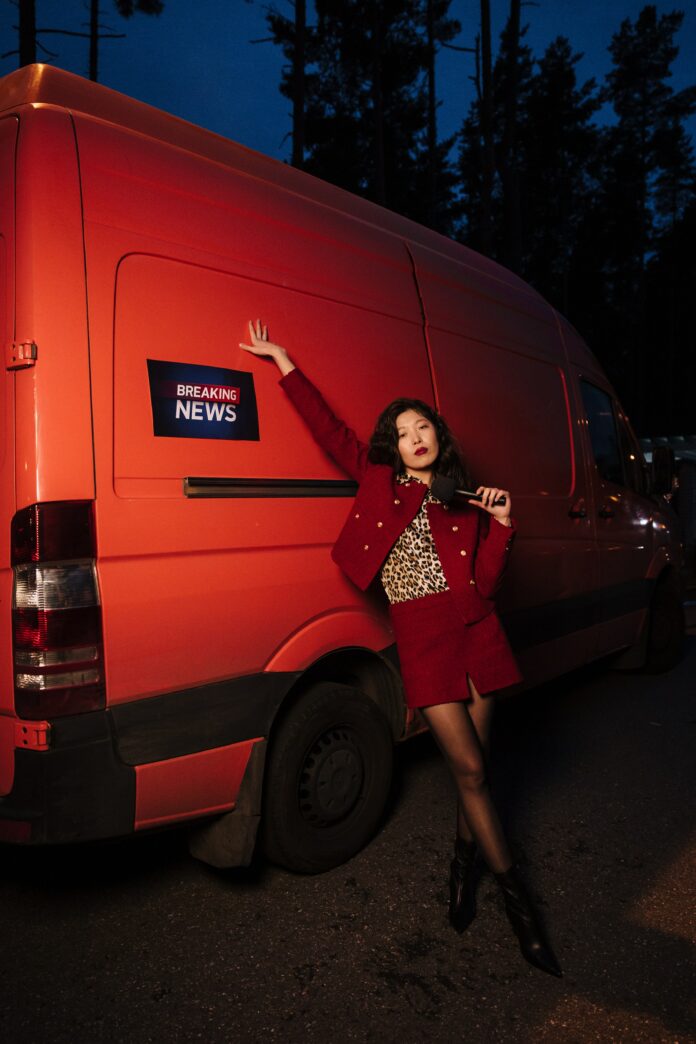
A woman in a red blazer and skirt standing near a news van
PHOTO: cottonbro studio / Pexels

By: C Icart, Humour Editor

News anchor: Breaking news — a local cisgender man who does gender-affirming things all the time is adamant when it comes to preventing trans individuals from doing the same. I, your local reporter, had the opportunity to interview Mr. Big Bigot and hear more about this frankly confusing affair. Take a look at the footage. 

Clip of Mr. Bigot waving a transphobic sign riddled with spelling errors in the street because he has nothing better to do.

News anchor: What are you trying to achieve here today?

Mr. Bigot: I want to stop the drag queens from reading to school children. 

News anchor: Why?

Mr. Bigot: Because if anyone had ever read to me growing up, I wouldn’t be the man I am today! 

News anchor: Fascinating . . . Would you say you’re jealous of the drag queens?

Mr. Bigot: I would prefer not to answer that. 

News anchor: But Drag Queen Storytime is not the only thing you’re against.

Mr. Bigot: No, I’m against all of it! Drag queens, transgender, cisgender . . .

News anchor: Aren’t you cisgender?

Mr. Bigot: Absolutely not! I’m not cisgender. Being cisgender would require me to know what that word means, and I like to stay away from big words; they scare me. 

News anchor: So, you’re afraid of the LGBTQIA2S+ acronym because the number of letters intimidates you? 

Mr. Bigot: Next question. 

News anchor: Would you be able to tell our viewers at home what exactly gender-affirming healthcare is? 

Mr. Bigot: I would not.

News anchor: But you are voting to ban it. 

Mr. Bigot: Correct.

News anchor:  Why is it important to you

Mr. Bigot: It’s not. I saw a man on TV once get really worked up about what the M&M’s have been wearing these days, and I decided to get worked up, too, because I don’t like to be left behind. Normal people don’t have to affirm their gender. 

News anchor: Is this why you’re letting your toupée slowly slip off your head? Is this part of your bold stance against gender affirmation? 

A strong gust of wind blows off Mr. Bigot’s toupée. He runs after it, cursing. The camera cuts back to the news anchor in the newsroom. 

News anchor: Wow. Well, you heard it here first, folks. If you’d like to share your thoughts on Mr. Bigot’s big “it’s cool when I do it, it’s a problem when they do it” energy, use #LiteracyIsGay on all social media platforms. Until next time and remember, reading is what? FUNDAMENTAL. That’s right, take care. 

Summer fashion trends

0
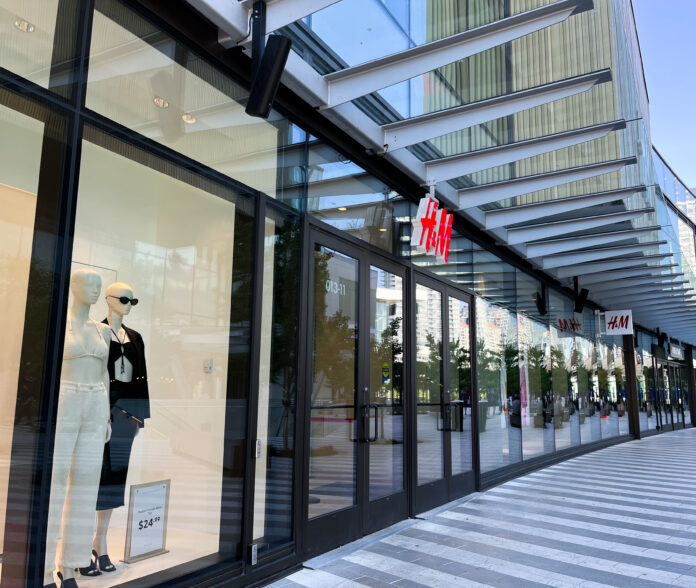
A modern-looking storefront exterior of H&M on a bright day. The display window features mannequins dressed in black and white monochrome outfits.
PHOTO: Shirlyn Zobayed / The Peak

By: Saije Rusimovici, Staff Writer

While fashion trends and fads are manufactured by fast fashion corporations to keep us buying, it can still be fun to join in on nostalgia for past eras, find second-hand dupes of popular items, and experiment with fun aesthetics. As we prepare our wardrobe for hot weather, here’s what I’ll be sweating in!

In: Coastal aesthetic 
I might carry some personal bias towards this particular trend, but you have to admit there is something about styling outfits to carry you from hot summer days into breezy West Coast nights. Your colour palette is built of periwinkle, ivory, and soft beige; think white linen pants, loose-fitting collared shirts, and slip-on sandals covered in sand. Flowy paisley prints also go well with this look. Take a trip to your local thrift store for affordable finds. Throw a straw shoulder bag packed with a worn saltwater-kissed paperback book, fruit-infused water, and a large pair of sunnies over your shoulder and head to the nearest body of water. And don’t forget to bring your sunscreen a Coastal Legend never forgets to take care of their skin.

Out: Low-rise pants
I know we were pushing for the Juicy Couture era to make a comeback for a while there, but do we really want it? I’m all for a good early 2000s trend, but jeans and cargos that fall below the belly button can be uncomfortable. There’s also something to be said about the unhealthy body standards, promoted in the emphasis on flat stomachs, accompanying this trend — body types do not “trend.” Don’t let any standard stop you from rocking them if they’re your style, but personally, they’re just not for me. I’ll be sticking to snug, high-waisted cutoffs this summer!

In: Tote bags
I’ve been obsessed with tote bags lately. What’s not to love? They come in a variety of sizes, styles, and colours that show off your interests or personality, like retro fonts, local organization logos, or your favourite pop culture icons. Not to mention they’re so practical and versatile. Tired of carrying around your laptop in a clunky backpack? Need a flexible spot to store your packed lunch? Grocery shopping after class? Throw it in the tote bag. I’ve made more trips to the library this month than in the last year, all because of how satisfying it feels to walk home with my tote bag full of books. Be sure to check out local sellers like kellybeanstudios and Cold Tea Collective to support small businesses!

Out: Platform shoes
Is it just me, or are these shoes unbearably uncomfortable? Personally, if my feet are going to be that far off the ground, I’m wearing heels. Platforms are heavy and impractical to walk in. These shoes can also draw attention away from the rest of your outfit. For some, this might be the goal (I, too, like to have my shoes in the spotlight sometimes). If you’re strong enough to endure this clunky shoe, props to you!   

In: Sheer & sparkles
Only Taylor Swift fans could turn an album into a fashion trend. The Midnights aesthetic is all over Pinterest and summer music festivals like Coachella. These outfits are built around dark, moody, mysterious basics in black, navy, or purple, and studded with shimmering flecks of silver and gold. Glitter and rhinestones dance on silky skirts and mesh tops, “making the whole place shimmer.” Check out a tutorial by Alexandria Layne on YouTube to learn how to make your own version of Taylor’s iconic top. Wear it on a night out as the sun sets and the night sky settles — you will feel absolutely bejewelled

Out: Baby tees 
These cropped, tight t-shirts with phrases like “baby” and “cherry” come from the cute aesthetics of the late ‘90s and early 2000s — but they’ve lost their charm. The mass production of these mini shirts by fast-fashion companies like Shein have ruined the nuanced loveliness of the baby tee. Not to mention they are often poor in quality and last barely one machine wash (forget about putting them in the dryer, unless your intention was to make a napkin). A great alternative to achieving a cutesy, flirty aesthetic is to hunt down genuine vintage second-hand or crop shirts that may be too long. Or, like me, you could forego them all together because they’re just not your style!

I’m (not) sorry I go the speed limit

0
Photo of a car
PHOTO: Aditya Chinchure / Unsplash

By: Olivia Visser, Copy Editor

Content warning: mentions of car accidents and death.

Those who drive to class on Burnaby Mountain are hopefully aware of the 60 km/hour speed limit. Yes, I’m talking to you, in your shiny blue BRZ with an even shinier N plastered on your rear bumper. Or, maybe you’re one of those retro Civic drivers with (definitely illegal) window tint and a ridiculous fart can muffler. Either way, I’m not intimidated by your following speed. I have a laundry list of reasons as to why I’m not interested in speeding up that mountain, and none of them involve your convenience.

Speed limits exist for legitimate reasons. Yes, they can feel rather slow for the experienced driver, but they’re designed to protect everyone on the road. The chance of a driver dying in a frontal crash is 60% at around 80 km/hour, and 85% for a side-impact. The risk of a pedestrian dying from a car moving 64 km/hour is around 80%. This is well below the average speed I’ve observed from most vehicles on Burnaby Mountain, which is concerning considering the number of cyclists that frequent this road in the warmer months.

Speed limits are for everyone’s safety. I’m not putting myself in harm’s way because you’re running late. Minimizing deaths on the road should be paramount when your lifetime risk of dying in a car accident is 1 in 112. Given that driving is commonplace in many people’s daily lives, risk desensitization is typical. It’s healthy to have an awareness of the dangers associated with driving — this is natural, and will protect you and those you share the road with. As with most risky activities, following safety precautions and having a low risk tolerance can only benefit you. 

Burnaby Mountain is not a highway. It’s a massive hill with wide turns, cyclists, pedestrians, and, most dangerously — people driving at drastically different speeds. Do you really think you’ll be able to slam on your brakes quickly enough at 100 km/hour when the speed-abiding vehicle in front of you needs to stop suddenly? I know you’d like to think your answer is yes, because you’re just a better driver and your car is good enough for that. You go on thinking that, and tell me how it pans out for you in the long run. 

Again, I’m not bothered by your reckless tailgating antics. You’ll be at fault if you rear-end me, and we both know damn well that Burnaby Mountain is frequently patrolled by police carrying out speeding checks. Why would you want to risk losing your brand new license to arrive somewhere two minutes before me? Hell, if I know — but I’ll see you at the next red light, pal. 

The Skytrain’s oldest track being revitalized with $35-million

0
This is a photo of the Skytrain on the Expo Line. The picture is taken of the outside of the train, at an oncoming angle.
PHOTO: Wikimedia Commons

By: Eden Chipperfield, News Writer

The Expo Line is receiving a $35-million upgrade. It is the oldest track in Vancouver’s Skytrain system, initially constructed for the 1986 Vancouver Expo. The update is funded half by the federal government, and half by TransLink. 

The purpose of the upgrade is to replace the running pads and reduce the noise pollution for residents in the area. They will also “ensure the ongoing safety and reliability of the lines,” said fisheries and oceans minister, Joyce Murray, at a press event on May 12. 

The update comes just two days after a letter to the editor published in the Burnaby Now newspaper by a concerned resident who described the noise that comes from the Skytrain as “unbearable.” The letter was then posted on the r/Vancouver subreddit, which resulted in over 150 comments from Vancouverites agreeing with it. Many were calling for action from TransLink to reduce noise pollution. One user commented: “My Apple Watch constantly gives me noise notifications when riding the older [ . . . ] trains, even with noise-cancelling headphones. The highest was 108 dB between 22nd Street and Edmonds station.”

In 2018, TranksLink compiled a report on Skytrain noise, offering solutions such as replacing the rail with harder steel and improving rail grinding techniques. Replacing the 20.2 km requires approximately 24,000 rail pads. 

TransLink reported, “When the program is fully implemented, the Expo Line will be able to move 17,500 passengers per hour per direction,” for a total of 35,000 passengers. This is in comparison to the 25,000 passengers the Expo Line moves per hour presently. The line update will move 300% more passengers when the project is completed. 

TransLink CEO Kevin Quinn told reporters at the press event on May 12 that rail replacement is already underway between the Commercial-Broadway and Nanaimo stations. The whole line will be completed in three other phases: Royal Oak to Edmonds station, Edmonds station to 22nd Street station, and Joyce-Collingwood station to Patterson station. 

The project will occur over the next four years and is to be completed by 2027.

BCCDC and SFU health sciences discuss food insecurity in Asian communities

0
This is a photo of the inside of a food bank. No people can be seen. There are many shelves that have labels such as “pasta” “tomatoes” and “protein” and they also read “take one.”
PHOTO: Aaron Doucett / Unsplash

By: Izzy Cheung, Staff Writer

To celebrate Asian Heritage Month, SFU’s faculty of health sciences and the BC Centre for Disease Control collaborated to bring students a virtual event on “Food Insecurity in Asian Communities.” This event included a panel of community leaders who combat food insecurity in Asian communities.

The panel of speakers was made up of representatives from four local organizations: Ahmad Zeividavi, the executive director of the House of Omeed; Celyne Asnani and Anita Lau from Yarrow Intergenerational Society for Justice; Danison Buan, founder of ReFood; and Tara Flynn of SFU Food Pantry. Each spoke at length about their respective organizations’ impact in the community as well as ways in which others can contribute. 

The panellists were asked a variety of questions on the significance of cultural foods. Asnani highlighted how culturally-appropriate food can be “something that reminds [immigrants] of home,” which allows them to find “a sense of belonging” in a foreign setting. 

While food banks may try to offer diverse food selections, Flynn noted “there’s no possible way to provide [ . . . ] all variet[ies].” Zeividavi compared food banks to the “one size fits all” misconception: food banks are not always mindful of diverse cultures that cannot eat certain meats or produce. 

Buan noted food insecurity is sometimes a “hidden” issue because most Asian cultures are hesitant to ask for help. He added all cultures are different and that working with different communities will require different approaches. “You have to understand, each culture is different,” Buan stated.

Lao noted, “Once they notice that you are willing to help, they are very, very open and willing to tell you how they want you to help them.” 

Zeividavi also found the communities served by House of Omeed behave differently. He cited that within the communities they serve, asking for help is “a major issue.” This is because “they don’t want to be ashamed,” he elaborated. “After all, it’s a shame and honour culture and that really plays into it.”  

Dignity plays a big part in the House of Omeed’s food distribution model, according to Zeividavi. “Our model is a shopping experience,” Zeividavi clarified. “Each family at our facility gets a credit [ . . . ] they come in and shop from our store.” 

“[The shopping experience] really resonated with our guests,” he explained. “That has been helping their dignity.” 

The situation is similar with university students. “There’s a lot of shame around not being able to feed themselves,” Flynn said. “Most often, they’re just coping [with food insecurity] by skipping meals.” 

Many communities within Metro Vancouver are impacted by food insecurity. As demonstrated by the speakers, there are many different ways to support the organizations that help combat food insecurity. This can include lobbying for more equitable policies. 

Affordability is a problem stressed by both Asnani and Buan. “A lot of the insecurity out there is more tied towards the level of income you have,” Buan shared. He noted finding a solution “comes down to [addressing] a lot of these affordabilities.” 

“The one thing that comes up all the time is about how expensive the rent is  [ . . . ] it’s not really affordable for a lot of the low-income seniors that we work with,” Asnani discussed. “I think the government needs to do a lot more than what they are doing now.”  

When asked for any concluding thoughts, Buan urged people to get involved in the conversation. “Having these kinds of discussions and having this safe space where we can discuss and share our ideas and build that awareness,” Baun said. “That’s the first step.”

Why I love sitcoms

0
Photo of Jess Day, Nick Miller, and Cece from New Girl.
PHOTO: Courtesy of 20th Century Fox Television

By: Saije Rusimovici, Staff Writer

For some people, the forced laugh track that follows every bad punchline in sitcom history makes them cringe. To me, it’s the lullaby that lulled me to sleep on the nights when anxiety was high and it was difficult to stop my thoughts from racing. Hearing Joey and Chandler’s familiar banter while watching Friends, or stifling laughter when Mitch and Cam got themselves into an awkward situation on Modern Family, made it feel as though my problems were slipping away with every episode. 

Since childhood, sitcoms have brought cheer into my house on even the worst of days. A day home sick was spent nestled in a cocoon of blankets, comforted by the soothing drawl of Full House or New Girl. At dinner time, my parents would stream a variety of their favourite ‘90s sitcoms while we ate to mitigate the stress of a long day at the office. Not only did watching these shows together put everyone in a better mood, but they brought our family together through lighthearted jokes made by chummy characters that had begun to feel like friends. Sitcoms offered a temporary escape from whatever problems we were dealing with in our everyday lives. 

Sitcoms are often criticized for relying on the same tropes that can be outdated and distasteful. It’s necessary to recognize these patterns when consuming any televised content, especially those in older shows from the ‘80s or ‘90s, because they serve as a reminder of society’s age-old prejudices. It should also be noted that sitcoms can be a powerful and approachable medium used to bring attention to important issues in society through humour. 

Abbott Elementary, created by Emmy-award winning writer, producer, and comedian, Quinta Brunson, follows the endeavours of a group of passionate teachers navigating a predominantly Black community in the Philadelphian public school system. The mockumentary centres on the life of Janine Teagues (played by Brunson), a Black second-grade teacher determined to make positive changes at her school — but rarely does everything go to plan. A hilarious cast of characters make up the rest of the school staff, supporting each other as they navigate daily life as educators. Not only is this sitcom funny, but it’s centred around real-life issues that are likely relatable to elementary school teachers and staff navigating the trials that come with being involved in the public school system. 

Humour can make major life stressors and day-to-day problems feel very relatable. Used in the right way, humour also has the potential to heal. The phrase, “laughter is the best medicine” is true. According to Dr. Grace Tworek, PsyD, laughing has significant health benefits such as contributing to stress relief, strengthening social bonds, and bettering heart health. With that being said, it’s no surprise winding down with family and friends to watch a funny sitcom makes us feel good from the inside out.

My arduous journey to fight flies

0
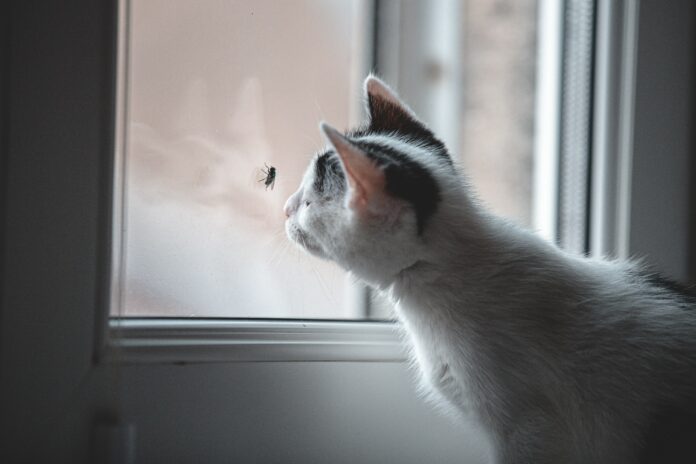
Cat staring at a fly on a window
PHOTO: Anna Hinckel / Pexels

By: Kelly Chia, Editor-in-Chief and Enemy of the Flies

I’m just an ordinary gal with an ordinary dream: to punch every fly I meet in the face. I admit this dream has no rhyme or reason, much like a fly’s existence. No, I am not being dramatic. Just imagine your perfect summer: delicious sunsets spent on boardwalks, lapping at cheap ice cream. Now imagine the fly: a creature that has made a career of providing the worst ASMR as it gets into your personal space, then headfirst into a pile of garbage. Absolutely horrifying. 

No, I will not provide any scientific proof of this behaviour as that would force me to research flies. Really, the proof is in the proverbial and literal (garbage) pudding. So what’s a girl got to do about these absolutely ordinary feelings? Make a grand strategy to fistfight flies with every perturbing 30-degree day. I am detailing my exclusive plan to you. Now you, too, can fight the flies for the low, low price of the 2 minutes and 53 seconds Grammarly says it takes to read this: 

The method of zoom

First, I had to train to become faster than the speed of sound. I had a hypothesis on how to achieve this with my frail mortal body. I considered the tiny fly, who evaded my swats like a bumbling, graceless butterfly. I envisioned myself as its superior alpha and began humming. In these moments, I imagined myself as a butterfly or a moth to assert my dominance. Then, I extended my arms outward behind me and ran like I could catch every fly, ever. I was positive this shocked and dazzled every fly from even perceiving me and had defied the laws of physics. I’m just so legendary. 

For maximum effect, I have found that attaching two portable radios to my hips for maximum bzzzzz really sells my alpha-fly persona. I couldn’t see any proof of this, but I knew I was so fast that I could collect rings in a dazzling cobalt-blue blur! 

GOTTA GO FAST! TO BE BETTER THAN THE FLIES!

Know your enemy

If I dared to fight the flies, I had to know their weakness. I had to, and I shudder to say this, become a fly. I was already buzzin’ around, so I just had to get into the mindset of an extraordinary fly. I returned to my 2014 Tumblr days — a harrowing experience — and visualized myself as a trash lover. It was difficult. Visions of the proverbial salt rife in ranked first-person shooter games filled my head as I meditated on what it was to be a hater, like a fly. To keep myself in character, I muttered, “garbage,” lowly to myself to really sink into the mind of the fly. 

Ultimately, I did not find this method very effective.  I am too emphatic to lower myself to being fly-like. Next one!

Communicating your feelings

Okay, say you want to try a more pacifist route. I envy you, as I do not share your patience or kindness, nor do the flies. Here are a few key phrases I have learned in the last few days of studying how to be the best fly-fighter™. Note that in my benevolence, they all include the word “please.” 

Raising one hand to wave hello: Hello, please go away now.

Waving your hands in a fluid motion: Please enjoy my dance of hands as you go away.

Making a heart-shaped gesture over a garbage can outdoors: I love your home; please stay there.

Making a thumbs-down gesture over a garbage can indoors: I love my home; please go away.

Raising two fists, bouncing your feet*: I am pleased to engage in mortal combat at this time.

*This last phrase will usually cause the fly to flit around you and leave your presence, but may cause it to return to taunt you further, as they do. 

As I write this insightful list for you, I wonder out loud if flies really deserve this much scrutiny and whether I would know peace if I just left them alone. I mean, they are just bugs inhabiting this planet like me, and it’s not their fault that they like garbage since we are making it — GET OUT OF MY EARS THIS INSTANCE, YOU HEATHEN!