Home Blog Page 165

This week at SFU

0
two soccer players captured jumping up to headbutt the ball
PHOTO: Paul Yates / SFU Athletics

By: Isabella Urbani, Sports Editor

Monday, September 18–September 24

Home 

Thursday, September 21: volleyball vs. Alaska Fairbanks in the West Gym (7:00 p.m.)

  • 1–1 against Alaska Fairbanks last season.

Saturday, September 23: volleyball vs. Alaska Anchorage in the West Gym (7:00 p.m.) 

  • 1–1 against Alaska Anchorage last season.

Away 

Monday, September 18–Tuesday, September 19: women’s golf at Saint Martin’s University Invitational in DuPont, Washington

  • First competition of the season.
  • Finished first on day one of the invitational last season.

Thursday, September 21: women’s soccer vs. Western Washington in Bellingham, Washington

  • 0–2 against Washington last year in the regular season. 

Friday, September 22–Saturday, September 23: men’s golf at Saint Martin’s University Invitational 

  • First competition of the season.
  • Finished first at this invitational last season. 

Saturday, September 23: cross country at the Bill Roe Invitational in Bellingham, Washington

  • Men’s and women’s teams looking to improve last season’s second place finish in Washington.

Saturday, September 23: swimming at Biola (California) (1:00 p.m.) 

  • First meet of the season.
  • Failed to compete in the championships last season after breaking a participation bylaw.


The Rundown (September 3–September 13)

Women’s soccer 

  • Beat Dominican California on the road 1–0 on Sunday, September 3. 
  • The lone goal of the game was scored by midfielder, Kate Cartier, and assisted by midfielder, Alyssa Clark. Goalkeeper, Sarah Loewen, earned her first win and second consecutive shutout of the season.

Record: 1–0–1

Men’s soccer 

  • Lost 20 to No. 25 Chico State (California) at home on Thursday, September 7.
  • Lost 10 to Sonoma State (California) at home on Saturday, September 9.

Record: 22

Volleyball 

  • Finished 22 at the APU/CPP Invitational in California from Thursday, September 7Saturday, September 9.

Record: 5

Canvas to ban phrases “I agree with you” and “jumping off what you just said”

0
Dialogue bubbles of all shapes and sizes. Some bubbles have phrases in them (“echoing what you said” “piggybacking on that idea” “I agree with that point”).
ILLUSTRATION: Alyssa Umbal / The Peak

By: Chloe Arneson, Peak Associate

SFU News —-

In a groundbreaking move that’s set to change the way we communicate with our fellow students online, Canvas has unveiled its new chatbot to rid academia of dreaded copycat commenters. 

Are you tired of staying up all night to devise a creative response for your discussion boards only to see later that five other students received full marks by telling you how much they agreed with your position? Well, Canvas’ new bot, EchoChamber, has your back!

Does this sound familiar to you? 

“Just to echo what you said about the discussion we had earlier in class, I think it’s important to remember that there is a certain kind of duality in this conversation that is not often acknowledged, and it’s key to understanding the differing perspectives blah blah blah.” This plagiarism detection software promises to put an end to all things “circling back to your first point” and “to piggyback off of that.” 

As you know, it’s hard to keep up with weekly readings. But you don’t do it just so someone else can take the top 50 most used words in class conversations and hot-glue them to each other. But how exactly does Echo put the ban in banter? This digital enforcer patrols the app’s discussion boards with the eye of a watchful hawk, swiftly identifying copycat comments. Echo will leave students friendly yet embarrassing reminders under their posts. Some of the bot’s featured phrases include: “You’ve got a voice worth hearing! Tell us what you think” and “It looks like someone else cooked here.” 

It’s important to remember that being boring is just as valid as being quirky. EchoChamber does not prevent users from agreeing with their classmates. It simply calls them out when their point starts sounding like they fed it through a word scrambler. 

The developers have announced that this new feature will launch by the end of the month, so there’s no more need to worry about carrying a bunch of freeloaders through their degrees. This revolutionary new technology is ready to help you showcase your academic brilliance on the discussion boards nobody really reads anyway! 

EchoChamber does not guarantee that your lukewarm take about SFU’s removal of hand towels from residence will impress your PoliSci professor, just because it’s original doesn’t mean it’s intelligent, try reading the textbook.

Venba is a heartwarming love letter to a Tamil immigrant’s experience

0
An illustration of an Indian mother and son sitting at a table in a house. The mother is wearing a red saree with a henna tattoo on her hand, and the son is feeding her.
ILLUSTRATION: Courtesy of Visai Games

By: Izzy Cheung, Staff Writer

I’ve always believed a great game is characterized by the way it engages the player physically, mentally, and emotionally. Most video games tend to capture players with elaborate plotlines, dramatic effects, and competitive battles, but Venba awakened my emotional state with a reflective narrative that carried out nostalgic themes — it was so emotionally engaging that I actually cried a couple of times while playing. 

The narrative video game created by Abhi, a Tamil immigrant living in Toronto, and Toronto-based Visai Games, was launched on July 31. It follows the story of a young Indian mother — the titular character, Venba — as she adjusts to life in a new country while trying to keep cultural traditions alive. Playing this first-person cooking game will allow you to step into Venba’s shoes and experience the bittersweet emotions of “first-generation immigrant parents and their assimilated children,” while learning to cook delicious South Indian dishes, like Idli and Puttu. As charming as the pink, purple, and blue animations may be, Venba’s greatest strength lies in its sentimental storytelling. 

The game begins with Venba (the player) and her husband, Paavalan, looking for jobs as new immigrants from Tamil Nadu. As the game progresses, it explores the growth of their son, Kavin, through the eyes of his mother. Acts of deciphering handwritten recipes of various Indian dishes and cooking them are woven within the narrative of an immigrant mother and her second-generation son. Recipes from Venba’s mother are provided at the start of cooking each dish, though parts are often smudged or torn away, prompting players to figure out the best solution themselves.     

Cooking the recipes in first-person allows the player to feel the frustration and excitement of making dough too watery or perfecting a recipe. It took me a bit of time to get used to executing the recipes, as I was playing on a laptop, but once I figured it out, I felt like I’d just solved a complex puzzle. The “dish” levels are relatively easy, progressively getting a little more difficult with each one, and the steps are simple — they only really require players to drag the mouse or click buttons. 

Venba does an excellent job of making the player feel like they’re stepping into their childhood home when entering Venba’s virtual kitchen. The soft plucks of an acoustic guitar’s strings welcome players into a home filled with framed family photographs, colourful cultural artifacts such as artistic masks, and Tamil words of endearment sprinkled into conversation. As Kavin grows up, players watch alongside Venba as he begins to reject Tamil culture in favour of fitting in with his surroundings; despite this, Venba continues to cook recipes with the love that only a mother could give. This was the most poignant part of the game for me. 

Stepping into the kitchen as Venba brought me into not only the world of the video game, but the world of my mother as well. I followed Venba and Kavin’s story as if it were my own — every lovingly home-cooked meal that Venba offered her son reminded me of my own mom’s culinary habits. While it may not bring the intensity of a video game filled with lively battles, Venba tackles themes of cooking, culture, and family that are sure to invoke more than just hunger from its players. 

Available on PlayStation5 and Xbox Series and One for $14.99 or Nintendo Switch and Steam (not playable on Mac) for $16.99. 

Bright-er Side: Bridges for animals

0
A deer in a forest
PHOTO: Federico Beccari / Unsplash

By: Michelle Young, Opinions Editor

In the midst of raging wildfires, a pandemic, and increasing inflation, it often feels like the world around us is collapsing (and it kind of is). The effects of climate change are creating deteriorating conditions for the surrounding wildlife and destroying their homes. It’s very easy to feel hopeless in this timeline, but something that has been easing my mind lately is the existence of bridges for animals to cross roads safely. 

It brings me so much joy imagining bears, penguins, and boars crossing bridges on their little paws, flippers, and hooves. They have places to go! These aren’t just regular bridges either, but built as overpasses over highways and tiny tunnels to blend into the natural environment. These bridges can even include passages for fish to swim through.

They are built beautifully, and reflect a desire to coexist with wildlife in a way that accommodates them. These bridges save the lives of many animals and allow them to migrate freely, when they might otherwise be harmed by oncoming traffic. This is a step forward in respecting the wildlife around us, and ensuring their safety. The existence of this infrastructure makes me feel hopeful for the future, like maybe we’re doing some things right, after all.

BC Coroners Service report shows increasing concern over drug-related deaths

0
This is a photo of an ambulance, driving down the street with its emergency lights on.
PHOTO: Jonnica Hill / Unsplash

By: Eden Chipperfield, News Writer

Content warning: this article refers to substance-related deaths. 

July was a critical month for British Columbians, as outlined in the BC Coroners Service’s data report on deaths involving hazardous substances from August 22. The report stated 198 individuals died from toxic drug supply in July, adding to the quickly rising fatality count from the beginning of 2023

The BC Coroners Service stated in their report there have been 1,455 fatalities in the past seven months. This timespan marks the highest levels on record since the initial public emergency of toxic drug deaths was announced in 2016

To further understand the severity of the coroner’s report and how the public emergency affects residents, The Peak connected with Jack Farrell, a PhD student in SFU’s department of criminology. Farrell is engaged in the research project, Imagine Safe Supply, through the Canadian Drug Policy Coalition

“The criminalization of drugs has led to an unregulated drug market that facilitates drugs being contaminated with highly potent substitutes (such as fentanyl, and fentanyl derivatives such as carfentanil) and other toxic adulterants,” said Farrell. He added this “has not only failed in every measurable way to reduce harms to people who use drugs, it is a primary cause of the staggering and preventable loss of life we are seeing today.”

Farrell also addressed a significant finding in the report data, quoting: “‘There is no evidence that prescribed safer supply is contributing to unregulated drug deaths.’” He noted this piece of information deconstructs the argument created by many politicians and reporters, who wave off the proposal for safe supply. 

Another highlight in the report, as noted by Farrell, is that the “drug toxicity crisis is not localized to any specific community but affects people across generations, occupations, and locations.” 

When inquiring about Farrell’s experience working on the Imagine Safe Supply project, Farrell responded: “Safe supply works by providing a known and consistent supply of drugs, so people do not have to access the unpredictable and deadly street supply,” he said. “Our participants expressed a range of health and relational benefits from accessing safe supply, including reduced anxiety, re-engaging in family relationships, finding meaningful employment, maintaining stable housing, engaging in less survival crime, experiencing less withdrawal and infections, and reporting an overall better quality of life.” 

In 2016, BC declared a public health emergency due to the loss of life surrounding hazardous drugs. They were the first in Canada to announce the crisis in April 2016. When the announcement was released, there was a “30% increase from the year before (2015).”

In 2022, the toxic drug supply took the lives of approximately 2,383 people in BC. “The overwhelming majority of these deaths were preventable if the government acted appropriately and listened to the needs and solutions, given time and time again by drug user groups such as the Vancouver Area Network of Drug Users (VANDU) and Drug User Liberation Front (DULF), who have continually stressed the harms and failures of drug prohibition,” said Farrell. “We also heard from our participants in Imagine Safe Supply that non-clinical programs, such as the one currently being run by DULF in Vancouver, are crucial to ensure more people who use drugs have access to safe supply, as many people experience serious barriers to clinical programs.” 

On August 31, International Overdose Awareness Day was recognized to help bring awareness and remove stigma from drug-related deaths. “Stigma prevents us from recognizing the capacity, creativity and value of people who use drugs. Understanding that people who use drugs have always been on the frontline. Developing innovative strategies to keep themselves and others safe can make clear how inaccurate and damaging misconceptions about drug users are. Again, however, while getting informed is an important first step, the most effective way people can help is by getting involved.” 

For more information on getting involved with VANDU or DULF, visit their respective websites at www.vandu.org/contact-us/ or www.dulf.ca/resources

Catalyst Cafe brings food justice, community engagement, and equity to the table

0
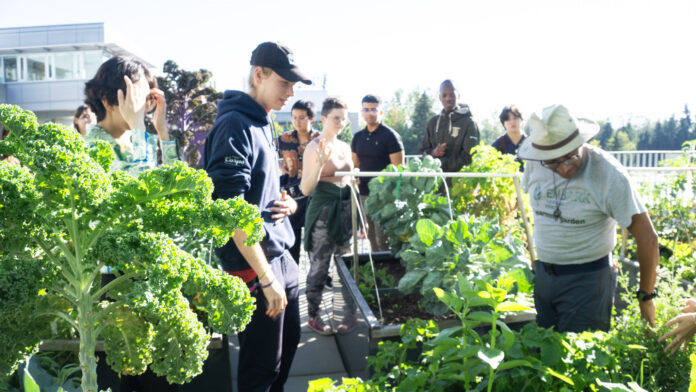
This is a photo of the community gardens. The attendees of Catalyst Cafe are in the gardens looking at the growing food.
PHOTO: Alyna De Guzman and Alice Pinheiro

By: Olivia Sherman, News Writer

Embark Sustainability Society is a student-led, nonprofit organization encouraging SFU students to “explore climate and food systems through the lens of justice and equity” with community events and education. One of their latest community-building events was the Catalyst Cafe on September 14, where students learned how to be more mindful and involved in how their food is grown and consumed. The Peak sat down with Jamie Hill, the community development manager of Embark, to learn more. 

Hill explained the intersections of equity and food justice. She noted food “exists within all the systems of our society, and that many of these have created injustices” for both consumers and labourers of food. “It’s sort of taking a look at all of those systems and finding ways we can advocate, and take action for change.” Many underprivileged communities are in severe lack of healthy foods, while the same members of those communities are relied upon for manual labour in harvesting that food. In order for food justice to be reached, Embark aims to direct students to be more cognizant of “intersecting and structural inequities” involved with food systems and recognize Indigenous sovereignty and knowledge of food systems. 

Embark aims “to start you off on a journey” in food justice and equity, Hill explained. “We see ourselves as a means to exploration, a means to move forward. We’re here as a learning organization, a place for skill-building.” 

Because of their priority of accessibility for newcomers, a crucial focus of Embark is “meaning-making,” or finding personal angles to climate justice. “It can be really hard to find meaning without community. It can be really hard to find meaning without being able to be connected to our personal lives, or to our heritage, or to our cultural connections,” Hill said. By “giving people different touchpoints to connect with the land, to connect with each other,” people can be more mindful about how “they walk through the world and experience climate and food systems themselves. 

“A big part of what we do is experiential learning. We really find that tying people’s personal and cultural experiences to their learnings is a great way to motivate yourself to take action or to learn more,” said Hill.

In order to achieve this, Embark hosts many community-oriented events and actions, one of which is a community kitchen, a communal space for people to gather and prepare a meal together. In these spaces, people “typically talk through a topic related to food justice or related to the cultural meal someone is preparing with us that day.” Another is a food rescue initiative, where Embark will “collect perfectly edible, but unsalable, produce from Nesters Market and redistribute that back to students on campus.”

The Catalyst Cafe is another example of Embark’s ongoing initiative to bring community and food justice together. The event was “a place to connect with others in the community.” They are “hoping it’s going to be a bit of a get-together, a get-to-know-you for everyone.”

Hill outlined the itinerary for the event: “We’re starting off in the learning gardens to talk a little bit about our connections to land, our connections to food-growing, and then we’ll be doing a bit of reflections on ourselves and our goals and social movements, where we think our skills or our interests are best aligned, and how we can sort of apply what we already know and like into this kind of work. 

“And then we’re going to be connecting over a meal, and chatting, and laughing, and having a great time together.” 

For more information on Embark Sustainability Society’s upcoming events and ways to get involved, check out their website at www.embarksustainability.org

This week at SFU

0
photo of an SFU softball player running the bases.
PHOTO: Paul Yates / SFU Athletics

By: Isabella Urbani, Sports Editor

Home

Saturday, September 30: softball vs. Douglas College at 11:00 a.m. (Beedie Field)

  • First exhibition game of the season 

Saturday, September 30: softball vs. UBC at 3:00 p.m. (Beedie Field) 

  • Game of two of the first exhibition game’s doubleheader 

Saturday, September 30: men’s soccer vs. Saint Martin’s (Washington) at 6:00 p.m. (SFU Stadium)

  • 2–0 against Saint Martin’s last season 

Saturday, September 30: volleyball vs. Western Washington at 7:00 p.m. (West Gym) 

  • Winless against nationally ranked Western Washington last season 


Away 

Monday, September 25–Tuesday, September 26: men’s golf at Western Washington University 

  • Finished fourth at the invitational last year

Thursday, September 28: men’s soccer vs. Western Oregon at 12:00 p.m.

  • First out of two meetings vs. Western Oregon this season

Thursday, September 28: women’s soccer vs. Western Oregon at 3:00 p.m. 

  • 1–0–1 against Western Oregon last season 

Saturday, September 30: women’s soccer vs. Saint Martin’s (Washington) at 1:00 p.m.

  • 1–0–1 against Saint Martin’s last season 


The Rundown

Women’s golf

  • Monday, September 18–Tuesday, September 19: women’s team finished fourth at their first golf invitational of the season, after previously finishing first and second at the same invitational last year. 
  • Sophomore, Meera Minhas, led SFU, finishing the two-day event tied for third out of 60 individual golfers. The remaining members of the team all finished in the top half of the tournament with a 19th, 22nd, and 30th place finish. 

Men’s soccer 

  • Thursday, September 14: won 1–0 against Fort Lewis (Colorado) at home. The lone goal of the game was scored by freshman forward, Koji Poon, in the first half of the game on a pass by junior midfielder, Hamish Ogden. Meanwhile, goalkeeper, Justyn Sandhu, held down the fort for SFU with an incredible seven-save shutout performance.
  • SFU plays Colorado Mesa to a 0–0 draw at home, finishing 1–2–1 during the brief four-game home stand. 

Record: 3–2–1

Volleyball 

  • Thursday, September 14: lost 0–3 to Northwest Nazarene (Idaho) on the road. 
  • Saturday, September 16: won 3–0 to No.13 Central Washington on the road. Junior, Brooke Dexter, led SFU in hits with 15, while junior, Jocelyn Sherman, had 17 digs and served two out of SFU’s three aces of the match.

Record: 6–4

Paige Smith explores unknown insides in Black Box Investigations

0
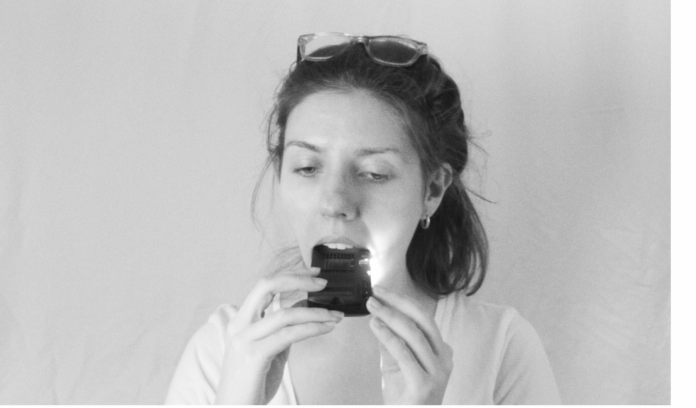
A black and white photo of Paige Smith with a disposable camera halfway in her mouth, with the flash going off.
PHOTO: Courtesy of Paige Smith

By: Petra Chase, Arts & Culture Editor

Vancouver International Film Festival (VIFF) is an exciting time of year. From September 28–October 8, the latest exceptional films all over Vancouver, showcasing local and global talent. Among the selection of 140 films stands SFU alum Paige Smith’s Black Box Investigations

Smith works primarily with lens-based mediums, interrogating their function in her films and visual art. Previous projects like “Watching You Watching Me” have pointed out how the lens mediates queer identity. Her latest short film is an instinctive exploration of the inner workings of a disposable camera and her own body, or what Smith calls the “human-camera body.” In it, she attempts to document inside her body with a disposable camera, and then the inside of the camera itself.

According to her, the film explores the “excitement of the game between photographer and camera — and that makes the viewer aware of how these apparatus influence how we imagine and see the world.” The Peak spoke to Smith about her venture inside these “black boxes,” what brought her here, and what’s next.

The Peak: What is the “embodied art-making” practice and what drew you to explore this in your work?

Smith: For me, embodied art-making really is just about trying to be in tune with my body during the creation process, and connecting that within the work I’m creating. I try to notice my senses just as much as my thoughts while creating.

What sort of questions do you want viewers of this film to ask themselves?

I want them to wonder about an everyday tool they use a little bit more and how that tool functions. So many of us are working with these highly advanced pieces of technology everyday, be that a smartphone, a computer inside a car, mapping software, medical devices . . . and I just want people to wonder how these objects shape how we see and function in the world. Some designer, company, person created that tool with a specific purpose in mind. Maybe there is a way you can creatively misuse it?

What was the best part of SFU’s School of Contemporary Arts (SCA) film program?

I learned an incredible amount studying in the SCA film program. I appreciate the skills I learned in my undergrad more and more with every passing year. The SFU film program is an amazing mix of theory and hands-on experiences, and the professors I learned from helped push me to refine my creative voice. You also truly learn how to work collaboratively with a team, and how to creatively problem solve. I’ve made lifelong friendships with classmates, and I even met my partner while in film school, so I can’t not say that the people were the best part of the SCA Film program. 

What does it mean to have your film screened at VIFF?

It is immensely satisfying to have my own work, especially a work I created from start to finish on my own, now have the opportunity to be seen through such a large platform. I truly do believe in artists creating their own spaces, venues, and modes of exhibiting their work, I believe wholeheartedly in artist-run centres and DIY spaces, but it’s also gratifying to have the backing and support of a larger entity like VIFF. More people know what VIFF is, and more people go to VIFF screenings. The opportunity to have my work seen by more people, and hear what more people think of the film, means the world to me.

What are your plans for the future of your filmmaking?

I’m actually currently a master of fine arts candidate at the University of Waterloo out in Ontario (I just started in September). So, I’m going to be creating lots of new work during the next two years of this new program. I don’t only make moving-image work, but I think it’s always going to be a part of my artmaking. Filmmaking is just a language that makes intuitive sense to my brain, and it is an insanely satisfying medium to work within. Film, and especially films viewed in cinemas, have this magic ability to hold people’s attention and teach a viewer the “rules” of viewing this particular film. I don’t know exactly where my artmaking is going to take me in the long term, but I know I’ll always be making films in some way or another.

Black Box Investigations is screening in a program alongside eight other short films about “struggle and perseverance.” Buy tickets on the VIFF website for October 1, 8:30 p.m. at Vancity Theatre or October 2, 12:15 p.m. at International Village Theatre. Find out more about Smith’s work at her website.

We need to redefine objectivity

0
A newspaper, the headline reads “the comrades and their divergent perspectives”
PHOTO: Ashni / Unspash

By: Sude Guvendik, Staff Writer

In journalism, objectivity has long been regarded as a guiding principle — a compass to navigate the turbulent sea of information. It’s often thought of as balancing two perspectives in a news story, and striving to provide a fair, unbiased account of events. However, as our relationship with media develops, it becomes evident that the notion of objectivity requires a critical re-examination, especially through the lens of decolonial thinking.

The decolonial lens teaches us that history is a living force that shapes the present. Consider the coverage of Indigenous rights. Indigenous communities have been grappling with centuries of colonization, dispossession, and cultural erasure. To report on their struggles without acknowledging this is not objective journalism but a perpetuation of injustice. It is necessary to understand that Indigenous voices are intrinsically valuable and have historically been silenced by institutions including media publications. Their experience and expertise should be honoured, rather than labelled as “biased.” Upholding white, colonial perspectives contributes to the marginalization and discrimination faced by Indigenous communities. This has not only hindered their efforts to secure land rights and cultural preservation, but has also deepened the divide between Indigenous and non-Indigenous communities, perpetuating a cycle of mistrust and misunderstanding.

News publications have increasingly become platforms for opinions and information that are not firmly rooted in factual reality, but rather driven by a misguided desire to present multiple sides or opinions to the story. This inclination, however well-intentioned, often results in what is known as the balance fallacy. This occurs when two opposing positions are treated as equally valid, even when one is supported by an abundance of evidence, while the other lacks any substantial factual basis. 

This plagues journalism and media coverage. To truly redefine objectivity in journalism, we must acknowledge that objectivity should not merely rest on the superficial appearance of balance, but on a more profound commitment to truth, equity, and historical context.

When reporting upholds the balance fallacy, information falls through the cracks. This prevents readers from fully understanding context, because Indigenous rights are sometimes presented as a narrative of Indigenous folks versus “others” — versus the police, versus the government, but their full stories aren’t being told from their perspectives. Their experiences are the most important because they are the ones living through these issues.

As another example, some news outlets have been criticized for perpetuating the balance fallacy in their coverage of climate change. Despite an overwhelming consensus among scientists that human activities are contributing to climate change, some news publications have given airtime to climate change skeptics, creating a false sense of balance in the “debate.” This also fails to give the full picture of an issue, because publications are wrongly focused on “debating the facts.” The facts are there — journalism should build on them. 

Reporting should be grounded in verifiable facts, and statements should be rigorously fact-checked before they are presented to the public. Media publications should not state quotes without further explaining their relevance or inaccuracy. Pointing fingers at interviewees, parroting what they said in an attempt to clear themselves of any responsibility is not enough. The fundamental commitment to truth should transcend the obsession with providing “both sides of the story” when one side is glaringly deficient in evidence. Objectivity should not be mistaken for false equivalency.

True objectivity demands an understanding of the historical injustices that continue to impact the present. Any news coverage, particularly coverage that impacts marginalized communities, must provide the historical context necessary for a comprehensive understanding of the issue at hand. Failing to do so not only perpetuates ignorance but also reinforces existing power imbalances. Neutrality, in its most simplistic form, often serves to uphold the status quo. In a world where power dynamics are skewed by various intersecting factors, such as patriarchy, capitalism, and colonialism, this means neutrality favours those who hold power within these systems and perpetuate systemic inequalities.

Instead of neutrality, journalism should aspire to be equitable. This doesn’t mean giving equal time to every viewpoint, regardless of its credibility. It means recognizing the disparities in power and privilege, and striving to provide a voice to those who have historically been silenced. Fair journalism actively challenges the narratives of oppression and highlights voices that have been marginalized.

This is necessary for the collective well-being of society. It is a commitment to dismantling the structures of power and privilege that have long shaped our understanding of the world. In embracing this decolonial perspective, we can pave the way for a more just and equitable form of journalism. 

VPL writer in residence discusses identity, culture, and representation

0
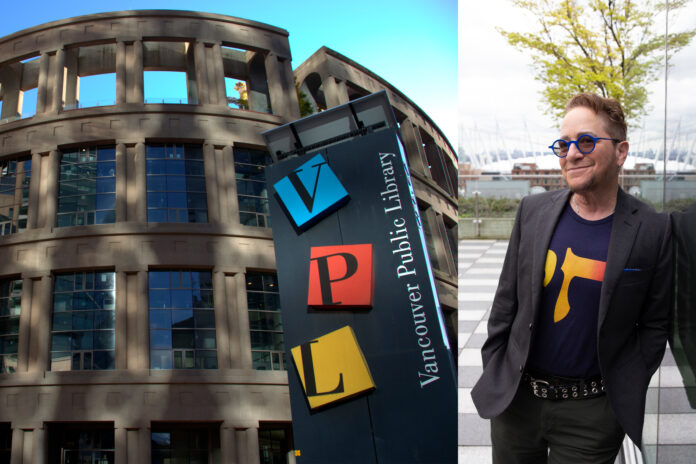
This is a photo of Aren Tulchinsky. He is leaning up against a wall and smiling at the camera. There is also a photo here of the outside of the Vancouver Public Library.
PHOTO: Coen Devlin / The Peak

By: Olivia Sherman, News Writer

Content warning: This article contains mentions of Nazism and violence. 

Aren X. Tulchinsky is a novelist, screenwriter, and the Vancouver Public Library’s (VPL) 2023 writer in residence. As a queer, Jewish, and trans writer, Tulchinsky draws inspiration for his work from many different backgrounds and aims to help marginalized writers break into the industry. The Peak sat down with Tulchinsky to learn more. 

“I’ve always been a creative soul,” Tulchinsky explained. “I was the kid who was writing stories in math class.” After graduating from York University and the Canadian Film Centre, Tulchinsky went on to be a writer and script editor for television and has written several feature-length screenplays. However, his calling has always been toward writing novels, and his several published novels centre around the queer community and Jewish identities. “I’ve always been interested in giving voice to communities that have been underrepresented,” he said. 

As this year’s writer in residence, Tulchinsky has been tasked with a full-time position: half of his residency will be allocated toward developing his newest novel, while the other half will go toward program development within the VPL. “This is a real treat for me to be in this residency,” he noted. “What better thing to do all day for a writer than to come and hang out in a library?” 

Throughout this fall, Tulchinsky will host several writing workshops for emerging writers. On September 21, Tulchinsky hosted a workshop aimed to “cure writer’s block.” Throughout his residency, he will host several related workshops at the VPL Britannia branch on the Downtown Eastside, an area often neglected from events such as this. “I live in East Van, in the Commercial Drive area, so I really wanted one of the programs to be at the Britannia branch, that’s sort of my neighbourhood,” Tulchinsky explained. “I wanted to make it really accessible for people in the neighbourhood.” 

On October 4, Tulchinsky’s official launch for his residency will take place. Generally, writers will read part of their work to their guests or host Q&A panels. However, Tulchinsky wanted something new. “For my launch, we’re bringing in a klezmer band,” which Tulchinsky described as “Jewish jazz.” Once a popular art form among Jewish communities in Europe, klezmer music was banned during the Nazi occupation, and many of the knowledge-keepers of this art form were killed. “That music died off, like a lot of things did,” Tulchinsky said, noting that modern klezmer music is seen as a revival of the culture. 

Many of Tulchinsky’s published works take place in Jewish communities, such as The Five Books of Moses Lapinsky, which is set in a Jewish community in Toronto during the rise of the Second World War. “There’s a lot of Jewish mothers in my books that are loosely based on my mother, and she doesn’t mind, actually.” At a private launch of his first novel, Love Ruins Everything, Tulchinsky joked, “Instead of just me reading all of it, there was a scene with the mother and her kid, so my mother actually read the mother role. She nailed it, of course she did! Because the character was based on her!”

Tulchinsky also writes from a queer perspective, which still has its struggles being recognized in both literature and film today. “Things are getting better, in the last several years, around what I would call underrepresented voices getting more airtime,” he said. However, he noted, “It’s the same old writers that have always been given the opportunities.” 

Because of the difficulty in queer representation, Tulchinsky hosted a teens-only creative writing workshop on September 23. “I came out as a teen myself, and I know there are a lot of challenges, so my idea for this workshop, since I’m a member of the 2SLGBTQIA+ community, I wanted to offer this to young people.” 

Tulchinsky also offered advice for new writers: “The biggest advice is keep writing,” he stated, noting the two most important qualities in a writer are discipline and tenacity. “You need the discipline to sit down every day and write, or as many days as you can.” He noted tenacity is vital for the eventual rejections a writer will face from publishers. Tulchinsky said to keep trying and knocking on doors. “I’m still knocking on doors, but I’m not giving up.” 

To learn more about Tulchinsky’s residency and workshops, visit the VPL website at www.vpl.ca.