Home Blog Page 16

El Jockey blends dark comedy and absurdity

0
IMAGE: Courtesy of Rei Pictures, El Despacho, Infinity Hill, and Exile Content

By: Gurnoor Jhajj, SFU Student

On September 14, the 23rd Vancouver Latin American Film Festival wrapped up its ten-day run full of movies, music, food, and a collective enjoyment of Latin American cinema and its charms. The festival’s closing night featured El Jockey, a peculiar dark comedy by Argentine director, Luis Ortega, featuring music from Collective SUR, a Latin American band consisting of local talent. I didn’t know what to expect walking into the VLAFF for the first time, but by the end of the night, I left with a story, a new perspective on the city I have lived in for the past 19 years, and a newfound love for vintage Latin American music.

Before the screening, the organizers reflected on the festival’s closing night, highlighting all the movies and short films shown from over 15 countries. The Consul General of the Argentine Republic in Vancouver, Ricardo Arredondo, also spoke about Argentine culture, referencing El Jockey in the process. Awards were also presented to shorts and New Directors competition, with Welcome taking home the prize for the former category, and My Chest is Full of Sparks being honoured by the Youth Jury for the New Directors category. These conversations and awards set the scene for the closing film and encapsulated the festival’s celebration of Latin American cinema and the community. 

The film itself is a story set in the world of horse racing, but it quickly shifts into a surreal, complex and absurd dark comedy that makes you rethink everything. Ortega doesn’t follow a simple flow in the movie; instead, he mixes humour and absurdity that makes the audience laugh, yet also unsettles them. The film stars Nahuel Pérez Biscayart, one of Argentina’s most famous actors, as Remo Manfredini, a legendary Jockey, and Úrsula Corberó, famously known for playing Tokyo in Money Heist, as another Jockey and his girlfriend, Abril. After a life-threatening accident, Remo disappears from the hospital and roams the streets of Buenos Aires, leaving his past behind and discovering who he really is. The movie, at its core, is about ambition, morality, and ever changing and unpredictable human nature. 

What stood out to me the most about the movie was the way it mixed comedy with dark undertones. The theatre was frequently filled with laughter at moments, proving that Ortega’s humour struck a chord even across cultural and language differences. These shifts between dark humour and absurdity often left me wondering whether I should laugh, feel uneasy, or both. Biscayart and Corberó also portrayed their complex characters beautifully, depicting the slightest emotions through their eyes. The music score was a major contributor to the film’s mood. It featured Argentine songs from the 1960s, ‘70s and ‘80s, mixing the vintage music with newer sounds from different languages, creating a contrast of both nostalgia and absurdity, matching the scenes. As I went home afterwards, I added the soundtrack to my playlist and logged onto Letterboxd to write a review. This small act reminded me that some movies just don’t end when the credits roll, but they leave the theater with us sneaking into our lives.

The end credits rolled, and the theatre buzzed with a final sense of laughter and conversation, the festival coming to an end. Latin American storytelling shone throughout its ten days, and El Jockey ended it with an unexpected yet memorable twist.

Through humour and sophistication, the film served as a physical reminder of why festivals like this matter. They bring global voices to Vancouver and give the audience a chance to learn, laugh, and live across borders, all on the big screen.


SIGGRAPH 2025: a retrospective

0
ILLUSTRATION: Yan Ting Leung / The Peak

By: Jin Song, Peak Associate

SIGGRAPH (Special Interest Group on Computer Graphics and Interactive Techniques) is the largest computer graphics conference in the world, bringing together scientists, artists, and other professionals working on cutting-edge technologies in the field. It has hosted guest speakers like Mark Zuckerberg and Jensen Huang. This year, it was held in August in Vancouver.

I learned about the conference’s existence and the fact that it would be local in CMPT 361 (Introduction to Visual Computing), which I took last year. I heard about it once more in CMPT 466 (Computer Animation), and my professors — who were also in attendance — encouraged the class to apply to be student volunteers if we were interested. 

Indeed, from a young age, I had been interested in computer graphics (specifically, animation), so I was naturally intrigued. I applied to be a student volunteer and was accepted. It was one of the coolest weeks of my life, and I interviewed three other SFU students about their experiences with the conference.

Michael Xu, a computing science PhD student, gave a presentation on his contribution, PARC: Physics-based Augmentation with Reinforcement Learning for Character Controllers. He said he was motivated by his desire to “have a physically simulated character that can traverse a Minecraft world,” which was not present in past research. PARC is a physics-based method for iteratively training an animation machine learning model. It uses the model’s output as the input for the next cycle, progressively improving and expanding the motion dataset. 

My other two interviewees were my classmates from my computer graphics courses, Tyrus Tracey and Peter Soava. Tracey — who presented a poster at SIGGRAPH — is a fourth-year computing science student like myself, while Soava, a fourth-year software systems major, was another student volunteer.

Tracey described his contribution to the conference, titled Physically-Based Compositing of 2D Graphics, as follows: “It is basically a new type of image editing technique. Given an image, you can insert a new image onto that image. It will conform to, say, the contours of the table or the wall or lighting present, that sort of thing.” He and his classmate built a tool on top of prior work to “process a bit more usable for average people.”

Attending Xu’s presentation, looking at Tracey’s poster, and seeing all of the other SFU contributors at SIGGRAPH 2025, I was hit by a profound sense of awe. On one hand, I was incredibly impressed by the work, on a technical level. These cutting-edge innovations were truly spectacular. On the other hand, I felt proud to be part of the SFU community, and was astonished to see its influence. Having grown up in Vancouver, I had always considered it familiar and homey, so seeing it in this new, influential light was pleasantly surprising to me. 

Soava said, “I think it was really cool bumping into a bunch of industry people. It seems kind of unique because Vancouver is such a VFX hub, like you have ILM, Sony Image Works, Coalition, CD Projekt Red, EA, also headquartered here. It’s just like, you asked somebody who has worked on all these big projects, and it turns out that they were local.”

When asked if they would recommend attending, Soava said, “If you find the stuff even mildly cool, you just spend a week with a bunch of extremely cool people just talking about extremely cool stuff.” Xu said

“If you’re just interested in animation, graphics, and art, SIGGRAPH is a good place because it’s more than just a technical conference.”

— Michael Xu, SFU Computing Science PhD Student


SIGGRAPH 2026 will be held in Los Angeles from July 19 to 23.

Performative Man Contest brings more than just irony to Vancouver

0
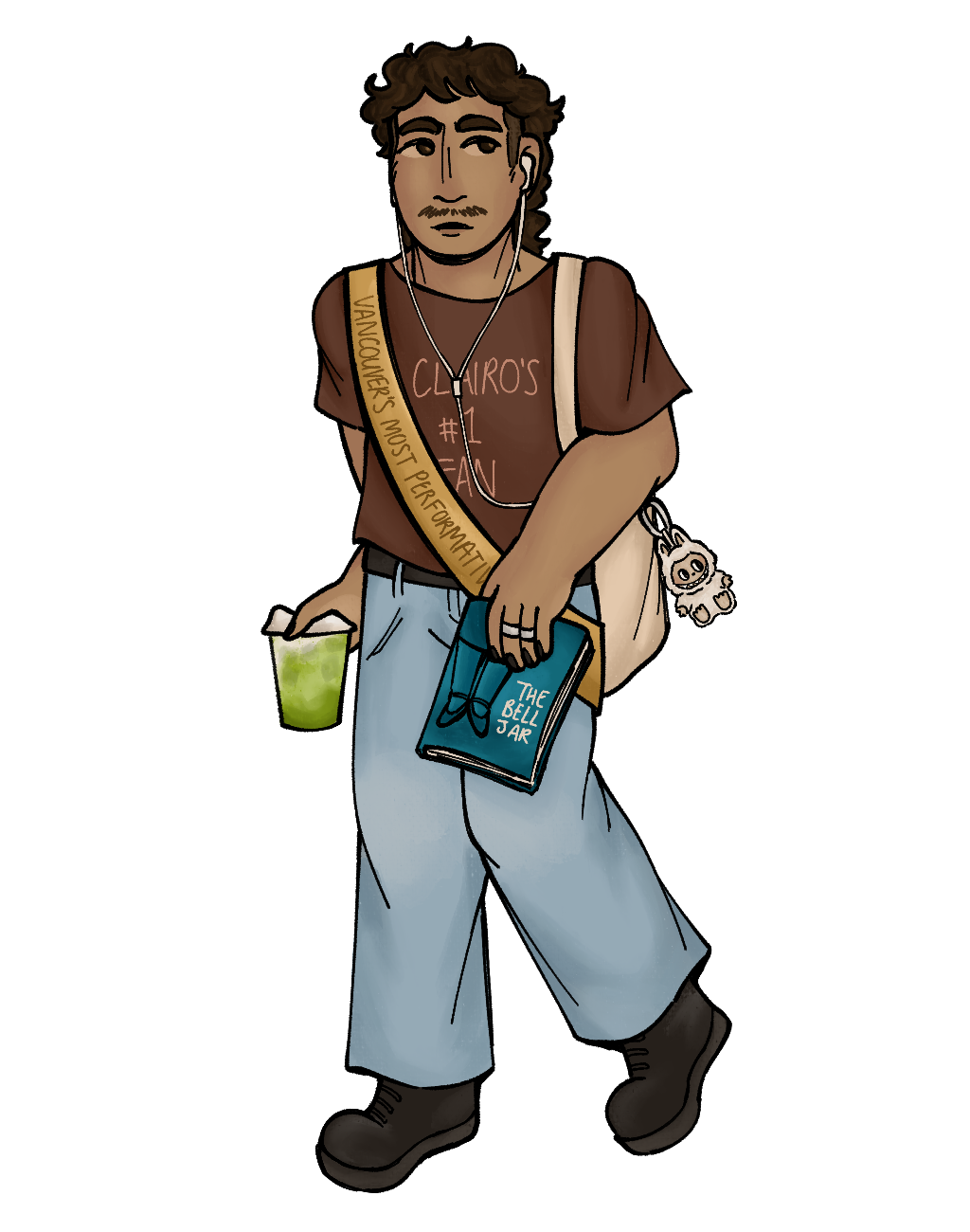
A dude carrying a tote bag, holding an iced matcha latte and the bell jar book in another hand. He is wearing basic jeans and a Tshirt that says "Clairo #1 Fan," and a sache hanging around his neck says "Vancouver's most performative man."
ILLUSTRATION: Abigail Streifel / The Peak

By: Jonah Lazar, SFU Student

The night of September 4 saw dozens of Gen Zers adorned with tote bags, carrying vinyls and books, wired earphones, Labubu keychains, and menstrual products, gathered at Fortune Sound Club in Chinatown. Hosted by IN-D-DANCE for free, these were the competitors for the grand title of Vancouver’s Most Performative Man. Along with winning the hearts of all who spectated the competition, the winner was also presented with a matcha kit, a copy of The Bell Jar by Sylvia Plath, and, of course, a Clairo vinyl.

If you don’t know what all of this means, you probably don’t spend a lot of time online. Esther Tóthóva, organizer and club promoter at Fortune Sound, told The Peak she drew inspiration for this competition from the growing internet culture surrounding the performative man meme. “We have been seeing the trend all over and wanted to find a way to bring it to Vancouver, and do it our way,” she said. 

The performative man represents a new archetype recognized in society, especially among Gen Z and those acquainted with their online spaces. Like the hipster trend of the early 2010s, where men in plaid shirts, man buns, fedoras, and suspenders crowded local craft breweries, the identity label is a reaction to a wave of men seemingly straying from gendered expectations of traditional masculinity

As Guinevere Unterbrink, one of the organizers of New York’s performative man contest, put it: “It’s men who are trying to cater to what they think women who are feminist like. This is a criticism that is frequently made of performative men, as many people believe their superficial interest in feminism actually does nothing more than alienate themselves from the women who they are so keen to impress. Their over-eagerness to be perceived as sensitive and trustworthy often comes across as aggressively insincere. 

Almost as soon as the term emerged in the cultural zeitgeist, it became a trend to poke fun at it, especially in a self-deprecating way, by dressing up as a performative man in public and creating tutorials to help others maximize their “performativity.” This eventually evolved into the first wave of performative man contests, which took place at the start of August, mainly in public places like city parks, with the first one believed to have taken place in Seattle. Similar events have been popping up globally into the start of September, with cities such as New York, San Francisco, Berlin and Jakarta having their own iterations. 

“The turnout honestly exceeded our expectations [ . . . ] the fact that ours drew a crowd into a music venue on a Thursday was very special,” Tóthóva described the night at Fortune. “Quite a few women competed for the title, which made the night feel way more expansive and culturally relevant (because who knows these men better than the women who tried to date them, ha!)”

Similarly, on September 20, the sapphic dating/friendship app Cherry FLFM hosted a “performative lesbian contest” at Sunset Beach, and UBC students hosted their own iteration of the performative man contest. Clearly, performative identity seems to resonate in many communities.

Irony and sarcasm have been a hallmark of our generation’s humour and ways of relating to each other. This trend often represents the confusing tension between serious critique and a fun ironic meme that has everyone hopping on the bandwagon. But if identity is performance anyways, is downplaying men reading feminist literature and embracing sensitivity counterproductive? Or perhaps these contests are a way of popularizing these aspects through a trend, while being aware of the ones who take it too far and appropriate feminism for personal gain?

While the performative man contests have only been around for a couple months, the trend of young people meeting up for ironic, appearance-based contests has a history that began last October. 

Lookalike contests took the internet by storm last fall. These were originally popularised by a Timothée Chalamet lookalike competition in New York last October, before sweeping around the globe with contests popping up in Ireland, Brazil, England, and, of course, most major cities in the USA, according to Vulture. These pop-up contests often had hundreds of spectators and competitors, even attracting the attention of some of the subjects of the lookalike competitions themselves.

These two trends have highlighted an interesting phenomenon which is becoming more commonplace among our generation — a grassroots mission to create and establish third places where young people can find a sense of belonging and form community. 

Since the start of COVID-19, third places — which are areas like cafés, public squares, parks, and more — have been consistently shut down, with online forms of connection, such as social media, seeing large gains in both usage and popularity among young people. Social theorist Dr. Sarah Stein Lubrano writes in her 2025 essay, The Perils of Social Atrophy, “Public green spaces are being shut down around the world. In the UK, a pub closes each day; music venues are similarly dwindling [ . . . ] clubs and associations are [also] at a low point.”

Isolation from one another has been more and more prominent among young people for the last few years. For example, in 2023, the American Psychological Association reported that young people spend a massive 45% more time on their own than people of the same age did in 2010, which is a strong indicator of our dwindling social lives.

It can be hard to look beyond the rather harrowing statistics of our generation’s physical and social isolation from one another. However, it also means online cultures have become so intricately developed and solidified in the lives of so many young people that memes are beginning to swell beyond the confines of the internet and build physical community around them. 

This brings about an interesting new development in the way that Gen Zers socialise and form community — a splicing of online, ironic meme culture with a genuine interest in feeling a sense of belonging within a physical community. Perhaps our generation’s days of solitude and isolation are finding ways to fade, ushering in a new wave of genuine attempts to build community and sociality, masqueraded behind our familiar veil of irony. 

While it does seem as though the performative man contest trend is beginning to crest the wave of internet popularity, it seems as though this sort of event — whether it be lookalikes contests or personifications of internet memes — are here to stay.

Remembering Kulbir Kaila

0
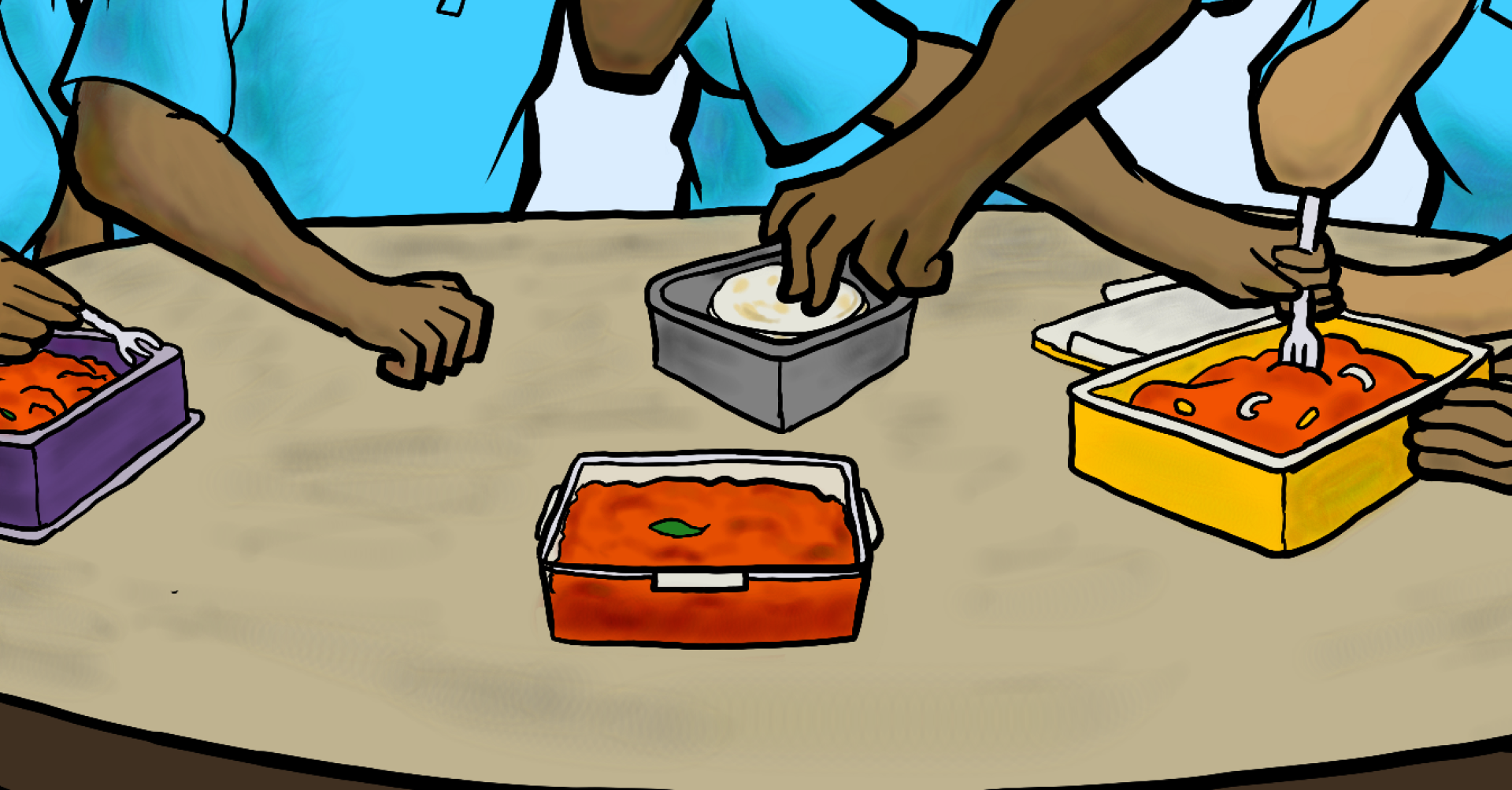
An illustration of a closeup of a group of cleaning workers gathered at a table sharing Indian dishes.
ILLUSTRATION: Yan Ting Leung / The Peak

Interview and translations by: Ashima Shukla, Staff Writer

Written by: Petra Chase, Features Editor

Kulbir Kaila worked at SFU for 17 years. On July 28, she died at the age of 61 while working a cleaning shift on the Burnaby campus. Many of her co-workers never knew SFU without Kaila. She had one son, who visited her twice a week at her home in Surrey. Her coworkers said she was funny, hardworking, caring, and deeply valued her friendships and family. She visited her brother and sister often. Her brother, Hardeep Johal, remembers Kaila for her big heart. “She was very generous and loyal, one of the most honest people you’ve ever met,” he told The Tyee

Since her passing, her loved ones have been grappling with life without her. Memories of Kaila’s life were shared with The Peak by two of her coworkers, who were “like sisters,” Ravneet and Noorpreet. These names have been changed for anonymity.

“I still can’t believe Kulbir is gone,” Noorpreet said in Hindi. She passes by the place of Kaila’s death every day during her shifts. “It always feels to me as if Kulbir is still there, just around the corner.”

Only a few days prior to her passing, Kaila had come over to Noorpreet’s house. She described Kaila’s playful and comfortable relationship with her family, how she’d tease Noorpreet’s husband by saying he looked “worn out” and jokingly ask her daughter when she was going to get married. Noorpreet’s son, upon seeing Kaila in their home, would scold her: “Auntie, you didn’t tell me [you were coming]. I would have brought something for you,” he’d say. 

“That is how we would joke,” Noorpreet said. “She was like family to us.”

“The two of us had the same story,” is how Ravneet described their friendship. “Work together, take breaks together, leave together. We used to share everything with each other.” She explained how they’d often vent to each other over the phone about work, sometimes calling each other 10 times a day. 

A group of five of them would eat lunch every day, becoming closer over the years of working together. Like a family, “we used to sit at one table, and everyone would show what they had brought,” said Noorpreet. “We all ate together, roti and all kinds of dishes.

“Sometimes I brought gajar ka halwa [a carrot dessert]. And sometimes I brought tomato chutney. Then Kulbir would say to me, ‘Sister, how do you make this? How do you make this?’” 

“She treated everyone kindly,” Ravneet said. “If they were younger, she treated them like kids, and if they were older, she would joke with them like adults.”

For Noorpreet, Kulbir’s generosity always stood out. She recalled when she was running late for a meeting, and had to drop off her lunch bag in the staff room: “Kaila said, ‘Sister, I’ve left the generator room door open. You put your bag there, I’ll come and close it afterwards.’ This kind of conversation used to happen every day. “Sometimes I used to leave my bag there because I had to go punch in. She’d say, ‘Don’t rush, go slowly, I’ll come slowly too.’ That’s how she was, always caring. We shared a lot between us.”

On the day of Kaila’s death, Noorpreet was not at work. She received a call from Kaila in the morning, who was “very tense” about the workload expected of her that day. Kaila was increasingly scared due to the strained work environment with management and the fear of surveillance. “She wouldn’t even sit for two minutes to drink water,” Ravneet said. “She was always afraid.” In a statement to The Peak, Chris Moore, the CEO of BEST Service Pros, said, they “unconditionally refute” they foster a culture of fear. 

When Noorpreet called Kaila again that day at 4:00 p.m., there was no reply. Instead, she received a call from another colleague a little later. “I said, ‘Tell me what happened,’” Noorpreet recalled. “Then she said, ‘Auntie, Kulbir has passed away.’ Oh my God! I can’t even tell you.

 “She passed away on Monday, and when I came to work on Tuesday, I cried so much.”

The two also described their frustrations with their management as they tried to advocate for better conditions for Kulbir. For example, they encouraged Kaila to get a doctor’s note so she didn’t have to clean the stairs with an injured leg. For a long time, she had asked to be transferred to Surrey, as her daily commute was two hours long, but her requests were denied. 

“Punjabis understand a little that there is such compulsion [to work] in our culture,” Ravneet said, explaining the struggle to afford living expenses in Canada. “[We feel like] the work should not be missed. People are afraid [to speak up.] Many times, we feel obliged/forced because we are afraid to lose our jobs. We feel very helpless. And we suffer a lot.”

“There’s no one you can complain to who will actually change things. Nowhere, even after so many years,” Noorpreet added. “Things were so bad, and then someone died. What’s the use after that? Now, poor Kulbir is gone. She can’t come back. She had been with us for so many years.”

So, they would turn to each other when they didn’t receive support from their employers. “When I would arrive, Kaila would already keep the cart (with cleaning supplies) ready for me,” Noorpreet continued.

“She worked for such a long time, did such hard work, and even lost her life at work,” said Ravneet.

“She truly deserves a lot of recognition. It should be written about.”

— Ravneet, friend of Kaila

Noorpreet’s message for Kaila’s family is this: “Whatever happens, I’m with you.

“Kulbir is gone, but I stood with her. I want justice for Kulbir.”

Noorpreet, friend of Kaila

Read more about the fight for justice for SFU’s cleaning staff in the news article.


We need to persist beyond symbolism

0
a day calendar showing September 30. The 30 is small in the corner, and an orange shirt takes up most of the space on the page.
ILLUSTRATION: Victoria Lo / The Peak

By: Zainab Salam, Opinions Editor

Every September 30, since 2021, we see public statements made by institutions and corporations that are still operating on unceded land — statements to remind us to observe the National Day for Truth and Reconciliation. This day is also known as Orange Shirt Day, a grassroots movement that began in 2013 and has grown into a national day of remembrance and accountability. But one day of acknowledgment isn’t enough to alleviate the weight of centuries of colonial harm on Turtle Island and its peoples

I feel like I’m stating the obvious, but the colour orange goes beyond symbolism. Phyllis Webstad’s experience, of having her new orange shirt stripped from her, on her first day of being forced into a residential school, showcases the erasure, violence, and trauma that Indigenous children endured — and still endure. We need to make sure that Orange Shirt Day extends beyond a single date on the calendar. In a metaphorical sense, Orange Shirt Day should be every day!

An aspect of this is cultivating sustained mindfulness — an insistence that the truths of Canada’s history should remain present in our daily lives, especially if we’re settlers on this unceded land. The violence of residential schools is not a closed chapter, but a living, breathing legacy that still harms Indigenous children

This means confronting hard truths about ourselves as well. It’s easy to participate in symbolic gestures, but much harder to ask: how does my workspace, my university, my neighbourhood, and even my family benefit from the displacement of Indigenous Peoples? How do my taxes, my voting choices, and my silence reinforce colonial structures? These are uncomfortable questions, ones that we must ask ourselves to fight injustice. True reconciliation isn’t about easing our conscience but about understanding how power is distributed and how resources are stolen. Moreover, it’s about actively working to materially improve Indigenous lives — by focusing on each community’s wants and needs

Of course, no single person can dismantle centuries of colonial violence on their own. However, if history teaches us anything, it’s that collective action matters. When we come together with honesty and humility, when we recall, daily, the children who never came home and the survivors who continue to heal, we begin to build a different kind of future. One where Indigenous children are better provided for, and protected. Instilling that yes, every child does matter!

So, let’s wear orange on September 30 — and carry its significance into October, November, and every month thereafter.

We shouldn’t consign remembrance to a single day of symbolism. The children who were lost, and the survivors who remain, deserve more than just a day of recognition. They deserve their voices to be heard, their rights to be upheld, and their futures to be safeguarded. To honour them is to act daily, to live in ways that challenge colonialism rather than quietly sustaining it. By doing so, we would be donning an orange shirt every day and embodying its meaning. 


The myth of a “correct” English keeps us policing ourselves

0
Two people standing side by side, speaking to one another. Speech emerges from them. One person says “Hello! How are you?” in capital letters, while the other says “Fine, thank you” in italics.
ILLUSTRATION: Cliff Ebora / The Peak

By: Ashima Shukla, Staff Writer 

When my family moved out of India a decade ago, I landed in an American school in Dhaka, Bangladesh. It was a bizarre reality to comprehend: students with MacBooks connecting to Apple TV projectors in air-conditioned classrooms, while rickshaw drivers cycled passengers through the humid heat outside. My classmates talked about their first-class flights to the US, while many in the city struggled to afford a daily meal. Meanwhile, I was a 14-year-old with tear-stained journal entries, trying to make sense of where I belonged. Hating myself for not sounding right, I was suddenly confronted with the reality that, regardless of English being my first language, I would never be considered a native speaker as long as I held on to my Indian accent.

In journal entries from that year, I reflected on all that stood out to me. In one entry, I wrote about my friend, who had a more pronounced Indian accent, being constantly dismissed as less capable. At the same time, I was praised for similar ideas — once I had softened my sounds enough for the American standard. Later, living in Shanghai, I would witness servers being confused by my mother’s accent as she asked for water. Even today, when my partner orders coffee, baristas instinctively glance at me to repeat it in the presumed proper accent. 

What felt shameful at 14 was never about me at all; it was about linguistic imperialism.

Accent-based discrimination is not harmless, it shapes who gets heard, hired, and respected. In classrooms, students speaking non-native varieties of English are treated as less intelligent or even suspected of plagiarism. In workplaces, candidates are judged not by their skills but by how professional they sound. In daily life, speakers of World Englishes face constant microaggressions: jokes, corrections, backhanded compliments, and the “your English is so good!” The message is clear: a person’s voice is only valued when it adheres to colonial standards

At the airport immigration checkpoint, I watched an officer berate an East Asian woman because of how she spoke. Just last week, as I sat on the bus going down the 20 route, I heard slurs shouted at strangers whose accents marked them as foreign. These moments repeat the same story: the problem isn’t comprehension but prejudice rooted in the myth of a neutral English accent. We are told there is a correct way to speak English, but this usually means white, middle-class American or British speech. They reflect how institutions, from schools to immigration counters to algorithms, reproduce the same prejudice. And it forces third-culture kids like me to self-police our voices and mannerisms, to give up our cultural identities if we want to be taken seriously. 

The reality is that English is a living language, with varieties evolving across the world. Their voices are not broken versions of English but legitimate expressions of it. Today, more people speak English as a second (or third, or fourth) language than as their mother tongue. Each foreign accent carries a rich story — of migration, colonization, trade, exile, resilience. My auntie’s voice, misunderstood by Siri or Alexa, is not a failure to speak correctly but a reminder of the paths she has walked and the worlds she straddles. Celebrating voices like hers is not just a matter of courtesy; it is an act of resistance against neocolonialism

If we continue to measure people against a fabricated neutral accent, we erase the richness of our shared language and reinforce the hierarchies that keep racialized speakers at the margins.

But if we embrace the diversity of Englishes as they are actually spoken, we can begin to dismantle the idea that belonging is conditional upon sounding white, Western, or elite. I wish I could hug my 14-year-old self and tell her accents are not mistakes to be corrected or flaws to be erased. They are living histories, and it is high time we give them the respect and admiration they deserve. 

Convenience isn’t always indulgence

0
a miniature shopping cart, with green accents. There’s one strawberry inside the cart. The background is a salmon pink colour.
Photo: Atlantic Ambience / Pexels

By: Zainab Salam, Opinions Editor and Michelle Young, Co-Editor-in-Chief

Working in the food service industry, we often receive single-item delivery orders for something easy to make. When that happens, at least one person makes a snide remark regarding the “silly” notion of making such an order. The assumption is that the customer is idle, lethargic, and unmotivated. 

But is reality really that simple?

It can be easy to forget how many silent battles people are fighting.

From mental health struggles to caregiving responsibilities, to experiencing mobility issues — so much of life happens behind the scenes, where others are not privy. I mean, should a parent juggling three kids — including a restless toddler — not have access to their pumpkin chai if it helps them enjoy 30 minutes of quiet? To judge someone for what might be deemed unnecessary or frivolous is unfair — it ignores the complex responsibilities that others carry. 

I’m reminded of the online discourse that occurred almost a decade ago regarding the environmental harms of precut vegetables and fruits. Many had rushed to condemn buying those products from grocery stores, due to the waste they create. But, the conversation shifted swiftly when people began discussing the necessity of precut products, as they provide those with mobility issues with additional food options. What some saw as convenience, others experienced as access and independence. The lesson to me was: what seems indulgent to one person can be essential for another. 

When we consider food or grocery delivery services as unessential, we erase the experiences that deem them as a necessity. For those with chronic health conditions or mobility issues, food and grocery services may be the only way to get nutrients in your body. A 15 minute drive (if you have access to a car) or cooking a meal can be taxing. Some people have argued for the removal of these services entirely, due to the lack of accountability companies like DoorDash and Uber take for their workers and customers. However, that suggestion fails to provide a solution for people who rely on these services. If the argument is that someone who is so disabled they can’t provide for themself should have a caretaker — think of the recent case where a caretaker in BC fed her client only with liquid supplements, subsequently dying of malnutrition as a consequence. Anyone should have both the access and agency to be able to choose their meals, where possible.

In a similar vein, I’ve also seen condemnation of people who use cleaning services. Again, the assumption is that the client is too careless to maintain their home. However, this isn’t always the case. These services can be extremely helpful for people who don’t have the physical or mental capacity to clean. They can be a one-time thing to help get you on track, or an ongoing service to help offload tasks. I myself have struggled keeping a small space clean due to mobility and capacity constraints, so I have a bare minimum checklist of what needs to be done on a weekly basis, and what will have to wait for later. Though the occasional splash of grease on the stove or toothpaste on the mirror is deeply upsetting to me, the thought of potentially hiring someone to help deep clean the oven or bath tub can be seen as part of a necessary network of support. No one wants to live in a dirty home, and provided that workers are paid well and treated fairly, there shouldn’t be anything wrong with hiring someone to help you. 

Even instances that aren’t as serious could be a balm to soothe. Maybe the latte delivered to someone’s doorstep is the only small joy they’ve been able to give themselves during a tough week. Maybe that single soup order is going to someone who’s sick and can’t make it to the kitchen, let alone to the restaurant. Maybe that bubble tea is a treat for someone who has just picked themselves up from a depressive episode, and it’s the first thing they’ve been able to crave in weeks. What appears to be frivolous from the outside might actually be comfort, survival, or even self-care. 

That perspective is worth carrying into our daily lives. The truth is, we’ll never fully know why someone ordered that one drink or that one snack. But maybe that’s exactly why we should pause before passing judgment. Behind every seemingly frivolous act, there might be a really good reason. Offering others a little more grace doesn’t cost us much — but it can decrease the pressure that others must bear.

SFU cleaning worker dies during shift, amplifying long-standing calls to improve working conditions

0
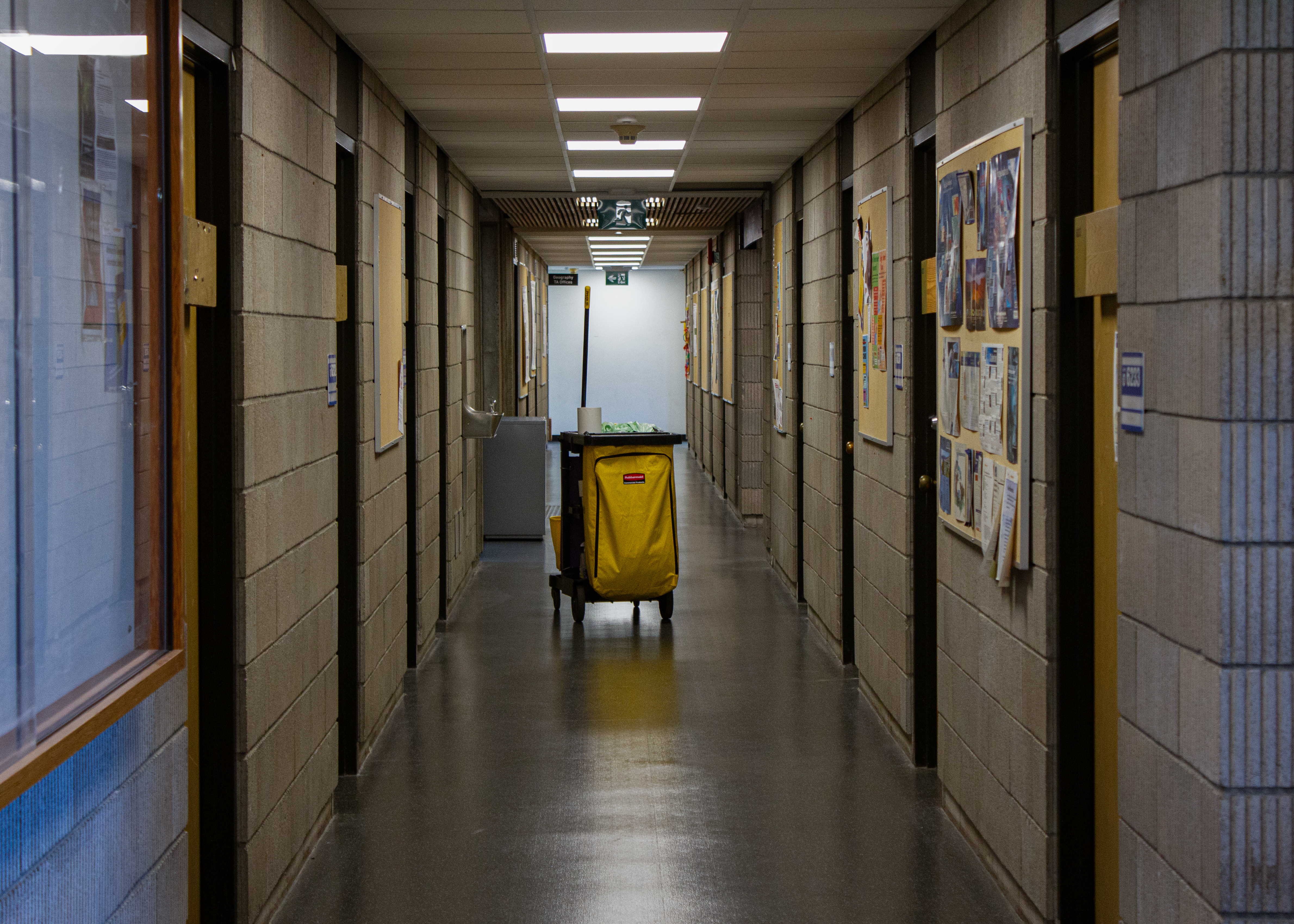
This is a photo of a lone cleaning equipment cart at the end of a hallway at SFU.
PHOTO: Issra Syed / The Peak

By: Hannah Fraser, News Editor (writer and interviewer), and Ashima Shukla, Staff Writer (interviewer and translator)

Since 2020, Contract Worker Justice (CWJ) @SFU has been leading the push for better working conditions at the university. 

At the heart of the coalition’s rallies, events, and research is a demand that SFU directly employ its cleaning staff, rather than outsourcing them to BEST Service Pros. CWJ argues that the current system leaves workers trapped in “low pay, weak benefits, a lack of job security, and exclusion from the SFU community.”

That fight for change took a turn on July 28, when cleaning worker Kulbir Kaila died during her shift at the Burnaby campus, leaving the community devastated. 

According to The Tyee, Kaila had already been struggling with leg and back pain and had to take on larger areas to clean as part of her daily work over the last two years. 

Many cleaning workers at SFU face the same reality — most are older than 50, some “have limited mobility and manage elbow, back, and leg pain,” and walk “up to 40,000 steps each shift, pushing equipment across campus on wheeled carts.”

SFU told The Tyee that Kaila’s passing “had nothing to do with the working environment.” 

However, all seven of Kaila’s co-workers that the publication interviewed said the workload, working conditions, and pre-existing health conditions “contributed to her death.” 

The Peak interviewed SDU+ to further investigate the concerns raised by The Tyee. Beyond organizing social justice events on campus, SDU+ said they had spoken with workers about their concerns.

The toll on cleaning staff

“According to the workers we’ve spoken with, Kaila’s death is directly linked to her working conditions,” said SDU+. “On the day of her death, she was assigned five areas to clean,” specifying that “a reasonable workload is one to two areas.” Her cause of death has not been made public.

Her case reflects wider concerns: for one, workers allegedly face verbal abuse and harassment. Multiple cleaning workers have been “on (often unpaid) leave due to physical injuries and mental stress, leading to hospitalization,” said SDU+. 

According to BC’s Employment Standard Act, workers should have a minimum of five days of paid sick leave. However, “if a union’s collective agreement meets or exceeds the requirements of the Employment Standards Act,” then “the collective agreement applies” instead. SDU+ did not specify how much paid or unpaid leave the workers were given. 

SDU+ also alleged the workers do not have access to the collective agreement of their union, CUPE 3338. The Peak reached out to CUPE 3338 to verify this claim, but they did not directly respond. WorkSafeBC is currently investigating individual claims. 

The Peak also spoke with two cleaning workers who were close to Kaila: Noorpreet and Ravneet. Their names have been changed to protect their identities. Noorpreet described how, with inflation and having to support family, she feels obligated to keep working despite harassment from management. 

“We feel very helpless. And we suffer a lot,” echoed Ravneet. 

The Tyee also noted that workers have “insufficient cleaning equipment to properly do their jobs.” SDU+ alleged that BEST “made repetitive attempts to keep workers quiet” about their concerns, including supervisors, team leads, and assistant managers surveilling them during shifts through photos and videos. Ravneet said that even during breaks, workers were being watched and recorded. 

SDU+ said recordings are “later used to justify wage theft,” with BEST claiming workers failed to do their jobs correctly. Workers are allegedly “docked pay for being one minute late or having the door closed on them to prevent them from punching in.” BC’s Employment Standards Act “prohibits an employer from withholding wages for any reason,” other than “deductions required by law, such as income tax, CPP, and EI.” The act also prohibits “an employee to cover any business costs.” 

Ravneet said Kaila “was always scared that someone might see her.”

“She (Kaila) wouldn’t even sit for two minutes to drink water — she was always afraid. She did her work properly. She was a hardworking woman.”

— Ravneet, cleaning worker

Chris Moore, CEO of BEST, expressed the company’s “deepest condolences” and told The Peak, “The well-being of our team is paramount, and this tragedy compels us to be better.” He said that BEST is “fully cooperating with ongoing investigations.” 

Moore refuted the allegations that the company operates “in a culture of fear,” stating, “our managers and executive team are here and always available to our team, without any repercussions or fear of termination.

“I want to reiterate that BEST takes the safety and security of all our team members as our number one priority,” he said. “We have listened to the concerns of our team members, and we commit ourselves to listening and responding.”

Moore stated that, “effective immediately,” BEST is “reviewing safety gear” and “protocols with a view to enhancing these with team safety and security in mind; reviewing workloads and schedules; reinforcing safety training, supervision, and hazard monitoring; and recasting clear, confidential channels for raising safety and well-being concerns.” He added that BEST will continue to work with “employee representatives, the union, and CWJ to engage in dialogue around enhancing safety and workplace culture.” 

Without a safety net

The workers’ union did not adequately support the workers, according to SDU+. They said that until Kaila’s death, “CUPE 3338 made no effort to listen to workers’ demands.” CUPE Local 3338 is a “non-profit union organization” representing “nearly 1,200 members in six bargaining units” across SFU. 

“Even after having meetings with Shaneza Bacchus (CUPE 3338 president), there was no improvement in working conditions,” said SDU+. The union, they added, had “no interest in fighting for working-class rights.” Bacchus allegedly “intentionally avoided speaking to workers and rarely had meetings,” making excuses such as “‘being on vacation’ and language barriers.” 

Since the prioritization of “bargaining for higher salaries” in 2023, SDU+ said CUPE has not brought up worker concerns to BEST. 

In The Tyee article, Bacchus said workers “were expected to do ‘surface level’ cleans,” but a language barrier with the workers — many of whom whose first language is not English — prevented that from being successfully communicated. SDU+ reported that management never told workers they were expected to do “surface-level” cleaning.

CUPE told The Peak that they are “actively working to address the concerns raised by members.” The union said they “have been raising the issue of contracted out cleaning (and food services) for several years.”

“We firmly believe that working conditions, equity concerns, and safety issues would improve significantly if SFU directly employed these workers.” CUPE acknowledged that “the loss of Kulbir Kaila is felt deeply in our community.”

The cost of contracting out

The Peak also interviewed Derek Sahota, campaign research assistant at CWJ and member representative at the Teaching Support Staff Union. “By contracting out, SFU both forces a race to the bottom for contractors, and also builds a buffer between them and the workers’ reality that means change is so hard to occur,” he said. SFU contracts out “to distance themselves from daily decisions that hurt workers and save money,” he added.

SFU stated that “maintaining safe and healthy learning and working environments is of paramount importance to the university. We are deeply saddened by this tragic passing. Our thoughts are with her family, friends and colleagues during this difficult time.”  

They added that “any questions about conditions for cleaning workers should be directed to their employer, BEST.”

“Cleaning is hard, demanding work that involves dangerous chemicals, and tens of thousands of steps per day, lifting, bending, no matter the temperature,” Sahota explained. 

“We know cleaners were being assigned more area to clean as SFU tried to cut costs. We know SFU had a $6.5 million surplus last year, more than enough to keep all the cleaners they laid off.” 

He also said SFU “would have had no way of knowing” within 24 hours that Kaila’s death “wasn’t their fault,” but this story was spread anyhow. SFU also allegedly claimed the workers “were always paired up,” but Sahota said “anyone who works on campus knows that wasn’t true.”

Paths forward

Sahota said SFU president Joy Johnson had “ghosted us on [worker] meetings when she came to power. 

“To put health first, these cleaners need to be part of the community and the president needs to actually step out of Strand Hall and directly hear from the workers and their union.” — Derek Sahota, campaign research assistant at Contract Worker Justice

Moving forward, Sahota said that “SFU needs to retract their statements, apologize to the whole community including the workers they exclude from SFU employment and take proactive steps to make the jobs better in coordination with their union.”

SDU+ said “the only solution is removal of the existing management, establishing democracy within the union, and forcing BEST to provide safe working conditions and reasonable workload to the workers.”

“Speaking up against your boss is always hard, and in order to speak up, workers need to know both that they’re protected, but more importantly, that there’s actually some hope that things will get better,” said Sahota.

“Every worker should return home after their shift.”

Activists discuss the intersection between Palestinian liberation and disability justice

0
This is a photo of four circular rows of people sitting and facing toward several panellists in a room.
PHOTO: Centre for Comparative Muslim Studies

By: Heidi Kwok, Staff Writer

Content warning: mentions of genocide, forced sterilization, and embodied and psychological trauma. 

On September 12 at the Harbour Centre, the Disability Justice Network of BC and the SFU Centre for Comparative Muslim Studies (CCMS) hosted a panel of five speakers who shared how the fight for Palestinian liberation is closely tied to disability justice. The Peak attended the event to learn more.

Adel Iskandar, an associate professor of global communication at SFU and director of the CCMS, opened the event by stressing the importance of “centring Palestine in the discussion around decolonization” and disability justice. “Israel has actively tried to render Palestine a non-existent entity, in every sense of the word, and to disable, dismember, and eventually dismantle and annihilate all that makes Palestinians human beings.”

Jasbir K. Puar, a distinguished faculty of arts professor at the Social Justice Institute at UBC, provided context for the talk, describing how the ongoing genocide exacerbated the existing amputation crisis in Gaza. According to Al Jazeera, an estimated 50,000 people already lived with disabilities in Gaza due to Israeli violence before October 7, 2023. Since then, the Gaza Health Ministry has recorded 4,800 cases of amputations, of which children made up 18% or 800 cases, “while about 24,000 of those injured required rehabilitation.” 

“Gaza is living through a mass debilitating, maiming, and disabling event on a historic scale.”

— Jasbir K. Puar, UBC professor in the faculty of arts

“with a health system near collapse, an engineered famine, almost no humanitarian aid, and forced evacuations,” said Puar. 

“It is genocide in slow motion. Palestinians in Gaza were living through genocide then, as they are now, through manufactured states of chronic debility and episodic maiming.” She referred to the first intifadah in 1987 — a large-scale uprising in the occupied Palestinian territories characterized by mass protests and harsh retaliation by Israeli forces, which wounded more than 130,000.

Bana, a Palestinian disability justice advocate, grounded discussions on the state of Palestinian political prisoners who have been maimed, amputated, and tortured in Israeli prisons “beyond recognition.” Lara Sheehi, a research fellow at the University of South Africa’s institute for social and health sciences, followed up by offering her perspective as a clinical psychologist: “Political prisoners are the heart of our struggle” and “have always intimately understood the targeting of bodies and the psyche as a central part of the working machine of settler colonialism.

“The psychic terrain being a place to be stolen as well,” she continued. “It’s the fact that oftentimes the entire industry of trauma wants to talk about trauma without ever linking it up to the system or the condition, like settler colonialism, that creates the trauma to begin with.”

Bana also shared the challenges of realizing disability justice when people with disabilities back home have been intentionally subjected to exclusion. “One thing about disableism” is that we choose “who to see and who to focus on.”

Sarah Jama, a community organizer and former member of provincial parliament for Hamilton Centre, drew parallels between the exclusionary systems that enable the systemic mistreatment of disabled people both here in Canada and in Palestine: “Because we live in a society that says disabled people, sick people, chronically ill people don’t deserve to live in public, we have to warehouse them and send them away, and that continues to kill people.” 

Calling to issues like Alberta’s Sexual Sterilization Act, in which Indigenous women were forcibly sterilized, Jama said these issues “cannot be removed from the question of, do Palestinians have the right to exist in their public space.”

For Siling, their project Crips for eSims for Gaza offers an accessible way for disabled folks to help Palestinians restore internet connectivity amid Israel’s targeting of vital telecommunications networks in Gaza. So far, over 160 volunteers from around the world have helped raise more than $3 million for eSims. 

Speaking on how disability relates to Palestine, another panellist named Siling said: “There is a clear connection between how disabled people are dehumanized, rendered ‘less than’ or ‘non-human,’ and the way that Palestinians are dehumanized. Everyone in Palestine is disabled or set to become disabled because the conditions of genocide are disabling.” 

Historic floods devastate communities in Punjab

0
This is a birds-eye-view photo of flooding in Punjab, where farmland and a road are completely submerged in water, barely peaking through.
PHOTO: Courtesy of @rahmatyasir3 / Instagram

By: Heidi Kwok, Staff Writer

Content warning: mention of suicides.

The Indian state of Punjab has been facing severe flooding, the worst since 1988, due to intense monsoon rainfall. As of late June, an estimated 1,900 villages and 400,000 acres of farmland are submerged, and around 300,000 people remain under evacuation alerts. Since August, the disaster has displaced a total of 1.3 million people. 

The flooding of agricultural lands was further worsened by overflowing rivers and the Indian government’s decision to release water from overwhelmed dams. In Pakistan’s Punjab province, similar record floods have led to the loss of 118 lives, the displacement of 2.6 million people, and the destruction of 2.5 million acres of crops. The United Nations reported that nearly 1,000 lives have been lost.

The Peak spoke with Vijay Malhotra, president of the SFU Punjabi Student Association (PSA), and Jasnoor Mann, PSA marketing team member, to learn more about how the floods have affected their members. Both members are second-generation immigrants, and highlighted the importance of staying connected to the place where their roots lie through family.

According to Malhotra, Punjab is “the home of wheat and barley for India, and it’s a big part of our culture and our food that we eat throughout the year.

“People lost their houses, lost their livestock and livelihood, essentially. They were uprooted, and they don’t have anywhere to go,” he said. “When there’s no support from outside sources or friends and family because everybody’s dealing with their own specific situation, it’s hard to sit back and watch people that we know be affected by nature that we really can’t control in a sense.”

The irreversible damage to a farmer’s crops — the only source of livelihood for many in Punjab — has led to suicides in Mann’s family. She reflected on other families being torn apart with the passing of their sole breadwinner:

“When stuff like this happens, it’s a crisis occurring in a crisis. So it’s always like, how much more can Punjab take before it collapses?”

— Jasnoor Mann, marketing team member, SFU Punjabi Student Association

Mann cited the flood’s severity as being exacerbated by ongoing political unrest and the government’s mismanagement of river systems, including its failure to adequately address the public’s concerns about existing damage to flood infrastructure. She expressed her frustrations: “Our people [are] always at the end of the stick when it comes to damages.”

On how PSA members are coping during this tragedy while being away from home and family, Malhotra expressed: “It’s been a hard time, I know, especially for some of our team having family back home,” whether that be extended or immediate family, “because communication’s been disrupted through the floods.” 

Balancing academics and contacting family makes it “hard for some of our general members and executive members” to participate in the PSA “because they’re so emotionally drained from the event,” he said.

Despite this, both Malhotra and Mann pointed out the strong sense of community and mutual support among members during this challenging period. “The most important thing is getting people together and getting people to talk and make them feel like they’re not alone,” Mann expressed.

Due to limited news coverage on the floods, friends and family serve as the immediate source of updates for PSA members. “Through maintaining these connections, I’ve learned the value of community, the power of resilience, and the importance of showing up for one another — especially in times of crisis like the floods currently affecting the region,” said Malhotra. “It’s a reminder that even from across the world, we can stand in solidarity with our people and make a difference.” 

Both interviewees highlighted efforts to raise awareness outside Punjab, including working on a fundraiser for flood relief. The PSA has also been working with Vancouver-based radio station RED FM’s Radiathon and SAF International to process pledges.

If you wish to support flood survivors in Punjab, please consider donating funds to SAF International or Khalsa Aid.