Home Blog Page 144

Where the River meets the Salish Sea continues a legacy of Coast Salish art

0
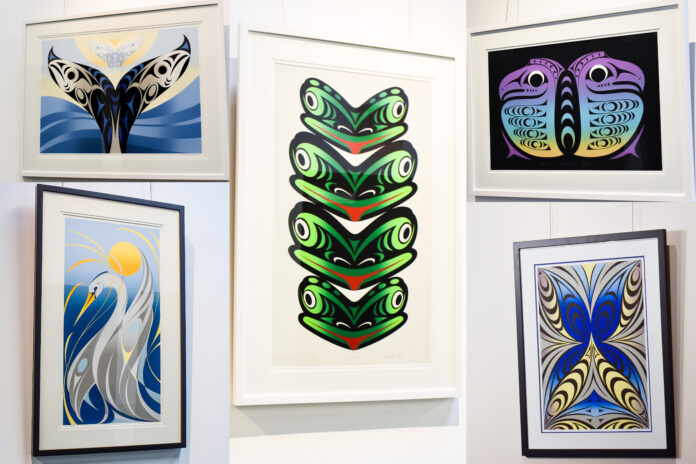
A collage of five framed formline design prints, with curved lined patterns and gradient backgrounds in vibrant colours. The center piece features four frog faces stacked. The other pieces feature, a heron, a butterfly, and a whale tail.
PHOTOS: Amrit Kamaal / The Peak

By: Angela Shen, Peak Associate

Editor’s note: The author of this article, Angela Shen, is a program assistant at Shadbolt Arts Centre. The Peak acknowledges this and has taken steps to prevent conflict of interest.

As a student learning the art of Chinese brush painting, I always look forward to the exhibits at the Burnaby Shadbolt Centre for the Arts. In November, I saw Musqueam mixed media artist Kelly Cannell’s solo exhibition, ʔəyx̓ watəna:t | Where the River meets the Salish Sea, which featured her newest print designs. Hopping off the 144 SFU bus, I walked a path of autumn coloured foliage to the main centre, and was greeted by a poster describing Shadbolt’s honour in featuring Kelly’s work. Daughter of the prolific artist Susan Point, Kelly been immersed in Coast Salish art “from birth” and “lives it everyday.”

The first art pieces were in the Centre’s café, Encores Bistro. Over a mocha, I enjoyed two mesmerising butterfly patterned prints, “KALEIDOSCOPE STATE” I & II, under the café’s neon pink lights. Curved lines casted over highly saturated blues and yellows, creating an optical vibration, signature of the traditional formline design distinguishing this collection.

I took this time to read up about the Point/Cannell family and their legacy on xʷməθkʷəy̓əm (Musqueam), Sḵwx̱wú7mesh (Squamish), and səlilwətaɬ (Tsleil-Waututh) land. You might have seen Susan Point’s red cedar spindle whorl, “Flight,” beyond customs at the Vancouver International Airport, a sculpture of an “eagle and a man with raised arms, welcoming visitors and also gesturing flight.” Point has created countless art pieces in public spaces, translating “Coast Salish traditions into contemporary modes of expression.”

Her family line have carried on the pride of Coast Salish art. On the side of a Granville and 70th condo, you’ll find “Land & Sea,” a coloured glass panel perched in the sky that demonstrates the “way nature flows together.” Next time you catch the sea bus, look out for the signs welcoming visitors in hən̓q̓əmin̓əm̓ (Halkomelem) and Sḵwx̱wú7mesh (Squamish) languages, with a painting honouring Chinook salmon. Both of these are collaborative works from Kelly and her brother, Thomas Cannell. Thomas also designed the stunning glass frontier, “Sea to Sky,” on the Paramount building in Richmond. 

Thomas’ granddaughter, Summer Cannell, carries a love for art into the family’s third generation, with a handful of works already in the public domain at a young age. For instance, she designed the Musqueam–YVR Friendship agreement logo with her dad. These are just a handful of the works of art with which the Point/Cannell family have adorned the city.

Since youth, Kelly’s been an active artist and built a reputation with bold use of lines in her patterns. She frequently works with prints and public artwork, such as murals and sculptures. She also specializes in other mixed media, such as wood carvings, designs, and glass works, having studied glass in prestigious universities in Washington and Istanbul. 

Inspired by her mother, Kelly also draws her inspiration from a connection to nature and culture, which was evident in her latest collection. The landscape piece, “Reflection,” with a pattern of whale tails swimming to the rising sun hung above the James Cowan theatre entry.

At the main gallery hall, the Salish alphabet of Kelly’s name unfolded above the over 20 print pieces, and various colours fell in my view: a series of aquatic-themed gradient prints like “Symphony of the Sea” and a “Great Blue Heron” stood out for their gradient backgrounds. For the latter piece, placed in the left centre under a bright yellow sun and a deep navy to light blue gradient sky, a curving flow envelops the heron. 

The comfortable gallery hall has soft couch seats along the eggshell coloured walls further down the hall where I sat and looked at “Fusion.” The print features four bedding frogs, with light to dark green lined gradient, dark black outlines, and red lined mouths. The way they’re stacked on top of each other reminded me of mitosis, while the name suggested the opposite. 

Names helped me gain a better understanding of the prints, while not assigning any specific meaning to each piece. I found great fulfillment in simply standing and allowing my brain to observe and take in the mesmerising patterns. Kelly makes nature the focal point of her work, while the frontline design creates contemporary yet elegant portrayals of the subject matter.

Observing the framed pieces more closely, I noticed the number of prints for each design were marked in pencil. Take the piece “Reflection,” for example; two prints out of the 78 prints under that theme are shown in the gallery, a testament to her dedication to the subject. I also noticed the colours from the traditional ink print rather than digital print made pieces not as light-reflective, despite the glass frame protection, appearing radiant.

From murals to exhibits to family collaborations, Kelly’s work has undoubtedly always had an astounding and familiar presence in the community. While the exhibit has ended, the Shadbolt Centre always has exciting artists on display, and the atmosphere is perfect for meeting a friend or a crush you finally mustered the courage to go on a date with. 

In the meantime, I encourage you to pay close attention to Indigenous art spread around our city and support the artists who kindly share their traditions, history, and culture. Find out more about Kelly’s projects and browse her one-of-a-kind available paintings on her website.

Cloverley Park to be paved into parking lot for new elementary school

0
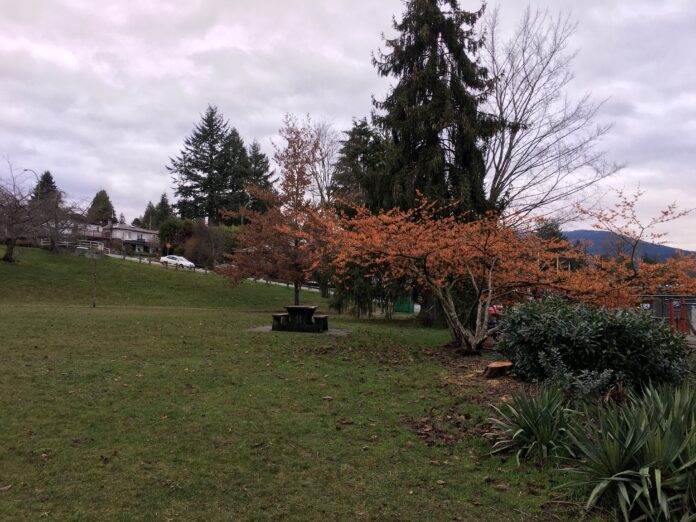
This is a photo of Cloverley Park. The park is on a small hill, with residential houses in the background
PHOTO: Olivia Sherman / The Peak

By: Olivia Sherman, News Writer

Nestled in North Vancouver’s Calverhall neighbourhood for over 40 years, Cloverley Park has provided green space, a playground, a tennis court, and sledding hills for its residents. However, the park will soon be paved over to make way for the new Cloverley Elementary School, scheduled for opening and enrollment in 2026. Residents of the area are concerned the building is threatening the community’s much-needed green space. “It’s a really active park and it’s an integral part of the community,” said Barry Shaw, a neighbourhood activist and campaign member for Save Cloverley Park

The original Cloverley Elementary still resides on the property. The old building has been vacant since 2014, after the renovations of nearby Ridgeway Elementary and Queen Mary Elementary were completed. The current plans for the new Cloverley Elementary have the structure set on the park side of the property, where the field, flower garden, playground, and tennis courts reside. Rather than building on the existing gravel field, where the vacant building already sits, the grass field and playground are to be paved over for the new school’s parking lot. 

A new elementary school in North Vancouver is direly needed, according to North Vancouver-Lonsdale MLA Bowinn Ma. Ridgeway Elementary’s student body doubled from around 330 students to 673 in the span of 10 years. Many elementary schools in the city rely heavily on portable classrooms. The new Cloverley Elementary will enrol almost 600 students and will contain a childcare centre for infants and toddlers. 

Shaw noted the intent of the Save Cloverley Park campaign is not to deter the school from being built. In fact, the community is “eager for that to happen, [they] just want it to be built in the right place.” Voicing these concerns has proven difficult, with the School Board becoming “really close-looped.” Shaw said the School Board meeting on November 21 didn’t do much to quell dissatisfaction with the plans. “They haven’t consulted the community [ . . . ] They’ve not been eager to have community input.” 

Another concern with the location of the new building is road access. Cloverley Park faces Kennard Street, which Shaw estimates to be on a 14.5 degree slope, often closed in the winter due to unsafe driving conditions. This same hill is where the School Board proposes the entrance to the driveway to be. Shaw encourages North Vancouver city officials to visit the park and survey the grounds themselves. 

The Peak contacted School Board trustee Kulvir Mann, who stated the “school district is working with a team of consultants to ensure the proposed site best meets the needs of a growing community.” They are working together to design a “school that is safe, accessible, sustainable, and flexible in design.” Mann also noted the increased capacity of the new Cloverley Elementary. They hope the new school will “meet the teaching and learning needs of students and staff for years to come.” The old school “had a capacity for 265 students,” compared to the new school’s “capacity for 585 students, in addition to space to accommodate 37 childcare spaces. This means the footprint of the new school must be larger.”

The initial costs for the construction and opening of the new Cloverley Elementary skyrocketed from $21.6 million to $64 million. Shaw said the increased cost could be a factor, suspecting it would cost less to construct a new school on the grass field rather than on the already existing property. The city of North Vancouver is also responsible for the cost and maintenance of Cloverley Park, such as mowing the grass, repairing the playground, and upkeeping its many trees around the perimeter, but Shaw said “they haven’t really been putting a lot of time and money into it.”

Shaw himself has filed a freedom of information request to determine the reason why the school won’t be built over the old one, but received “stonewalling and pushback from the school district.” 

In 2017, the North Vancouver School District (NVSD) considered selling the property, including the park and tennis court, to developers. The proposal was met with severe public backlash, and the plans were dropped. Shaw said this was “amazingly short-sighted of the School Board, at the time,” noting how the NVSD severely underestimated the overcrowding in their elementary schools only years later. 

Another School Board meeting is scheduled for January 17. “We think it’s going to be a really packed crowd there because the school district hasn’t really been good at communicating with, and involving the community,” Shaw said. “This type of meeting should have been done a year ago so that there would be no contentious comments.” 

As a neighbourhood campaign, Save Cloverley Park is comprised of “people that are trying to do the best for our kids. And we have other thoughts as to how things should be done, but the overall thought is, ‘this is for our kids,’ and we want a school. We just want it in the right place.”

For more information, visit the campaign website at cloverleypark.ca/.

City of Vancouver partner with Good Night Out Vancouver for the #NotMe app

0
This is a photo of the user interface for the hashtag not me app. The interface shows featured resources and a button that reads “speak up”
PHOTO: Amirul Anirban / The Peak

By: Eden Chipperfield, News Writer

Editor’s Note: This article was updated on January 19, 2024 to note that Good Night Out did not create the #NotMe app, but worked with app founders to implement it in the Vancouver scene. 

Content warning: mentions of sexual assault. 

An app has entered into the Vancouver nightlife and hospitality scene that provides a new way for partygoers to anonymously report sexual harassment and misconduct in entertainment spaces.

The #NotMe app is a way for individuals to have a safe, anonymous place to report their experiences with safety concerns or harassment. The app was brought to the Vancouver scene by not-for-profit Good Night Out in partnership with the City of Vancouver. The app was originally created by “Ariel and Sarah Weindling in the US as a response and solution to the #MeToo movement,” according to Good Night Out Vancouver.

Good Night Out considered “various methods for victims to share their stories, [ . . . ] and reached out to the #NotMe founders about bringing the app into their “Last Call” partnership with the City of Vancouver.”

Stacey Forrester, education director of Good Night Out Vancouver, shared more details and information about the #NotMe project and their organization. 

Good Night Out Vancouver is a BC-born non-profit organization operated by a board of directors and a team of volunteers. The society offers educational workshops on the prevention of sexual violence occurring in nightlife and hospitality spaces, including restaurants, bars, festivals, nightclubs and more. The goals of Good Night Out are preventative care and effective response. This includes working with local partners to increase their capacity and knowledge in responding to assault. 

The app’s development started in 2019, dawning when the City Council of Vancouver began investigating options for increasing awareness and addressing sexual violence within the nightlife and hospitality industries. Good Night Out was part of the conversations on handling these situations alongside other community industry stakeholders. 

The project is starting in three hospitality areas in Greater Vancouver. For Forrester, the hope is that the pilot project will report positive responses from staff and patrons of hospitality areas. Any report made on the #NotMe app will be confidential and will only be read by Good Night Out staff. The app will collect information on where, when, and how the act of harassment occurred. An anonymous chat function is embedded in the app for users to receive staff reports and feedback, if needed. 

The app will provide users with further information and resources, whether someone reports an incident or wants further knowledge on their next steps. The information available includes low-cost options for counselling services, organizations that provide legal services and counsel, regulations in workplaces regarding sexual misconduct and harassment, how to file a report with the police, and access to nurses who deal with sexual assault incidents. 

Sexual assault remains one of the most under-reported crimes. “Over the years, Good Night Out has found that victims are even less likely to report incidents of things that they feel are ‘less severe’ on the spectrum of sexual violence and/or things that society has generally justified as ‘not that bad,’” said Forrester. They hope this pilot project will aid in researching how to fill in the gaps that have not been addressed or paid attention to in regard to sexual assault cases. 

Good Night Out recognizes there is a lot to accomplish still when it comes to resources and addressing these concerns. “We know that the hospitality industry contains so many of the risk factors associated with sexual violence: a gendered and racialized workforce and tip-based compensation. From a patron perspective, we have the addition of alcohol, the fact that protections around their well-being are often left out of policy, and prevention training is considered optional.”

To connect with Good Night Out Vancouver on the #NotMe app, use the PIN 5239 for the Metro Vancouver area. The #NotMe app is available for free download on the Apple App Store and Google Play.

Elf on the Shelf causes post-holiday chaos

0
Elf on the Shelf wearing a robe surrounded by birthday cards.
PHOTO: Nik / Unsplash

By: Saije Rusimovici, Staff Writer

The attack of the oat milk foam, 9:02 a.m. 

I woke up to the sound of my Nespresso machine whirling. It was recently gifted to me under the name of “Santa,” which I decided to take as a whimsical gesture from my partner’s mother, who never quite gave up her sense of childlike wonder. Usually, the drip drip sound of the caramel-scented coffee and the satisfying spin of the milk frother would stimulate my brain with the promise of caffeine. The thing is, though, I live alone — I did not turn on the coffee machine. 

Stumbling into the kitchen, I was flabbergasted by the disaster that awaited me. It was almost comical: espresso pods scattered all over the counter and floor. A half-full mug had tipped over and dripped down the cabinets, leaving perfectly frothed oat milk foam on the linoleum. I don’t know what I was more upset about: the mess I had to clean up, the hours of sleep I had lost, or the fact that there was now a chip in my favourite One Direction mug (right across Niall Horan’s face). 

Then, I heard it. The tinkle of jingle bells, the high-pitched, menacing giggle of a troublemaker I knew all too well. 

Elf gone rogue, 9:30 a.m.

I had neglected to put my holiday decor back into their respective places in the storage closet, which I now realize was a big mistake. My elf on the shelf was most certainly not in its packaging, meaning it was hiding out in the house somewhere. My landlords were going to have a rude awakening if it somehow managed to get upstairs. 

It was time to catch the little bugger and ship him off to the North Pole (aka the big bin labelled “decorations”). 

Setting the trap, 11:30 a.m.

By the time I had cleaned up the disaster in my kitchen and brewed a new coffee, which I drank black (I didn’t have the heart to use more oat milk), I had come up with a Home Alonestyle booby trap to catch the elf. It would involve a trail of candy canes, a lot of powdered sugar (those little tricksters run off the stuff), and the last three shortbread cookies I painfully set out on a dish by the fireplace (I’m convinced Santa doesn’t even eat the cookies, just takes them back to the North Pole for the elves). Once the trap was set, I found my butterfly-catching net from my aspiring days as a seven-year-old ecologist and waited.

Caught sugar-handed, 1:30 p.m. 

YES! Sure, it squirmed a little bit, but after a gentle talking to, I managed to coax the little guy back into the box. I would now be safe from all of its shenanigans — until next year, that is. 

New year, same old hateful me

0
A hand holding a pencil writing a letter. The letter reads “I love being a hater.”
ILLUSTRATION: Emily Xu / The Peak

By: Cam Darting, SFU Student

Roses are red, violets are blue, I hate everything, why don’t you? Dear readers, as I lay in bed this whole winter break, the beautiful poem mentioned before played harmoniously throughout my head daily. It reminded me of all the things I hate. I hate cats, birthdays, loud cars, water, when Freddie never said “one” in iCarly, and snakes. The list can go on and on. I then asked myself, why do I hate so many things? I kept asking my brain, hoping it’d give me this profound answer that would create world peace, but it refused. Of course, my brain has so much to say when I want a clear mind, but the one time I need it to talk, it’s silent. If my brain wouldn’t give me an answer, I thought the best thing I could do was a good old-fashioned rewire. 

With the new year coming, I thought this would be the perfect time for a mindset reset. 2024 was gonna be the year where I hated less and loved more. WRONG. Right when it hit midnight on New Year’s Day, hate filled every ounce of my body. I was reminded of how much I hated the sound of party poppers and the rainbow confetti they were filled with. 

The next day, I pondered again while sipping a mango Bubly in my heather gray Aritzia sweatsuit, as one does, when my brain finally answered. Do I remember the answer? No. Do I care? No. What’s important is that I realized my brain is annoying. How are you going to make me think I should be less hateful, yet still fill my mind with hate? It makes just as much sense as why Bloom was the main character in Winx Club, and not Stella. IT DOESN’T. 

Anyway, this is a message to my brain. I realize you’re the one trying to get me to hate less because YOU’RE the one who wants me to think more positively, but guess what? No. I refuse to let my brain control me. To this, here are two hateful people who are amazing. I hope this will fill you, my brain, with hate as you read this.

Starting off strong we have Jade West from the hit Nickelodeon show, Victorious. Pretty, talented, scissor enthusiast, and more importantly, hateful. She was so hateful that if you were to look up the word, “hateful in the dictionary, her name would be a synonym. The reason why her hateful ways are superior is pretty self-explanatory. 

Next up on the list is Wednesday Addams. Everything about her is a slay. She loves black, she has a dark aura, she’s morbid, pessimistic, grim — what isn’t there to like? Clearly, she’s doing something right because her hateful ways landed her her own hit Netflix show. Do better, Pugsley . . .

To conclude, new year, same old hateful me.

Need to Know, Need to Go: Upcoming performances

0
an illustrated calender that says "Need to Know, Need to Go"
ILLUSTRATION: Courtesy of The Peak

By: Petra Chase, Arts & Culture Editor

The Firehall presents Pants
When: January 17–20, 7:30 p.m.
Where: Firehall Arts Centre, 280 E. Cordova St., Vancouver

Tara Cheyenne Friedenberg, artistic director of her self-named performance company and experimental dance veteran, uses comedy, dance, and theatre to explore what makes a simple garment so contentious: Pants will take audiences outside of the gender binary by crawling “inside our ‘packaging’” and asking “what happens to one’s flimsy identity, built on blending, when one’s offspring sheds the binary before recess?”

PuSh Festival
When: Various times from January 18–February 4
Where: Various art centres around Vancouver

The annual international performing arts festival (PuSh) features  “edgy, controversial explorations of the new frontiers of performance in the blended arts.” Highlights include Dear Laila, an immersive experience by Basel Zaraa recreating his home in a refugee camp, and L’amour telle une cathédrale ensevelie, which “tells the story of exiled Haitian families through opera-theatre.” Youth passes are available for audiences up to 24 years old for $20. Explore other options, including a digital pass, on their website.

Lunch poems: 
When: January 17, 12:00 p.m.–1:00 p.m.
Where: Online

Two poets will perform readings of their work for the SFU community for this intimate event. Pushparaj Acharya is a poet and literary scholar born in Nepal. His poetry collections are in Nepali and English. Gillian Sze is a Montreal-based poet and childrens’ book author with multiple award-winning poetry collections under her belt, including Peeling Rambutan and Redrafting Winter. She’s currently an instructor at Concordia University and just published her latest childrens’ book, I Drew A Heart. Lunch Poems is a monthly recurring event that happens on the third Wednesday of every month, so if you miss this one, you can still make the next one!

Poetry for Peace is SFU Slam Poetry’s project for Palestine and beyond

0
A photo graphic that reads “Poetry for Peace in the occupied territories of Palestine and all occupied people” with an illustration of a watermelon and a microphone icon beside it.
ILLUSTRATION: Courtesy of SFU Slam Poetry

By: Sude Guvendik, Staff Writer

Content warning: mentions of genocide.

In response to the ongoing humanitarian crisis in Palestine, SFU Slam Poetry organized a powerful event titled Poetry for Peace on December 1. The event aimed to provide a platform for students to express their sentiments and solidarity through spoken-word poetry. The Peak sat down with Sumaiya Tufail, the club’s president, to delve deeper into the inspiration behind the event, its impact, and future plans.

Tufail unveiled that the inspiration for Poetry for Peace originated from the reality of the genocide in Gaza and the West Bank. Confronting the documented atrocities on social media, Tufail, a poet herself, felt a moral obligation to create a sanctuary for the student community. 

The event evolved into a gathering to collectively stand against injustice. Emphasizing inclusivity, Tufail stated, “When I made the title Poetry for Peace in Palestine, I included all occupied lands and territories, so that I could show the community and the students that you don’t have to be Palestinian or be directly impacted by what’s happening in Palestine. She added, “If you come from another place that is facing persecution, genocide, human rights abuses, that you can also recite poetry in this event and that’s exactly what happened.”

The result was a diverse array of voices, including a community member addressing human rights abuses in Kashmir and another connecting the Sikh genocide in India to the occupation in Palestine. This diversity showcased the universal pain and healing inherent to the human experience.

Tufail highlighted the diversity of participants, spanning both students and non-students of different ages, backgrounds, and professions. She reflected, “It was really amazing, because most of the poets weren’t even Palestinian. And it just showed how unifying this type of event — even just the Palestinian cause is, that everyone can see that what’s happening is wrong, and it’s an atrocity, and we all can feel the pain of other human beings and that’s essentially what connects us.”

The most moving part of the event was when students courageously shared their personal stories. They opened up about their connections to the Palestinian cause and their experiences in Gaza. Tufail, who led the event, highlighted the power of poetry for processing pain, saying “I use poetry as an outlet to express my emotions and what I feel and my voice.

In addition to these stories, there was a soothing meditation session during the event led by Tiara Cash, an African American and Indigenous Cherokee SFU student and fellow TEDxSFU speaker (like Tufail). Cash guided a meditation circle to help the event attendees ground themselves, recognizing the healing nature of poetry.

Tufail shared a special moment from the event with The Peak: there was a performer who was Palestinian and had never performed a poem before. Her poem was about what it means to be asked, “Where are you from?” and what it’s like to say, “I’m from Palestine.” The emotions in the room were intense — people in the audience and even the performer herself were crying. The event was a safe space where everyone could share their feelings without judgment or shame. This is why poetry is so powerful — it brings people together, helping them understand each other and stand together in tough times.

Tufail explained the event’s success and her desire to continue its impact inspired her to create a zine, which will compile the poetry performed or written by community poets. Tufail shared, “We’re currently in the process of putting it together, and we hopefully are looking to have it printed in the next month. It’ll be free, and we’re looking for people, faculty members, and club members who are interested in distributing these poetry books.

The zine, expected to be available this spring semester, is poised to extend the reach of Poetry for Peace beyond its initial performance. Tufail encouraged interested individuals to follow SFU Slam Poetry on Instagram @sfuslampoetry for updates on the zine’s release, and contact them to get involved.

Tufail hinted at potential collaborations with other colleges and universities to broaden the impact of Poetry for Peace. The launch event, a follow-up to the zine’s release, promises to be another opportunity for the community to come together in support of social justice through the medium of poetry.

Being aware of my creative self

0
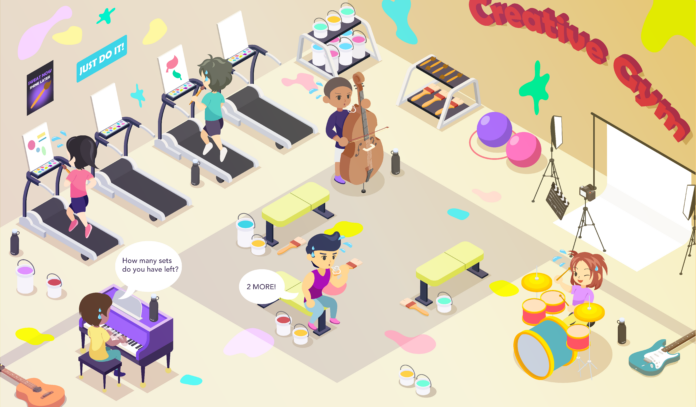
In a gym-style room, multiple people are training with brushes, painting, and musical instruments
ILLUSTRATION: Alyssa Umbal / The Peak

By: Daniel Salcedo Rubio, Features Editor

If you asked me over the past six years if I consider myself creative, my answer would have probably been “no.” Before that, though, I defined myself as a creative person. I grew up surrounded by art, from learning to play a couple of musical instruments to picking up brushes, paints, and a canvas. I’d just paint whatever came to mind. The thing is, being involved in the arts and being creative are two different things. A lot of us are conditioned to think of creativity as a mysterious force that creates art — a mystical entity that only a few are blessed with. The reality is creativity isn’t quite that straightforward.

There are thousands of ways to define creativity. The more utilitarian and structured definitions assert that “creativity is novel and useful, is a description of a product.” The more spiritually inclined definitions tell us that creativity allows us to “experience your spirit through your six senses.” Whatever your definition is, it can most likely be broken down to a tool or skill used to create something novel, or from which novelty and change arises. At its core, creativity is not a mysterious force that some have and others lack: it’s a skill, and as is the case with any other skill, you can train to be more creative. 

I think I was a pretty creative kid, but that creativity didn’t arise from nothingness. I was a very active kid; I used to play tennis and go swimming with friends on the regular. I also enjoyed playing video games and studying the flowers in my grandma’s garden. It’s no surprise that my sketchbooks were filled with pretty flowers and different renditions of Link from The Legend of Zelda doing different activities I enjoyed (also no surprise that I’m a gay biologist now). While original to my creation, my sketchbooks were filled with information my little child brain absorbed from its environment. My environment was filled with information I could pull from, full of images and moments of reflection, even if at that moment I didn’t see them that way. The reality is, I was privileged as a kid, and I had an optimal environment to be creative. Now, let’s focus on my ever-exhausted, sun-deprived, and creatively-depleted self. Yes, university made me busier, as I wasn’t exposed to the same environment as I used to be. Then, there was my first corporate job, with traffic jams, cubicles, and the office coffee machine. These were the only creative inputs I was getting for 12 hours a day. It’s true and natural: with growing up comes more and more taxing responsibilities, and you might not be able to expose yourself to that same environment rich in creative nutrients. However, creativity doesn’t die with age, it dies without a conscious effort to keep it alive.

When I was a kid, my mother did a great job of making sure I exercised enough; tennis, taekwondo, and swimming lessons were my day-to-day. Today, with far less time and far more responsibilities, I’m at my best physical health. That’s mostly because I make a conscious effort: I allot the time and track my progress. I never thought of having this same approach to my creative self until I stumbled across The Artist’s Way by Julia Cameron. I have to clarify, I haven’t read the entire book, but I know it serves as a kind of a guide to train one’s creativity through exercises. Exercises? For creativity? While it might sound a bit unconventional at first, there’s merit and actual research behind this approach. The book itself does mention exercises, but its emphasis lies on what Cameron calls the morning pages — a form of reflection and meditation done first thing in the morning, every day — and the artist date — a weekly form of reconnecting with those creative nutrients. While I can’t yet speak to the effectiveness of either of these exercises, what I can say by experience is that consistency is key. Cameron’s book is one of many examples of creativity training. A quick search of “creativity training” on Google Scholar shows over five million results, ranging from neuroscience concepts for creativity training to creativity training for nursing students

While approaches to creativity training in the form of exercises vary widely, a thing that might not vary as much is the science behind it. Brain imaging experiments have given us insight into which regions of the brain activate during certain creativity tasks. Having objective measurements to how our brain approaches creativity can also help us better design ways to train for it. For example, we know that the anterior cingulate cortex is associated with divergent thinking: an unstructured, problem solving-oriented way of thinking when we’re in a good mood. Things like having a gratitude practice, mindfulness, exercise, and a good rest are also directly related to our brain’s creative health, which is no wonder why I felt so creatively depleted when I grew up. A full night’s sleep, as a university student? Exercise, mindfulness, and a gratitude practice? How would I fit all that in when my day-to-day was going to work at 5 a.m. and not coming back home until sometimes 10 p.m.? 

We are creative selves by nature and depleted of it by the business of life. Sometimes, life can be too much, and more often than not, we end up stretched so thinly that we don’t have the energy to consciously give time and space to our creativity. And while it’s true that for some it might be impossible to give time for their creativity to materialize in paintings, novels, or whatever we commonly associate with creative individuals, the importance of conscious creativity practice can’t be understated. Start with unfiltered journaling or give a shot to the morning pages, build your practice little by little and trust that your creativity will pop up in unexpected ways and you will feel better for allowing it.

Council Chats: SFSS motion to call for permanent ceasefire in Gaza

0
This is an illustration of a graphic that reads “Council Chats.” The image also has two text boxes to symbolise messages being sent.
ILLUSTRATION: Andrea Choi / The Peak

By: Eden Chipperfield, News Writer

On January 3, The Peak attended the Simon Fraser Student Society (SFSS) bi-weekly Council meeting via Zoom. The adopted agenda touched on crucial motions, including a vote for SFSS to call for a permanent ceasefire in Gaza and a notice of motion to strike the Issues Policies. 

Vote to call for a ceasefire in Gaza passes
Joining the January 3 Council meeting were various undergraduate students who spoke about Israel’s genocide of Palestinian people, as well as the ongoing occupation in Palestine. 

SFSS president Liam Feng read the society’s motion to call for a ceasefire. Many councillors and SFU students disapproved of the motion that would call for a ceasefire and to end the siege and genocide in Gaza. 

Councillor Sam Killawee proposed to the Council that the motion should be amended to add more information to the call to action. “I would like to add some of the words that the Canadian government used in this to help frame our argument and also make it very clear, as per Issues Policy (IP) 10, that while we support Palestinian liberation, we do not support antisemitism or attacks on Jewish people,” said Killawee. Following the suggestion, Killawee posted a revised motion in the chat box that condemned the treatment of hostages as well as the immediate release of captured individuals and said, “Israel must respect international humanitarian law.” 

The majority of attendees voted in favour of the ceasefire motion. However, a few individuals spoke out against the SFSS getting involved in politics. One councillor described how “as a student society, we shouldn’t talk about this because conflicts are complex. Conflicts are politically complex; that’s not our place.” However, the Council decided the amendment of the motion proposed by Killawee should be reviewed and discussed further; thus, the original motion was struck and a new amended one was reviewed. 

The Council then moved to vote on the amended motion for the SFSS to call for a permanent ceasefire, which passed. A referendum to establish this at the SFSS membership level will be submitted and put to a vote at a later time.

Notice of motion of removal of Issues Policies stricken

President Feng submitted a notice of motion suggesting the SFSS remove all IPs, arguing that an “Issues Policy may inadvertently introduce bias or preference towards specific political stances, potentially compromising the society’s commitment to impartiality.” The motion also discussed that it is a way “to safeguard the student union’s commitment to inclusivity and fairness by eliminating any potential sources of bias or partiality arising from the Issues Policy.” 

The suggestion to remove IPs caused concern among the Council members, especially those representing constituency groups and undergraduate students attending the meeting. Vice-president of equity and sustainability, Priyanka Kaur Dhesa, commented, “Many of these Issues Policies were born through consultation with or through groups and concerns they raise.” 

The ten listed IPs dedicate their support for reproductive rights, Black History Month, tuition affordability, disability justice, living wages and union rights, climate justice and sustainability, Indigenous inclusion and reconciliation, anti-racism, police and militarization, and Palestinian liberation. 

An executive with SFU350, Ally Soriano, explained to the Council how removing IP 6 would be detrimental to the clubs and all the work done to raise awareness about the climate crisis. “I would hate for years of student activism and solidarity to be undone by just one action. And one motion, quite frankly, will lose trust in this organization completely,” said Soriano. “I do want to emphasize as it is a student union, and a portion of our tuition funds this organisation’s operations. If I’m paying you to represent me and my peers’ interests, please do so. Striking these Issues Policies is anti-student.”

A past executive and current member of DNA (SFU Disability and Neurodiversity Alliance) stated that removing IPs was “political action against human rights, against equity, against justice.” The past executive also added, “as a student, I am frankly disgusted we are having this conversation. I expect better from my representatives.”

Several concerns were raised regarding the motion to remove the 10 IPs, especially on a day where the SFSS’ call for a ceasefire was listed. A student who wished to remain anonymous spoke up about this coincidence, “This policy protects students in their advocacy for a free Palestine, which means an end to the Israeli occupation of Palestinian territories, an end to the oppression of Palestinians by Israeli forces, and an end to the genocide that is currently happening in Gaza at the hands of the Netanyahu government and IDF forces, in which Canada as a state is complicit.” The student expressed that removing IPs impacts everyone, from affordability to climate justice, regardless of how someone identifies. 

After many students and councillors discussed their views and criticisms, the Council voted to strike the motion. Therefore, the SFSS will retain their 10 IPs.

Unhoused residents of Vancouver parks subjected to discrimination

0
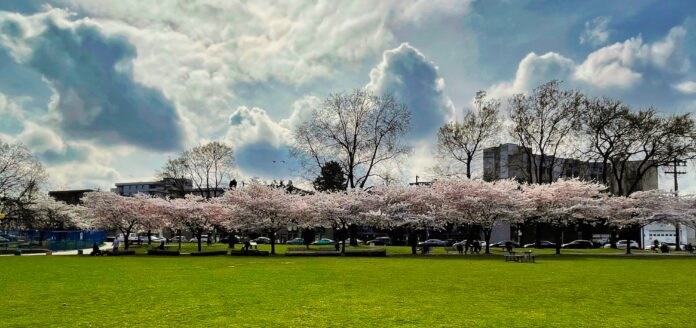
This is a photo of Oppenheimer park in march. The Cherry Blossom Trees are blooming, and there are pink flower petals sprinkling the area.
PHOTO: Ted McGrath / Flickr

By: Olivia Sherman, News Writer

Since 2018, Fiona York has dedicated her time to advocating for some of Vancouver’s most vulnerable populations. Unhoused residents of Vancouver parks, such as CRAB Park and Oppenheimer Park, are subjected to street sweeps, exposure to the elements, and discrimination. In an interview with The Peak, York discussed these acts of injustice and the human rights complaint against the City of Vancouver.

On December 18, the BC Human Rights Tribunal (HRT) agreed to proceed with a complaint against the City of Vancouver and the Parks Board, voicing concerns over unfair treatment of residents of Vancouver’s parks. In a December 14 letter, the HRT states both the city and the parks board “discriminated in Services [ . . . ] based on Indigenous Identity, Race, Colour, Ancestry, Place of Origin, Physical and Mental Disability, Sex and Age.” The inadequacies include “insufficient washroom and showering facilities, no shade in summer, insufficient electricity, and a lack of comprehensive sanitation of public facilities.” 

York seconded the statements made in the letter, saying, “none of these amenities have been [provided] in a consistent manner, and when they’ve been provided, it’s usually too little and has been taken away again.” 

In January of 2022, the BC Supreme Court granted a section of CRAB Park available for 24-hour camping, allowing residents’ tents to remain standing all day. As the unhoused population in Vancouver grows, more tents spill into the non-designated areas, breaking the city bylaw. The BC government is set to impose a seasonal moratorium on evicting residents from CRAB and Oppenheimer Park in the winter months. A seasonal moratorium involves the temporary suspension of certain laws or regulations. Advocates for residents call to postpone the eviction to spring, when the weather warms. In a correspondence with Global News, the Vancouver Board of Parks and Recreation stated, “this is not a decampment. We’re not asking people to leave, we’re asking for people to comply with the bylaw.”

However, York noted, “If there was a real interest or desire to provide those services, there would be, or should be, some means of doing that.” For York, “It’s not a matter of not being able to provide these services, it’s a matter of making the decision not to provide these services.”

Residents of park encampments are often subjected to street sweeps. The Belongings Matter report analyzes current laws and how they’re enforced against vulnerable populations and their belongings. The treatment of people’s personal belongings differs depending on where they’re located, such as city property, a park, or elsewhere. The reality for unhoused people who face street sweeps is often having their property destroyed or disposed of. York says this is “part of a bigger belief system that [unhoused] people dont deserve to have belongings,” which is “negating the very humanity of people.”