
Home Blog Page 1397

Climate reporting heats up debate over oil sands

0

By Erika Zell
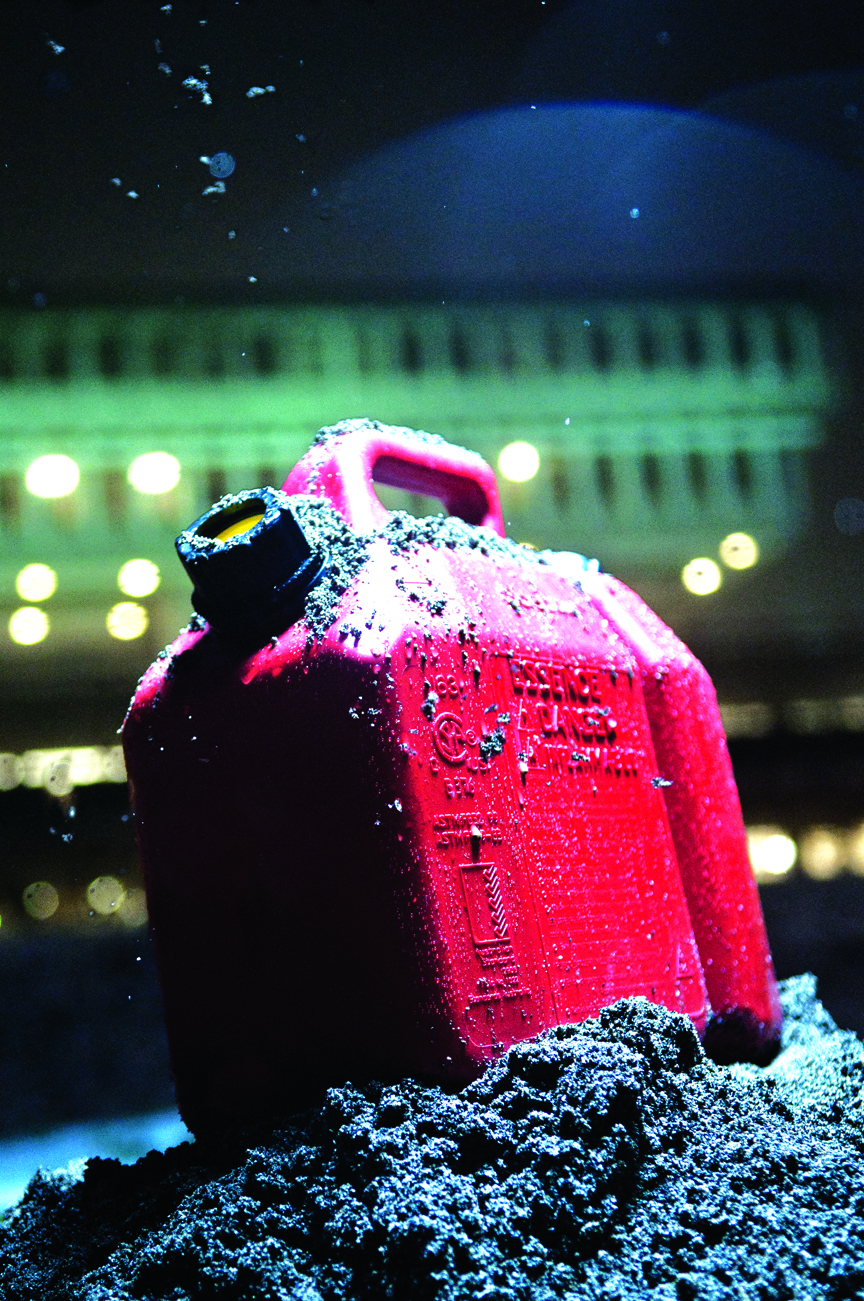
Photo by By Mark Burnham

Oil sands advocates may have been given some unexpected fuel for their fire this month, with the release of a new study claiming that burning off the entire Alberta oil sands would only raise global temperatures by 0.36 degrees Celsius.

The study, “The Alberta oil sands and climate: The claimed economic benefits of exploiting the vast Alberta oil-sand deposits need to be weighed against the need to limit global warming caused by carbon dioxide emissions”, was co-authored by Neil Swart and Andrew Weaver and published in the journal Nature Climate Change. At its core, it is an attempt to quantify the total combustible carbon in the oil sands, but maybe more importantly, it makes several key inferences about what this could mean for future climates.

The methodology is simple and upon closer inspection the results are actually unsurprising. By using known oil sands data, the authors were able to calculate the total carbon stored in the oil sands today. They then performed similar calculations to determine the carbon content of other known fossil fuel sources, and compared the results. What they found was that the oil sands are actually a relatively small source of carbon when viewed on a global scale — their numbers indicate that the oil sands hold less than two per cent of global carbon stored in fossil fuel reserves, and that as a source of emittable carbon, coal reserves trump the oil sands by two orders of magnitude.

However with so many stakeholders, the results were bound to be controversial. Those personally or financially invested in the oil sands are using the report to further justify oil sand exploration and expansion, while environmental groups claim journalistic bias or poor science. The report’s tone is moderate, but the findings have been prominently featured across major Canadian news outlets — The Globe and Mail and National Post recently ran news stories under the headlines “Canada’s oil sands: Not so dirty after all” and “Coal worse than oil sands: study”, respectively. In relation to other international events, the sensationalist coverage has likely played a role in affecting public opinion regarding the EU’s stalled vote on classifying the oil sands as a source of ‘dirty’ fuel.

One of the most interesting aspects of the controversy, and one media outlets were quick to jump on, surrounds the team who authored the article. Both Swart and Weaver are climate scientists out of the University of Victoria’s prestigious Climate Modelling Group, which has produced internationally-renowned climate research since its inception. Weaver, especially, has been an outspoken advocate of climate warming for the last decade, and is one of the most well-known researchers in the field of climate studies. As well as heading the Climate Modelling Group, he was a lead author on the UN Intergovernmental Panel on Climate Change (IPCC)  Fourth Assessment Report, which, although published in 2007, stills stands as the most comprehensive summary of modern climate research, and is a benchmark for other climate modelling studies being done today. Weaver’s reputation in the field of climate science lends a lot of weight to the article, and has almost certainly increased the attention that the results have been given. His level of expertise also limits the likelihood that the figures were born out of bad science: Weaver has helped develop some of the most sophisticated climate models in the world — the calculations that went into the oil sands report are child’s play by comparison.

So is the study really worth the attention it’s received? It was intended for use as a comparison tool, and the authors place some important qualifiers on the work, especially on temperature projections. In fact, a careful reading of the original work reveals that the authors did not intend for the work to be used for predicting temperature change at all — the “warming potential” calculations (as they’re referred to in the paper) were provided for comparison only, and they admit that the models behind them are far too simple to accurately predict something as complicated as temperature responses.

Global warming is something of a media darling these days and makes for excellent news; however, problems arise when crucial facts are misrepresented to an uninformed readership. It’s difficult to say whether the problem stems purely from irresponsible reporting or the ongoing trend towards more sensationalized news, but one thing remains clear: few people seem to actually understand the crux of Swart and Weaver’s argument — and this is having serious ramifications on an international scale.


Behind the numbers

The trick to understanding the results comes from reading beyond the media reports.

Kirsten Zickfeld, an SFU climate scientist, says she was appalled by the reaction that the study got from news outlets. “I was shocked by the biased reporting in the media, who cherry picked the results reported in the article. The article clearly concludes that if policymakers are serious about limiting global warming to two degrees Celsius, there is no room for oil sands development. I was really disappointed that they all [chose to write] on this same idea that the tar sands don’t impact climate, which isn’t true.”

What most articles have focused on is the easy-to-grasp conclusion that burning off the carbon in the tar sands would only increase global temperature by 0.36 degrees Celsius. In fact, if the tar sands are broken down into economically viable and unviable oil reserves, and the impact of only the usable oil is calculated, Swart and Weaver claim that global temperature would increase by just 0.03 degrees. To compare, the authors performed similar calculations on the known stores of conventional oil (such as Saudi Arabian oil reserves) as well as known coal reserves, and found that if all the carbon found in coal was burned off, global temperatures would increase by almost 15 degrees. The comparison is staggering, and the headlines practically write themselves. The tar sands are a small source of carbon — but is this a new development in the climate change canon?

“I was not surprised [by the results], no,” said Zickfeld. “The tar sands are just one single resource.” Zickfeld also has some concern about the framing of the results: “They compared this single resource to all the coal available on the planet. It’s a bit of a mismatch. No wonder the warming potential of coal would be so much higher. There’s so much more of it.”

Another factor in interpreting the results is the idea of warming targets, or limiting global warming to a defined, measurable ceiling. In 2010, the Copenhagen Accord adopted a safe warming ceiling of two degrees Celsius. “[In relation to a two-degree target, 0.36 degrees] of warming is actually very big. We’re not talking about limiting warming to 10 degrees; in that case the tar sands might not make a big difference. But in the context of a two-degree limit, the tar sands are important.”

The two-degree temperature limit is even tighter when you consider that the IPCC recommends this limit of a two-degrees temperature increase from pre-industrial levels — and that we’ve already seen a 0.8 degree warming from this pre-industrial baseline. That leaves us with 1.2 degrees of climate wiggle room, and the projected 0.36-degree impact of the tar sands account for almost one-third of the remaining room.

“We need to see the tar sands in a global perspective,” emphasised Zickfeld. “If the tar sands were the only fossil fuel resource on the planet, it’s true that the climate effects would not be dramatic. But the rest of the world won’t stop exploiting their own fossil fuel resources just to let Canadians exploit the tar sands. If every country would follow Canada’s example and fully exploit their resources, the warming would be very large. Canadians have already used up more than their fair share of the carbon budget that would allow us to limit warming to two degrees.”

[pullquote]

If the tar sands were the only fossil fuel resource on the planet, it’s true that the climate effects would not be dramatic. But the rest of the world won’t stop exploiting their own fossil fuel resources just to let Canadians exploit the tar sands.

– Kirsten Zickfeld, SFU climate scientist

[/pullquote]

Finally, she has some words of warning in regards to the inertia befalling current energy policies and the path of high greenhouse gas emissions that society is bound to. “Research from the International Energy Agency has shown that most of the remaining [carbon budget] that would allow us to stay within two degrees of pre-industrial temperatures is already committed within existing energy infrastructures.” In other words, because there has been no real effort towards the large-scale use of alternative, ‘greener’ energy sources, we will continue to be dependent on high-emissions infrastructure for the foreseeable future. Because of this, there is a high likelihood that continued development of the tar sands — not including the continued development of other fuel sources — could push the climate system beyond the two-degree limit, to potentially hazardous results.


Beyond climate

The study and subsequent media reaction isn’t only raising ire in the climatology community, however; professionals from many other disciplines in environmental studies feel that the take-away message got taken out of context as well.

“My knee-jerk reaction is that it’s not the full story,” said Meg Krawchuk, a landscape and conservation ecologist, and assistant professor in SFU’s Department of Geography.

“Talking about the effects that the oil sands could have on climate is one part of the story, but the other part is that land cover change [in this area] is leading to changes in biodiversity and species composition, and that all species — including humans — living in oil-sands affected landscapes are being impacted. In fact, this will be a concern whether or not we use all or some of the deposits.” She continued, “[People] get so excited about climate change that they forget about what’s happening on the ground.”

“[Scientists’] concerns about the oil sands have dominantly focused on land-cover changes, water, and species, that live in that region. In my mind that’s been a primary concern, but because there’s been an extraction of carbon based resources, climate will obviously be a concern as well.”

While the Swart and Weaver report focuses on the direct effects of burning fuel deposits found in the oil sands, it does touch on the other environmental question marks regarding the development of this resource. In their supplementary materials, the authors explain the concept of “well-to-wheel” calculations to better include the impacts of extracting and refining oil. The oil sands are an input-intensive source of oil; extracting the crude product requires massive amounts of super-heated water, which in turn requires a lot of fresh water and energy — even before the fuel is combusted, or even refined, the energy required is high. In light of this, there have been industry studies which assert that extracting oil from the oil sands is only economically viable when oil prices are high, and after this threshold, extracting and processing a barrel of oil sands oil costs more than that same barrel can be sold for.

Another key relationship between the oil sands and climate is the biome — the Canadian boreal forest — in which they are found. Many scientists hypothesize that the boreal is acting as a major carbon sink, or storage site for inactive organic carbon. The carbon in these systems is stored as biomass (i.e. as trees or shrubs), or in the soils, and is released into the atmosphere as carbon dioxide very slowly, thus potentially mitigating the effects of climate warming.

“Having peatlands and bogs, having the boreal, which stores huge amounts of carbon and methane [a greenhouse gas several times more potent than carbon dioxide], and having those affected by disturbances and land-cover change [also has an effect on climate],” said Krawchuk. “[The study] didn’t include an assessment of the life cycle of trees as sinks for carbon, or idea of landscape value versus extractable carbon.”

In any case, wires seem to have gotten crossed somewhere along the line, and Krawchuk has a pretty good idea where: “[The idea of] ‘It’s not the worst emitter’ got confused with the idea that ‘It’s not as bad as we thought it was’. The paper came out saying that it’s not the biggest emitter, but it’s being interpreted as being that it’s not as bad as we thought it was, which isn’t necessarily the case.”

“I don’t think anyone would have suggested that the oil sands would ever be the largest contributor to climate change. We never thought that they were that bad [for climate] to begin with.”


A warmer future? 

Although public opinion of the oil sands has already been affected, Swart and Weaver are blunt in their conclusions: “If North American and international policymakers wish to limit global warming to less than two degrees Celsius they will clearly need to put in place measures that ensure a rapid transition of global energy systems to non-greenhouse-gas-emitting sources, while avoiding commitments to new infrastructure supporting dependence on fossil fuels.”

The omission of this key point illustrates how this whole situation swung wildly out of control: sensationalized news and under-informed citizens create opinions, not educated decisions, and if Canada ever hopes to make a stand against climate warming, opinions won’t be good enough.


SSB and Shrum Chem faceoff

0

By Ariane Madden

Sustainability competition’s goal is to reduce energy consumption by five per cent, which could save up to $24,000

Starting March 5, the South Sciences Building and the Shrum Science Chemistry building will go head to head in a competition to reduce their energy usage and increase sustainability awareness. The competition, an initiative of the SFU Sustainability Network, teamed up with B.C. Hydro’s workplace conservation awareness team to organize and execute the event.

Landon Hoyt, a Green Labs program assistant for SFU, stressed how science buildings typically have the highest energy consumption of all buildings within a
university campus.

“Science buildings use up a lot of energy from their equipment and especially from open fume hoods. So we thought it would be a good idea to target these buildings for the competition because of that,” Hoyt told The Peak.
The goal of the competition is to reduce building energy consumption by five per cent, which if maintained throughout the year could potentially save the university $24,000 in energy costs. Buildings will be able to monitor their progress using an online building dashboard which tracks energy consumption for seven of SFU’s buildings, including the Academic Quadrangle and Maggie Benston Centre. The dashboard will also be available on an interactive touch-screen television outside of the chemistry department offices.

While the winning building will receive a catered lunch prize, smaller prizes of gift cards will be available to individuals who comment on the dashboard website about their sustainable habits and to others partaking in energy-reducing activities seen by the so-called “Green Police”.

The Green Labs program, which has been running since last year in the South Science Building, has identified three key areas where science labs can reduce their energy consumption: closing fume hoods when not in use, turning off lights in empty labs and offices, and shutting down computers at the end of every night. The hope is that such energy-saving habits will help SFU maintain LEED Gold certification on the Shrum Chemistry building, while also working towards the university’s overall goal of reducing its energy use by two per cent every year.

In order to encourage such energy-reducing habits, each building will nominate one student or faculty member each week as their MVP who will wear a green lab coat while acting as a sustainability ambassador. The MVP will then hand out tip sheets and give feedback on energy-efficient practices by placing encouraging stickers and magnets on fume hoods and around labs.

“Really, what we’re trying to do is increase awareness,” said Hoyt of the competition’s overall vision. The competition will continue until March 16 and prizes will be awarded later in the month.

AQ bathrooms renovated

0

By Benedict Reiners

After approximately four months of construction, the washroom renovations in the Southeast AQ near completion. The renovations, which involved the demolition of old infrastructure as well as upgrades, were completedon three facilities in question: a male and a female washroom, in addition to one private unisex washroom, all in compliance with accessibility requirements. These washrooms should be opened to the public this week.
“The washrooms in the AQ were chosen as they are some of the most heavily used washrooms on campus and were also some of the oldest and in most need of repair,” said Larry Waddell, director of facilities development. He added that, although these were the washrooms with the greatest need of repair, there were still many others that also needed similar repairs elsewhere on the Burnaby campus. “Planning and design work is underway to renovate the washrooms located in the northeast section of the AQ near the Renaissance, and the washrooms in the southwest corner of the AQ. This work is planned to take place this summer.”
However, this work did not come without cost. Sources indicate that the recent renovations cost the university approximately $375,000, all while, as SFSS university relations officer Marc Fontaine pointed out, the provincial government has been making cuts to available funding for such projects. “Several years ago, the provincial government [cut SFU’s] annual capital allowance $6.5 million to $0.5 million, not nearly enough to address deferred maintenance of campus buildings,” Fontaine reported.
In addition to this, the opening of the newly renovated AQ washrooms has been delayed as a result of issues regarding the building permit, which, although initially approved, was later mandated by the city building inspector to be changed to include entry doors from the corridor. Despite these setbacks, the washrooms are set to open this week.
While these renovations have been going on, the SFSS has also been doing some of their own renovations in the Maggie Benson Center to the washrooms under the Higher Grounds Coffee Shop and the Highlands Pub. This project is set to be the last for the time being by the SFSS in terms of washroom renovations, as it is intended to bring the last of those under the SFSS jurisdiction into good condition. “In terms of washrooms that are under the jurisdiction of the SFSS, our facilities are now all in excellent condition. The upper pub washrooms were renovated as part of the recent pub renovations and two other washrooms near the SFSS conference rooms are relatively newer than others on campus,” said Fontaine.
As the last of the planned washroom renovations by the SFSS for the time being, the upgrade is smaller than the project just completed in the AQ, only covering two smaller washrooms, a male and a female. As a result of this, the project will only cost the SFSS approximately $112,000, a little under a third of the cost of the AQ renovations. This money is coming from the SFSS expansion fund, a fund set aside to pay for building upgrades and renovations under society jurisdiction. The planning for this project took place from April to December, and building started in January. The renovation is projected to be completed in March.
However, outside of the SFSS jurisdiction, there is much work that remains to be done on the aging washrooms throughout the university, and there will be much work on such projects as the university moves forward, projected Fontaine. “The university itself is continuing to undertake [the] renovation of its own washrooms around campus, especially in the AQ. These projects take a lot of time and money but I am proud to say that the university’s senior administration is aware of the issue and taking action.”

University Briefs

0

By Ariane Madden

Former Calgary student union president charged with robbery


The former president of Mount Royal University’s student union was arrested and charged with bank robbery last week, only one month after resigning from her position. She allegedly resigned after a routine review uncovered several unexplained discrepancies in policy compliance. She had a prior outstanding arrest warrant for fraud.


Federal youth employment programs cut


Several Service Canada Centres for Youth Employment shut their doors last month as part of a government cost-saving strategy. Federal human resources minister Diane Finley highlighted enhanced online government employment services as an alternative to the former job-search assistance centres.


“Cavesluts and Dinowhores” posters elicit warning to UBC club

The University of British Columbia Ski and Board Club has received a written warning from university administration following the display of event posters which were deemed offensive last month. The posters — which advertised a prehistoric-themed beer garden event — featured a scantily clad woman leaning against a dinosaur skull.


Law school students participate in Twitter mock court case


Students from the universities of British Columbia, Victoria, Dalhousie, Ottawa, and York participated in the first ever mock-court case to be held over Twitter. Students were asked to argue different sides surrounding the issue of the B.C. government’s obligation to First Nations’ treaty rights and were judged on their clarity of responses as well as use of the social media tool.


 Ineligible votes uncovered from UBC BoG election


A review of the votes cast for the University of British Columbia’s recent board of governors elections discovered that some ineligible votes had been cast. The UBC associate registrar stated that the votes were mostly cast from students attending UBC’s affiliate colleges who are not permitted to vote in board of governors elections but that the number was not high enough to affect election outcomes. 


Ariane Madden


Referendum questions announced

0

By Jennifer Bednard

On February 29, the Independent Electoral Commission (IEC) released the list of referendum questions that will be on the ballot for this year’s SFSS elections. Within these referendum questions is the proposal that would fund the proposed student union building at SFU Burnaby.
Ali Godson, chief electoral officer of the IEC, explained the process. “There are three ways to get a referendum question on the ballot. One of them is by getting a petition signed by five per cent of the SFU undergraduate student population. Another way is having it approved by forum. The final way is having it approved by the board of directors. [In this referendum] the Schools Building Schools question was approved by forum and the other three questions were approved by the board of directors.”
The first question is concerned with whether or not to add a levy of $1 per semester for full time students and $0.50 per semester for part time students in order to support the charitable organization Schools Building Schools, which Godson explained would use the levy to build schools in Uganda. The question also asks whether or not to allow students the ability to opt out in any given semester.
Question number two addresses a proposed amendment to By-Law 17, which is concerned with referenda. The amendment would address a number of provisions in the bylaw to allow referenda to be held in the fall semester. “It would allow referendum questions to be held in the fall,” Godson said, “whether or not there is a by election.”
The third question has to do with the reallocation of a portion of the Space Expansion Fund to different campus organizations, including clubs and departmental student unions. “Currently, $15 is collected from each student. $5 of that would be reallocated and $10 would remain in the Space Expansion Fund,” explained Godson. The reallocation would not increase the student levy.
Question four deals with the proposed Student Union Building and stadium. A membership levy of $10 would be introduced in January 2014, increasing by $10 each following year until it is capped in 2022. Godson further clarified, saying, “The levy would be pro-rated, depending on how many courses you’re taking each semester.”
The referendum will be held online from March 20 to 22.

For a full list of referendum questions, see page 8.

Library hours extended

0

By David Dyck

Library announces longer study hours during exam time at both the Burnaby and Surrey campuses

At forum last week, it was announced that the Fraser Library on the Surrey campus and the W.A.C. Bennett Library on the Burnaby campus would be extending their hours to accommodate late-night study sessions.  The new hours will allow the Surrey campus to remain open longer, and students on the hill who want to pull all-nighters will now be able to do so in the comfort of the library.

SFSS university relations officer Mark Fontaine and president Jeff McCann first approached the library in December to attempt to extend library hours. “We were going in with the idea that students don’t need full check out facilities and full librarian assistance in the middle of the night,” said Fontaine. “They need the space to study in; warm space and good lighting, with access to computers.” Fontaine pointed out that when either the Burnaby or the Surrey libraries close in the evening, “there’s a stream of students who are herded out of the library.” This indicated to him that the demand was there for longer hours.

Natalie Gick, associate university librarian, administrative services, explained the changes at forum. “At the Bennett library we’re going to have what I call ‘late night study hall’. We will be keeping parts of the building open 24/7.” These hours are for exam period only, taking effect on April 10 and running until April 22. Gick explained that only designated spaces, such as the fourth floor, most of the third floor, and the group study lounge on the second floor, would be kept open.

Students wanting to check out books, borrow laptops, or browse the stats and reserves collections are out of luck after regular library hours, however, as there will be no library staff on hand. Students won’t be completely alone; security will remain on hand to manage safety on the floors that remain open. Essentially, the library will only be providing added study space.

On the Surrey campus, the Fraser Library will not be offering the same full-time service, but it will be extending regular operating hours. Beginning April 12 and ending on April 21, from Monday to Friday, the library will be open at 8:00 a.m. as usual, but it will close at 11:00 p.m. instead of 8:00 p.m. On Friday during that period, it will close at 11:00 p.m. as well, as opposed to its regular Friday closing time of 6:00 p.m., and on Saturday it will be open from 10:00 a.m. until 9:00 p.m., rather than 5:00 p.m. Regular services will be available at the Surrey location during those hours.

Gick told The Peak that they are doing this on a trial basis this semester, and will be looking at how many students use the facilities during this time.

Bruno Mars: not quite the hopeless romantic

2

By Denise Wong
Photo courtesy of Atlantic Records

Think twice about making that Bruno Mars cover video for your special someone — here’s what you’d be saying

Bruno Mars is the singer-songwriter behind the hit single, “Just the Way You Are”, a sweet song about how his lover is perfect the way she is and doesn’t need to change a thing. Ask the average pop music groupie if they see anything wrong with the picture, and they’ll probably shake their heads innocently.

“Bruno Mars is talking about loving a girl for who she is, no matter what. There’s nothing wrong with that. That’s a great message,” they might say, without ever having really listened to his lyrics beyond the chorus.

He’s not saying that girls shouldn’t be insecure because looks don’t matter to him — he is absolutely saying looks matter, but that whoever the song is meant for doesn’t need to be insecure because she’s already pretty.

The song’s message is quite simple: “I love you because you’re perfect.” Physically perfect, that is. Don’t believe that’s the message that your Prince Charming-slash-role model is really saying? Take a look at the line right before the first chorus: “When I compliment her, she won’t believe me / And it’s so, it’s so sad to think she don’t see what I see.”

What does he see? Her eyes, her hair, and how physically attractive she is (re: first chorus). There’s nothing to rule out the possibility that he only thinks the object of his affection doesn’t need to change because she’s already drop dead gorgeous.

He’s not singing about inner beauty, or how love colours our perspective so that our beloved is beautiful no matter what — he’s singing about big, shiny eyes, perfect hair, and sexy laughs. Note how he never actually says anything about loving this girl regardless of how she looks.

When Bruno Mars says she’s beautiful and she doesn’t need to change a thing, the message I’m getting is, “Pretty people, like you, don’t need to change because they’re already physically perfect.” I can’t assume that he means she’s beautiful whether or not she wears make up—because that’s not what he sings.

And suddenly those sweet words have become flavourless.

“There’s not a thing that [he] would change about her face,” is the kicker line that shows he’s really just talking about physical appearance. “If perfect’s what you’re searching for, then just stay the same” says Mars, completely disregarding the fact that all human beings are predisposed to this thing called old age.

Luckily, it’s a disease easily prevented and cured by Botox shots — but Bruno Mars should probably bank on something other than good looks and long eyelashes, because her “beautiful skin” is going to sag in about 20 years.

Throughout the song, he manages to capture a relatable scenario for women who have, at one point or another, felt insecure about the way they look, and targets those insecurities with flattery by telling them how perfect they are. Yet, as I’ve stated before, his idea of perfect is really more shallow than what most people think it is.

If one looks strictly at the title and the catchy chorus, “Just the Way You Are” almost makes an easy pass for a song with substance. How does telling someone they’re perfect just the way they are seem superficial? It doesn’t, if all you’re hearing is the chorus.

Bruno Mars gives more reasons than not to believe his song is about skin-deep beauty. Because it’s music, I understand it’s open to different interpretations. Just because he doesn’t say he won’t love her when she gets old, doesn’t mean he won’t. Just because he only describes her looks in this song, doesn’t mean he doesn’t love her for her personality. Understandable. But that goes beyond giving him the benefit of the doubt; it would be praising him for something he never even said.

I acknowledge his amazing range and admit his songs are catchy, but it’s a whole different story to give him credit for being a sweet romantic when the message behind the song is really quite far from it. No one thinks of Bruno Mars as a shallow singer who sings about pretty faces, they think his songs have uplifting messages — but the problem is that people tend to be selective. They pick out their favourite lines and think those lines represent the whole song, but they don’t.

In the case of Bruno Mars, people are supporting the song for reasons that are not even represented by the lyrics. It sounds like he’s sending an uplifting message to the female population when he sings about how they’re perfect just the way they are.

What people don’t always realize, is that his love is conditional and only applies to those that are physically attractive — which counteracts the major appeal of the song.

Arts rep pitches student affairs officer position

1

By Graham Cook

Kyle Acierno, SFSS arts rep and SASS president, has drafted a proposal for the creation of a student affairs officer. The proposal describes the position as being “responsible for developing programming, advising student organizations and student leaders, and conducting research to meet the needs of the whole student — physical, emotional and mental.”

The document also claims that Tim Rahilly, VP-Students, “has agreed to provide half the financial support” for the position. This comes with the condition that the Faculty of Arts and Social Sciences will provide the rest of the funding and strategic support.
The same report cites a 2010 survey completed by SFU about the top 10 things that students would improve about the school. The findings concluded that other than repairing facilities, the biggest focus was on student life. The document goes on to describe that “although student societies . . . and student clubs have existed at SFU since the early 1960s, there still appears to be a disconnect between the students and the university.” Also mentioned are the current student issues in the Faculty of Arts and Social Sciences, most of which surround the poor relationship between the dean’s office or Arts Central and the student population.

On this proposed position, Acierno told The Peak that it would be very connected to both the administration and the students. He also said that it comes in response to “the lack of engagement that our faculty provided for students in the faculty.” In addition, Acierno said the inspiration for this came from observing the Arts Undergraduate Society at UBC where there is a similar position: “Once I found out that they have a person there . . . helping to engage the students, helping to help the students, helping to work with them, and make activities and make events for them I thought this was something that is really necessary here.” Nancy Johnston, executive director of SFU Student Affairs, has also been noted as being in favour of this position being implemented.
Acierno’s report concludes: “Student social integration and engagement at SFU is relatively low. Given the anticipated student retention benefits of a more engaged student population, SFU should consider ways to increase awareness of social activities and opportunities to increase engagement of its students on campus.”

In the Faculty of Science, a similar position existed to bridge the gap between students and administration. However, the position was eliminated in January of this year by dean of science Dr. Claire Cupples.

Stuff We Hate: March 5th

0

By Gary Lim
