Home Blog Page 132

Navigating the soaring costs of groceries

0
produce stand in a grocery store isle
PHOTO: Jin Song / The Peak

By: Yasmin Hassan, Staff Writer

If you’ve recently gone grocery shopping, you’ve likely noticed concerning rises in food prices. Why has everything gone up a couple of bucks, but the portions have gotten smaller (also known as shrinkflation)? Why have the prices for staple items skyrocketed in the past few years with little consensus on why? Why are our wages so low, and our produce prices incredibly high? These are just some questions many people like me are asking. I’m no economist, I’ll admit that right now. But, that doesn’t mean these terms aren’t worth trying to understand, nor does this mean we shouldn’t hold powerful parties accountable.

Many people are speculating why grocery giants have done little to change the costly nature of buying food. Back in March 2023, CEOs of the largest grocery store corporations (Loblaw, Metro, and Empire) met before Parliament to defend against accusations of profit-mongering, or, as the NDP might call it, “greedflation.” I’m not the only one who thinks these costs that affect food inflation aren’t entirely up to supply-chain mishaps or the carbon tax. It’s a bit unrealistic for company CEOs to expect people to afford basic necessities like food, hygienic products, and other commodities when they’re economically unobtainable. 

The NDP passed a bill to lower grocery prices and increase the extent to which the Competition Bureau has the power to prevent large corporations from abusing their dominant positions in the market. On top of that, organizations like the community union ACORN have also taken action in the form of protests and calling for increased taxes on corporate grocery profits, but some are saying that that’s not the answer to our problems. Another thing you might’ve seen is the recent Loblaw boycott — Loblaws is Out of Control — that started as a sub-Reddit, grew to 70,000 members and is now happening across Canada. The reasons driving these grocery prices up are like a trifle cake: too many layers. We can sit here and blame greed (a valid point) or the general rise of inflation, but the bottom line is that there are so many interchanging factors that have an unforeseen effect on consumers. 

This isn’t just about how food prices have risen —  this all boils down to a reflection of the overall high cost of living in Canada right now.

And how do our farmers feel about this? How have they been affected? Executive director of the BC Association of Farmers Markets, Heather O’Hara said farmers who sell at farmers markets are “not necessarily interested in volume and better margins” and that “the goal of a conventional mass grocer is different than the goal of a farmers market.” As much as no one’s immune to food inflation, farmers are impacted in a similar way. Although many say it’s better to shop locally and support your farmers, which I totally agree with, sometimes it can be pricey! It’s all fair game, though, because oftentimes, the heightened cost of production is reflected in the cost of the product. 

So, what can we do? Will fixed-price ceilings or prize freezes work? I doubt it. Prize freezes, according to some (and me), seem like a bit of a publicity stunt coming from the major grocery corporations in order to please the public for a while. Price controls won’t do anyone any good in the long run, because one way or another, the corporation’s expenses will be cut so they can continue to pocket outrageous profits — and that might mean actions like layoffs. Canada also relies heavily on imported food, especially during winter, so limiting exports won’t be beneficial either. But it’s not completely miserable. Some say that if we can increase food resilience —  which means diversifying food sources to reduce the risk of shortages due to importation or weather — and reduce domestic trade barriers, it might help bring costs down. Wage push inflation might also help in propelling the momentum for wages to catch up to high prices, but that will definitely take time. 

Although it is getting better, wages are low and slow to catch up to the rate of inflation at this point. Even if we might be getting paid more, prices are still rising beyond pay increases, which makes the overall cost of living really uncomfortable. Raising wages is important, but this doesn’t guarantee prices stop surging. If inflation is slowing down, and people get higher wages, that could lead to more spending which only makes inflation worse! Ultimately, wages need to keep up with inflation rates. Many of us will never be able to buy a home in the Lower Mainland at this rate, and that’s not to mention find an affordable apartment to rent — so why not at least make basic necessities something that’s accessible? Why should a family of four expect to spend an average of $16,297.20 on food this year? That’s not even accounting for people who have to choose between putting food on the table or paying rent for the month; how is it fair to them? This isn’t just about how food prices have risen — this all boils down to a reflection of the overall high cost of living in Canada right now. We should hold grocery giants responsible when guarantee price gouging, but that doesn’t mean it’s the only solution to this mess. What is clear is that the government needs to make affordability a top priority.


Skincare should be effective, not excessive

0
A photo of four skincare products against a white backdrop from the brand The Ordinary. The products are labeled: high coverage foundation, azelaic acid, hyaluronic acid, and natural moisturizing factors + HA.
PHOTO: Valeriia Miller / Unsplash

By: Olivia Visser, Opinions Editor

In my teenage years, the average skincare routine consisted of a cleanser, toner, and moisturizer. Skincare was just beginning to bloom into the multi-billion dollar industry it is today. Sometimes it felt difficult to keep up with the most basic of routines back then. Yet these days, the variety of skincare products on the market feels overwhelming: retinoids, serums, vitamin formulas, you name it. And it’s not just the products themselves that are excessive; growing cultural trends and conversations tell us we need every formula under the sun for every possible skin concern, no matter how small. Why should we give predatory skincare companies $50 a month for items we aren’t even certain are effective? And moreover, why are we OK with being told that aging is unattractive or even avoidable?

Despite all those nighttime routine videos you may see while scrolling through your feed, dermatologists tend to agree that “less is more” when it comes to your skin. In fact, overuse of skincare products can cause irritation, breakouts, and dryness. So why the obsession with piling on eight different products twice a day? Don’t get me wrong, we all have different skin concerns and conditions. Some skin types need more intensive routines, and others don’t need much at all. But what we should be wary of are the extensive multi-step routines being sold universally to the average consumer, many of whom already have clear skin without the need for specialized products or treatments. The global skincare industry was worth $146.7 billion in 2021, and it’s only expected to grow. Most of these companies are aware of our insecurities and know they can profit off them. Have you ever wondered why many of them tend to hire models with picture-perfect skin? Do you really think none of their brand photos are filtered and edited? 

Remember that “signs of aging” are visible reminders that you’re alive.

The skincare industry isn’t just bad for our self-esteem, either. Despite the growing number of products made with recyclable packaging, 20–40% of beauty products “end up as waste.” A big part of this boils down to overconsumption. To avoid products you don’t need, it’s important to know your skin type and research the best products that’ll work for you. This prevents you from over-purchasing in hopes that one of many products will do the trick. If you’re not sure which products are helping and which are harming, it’s probably worth de-bulking your routine and starting fresh. According to dermatologist Dr. Whitney Bowe, the first place to start when it comes to simplifying your routine is reducing “active” ingredients. This includes products like “retinoids, vitamin C, benzoyl peroxide, and lactic acid,” which can be harsh on your natural skin barrier. She recommends a “cleanser, moisturizer, and sunscreen,” which tends to be the consensus among skincare professionals. Another ingredient to avoid is fragrance. If you have specific skincare concerns, it’s worth seeing a dermatologist — but if that’s not possible, researching information from accredited dermatologists and peer-reviewed sources is the next best thing. 

There’s nothing wrong with having a specialized skincare regimen; for many people it’s a satisfying part of their self-care routine. But at the end of the day, you can’t reverse aging and skin isn’t meant to be flawless. And unlike what these massive corporations want you to think, the most proven way to reduce major skin-related changes as you age is still just wearing sunscreen and avoiding excessive sun exposure. Don’t let yourself fall for heavily curated advertisements, paid promotions, or trendy products that use buzzwords like “fine lines,” “pore-shrinking,” or “dark circles.” Pores can’t disappear, dark circles are often genetic, and there is nothing wrong with aging. I gave up on my multi-step skin care routine years ago and I’ve never been happier — not to mention my wallet! And believe it or not, my skin looks exactly the same, if not better. Skincare is about taking care of your skin, not looking perfect. Yes, I still have visible under-eye veins and the beginnings of “crow’s feet” wrinkles, but those were never going anywhere with any amount of pricey products. Remember that “signs of aging” are visible reminders that you’re alive — and that’s nothing to be ashamed of. 

Want to be a certified Olympian? Now you can!

0
Synchronized swimmers in a triangle formation in a pool.
PHOTO: cottonbro studios / Pexels

By: Kaja Antic, Staff Writer

With the Paris 2024 Olympics quickly approaching, many of us at home lament that we can’t participate in the rigorous athletic competitions that trained athletes much younger than us are gaining medals for. Or, that’s what we may think.

As SFU students, we are eligible to compete in our own Olympic events — the difficulty of some being harder than those exhibited across the Atlantic in France this July. All you have to do is pick one or more of the following events to compete in! The International Olympic Committee doesn’t exist for these events; the only judges are the Burnaby Mountain raccoons. 

The AQ to West Mall Half-Marathon

Don’t you love the trek across campus? Now it’s an official event! If you can make the cross-campus distance in under ten minutes, you earn yourself a medal! Navigating the packed walkways, climbing the concrete stairs, dealing with the cold mountain wind — this route can be a challenge for any student.

Still think it’s too easy? Try the UniverCity to Residence Marathon for an even harder challenge. Make sure to watch out for construction detours. They change every hour.

Swimming (Multiple Locations)

With many fountains and ponds around campus, there are lots of options for swimming events, a traditional staple at the regular Olympics. While we don’t recommend diving — seriously, save your spines, kids — short and long-distance swimming is available, even with the on-campus pool closed for renovations.

The short-distance competition will be held in Fountain Plaza, just west of Convocation Mall, while long-distance swimming will be held in the Jade Pond on the AQ 2000 level. Additionally, synchronized swimming will be held in the AQ koi pond. Don’t worry about assembling a team — the fish can coordinate a routine with you for this event!

The koi pond is an especially unique venue, as it can also play host to ice hockey during winter competitions (we at The Peak do not endorse this — though the Vancouver Canucks may be in talks with SFU to use it for training purposes)!

“Additionally, synchronized swimming will be held in the AQ koi pond. Don’t worry about assembling a team — the fish can coordinate a routine with you for this event!”

Pigeon Dodging

Author’s note: The previous iteration of this article included a similar event of Canadian Goose dodging. Due to concerns about human participant safety, this event has been cancelled to avoid further casualties.

Ever noticed the abundance of pigeons that make their way inside the campus, regardless of the time of year? Since these government spies love to see exactly what students are doing at all times, they are everywhere! This event is easy to enter — in fact, you’re probably already part of it! As long as you have side-stepped, ducked, or ignored these dinosaur descendents, you have participated in this sport in some capacity! Congratulations, you’re an Olympian!

Standing-On-Bus-During-Burnaby-Mountain-Descent Contest

This event is only for the brave. The student-athlete that can stand on one of the various mountain-descending bus routes for the longest time without falling, wins the Olympic champion. Extra points will be awarded to those who can do this hardcore activity without holding onto any poles, handles, seats, or fellow transit-goers. 

You may be asked to sign a waiver beforehand in regards to twisted ankles. To be fair, you’d get the same injury walking along any outdoor space on campus, the risk in this bus is just gravity instead of potholes deeper than the Mariana Trench.

Finding McFogg the Dog

This is less of a sport and more of just a personal plea. Please find him so there is an ounce of character inside these blank concrete walls. Let this dog bring life back to a campus so deprived of it. Finding this lost dog nets you a gift card reward, so there is incentive. Please, SFU, we know there are budget cuts, but please return our beloved furry. The student Olympics need a mascot!

Highlighting local Asian restaurants

0
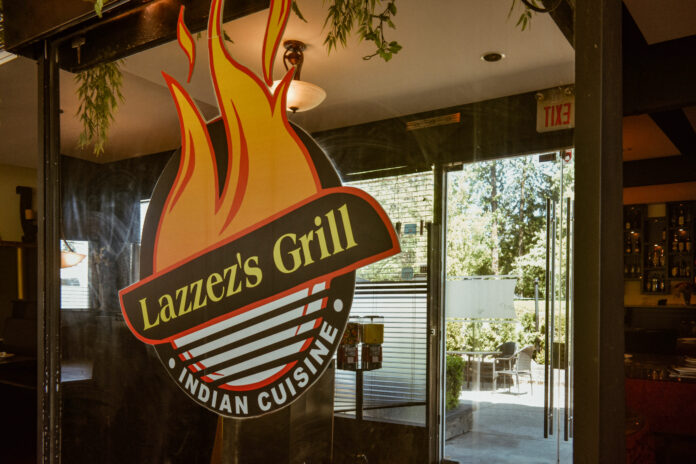
Photo of Lazzez’s Grill Indian Cuisine, one of the restaurants included in the piece!
PHOTO: Amrit Kamaal / The Peak

By: Hailey Miller, Staff Writer

For Asian Heritage Month, here are a few of my favourite go-to restaurants around Metro Vancouver that serve up delicious vegetarian options.

Sushi Bar Shyun 
#102-1250 Dominion Ave, Port Coquitlam
 WedSun: 5:008:30 p.m., closed Mon and Tues

This family-run Japanese restaurant, owned by husband and wife duo Katsu and Kanako, is the perfect hidden gem for a delicious Japanese meal. Their sushi bar and kitchen feature every type of dish you can imagine, with hot and cold entrées — such as Ebi Chili Mayo or their Tempura Soba — that rotate the menu depending on the season. 

Start off with a simple bowl of miso soup or a side of edamame. It’s a must to order some sushi here. Their kappa, natto, and the mixed vegetable and avocado rolls are a few of my favourites. They also offer various types of sashimi, nigiri, maki, and ura maki

Shyun is hands-down the best Japanese restaurant in town. If you stop by, tell Katsu and Kanako I say, “Hi!”

Lazzez’s Grill Indian Cuisine 
2786 Barnet Hwy, Coquitlam
TuesFri: 11:30 a.m.9:30 p.m., SatSun: 12:009:30 p.m., closed Mon

Lazzez’s has a variety of options for curries, naans, rice, tandoori, and appetizers. Some of my favourite vegetarian dishes are their vegetable zalfrezi, vegetable briyani, and mutter paneer (with green peas, ginger, and spices).

You can’t go wrong with rice pulao and naan or roti. Their spinach paneer naan and onion kulchas are tasty additions to plain naan — I highly recommend them. They also have an Indo Chinese section featuring vegetarian, chicken, or beef manchurian and chilli paneer dry

“With affordable prices and a hefty menu selection, you’ll surely have a delectable meal here.”

Kurumba 
#107-3003 St. John’s St, Port Moody
MonTues: 11:00 a.m.3:00 p.m. and 5:008:30 p.m., ThursSun: 11:00 a.m.8:30 p.m., closed Wed

Kurumba is a Himalayan restaurant offering various dishes from curries and omelettes, to fried rice and chow mein. They feature a mix of Singaporean, Malaysian, Chinese, Indian, and Sri Lankan cuisines. Many of their dishes are on the spicy side, so if you can take the heat, this is the place for you!

My favourite dish is the mixed vegetable yellow curry. Pair it with some vegetable fried rice and chow mein or pad thai, and it’s the perfect meal to share with friends. They have countless seafood, meat, and vegetarian options for nearly everything on the menu, making it suitable for everyone. 

Kari House 
#130-3900 Bayview St, Richmond
TuesSun: 11:00 a.m.2:30 p.m. and 5:008:00 p.m., closed Mon

Kari House is a Malaysian restaurant overlooking the water on the Steveston boardwalk. Their dishes complement the gorgeous view, as they serve up a variety of soups, salads, rice, noodles, curries, and stir fry featuring seafood, meat, and vegetarian options. 

Their pad thai, mixed vegetables with red curry or peanut sauce, and pineapple fried rice are all must-tries. With various sauces, vegetables, and protein to choose for each dish, there are countless tasteful options for everyone. I recommend sharing a little of this and that.

Their spicy dishes will surely spice up your life!

BC organizations donate unsold food from grocery stores

0
A shelf in a grocery store full of produce
PHOTO: nrd / Unsplash

By: Hannah Fraser, News Writer

Since 2020, BC organizations FoodMesh and Georgia Main Food Group have collaborated to build a network of 220 charities and farmers to distribute food to people living in food-insecure households. While food insecurity is at an all-time high, they have put 3.5 million meals onto the tables of British Columbians by donating unsold food from stores like IGA and Fresh St. Market. For more information, The Peak corresponded with Megan Czerpak, head of communications at FoodMesh. 

Czerpak explained how “food is wasted for a variety of reasons, depending on where in the supply chain it is.” For example, she said retailers may be unable to sell their stock  if food is past its expiry date, has aesthetic imperfections, is overstocked, or has errors on the packaging. As a result, Czerpak noted that throwing out unsold food is “quicker, easier, and cheaper” for retailers. Georgia Main works to divert the most unsaleable food possible away from waste streams. According to Jessica Regan, CEO and co-founder of FoodMesh, “more than half of the food produced in Canada goes to waste,” showing “deep flaws in Canada’s food system.” 

“Since our collaboration began in April 2020, IGA and Fresh St. Market have diverted over 2.1 million kilograms of food from ending up in waste streams,” Czerpak said. 

Czerpak said FoodMesh coordinates the daily collection of unsold food to “ensure it is rescued and redistributed quickly and efficiently.” As FoodMesh measures the volume of food each store is diverting, “Georgia Main can track its progress against its food waste reduction goals.” 

“Since our collaboration began in April 2020, IGA and Fresh St. Market have diverted over 2.1 million kilograms of food from ending up in waste streams.” — Megan Czerpak, FoodMesh.

For example, the Immigrant Link Centre Society (ILSC) picks up and delivers fresh food from Fresh St. Market for newcomers to Canada who are otherwise unable to afford groceries. The CityReach Care Society also distributes food to underserved communities in Surrey, the Downtown Eastside, and 50 schools in the Greater Vancouver Area. 

Further, Czerpak explained “the most recent Statistics Canada data showed that ‘nearly nine million Canadians live in food-insecure households” which makes up approximately 23% of the population

Czerpak said FoodMesh hopes “others see the example they are setting for the industry and follow suit.”

Residents of CRAB Park experience street sweeps

0
CRAB Park in Downtown Vancouver
PHOTO: MikoFox / Flickr

By: Hannah Fraser, News Writer

On April 16, the Vancouver Park Board began street sweeps of CRAB Park residents, forcibly removing any individuals outside the “14–tent ‘designated area’” on the peninsula. Park rangers dismantled residents’ homes and confiscated belongings according to bylaws, which say campers must pack up belongings by 7:00 a.m. The Peak corresponded with Fiona York, an advocate for CRAB Park residents, for more information.

In March, “over 30 residents were forcibly removed” from the park. Around half are Indigenous, who are disproportionately impacted by the housing crisis and substance use. This is linked to various injustices committed over Canada’s history, such as colonialism, residential schools, and additional barriers to education and housing. 

In March, residents were told they could move back after the “clean-up” of the park was completed, according to the press release by CRAB Park Tent City residents. Similar to the sweeps of the area in March, York claimed the Park Board intended to forcefully remove all the residents from the area. 

On April 11, park rangers gave notice “to people on the south side informing them that the temporary sheltering area was [sic] ended, returning the park area to regular park use,” according to the City of Vancouver. The CRAB Park Tent City press release said the Park Board stated there would be an appeals process, though no additional information about it was provided to the residents before the sweep on April 16. York elaborated, “There obviously needs to be sufficient time for people to start the appeal process, present evidence, and be heard before there is any enforcement against them.” 

“They did not follow through on the apology and nowadays they enforce street sweeps every single day on Hastings Street.” — Fiona York, CRAB Park advocate

“Supporters of CRAB Park residents are greatly concerned about this increase in enforcement, especially given that it was completed during cheque week,” read the press release. This is the distribution of monthly cheques for welfare and government assistance. 

York explained that park rangers wait for residents to leave their homes to avoid confrontation. In 2022, the City of Vancouver apologized for the harm street sweeps were causing, but York noted “they still went ahead and did a mass, violent eviction of the tent city on Hastings Street on April 7, 2023.

“They did not follow through on the apology and nowadays they enforce street sweeps every single day on Hastings Street.”

York added that “the Park Board seems very interested in trying to look like they are being very compassionate, even when they’re not.” Specifically, she stated these street sweeps are violating “their dignity and right to shelter and safety,” especially with the increased anxiety that their home and belongings could be seized at any time. 

York noted how rare it is for items to be retrieved once confiscated. “It can take a lot of phone calls, emails, follow up, arranging transportation, and a lot of other hurdles that would be impossible to many homeless people that don’t have phones or emails or internet or electricity,” York said. She stated that even when a ranger returns a phone call, sometimes they have already marked the case as “closed.”

Rangers also took down the largest tent at CRAB Park which functioned as an “overdose prevention site, a peaceful gathering spot, a cultural site, and a memorial” for over three years. York said the tent’s destruction signifies a loss of community building, safety, and sense of belonging. 

“It also signifies a huge gap in dialogue and consultation as residents were very clear [and] vocal about the significance and importance of the community tent, but the feedback wasn’t respected,” she continued. “The First Nations Leadership Council also referred to ‘the right to communal gathering’ in their open letter about the move,” said York.

York said the City of Vancouver and Park Board’s continued street sweeps shows the perpetuated stigmas and discrimination against unhoused individuals. Particularly, “believing that homeless people are somehow different from other people and don’t deserve to have access to their belongings, or because they somehow don’t deserve to be treated the same way as others,” she said. 

Earlier this month, over 650 community members signed an open letter to encourage the city to stop the decampment operations. Supporters included Nicholas Blomley, a geography professor at SFU who co-authored the Belongings Matter report. Medical students at UBC wrote another open letter, which over 30 students signed.

York stated housing issues are “big systemic issues all over and should be treated with concern and real compassion instead of stigma and eviction.” 

Residents of CRAB Park are going to the provincial Legislature in Victoria on May 8 to give MLAs the chance to directly hear their input and accordingly act on what they hear. They say most MLAs have not engaged with tent city residents, “nor have they engaged in meaningful dialogue with the community.” 

Residents of CRAB Park are also proceeding to a hearing after opting to withdraw from mediation from a Human Rights Complaint. 

The Peak reached out for comment from the Vancouver Park Board, but did not hear back by the publication deadline.

United Way BC fights menstrual inequality

0
various period products, pads, and tampons stacked on a toilet lid
PHOTO: Gudrun Wai-Gunnarsson / The Peak

By: Yashita Dhillon, News Writer

In an effort to combat period poverty across BC, United Way BC has launched its 2024 Period Promise campaign, which is an initiative that they’ve run since 2017 to fundraise, collect, and deliver menstrual product donations from Canadians and non-profits. They then deliver menstrual products to low-income Canadians. United Way BC has a broad focus, spanning from emergency responses and senior’s support, to youth activities and fighting food insecurity. In partnering with Pacific Blue Cross and CUPE Local 1816, they seek to address the growing challenges faced by those who menstruate through education on the societal impacts of period poverty, and calling for donations of products. 

Period poverty refers to the barriers in accessing menstrual products, often due to financial constraints or societal stigma related to menstruation. Access to menstrual products has increasingly become a luxury for many.

The Peak spoke with Kim Winchell, provincial director of community impact and investment at United Way BC, who highlighted the growing difficulty of accessing menstrual products amid rising costs, particularly affecting students, workers, and single parents.

“Not having access to menstrual products isolates people,” Winchell explained. “So they miss community events, they miss social events, they miss school, they miss work, they miss medical appointments, and all of these can contribute negatively to health outcomes.”

Last year’s campaign saw over 800,000 menstrual products collected and distributed from 200 non-profit organizations. “We’re really fortunate to live in a province where there is so much generosity from the general public,” she said. 

“Not having access to menstrual products isolates people. So they miss community events, they miss social events, they miss school, they miss work, they miss medical appointments, and all of these can contribute negatively to health outcomes.” — Kim Winchell, United Way BC

“26% of people who menstruate have to make tough decisions about basic needs like paying rent or buying menstrual products,” Winchell explained, citing their Period Promise research project. This affects “health outcomes, employability, and participation in community events.” 

To distribute menstrual products, United Way BC transports donations from collection points to non-profits and has partnered with DoorDash to facilitate free delivery of products across various locations. They also work with corporations and non-profits with large trucks, allowing for the transportation of menstrual products to remote areas. 

United Way BC aims to expand the accessibility of menstrual products to public spaces, not only to provide immediate access to necessary products but to normalize the availability of menstrual health supplies as a standard amenity. “We really hope to continue to raise awareness with people and communities about the need for this,” Winchell explained. “Oftentimes, we don’t talk about the essential need of period products.

We want to remove stigma from the conversation. We also want to help workplaces, post-secondary institutions, and corporations to put free products into their bathrooms. And to make sure that is accessible for people that come into their workplaces as well.” 

BC health advocates demand return of mandatory masks in healthcare

0
A window displaying a sign that says “wear a face mask.”
PHOTO: Prerita Garg / The Peak

By: Yashita Dhillon, News Writer

In response to April’s removal of mandatory mask mandates in healthcare settings, BC’s health advocacy group DoNoHarm BC, joined by Protect Our Province BC and Masks4EastVan, are leading a campaign to urge the provincial government to reinstate these protections. The groups say that BC health authorities have ignored warnings about ongoing COVID-19 risks and other respiratory threats like measles and tuberculosis

The decision to remove mask mandates in healthcare settings was announced by the Ministry of Health, “the peak of the respiratory illness season has passed.” Though COVID-19 levels typically lessen in the spring, COVID-19 has not been established as a seasonal illness.  

The Peak reached out to Dr. Karina Zeidler who organizes with DoNoHarm BC and is the co-founder of Protect Our Province BC for more information. Zeidler referenced a research article from BC Medical Journal which noted that for some of these most vulnerable patients, the air in the hospital can be deadlier than the diagnosis that brought them in.” This is due to hospital acquired infections, which can then lead to COVID-19 deaths. 

There is no doubt that the absence of masks in healthcare mostly impacts those who are already pretty sick or those who can easily get sick like the elderly, immunocompromised people, or those with complex health needs,” Zeidler said. A colleague of mine has had six of her long term care patients die of COVID-19 infections in the last six months that they caught in the hospital, and that is while we still had a hospital mask mandate.”

“The narrative that public health has about COVID-19 has become completely divorced from what we actually know about the virus,” — Dr. Karina Zeidler, Protect Our Province BC

“If there is one space that all vulnerable people should be able to rely on to prioritize their safety, it is in healthcare settings,” said the BC Human Rights Commissioner in a statement regarding the decision in 2023. The “removal of universal masking directives in healthcare settings does not uphold a human rights centered approach to public health.” 

Despite over 18,000 British Columbians petitioning the government through the Vulnerability Isn’t Seasonal campaign to maintain and enhance healthcare protections, there has been little movement or acknowledgment from healthcare institutions or the provincial government, according to Zeidler.

“The narrative that public health has about COVID-19 which has become completely divorced from what we actually know about the virus,” said Zeidler. She explained the BC government continues to “push this narrative that COVID-19 has become nothing worse than a head cold that you might get in the winter, same as the flu, and the more you are sick with it the less sick you’ll get. Except these two things can’t both be true.” She pointed out the contradiction in the diminishing of COVID-19’s severity while it remains a leading cause of death and a significant source of long-term disability in Canada. 

“It also poses a risk to our health care system in general. Every surge in COVID-19 cases leaves in its wake more burnt-out health care providers, more Long COVID in health care workers and an exodus of experienced senior nurses,” Zeidler noted. “We can’t afford to lose more staff — temporarily to acute illness, or long-term to Long COVID-19.” 

Health advocates like Zeidler are calling for a shift in approach, advocating for airborne precautions as essential, not optional. This includes implementing filtration and ventilation in indoor spaces to reduce the amount of airborne pathogens breathed in the air. 

“Just recently the WHO finally came out with a paper establishing that COVID-19 is a virus that spreads through the air. But it will be a while before things start to change in [healthcare settings] where we are still telling people to protect themselves from bad air by washing their hands and coughing into their elbow.

“There is very little, if any, reliable data on the consequences of the most recent removal of masks in healthcare settings in BC. But we know from last time BC experimented by dropping healthcare masking, it was followed by multiple COVID-19 outbreaks. Mask-wearing shouldn’t be optional, because there’s no acceptable amount of avoidable healthcare-acquired infection.”

Joy Johnson breathes a sigh of relief because there is no SFU encampment

0
A man and a woman giving each other a high five during a business meeting.
PHOTO: krakenimages / Unsplash

By: Freida Watermelon, SFU Student

Content warning: mentions of genocide.

As she was sitting in her office reading the most recent message from the UBC president on the encampment on their campus, Johnson could not help but be grateful she did not have to make a similar statement. Some might say that silence is violence, but she likes to think that silence is aidance. See? It’s all about the mindset. While Benoit-Antoine Bacon’s strategy of using percentages to camouflage a large number is commendable, Johnson was particularly impressed with how he was able to convey funding genocide is just not something worth criticizing. Regardless of the his claims, it’s a fantastic strategy to seem open to dialogue without actually having to plan a meeting. 

Upon reflection, Johnson concludes that if she were to be put in the same situation (god forbid, student organizing gives her a headache, unless the students are organizing a photo-op), she’d likely ask AI writers to make the sentence, “Divesting from war contractors and complicit institutions goes against everything SFU stands for” more palatable for overly sensitive students. She wishes those little snowflakes who get their panties in a twist over escalating war crimes  would understand that “this is still not the time.” Maybe it will be the right time once her tenure is over and the stars align in a particular way and pigs are flying around in futuristic cars like in The Jetsons . . . maybe. But certainly not before. Acknowledging that the university is on unceded territories is already such a big and important step that should not be overshadowed by calls to do anything more. Land acknowledgements only happen a hundred years after colonization anyway.

In fact, any truly educated person would know that the university’s motto “Nous sommes prêt” (we are ready) is a shortened version. The full motto is actually “Nous sommes prêt à surveiller et réprimander toute action qui ne supporte pas l’image progressiste que nous voulons refléter” (We are ready to surveil and reprimand any action that does not support the progressive image we want to reflect). Well, to be fair, according to historians, this is contested because there are also mentions of alternate versions such as “Nous sommes prêt à appeler Lions Gate Risk Management sur vous” (We are ready to call Lions Gate Risk Management on you) and “Nous sommes prêt à quitter la salle lorsque les manifestants nous tombent trop sur les nerfs” (We are ready to leave the room when protestors are annoying us). Anyways, enough reflecting. Johnson must go find something to do to justify her obnoxiously large salary.  

Need to Know, Need to Go: Events to look forward to in May

0
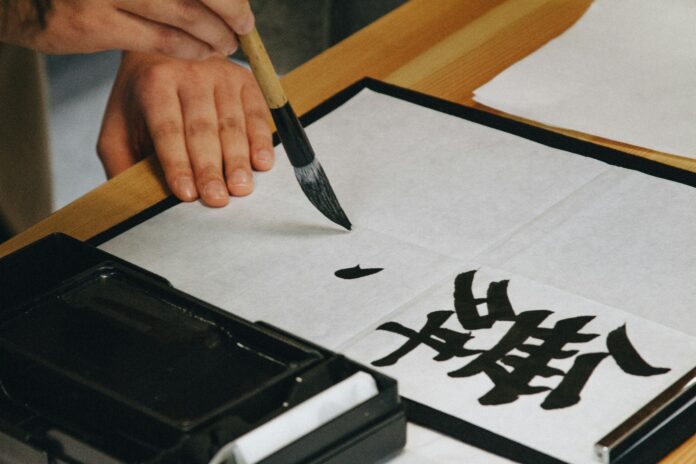
Chinese calligraphy being written with a thick brush in black ink.
PHOTO: Niketh Vellanki / Unsplash

By: Marie Jen Galilo, SFU Student

There are a lot of events to look forward to in the month of May. Aside from being the start of the summer semester, May is also Asian Heritage Month. As another semester begins, you’re probably thinking about how you can make an academic comeback. Attending events is a great way to become more involved in school and learn about Asian culture and heritage, and I’ve got a list of events to help you get started.

Lunch Poems at SFU: Leanne Dunic & Jane Shi

Ever since the first poetry reading in 2012, SFU has continued to hold Lunch Poems on a rolling basis. For the month of May, Lunch Poems at SFU features the literary works of Leanne Dunic, who is the fiction mentor for SFU’s The Writer’s Studio and leader of the band The Deep Cove. Works by the writer of Leaving Chang’e on Read, Jane Shi, will also be highlighted. This is not just for poetry connoisseurs it’s open to anyone. So, whether you’ve always been passionate about poetry or have just developed an interest in it, this event is for you!

Tickets: free

Where: 515 Hastings St, Vancouver

When: May 15, 12:00 p.m.–1:00 p.m.

Colour Fest 2024

Colour Fest combines a celebration of past festivals Holi and Vaisakhi, hosted by the Diwali Celebration Society. Holi, which takes place in March, is the festival of colours, “the festival of love, and the festival of joy.” You can also celebrate Vaisakhi, “a harvest festival that originated in the Punjab region of Northern India.” In the colour zone, you can match the vibrancy of spring by covering yourself in powders made from flowers and herbs. Aside from music, dance performances, and the colour zone, there’ll also be food trucks and artisan markets.

Tickets: $30 for adults (Ages 16+), $25 for kids (Ages 5-15)

Where: Town Centre Park, 1299 Pinetree Way Coquitlam

When: May 18, 5:00 p.m.8:00 p.m.

Japanese Canadian Heritage Cooking Class: Sen Sakamoto Suama Wagashi Trio

At the core of every culture is its cuisine, and the unique quality of each cuisine makes food an important part of cultural identity. One of the best ways to learn about other cultures is to learn about their food. The Japanese Canadian Heritage Cooking Classes collection is a program that allows Japanese Canadian home cooks to teach others about Japanese cuisine by sharing their family recipes. In Sen Sakamoto’s workshop, you can learn about Japanese cuisine by making and tasting a variety of wagashi and traditional Japanese desserts like suama or sweet rice dumplings.

Tickets: starts at $25

Where: Tonari Gumi (42 W 8th Ave #101, Vancouver) 

When: May 26, 1:00 p.m.3:00 p.m.