Home Blog Page 1166

Local man fills out March Madness bracket perfectly

0

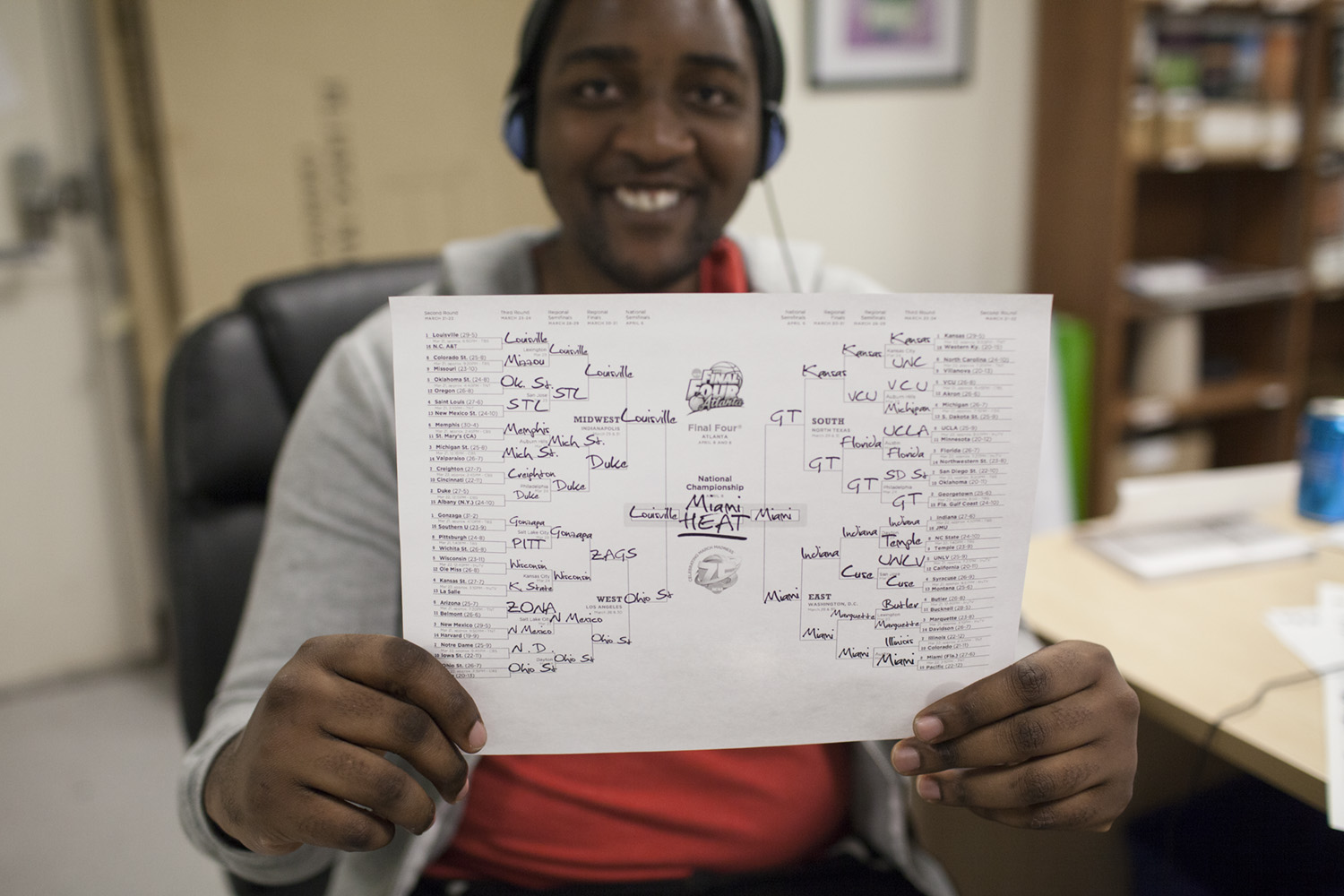
VANCOUVER — A local man has reportedly filled out a 2014 March Madness basketball bracket perfectly, without a single error in his spelling or capitalization, and he didn’t even accidentally leave any blank spaces.

According to reports, Theo Baxley, a 26-year old high school teacher, has achieved a great feat in the “perfect” presentation of his terrible, definitely incorrect picks.

“I can’t believe he really did it, I thought it was impossible for sure,” raved Baxley’s friend Tim Gleeman. “He’s normally got such messy handwriting, I didn’t think there was any chance it would turn out perfect.”

He completed his bracket without a single spelling error and didn’t even accidentally leave any blank spaces.

Baxley’s perfectly filled-out bracket has impressed more than just his friends and has made headlines around the country.

“When I heard about it, I couldn’t believe it but he really did nail it,” commented respected sports analyst, Donald Barry. “That’s not easy to do, he had Gonzaga and Valparaiso going to the finals so he had to spell both of those perfectly four times each . . . I don’t think Valparaiso is even in the tournament but still those aren’t easy to write!”

According to those who have seen the fabled bracket, there were a lot of challenging elements but Baxley somehow manage to nail them all.

“He had the Winston-Salem State going to the Final Four and I know I would have forgotten the dash at least once but again he nailed it,” Barry continued. “Of course I would never have taken Winston-Salem at all but that’s beside the point.”

While most might be impressed with Baxley’s “perfect bracket,” there are others who are less impressed.

“He has Alabama-Huntsville beating Duke in the first round and he managed to keep it nicely in the allotted space, that’s just called getting lucky,” critic Mike Frank explained. “I mean, it doesn’t take any skill to fill out your bracket perfectly, it’s all just luck!”

While Baxley says that he is pleased and flattered with all the attention he’s received, he says what he’s really excited about is the $1 billion he claims he’s going to receive from Warren Buffett.

“He hasn’t contacted me yet but I’m sure he’s just busy,” Baxley said. “I mean, I’ve got the perfect bracket and he promised $1 billion for a perfect bracket . . . I’m just amazed that I’m the only one who’s done it, don’t people know you can just do it on the computer and print it out?”

University Briefs

0

WEB-universitybriefs-CookingCinderella-Flickr

Students boycott hummus linked to Israeli Apartheid

University of Ottawa students have launched a campaign that would ban Sabra hummus on campus, as it is allegedly connected with the Israeli Apartheid.

According to the New York Times, the Strauss Group — a food manufacturer that financially supports the Golani Brigade of the Israeli Defense Forces — partly owns Sabra. Associate professor of international development and global studies, Susan Spronk, commended on the effort, saying, “Boycott campaigns are a peaceful and non-violent way to affect political and social change.”

The campaign coincided with the 10th annual Israeli Apartheid Week, which raises awareness about Israel’s treatment of Palestinians.


With files from The Fulcrum

First day of U of O strike sees first blood

As Carleton’s campus safety workers began striking on Mar. 10, the irony was sharply felt by one of the picketers, who had her foot run over by a car.

The picketer said that she and the car were at a standoff when the car pushed through, driving over her foot in the process. The car left the scene, but authorities have the license plate number and are following up. The altercation left the picketer with a scrape on her leg, but she was otherwise uninjured.

CUPE 4600, the teaching assistants and contract instructors’ union, reached tentative agreements with the university that morning, but says they will continue to support the safety workers on the picket line.


With files from The Charlatan


UBC adds minor to remember Japanese-Canadian internment

UBC is offering a new program in honour of Japanese-Canadian students who were unable to complete their degrees as a result of being sent to internment camps.

This effort is one of three made by the university, which granted honorary degrees in May 2012 to Japanese-Canadian students who couldn’t finish their degrees during World War II.

Beginning Sep. 2014, the minor will focus on the history and contemporary lives of Asians in Canada. Ross King, head of the Asian studies department, said, “It’s about recognizing that we have really large, significant, vibrant Asian-Canadian communities here in Vancouver that have their own histories and that deserve study.”


With files from The Ubyssey


Stella and Garment play with gender

0

Sidra Bell Dance New York  RM Pool photo promo IMG_4694

New York’s Sidra Bell Dance is a bold company that presents innovative works dealing with gender and identity. “My work lives in a world of darkness,” said artistic director Sidra Bell.

The theme of gender reversal comes up often in her work, which she said is “subconsciously purposeful,” and her perspective of identity and gender shapes her creations: “I’m fluid with identity. It’s either neutral or fluid, the way I approach the body. It can be considered political, but it’s just how I saw things. It’s an element that’s always been there.”

The company will be bringing two works to Vancouver as they return to the Chutzpah Festival for the second year in a row, this time as part of Chutzpah!PLUS, a co-presentation with The Dance Centre. Their first appearance at the festival was in 2009, and Bell is excited to return. “We had a wonderful engagement; I love Vancouver — it’s one of the highlights of our tour,” she said, “I love the atmosphere; it’s natural and cosmopolitan.”

Last year’s Nudity was an emotional, uncomfortable piece that commented on conformity and the strict discipline of ballet. This year, the two pieces represent a different side of her work. “The tone is different,” she said, “Nudity was about physicality, more emotional than theatrical. These two are the more humorous and theatrical end of my work.”

Garment just premiered in Pittsburgh, and Bell said it is packed with movement and has a lighter, comical tone. The music also plays a large part in this work: “I use the music for atmosphere and scenography; it’s cinematic and all over the map sonically.”

Stella, an older work of Bell’s, is also driven by the music with a cinematic tone and snatches of conversations. Bell said the work also has a film noir quality and is wildly varied and episodic.

For Bell, the costumes are about how you identify yourself through clothing. “I’m excited by the costumes,” she said. For Stella she described them as a fusion of gothic and celtic influences, with leather accoutrements.

Sidra Bell Dance New York IMG_7375

“Visually it’s a wild show,” she said, explaining that she calls the characters portrayed in the piece “ranting autobots.” There are several costume changes; another identity within the piece aims to be childlike, with the dancers in gingham skirts.

Garment’s costumes are more of an homage to specific gender bending, Bell explained, as the guys are revealed and the women are covered in suits. The costumes facilitate the gender reversal of this piece, but aren’t as complicated as those in Stella.

The gender play in Bell’s work adds a unique element of humour, and while the pieces sometimes deal with dark themes, they remain light and fun. “They’re exuberant pieces,” said Bell, “they don’t have the idealism of conveying an overarching ideal like Nudity did. They’re fun and entertaining.” She also said that the works involve a high degree of audience interaction and at some point the dancers will move off the stage and into the audience.

The company is looking forward to connecting with Vancouver audiences once again. “It’s nice to continue to grow,” said Bell, “Chutzpah has been a huge part of our international touring. It’s nice to continue our relationship in Vancouver with the arts community.”


Stella and Garment will be presented by Sidra Bell Dance at Scotiabank Dance Centre from March 27 – 29 as part of Chutzpah!PLUS, a co-presentation with The Dance Centre. For more information, visit chutzpahfestival.com.

Clan swept away on opening weekend

0

The new month hasn’t meant any sort of fresh start for the SFU softball team.

After going 0–9 in preseason play and the month of February, the Clan were looking to right the ship in March against Great Northwest Athletic Conference opponents. Four straight losses to two conference rivals on opening weekend, however, leave much to be desired.

The Clan, shorthanded due to illnesses, were outscored 16–3 in their first two games against Western Washington, including a 13–3 walloping in their conference opener. That game was over early: WWU scored 11 runs in the first inning, before SFU rebounded slightly with three in the fourth.

“We knew we were in tough today,” said head coach Mike Renney. “We started out by doing what has put us behind the eight ball in a number of our games, shooting ourselves in both feet by having to get more than three outs in an inning due to errors or just plain poor choices.”

Western Washington added two in the fourth before the game ended in the fifth due to the mercy rule.

During the second game, the Clan were much better defensively, but couldn’t get going offensively, leading to an ultimate shutout of 3–0.

“I was pleased the team didn’t fold [after game one],” said Renney after the contest. “The offence was unfortunately not able to measure up.”

It was the same story in the second double header of the weekend, this time against Central Washington, the GNAC’s top team.

In the first game, a 9–1 loss, CWU jumped out to a 6-0 lead in the first two innings, setting the Clan back early, again.

The second game, however, was a very different contest. “Much like we did yesterday, we played a much better game and I think we put a scare into a quality team,” said Renney after what was a narrow loss.

His Clan led 3–0 after three innings, and 5–1 after four. Unfortunately for SFU, Central rallied off three runs in both the fifth and sixth frames to give them a two-run lead they would not relinquish.

“With a young team, you’re going to see Jekyll and Hyde at different times and I think we saw both today,” said Renney.

With the two losses, SFU falls to 0–4 in conference play, and are one of three teams without a win against GNAC opponents. However, the Clan’s 0–13 overall record has them at the bottom of the GNAC standings.

“The reality is with a young team the number one need is time,” said Renney after the first game. It’s early in the season yet, but the rebuilding Clan are quickly running out of time this year.

Like a hurricane

0

NashvilleHurricane

Chase Padgett loves Canadians and Canadian Fringe Festivals. “I often feel that I’m a Canadian trapped in an American’s body,” he said.

Padgett is returning to Vancouver with his new show Nashville Hurricane after last year’s successful Vancouver Fringe Festival show, 6 Guitars, and he is looking forward to being back in this city.

“Canada is very, very lucky to have the fringe festival circuit it does,” said Padgett. “There are a lot of fringe festivals in America that are poorly run, that don’t give 100 per cent of the proceeds to the artists. It’s just so beautifully Canadian that people had the compassion and the empathy for the arts long ago, so now it’s really blossoming into a performance circuit that is kind of unlike anything else in the world that I know of.”

Padgett describes the fringe festival experience as an invaluable education in theatre where artists learn things that theatre school won’t teach them. “The fringe festivals made me, out of necessity, learn WordPress and Photoshop, because you’ve got to do your own promo. If you want to get media time you better learn how to write a decent press release. Those are things that — I don’t care what theatre school you go to — they don’t teach you that.”

There are a few other things that theatre school won’t teach you, said Padgett, such as how to still do a good show when four people show up. “Sometimes small houses are a way better experience to perform for,” explained Padgett, “because I would rather have 10 people who are 100 per cent with me than 100 people who are 10 per cent with me.”

So far, Nashville Hurricane has delivered. “The show is really clicking into place in a way that took 6 Guitars longer to do, and I’m really happy about it,” said Padgett. This new show is also about the guitar, but it is very different in terms of the story structure and characters. The only character from 6 Guitars who reappears in this show is Tyrone.

“I would rather have ten people who are 100 per cent with me than 100 people who are 10 per cent with me.”

Chase Padgett, Nashville Hurricane 

This show is much more of a narrative and each character tells their side of the same story, but those perspectives are often conflicting. Unlike 6 Guitars, which featured six different musical genres, Padgett said that this show features two: “The whole story centres around a young guitar prodigy named Henry who then becomes known as the Nashville Hurricane.”

The characters in Nashville Hurricane each go through a transformation, and their relationship with the audience changes as well. Henry, the Nashville Hurricane, is a young boy at the beginning of the story, telling the story in hindsight as an adult. He is somewhere on the autistic spectrum, although it’s never fully diagnosed and Padgett never says it out loud.

“The way I play him and the way he just shows a passion for these very esoteric interests like electricity and science in particular, and the fact that he never makes eye contact with the audience — people understand it,” said Padgett, “He starts off very shy and afraid of the world and by the end he learns how to be his own person.”

Padgett describes Henry’s mother Brenda as “straight up country trailer trash hilarity” and “a whisky soaked tornado” who has no qualms telling it like it is and being crass the entire time. By the end of the show, Padgett said that she ends up understanding what it’s like to be a loving, protective mother.

He premiered the first version of the show at the Orlando Fringe in 2012: “I’ve got to be honest with you, it wasn’t that good. I was doing this whole show and the audience in front of me would laugh at certain things, but I could just feel I was losing them at certain times. The music was okay, but the character was off and the story was a little off.”

Padgett rewrote the entire show and premiered it in Calgary with a completely different reception. “I really turned — at the time what was a defeat — into a victory, and then when I did it in Edmonton, it got the same kind of response 6 Guitars did when I first brought that there. It was really an incredible experience all over again and it was important to me to prove that I could do it a second time.”

“If I got to tell 18-year old Chase what 30-year old Chase is doing, 18-year old Chase would be thrilled beyond belief because this is exactly what I want to do with my life, and I’m doing it.” There’s nothing better than that.

Nashville Hurricane will be presented at Performance Works from March 19 to 23. For more information, visit vancouverfringe.com.

Hitler had the right idea

0

Right off the bat, I feel like I should apologize to anyone who I may have offended.

It’s not often that I write for any section other than The Peak‘s illustrious and often irreverent humour section, so each semester when I’m called upon to spill my real thoughts in an “Editor’s Voice,” I’m not always as tactful as, maybe, I should be.

Of course, what I mean when I say “apologize” is apologize for the last two “Editor’s Voices” I wrote back in summer and fall.

Not only did I controversially say that I believed that US President Barack Obama would go down in history as “one of the presidents of the United States,” but I followed that up with a staunchly pro-choice stance on trick-or-treating.

You can’t deny that a small moustache is way more practical than a big bushy mess under your nose.

I knew the risk I was taking with these wild and contentious opinions of mine and although I stand behind every word I wrote (even “and”), I still feel as if I have to take a second to make amends with those loyal Peak readers who may have felt betrayed by such radical commentary.

That being said, this semester I decided that I would wholeheartedly attempt to tone down my tendency towards a ridiculous and, frankly, immature “shock-factor” and just write something nice and normal that no one could possibly get mad at.

With that said, I believe that Adolph Hitler had the right idea. Smaller, more manageable facial hair is definitely the best way to present yourself.

Now, of course, I disagree with most of Hitler’s views. His politics, his ideals, even his taste in arm bands was horrible. But you can’t deny that a small moustache is way more practical than a big bushy mess under the nose.

A small moustache allows you to breathe better, it looks much more dignified, and you can drink foamy beverages as much as you want without a care in the world.

With all the grooming products and razorblades available today, there’s really no reason to sport any moustache bigger than a couple of inches. So please, follow in the footsteps of Hitler and keep it neat and clean up there.

Oh god, now that I look at it again I realize the headline I chose might have been a little inappropriate.

It kind of makes it seem like I’m saying that having a large moustache is “wrong” and that’s not what I’m going for at all. Of course you can still be a fine and decent person with a handlebar or even a Van Dyke, it’s just my personal preference to keep it on the small end.

Whatever, I know that Peak readers are intelligent and thoughtful enough to read past the first line before passing judgement. If you do have a problem with anything you’ve read here however, please let me know by emailing [email protected]. Don’t forget that using caps-lock is a great way to get your point across.

Also, you should check out the humour section, it’s the last couple pages of this paper and it’s a lot of fun and if you have any problems with anything you read there, again, please email [email protected], okay?

Life after Sochi

0

At the end of the Sochi 2014 Olympic games, several media outlets around the world reported on the phenomenon known as Olympic withdrawal.

Its apparent symptoms can range from sadness, anxiety, and a lack of motivation which can supposedly plague both fans and athletes after the closing of an Olympic games.

However, according to SFU professor Dr. David Cox, who has been a clinical psychologist for multiple Canadian Olympic delegations and has attended several Olympics as part of the support staff, this phenomenon shouldn’t be labeled as a withdrawal because of the negative connotations attached to that term.

Instead, he argues that it should be understood as a “post-Olympic experience” that athletes go through in which they take time to reflect on the intense physical and emotional Olympic games. In fact, Cox states that for many athletes, this time of reflection usually involves reminiscing about positive memories from their Olympic participation.

Cox compares athletes’ post-Olympic experience to that of graduating university students since both groups worked hard for four years in order to achieve a goal. He adds that for a number of athletes, just like convocating students, this time of reflection also involves making decisions about the future.

In the case of athletes, the decision is whether or not to continue to train and compete for future Olympics.

This process can be more intense for athletes of certain sports that run on a quadrennial system and have an age limit due to physical requirements, thereby leaving competitors to decide if, at their age, they should attempt to train for another four years.

Cox insists athletes should take a well-deserved break from intense training after their Olympic experience and not make quick decisions about their futures; he recommends the same for coaches and support staff.

And for the fans that may be missing the enthusiasm, motivation, and unity that the Olympics create, Cox says all is not lost at the Closing Ceremonies.

“Watch the Paralympic games,” he says, as they offer another two weeks of national pride with athletes just as talented as those in the previous games.

Poster Slam 2014

0

Well, it’s election time again and SFU’s beautiful grey walls have once again been covered up by a seemingly endless number of posters. There are so many out there it’s hard to believe that they’re all just for this one election! While most of them are great and really creative (I saw one that was like the Obama thing, neat!) there’s a few . . . how should I put this, stinkers out there that are just ripe for mockery! So without further ado, let’s slam this year’s worst posters!

WEb-300

Oh boy, look at this one, it doesn’t even have the candidate’s name on it! Hey jerk, maybe you should spend a little less time mastering photoshop and a little more time REMEMBERING TO PUT YOU NAME ON THE POSTER! It just says “300: Rise of an Empire,” what does that even mean? This is one of the worst SFSS election posters of the year!

WEB-chinese

Ummm sorry, but not all of us can read chinese, okay? If you want to get some votes you might want to try putting some English in there! You know, this might be fine if it were like a tutoring service that was specifically targeting chinese students but these are the SFSS elections, you got to do better than this! NEXT!

WEB-math

Are you kidding me Math Tutor?!? Is this really the best you could come up with? At least have a picture or some colour or something! And if you’ve really been a high school teacher since 1999, like you claim, why do you even want to be in the SFSS anyway? Are your guys’ salaries really that bad? Come on Tutor, smarten up!

WEB-men

Okay, so I’ve been seeing a lot of these around campus, so kudos on the promotion, but I’ve just got to say it: these are some of the dumbest posters I’ve ever seen! Sure, their quality is pretty amazing but, seriously just “men”? That’s all it says? We’ve already heard of men, idiot! We’re going to need a LITTLE MORE INFO! What a terrible poster for an SFSS election!

WEB-door

Alright, I’ve got to admit, this one’s actually kind of cool. You can literally push it into the wall and a door will open, which is pretty awesome. But still, I don’t see what this has to do with the elections or the SFSS! I’m not even sure if I would consider this to be a poster, it’s more of a button! God, am I confused. Anyway, this poster sucks, moron! “Press to Open”? Get real!

Sentenced to Death

0

1793 marie antoinette-wikipedia commons

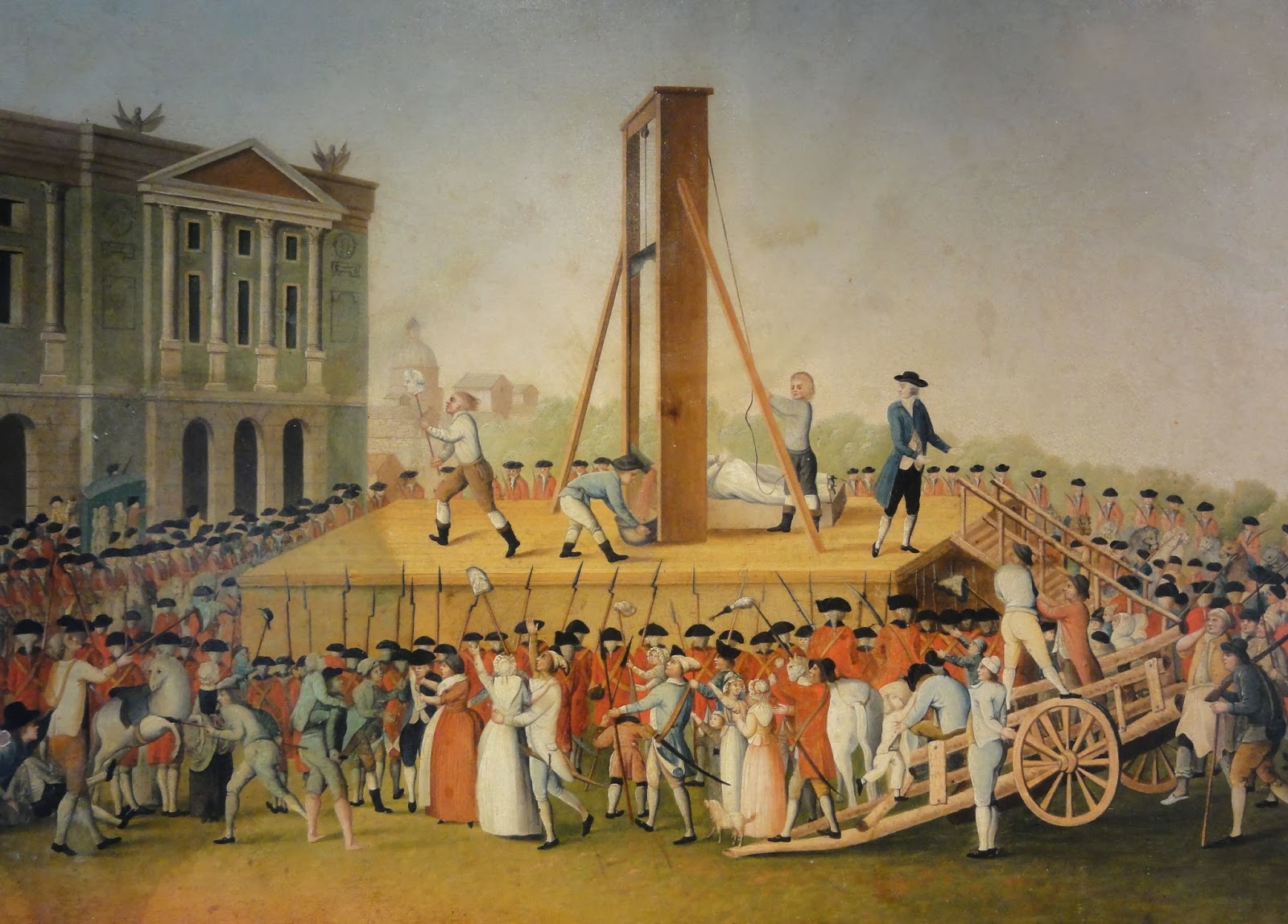
Growing up as the child of a police officer, I have always believed very strongly in the concept of crime and punishment. If you violate the law, you deserve to have certain freedoms revoked for a period of time deemed reasonable by the court. Though I would place myself in favour of harsher punishment for criminals, there is one line that I cannot cross: the sentence of death.

Though some may argue the value of the Hammurabian “eye for an eye” policy, our society should not have the power to take from a person that which it cannot give. This is especially important when it comes to those who are wrongly found to be guilty. If one is accused of murder, found guilty and sentenced to life imprisonment, they can be released if exonerated by later evidence.

The death penalty, on the other hand, is final. Once your punishment is carried out, there’s no coming back.

According the Death Penalty Information Center, over 140 people have been released from death row since 1973 “with evidence of their innocence.” However, a study done by two professors in the United States found that, of the 7,000 people executed between 1900 and 1985, only 35 were innocent of capital crimes.

In other words, a little under 0.5 per cent of all cases where the death sentence was carried out were incorrect. While this may not seem like enough to justify the abolition of the death penalty, it does matter greatly to the families of those 35 people, and for the 3,108 more currently awaiting execution in the United States.

Our society should not have the power to take from a person that which it cannot give.

There is little evidence for capital punishment as a deterrent to violent crime — especially given the fact that the sentence is based largely on a given judge’s discretion. In these cases, the difference between life or death is one person’s verdict.

Even in Canada, the debate still rages. Many may not know this, but the death penalty in Canada was slowly abolished over a 13-year period, lasting from 1963 until the narrow passage (130:124) of Bill C-84 in July of 1976, which abolished the death penalty with the exception of certain offences under the National Defence Act. The death penalty was not fully abolished until 1998 — less than 20 years ago.

The reasons cited for the abolition of capital punishment in this country were the same reasons we hear today: fear of wrongful convictions, concerns about the state taking people’s lives, and uncertainty regarding the death penalty’s role as a deterrent for crime. Until 2007, the Canadian government also had a policy of automatically requesting clemency for any Canadian citizen sentenced to capital punishment for crimes in another country — it’s still occasionally requested on a case-to-case basis.

Despite the outcry in Parliament when this change occurred, studies have shown that the average Canadian is actually in favour of reinstating the death penalty. Gallup polls taken between the years of 1978 and 1998 found that support for the reinstatement of the death penalty never dropped below 55 per cent. Even more telling is an Angus Reid poll conducted last year, where 63 per cent of those polled were in favour of reinstating the death penalty.

While the majority of those in favour supported the Conservatives in the last election, 51 per cent of Liberal supporters polled were also in favour, as were 57 per cent of NDP supporters. Clearly the reinstatement of the death penalty is an issue that crosses political lines, and the majority of Canadian politicians seem to be in favour of reintroducing it.

However, when asked if they preferred capital punishment or life imprisonment without the possibility of parole, the numbers changed significantly — 63 per cent became 39.

Currently, any Canadian convicted of murder, whether it be first or second degree, is given a “life sentence,” but first-degree murderers are eligible for parole after 25 years, and second-degree murderers after 10. The Correctional Service of Canada estimates that the average incarceration time for first-degree murderers is only 22.4 years.

With this in mind, it is not shocking to see these kinds of poll numbers. It’s not that Canadians are overwhelmingly in favour of the death penalty; what we are in favour of is keeping violent criminals off the streets — especially those who may offend again.

If the poll numbers are any indication, before this year is out, we may see the federal government attempt to pass a law that would allow judges to pass Life Without Parole sentences for, in the words of Justice Minister Peter MacKay, “the worst of the worst, the most violent, repeat offenders.”

Though the debate on the death penalty is still split, this option seems to find the perfect middle ground, and one that will make the majority of Canadians feel more secure. Those who have committed violent crimes absolutely deserve to be punished, but we have no right to take someone’s life — no matter what.

Manhattan and Monopoly: Four ways Nollywood is more successful than Hollywood

0

Sleeper 4

“If my films make one more person miserable, I know I’ve done my job.” 

In the existential eyes of Woody Allen, the world is a miserable place. As a great filmmaker, his job is to communicate the harsh realities of life in a way that the world can relate to them. To Woody, success is about making people miserable.

We often see success in economic terms: success equals money, money equals success. Such a paradigm has led to the idealization of Hollywood as the world’s most successful cultural producer. But if we define success in more than economic terms, we may see other industries surpassing Hollywood.

Here are four ways the Nigerian film industry, Nollywood, is more successful than Hollywood.


Democratization of the
means of production

In Nollywood, films are released straight to cassette tapes or compact discs. The low production and distribution costs of Nigerian films provides an equal opportunity for everyone to profit from the industry.

FIlms are distributed out of electronic markets, where thousands of vendors sell a variety of films. Individual vendors and groups of vendors purchase cassette tapes and electronic devices to transfer films onto tapes.

On average, it costs $1.50 to make a single film cassette, which is sold for approximately $3.00. Unlike Hollywood, Nollywood’s egalitarian production process provides an affordable opportunity for almost anyone to profit.

Independence from the government 

Nollywood is a more than $4 million industry that has arisen without influence from the government. The intellectual property laws that fuel the fire of Hollywood’s corporate monopoly over North American cultural industries are non-existent in Nigeria.

Copyright laws are put in place to protect artists from having their work stolen, but now act as a monopoly tax on cultural products. Under copyright laws, access to cultural products must be purchased, and the only people who can afford to do this are corporate actors. Corporations obtain a monopoly over cultural products, and charge fees for the average citizen to access these products.

On the other hand, Nollywood has grown from the inside out. Deregulated intellectual property allows for sharing of cultural products, so all citizens have equal access to Nigerian cultural products.

Reflecting real cultural values 

Human-to-animal transformations, demons materializing out of thin air, and women spontaneously growing male genitalia — these are not your typical Hollywood film scenes, but they are not uncommon in Nollywood. Such scenes may seem silly and unrealistic when taken literally, but they are in fact more “real” than most of the films that come out of Hollywood.

The cultural symbols in Nollywood films reflect genuine Nigerian values that are relevant to the country’s citizens. On the contrary, films coming out of Hollywood primarily reflect “the American Dream” — values that can only truly be associated with those with social capital.

Everyone has a voice

The open market, and low production costs of producing a film in Nigeria, mean the barriers for entry into Nollywood are minimal. The development of the Nigerian film industry has allowed any Nigerian with access to a camera and basic editing software to make significant contributions to cultural industries.

Democratization of the means of production, and independence from the government has led to an industry where everyone can have a voice which allows for the free flow of cultural products that every Nigerian, rich or poor, can relate to.