Home Blog Page 1161

The power of the vagina comes to SFU

0

WEB-lips-Mark Burnham

“Vagina” is a sticky word. While it refers to part of the female anatomy, it is incredibly intimate in connotation. Unlike its male counterpart, “penis” or “dick,” the word “vagina” is not used liberally in society; in fact its use seems almost like a faux pas. Yet it is that very body part that not only defines a woman in the physical sense but is also a powerful symbol of who she can be.

This is the mindset that The Vagina Monologues aims to tackle. Created by Tony Award winning playwright Eve Ensler, this beautiful collection of monologues explores the ups and downs of being a woman — with stories ranging from hilarious sex tales to heart wrenching accounts of sexual abuse.

It was this very collection of works which inspired the creation of the V-day movement — a global activist movement that aims to end violence against women and girls. The cause has now raised over $100 million through proceeds from productions such as The Vagina Monologues that are being performed all over the world.

SFU will be hosting a production of The Vagina Monologues with proceeds from the show benefitting the North Shore Women’s Centre. Eighteen talented young women have been hard at work in order to bring these stories to life.

“With media portrayals and public dialogue on the subject [often being] demeaning and oppressive, we need art like this to encourage discussion of our own experiences.”

Gabrielle Lamoureux, performer

Performer Gabrielle Lamoureux says of the show, “I think The Vagina Monologues is still so relevant because it deals with vaginas and womanhood in an open and often positive way. With media portrayals and public dialogue on the subject [often being] demeaning and oppressive, we need art like this to encourage discussion of our own experiences.”

Fellow performer Diana Bartosh agrees and says of her participation in the production, “I saw the show at UBC last year and immediately wanted to get involved because I missed doing theatre. The show starts important conversations that people can be afraid of initiating.” Indeed, even the title of the show is straight-forward and in your face, allowing for the societal taboo surrounding the word to be addressed before its opening lines.

Camila Cardenas, Nina Boosheri, and Erika Dee are the three students who have organized the event and worked with the actors to make it a reality at SFU. One of the directors, Camila Cardenas, says of her love for the show: “It is one of the shows that I have enjoyed [doing] the most. It is funny, sad, inspirational, intuitive . . . I think shows like this help to acknowledge the very real part of our humanity.”

It is not a raunchy romp of sex stories, although there are plenty of laughs in store for the audience. The stories of these women echo with threads of vulnerability, brokenness, and in the midst of it all, an inherent source of strength. Relatable and humorous, the show also explores issues such as how women are seen and treated in society.

The monologues will be performed on March 26 at the Orpheum Theatre downtown and on March 28 at the SFU Images Theatre on the Burnaby campus. Tickets can be purchased online or at the door and can be accessed through the link posted on The Vagina Monologues Facebook event page.


Open letter Re: fossil fuel divestment

0

As SFU faculty, we join with SFU 350 in calling on the Board of Governors to 1) increase transparency about the climate risk and carbon intensity of SFU’s investments, 2) immediately freeze any new investment in fossil-fuel companies, and 3) divest within five years from direct ownership and from any funds that include fossil-fuel public equities and corporate bonds.

[. . .]

It is not too late to limit climate change and thus reduce the suffering of millions of people around the world. To limit global warming to the “safe” target of 2°C above pre-industrial levels, it is increasingly clear that we must make a rapid shift away from fossil fuels.

According to the most recent report of the Intergovernmental Panel on Climate Change, future global CO2 emissions from human sources must stay below 1.01 trillion tonnes (1,010 GtCO2) to preserve just a 66% chance of limiting warming to 2°C. Yet estimates of the emissions potential from existing, economically-viable fossil fuel reserves (2,800 Gt CO2) exceed that target several times over.

Proven and probable reserves in Canada alone amount to 174 GtCO — one sixth of the carbon budget for the entire planet. In other words, if we want to avoid the strong possibility of catastrophic climate change, most of the Earth’s fossil fuel reserves must not enter the atmosphere.

[. . .]

SFU aspires to be “a leader in our progress to a sustainable way of living” and, accordingly, it must advocate for immediate action to dramatically reduce our reliance on fossil fuels. But when SFU invests in fossil fuels, it sends the opposite message: the university appears to be betting that the extraction of fossil fuels will continue unabated, and that we will fail as a species to come to terms with climate change.

Even if the world does continue to burn carbon at current rates, there is no reason to assume that SFU must invest in fossil fuels in order to fulfill its fiduciary responsibility. A study by S&P Capital IQ found that if universities had divested 10 years ago from their fossil fuel-based investments, their endowments would likely be larger than they are today. Many organizations around the world have already committed to divestment, including nine post-secondary institutions, 22 cities, 19 foundations, and 23 religious organizations.

[. . .] We call upon the Board of Governors to end business as usual at SFU and immediately begin the process of divestment from fossil fuels. Divestment is an opportunity for SFU to engage the world by boldly demonstrating a commitment to a sustainable future. To quote again from SFU’s Sustainability Plan, “Taking action on the environment means significant change in both social and economic structures. Behaviours and expectations need to be aligned around the unified goal of a healthier planet. If we are serious about this endeavor, educational institutions must help show the way.”


Michael T. Schmitt (Psychology)

Rosemary Cornell (Molecular Biology and Biochemistry)

Nilima Nigam (Mathematics)

Shane Gunster (Communication)

Arne Mooers (Biological Sciences)

Kirsten Zickfield (Geography)

A complete list of signees, a longer version of the letter, and how to add your name to this list can be found at http://sustainablesfu.org/actionareas/climate/fossil-fuel-divestment/open-faculty-letter-to-sfu-board-of-governors/

Tippy Top Ten: Puppy Therapy

0

Here are the Tippy Top Ten Reasons Puppy Therapy is better than Regular Therapy…


10. They aren’t afraid to just go ahead and lick you

9. Seeing three at once won’t come across as a major cry for help

8. They actually listen to your story about the time you saw a squirrel

7. Eddie always had his life together way more than Frasier

6. You can be sure they’ve had all their shots

5. Probably won’t feel as much judgement for drinking out of the toilet

4. They rarely use electro-shock treatment

3. There will be more interest in your fajita than your father

2. They appreciate you scratching behind their ears

1. Requesting “a black one” doesn’t seem as weird

“Complete breakfast” doing just fine without Reese’s Puffs

0

CLOVERDALE — A local breakfast is reportedly doing “just fine” on its own without Reese’s Puffs, a cereal long believed to be an essential part of it.

According to the group of three pieces of toast, scrambled eggs, a grapefruit and a medium-sized orange juice, they feel just as “complete” as ever even without the presence of Reese’s Puffs who was not purchased this week.

“I really don’t know what he was even bringing to the table,” one of the pieces of toast told The Peak, “I mean, we’ve already got grain, protein and most vitamins covered just among us.”

“Sure, he’s a sweet guy and he’s got a little protein but I don’t think it’s fair to say he completes us”

– OJ

These thoughts were echoed by the rest of the breakfast who just couldn’t see the legitimacy in the value that their chocolatey compadre always talks up on TV.

“Sure, he’s a sweet guy and he’s got a little protein but I don’t think it’s fair to say he completes us,” explained the orange juice. “Really, if anything he’s bringing us down, making us unhealthy.”

While the majority of the breakfast was quick to dismiss Reese’s Puffs, some did rise to his defence.

“I’ve got to admit, without him, we’re pretty boring; you’re never going to find a neat prize in a carton of eggs,” the grapefruit commented. “Plus, he’s the one who always gets the milk to come around and, if I’m being honest, dairy is pretty important to us.”

While the breakfast may be somewhat divided on the worth of Reese’s Puffs in their meal situation, they agree that the chocolate-snack branded cereal could be easily replaced.

“We’ve had everything from Frosted Flakes to Shredded Wheat come in here and do more than a great job in that role,” Toast-Piece #2 explained. “RP is fine to have around the house, maybe join us on weekends, but we can get along just fine without him.”

As of press time, Reese’s Puffs did not make an official statement regarding the situation although he is reportedly also doing just fine on his own, quote “actually making kids happy.”

Our Colour-Coded World

1

1243631582_040ccf07a6_o

There are few feelings that ever rivaled breaking open the seal of your brand new crayon box as a primary school student. No more borrowing crayons from the other kids at school. You could finally use any colour you wanted: Carnation Pink, Sky Blue, Brick Red. The anxiety of being stuck with the five most unwanted, useless colours to have ever existed in the Crayola world was gone.

Brown. Black. Yellow. Red. White. With so many different colours to choose from, these five colours seemed boring and ugly in comparison. So, who felt the need to categorize seven billion human beings — all with distinct, individual cultures — into five of the most disliked crayon colours of our youth?

Identifying people by their colour minimizes and marginalizes their individual identities.

To be clear, I’ve never been personally offended by someone calling me “brown”; I suspect this is because the term has become normalized in our society. I myself have been using the term casually for years.

But a conversation I had with my cousin from Manchester, who uses “Asian” to refer to the same group of people we North Americans refer to as “brown,” made me question the terms I use in my everyday life. Is it right to identify individuals by a colour, even if those terms don’t paint a complete picture?

“As long as your character is what precedes you, I’m okay with being called a black guy,” says Kayode Fatoba, an Health Science student at SFU. “Black is beautiful, I’m black and I’m proud . . . Calling me Kayode is much cooler, though.”

Colour labels might serve a beneficial purpose. I am Punjabi. It is the only ethnic label I feel proud and honoured to identify with. I was born in Punjab, India. Both my parents are Punjabi. But if I were given a list of countries and asked to check where I was born, I would be forced to check the box next to India.

Sovereign states are the foundation of our current global political economy and, therefore, have a monopoly on their citizens’ identities. If people used nationalities to describe individuals instead of colours in our society, I would be labelled an “Indian” and forcibly be identified with a state that has intentionally made a point of oppressing my people both historically and presently.

The label “brown” serves a purpose here: it doesn’t limit my identity within a political border, and allows me to fill in the blanks of my ethnicity myself.

Chantal Chow, a Communications major at SFU, struggles with a similar issue. Both of her parents are from Hong Kong, and if people were to refer to each other by their ancestral nationalities, she would most likely be labelled “Chinese.” According to Chantal, this label would not express her identity correctly, because there is a deeply embedded and significant reason for making a distinction between Hong Kong and China.

She’d prefer to be recognized as Canadian first since she was both born here and holds Canadian citizenship.

Taking this into consideration, using a colour to describe an individual transcends our traditional sovereign state system and avoids mistaking someone’s nationality or their preferred regional identity.

But is defying the traditional state system with the use of a broad and overly-generic colour-coding system a form of rebellion, or just laziness?

According to Mariam Hanjra, a Psychology major at SFU, labels, nationalities, and colour are not the best way to break down boundaries. Where someone is born or where their parents were born is not an accurate representation of their identity. As someone who is half-Pakistani and half-Filipino, Mariam knows all too well the problems with putting someone in the most convenient colour category, and ignoring a part of their identity in the process.

Identifying people by their colour or nationality is meant to be efficient, but that efficiency comes at the cost of minimizing and marginalizing an individual’s identity. After all, when you call me “brown,” what insights have you gained about me and my family? About who I am as a person?

We’re so much more than colours in a box. It’s time our language reflects that.

The colour-coding system also ignores specific ethnic groups and their historical struggle for independence and a sense of identity. The “white” category carries a strong stigma, along with all the other colour categories I’ve discussed. Imperialism, colonialism, and privilege are almost exclusively associated with the white race. In our society, however, we have conglomerated almost every country in the “Global North” under this banner of whiteness.

By continuing to use “white” to describe the Irish, for example, we effectively ignore the very crucial and significant history of the Irish people. According to Jess Furney, a Criminology student at SFU, who is half Irish, “To be fully alright with being defined by such an all-encompassing term seems a contradiction, and suggests disrespect to my family’s ancestry and circumstance in their fight against British exploitation, famine, and the like.”

So I ask you again: Is it right to identify individuals by a colour, or by their ancestral nationality?

It doesn’t have to be one or the other. It’s not primary school anymore, so why settle for such a limited colour palette?  It may be more difficult to look past our system of categorization to see the person beneath, but it’s worth doing so. We live in a world bursting at the seams with culture and individuality — using simplified terms to describe ourselves only serves to minimize our diversity.

We’re so much more than colours in a box. It’s time our language reflects that.

A sneak Peak into the SFU Concert Orchestra

0

orch1

On the third floor of the Maggie Benston Centre, when the day is nearing its end and many people have headed home after a busy day of school, you may hear the faint echoes of an orchestra playing. “There’s a [musical] presence on the Burnaby campus — other than the pipe band!” says orchestra co-president Kristen McLaughlin.

The SFU Concert Orchestra, founded in 2007 by Jerry Yon and George Chung, is a student-run club on the Burnaby campus. The club was started as the SFU Chamber Orchestra, but as it expanded, the name changed to adapt to the additional members and instruments. Yon and Chung founded the club to fulfill the lack of  musical groups on the campus.

The current co-presidents Adrienne Mariano and Kristen McLaughlin, and vice president Nathalie Scott-Hsiung, look back at their past three years with pride and delight when they talk of their fellow musicians, whom they have witnessed transform before their eyes, often in the course of one semester.

Today, the orchestra averages at about 30 to 40 members each semester. Mariano notes that when she first joined, the audition process was an intimidating hurdle, one she attributes to the group’s smaller size years ago. “If it would have scared us away, it would have others as well.” Now, instead of an audition, any musicians with some experience looking to join can sign up at Clubs Days at the start of the fall or spring semesters.

With so many diverse members, it’s interesting to note that none of them are going to school for music studies. Each person comes from different backgrounds, with different majors and hobbies, yet they have one thing in common: the drive and the commitment to make the orchestra better and more enjoyable each year.

Any musicians with some experience looking to join can sign up at Clubs Days at the start of the fall or spring semesters.

The SFU Concert Orchestra would not be the growing club that it now is without the hard work and talent of its members. Many use the club as an opportunity to grow a childhood passion, while others perform in this orchestra as well as youth orchestras in the Metro Vancouver area, and SFU’s various other music groups and clubs.

Each semester the orchestra holds a concert at the SFU Burnaby theatre. This spring’s concert will take place on March 29 at 7:00 p.m. Each semester the concert is named after a favourite piece in the show, resulting in this semester’s title: The Sound of Music. The concert will feature Celtic and classical music, and the presidents say that “the audience will get a bit of everything.” The show will also feature sectional showcases of some of the musicians.

Additionally, the orchestra will be performing at the Burnaby Rotary Club’s Wine and Music Festival in the heart of Loughheed Mall on April 26.

The SFU Concert Orchestra is optimistic about the future: “In our three years, we’ve seen it grow slowly but surely every year,” says Scott-Hsiung. As the school’s awareness of the club grows, they intend to continue growing as a group, and develop their personal musical talents.

SFU still winless after home opener

0

After playing their first two homes games of the season, the Clan softball team is still searching for their first win of the year.

Playing their first home games almost a month after three exhibition contests were snowed out, SFU was in tough against the defending Great Northwest Athletic Conference (GNAC) champions, the Saint Martin’s Saints. A scrappy Clan team gave the Saints everything they had, but fell in both ends of the weekend doubleheader.

SFU fell 9–6 in the first game. SMU jumped out to an early 3–0 lead, but the Clan tied it in the fourth, and then took over the lead 6–3 before the inning was over. SFU held the lead until the sixth inning when the Saints pounded the Clan for six more of their own.

“I think I’ve got to go buy some bullet proof cleats for our players because we seem to find a way to shoot ourselves in the foot every game,” said head coach Mike Renney. “The first game, the wheels just came off in one inning where we made several errors against the team that won the conference, that’s projected to win the conference again and they took advantage of it with a six spot in a game where we had worked hard and earned the lead. Other than that one inning, we competed the entire game.”

The second game featured a Clan collapse as well. SFU lost 5–2, but only trailed by one heading into the seventh and final inning. With the top of the SFU order due up in the bottom of the seventh, the Clan’s defence allowed two more Saint runs in the top half to seal the deal.

The two losses drop the Clan’s record to 0–8 within the GNAC and 0–17 overall.

“I was really pleased with our compete [this weekend],” added Renney. “Having said that, we’re not where we need to be yet and we’re not where we want to be but I’m confident in this group of athletes.”

SFU’s next batch of home games are this weekend, against Central and Western Washington, two teams near the top of the GNAC standings. Renney’s squad will need all the compete they can muster to earn their first win of the season.

Spring Sendoff on track

0

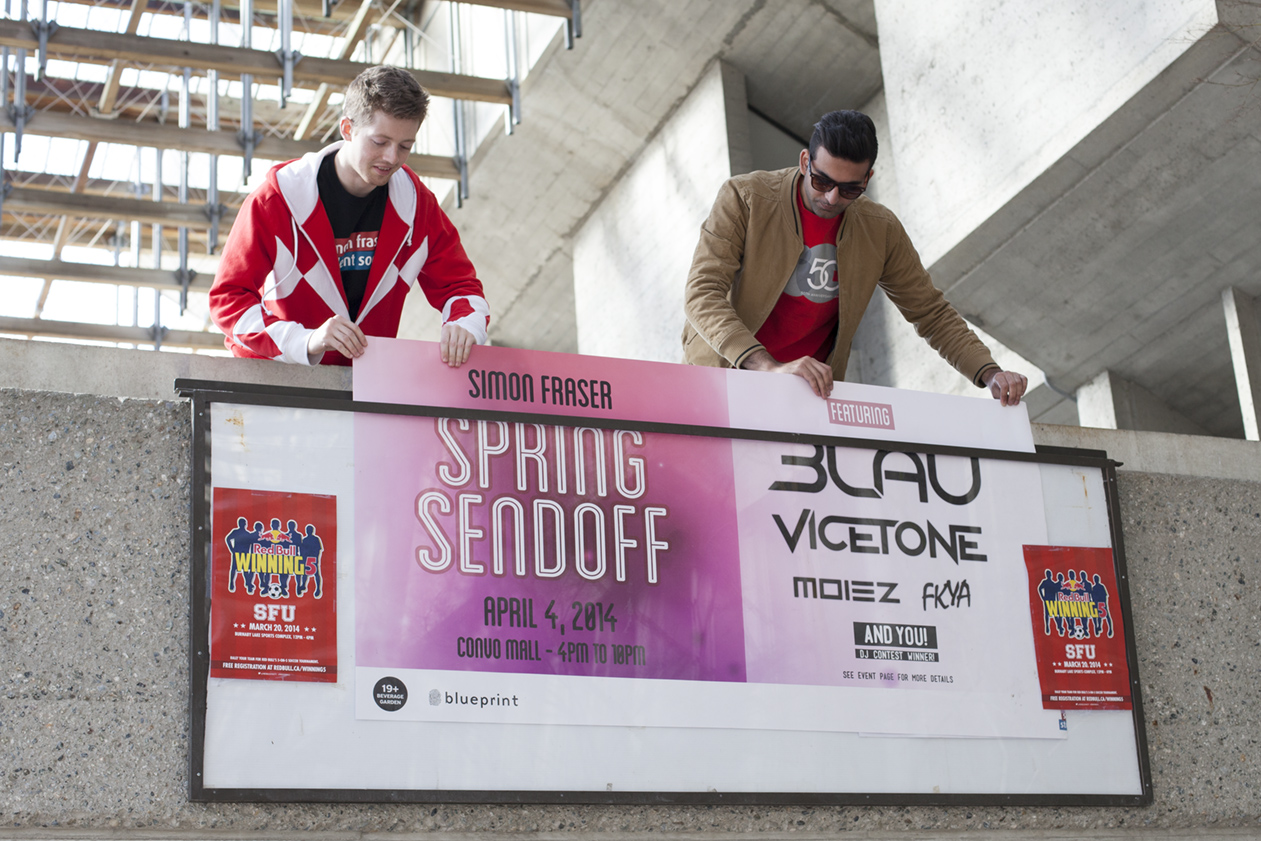
WEB-spring concert-Mark Burnham

Plans for the SFSS Spring Sendoff concert are well underway, and this second event promises to be bigger and boozier than the first. In response to student feedback from the dry Fall Kickoff concert, this time around there will be a separate beverage garden open to concert-goers of age, pending final university approval.

The event will take place on Apr. 4, and will feature electronic dance music artists 3LAU, Vicetone, Moiez, FKYA, and the winner of this semester’s SFU DJ contest. Student interest in the concert appears to be high, with over 700 tickets sold as of last week.

Last fall’s concert was met with hesitation on the university’s part, but in light of its success and positive feedback, SFU approved a second concert. While both the university and SFSS agreed to keep the event largely the same, a major change is the inclusion of a beverage garden.

Board members did discuss changing the genre of music in order to appeal to a greater scope of students, however, it was decided that the lack of alcohol was the biggest complaint and, therefore, the natural next step.

Brandon Chapman, business rep on the SFSS board of directors, explained that their aim is to make incremental changes to the concert model, so as to not risk the university’s disapproval.

The SFSS has already received approval from the City of Burnaby and the RCMP for the beverage garden. They are still in conversation with the liquor inspector, after which they can be receive the official  green light from the university and will have a clearer idea of how the beverage garden will run.


The aim is to make incremental change to the concert model, so as to not risk the university’s disapproval.


Chapman has spearheaded the project since the SFSS began to entertain the idea of a second concert near the end of the fall semester. A task force of 12 people was formed mid-December and put forth the proposal to board on Jan. 20.

Despite concerns from other board members over the near $19,300 deficit of the last concert, the spring concert was approved.

“That won’t happen again,” said Chapman of the deficit. “We’ve already secured over $12,000 in sponsorships, which is huge.” A sum of $10,000 was contributed by the university and the rest came from external sources.

Ticket prices have also increased slightly to offset the cost of the concert, but it is still important to the organizers to keep this event affordable for students. The team is also evaluating the expenses of the fall concert to see where money could have been saved.

Chapman said that the society’s goal for similar future events is to break even. The SFSS has been working closely with Student Services to move towards a more sustainable and cost-efficient way of hosting concerts.

There has already been talk of another kickoff event next fall, which could potentially offer a more varied collection of artists. Chapman shared his vision for this event with The Peak: “Imagine Terry Fox Field being a place where people can come and just listen to some indie music in the afternoon when the sun shines, have a beer with some friends and reminisce about the summer.”

Salt and Paper: Cashew lime squares

1

Processed with VSCOcam with f2 preset

I will be the first to admit that I love cheese and am in no way a vegan. If you’ve ever read the arts section, you probably already know this, as I never tire of talking of my adoration of all things fromage.

I also have a major sweet-tooth, and sometimes it becomes detrimental to my health, in more ways than one. Craving cheesecake at 10:00 p.m., I once walked several blocks just to buy a little slice to satisfy my very specific desire. I’ve also been known to eat an entire bag of five-cent candies while binge-watching Gilmore Girls. Sometimes, my sweet-tooth takes the wheel.

Occasionally, a (moderate) intervention is needed, and while my sweet cravings will likely never dissipate — I pity the soul who has to supply me with pints of ice cream and almond croissants when I’m pregnant — there is a solution: healthy sweets.

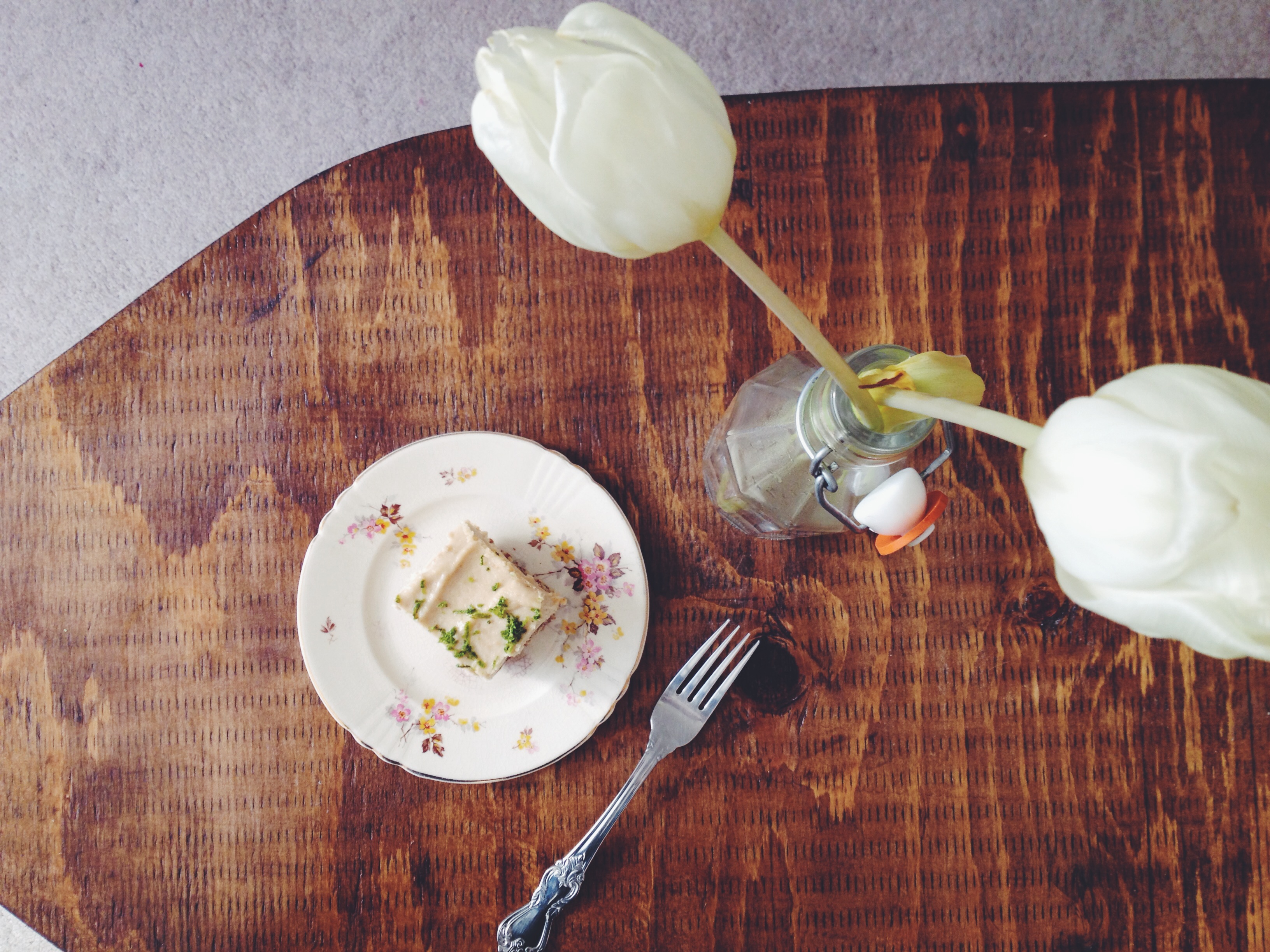
And I’m not talking just fruit here, folks. I’m talking creamy, citrusy lime squares made entirely of healthy ingredients. So while I still love a classic lemon or lime tart or cheesecake square, the discovery of entirely vegan, raw treats has rocked my world a little.

These lime squares are so incredibly creamy and flavourful that you’d never know they were made from nuts. It’s kind of, well, nuts.

This recipe is also highly adaptable. Not a fan of lime? Try lemon with a blueberry compote, or add some chocolate and peanut butter to the mix and really get the party started.

Processed with VSCOcam with f2 preset

For the crust:

• 1 cup almonds

• 1/4 cup pitted dates

• Coconut oil (as much as is needed for the crust to be moist, around 3-4 tbsp)

Blend the almonds in a food processor until well chopped. Add the dates and coconut oil, a bit at a time, until the mixture is moist enough to press into the bottom of a pan. You can either use a circular pie pan or a small square one, depending on what you’ve got.

For the filling:

• 1 1/2 cups cashews, soaked four hours or overnight

• 1/2 cup lime juice

• 1/2 cup honey

• 1/2 cup coconut oil

• 1 tsp vanilla

• 1/4 tsp sea salt

Blend all ingredients in food processor until creamy, around five minutes. Add ingredients as you see fit: Not lime-y enough? Add some more juice or some zest. Not sweet enough? Add a bit more honey.

Pour the filling over the crust in the pan and add some zest to the top, if you’d like. Pop in the freezer and let set for around three hours. Store in the refrigerator, or consume all in one sitting — you know what I’d do.

lime4

Experiential learning site matches students with researchers

3

WEB-Living campus-Mark Burnham

A recently launched SFU-based website is hoping to find you the perfect match — but we’re not talking about a love connection. Campus as a Living Lab aims to pair students and faculty with projects and people in order to gain experiential learning as well as course credit.

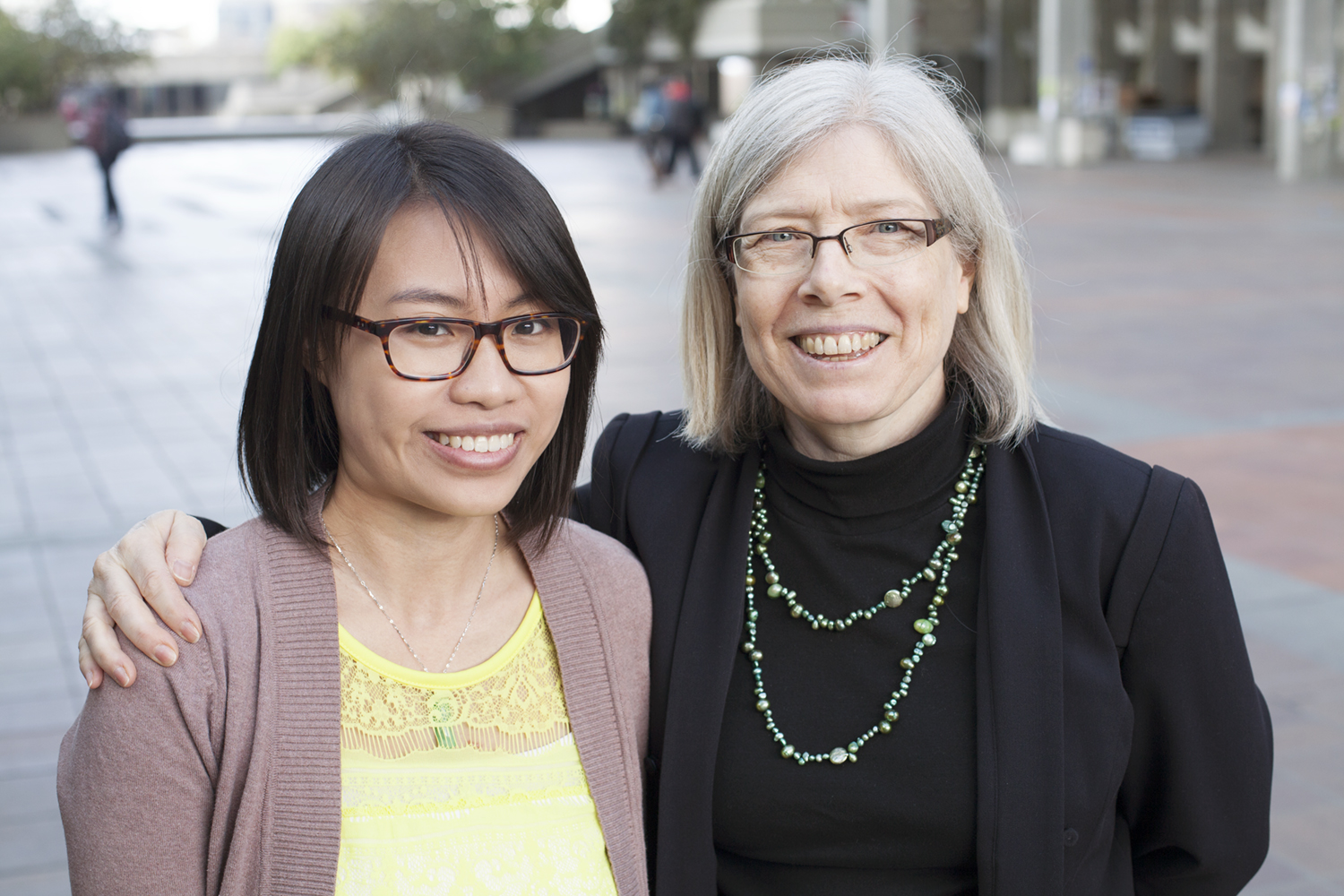
Helen Luo, a work-study student from SFU Teaching and Learning Centre, had the idea for the site last May. Working alongside Vivian Neal, her supervisor and an educational consultant for SFU in the Applied Sciences and Environment faculties, Luo hopes to expand the university’s offerings to include more experiential learning in its course curriculum.

Neal explained that this site is meant to fill a gap in what is offered at SFU. She said, “There’s lots of co-op student job planning sites and there’s volunteer project sites [ . . . ] but there seems to be very little to match action learning with credit based courses.”

The site encourages students who are looking for projects to fulfill course credit — either as individuals or groups — to post ideas on the site. There, they can be connected with researchers or companies with similar goals.

Eventually, Luo hopes the site will act as a project database, where both students and researchers can scroll through listings, choose projects in which they are interested, and form partnerships based on research compatability.

According to Neal, inspiration for the project came from the university population’s own desire for greater opportunities. “Instructors were looking for projects for their students, and students in project courses were looking for good projects, and they didn’t know where to find them,” Neal said. “They didn’t know what were useful things to do, on campus or near campus, that would have a real world outcome.”

Luo extolled the site’s accessibility as one of its most attractive features. “As you can see on the site, anyone can post a project, whether you are a student or staff,” she said. She explained that this provides a vehicle for those who may have a vision, but not necessarily the resources to put a project into action.

Although the current project listings are mainly related to sustainability, Luo and Neal feel that all faculties at SFU could benefit from the site. “There’s probably lots of hidden histories at SFU which would be interesting to dig up,” Neal said. “[There could be] real life, campus based research for history students.”

Anyone can find their scholarly soul mate: Neal continued, “Pretty much for students in any discipline, there is going to be something on or near campus which could be studied or managed or proposed.”

Although the two anticipate challenges, such as getting students to engage with the site, Neal is optimistic that students will use this opportunity “to engage in real world problems and problem solving through programs and research so they can make real changes on campus.”