Home Blog Page 1160

Take the SFSS logo off the “Silent No More” posters

0

WEB-prolife poster-mark burnham

I could not focus in my class this past Friday. As hard as I tried, my mind could not let go of what I had seen on my way to my lecture hall in the AQ.

“Men and women DO regret abortion,” the poster read, an assertion made by the Lifeline club at SFU in order to promote their upcoming event “Silent No More” on campus. I admit I was a few minutes late to class, taking my time to study the contents of the poster and trying to understand exactly what message was covering the walls of my school.

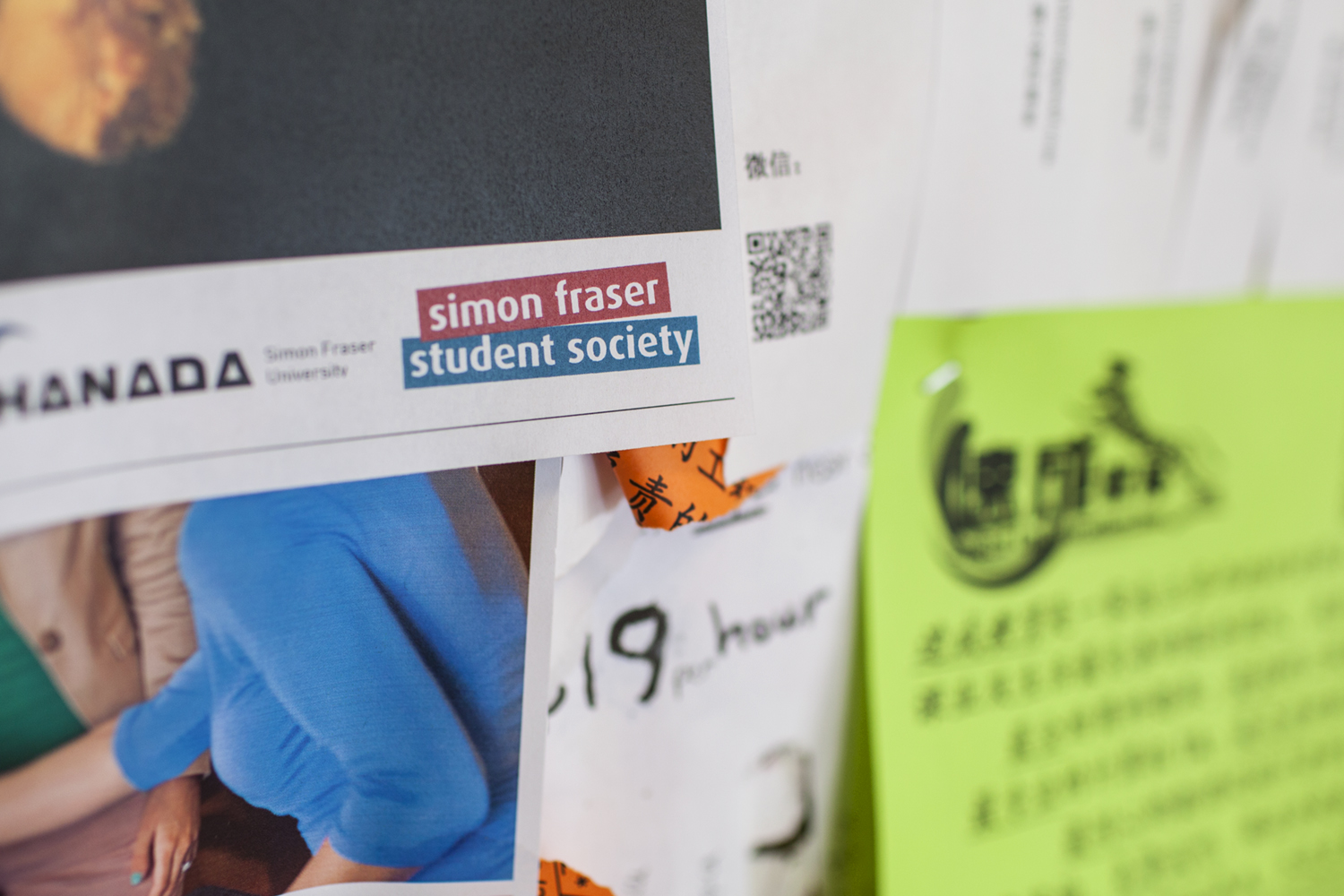
Compounding my confusion was the presence of the student society (SFSS) logo on the poster. The logo is available for download on the SFSS webpage, welcome to be used on “your sponsored [sic] event poster or flyer,” with the accompanying logo branding guide only stipulating the font styles and colours that can be used with the logo.

It would be as simple as re-posting the posters without the SFSS logo or altering its language.

Rather than aesthetics, however, my concern here is with the implication of the logo. While most club event promotions that bear the SFSS logo are arguably neutral in nature, the message presented by Lifeline’s posters is clearly not.

Lifeline, whose club description on the SFSS webpage refers to abortion as an assault, is a pro-life club on campus. By branding the choice to terminate a pregnancy as a widely-held regret, the poster shames those who have chosen to exercise their reproductive rights.

This message is particularly troubling in the context of a university, a place of higher learning comprised of a predominantly young student population. The presence of the SFSS logo on the poster inadvertently legitimizes Lifeline’s negative, inflammatory message.

While the poster affected me deeply, I cannot imagine the impact it might have on a student or employee of the university who has had experiences with terminating a pregnancy.

The message asserted by the poster targets these individuals and creates an environment in which they are not welcome. The presence of the SFSS logo brings an official sense to Lifeline’s beliefs and is not indicative of a university student society that strives to represent its undergraduate student population.

Though Lifeline is welcome to exercise free speech and organize on the basis of their beliefs, I believe the use of the SFSS logo should be further regulated, ensuring that the logo is not used in situations where assertions that can be harmful to members of the university population are made.

In the context of this issue, it would be as simple as re-posting the posters without the SFSS logo or altering its language: “Men and women share their experiences with abortion,” for example.

Ensuring that the use of the SFSS logo on club promotional material is held to a certain standard of neutrality is necessary in order to prevent the association of club beliefs with the views of our student society.

End unpaid internships

1

CMYK-Interns-Mark Burnham

During an awkward icebreaker game at the beginning of the semester, someone asked me if I planned to take an internship. I laughed nervously and told her no, considering most of the internships in my field of interest were unpaid.

I was taken aback by her response; she recoiled in horror, as if she were going to catch some sort of unemployment plague, and demanded to know how I expected to get a job in the future. My annoyance bubbled below the surface, but I managed to slather on a tight smile.

       I want to know why I am expected to sell myself short because of the precarious title I bare. Not only do I, and many other students, not have the luxury of throwing a whole working summer away, but the idea of selling labour for free because of my status as a student seems ludicrous.

Students should rally together and hold ourselves to a higher standard.

Regardless of the fact that we were raised in this Post-fordist era of experience over compensation, why do students work laboriously to leave empty handed, save for (fingers crossed!) a glowing recommendation? Unpaid internships are not a fair and noble exchange between those in power and students; they are a shady way of extracting cheap or free labor.

When the topic of unpaid internships came up in one of my tutorials last semester, few people recalled good experiences. While some people did mention that completing an unpaid internship for a not-for-profit organization left them with valuable job experience, the overwhelming majority felt like they were being taken advantage of.

The rule of unpaid internships is that interns cannot do the same work as paid employees. Unpaid internship advocates’ solution to potential exploitation of interns is for interns to have a firm awareness of their rights by reading the Employment Standards Act.

Realistically, though, even when interns are equipped with that awareness, they would accept breached rights if it meant keeping their employers happy, and safe-guarding a potential future job.

As one girl in my tutorial put it, “I was so bent on pleasing my boss in order to get a good recommendation, that I never objected to doing the same menial tasks as the secretaries.”

The act itself perpetuates class division. Unpaid internships create a distinction between the privileged who can afford to take them, and the middle class or poorer students who cannot. The privileged are allowed these unpaid “opportunities,” while most students are forced to take jobs outside of their area of interest in order to make money.

This situation begs the question: are those who get unpaid internships really the crème de la crème of intern candidates, or has the competition just been sufficiently thinned out to only include the wealthy? If you ask me, it’s the latter.

Unfortunately, as long as there are students willing to settle for these unpaid internships, the belief that students are okay with this sort of relationship to those in power, and the belief that the wealthy deserve this leg up on the rest of us, will continue to be perpetuated.

Instead of climbing over one another on our race to employment, students should rally together and hold ourselves to a higher standard. I think it’s high time we challenge the status quo. The mindset that perpetuates internships might have had a place in the Feudal era, but not in 2014.

I’m afraid I just blue myself

0

bmgp-671_FinalCrop (3)

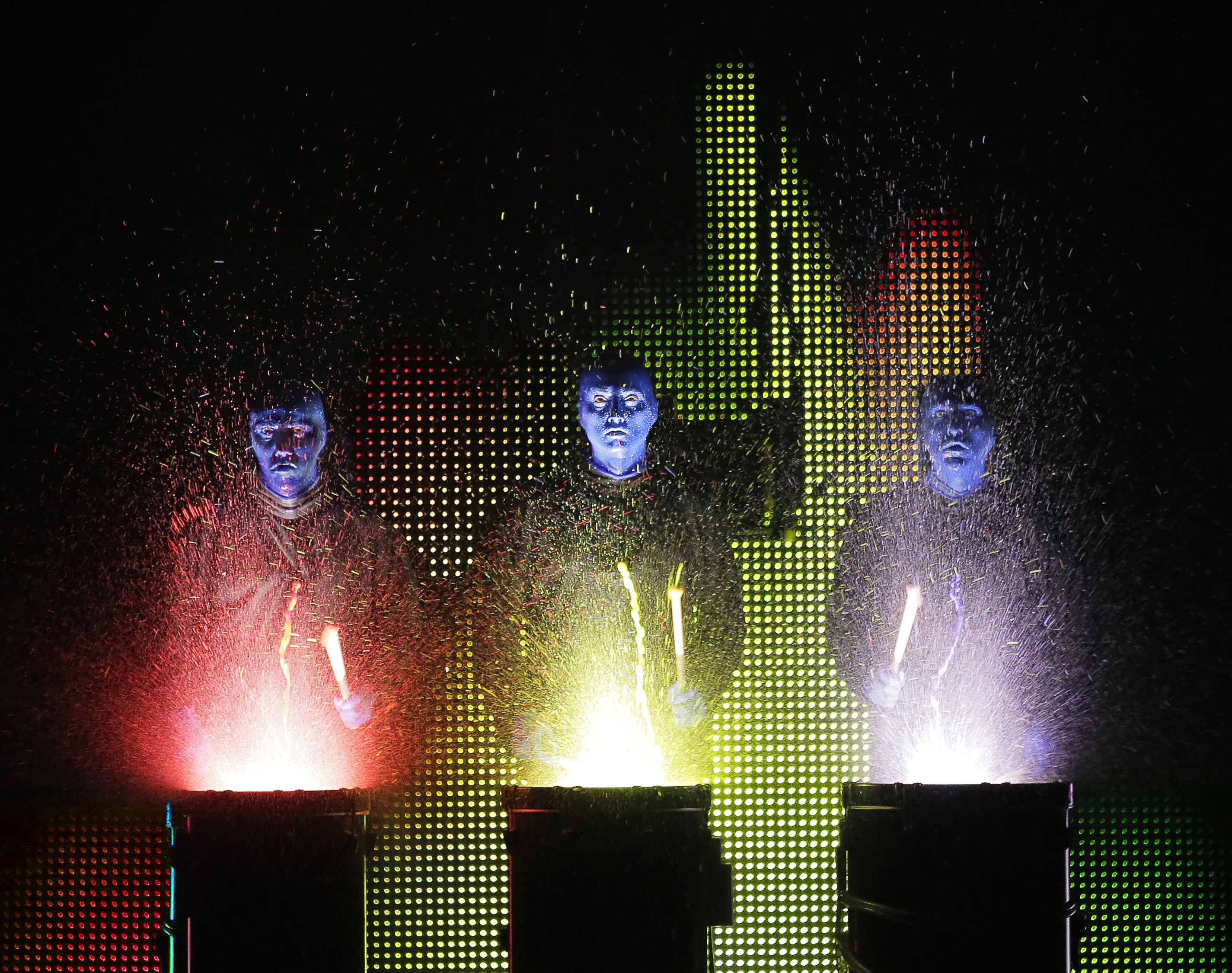
Three years of working on the Blue Man Group show has changed Jesse Nolan’s perspective on the world.

“It has changed the way that I look at everything,” he said. As the show’s musical director, Nolan said his challenge is to create musical accompaniment that outlines the stories and action on stage. He describes it as “painting with sound.”

Working on the show and thinking like the Blue Man character has helped Nolan expand his own thinking. “I’ve been encouraged to think a little bigger about everything,” he said, “I think more creatively in all aspects of life.”

There is something about the mysterious Blue Man character that people are attracted to. Nolan has been interested in the show since he was 12 and saw it for the first time in New York City.

“There’s a sense of exploration,” he explained. “When you watch the Blue Men move and interact, they’re always exploring. There’s a hunger for learning and knowledge.” Nolan said that children find them especially compelling.

The Blue Men also love to involve the audience in their shows. There are a few signature things that they do in every show, including climbing over the theatre seats up the rows. They literally take the show into the audience, and Nolan said that this creates an interesting atmosphere.

“There’s a sense of wonder coupled with tension.”

Jesse Nolan, Musical Director

“There’s a sense of wonder coupled with tension,” he said, as the audience is always wondering what’s going to happen next. “They have a sense of purpose, and the audience is trying to connect and figure out why,” said Nolan.

This show has a very heavy emphasis on technology and the role it plays in our lives. For example, the Blue Men interact with “Gi-pads,” huge eight foot iPads that allow them to comment on the influence of technology. “The outcome is thought provoking or comedic,” said Nolan, explaining that, compared to previous iterations, there is more video content, lights, LED screens, and even some wearable technology.

The great thing about a Blue Man Group show, said Nolan, is that it’s always fresh and new. Their performance philosophy is one of collaboration and an ever evolving show that is never the same from one night to the next. “We’re using the characters and style to tell a different story,” he said, adding, “we’re doing this thing that can’t repeat itself tomorrow.”

One thing that never changes, however, is the mess they leave behind on the stage. Of course there is splattered paint everywhere as they hit drums covered in it, but the Blue Men also play with food. “It ends up being a mixture of paint, food, and sweat,” laughed Nolan.

The content of each show comes together through collaboration, and the founders (Chris Wink, Phil Stanton, and Matt Goldman) are also still involved from their base in New York along with a team of musical directors and designers.

The essence of a Blue Man is a curious, innocent trickster, and Nolan hopes the show can reach out to adults just as much as it reaches kids. He hopes that adults can also “experience life through the eyes of a Blue Man,” saying, “That’s what we want to leave them with.”

Blue Man Group will be presented by Broadway Across Canada from March 25 to 30 at the Queen Elizabeth Theatre. For more information, visit vancouver.broadway.com.

Woohoo; boohoo

0

Woohoo: disagreeing with me

Disagreeing makes the world go around. In fact, there’s nothing more human.

People can’t be absolutely sure of anything, bound to our own perceptions, our senses and memories. How could we trust our experiences to be true to anyone else but ourselves?

Of course, there is merit in striving for truth; it’s what makes relationships and the law, for instance, function. But the absolute uncertainty of reality always remains.

This doesn’t have to be disappointing, though. Not knowing can be freeing. The inability to know anything means everything could be true. There is space to entertain every idea as true or possible, even if momentarily, because it might be.

This is what makes agnosticism so fun.

So, disagree with me. Let’s talk, let’s have a conversation, let’s look at the world in ways we’ve never thought of before.

Boohoo: being a child

Children see disagreement as a personal attack. To not like the colour green is to not like me, every essence of me, because I like green.

I often receive letters that disagree with writers’ opinions. But one I received recently had only a short legitimate claim against the article, surrounded by attacks on the author personally: the letter writer cited the author’s name several times, made sure to call them “foolish,” and repeatedly questioned The Peak’s editorial process, which allowed for such an article to be printed.

Elementary school teaches to argue in a disagreement. Aruge, but know that taking the situation too personally, and having the loudest and angriest voice doesn’t make you more correct.

Letters such as this remind me that I have to be an adult, too. I could throw my metaphorical legos at them, but I’d rather take their nuggets of truth, learn from them, and move on.

Clan lacrosse extends winning streak

0

It was tough for the Clan lacrosse team last weekend, but the Burnaby boys managed to continue their strong season with wins over the University of Utah and Oregon State University. The two wins up the Clan’s winning streak to six games, and improve their record to 5–0 in the conference and 7-1 overall.

The two-game trip started with a neutral site game against the University of Utah Utes in Vancouver, Washington. The Clan got off to a slow start with the Utes going up 2–0 early in the first, but after the rude awakening, the Clan went on a 9–3 run to take control of the game in the first half.

The Clan slowed down a bit in the third, but still outscored the Utes 3–2 to bring the score to 12–7. In the fourth however, the momentum swung heavily in the Clan’s favour, as they outscored the Utes 6–1 over the last 15 minutes to bring the final score to 18–8.

The Clan’s firepower was led by two-time All-American Sam Clare who tallied five goals and two assists, while leading scorer Tyler Kirkby (two goals, four assists), and Ward Spencer (five goals, one assist) both had six points.

The Clan then made their way down to Corvallis, Oregon to take on the Oregon State Beavers who currently sit second in the conference behind the Clan. The Beavers came out fighting, netting the first goal of the game and putting the Clan behind early for the second time on the weekend.

It was an uphill fight for the Clan, but they eventually pulled away and took the game 9–5. Spencer led the way for the Clan offensively with five points (three goals, two assists), followed closely by Kirkby, who had four (three goals, one assist).

Senior goaltender Darren Zwack played both games for the Clan, stopping 10 of 18 for a save percentage of .556 against Utah and stopping 11 of 16 for a save percentage of .688 against OSU. His save percentage for the season is now an impressive .690.

The Clan will slow things down for the rest of the season, with just one game a weekend until the playoffs. Up next for the Clan are two home games against Washington State on March 29 and Portland State on April 5. The Clan remain at #10 in the Men’s Collegiate Lacrosse Association rankings but look to continue their rise in the standings as the playoffs approach.

Is Beyoncé a feminist icon?

0

She is! by Max Hill

Like it or not, for many people in our society, feminism is still a bad word. Female pop stars from Katy Perry to Taylor Swift to Madonna have openly rejected the term, citing the same tired “I’m not a feminist, I’m an equalist” argument we’ve heard a million times before. For this reason alone, the depressingly small number of female pop singers who do openly support feminism deserve our applause and support.

Beyoncé is one such woman.

It hasn’t always been this way — back in 2010, Beyoncé only referred to herself as “feminist in a way,” mainly because she valued her female friendships. But four years later, she’s publicly proclaimed herself a modern day feminist, both in her music and in her everyday life. She even wrote an open essay last year in response to a study which reported that 42 million women in the United States were living in poverty.

“We need to stop buying into the myth of gender equality,” she argued, urging men and women alike to fight for equal pay and equal treatment in society. That sure sounds like a feminist to me.

To be fair, Beyoncé isn’t a flawless exemplar of feminist ideology — her music videos skew towards the male gaze, and some of her lyrics are more than a little problematic. But arguing that these issues disqualify her as a feminist icon treats feminism like the kind of exclusive club that feminists have been trying for centuries to undermine.

Especially on her most recent album, Beyoncé, her lyrics have advocated sex positivity, self-confidence, girl power, and positive body images. With each new record, her feminist lens focuses more clearly on the issues affecting girls and women in North America and beyond.

Feminism is an open conversation, a movement with plenty of room for dissenting voices and different cultural experiences. Beyoncé’s is one such voice, and it deserves to be heard, both by her fans and her critics.

At the end of the day, Beyoncé is one of the most popular and influential women in the Western world, and she’s using her power to promote feminism and gender equality. What more can you ask?

No way! by Joel MacKenzie

Beyoncé is a strong woman. She’s a fantastic performer and artist. She is a feminist. But her feminism is problematic.

Feminism itself is a slippery term. Generally, it can be defined as advocating for women’s rights to achieve equality among the genders, on levels of economics, politics, and sociality. It is a movement that affects everyone, not just women. The problem is that it’s hard to say exactly what constitutes behaviour that strives to meet this goal. Thus, feminism is a constantly changing, open debate about the best way to do so.

Looking at Beyoncé’s music — the clearest vehicle for the pop icon’s opinions and influence on the general public — she only makes female empowerment statements in relation to men. This attitude does not contribute much to long-term gender equality.

Of course, I lack sufficient room here to do justice to anywhere near all of Beyoncé’s work. And she has done writing outside of her song lyrics that addresses feminism. But again, her lyrics are what she uses to communicate with the masses, and they should be seen as a fair representation of what she stands for.

I look here at two examples of her work, though this theme appears throughout.

Listen to “Single Ladies.” This song is an apparent response to not receiving a proposal from a man. From this point of view, the power remains in the man’s hands. The only agency that the woman assumes in the song is spiteful revenge amassed by flirting with other men.

Certainly, “Run the World” has a lot of explicit positives — suggesting that women college grads can be powerful, for instance. But beyond some simplistic notions about women power, the song begs for a gender struggle of women versus men, rather than equality. This perpetuates the same problem that feminism is a response to, and is exactly what spurs the reaction from loud-mouthed, ignorant persons (Men’s Rights Activists) who become threatened and take an opposite stance in the same gender struggle.

It is awesome that Beyoncé can stand as a strong woman and inspire anyone to feel empowered. And it is certainly necessary to talk about relationships amongst genders. But only when we can look at women as independent and equal, not only as such in relation to men, can equality be achieved.

Spaces of contestation: art, activism and the city

0

spaces-of-contestation-talk-series-image

In a quiet room nestled in the SFU Woodward’s building, Stephen Collis addressed what it means to resist as a community in his lecture “Riot Dogs and Research Labs — Poetry and Struggle.”

The event was the fourth in a collection of talks, performances, public auctions, publications, and an exhibition that have made up the project Spaces of Contestation: Art, Activism and the City. The compilation, curated by Mariane Bourcheix-Laporte, examines the collective walk/protest/public demonstration as both a performance and a social formation.

The series was presented by SFU’s Vancity Office of Community Engagement, the SFU Institute for the Humanities, and UNIT/PITT Projects. This fourth talk was a critical discussion in how to negotiate the future and build considerable capacity to resist what we don’t wish to see in our world, but also how to evoke alternative ideas about what we do want.

Collis is a poet and professor of contemporary literature at SFU. In his work, he invites us to embark on a journey of exploring the capacity to resist. In this dialogue-centered presentation he focused on three “spaces”: the street, the commons, and the future.

He began with the street, the most obvious contested space. When we — in Vancouver and the Western world — “take to the streets,” we are rebelling in a way that could be categorized as safe compared to acts of civil disobedience in other parts of the world.

For example, not only do many of us feel confident that nothing terrible is going to happen to us when we go to a demonstration or march, but protests in the city are safe in that they are often even escorted by the police force themselves.

Collis asked, “Are street protests rooted in the past?” He referred to the language around these events as well as their “reactive” nature. If we are simply reacting to something that’s already been initialized, what are we ignoring? Despite these thoughts, he said that the street is an important place of contestation as it builds capacity for resistance in a direct and immediate way, and it frustrates the state authorities.

Protests in the city are safe in that they are often even escorted by the police force themselves.

Collis then explored the “commons,” spaces characterized by shared livelihood. We have been dependent on common ground, he reminds us, throughout history.

Before the 17th century, there was absolutely no concept of private property: everything was communal. He urged us to see that in recent decades, capitalism has continually enclosed (privatized) these spaces, rendering different ways of thinking essentially impossible.

He evoked a sense of yearning for these places to which we have lost connection with a beautiful poem titled “Blackberries”; it’s about a berry patch that thrived in an abandoned lot, a junk space, off of Prior Street in Vancouver. The wild thorns and fruit draw our attention to a space absent of market relations and state. The berry patch represents another site where resistance occurs in a reactionary form.

Collis is interested in timelines — where do we cognitively map things in time and space? He explored the idea that we are always thinking of ourselves either in the past or in the future. It is fitting, then, that the third space he investigated is “the future.”

In the arena of climate change, he explained how we think of the future as an absolute — something that has basically already happened.

Corporations are already counting on burning all the CO2 that is still in the earth, as if it were already extracted and ready to go. As he explained, “Here we are, the dead of all times dying once again, but now in order to live.” He emphasized the importance of functioning as a “we” — a collective — in the future if we want to actualize futures that have not been created yet.

Reactionary resistance, he concluded, isn’t really about having true freedom and creating positive change. It is a negative discourse we employ as a way of saying, “no, I don’t want that.” Alternatively, capacity building moves beyond what’s happened in the past to proactively create alternative realities. It is this positive capacity building that Collis wants to continue to engage in, through his poetry, studies, and dialogue with others.

The Grand Budapest Hotel is immaculately immersive

0

the-grand-budapest-hotel-di-movie-533172770

Living in a Wes Anderson film is like living in a perfectly symmetrical doll’s house, but with complex characters and an overwhelming amount of 70s nostalgia.

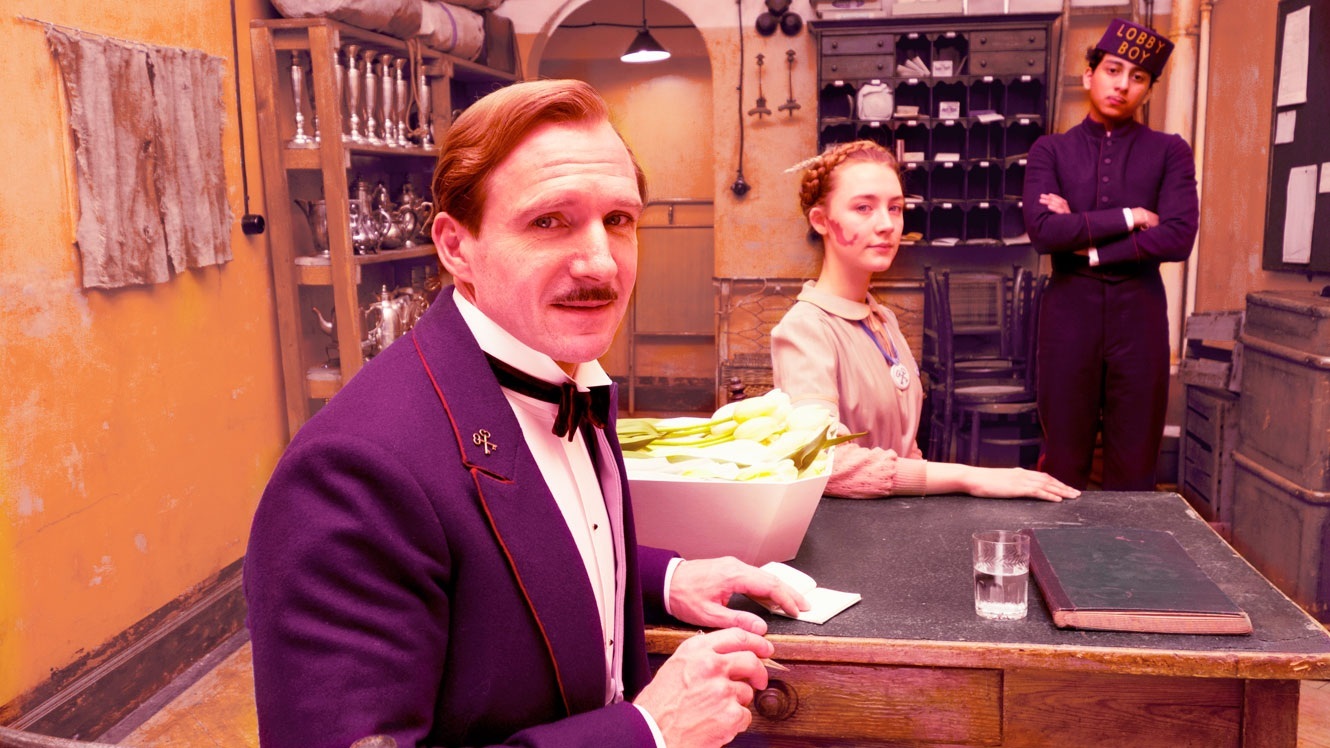
Anderson’s latest masterpiece, The Grand Budapest Hotel, follows Gustave H (Ralph Fiennes) and his protégé Zero Mustafa (Tony Revolori). Gustave is the concierge and Zero the lobby boy at the esteemed Grand Budapest Hotel.

The diligent Gustave keeps the hotel in immaculate condition, much like Anderson and the aesthetic of his films. He is brutally honest, witty, vain and has a particular fondness for elderly rich women. His most notable fling is with Madame D (Tilda Swinton), who assigns Gustave the fictional renaissance painting Boy with Apple in her will.

When the time comes for Gustave’s inheritance of the painting, Madame D’s son Dmitri (Adrien Brody) is not keen on giving up the notable piece of art, especially to the man he accuses of murdering his mother.

The Grand Budapest Hotel follows the wild string of events that ensue to retrieve the painting and clear Gustave’s name. It also follows the beautiful friendship that develops between the kind and lowly lobby boy Zero and the clever, liberally-perfumed Gustave.

The story is narrated by Zero retelling the events in his old age. He portrays the hotel sentimentally, indicating his gratefulness for the place and all that happened there. The film is hilarious and made me laugh out loud on several occasions, but it is also poetically written and full of heartwarming connections.

This is the world of Wes Anderson, where polished, dream-like settings turn nostalgia into a backdrop for complicated humans.

Watching the world Anderson created in the film is like living in the doll house that you always wished would come alive when you were a child. The colours are vivid and, in true Anderson style, reminiscent of the 70s.

The buildings and scenery are almost cartoon-like, appearing as though they are made of clay — this is the world of Wes Anderson, where polished, dream-like settings turn nostalgia into a backdrop for complicated humans. The score is also eclectic, adding to the whimsical nature of the characters and plot.

The characters are brought to life by the cast, as Fiennes flawlessly delivers the genuineness and hilarity of Gustave. Saoirse Ronan plays Zero’s brave and fiery girlfriend Agatha. Zero’s character was cast perfectly with newcomer Tony Revolori, as the charmingly loyal companion of Gustave. All of the classic cameos you would expect from a Wes Anderson film are successfully delivered.

Watching The Grand Budapest Hotel is an immersive experience — it’s like playing a game that you get so involved in you don’t even know how long you’ve been playing. You are fully transported to witness the inner-workings of the hotel and the polished madness that is happening around Zero and Gustave. It is cheeky and so very endearing, and a more than worthy addition to the Anderson canon.

Of mice and men

0

WEB-mice-Lily Li

Michael Silverman, an associate professor of biology at SFU, has made an important contribution to the collective knowledge about Alzheimer’s disease through his research on cellular neuroscience.

Today, the prevalence of Alzheimer’s disease is undeniable. The degenerative disease targets the brain, resulting in loss of memory, behavioural changes and disintegration of language abilities. Alzheimer’s does not discriminate, and can seemingly target anyone as they age.

However, Silverman has come across a rare gene variation which may prove helpful in understanding the disease.

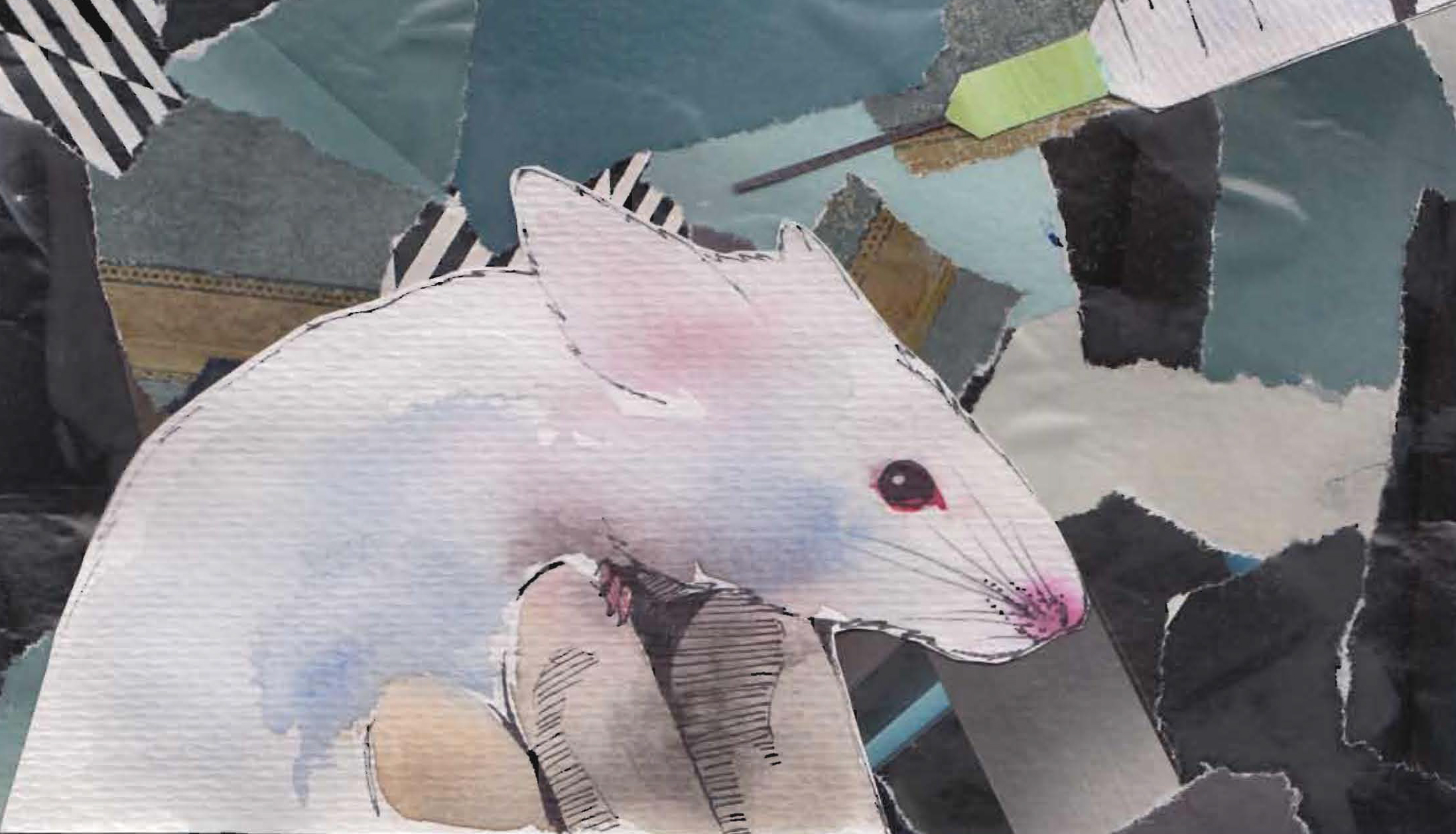
Two years ago, Silverman went to Japan for a fellowship, bringing his strengths in the field of cell biology to work alongside geneticists and physicists. During his time there, researchers did genetic marker studies on mice, without a specific goal in mind, but hoping to find a genetic pattern between the subjects.

After raising mice with indistinguishable genetic backgrounds in identical settings, scientists found that some of the mice had a specific gene that led to the slowing down of amyloid precursor protein (APP) transportation in the cells, resulting in greater deterioration. In simple terms, this is a gene anomaly that leads to Alzheimer’s.

After the initial studies, they tested for the same specific gene in people with the disease, and they too, had this genetic anomaly.

Silverman explained, “[This] doesn’t say it’s causative, necessarily — it’s correlative. If you have this gene variation, there’s a good chance you’re going to have this disease.”

Researchers have struggled with Alzheimer’s because it does not have a strong genetic component, at least not one researchers have discovered. While this discovery is promising, it does not necessarily mean researchers will find a cure for the disease anytime soon.

Alzheimer’s disease is still an incredibly complex enigma, but as Silverman said, “finding more pieces to the puzzle [is] essential.” Any information that can help doctors and researchers understand more about the disease is valuable and may lead to treatment or earlier detection for those who are at risk of developing Alzheimer’s, he concluded.

Post-secondary bullies

0

It seems the phrase “I’m just a big kid at heart” couldn’t be more applicable to current research from SFU, which revealed that cyberbullying (or cyber-harassment) is more prominent among students and faculty members than we’d expect. So prominent, in fact, that I am dismayed and ashamed of academic populations after learning the details.

The study, conducted by Professor Wanda Cassidy and her colleagues, included 30 interviews and a survey of over 2,000 people from four universities across the country. The results found that, surprisingly, many students harass their TA’s through social media smear campaigns, and faculty members harass each other most prominently through emails and text messages.

One situation concerning a TA grabbed my attention: the TA claimed that a colleague felt that she was being gossiped about, and consequently sent the TA derogatory messages up to 73 times a day. When the TA did not reply, the messages became worse.

Cyberbullying is what children do, children who are paranoid about popularity and self-image.

Other instances include professors who have been attacked by students calling them “lousy, incompetent and useless,” causing instructors to fear going to work each day.

I’m sure I’m not the only one who witnessed cases of cyberbullying while in high school. I’ve even been a victim, and (I’ll admit) at times a perpetrator of this harassment. I am well aware of the adolescent life played out through social media and texts, one that can be careless, self-absorbed, malicious, and without shame. Furthermore, being from a small town, it was fairly routine for cyber-harassment cases to spread by word of mouth to all the townsfolk.

After a particular instance in which one student attacked several teachers with a Youtube video, causing widespread distress among the school staff, I remember thinking to myself that I couldn’t wait to graduate and leave the degrading, single-minded woes of small town, adolescent life behind me.

Of course, I knew harassment would still exist, but I think these realities were shrouded by my vision of university as some kind of paradise, the adult holy-land of professionalism. Reading about cases in studies such as this further erodes the pit of reality in my stomach.

Cyberbullying is what children do. Children who are paranoid about popularity and self-image, who have trouble thinking before acting, and who don’t yet understand the values of creating and maintaining positive relationships.

When adults who claim to be mature individuals seeking skillful employment and companionship, turn around and harass each other like this, there are some serious consequences. Do you want your professional image tarnished? Do you want to be sleep-deprived and anxiety-ridden? How about thoughts of suicide?

As a guy who has very little tolerance for bullying of any sort, I am proud to say that I make an effort to treat everyone with kindness and respect, no matter their differences. I try to understand the outlooks of others, and I’ve come to learn the value of upholding positive relationships.

Clearly, these are concepts that too many striving academics have yet to grasp.