Home Blog Page 1158

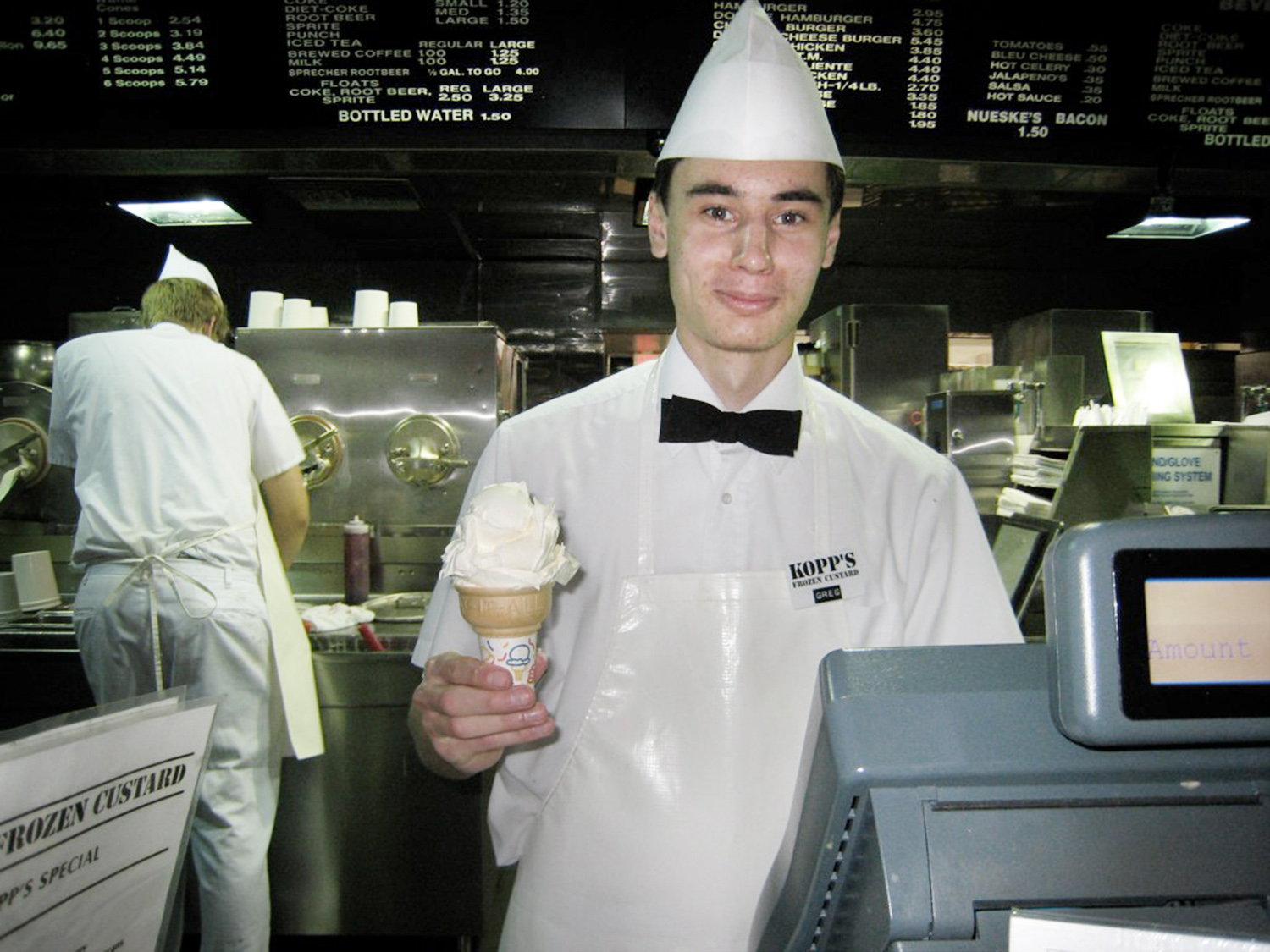
You want fries with that?

0

IMG_4435.JPG

You’ve been eyeing the job boards lately, looking for that perfect internship to kick-start your professional career. Then, suddenly, it’s the end of March. The warmer weather is an ominous reminder that you might have to beg your old boss at that dreaded customer service job to take you back.

Searching for summer work as a student can be stressful. When else in life do you have to cycle through unemployment and full-time employment so frequently? The added stress of exams and the foreknowledge that that tuition payment isn’t so far away don’t help, either.

So what’s the best thing to do? Blow off studying for finals and use the time to hand out resumes? Hope that summer work will land in your lap? Give up on seeking opportunities that further your career and fall back on an old job that will pay the bills? The answer: none of the above.

Finals are overwhelming, and job hunting can be stressful, but the good news is that doing both is not unmanageable. We live in a world where, even if you walk into an office in a suit, resume in hand, you will be informed you that the application process begins online. Take advantage of this.

Take advantage of online applications.

Instead of making job-hunting a huge task that you put off until the last day of exams, budget time for it now. Wake up half an hour earlier every day, get the coffee on, and discipline yourself to apply for just one job a day. This will help you focus on applying with quality, instead of the exhaustive “I’ll just hand my resume to every single business in the neighborhood and hope for the best” approach.

Read the job description and the qualifications, and apply for positions that you would hire yourself for. It is great to stretch yourself, but you’re probably not a CEO, so don’t waste your time and the employer’s time. Take a few minutes to cater your resume to the qualifications that the employer is looking for (provided, of course, that you possess them), and take the extra 10 minutes to write a cover letter.

With the stress of final papers and exams, too often we leave summer job hunting to the bottom of the to-do list, and end up with work that isn’t furthering us in the long run. Set aside some extra time to look for positions that will build your resume and apply for them with integrity. Doing so will set yourself up for success, and save yourself a lot of stress at the end of April.

Wildlife talks On the Heart

0

wildlifepic3

Described as an essay about all matters to do with the heart, Wildlife’s On the Heart is about more than love.

“It’s not just about being in love and being heartbroken, that’s definitely part of it, but it’s about everything related to the heart,” said lead singer and guitarist Dean Povinsky.

As they embark on a national tour, Povinsky said that he is looking forward to playing in some cities that they haven’t played in a while, and also returning to Vancouver for their fifth show in the city. For their first few dates in Ontario they shared the stage with Fast Romantics, and for their western dates they will be playing with Boy and Bear.

Povinksy says he misses his own bed the most when on the road, “and not sharing it with some dudes,” he adds, laughing.

Povinsky comes up with the lyrics and melodies for Wildlife’s songs first, then brings them to the rest of the band. It’s a collaborative process with everyone shaping each song together. For On the Heart the band worked with producers Peter Katis, Gus Van Go, and Werner F., and Povinsky said that the album developed organically and that it was a lot of fun to work with them.

“Peter put the unifying patina on the whole album, so it didn’t sound schizophrenic,” said Povinsky.

“You make an album and it’s bound to be a learning experience,” he continued. “There’s no way you can’t take something away.” He’s happy with the process and proud of the album: “It’s pretty reflective of what we were trying to do.”

The thing Povinksy misses most when on the road is his bed: “And not sharing it with some dudes.”

The theme of the record, said Povinsky, is reflected in “Don’t Fear” with its juxtaposition of happy and sad elements. “It encapsulates the record well,” said Povinsky, “sonically it’s a bit more melancholy and it’s instrumentally interesting — there’s a build up I like. Lyrically it reflects the tension we were trying to put in the songs.”

Another element of tension is in the idea of romanticizing something that might not be good for you and, on the other hand, being able to see the good in something negative.

While a concert may be a place of tension for some, Povinsky said, “We’re good at making people have fun in a live setting.” He likes to talk to the audience a lot and put them in a good mood. “I let them know we don’t think we’re better than them,” he said, “We’re honest and earnest about what we’re doing up there — they can relate to that.”

That being said, he doesn’t have anything specific prepared for each show. “I’m not a fan of delivering the same banter every night and having go-to jokes,” he said, explaining that the goal is just to make sure the audience has fun. “If I have to make fun of myself then so be it.”

Open letter RE: supporting unions on campus

0

It is no secret that times are getting tougher for post-secondary students who must support themselves through work. Minimum wage in BC is $10.25 while the living wage in the metro Vancouver region is $19.62 for a family of four with both parents fully employed.

It is true that most working students are not fully employed parents, [but this] nevertheless points toward structural impoverishment for low-skilled workers. Most students come to university to develop skills and abilities that will improve their position within the labour market because their current skill levels place them firmly in the minimum wage, or near minimum wage, pay grade.

Regardless of one’s political stance towards unionized labour, it is a fact that unionized workers on the whole have better wages and benefits and greater job security than do non-union workers. If this were not the case, businesses would not be so keen to oppose unionization or call upon the government to institute policies that erect barriers to workplace organization.

Unorganized low-skill workers, especially, are treated as readily substitutable for one another; economic precariousness is their hallmark condition of existence.

The growing rift between wages and the cost of living implies both that workplace unionization to protect jobs and labour militancy to fight for better working conditions and standards of living are increasingly becoming a matter of survival for low-wage workers. Indeed, the job protection against arbitrary dismissals that a union job provides enables a more solid position from which a militant struggle for respect and a better life can be fought.

There are a number of students who work on campus in unionized jobs. Teaching Assistants and Teacher Markers, the members of TSSU, are probably the most visible. The office, retail and library staff of both SFU and the SFSS as members of CUPE, are probably the second most apparent unionized workers on campus. Then there are the food and beverage services workers that you will find in the Highland Pub, who are also CUPE members employed by the SFSS.

Perhaps less apparent are the food and beverage service workers in the cafeterias, White Spot, Starbucks, Residence Dining Hall and the Diamond Alumni Club who are members of Unite Here! Local 40. These workers are employed by Compass Canada who holds the SFU food services contract. MBC private vendor food court workers are unorganized.

Many Unite Here! Local 40 members on campus are not students, but many are. SFU Food Services is a key provider of employment opportunities for working students on campus. Therefore, the strength of presence of Local 40 at SFU is a determinant of well-being for working students at SFU. Unite Here! Local 40 will be organizing to increase its presence on campus and improve standards of living for its members, many being students.


In solidarity,

Joel Warren

Chair, Labour Studies Student Union

Member, Unite Here! Local 40 (off campus)

Field trip challenges conventional urban environments

0

WEB-Urban studies

This year’s cohort of SFU urban studies graduate students recently returned from Portland, OR, where they explored the future of urban development. In a city known for “keeping it weird,” students drew inspiration from the concrete jungle as well as the work of admired innovators in their field.

The trip, which was first initiated in 2008, allowed those in attendance to opt into whichever workshops and seminars interested them on the two-day itinerary. The 40 students who travelled to Portland this year heard talks on immigrant and refugee community issues, city repair, and sustainable transportation, to name a few.

Students were significantly impacted by the hands-on experience of the trip. Said urban studies graduate student Peter Marriott, “It was sort of a highlight and defining moment of the program. Going to our laboratory of nearby cities, whether it’s Seattle, Portland, Victoria, maybe one day San Francisco, it really gives us an opportunity to study cities first-hand and to explore such a huge diversity of people who are working and researching in different cities.”

One speaker who left many of the students inspired was Mark Lakeman, a national leader in sustainable development who has created more than 300 community-generated public spaces in the Portland area.

Student Katelyn McDougall spoke about what resonated most with her — that the initiatives Lakeman discussed are run by, “people who aren’t afraid to stand up for their own use of what communities should be, contrary to what planning departments are telling them.”

One such initiative is Dignity Village, a self-governed, permanent housing encampment built by and for homeless people. Since being officially recognized by the city, the area houses approximately 60 people. It even elects its own officers, provides comforts such as showers, and offers a variety of community services.

Upon arriving at Dignity Village, student Robyn Craigie said, “It was quite awe-inspiring. I would recommend anyone go and see it, just the ability of people, who supposedly have no capacity to help themselves, are really creating something for themselves.”


“It’s much more powerful, I think, to go down and experience what people are living.”

– Robyn Craigie, urban studies graduate student


Many students appreciated similar opportunities to see theory in practice, exploring the neighbourhoods that they had heard about in their workshops. “It was really neat to hear that from the professors earlier and then to go out and experience the gradient of gentrification and neighbourhood change,” said Marriot.

With Portland only a stone’s throw away from Vancouver, participants were also exposed to initiatives that could potentially be made to work in our own urban world. “A lot of the issues we’re dealing with in Vancouver, you can find in a lot of major cities on the continent,” said Craigie. “You can read about that commonality of issues and experiences but it’s much more powerful, I think, to go down and experience what people are living and how they’re similar to you.”

Beyond an opportunity to consider new ways of thinking about urban development, the trip was an opportunity for urban studies students to engage with their peers and experts in their field. “Grad school can be a fairly isolating environment,” said Marriott, “It really strengthens us in the program, the program [itself], and what we were able to learn by going on this trip.”

Despite Portland’s attempts to keep itself “weird,” the understanding of urban issues brought back from the trip by students may not be so far-removed after all. McDougall commented, “Understanding the inequalities and the nature and fabric of the urban landscape is very important in terms of how we move forward creating a sustainable, economically [and] socially just place in the future.”

Students’ inner superheroes take on cancer

0

WEB-relay-Jennifer Hoffmeister

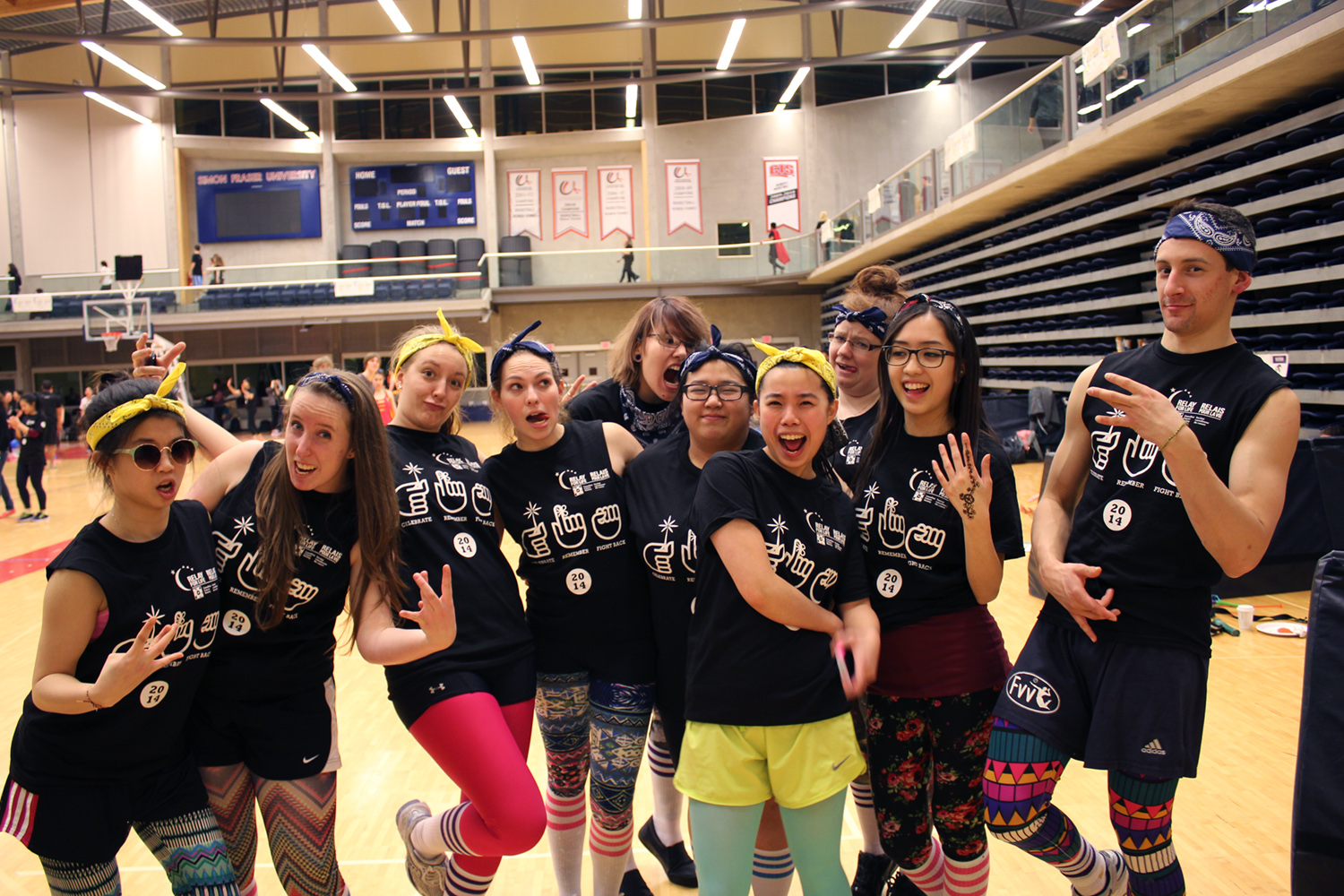
The West Gym hosted SFU’s sixth annual Relay for Life, lasting 12 consecutive hours, from 7:00p.m. to 7:00 a.m. on March 21 to 22. The charity event saw approximately 380 people, with 42 teams, as well as more than 30 volunteers.

Relay for Life (RFL) is an event organized entirely by students. According to Eve Mitchell, RFL youth coordinator, the fundraising target of $33,000 was exceeded before the night had even started, reaching $48,000 and counting. Proceeds will go to the Canadian Cancer Society (CCS) to fund research, prevention initiatives, and care services for people affected by cancer.

RFL aims to bring communities together in universities and high schools across Canada in a fun and festive way, while raising awareness around cancer prevention.

As team members took part in turn in the relay — walking or running laps for the duration of the event — a number of activities were scheduled throughout the night, partly to keep participants awake.

This year at SFU, as participant Norman Krismantara-Cheng told The Peak, “People were playing around, doing yoga, [listening to] two bands, trying to have fun.” Participants were also fed and able to decorate luminaries against cancer.


The fundraising target of $33,000 had been exceeded before it even started, reaching $48,000 and counting.


“The theme of the event changes every year, and actually I think this is the first year that SFU has done a theme, [superheroes against cancer],” said Mitchell. She continued, “I think it’s really nice because it’s that extra bit of fun; everyone loves dressing up so it gives them something to rally around.” She added that the costumes she saw were the best she had seen at a relay event, setting a high bar for next year.

At around midnight, participants joined for a solemn walk in the dark to remember cancer victims in what turned out to be a very emotional moment for some. However, there were also merrier moments, such as the survivors’ victory lap.

Ayla Kooner, co-chair of the organizing committee and a health sciences major, is one such survivor. Diagnosed at 12 with Ewing’s sarcoma, a bone cancer, she underwent a heavy year-long treatment involving both chemotherapy and radiation.

This year, she will celebrate her 10 years in remission. Kooner told The Peak, “The thing that people don’t understand about being a survivor is that you are forever living with the consequences of [your cancer]. [. . .] There are long-term side effects of chemotherapy we kind of all have to live through, and I will have to be going for check-ups for the rest of my life.”

The relay is SFU’s longest-running university event. “I think it started as a res event, so there was a really good awareness of getting people together, creating that community spirit, and also promoting health awareness,” Mitchell explained. The RFL involves teams of up to 15 people fundraising for the CCS, both individually and as a team.

One of the key programs funded is Camp Goodtimes at Loon Lake in Maple Ridge, where children and their families can go to forget about cancer treatments. It’s a place that, for Kooner, “puts your faith back into humanity.”

“One thing I would hope [participants] learned is that the fight against cancer is far from over,” Kooner concluded. “I hope that they take away how important life and time really are. [Anyone] could be diagnosed with a life-threatening disease like cancer tomorrow, so you better make the time you have count.”

Triple O’s Secret Menu Revealed!

0

You may have heard of the popular Californian burger chain In-N-Out’s “Secret Menu” wherein regular customers order variations on items using cool codewords, but did you know that SFU’s own Triple O’s has one as well? Well it does! While new students may not know about it, SFU’s fast food veterans have long been shaving seconds from their order-times by learning this top-secret item list. We might get in trouble for revealing it but we’re here to serve you, so feel free to order any of these during your next visit! If the cashier looks at you funny, say it again but louder until they listen, that’s all just part of the game!

DOUBLE DOUBLE DOUBLE DOUBLE


One of the more popular secret menu items, the “Double Double Double Double” is a burger with two patties and a Tim Horton’s Double Double coffee in between them.

THE FULL MONTY


“The Full Monty” is simply a Monty Mushroom Burger stripped down to the patty and instead of sliced mushrooms, it has full mushrooms picked from the nearby forest.

QUADRANGLE STYLE


Asking for a burger “Quadrangle Style” means that you want the edges cut off the patty and the bun to be carved into an scale-model replica of the Academic Quadrangle.

EXTRA KETCHUP


This is one of the lesser known secret requests but if you say you want “extra ketchup” and point a gun, the clerk will toss every fifty dollar bill from the register into your bag.

ANIMAL STYLE


While it shares its name with the In-N-Out slang for the addition of pickles, grilled onions and extra spread, at Triple O’s “Animal Style” means your burger will be prepared for you by a raccoon.

Tippy Top Ten: SUB Requests

0

Here are the Tippy Top Ten Most Ridiculous Student Requests for the New SUB…


10. “Equal water to chocolate fountain ratio”

9. “A beer garden, to grow beer in”

8. “Tennis courts, but no one’s allowed to play on them”

7. “Lettuce, tomatoes, pickles with light mayo”

6. “A lot of Pepsi machines and Pepsi product ads, Pepsi is a great company”

5. “Gender-neutral bath houses”

4. “Free coffee for everyone somehow”

3. “A giant slide, JK, that’s too ridiculous”

2. “Multiple Estonian food options”

1. “Just no EDM please . . . wait, what is this for again?”

Fun in the sun #1

0

SFPIRG group hosts Pancakes not Pipelines event

1

WEB-Fish pancakes-flickr-taidoh

The newly launched SFU action group Wild Salmon Creative Action sought to spread environmental activism and awareness last week through a medium everyone could enjoy: pancakes.

The Simon Fraser Public Interest Research Group (SFPIRG) affiliate’s breakfast fundraiser “Pancakes Not Pipelines,” held on March 24, was a collaboration with Nature’s Garden. The Cornerstone cafe has already declared their organic deli farmed salmon free, as has Nester’s Market.

Wild Salmon Creative Action is campaigning to make SFU a farmed salmon free zone — an issue that extends beyond environmental activism to questions of social justice and democracy. Said Mia Nissen of her introduction to environmental activism, “It was like waking up from a naïve slumber.”

Nissen, a member of Wild Salmon Creative Action, went on a seven-day hunger strike last December after hearing of the National Energy Board’s conditional approval of Enbridge’s Northern Gateway pipeline. Shortly after breaking her fast, Nissen attended a Stó:lo First Nation wild salmon ceremony where she was introduced to the wild salmon as a keystone species in terms of ecology, economy and culture.


“It was like waking up from a naïve slumber.”

– Mia Nissen, member of Wild Salmon Creative Action


Nissen admitted that a lot of people are uncomfortable with the term genocide, but said that if oil spills or fish farms compromise the BC coastline, “the people who depend on wild salmon will no longer be able to sustain themselves.” She declared, “If you’re controlling the food supply, you’re controlling the people.”

Wild Salmon Creative Action opposes pipelines and fish farming as threats to wild salmon habitats and migration routes. Nissen cited a risk assessment conducted by SFU that suggested that there is at least a 90 per cent probability of an oil tanker spill if the Northern Gateway pipeline proceeds. Fish farms can be equally devastating to wild salmon populations, says Nissen, as they can create breeding grounds for sea lice and disease.

Nissen said of government compliance with both oil companies and fish farms: “It’s a continuation of exploiting the land and oppressing indigenous people.”

Partial proceeds from the breakfast will go to Unis’tot’en Camp, a First Nations community located in the middle of the proposed Northern Gateway route that refuses to cede their land to the government or private enterprise. This is the site where, Nissen says, if all other forms of resistance fail, protestors will lock arms against the pipeline.

Despite this, Nissen resents the term “radical.” Wild Salmon Creative Action’s ultimate goal is to normalize resistance and make activism accessible to everyone.

“Our group wants to demonstrate that the culture of resistance is not about being an anarchist or about being radical. It’s about identifying social wrong and taking a critical stance,” said Nissen.

She and Wild Salmon Creative Action hope that events such as their pancake breakfast will increase public awareness and encourage all kinds of involvement. “I have tons of optimism,” said Nissen, “otherwise I wouldn’t be doing this.”

Bueckert triumphs and ACE dominates

4

WEB_RGB_MG_8429

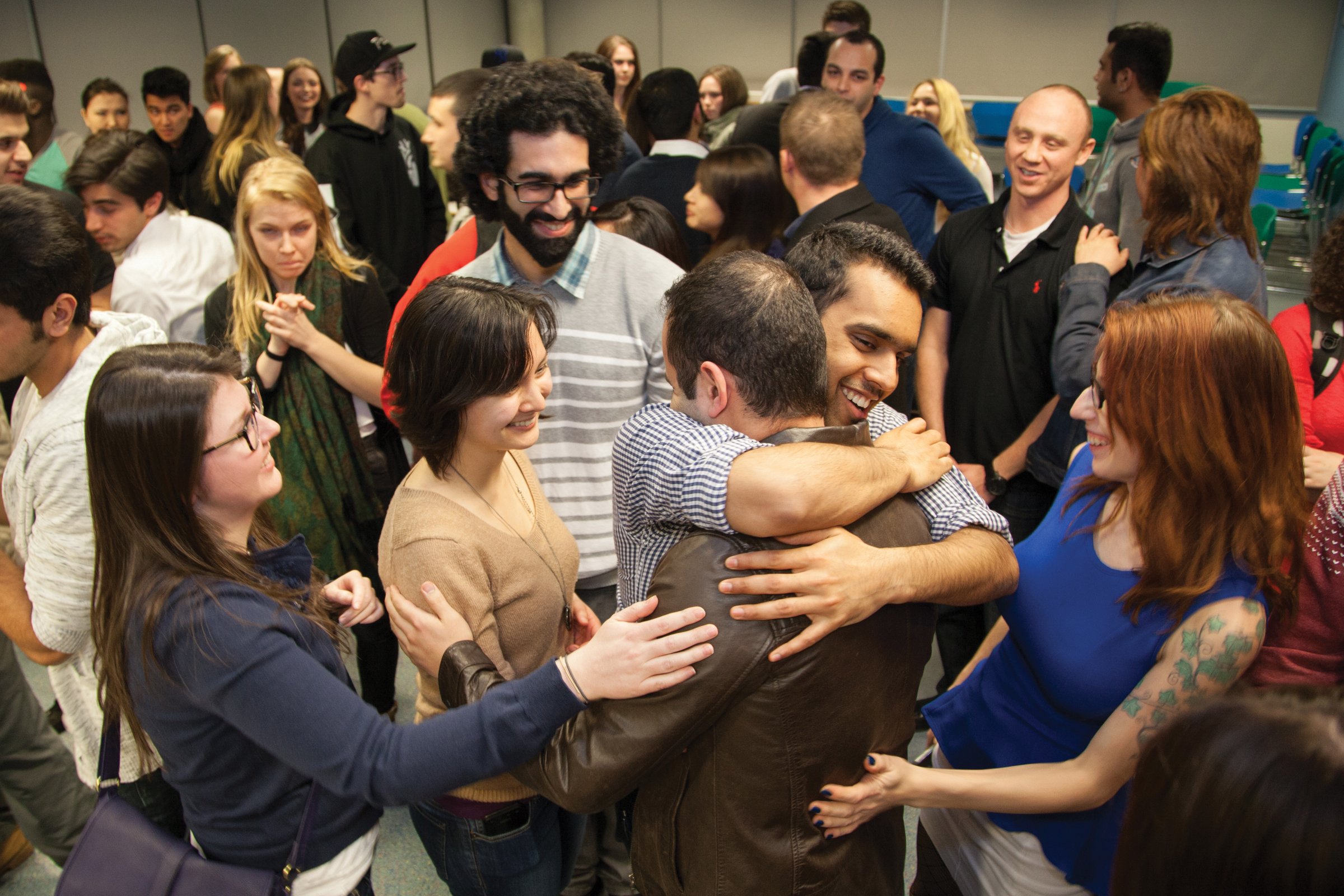
Out of one of the most heated SFSS elections in recent history, Chardaye Bueckert has emerged as the next president of the SFSS board of directors. Bueckert ran a tight race against ACE slate presidential candidate Brandon Chapman, winning by just 23 votes.

Despite the success of the Move the Mountain’s (MtM) presidential candidate, it was a near landslide victory for ACE; of the 14 total slate members, nine were elected to the 2014/2015 board of directors, giving those candidates a majority on the 16 member-strong board.

Chief executive officer of the Independent Electoral Commission (IEC), Lorenz Yeung, told those in attendance that this election had the lowest voter turnout in a number of years. Of the approximate 25,000 undergraduate students who attend SFU, only 9.44 per cent cast a ballot.

At the beginning of the night, the mood was tense, but jovial, as the candidates moved from the Highland Pub to one of the MBC conference rooms to hear the election results. Said presidential candidate Alexander Morris, who has been the subject of much electoral controversy, “My stomach feels a little upset because I tried to chug a beer with my friend, Adhar [ . . . ] I hope the people have chosen the best president that will represent them.”

Bueckert had similar words for The Peak. “It’s all up to the voters,” she said. “No matter what happens, there’s no getting rid of me. I’m here for another year — [I] got elected to senate — so that part-time student bursary is my goal before I leave SFU.”

“I hope the people have chosen the best president that will represent them.” 

 – Alexander Morris,
presidential candidate

“I’m just honestly looking forward to it being done,” said Chapman. “There’s been way too much negativity surrounding this election, and I know that no matter what happens next year, I’m hoping whoever gets elected focuses on the positivity because nothing good will come of [being negative].”

Yeung began by announcing the results of the three referendum questions, two of which concerned extensions to the current Health and Dental Plan. Students voted in favour of increasing the plan’s fee to $255 for the enhanced option; students will still be able to opt out of the plan entirely or choose the $198 basic plan. However, students did not vote to grant the SFSS board the power to increase plan fees by a maximum of five per cent in any given year.

The membership voted “overwhelmingly” in favour of recognizing the Society of Arts and Social Sciences as the official faculty student union. Nonetheless, the motion only exceeded its required voter quota by 12 votes.

Of the six candidates who ran for at-large representative positions, Rebecca Langmead (MtM) and Jeremy Pearce (ACE) clinched the two board spots.

For the three contested faculty rep positions, ACE candidates Shadnam Khan for Business and Katie Bell for Education claimed two of the victories. Deepak Sharma triumphed over his two opponents to be named the Science representative.

“Im sad that that few people voted. That really kills me.”

– Chardaye Bueckert,
SFSS president-elect

Unopposed candidates Ben Rogers (MtM) for Applied Sciences, Brady Wallace (ACE) for Arts and Social Sciences, Shirin Escarcha (ACE) for Communication, Art, and Technology, Tesicca Truong (ACE) for Environment, and Ayla Kooner for Health Science were all elected.

As the IEC began to announce the winning executive candidates, a hush fell over the crowd, save for a few dramatic “ooohs.” VP University Relations candidate Moe Kopahi won his fourth consecutive SFSS election by 82 votes over opponents Clay Gray (MtM) and Sarah Flodr (ACE). Incoming VP External Relations Darwin Binesh (ACE) won by a similar margin of 89 votes over Kathleen Yang (MtM).

Kayode Fatoba, who made a splash on social media with his campaign rap, beat out both slates’ candidates and another independent for VP Student Life. ACE VP Student Services candidate Zied Masmoudi won his seat on the board by a wide margin of 370 votes.

Nevertheless, it was the VP Finance position that received the most votes cast of any executive spot. Receiving a total of 1,036 votes, Adam Potvin (ACE) won by 538 over opponent Nomin Gantulga (MtM).

With ACE having claimed nine of the 15 spots, it seemed as though the slate’s momentum would carry them to a presidential win. The crowd gathered around Chapman, while Bueckert stood in the wings surrounded by a few close supporters.

Yeung announced, “The next president of the Simon Fraser Student Society: Chardaye Bueckert.”

A shocked and excited Bueckert told The Peak, “I’m honoured to have won, but I’m sad that that few people voted. That really kills me.”

When Bueckert went to shake opponent Chapman’s hand, Chapman refused, saying, “You played a very dirty game Chardaye. You didn’t deserve this.”

Fellow presidential candidate Morris remarked, “I feel that this reflects a lot of what I thought was going to happen.”

He continued, “Chardaye’s got experience, ACE has experience, so it’s a fantastic transition. I foresee an interesting student government.”

These results are unofficial and will be confirmed on Monday, after they are ratified by the current board of directors.