Home Blog Page 1150

Shrek and Fiona find love in Stanley Park

0

CMYK-Shrek-TUTS

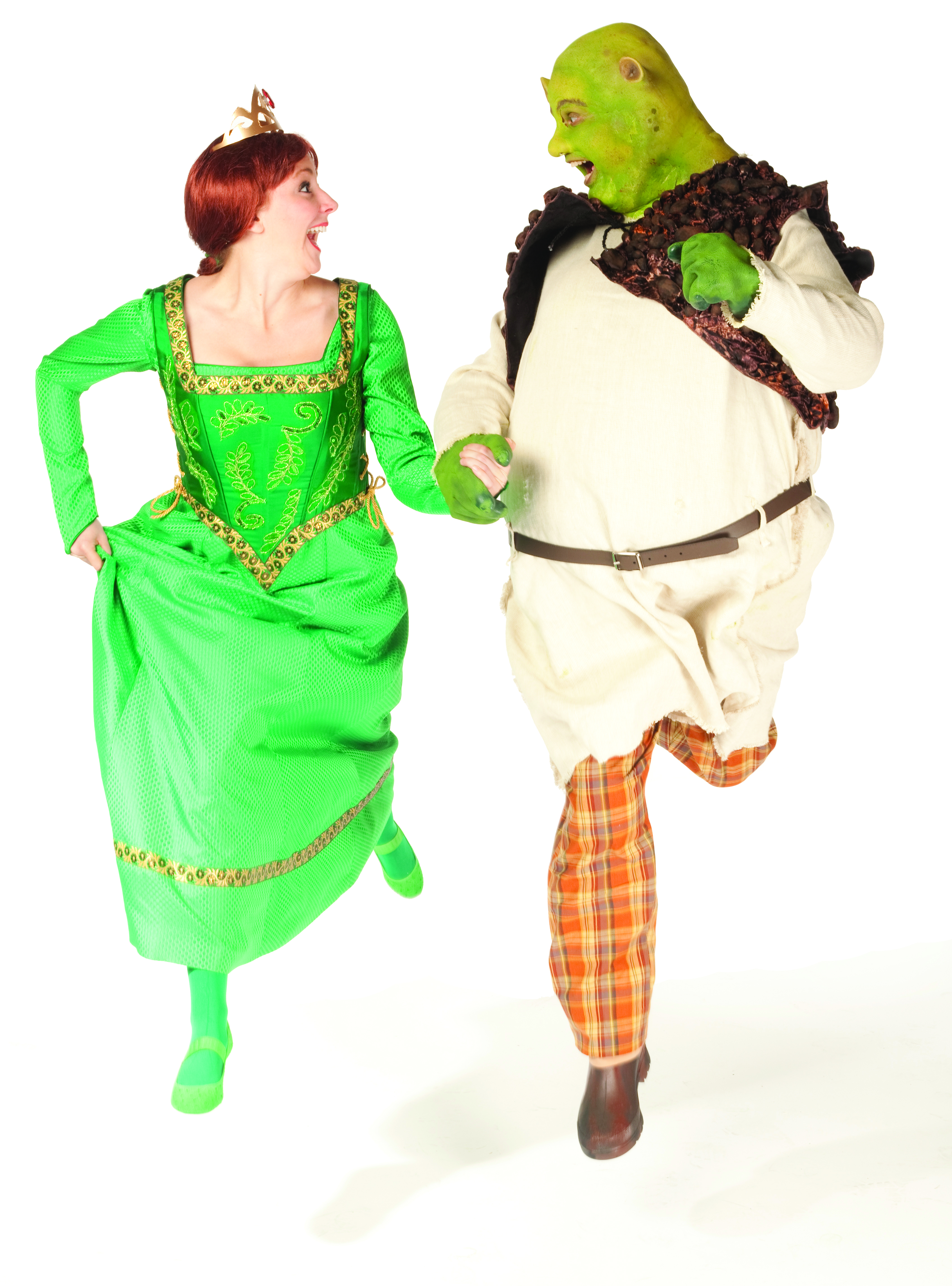
Matt Palmer has never played a character quite like Shrek. “It feels very large, very green, very grumpy,” laughed Palmer. Even just getting into costume is a unique experience. It takes him one and a half to two hours to make the transformation into the lovable ogre, and the process involves prosthetics along with tons of green make-up. 

Shrek, playing in repertory with the return of Legally Blonde, should be a popular show for all ages. Just as the animated film cleverly included many jokes that only adults would understand, the musical will be entertaining for the whole family. The adaptation follows the story pretty closely, said Palmer, with a few additions of some characters’ backstories. The score, however, is completely original except for the inclusion of “I’m a Believer” during curtain call. 

Palmer said that the music is clever and very entertaining, with many standout songs. “I get to sing ‘Who’d I Be,’” said Palmer. “Donkey asks Shrek, ‘Who would you be if you could be anything?’” Donkey gets his moment to shine when he sings “Don’t Let Me Go,” and Fiona also has some great songs, including “Morning Song.” These songs tell the story in a powerful way and help the audience understand Shrek’s struggle. 

“The message at the heart of Shrek is that just because you’re not necessarily beautiful and you may be framed as an outcast or freak,” explained Palmer, “you have beauty on the inside and you’re capable of love and being loved.” The show features many characters that are considered to be freaks, and feeling like an outcast is something most people can relate to in some way.

Another aspect of the story that is endearing, explained Palmer, is the relationship between Shrek and Donkey. “Shrek has never known friendship or love until Donkey insists on being his friend. It’s a complete surprise to him.”

Palmer said that Donkey and Farquad will get the most laughs from the audience, although Shrek has his moments as well. “Shrek is the straight man; you would never expect to have a big green ogre as the straight man,” he laughed.

Along with the laughs, “the audience will leave feeling uplifted, happy, and touched by the journey of these characters,” said Palmer. “I don’t see how they could leave feeling any other way.”

Shrek: The Musical will be presented at Theatre Under the Stars from July 15 to August 22. For more information, visit tuts.ca.

Diaspora conference connects SFU with its Scottish heritage

0

4884904376_23bf86b7a6_zSFU was well represented at a conference in Edinburgh from July 4 to 6 that looked at the Scottish diaspora, and its effects both in the world and in Scotland.

The executive director of SFU’s Harbour Centre campus, Laurie Anderson was a panelist at a talk titled “The Global Migrations of the Scottish People since c. 1600: Issues, Debates, Controversies,” along with former coordinator of SFU’s Centre for Scottish Studies (CSS), Harry McGrath. Also in attendance was the dean of SFU’s Faculty of Arts and Social Sciences, John Craig.

Anderson, a first generation member of the Scottish diaspora, who moved to Canada from Scotland in his youth, describes diaspora as being “essentially about the ‘scattering’ or movement of peoples from their original home or country of birth.

“It is studied a lot in Scotland because the Scots have migrated around the globe since medieval times, and is one of the most significant diasporas in the world,” Anderson explained. One of the main themes of the conference revolved around the ongoing dissemination of Scots over the past 700 years.

As a result the Scottish diaspora has had a large influence on our modern world, particularly in North America. However, McGrath pointed out that not all of its effects have been positive.

Over the three days of the conference, participants attempted to take a balanced view of the effect the Scottish diaspora has had on the world, McGrath stated in an email. “So, for instance, while there was some focus on Scottish achievements, there was an equal, perhaps greater, focus on issues like the Scottish connection to the slave trade, which has often been neglected or deliberately ignored,” he explained.

“Scotland for a while was by far the most diasporic nation in the world.” 

– Harry McGrath, former CSS coordinator

According to Anderson, part of the importance of the diaspora aligns with Scotland’s upcoming referendum for independence. “The economy of the country is a very important aspect of being independent,” he said. “[And there are] many, many more people with Scottish connections outside of the country than in the country. If they can promote business ties, cultural ties with the diaspora, it can support the cause of the country becoming independent.”

Among the examined topics was whether the number of Scots that have left Scotland was detrimental or beneficial to the country. Anderson said, “When you have a country with so many people leaving all the time [. . .] you’re losing your best and brightest [. . .] However, one of things that [was] also talked about was the fact that many people who left the country made a lot of money overseas.

“Some people left by choice for better opportunities, and some people were forced to leave during different political uprisings.”

The three-day conference concluded with the panel, “Scotland Today: Perspectives from the Diaspora,” which was chaired by McGrath and featured Anderson as a panelist.

McGrath said of the CSS, where he worked from 2003 to 2007, “One thing I took away from the conference was the fact that the Centre for Scottish Studies at Simon Fraser University is an unusual and precious resource. There are very few such centres outside of Scotland and I would like to see it develop into a true international research hub for the Scots in Canada in general and those of Western Canada in particular.”

He concluded, “I would very much like to see the Scottish diaspora find its place in the great upsurge of interest there has been recently in diasporas from all countries.”

Build SFU accidentally submits foosball table as stadium proposal

0

BURNABY — The architects contracted by Build SFU to build a new SUB and stadium for SFU released their incredibly ambitious plans for a new stadium this week, but according to Build SFU the design is a mistake.

The proposed stadium which is set to be 10 times larger than an average football field and built on top of four 200 meter high columns is apparently the result of a simple miscommunication. 

“When we were presenting the new SUB ideas, we made a scale model of what it would look like to show to students,” explained a representative for Perkins+Will, the project’s architects. “When we got to the Build SFU Think Tank we saw that they had done the same with the stadium so we decided to get a jump start on planning that.”

Not realizing that the scale-model stadium was actually just a foosball table set up to draw students into their offices, the architects got to work on the blueprints for the new stadium immediately. 

“Sure it seemed infeasible, outrageously expensive, and downright insane, but we didn’t want to offend them,” the architect told The Peak. “It took weeks to come up with a design that was even remotely structurally sound but we got there eventually.”

In a surprise unveiling on Friday, the architects showed off the new stadium plans to students who were much less excited than they had anticipated.

Instead of being carried out of the room on shoulders and sung praises, the architects were simply met with perplexed reactions and questions about how much the new stadium would cost.

Unfortunately, the architects say they’re too far into the project now to go with a different, less ridiculous design and that, due to the complex nature of the stadium, they no longer have the funds to complete the SUB building.

“It’s a real shame about the mix-up but even though the SUB isn’t going to happen, I still think everyone’s going to love the new stadium,” continued the architect. “Yeah, there might not be any room for seating and it’s so high up that no one can even get to the field but still those giant number cubes for keeping score are pretty cool.”

Construction on the stadium is supposed to commence in the fall and be completed in 2027. While no sports teams will be able to use the stadium, it is expected to bring tourism to SFU with people eager to witness the “world’s biggest waste of money.” 

Hobby Lobby ruling harms women’s rights in the US

1

14395472089_515699c1c4_o

The Supreme Court has chosen religion over human rights in the case of Burwell vs. Hobby Lobby. On June 30, the Court ruled that certain for-profit companies cannot be required to pay for specific types of contraceptives for their employees. 

The complaint over the Affordable Care Act’s requirement was made by Hobby Lobby, an Oklahoma arts and crafts retail store operated by Southern Baptists, and Conestoga Wood Specialties of Pennsylvania, which is owned by a Mennonite family. They argued that this requirement violates their religious freedom as it requires them to pay for two types of morning-after pills and intrauterine devices, which they believe are the same as abortion. 

The company had also rejected a compromise made by the government, which would see their insurers, or third party administrators, pay for the contraceptives; they argued that the insurers and third party administrators are complicit in offending their religious beliefs.

The Supreme Court’s decision promotes the connection between the church and state: it imposes religious beliefs on the companies’ employees who may not share them.

Indeed, many supporters of the ruling have called it a victory for religious freedom, but it is a violation of the First Amendment of the American Constitution. In addition to the free exercise of religion, the amendment also says that the state is not allowed to make laws that respect a religious establishment. 

Hobby Lobby has no right to control the reproductive rights of its female employees.

The ruling has also violated the Equal Rights Amendment of the Constitution, which protects women’s rights, as a company has no right to control the reproductive rights of their female employees. 

Justice Ruth Bader Ginsburg, who was against the companies’ claims, argues that the ruling would “deny legions of women who do not hold their employers’ beliefs access to contraceptive coverage,” and noting that the Affordable Care Act requirement is important to women who work minimum wage jobs, as an IUD without coverage costs a month’s pay. Eliana Dockertman, writer for Time, also brings up the important point that most women who are economically and geographically restricted cannot choose their place of employment in order to obtain coverage.

Furthermore, if the exemption is made on religious grounds for health care coverage of contraption, then who is to say that it could not extend to objections by companies run by Jehovah’s Witnesses to blood transfusions, Scientologists to antidepressants, Jews to medication derived from non-kosher animals, and various religious groups to vaccines? 

A broader consequence is that the Supreme Court’s granting religious freedom rights to companies could affect laws on employment, safety, and civil rights. The most alarming consequence is that the Supreme Court’s granting of religious accommodation could extend to other laws not related to health care or employment. By then, the union of church and state will have been complete.

Zero Waste design is garbage

0

CMYK-Recycling-Anderson Wang

In January 2014, SFU launched its comprehensive Zero Waste program on all campuses as another step to achieve the goal of “diverting 70 per cent of landfill waste into recycling and composting by the end of 2015,” according to the SFU Sustainability Office.

The Zero Waste Program was designed to help reduce the amount of waste that is sent to landfills, and consists of four containers for different types of materials. By differentiating recyclable materials from non-recyclable waste, it aims to increase the percentage of recycling and reuse of misplaced resources.

However, as a fourth-year design and media arts student at SFU Surrey, years of studying user behaviour and product design have led me to notice some of the design flaws of garbage containers, specifically at Surrey campus.

During the spring semester, I saw a pile of coffee cups and food containers over-filling the corresponding containers in some high traffic areas. The design of these recycle bins did not meet the demand of garbage disposal from students.

When it comes to throwing away garbage, people aren’t prepared for such a difficult process.

The first problem with these garbage bins is that each separate container is of identical size, and, in order to not take up much space, each is very narrow. Their small openings also make them hard to use.

Garbage comes in various sizes and shapes, not all of which can easily fit these narrow opening: a flattened box fits in the opening pretty well, but a plastic fruit container does not. When it comes to throwing away garbage, people aren’t prepared for such a difficult process. 

The size of each garbage bin does not meet the volume and size factor of particular garbage disposal. It is easy to understand that a thin piece of paper takes less space than an empty plastic bottle — the mixed paper bin is more than roomy enough for paper, but will not hold as many recyclable bottles. This means some bins require more frequent empties otherwise they will easily overfill.  

These problems indicate that the design of the receptacles has failed to accommodate students’ garbage disposal demands, and this is where user design plays a vital role to ensure that a product works as expected. Sustainable innovation does not automatically lead to sustainable user behaviour; it is the design that influences users to more sustainable behaviour. 

If a designer designs a product in such a way — i.e. different sized bins to accommodate different sized waste — it increases the likelihood that students dispose of garbage in environmentally conscious ways, following the instructions and acting greenly.

When students see an overfilled Zero Waste collection station with all kinds of misplaced garbage, they aren’t likely to follow any instruction, and simply toss their trash anywhere. 

Designing bins that make unsustainable behaviour difficult or even impossible, while sustainable behaviour is easy to achieve or even automatic, would boost the effectiveness of the Zero Waste idea: students would not have a hard time disposing of garbage, instead their sense of approval with the Zero Waste program would increase.

As a first step, can we at least start by making the recyclable and landfill bins larger on satellite campuses, like they are in Burnaby? 

And if we have time, let’s consult a new designer.

Reducing sodium is worth its salt

0

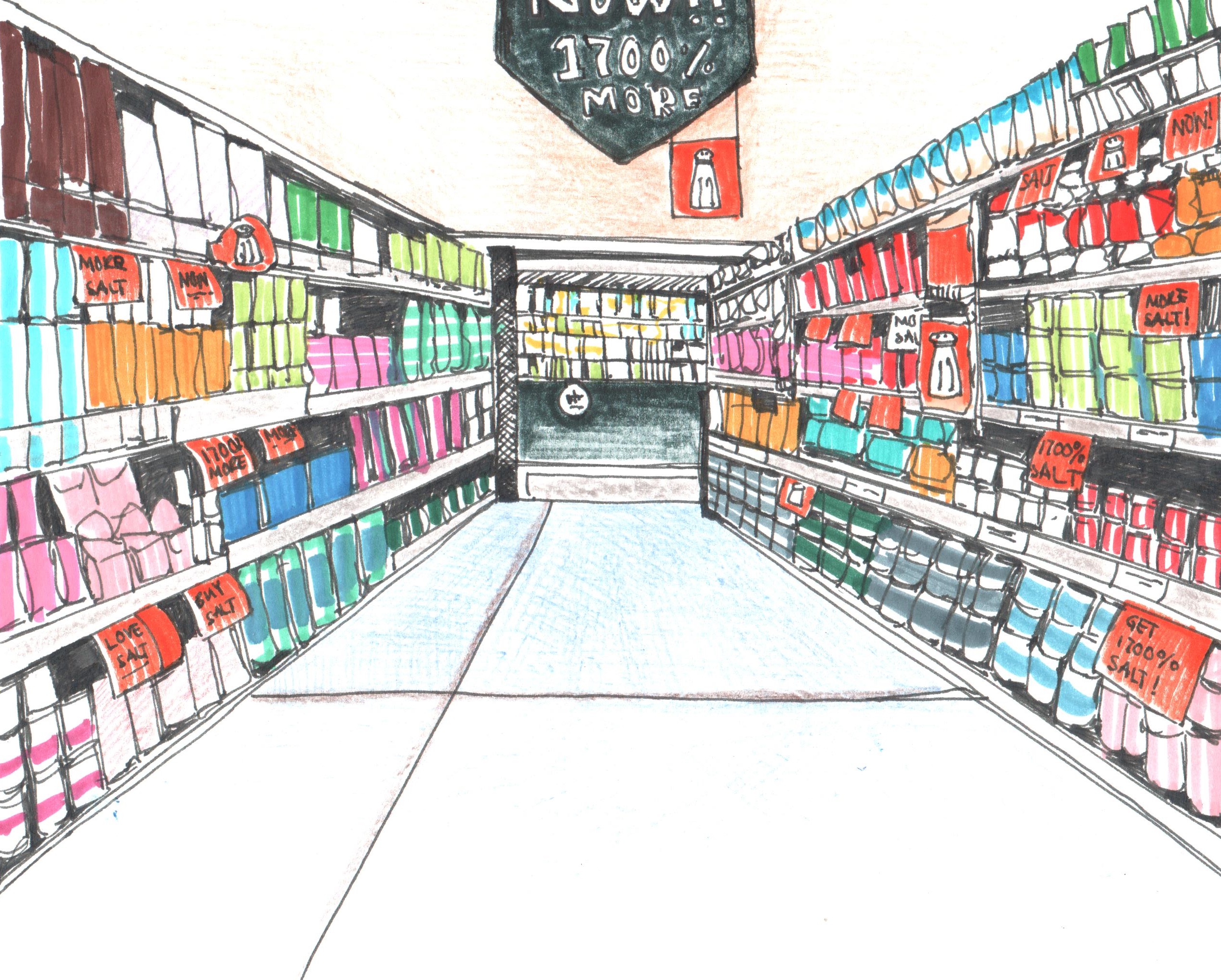
salt-LilyLiA joint consensus recently released by the New York Health Department (NYHD) and the American Heart Association (AHA) brought together SFU health science professor Michel Joffres along with 33 of the world’s leading scientists in the field to affirm the benefits and importance of reducing sodium intake to combat one of the world’s deadliest diseases.

Sodium is an important regulator for the body, necessary for proper nerve conduction, muscle activation, and control in blood pressure and blood volume. However, sodium is also a major contributor to heart disease, because it elevates blood pressure, which is the leading risk factor for cardiovascular disease and stroke.

The news release indicated that many studies and controlled trials have shown that a decrease in sodium intake levels has a positive impact on improving health, sustaining lives, and reducing healthcare costs.

The Centre for Disease Control and Prevention (CDC) reports heart disease as the leading cause of death in the US, while a Statistics Canada report had it down as the second leading cause of death in Canada, after cancer.

The CDC currently recommends that individuals under the age of 50 consume no more than 2,300 mg of sodium per day—for those over 50, that number drops to less than 1,500 mg.

Nevertheless, Joffres told The Peak that humans require as little as 200 mg of sodium per day for their basic physiological needs. However, he said, “We are consuming about 3,400 mg [of sodium] per day, and young people consume even more.”

Joffres explained that, “We have an appetite for sodium as we did not have high sources of sodium in our evolution. [. . .] Now this appetite has been exploited by industries that make low quality food and use salt to enhance taste.”

Sodium occurs naturally in most foods — milk, beets, celery, and even water, according to the National Institute of Health. Sodium chloride, or table salt, is the most common derivative of sodium and makes up a large percentage of sodium consumed.

However, “[about] 80 per cent of sodium we eat comes from processed food,” said Joffres. Examples include breads, cold meats cuts, pizza slices, and canned soups and vegetables. Other lesser known products that contain sodium are laxatives, aspirin, mouthwash, and toothpaste, according to the Household Products Database.

The best way to avoid unexpected sodium intake is to cook meals at home, emphasizing low sodium, and consuming more fruits and vegetables, advised Joffres. Care should also be taken when reading labels and choosing what is to be eaten.

While Joffres acknowledges that the reduction of sodium intake levels is important, he says that the regulation of sodium usage within food industries and distribution locations is just as integral to the health of the world’s populations.

For now, Joffres hopes to raise awareness of the deadliness of sodium. “You may see the negative effects of high sodium diets much later,” Joffres told The Peak. “It is like a very slow acting poison and is a silent killer.”

The rise of the far right

6

Tea_Party_Protest,_Hartford,_Connecticut,_15_April_2009_-_031

Though most of us think of fascism as a relic of the past, right wing extremist movements in Europe and North America have seen a steady surge in popularity over the last few years. This may be due many current global conditions similar to those that gave birth to Hitler’s Third Reich, including unemployment, global financial crises, and massive government debt and inflation. The recent European Union elections illustrate just how much support these radical parties have gained in the face of these issues.

Though they may seem like fringe parties, it’s nonetheless crucial to recognize them and be aware of their ascent to power on the world stage. Here are five of the most prominent parties in the growing fascist movement.

National Front (France)

In the recent European Parliament elections, the National Front took over 25 per cent of the popular vote in the country, beating out both the ruling Socialists and the opposing Union for a Popular Movement. They also came in second in the 2002 presidential election, which became the first presidential run-off without a leftist candidate in the second round in French history.

The man who ran in that election, founder of the party and father of current leader Jean-Marie Le Pen, referred to the Nazi gas chambers as “a point of detail of the history of the Second World War,” hinting at the problematic views of the party.

Among the party’s other beliefs are support for harsher sentencing for criminals and the deportation of certain groups of immigrants, along with halting the migration of Muslim peoples. They are highly protectionist, and have criticized the European Union as a “puppet of the New World Order.”

United Kingdom Independence Party (United Kingdom)

Another shock to come out of the recent European Parliamentary election was the performance of Nigel Farage’s United Kingdom Independence Party, which took 27 per cent of the nation’s votes, marking the first time in over a hundred years that neither Labour nor the Conservatives won the most votes in a nationwide election.

Like the National Front, the UKIP are very strongly anti-EU, believing that money spent on EU membership would be better spent at home. Furthermore, they believe that the massive waves of immigrants from the Union — most recently from Bulgaria and Romania — are responsible for Britain’s debt, and have expressed an intention to reintroduce border controls which the EU forced the nation to abandon.

While they have distanced themselves from the far more extreme and openly fascist British National Party, the group’s far right views don’t exactly inspire confidence. It remains to be seen how they will fare in Britain’s upcoming general election next year.

Golden Dawn (Greece)

Of all the groups on this watchlist, Golden Dawn is likely the best known. The Greek nationalist party, known for its xenophobic and racist tendencies, has been making headlines in Europe for several years. Despite rejecting labels such as neo-Nazi and fascist, this group has made use of Nazi symbolism and praised the figures of Nazi Germany in the past.

The party has also been accused of carrying out acts of violence against immigrants, political opponents, and ethnic minorities. Clashes in the streets between anarchists and Golden Dawn members have become commonplace in Greece, and investigations proved that many police have aided the latter party by providing weapons and ammunition. Citizens have also joined in, as many native Greeks view the Golden Dawn party as heroes.

Unlike other parties on this list, Golden Dawn is also spreading outside of their native country. The party has now set out to establish cells wherever there are Greeks, opening offices in Germany, Australia, the United States, and even here in Canada.

National Democratic Party (Germany)

Though they only managed to win one per cent of the German vote in the European Parliamentary elections, that one per cent was enough to earn the National Democratic Party of Germany one seat in that assembly. Unlike Golden Dawn, which attempts to deny its neo-Nazi traits, this group is openly neo-Nazi, and were labelled by Chancellor Merkel as an “anti-democratic, xenophobic, anti-Semitic, anti-constitutional party.”

Given that the party is the spiritual successor to the actual Nazi Party, having been founded by former party members in 1964, their far right views should come as no surprise. They have announced their belief that “Europe is a continent of white people,” and that it should stay that way. They’ve backed up this belief by calling for the expulsion of Jews, Turks, and immigrants in general from Germany.

Udo Voigt, the party’s former leader, will represent them in their new European parliament seat. Voigt is well known within German political circles for inciting violence in 1998 after he called for voters to engage in “armed combat,” and was found guilty in 2004 of promoting Nazism after he referred to Hitler as “a great man.”

Tea Party (United States)

Potentially the most prominent party on this list, the Tea Party has managed to infiltrate and hijack the United States’ Republican Party, moving the already conservative group even further towards the right. They may not be as radical as Golden Dawn or the National Front, but trust me when I say they are just as dangerous.

The Tea Party has also managed to take control of the United States House of Representatives, which has given them an incredible amount of influence on American politics; after all, it was the Tea Party Republicans who were responsible for the shutdown of the United States government last year, in protest of the passage of Obama’s Affordable Healthcare Act — and of Obama in general.

Support for the party continues to grow as America’s debt continues to skyrocket, as the Tea Party promises cuts to spending and lowered taxes for citizens. These are noble goals, but the party’s tendency to blame America’s problems on immigrants (legal and illegal) and the social policies of liberal governments undermine their value as a political faction.

Woohoo Boohoo: Potato salad, fruit, and growing up

0
7974641931_032f4f3970_o
Worth every penny!

Woohoo: >$70,000 for potato salad

A dude in the US recently started a kickstarter campaign to raise ten dollars to make a potato salad for himself. A lot of people got on board, and he now has over $70,000. Good for the guy!

Boohoo: >$70,000 for potato salad

The guy got over $70,000 for being ironic. Seriously? This is what people care about? Fun is fun, but how much could $70,000 have done otherwise?! Plus, this guy stole my idea.

Woohoo: Perfect, glowing fruit

I, for one, become ecstatic when surrounded in a supermarket by perfect fruits, identical in size, colour, and wax-coated flavour. I’m not even sure if they count as fruits anymore they taste so good!

Boohoo: Birds are dying

Recent research from the Netherlands suggests that a widely-used class of insecticides are responsible for the decreased populations of 14 species of birds. Now, I’m all for killing off every bee on earth, but birds are pretty!

Woohoo: Being an adult

Living on my own has been a pretty sweet experience so far. I can’t tell you how much I just walk around naked in my house. So much!

Boohoo: Cleaning my house

Where does all this dirt come from?! And those smells?! There’s a distinct bathroom smell and a distinct kitchen smell, neither of which I ever want to smell on a regular basis. But cleaning takes so looooong, when there’s eating and naked-living to do.

God publishes brand new Bible story on his website

0

Fans of the Bible rejoiced this week after God unexpectedly dropped a new story on his website featuring all their favourite characters revealing what they’ve been up to since “Revelations.”

The story, in which everyone from Jesus to Moses and even Judas reunite to watch a leg of the Tour de France in Montpellier, almost crashed God’s website due to the heavy traffic it caused.

Much like JK Rowling’s new Harry Potter story which was released last Tuesday, the new Bible update satisfies the thirst passionate readers had to find out what has become of the characters in the past 200 years.

According to the story, Jesus is still very much a famous figure in the world with cyclists who saw him apparently “falling off their bicycles in disbelief.” Although the writing suggests that Christ is “still the same old prankster,” his turning water into wine routine has been replaced with a “water into grape soda” miracle.

Many fans have interpreted this as a potential hint by God that his own son has had to deal with some problems with alcoholism in the years following his resurrection, although there is no actual evidence that this is really the case.

Moses also appears to not have changed much since his sea-parting days, but his beard is mentioned to be “even greyer than it once was.”

While the quality of writing of the new story has been questioned, as it does not seem to match the rest of God’s work in terms of its style, message, and language, hardcore Bible fans have eaten up the new entry in the series.

“I’ll read anything Bible-related so I was thrilled when this came out,” explained Rachel Henry, a young Canadian Bible fan. “It really gives me hope that maybe he’ll come out with a whole new book at some point. You know, I always thought that Jebediah could’ve used a spin-off, I have so many unanswered questions about that guy.”

Although God has neither confirmed nor denied that he is working on a new Bible adventure, sources close to him have said that he has no plans for a new book in the series and that he’s actually really interested in writing non-fiction for a change.

8 signs that you’re definitely making a list

0

1. You begin with an overall theme, no matter how vague it might be

Maybe it’s a theme about how to make a list or maybe it’s about coming up with bullshit examples that don’t make sense. Whatever it is, just run with it and see where you end up!

2. You have more than one thing to say, so you decide to use a second point 

Some people like to use bullets but I’d recommend using numbers so that way people know you’re really serious about making a list.

3. You start building momentum as you add the third example to your list 

This example is crucial so make sure you’re not slowing things down by redundantly explaining things as you go along. It’s all about the momentum.

4. You use your last legitimate example and then start to brainstorm more

Chances are you didn’t really think this list through and now you’re going to have to put some actual effort into it. That’s okay. I’m sure you’ll be able to come up with something.

5. You realize that you used your best examples first and regret not having some of the better ones saved for later in the list 

Just throw something in and hope people assume that it fits with everything else you’ve put so far. Got it? No matter how unrelated or lame the example might be, everyone will totally believe you unless you unknowingly draw attention to it.

6. You wonder how Buzzfeed makes lists look so easy but then you remember that they mostly rely on unrelated GIFs of pop culture references

Yup. I bet a GIF of Tina Fey and Amy Poehler hosting the Golden Globes would really spruce this list up right about now.

7. You realize you might actually hate Buzzfeed

That’s okay though. Everyone eventually does.

8. You run out of things to say, so you decide to arbitrarily end things on whatever number you’re at

Just go back to the top of the list and change the title to match however many points you made it to.