Home Blog Page 1109

Kinder Morgan surveys Burnaby Mountain as potential pipeline site

0
The proposed route runs 1,150 kilometres from the Alberta oil sands to the Westridge Marine Terminal in Burnaby.

Canada’s National Energy Board recently issued a review granting permission to Kinder Morgan to study the possibility of running a pipeline under Burnaby Mountain to the Burrard Inlet. The energy company wants to do so as part of a plan to increase capacity of their existing pipeline.

SFU’s John Clague and Doug Stead, professors of earth sciences, are working with Kinder Morgan to enact the study, though many SFU alumni have spoken out against the project.

Mike Soron, executive director of Sustainable SFU, says that his group is currently reminding students that these pipeline plans, “threaten both the health and safety of our student members and communities worldwide that are vulnerable to climate change.”

Sustainable SFU is “encouraged by the actions of campus climate leaders like Dr. Lynne Quarmby,” said Soron. Quarmby, chair of molecular biology and biochemistry at SFU, along with a small group called ForestEthics, launched a constitutional challenge against the National Energy Board in May. They objected to the decision, claiming that the review obstructs public participation and silences public concerns.

In late June, SFU ecologist Wendy Palen led a demonstration with other academics calling for a moratorium on oil sands and pipeline projects until such developments are consistent with the government’s commitments to carbon pollution reduction.

Palen was also a cosigner of an article recently published in Nature magazine that cited what the authors interpreted as flaws of how decisions regarding oil sands are made. The study argues that debate regarding individual projects only considers short-term costs and local benefits without accounting for long-term consequences extending to multiple or worldwide projects.

“If Canada and the United States continue to move forward with rapid development of these reserves,” Palen is quoted as saying, “both countries send a signal to other nations that they should disregard the looming climate crisis in favour of developing the most carbon-intensive fuels in the world.”

Clague stands by his decision to research the topic. While sympathetic towards concerns about the project, he is confident that such a pipeline route “is less expensive than [one] near the surface through Burnaby neighbourhoods,” and eliminates the disruption of those neighbourhoods.

Clague also responded to Sustainable SFU’s claim that the pipeline poses a threat, saying that he believes, if properly constructed, it “would pose no risk either to people or the environment.” He pointed to the hydrocarbon pipeline that “has operated beneath Burnaby without leaks,” and the “light oil products [which] have been shipped from the Chevron Refinery in Burnaby through Burrard Inlet, English Bay, and the Strait of Georgia,” all without incident for 60 years.

He argues that the ‘real issue’ is not the safety of the pipeline, saying, “Opponents of the Trans Mountain pipeline project should worry less about pipeline safety and more about our government’s energy export policies.” He continued, arguing that individuals would be better off changing “their focus and pressure our federal government to provide leadership in reducing Canadians’ rampant consumerism, while changing our economy to one based more on renewables.”

Despite Clague’s assurance that the pipeline would be beneficial to the community, local resistance persists. Sustainable SFU, according to Soron, promises “a number of community events already planned” concerning the issue, and regular encouragement for student involvement. One goal of the group, says Soron, is “seeing SFU divest its endowment from pipeline companies like Kinder Morgan and [. . .] fossil fuel companies.”

New course opens entrepreneurial avenues

0
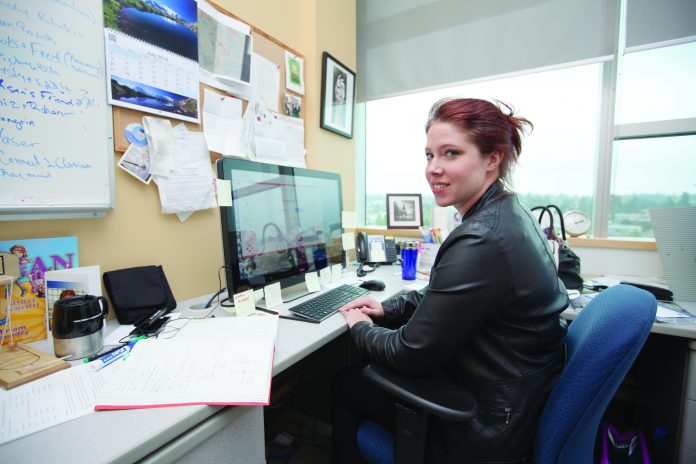
SFU professor Sarah Lubik will teach BUS 238 for the first time this fall.

A new course offered this fall by two SFU professors will open entrepreneurial avenues to undergraduate students in all faculties.

The 200-level introductory course, BUS 238: Introduction to Entrepreneurship and Innovation, emphasizes cooperative, team-based approaches to entrepreneurship and innovation. Available to any student who has 12 or more credits, the course will make upper-division business classes accessible.

Taught by Sarah Lubik, lecturer in the Technology Entrepreneurship@SFU program, and Andrew Gemino, professor of management information systems, BUS 238 demonstrates that you don’t have to take courses in business fundamentals — such as finance or accounting — to learn about entrepreneurship at SFU.

For the duration of the course, Lubik and Gemino intend to bring in multiple guest speakers from differing disciplines to discuss team-based approaches. As of yet, the guest speakers have not been confirmed.

Lubik told The Peak, “The course looks at empowering students in understanding themselves as entrepreneurs and innovators. It looks at studying problems, going deep into problems.”

According to Lubik, this type of course instruction will allow all students to develop basic, core skills necessary for any innovator or entrepreneur. “This course is important because entrepreneurship and innovation skills are important no matter what faculty you are in, no matter what you think your future is,” Lubik said.

She added that the course will help students develop “the ability to come up with an idea that actually meets needs [as well as] the ability to execute on an idea and to iterate, and to pivot.”

In addition to these benefits, Lubik said the course is important for the university and its students because it brings together all of the different faculties involved in entrepreneurship and innovation. “It is open to everybody, regardless of faculty,” she said.

According to Lubik, one of the most important skill sets in entrepreneurship and innovation relates to the ability of people to work in a team and cooperate to succeed at an entrepreneurial goal.

“The reason I keep saying ‘team’,” she told the Georgia Strait, “is because traditionally, business schools have tried to teach entrepreneurship to business students, not realizing that as soon as you get out into the real world, you’re going to be working with people who don’t speak that language — who are completely different from you.”

Lubik emphasized the importance of involving students who have the ability to work across disciplines because of the challenges — such as communicating in different languages — that are encountered in different fields.

In such situations, it becomes important to find a common language or conversational style which allows everyone involved to bridge disciplinary jargon. 

She concluded, “No matter what your discipline or interests are, entrepreneurship and innovation skills will give you greater flexibility, more value for many potential employers and the security of knowing you have the ability to create and seize your own opportunities.”

BMO finds half of Canadian parents pay children’s tuition

0
BMO found 10 per cent of parents thought they’d be footing the whole bill.

A recent Bank of Montreal (BMO) study claims that almost half of Canadian parents expect to pay for all or most of their children’s post-secondary education.

The survey included 1,000 parents from coast to coast, who were questioned regarding the cost of tuition, books, living cost, and school supplies. However, associate VP of students, Tim Rahilly, suggested that SFU may not follow mainstream trends.

“I think SFU is perhaps a little different than some other schools insofar as the use of the student loan system. I think we have more part-time students proportionally than some other schools,” said Rahilly.

He explained, “I think our student demographic is slightly different because we draw from the nation of people who are relatively close by, along with people who are either first generation or new Canadians and so they tend to be a little bit more financially conservative. They don’t necessarily like to have a lot of debt, if I can stereotype slightly.”

Rahilly also served on the board for the Canadian University Survey Consortium (CUSC), which surveyed second and third year students this past year regarding the way students across Canada pay for their schooling. According to the survey, 71 per cent of middle years students at SFU rely on their family, spouse or parents for financing.

The CUSC study notes that although 73 per cent of students across Canada under 20 are relying on family for financial support, only 30 per cent of students 30 or older rely on their families the same way.

Rahilly speculated that this difference may stem from parents’ desire to continue providing for their kids. “[Parents] seem quite comfortable having those students live at home,” he explained. “I think that has two elements to it. One means that it saves the students the cost of renting or other housing costs, and secondly, I think it means that that particular family wants to stay involved and give support to that student.”

Despite the high number of students who are financially supported by their parents, the CUSC also revealed that 46 per cent of students at SFU work off campus, five per cent work on campus and two per cent work both on and off campus. The study also notes that there are varying degrees of how students say work affects their schoolwork.

“You have some students that reported negative impact to their work, but I think there’s some other work that shows that students who work, be it on campus or off campus, if they’re working a moderate amount then that is actually beneficial to them,” Rahilly commented.

No matter how SFU students pay for their schooling, Rahilly encourages working while attending university: “It gives them good skills, it keeps them involved, it means that they’re earning some money, and that is generally a positive thing.”

Let me be blunt

0

When it comes to the benefits of being direct, let me be blunt. I believe that when it comes to relationships — be they work related or personal — it pays to tell it to someone straight instead of beating around the bush. When you’re routinely honest with someone, your word becomes more reliable; you can be approached without fears of being duplicitous.

Nevertheless, there is a stigma associated with being direct that has caused me to more carefully pursue a balance between being blunt and remaining quiet.

The words associated with being assertive are overwhelmingly negative. Sure, one can be described as honest or direct, but they can also be called arrogant, overconfident, and insistent. When describing women in particular, these descriptions can often take the form of bossy or bitchy.

In personal life, navigating the fine line between being assertive and being an asshole comes with its fair share of challenges. I was always very careful about what I said when I was younger, which most likely resulted in me giving an insincere or evasive impression. As such, I’ve attempted to break those internal walls down during my time at university; in the process, I’ve often overstepped my boundaries, speaking brusquely in situations that may have required more subtlety.

It’s about navigating the fine line between being assertive and being an asshole.

Nevertheless, putting those blunt feelings out there can also lead to refreshment and growth as a person. When I bottle up my direct and honest opinions, I often find my emotions build to a point where conversing productively is difficult. Instead of resolving an issue at its inception by discussing the problem, choosing to remain silent can lead to confusion and feelings of betrayal. The other person may then ask whether this is the way you’ve been feeling all along.

There are certain situations when speaking directly can be a strong asset. At The Peak, for example, we constantly make stylistic decisions that require us to separate personal feelings from the decision-making process. I often become very invested in my own work, which causes me to want to sympathize or console someone when I have to critique their content in turn. However, I’ve found that this can quickly lead to more emotions becoming embroiled in a process that is purely professional, resulting in hurt feelings.

By speaking to the point without commiserating, a decision is seen as a calculated determination based on the merits of the work, rather than a judgment on someone’s skills or intellect. In the future, this allows people to trust that your decisions are based on merit rather than petty emotional responses.

As with all things, it’s important to realize that being direct may not be appropriate in all circumstances. Sometimes we don’t need to hear a blunt assessment of the situation, but rather need a person who will just sit and listen.

Social interactions aren’t black and white — as much as I’d like them to be — and being direct isn’t a panacea for traversing conversations. Nevertheless, being honest in a constructive manner, rather than speaking rudely as the stereotype might suggest, may be a good path to take when navigating the shades of grey in between.

Translink announces bus driver barrier pilot project

0
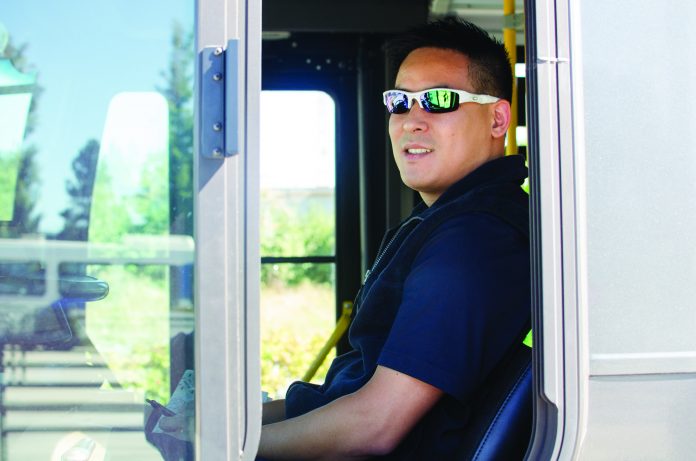
As of July 31, there had been a total of 65 reported assaults on bus drivers in 2014.

Translink has announced that it will implement a pilot project to install bus driver barriers on a number of Coast Mountain buses to protect its employees from violent assaults by unruly passengers.

The move follows Translink’s “Don’t Touch The Operator” campaign, which was launched in March to combat the increasing number of assaults on bus drivers. As of July 31, the number of assaults on operators in 2014 totalled 65.

In a news release on August 29 regarding the Pilot Barrier Program, transit police stated, “Bus operators should not have to go to their workplace every shift with the fear of being verbally or physically assaulted.”

In March, three young women allegedly attacked a bus driver, grabbing her by the hair and punching her. One month later, a woman leapt out of her wheelchair and punched a bus driver in the head while attempting to bite him. Similar attacks range from death threats to physical abuse to spitting on the drivers.

Following these incidents, Coast Mountain Bus Company, Translink’s largest operating company and the contract operator for bus transit services in Metro Vancouver, decided to consider installing plexiglass barriers in accordance with drivers’ wishes. However, Ruth Armstrong, a representative of the Metro Vancouver Transit Operators union, Unifor 111, responded that drivers would not be in favour of the barriers if they were mandatory.

Armstrong told the Vancouver Sun last March that some drivers expressed feelings of claustrophobia behind the shields, while others felt they were unnecessary. “Though, if I was doing a late night shift through the downtown core, then I might want a shield. And I should have that option,” she said.

A late-night driver himself, Derek Metz operates the number 19 bus through downtown into Stanley Park. As someone who has encountered assault, Metz told the Vancouver Sun that he wouldn’t mind if barriers were mandatory, because he feels they are essential to maintaining drivers’ safety.

“You never know what you are going to get with these people. The potential for them to do something harmful is very real,” he said.

Gordon Price, director of SFU’s City Program, echoed Armstrong’s concerns, but added that a balance needs to be pursued in order to preserve the “emotional capital” that comes with greeting your bus driver or acknowledging your fellow passengers.

“A lot of [drivers] really value the interaction they have with the public,” he said. “From a social trust point of view, there’s a price to pay here that shouldn’t be discounted. This ability to have interaction, just a friendly smile or a hello, even a name, that really counts.”

He also said that design elements such as height, transparency, and whether or not the barriers can be removed easily all need to be considered when implementing the pilot program.

Nevertheless, Price feels that these initiatives mark steps in the right direction. “The protection of the driver clearly has to be a high priority for Translink,” he said. “[However], I think it has to go in conjunction with other things, and that is effective use of the transit police, cameras where appropriate, things like that. I don’t think there’s a single solution to this.”

In the long term, Price advocates for preserving the human interaction on transit. “Being able to say thank you to the bus driver or again acknowledge them with just a word or two, that I think is necessary for the kind of society where trust is something that gives it strength,” said Price. “And if a barrier makes it seem inappropriate or not possible, then there is a real loss there.”

Board Shorts

0

SFSS food bank accessibility

In an attempt to make the SFSS food bank more accessible to the SFU community, the board is looking into providing certificates to services on campus such as the SFU Dining Hall.

Concerns were voiced about the stigma around these certificates which could make people uncomfortable about using the food bank. In order to address these concerns, the vouchers would come in a form akin to the cards used by all diners in order to prevent attention being called to food bank users.

SFSS discusses institutionalizing student society fees

The board of directors approved a letter to be sent to the Ministry of Advanced Education with the intent to initiate discussions on changing its member-authorized targeted levy to an institutional mandatory fee.

The student society fee is currently being used to fund the design work for the Student Union Building (SUB) and stadium seating project. However, in order to obtain the proper loans to begin construction of the SUB, the SFSS must be able to guarantee to the banks that they will be able to repay those loans. The current problem is caused by the fact that any existing student society fees can be overturned by referendum, and as such banks are hesitant to lend money.

The decision, which would have to come to the membership for approval at the SFSS’ Annual General Meeting (AGM) this fall, would create a fee that, being institutionalized, could not be overturned before the loan is repaid. Once repaid, the institutional mandatory fee would no longer be collected.

Farewell Lorenz

The board accepted the resignation of their chief electoral officer (CEO) and former president, Lorenz Yeung.

The SFSS has issued a call-out for nominations to fill the position, which will end at noon on September 22; the board will select a candidate on September 24. The appointment for the position of CEO will last for the duration of the fall semester, when Yeung’s term would have ended.

Having held the position since December 2013, and after overseeing an eventful election last Spring, Yeung is now ready to hang up his hat. Reflecting on the experience, he imparted some words of wisdom: “Last election showed how just a handful of votes can change election outcomes. Everyone should vote.”

TSSU files grievance over international student health plan

0

SFU’s Teaching Support Staff Union (TSSU) has filed a grievance against the university based on the claim that SFU is exploiting its international students by imposing an over-costly mandatory health plan.

TSSU spokesperson Melissa Roth stated at a recent town hall meeting on August 29 held by the SFSS that the mandatory health plan is “just one example of how international students are being gouged. [. . .] [The TSSU] would like to be in a coalition with any group that is against this gouging and using international students, frankly, as a cash cow.”

All international students are automatically enrolled in the plan, which costs $336 for the semester. This is more than double the price of the previous plan — which cost $126 — as well as that of plans offered at several local universities.

The provider, Guard.me, was chosen out of a number of bids from cheaper alternatives; the plan itself is the most expensive of the proposed options. It also pays five per cent of each student’s fee back to SFU. “They’re using it to fund the basic budget at SFU,” said Roth.

This coverage is required for students who have lived in BC for less than three months, after which time they are considered a BC resident and may apply to be covered by the BC Medical Services Plan. All residents are legally obligated to enroll in the MSP, which covers all medically required services.

Members of the TSSU can have their MSP premiums covered by the university, and are also eligible to receive 50 per cent of the Guard.me fee back. However, the union is filing a grievance with SFU not only for the increase in fees, but because employees have allegedly only been receiving 25 per cent of the promised 50.

Once an international student can prove they have alternative coverage, such as MSP, they have the choice to opt out of Guard.me — nevertheless, Roth describes doing so as a “complex process.”

The TSSU has also taken issue with the fact that students who have proven alternative coverage are re-enrolled in the plan automatically the following semester. They pointed to the University of Fraser Valley’s model in which coverage is automatically converted to MSP.

TSSU member Derek Sahota told The Peak that when they met with university administration, “[The administration] said some things we found really offensive.”

The university has issued the following statement from associate VP of students, Tim Rahilly, but declined to comment further: “International students are required to carry basic medical insurance, but [. . .] we discovered many of them did not purchase coverage. We have a duty of care for our students and believe that providing a mandatory medical insurance plan for all international students is the best way to ensure their well-being.

“The welfare of our students is an important issue and something we will further discuss with the TSSU at arbitration meetings scheduled in December.”

The TSSU will officially challenge the administration in these meetings on December 4 and 5. They will request that all members be refunded the additional alleged 25 per cent withheld by the university and, while it is not a part of the grievance, the TSSU proposes that SFU reconsider the whole process once the contract with Guard.me is up at the end of 2015.

University Briefs

0
Powel Crosley and wife Sladjana

Widower returns to school to study cancer that killed his wife

Widower Powel Crosley has gone back to school at University of Alberta to study the rare form of ovarian cancer that killed his wife.

After taking introductory courses in biochemistry and oncology, one of Crosley’s professors asked him to do lab research alongside masters and doctoral students. Recently, he was awarded $50,000 in grants to continue studying granulosa cell tumour of the ovary, or GCT.

“[My wife’s] motto was: the answer lies in the lab,” said Crosley. “She was pretty persistent about things she believed in. And so I’m just basically completing her mission.”

With files from Canadian Press

U of T student successful on the world stage

University of Toronto fourth year history and political science student and research fellow of North Atlantic Treaty Organization (NATO) Council of Canada, Jozef Kosc, made waves in the foreign policy world this summer at the Organization for Economic Co-operation and Development (OECD) in Paris.

In addition to researching economic development policies for the OECD Observer, Kosc was published in international journals such as Atlantic Voices and The Journal of Political Studies.

He intends to serve his country in the future through work in the Canadian Foreign Service. “Having met diplomats during my time abroad, their duty, drive, and perseverance are qualities I’ve come to strongly admire,” Kosc said.

With files from The Varsity

Campaign raises awareness of mental health issues

The Canadian Federation of Students — Nova Scotia (CFSNS) launched Mental Health Matters this week, an awareness-raising campaign to improve mental health services for university students.

The CFSNS expressed concerns over a lack of services on campus, which can negatively impact students. This is especially important for first years, who face stress from a plethora of issues, such as being away from home, student debt, personal relationships, and their studies.

According to David Pilon, program leader for Special Mental Health Services at Capital Health, 75 per cent of mental health illness starts before the age of 25, meaning university students are particularly vulnerable.

With files from Global News

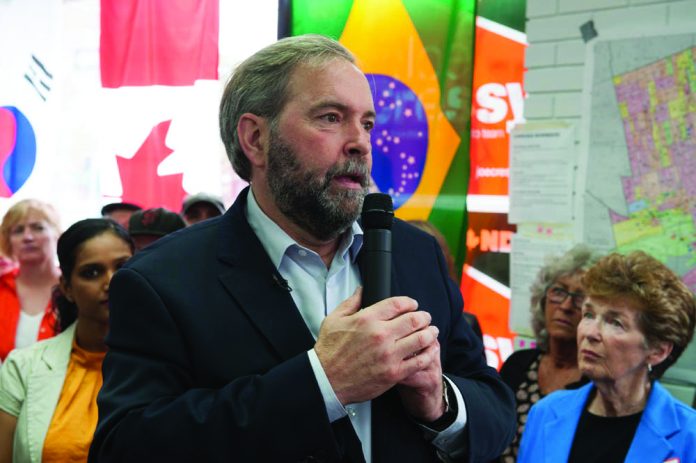
I choose Mulcair over Trudeau

2

In their roles as Prime Minister and Leader of the Opposition, there are very few things that Stephen Harper and Tom Mulcair agree upon, and there is nothing wrong with that. It is the Opposition’s role to disagree with the governing party in order to ensure that any legislation brought forward is given suitable scrutiny before being made into law.

The two men agree on one thing however: Justin Trudeau should not be allowed the keys to 10 Sussex Drive next October, and not just because they want them for themselves.

Though the Liberals currently lead opinion polls for both party support and choice of best Prime Minister, in light of recent events the data should be a bit concerning for the Liberal Party.

Despite their lead, party support has dropped since the last poll, as the Conservatives move to catch up. The same could be said of the leadership poll, which saw Harper tighten the gap between himself and the Liberal Leader.

Though Mulcair and the NDP currently trail the pack, Mulcair has a plan to convince Canadians that he is the true progressive leader Canadians need, and plans to make this clear in the year leading up to the 2015 election.

In contrast to Trudeau’s lack of solid stances on policy, the NDP leader plans to make the party’s stance clear on a variety of issues, including health and child care, First Nations rights, and the environment, to name a few. Mulcair claims he will offer both toughness and deep experience, which is something everyone can agree the Liberal leader is lacking.

The Liberals bank on a man with nothing more to offer than his father’s name and his mother’s looks.

Mulcair’s attacks on Trudeau as being light on policy may have found him an odd ally in the Prime Minister. While the Conservative stance regarding the young leader has never altered from their “he’s not ready” line, the Prime Minister stepped up the rhetoric during his annual Stampede barbeque speech, where he said that “[Trudeau] has [. . .] absolutely nothing of substance to offer.”

Harper spent most of this speech taking aim at Trudeau, without mentioning Mulcair by name, which seems to indicate that either he doesn’t see Mulcair as a threat to a continued Conservative government, or at the very least, sees him as less of a threat to the country than a Liberal government under Trudeau.

One should also take into account both the Prime Minister’s and the Opposition leader’s experience. Though Harper now enjoys a majority government, it is easy to forget that the two minority governments prior to 2011 give the Conservatives the distinction of having the longest lasting minority government in Canadian history, with a total time of just under five years. This is impressive when one considers that the average lifespan of a Canadian minority government is less than 18 months.

But Mulcair is not new to politics either, bringing in 20 years of experience at both provincial and federal levels. In addition, Mulcair is considered by many to be instrumental in helping his predecessor, the late Jack Layton, catapult the NDP from third-party to Official Opposition status in the last election. Do not underestimate this man.

Against these two political giants, Trudeau brings a mere eight years of experience in the political arena. The Liberals are banking on a man who has nothing more to offer than his father’s name and his mother’s good looks. As much as it pains me to admit it, if given the choice between a Liberal or an NDP government, I would cast my vote for Mulcair, who is the lesser of two evils as far as our country is concerned.

Welcome Back SFU

0

As a new school year begins, so does the common struggles and triumphs of SFU students.