Home Blog Page 1088

Why I won’t be saying “hello” to Ello

0
Ello’s monochromatic logo and Marxist-like slogans affirm its elitist image.

Recently, several internet financial observers have attributed the emergence of the social network Ello as a response to Facebook’s strict username policies and ambiguous privacy rules.

A couple of weeks ago, I received an unusual friend request on Facebook from a 10 year old Nigerian boy. After I refused his request, I asked some friends if they had received similar requests, and they explained that it was a scam.

I began to ponder the effectiveness of Facebook’s privacy settings, as this incident happened four months after Facebook changed its default privacy settings from ‘public’ to ‘friends only,’ and included a privacy check-up option, which ensures users that their posts are shared with only friends. However, Facebook still retained the right to sell user information to advertisers, which has been a major source of controversy.

In addition, members of the LGBTQ community were outraged when Facebook shut down user profiles of drag queens and transgender people who did not comply with their user name policy which permits only birth names.

Then Ello stepped in. Contrary to Facebook, Ello’s manifesto states that the user is “not a product,” and promises an ad-free social network along with the use of pseudonyms. Ello is not the anti-Facebook that it presents itself to be, however: I suspect that, sooner or later, it will either begin to charge fees for features, or will backtrack on its manifesto and allow advertisements to permeate the network.

Ello claims to be ad-free, but allows mass-marketing [through brand profile pages].

According to Ello’s website, there will be no charge for users at the basic level, but there will be the option to purchase special features to support the company. The network’s founders argue that this business plan could generate enough money to keep the site ad-free, but I find this unlikely. Like Facebook, Twitter, and Instagram, Ello will soon have to resort to selling ads to maintain itself as it gains popularity.

Social networks must have the money to provide faster and safer services across various platforms. Relying on ad revenues, rather than paid memberships, has historically been the most successful business strategy to garner revenue, as people seem to be more willing to tolerate ads than to fork over money for a membership.

Furthermore, the social network ironically permits advertisers to create brand profile pages; Ello founder Paul Budnitz even has a brand page for his bicycle company. This is a highly hypocritical concept — Ello claims to be ad-free, though it still allows mass-marketing.

The network further harbours a hidden elitism. While Facebook and Twitter allow users to register to use their networks instantly, anyone who wishes to use Ello must request an invite by submitting their email address. The network’s slow, invite-only system has led to so much frustration that users are now purchasing invites on Ebay for over $500, to avoid waiting.

Overall, Ello portrays itself as an exclusive, ‘hipster’ club. Its monochromatic logo and Marxist-like slogans further affirm this secretive, elitist image. I believe that the internet should be an open place, but unfortunately Ello dismisses the idea. For these reasons, I will take this social network off my ‘To Do’ list, while opting for something a little more open and commercial.

DC and Marvel fail minorities

0

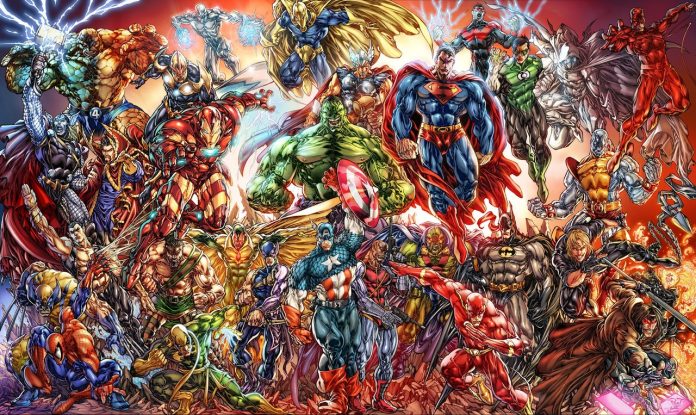
I have a confession to make; I am a comic book nerd, and have been since long before it was cool. While there is a part of me that loves being able to wear my Batman shirt in public without ridicule, and also enjoys the edgier tones of my favourite childhood heroes, it is also clear that the big two publishers — DC and Marvel — have fallen behind the times in one very important way: their representation of minorities in the ranks of their superhero squads.

In case you don’t believe me, think back to the recent Avengers movie. It features a six-person team comprised of five white guys (one of whom does turn green) and a token female in the form of Black Widow. DC’s current version of the Justice League in their New 52 universe features a single hero who isn’t Caucasian — the African-American Cyborg. And this is on a team that has featured multiple aliens (Superman, Martian Manhunter, Hawkman, and Hawkgirl) in its various incarnations.

Even the X-Men, which has the most direct correlation with real world minority issues, features characters that, despite coming from various national, cultural, and religious backgrounds, are mostly white. Even Mystique, a character whose mutation allows her to shapeshift, often appears as a Caucasian.

It seems that many of the characters designed to represent minority groups are little more than tokens, a way for the two companies to show that they are attempting to be diverse in their portrayal of our heroes.

This is problematic, as these characters end up with a minority identification that encompasses their entire character. Though I’ve been reading the entire Earth 2 series up to this point, I don’t know much about their Green Lantern character, as the fact that he is gay and lost his fiancé in the second issue seems to becloud the rest of his persona.

DC and Marvel could learn a lot about strong characters from independent publishers.

To their credit, both DC and Marvel have made efforts to introduce more minorities into the superhero pantheon. Unfortunately, these efforts have been uninspired at best and downright offensive at worst.

Recently, Marvel Comics announced some major changes to two characters that have been around for decades, Thor and Captain America. The new Thor has already made her — that’s right, her — debut in the past week, while Sam Wilson, better known as Falcon, will soon don the suit formerly belonging to Steve Rogers, marking the debut of the African-American Cap. As I said, uninspired, as Marvel’s solution to creating strong minority characters is to simply repackage existing ones.

Though, all things considered, these measures are better than what DC did with the introduction of Simon Baz, the Muslim Green Lantern. Though it was a great idea in principle, DC dropped the ball, turning what could have been an inspiring story into a giant cliché. While Baz’ ring could’ve come to him while he was at prayer, DC writers decided to have the ring choose him while he was being interrogated by federal agents under suspicion of committing domestic terrorism. Ouch.

Point being, DC and Marvel could learn a lot from the independent publishers who seem to do an excellent job of providing strong characters that exist outside of what has become the culturally accepted norm for superheroes. Malibu Comics, for example, provides the superheroes Spectral and Turbo Charge, both of whom are members of the LGBTQ community. There are plenty of original ideas out there, and I sincerely hope the big two open their eyes to these possibilities soon.

Woohoo, Boohoo

0

Woohoo: Hajj selfies

At the beginning of October, over 1.4 million Muslim pilgrims made the Hajj to Mecca, a journey which comprises one of Islam’s five pillars. This year, pictures of the religious observance exploded across the internet thanks to a new phenomenon: Hajj selfies.

From the Tawaf — the circling of the holy Kaaba structure — to prayers atop Mount Al-Noor, to the stoning of the ‘devil’ in Mina, the key stages of the Hajj have been mass-recorded for the world to see. Although the phenomenon sparked controversy over social media, with some observers criticizing the photo trend for being flippant, the flood of photos has exposed an entirely new audience to this major religious event.

This week, news buffs could click on BBC World and be greeted not by news of air strikes or jihadist rebels in the Middle East, but by the faces of millions of individuals participating in an exceptionally important global event.

Boohoo: Hajj construction

While some pilgrims were upset by the Hajj selfie storm, many more were outraged by the major development that dominated Mecca’s skyline to accommodate for the increased number of visitors. Historic neighbourhoods, domes, and pillars dating back to the Ottoman Empire have been bulldozed to make room for hotels, shopping malls, and other buildings.

For example, the 12-mile radius around the Kaaba, which houses the Black Stone — the spiritual focal point towards which all Muslims pray — used to be a restricted and holy space. Today, the area is littered with cranes.

This new ‘Mecca-hattan’ has archaeologists and religious authorities concerned that development is stripping the holy city of its spirituality. Far more dangerous than a couple of selfie snaps, this trend has the potential to transform one of the most beautiful sites of the modern and ancient worlds into a monstrosity of petrodollar-fueled capitalism.

How to achieve your dream

0

All of us have dreams, yet some of us lack the motivation to pursue them. Whatever you see as your goal in life, you can achieve it by following a set of rules.

First of all, the more outrageous your dream, the better. Whether it’s to become an athlete, chemist, or the next prime minister, the first step is to research those who have already achieved your dream. Recognize them, study them, and admire them. Watch their movies, read their biographies, and listen to what they have to say on Youtube. I guarantee that the more you do this, the more you will become inspired.

The second step is to visualize yourself as that famous Hollywood actor or that Olympic athlete. This is absolutely necessary, because if you can’t visualize this, then no one else will. This concept can also be applied to those smaller, intermediate goals.  For example, before every set at the gym, I examine the weight on the bench press or the barbell, and I visualize myself lifting it. Afterwards, the actual lift is much less difficult because the struggle in your mind is always more strenuous than reality. If you can visualize your dream, you’ve completed the toughest part.

The next step is to dismiss all of your critics, as many people in life will claim that your dream cannot be accomplished. I find that many of these people make biased or ignorant assumptions, as they naturally cannot put themselves into your shoes. Trust yourself, fall back on visualizing your accomplishments, and remember that you have the ability to achieve your goal.

You may demonstrate your skill well, but you’ll never be publicly known unless you promote yourself.

Of course, you must put the best work possible toward what you want to achieve. This means diligently studying your notes, lifting the heavy weights at the gym, coding away on your computer, or whatever applies to you. This hard work will require a lot of mental and physical power, so it’s best you make it a double shot of espresso.

However, there is another aspect of work that people often ignore. You may demonstrate that you have skill or knowledge, but you’ll never be known to the public unless you meet up with like-minded people and promote yourself. You can do this by creating online profiles through certain websites dedicated to your skill or craft; many of these sites have forums in which you can discuss topics with other members. Not only does this make you known, but it helps establish you amongst a network of people.

One misconception about the road to success is that failure doesn’t occur. Embrace failure — it’s inevitable that you’ll have setbacks. I’ve failed many times to achieve what I want in school, at the gym, and in my other activities. When I don’t receive a decent mark on a test, or fail to lift a weight at the gym, I remember that there will be a next time. Whether it takes three times or 100, I’ll eventually crush it, and this is the attitude you must employ. Failure is opportunity for growth, and not some moral incompetency.

What you want out of life is attainable, but you must first believe it to be possible. Your dream will not be accomplished easily, but if you find an inspiration, visualize, work hard, and do not fear failure, then you will undoubtedly achieve your dream. When it comes to your life path, never let a critic’s remark become your reality.

Society Act revisions harm B.C.’s non-profit organizations

0

What is absurdly clear from the recently released white paper outlining the revised Society Act, is that the current Liberal government has issues with priorities. While there is a scarcity of accountability for corporate activities in BC (I’m looking at you, Kinder Morgan), the government seems overly concerned with regulating non-profit societies.

Section 99 of the proposed act is of particular interest, as it allows for any “member of the public” to file an application to the BC Supreme Court if they feel that a registered non-profit society is acting in a way that is “detrimental to the public interest.” This act essentially introduces an undue amount of ambiguity, while misunderstandsing the role of non-profits, and will be used to lessen the impact these societies have in BC.

The ambiguity of the term ‘public interest’ implies an unacceptable amount of judicial interpretation in a non-partisan court system. In order to define the public interest, a judge must determine what interests are at hand and whose interests take priority. The very nature of politics is centred on this question.

Whether one defines public interest as job creation, environmental protection, or income equality, it ultimately remains a political position on which all parties in BC take a stance. This term cannot be interpreted without a partisan judgement.

The term ‘public interest’ cannot be interpreted [by the government] without a partisan judgement.

Section 99 further affirms that there is a “general expectation that societies will act in the public interest.” Considering the ambiguity in ‘public interest,’ it is clear that no non-profit could live up to this “expectation.” These organizations exist in our society as mechanisms for concerned individuals — who are otherwise voiceless — to organize and collectively advance their own specific interests.

To legally incorporate as a non-profit involves its structure and finances, more than its specific aims. Non-profits functions to counter hegemonic opinions and create a democratic civil society in which people can play a greater role in politics beyond the act of voting. Tying the legitimacy of a society with its specific actions contravenes this purpose and lessens its positive social impact.

The act will lead to silence, and intimidate those organizations whose activities are incongruent with the Liberal political agenda. It places a disproportionate burden on already struggling non-profits to not only self-regulate actions for fear of legal reaction, but to spend enormous amounts of their already tight budgets defending themselves in courts from accusations which can be raised by anyone, and be justified by any rationale the court finds convenient.

Outlined in Section 98 (3) are the court’s available remedies, which include “directing the society’s activities” and “ordering the society to liquidate and dissolve.” These measures clearly constitute overreaching power of the courts — a power that concerns me, especially given recent news that the BC Supreme Court denied the City of Burnaby an injunction against Kinder Morgan for violating the city’s bylaws. The courts simply cannot be relied on to protect public interest.

The true intentions of this act may be benevolent, but I remain dubious. This white paper places too much power in government hands, and constrains public free speech and action for the good of society. The Society Act is yet another bill that strips away the democratic standings of our nation.

VIFF 2014 reviews: 52 Tuesdays, Valley Below, Preggoland, Lifers

1

52 Tuesdays

The award-winning 52 Tuesdays is a window into the lives of James and Billie — we get a glimpse into their lives on each Tuesday of the year. James is a mother who finally comes to terms with who she really is — that is, a man — and sends her daughter, Billie, away to live with her father during her year of transitioning.

With an intensely captivating premise, this Australian film is quietly extraordinary in the way it wrestles with a very gripping, complicated issue. Instead of grappling with gender politics and prejudice at the forefront, 52 Tuesdays focuses on capturing the undoubtedly hilly relationship between James and Billie. The film shines with its unique, dedicated camerawork, and its talented cast of brave, authentic characters, each with their own ghosts to sort out.

One of my favourite parts of the film was James’ monologue, where he expresses how hard it was for him to admit that he was a man, and then to become the man he really is. James admits that when he realized, deep down inside, that he was really a beautiful man, he pushed away the truth in order to take care of his daughter. “My daughter was what was important to me. But then, 10 years later, it was still haunting me.”

“Do you wish you were born a man?” James’s lover asks him twice before he can reply. “Yes,” he says. “But then you wouldn’t have had Billie,” says his lover. All this was conveyed in the most hauntingly cadenced tones. It’s really something you have to watch and listen to in order to fully receive the emotions behind it. As with all nuanced art, 52 Tuesdays is the kind of story that keeps you thinking and caring about the characters long after it’s over.

Valley Below

The film opens with the iconic tyrannosaurus rex of Drumheller, towering over a small town in the middle of the badlands of Alberta. I was drawn to this film because I’d been to Drumheller two years ago and loved the quiet, mesmerizing landscape.

Kyle Thomas, the director of Valley Below, did the badlands proud by capturing it beautifully on camera. Thomas was adamant that the film have the simplest effects possible — he wanted the audience to focus on the raw acting talent and the natural beauty of Alberta. He definitely succeeded in that respect, bringing together an ultra-talented cast of characters on parallel and intersecting paths.

As beautiful as the setting and simple camerawork were, and as wonderfully crafted as the stories were, the film left me hanging with so many unanswered questions. I left the theatre feeling somehow cheated by the movie as it ended without resolving its many endless open-ended questions.

The storyline I most identified with was that of the young teenage girl breaking up with her boyfriend just before moving away for university, after finding out about an unexpected pregnancy. I admired her for her courage, and I was disappointed when her storyline didn’t resurface in the tangle of other brilliant stories. I guess my only qualm with his film is that it wasn’t longer and that it left me wanting much more.

Preggoland

Preggoland first debuted in Vancouver on September 30, 2014. The film garnered high acclaim when it premiered in Toronto for TIFF earlier in September, but screening at VIFF was a special occasion, given that Vancouver is the hometown of writer and leading actress Sonja Bennett. It was a real joy to note that so many people came to support a much-beloved local actress — the theatre was sold out that night, and the line-up outside when I arrived stretched around the corner.

Bennett wrote the film’s strong script as a response to her observation of society’s treatment of motherhood — and also to revitalize her career. Thank god she did, because what a wonderful laughter-inducing creation it was. Viewers were happily taken along for the ride, watching 35-year-old Ruth get up to her crazy shenanigans: getting drunk during her friend’s baby bash, throwing a party overnight in the grocery store she works at, and — the fundamental storyline of the film — faking pregnancy.

One of the ladies in the audience gushed after the show, “That was the first time I’ve laughed in years.” Its brilliance lies in the fact that the audience is made to care deeply for Ruth, who hasn’t embraced motherhood like her friends have and feels like the odd one out, unable to connect with them solely based on high-school memories.

We empathize when she finds herself caught in this epic lie, feeling like she has to be someone else to fit in with her core group of friends, and we know that deep down, there isn’t a single malicious bone in her body; all she wants is to be accepted and loved by those who she cares so much about. We watch a beautiful, funny romance unfold, all the while cringing in dreaded anticipation of the climatic point the movie has no choice but to reach — the unraveling of Ruth’s nine-month lie, as messy as the placenta-like melting jello that’s been sitting way too long in her fake belly.

Lifers

Lifers is a Canadian short film we should all be especially proud of because it is by SFU’s own Joel Salaysay. Shown as part of a Canadian shorts collection, Lifers received the loudest applause that night. A very clever and subtle film, Lifers, the name itself a symbolic reference to a life-long prison sentence, is a look into the life of a kitchen worker, and his thoughts on a career path that is as convenient as it is undesirable.

Salaysay, the director of the film as well as its main actor, knows how to make lasting impressions. The film expresses sentiments from his own real-world experience that leave the viewer nodding along. A very down-to-earth film that captures a collective mindset, it is especially relevant as the kitchen is a common starting point for many. Countless people have been faced with the same situation, the same crossroads, that Salaysay presents in Lifers.

I thought Salaysay chose the right dramatic close for such a story. He sums up the essential message of the film, his feelings, the implications and the consequences, all without saying a single word. Salaysay cuts his finger while chopping up some potatoes, and the camera scrutinizes his face as he stares down at the cut, horror slowly dawning. That last shot plays on an earlier scene when Salaysay notes that the scars on one’s hands represent the number of years you’ve served your ‘sentence.’

The higher your tolerance of your environment, the more of a seasoned pro you are. As a worker in the food industry, I completely understood Salaysay’s message, and that’s what makes Lifers such a great film. It’s not a cryptic film that you have to spend hours deciphering; it is a film that speaks to the average viewer.


 

VIFF 2014 reviews: Two Step, Phoenix, Men, Women & Children

0

Two Step

By: Christopher Cross

There’s something home-like about Alex Johnson’s debut film, Two Step. Set in rural Texas, the film seems to savour its quiet setting. Shots of crows on power lines, sunsets over fields of green, and a run-down gas station linger in the background, amounting to a film that is distinctly Texan. The visual cues remain constant, but Two Step attempts to build two character arcs separated by a clear shift in genre.

The film opens when James (Skyy Moore), a college dropout, inherits thousands of dollars after the death of his grandmother, but I wasn’t really happy for him. He simply had something fortunate happen to him, while not necessarily deserving it. When Webb (James Hebert) cons an old man out of thousands of dollars, and then loses that money to his ex-girlfriend who he had abused, I was pleased by his misfortune. Both characters came off as dislikable to me; it wasn’t polarizing when their two lives violently intersected — it was actually more of a relief than anything.

However, my feelings towards the characters changed when the film became a taut but predictable thriller. Webb becomes an extremely interesting character that you begin to sympathize with early into the major genre shift.

Meanwhile, James is put into a circumstance which very subtly unravels his past and makes him more likable. By the end of Two Step, I sympathized with both characters, and I especially enjoyed Hebert’s portrayal of Webb. The film’s structure is ultimately satisfying, even if the thriller elements come off as fairly contrived. Johnson’s debut film definitely lays the groundwork for what is sure to be a very promising filmography.


Phoenix

By: Christopher Cross

There is no shortage of World War II films, so it generally takes a unique premise to inspire a viewing. Phoenix relies on one unique hook throughout the entire film in order to maintain viewer interest: Nelly (Nina Hoss) returns to her husband, Johannes (Ronald Zehrfeld), after her time in a concentration camp and surgery to mend her facial disfigurement, only to find that he no longer recognizes her.

However, she resembles his wife who he believes to be dead, so he invites her into a plan to impersonate his wife to get her inheritance. Why would Nelly agree to do such a thing? And does Johannes truly not recognize his own wife? Does he simply not love her anymore? These are all questions that will linger in the back of your head as you watch these characters slowly develop over the course of the film.

It is the characters who make the film interesting, but unfortunately, much of the film is spent meandering to its explosive, yet muted conclusion. Fortunately, the performances by both Zehrfeld and especially Hoss are incredible. They manage to sustain the film long enough to get to the finale, and though the journey may take too long, the destination is well worth the wait.


Men, Women & Children

By: Josh Cabrita

Men, Women & Children, is the most accessible and best film I saw at VIFF this year. Everything about the movie and the way I experienced it was unforgettable, including the grand venue, The Centre for Performing Arts, where the joyous laughter and anxious gasps of the audience echoed, amplifying the humour and poignancy of the movie.

This film follows an ensemble of characters as they fail to properly interact with each other and consequently seek a virtual escape in different forms of media. A husband involved in a loveless marriage seeks out escorts online, his wife has an affair through an online website, and their son is addicted to internet pornography. This is only one of the families Reitman dissects; each story relates to the others, and every character comes across as believable with remarkable depth, given the brief amount of screen time.

This film is masterfully written and directed by Jason Reitman — the genius behind greats such as Juno and Up in the Air. His film encapsulates our times by examining the effects of social media, texting, and the internet on the psyches of everyone in society.


Vancouver Confidential tells the untold stories of the city’s seedy underbelly

0

Vancouver’s civic history is ripe with stories of seedy back alley deals, corrupt officials, murders, gangsters, and gambling; a recent wave of books has mined archives and libraries, used bookstores, antique sales, and auctions to present this city’s dark side. One such book is Vancouver Confidential.

John Belshaw, the book’s editor and an established historian, explains, “Most civic histories celebrate progress, industry, order, and vision. [Vancouver Confidential] isn’t one of those.”

Topping the BC Bestseller list in its first week on the shelves, Vancouver Confidential features contributions from everyone from local historians and authors, to storytellers and bloggers. The book joins a list of other recent local hits such as Liquor, Lust, and the Law by Aaron Chapman about The Penthouse Nightclub, The History of Metropolitan Vancouver by the late Chuck Davis, and Vancouver Noir, which Belshaw co-edited with Diane Purvey — all of which explore Vancouver’s ‘ugly’ side.

Vancouver was bound to get caught up in trouble as it was not only a port city and a railway terminus, but its proximity to the American border made it a prime spot for illicit activities. Imports of opium from Asia were common, transients often hopped the rail and stayed at the end of the line, and rum-runners frequented the city during prohibition.

Lani Russworm, creator of the Past Tense blog and author of Vancouver Was Awesome, contributes to the collection with a piece about the red scare in the 1930s, and the communist spies in Vancouver. Jason Vanderhill, of Illustrated Vancouver fame, continues his interest in BC brewing ephemera and looks at cocktail connoisseur Daniel Joseph Kennedy and the prohibition era.

Author and reporter Eve Lazarus also contributed to the book. Her recently published fifth book, Sensational Vancouver, looks at the homes and spaces occupied by both the famous and the ordinary people of the city. Lazarus’ chapter in Vancouver Confidential looks at police corruption and the infamous mayor L.D. Taylor.

At the book’s launch party, Rosanne Amosovs Sia spoke about the inspiration behind  her chapter, entitled “Crime and its Punishments in Chinatown.” She discovered a photograph by Stan Williams of 15 waitresses in 1937 marching from Chinatown to the newly built city hall south of False Creek. It was the middle of the Depression, and they were protesting the loss of jobs due to legislation that prohibited white women from working at Chinese-owned businesses.

Although the law had been around for a number of years, it wasn’t until a murder/suicide in 1931 and the appointment of W.W. Foster as police chief that it was enforced. Sia spoke about her interest in these waitresses and what became of them, as the mayor refused to see them, and their protests fell on deaf ears for many years.

The launch party was held on September 21 at The Emerald supper club in Chinatown, a fitting establishment for the ambiance of the book. The restaurant was packed with people, many wearing swanky hats and ‘20s to ‘40s era attire. Prizes were awarded for the best outfits and Aaron Chapman closed out the night performing a spoken word beat poem with jazz tunes playing from the speakers. In a deep smoky voice, Chapman told the tale of the arsenic milkshake murderer, a radio DJ who slowly poisoned his wife to death while broadcasting from the BOWMAC car lot on Broadway.

All the contributors have a distinct style of storytelling, which will have you picking up Vancouver Confidential time and time again to get another taste of Vancouver’s seedy underbelly in the mid-20th century.


Sloan deals themselves a new hand

0

After 23 years as a band, Sloan have done something they’ve never attempted before. Commonwealth, their 11th studio album, is divided into four solo sides each helmed by a different band member. Named after the four playing card suits, the solo sides each have a distinctive feel and focus while remaining characteristically Sloan.

The Peak sat down with guitarist and part-time lead singer Jay Ferguson to discuss the concept of the new album, the recording process, and the band’s ceaseless experimentation with the form and presentation of their unique brand of power-pop.

“Its nice to have a specific angle to a record as opposed to ‘here’s just another album’,” explains Ferguson. “We’re one of the few bands that could make an album like this, because everyone is already a singer and songwriter.”

Sloan have shared songwriting and lead vocals on each album, but this is the first time that the band has made such a deliberate break between the songs. While Ferguson’s side, “Diamond,” technically opens the album, he makes it clear that Commonwealth can be listened to in a far less traditional way. “It makes sense to listen to it as a record as opposed to a CD. There’s a natural break where you would flip the record over. But we didn’t want to present it even as side one, side two, side three, side four . . . you can kinda start the record anywhere.”

The divided nature of the record only serves to enhance each band member’s different songwriting styles, from Ferguson’s power-pop, to Chris Murphy’s more orchestral psychedelia to Patrick Pentland’s hard-hitting, distorted rock songs. “We all brought our own songs into the sessions. In terms of songwriting, everyone was pretty much left to their own devices,” Ferguson explains. “We knew what was going on with each other’s sides, but there were no boundaries. Everyone kinda does what they want.”

While much of the record could fit neatly with previous Sloan records, drummer Andrew Scott’s “Spade” stands out as an entirely different beast. The side consists of only one track “Forty-Eight Portraits,” an almost 18-minute medley of song splices reminiscent of side B of The Beatles’ Abbey Road. This medley style of songwriting has become something of a tradition for Sloan, whose records often consist of one- to two-minute songs that segue into one another, forming a cohesive whole.

“I love making songs like that. It’s an interesting way of presenting them. I was trying to make them more economical,” says Ferguson. “When you join them together like that, it’s one of the few experimental things you can do with a pop-rock format to make it more interesting. It’s one way to experiment with song form, you know, instead of making electronica or something that wouldn’t suit us.”

Ferguson says that the band has already started playing the epic “Forty-Eight Portraits” live, which will surely be a set highlight when the band hits the Commodore on October 18. “That was the first song we learned to play on the new record, we thought let’s just dive in and tackle the hardest one,” Ferguson explains. The unique nature of the medley, and the difficult nature of playing it live, are simply new ways that Sloan continue to challenge themselves and their listeners, creating something new and exciting out of the traditional form of rock n’ roll.

Sloan are clearly a band that know what they can do, and do it well. They write guitar based pop-rock songs that are catchy, economical, and simple — but never simplistic. After 23 years and 11 albums, Sloan may have not changed their songwriting style or musicianship drastically, but they’ve found new, creative ways to present and record their songs.

The medley form of their recent albums, with tight, short songs flowing into one another, has led to some of the biggest acclaim of their career. With Commonwealth, they’ve achieved another success: a drastic change in form that highlights each band member’s individual strengths while providing the listener with a challenging yet ultimately rewarding listening experience.


Rebel Women puts the words of suffragettes on stage

0

I’ll be honest, the first thing that usually comes to my mind when prompted about women’s rights to vote is the character Mrs. Banks in the 1964 Disney movie, Mary Poppins. She graces the screen every so often with the sing-song battle cry “Votes for women!” then proceeds to rush out the door to go wave some signs around and join her sisters once more. While a memorable presence, this portrayal only illuminates the tiniest course of action taken by women’s rights advocates in the early 20th century.  

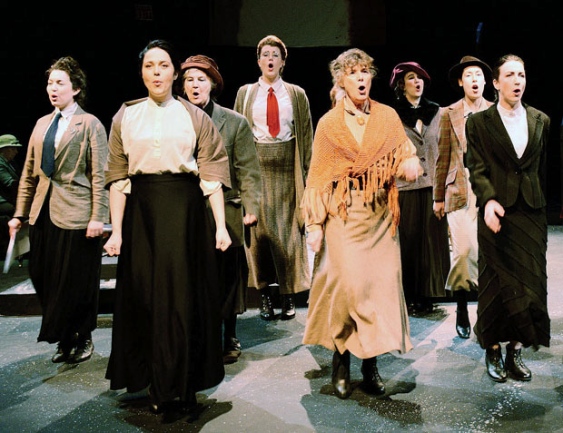
Rebel Women, created and directed by Joan Bryans, brings the more dramatic elements of the women’s suffrage movement to light. It’s a verbatim play, using the words and songs of real-life suffragettes to guide the story. Set in London, England, the show introduces us to women from every social class, from mill workers to aristocrats, compelled to action after being exposed to injustice on a daily basis.

Why was it that when the women finished a long day of work, they were the ones who cooked, cleaned, and looked after the children, while their husbands went off to the pub? Why were men the ones deciding whether women could vote or not? Despite their differences in life, it was clear to these women that rallying together would be the only way direct change could be made.

The play starts out like a history lesson. We see the women’s effort grow and attract more attention, in spite of routine rejection and dismissals by Parliament and the law. We learn about the contributions of Canadians to the movement.

In the second act, we are shown what suffragettes would have experienced at Holloway Prison, an institution that became female-only in response to the growing women’s movement. Here, the women who attempt to stage hunger and thirst strikes in the name of their cause are force fed and brutally assaulted. This is the most compelling and enlightening element of the entire play. The actors’ ability to communicate this injustice so vividly is amazing to watch.

Rebel Women gave me and my fellow audience members the chance to sit down collectively and experience the women’s suffrage movement. Having the opportunity to reflect and realize how far we’ve come as a society, is a wonderful yet perplexing experience.

October is officially Women’s History Month, which means that now is as good a time as any to explore the development of women’s rights in Canada, and what better way than seeing a play that uses the words of the suffragettes themselves?

Rebel Women runs from October 3 to 12 at Presentation House Theatre. For more information, visit phtheatre.org.