Home Blog Page 1082

Sports Briefs

0

Hockey

SFU Hockey won in a shootout 5-4 against first place Trinity Western University (TWU) at home Saturday, October 18. SFU outshot TWU 42-27, and scored three straight goals after surrendering the first goal of the game. TWU battled back to tie the game and take it to a shootout. The Clan are second in the league, sitting at 3-2-0, with one of those losses against TWU the night before.

Women’s Wrestling

SFU’s men’s soccer team defended their way to a 1-0 win over the North Nazarene Crusaders. Captain Jovan Blagojevic scored his 13th goal of the season in the eighth minute, which ended up being the game winner. Callum Whittaker was ejected from the game in the 53rd minute, which forced the team, already under pressure from the Crusaders, to play with one less man. The Clan are now 7-4-2 overall, and 5-3-2 within the conference.

Golf

SFU’s golf teams played on October 20 and 21, as the men headed to Monterey Bay, CA, while the women headed to Victoria, BC to play at the Vikes Invitational. Both teams placed third, with freshman Kylie Jack leading the women’s team, coming in seventh. These tournaments wrapped up the teams’ fall seasons.

The week in comics

0


webFun in the Sun - (Austin)_bw
Fun in the Sun (by Austin Cozicar)


Peers Halloween
Peers (by Leslie Lu)


webAgoraphobia Man
The Adventures of Agoraphobia Man: World Defender (by Jacey Gibb)

Modern pranks to scare with this Halloween

0
Fake blood is scary, but finding a job in a recovering market is even scarier.

There’s no doubt about it: October is the scariest time of year around SFU. With the fog rolling in and Halloween drawing near, the time to affright the people you love is optimal. Ghosts and ghouls might do the trick, but drawing on some utilitarian fears works even better. Here are a couple of soon-to-be classic pranks you can try out yourself!

Prank #1: Have a person spend four to five years of their life in post-secondary and then release them into the job market. There’s nothing more petrifying than not being able to find a job in your field of study. For bonus marks, make sure they’ve accumulated a lot of debt in the process. Spoooooooky.

Prank #2: Be a woman walking alone down the street, preferably at night. Nothing says terror like having to always be aware of your surroundings in case someone tries something. Try adding revealing clothes and the consumption of drugs or alcohol to the mix. Remember to have people blame you more for inviting the attack on yourself. Terrifying!

Prank #3: Dismiss someone based entirely on their age. If they’re younger than you, say they just don’t know any better. If the person is older than you, tell them they’re out-of-touch with the world and imply they might be senile. Blind ageism in an otherwise progressive time can be downright bone-chilling.

Prank #4: Remind someone, preferably one of your single friends, that no one loves him or her. Dying alone and forgotten feels fan-flipping-tastic. You can emotionally cripple and terrify anyone with the strike of a single sentence.

Prank #5: Make any coffee or tea drinker believe that their drink of choice has been outlawed, then watch the life drain from their eyes. The coffee and tea addicted generations of today need something in their lives to help them function. With the temperatures dropping and rainy days becoming more frequent, the need for comforting warm drinks will increase their petrified reaction. For those master pranksters out there, wait until finals start and caffeine is at its highest value.

These are just some of the things you can use to instill fear into the heart of any millennial. Your victims will not just be momentarily horrified, you’ll get to the heart of any person. Their current anxieties and fears will run rampant for much longer than just Halloween. So, go forth and frighten!

Why you should donate blood this season

0
It's in you to live — wait, I mean give.
Go with the flow.

When was the last time you rolled up your sleeve and gave blood? Just recently? Back in high school? Never?

Don’t feel badly if you’re not a regular donor — Canadian Blood Services reports that only about four per cent of eligible donors in Canada give blood, and Vancouver’s track record is even worse at just two per cent. These statistics are indicative of our current predicament: Canada is experiencing its biggest blood shortage in six years.

Canadian Blood Services (CBS) is urging anyone able to donate blood to do so, in order to build their stock. But even when the donation rate isn’t this low, the CBS is always in need of a little extra red. After all, blood can only be safely stored for 35–42 days after collection; that means new donors are always needed to keep stocks full. If all Canadians stopped donating blood entirely, the existing stock would only last for about four days.

Blood donation has a long and interesting history. In terms of public health as well as scientific progress, transfusion is among the most important discoveries of the past few centuries. The first successful transfusion was performed in 1665 by physician Richard Lower, who saved his ailing pet dog by transferring blood to it from other canines.

Just 500 ml of blood, the standard amount donated, can help save up to three lives.

Though later transfusions were performed between humans and animals such as sheep, the first successful human-to-human blood transfusion did not happen until 1818, less than two centuries ago. Almost 100 years later, the three basic human blood types — A, B, and O — were first identified.

This was a game-changing discovery — knowledge that blood could be classified by its antibodies (ABO) and antigens (positive or negative) dramatically increased the success rate of transfusion, and led to the saving of thousands of lives. If you don’t know your own blood type, ask your doctor (or your mom). It might just save your life one day.

So why is blood transfusion so important? Statistics show that someone in Canada needs blood every minute, and around half of Canadians have reported either themselves, family members, or friends needing blood at one point in their lives.

A normal human body contains about 10 units of blood at 500 ml, or just under one pint, per unit. Just one unit of blood — the standard amount donated — can help save three lives. As an added cool factor, the donated ‘blood’ which modern doctors use is actually just certain components of blood, namely red cells, plasma, and platelets, each of which is used to help patients suffering vastly different ailments. This is the reason that three different lives can be saved with each single donation.

So, who is being helped by the blood you give? As it turns out, pretty much everyone. Among the more common recipients of blood transfusions are car accident victims; premature infants and children being treated for cancer, anaemia, or heart surgeries; women suffering complications from pregnancy; severe burn victims; surgical and cancer patients; and those with blood disorders, who often need to receive new transfusions every month.

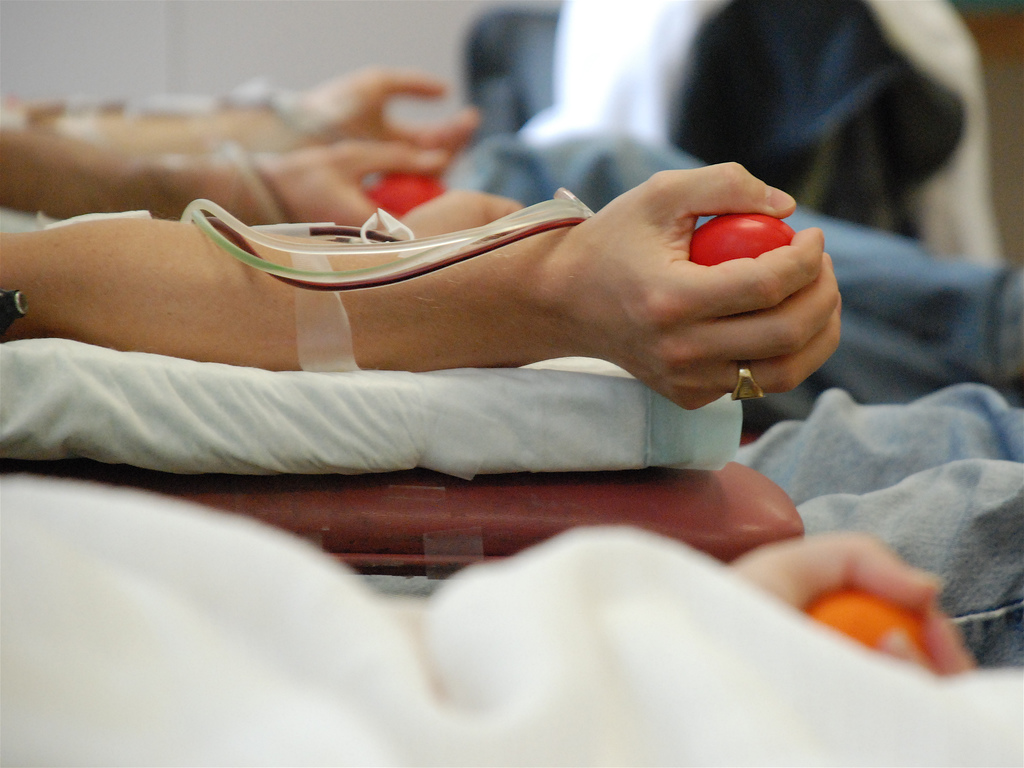
People who know very little about the process often ask whether or not it’s complicated. It isn’t — the whole process, from the moment you walk into the clinic to the moment you leave, takes about an hour. When you arrive at the clinic, you will go through registration, a medical history check, and after a quick physical, the blood donation process will begin.

The actual donation usually lasts around 10–12 minutes. After that, you can help yourself to snacks and refreshers in the clinic! If you’re feeling really generous, a healthy Canadian can legally give blood up to seven times in a single year. That’s 21 saved lives per year, making you pretty much an unofficial superhero.

To debunk a few common myths about the donation process, read on: it’s absolutely safe and only sterile needles are used; it doesn’t pose any significant risk to your health; and no, it doesn’t hurt that much. Barely as much as a pin prick.

If you’re at least 17 years old and weigh at least 110 pounds, you’re allowed to donate blood about once every two months. The best place to donate is the Canadian Blood Services; you can either book an appointment or just walk into the clinic during their open hours. The two clinics closest to SFU are located in Surrey near Guildford Town Centre and in Vancouver next to the BC Women’s Hospital.

While most of us are keenly aware of the importance of blood donation, many people remain reluctant to take action — we’re lazy, busy, or just too nervous around needles. To be honest, I’m not a regular donor myself; the first and last time I gave blood was in high school. However, writing this article has reminded me of the feeling of reward that comes from doing a good deed for others.

I’m encouraging everyone like me to stand up and donate blood again. This Halloween, why not do away with the fake blood and give donation a shot? It’s one of the easiest and most painless ways there is to save lives, and it feels good to know that you’re making a contribution to the health of those across the country. It doesn’t matter what your blood type is — only that you’re the giving type.

Art and science are not mutually exclusive

0

I have always thought that there is more crossover than we might assume between art and science, and that interesting things happen when the two fields collaborate on a project. A couple of recent arts events have led me to revisit the idea that art and science aren’t mutually exclusive. I think that we all understand this in some way, but it’s not until you listen to a scientist and a cellist give you a genetics lesson that it becomes very apparent.

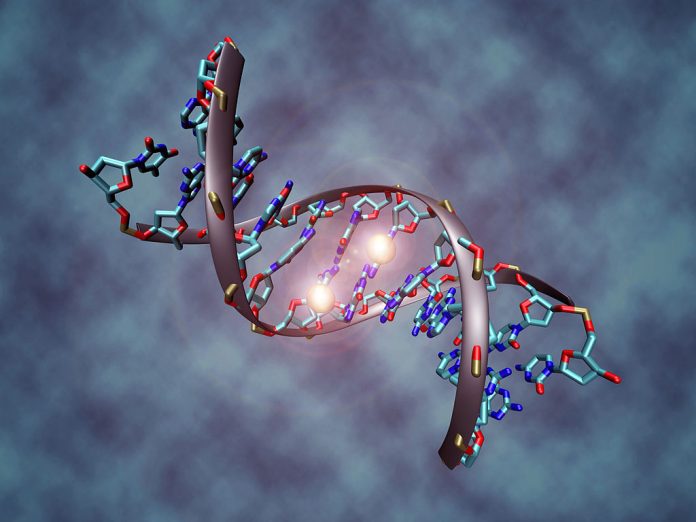
At TEDxVancouver, Jennifer Gardy and Peter Gregson discussed the origins of culture and why we are genetically disposed to creativity, through the study of other species, such as the zebra finch. One would think that a finch raised in isolation, never hearing birdsong, would not be able to produce its own song. In fact, the finch is able to sing, but it doesn’t sound as good as his parents. However, as Gardy explained, after about five generations of raising offspring in isolation, the finch’s song sounds just like the that of finches raised in the wild. The birdsong evolves all on it’s own and it seems to be an innate ability in their DNA. 

The DNA responsible for this phenomenon used to be called junk DNA, but has since been renamed regulatory DNA, and it seems that this is what gives  humans the ability to evolve complex creativity. It’s fascinating to think that this extra DNA, which performs no obvious function, is responsible for the most beautiful works of art.

[Gregson] takes genetic data and transforms it into a beautiful piece of music.

Gregson — an accomplished cellist and composer — is interested in data sonification, the process of turning data into sound or music. He has taken genetic data, translated it into musical notation, and has transformed it into a beautiful piece of music.

This may all sound a bit bizarre, but he’s not the only artist working with science. Swiss choreographer Gilles Jobin recently brought his new work Quantum to The Dance Centre. This work was inspired by Jobin’s residency at the European Organization for Nuclear Research (CERN), the largest particle physics laboratory in the world. The choreography explores forces such as gravity, time, and space, and American composer Carla Scaletti’s electronic score incorporates data from the Large Hadron Collider, the world’s largest and most powerful particle accelerator.

Jobin was part of the Collide@CERN artist residency program, where he spent several months immersed in the world of scientists at CERN and their study of the origins of the universe through the Large Hadron Collider. Inspired by particle physics, his work ultimately explores the idea that we are held together by quantum forces.

Art and science are fascinating fields of study in their own rights, but when they come together, we can push our knowledge even further and make all kinds of amazing discoveries.

Future climate sustainability must begin with education

0

Because climate change is a fairly recent issue, it has been difficult to arouse the public’s interest enough to reverse the trend. During my high school years in Hong Kong, students would occassionally be exposed to discussions on this issue. An article from Rabble suggests that “education about climate change must become front and center in our curriculum at all levels of schooling and across disciplines” — a statement with which I agree immensely.

As unpleasant as it is to admit, climate change is one of the most serious crises we face on this planet. It is no longer an issue that troubles only a few countries; the issue has now quickly come to affect almost every part of the world. If we do not act quickly, future generations will suffer.

Climate change issues cannot be solved in a short period of time, therefore, the education of future generations is an essential element in building a sustainable future.

One of the problems with current climate change education is that it’s introduced too late in the school curriculum. In elementary school, these issues are barely touched upon, and only in high school is the subject really introduced. It is best to start educating students when they are young, in order to successfully encourage them to change their attitudes and behaviours.

Educators must show understanding and be passionate when teaching.

Unfortunately, I find that some teachers do not have adequate knowledge on the issue, and are therefore unable to enlighten students fully. Furthermore, educators must be passionate about what they teach their students. A real interest in a certain situation would do wonders in influencing students’ perceptions.

Sadly, during my high school days, climate change talks could be dull. Teachers tended to bombard students with scientific research — statistics, graphs, charts, and quantitative facts — that did little to arouse student interest.

An interactive learning approach may be a useful alternative in educating students on climate change. Innovative, hands-on activities would be a decent method to use on children.

Point blank, while we may have yet to come up with some truly effective methods that will motivate people to participate in a viable climate change solution, education and awareness for our future generations is where it starts.

Carbon dioxide levels have almost doubled in the past 60 years, global sea levels have risen about 17 centimetres in the last century, and extreme weather is occurring all over the world. As everyone is responsible for the environment, we must invest our time, money, and interest in raising our future generations to be globally empathetic, innovative individuals who will build our sustainable future.

SFU Community Summit explores the future of innovation

0
The sea level along Vancouver's coastline is projected to rise by 1 metre by 2100.

Experts, innovators, and artists gathered at venues throughout the city last week to discuss the implications of innovation at SFU’s third annual Community Summit.

Hosted by SFU Public Square, this year’s summit, titled, “Innovation: The Shock of the Possible,” explored the impact of new ways of thinking on the most important social, environmental and economic issues in British Columbia, Canada, and beyond.

In an editorial published in the Vancouver Sun, SFU president Andrew Petter explained, “Innovation is not just about technological developments, although there are groundbreaking examples of technological advances to celebrate. Innovation also refers to new ways of imagining our society, of reconfiguring our democracies, and of reinvigorating our social contract.”

The week kicked off on October 19 with the Young Innovators Crawl, which invited community members to explore studios and open houses of local innovators under 30.

“We didn’t want to have just another youth conference where young people are just discussing what innovation is,” Shauna Sylvester, the executive director of SFU Public Square told the Vancouver Sun. “We wanted to look at how they’re innovating.”

Later that evening, opportunities for innovation were explored at RISE, a competition addressing sea level rise in Metro Vancouver. Teams were invited to pitch their ideas for how people in the area can “adapt and thrive — faster than the waters that surround us.”

Teams competed for a $35,000 grand prize, pitching their ideas to a panel of experts from the government, the media, and academia.

On a similar topic regarding an uncertain future, Ray Kurzweil, director of engineering at Google, and Richard Florida, a world-renowned urban theorist, joined forces at the Queen Elizabeth Theatre on Wednesday night for a talk titled, “Will Innovation Save Us?”

One of the talks that was most relevant to SFU students concerned the production, adoption, and use of open textbooks at post-secondary institutions. The province has already invested $2 million dollars to date in the BC Open Textbook project, which creates free open source textbooks for the most popular courses in the province.

Simon Fraser Student Society (SFSS) president Chardaye Bueckert, who was on the discussion panel for the event, spoke to its value: “It’s good to hear about the various developments that are going on in open source and what [students] can do to advocate for the use of them in their own classrooms, and how to engage in conversations with their professors in a way that’s productive and encourages them to get involved in the movement.”

Other events included a discussion on how to make Metro Vancouver a zero waste city, and a presentation on the viability of values-based businesses.

Overall, the week provided an opportunity to connect SFU students with faculty members as well as with innovators in the greater community and beyond, an effort that mirrors SFU’s commitment to being an engaged university.

Bueckert commented on the significance of that effort: “Instead of having our university as a bit of an ivory tower, it’s more out there and engaging with the public.”

Why Canadians need to stop freaking out over the Ebola outbreak

0
Extensive media coverage has left Westerners in a state of paranoia.

The rapid spread of the Ebola virus has undoubtedly become one of the worst epidemics in recent history, claiming the lives of thousands in West Africa. Ironically though, as victims fall prey to the outbreak thousands of kilometres from our borders, Westerners over here in ‘prosperity-land’ are left shaking in their boots. After all, it could be any day now that a weary traveller fresh from disease-ridden Sierra Leone steps foot on Canadian soil, thus sounding the alarms for terrified public health officials to race over and quarantine the hell out of that poor individual.

Extensive media coverage has left frightened Canadians in a state of paranoia. But what we Westerners must realize is that the only outbreak we’ll be falling prey to is that of anxiety bordering on hysteria.

In many respects, it’s become the media’s duty to shroud foreign epidemics in a certain melodrama. This isn’t to belittle the fact that, since March, over 4,700 people have been killed by the virus, it’s to say that our nation’s perception of this issue, through the corporate lens of the news, has been vastly misinformed.

Yes, Canadians should be worried about the possible introduction of the disease to the country — after all, it only makes sense — but what we should be even more worried about is how our news coverage is currently skewing the issue through too much speculation and too few facts.

Currently, our nation’s precautionary measures regarding a Canadian Ebola outbreak are sturdy. Apart from sending out 800 vials of experimental vaccines to the World Health Organization last Monday, the Public Health Agency of Canada has placed two large groups of epidemiologists and other experts ‘on call’ in Winnipeg and Ottawa.

Harper has needlessly ingrained a bloated issue into our Canadian psyche.

In addition, quarantine officers have been stationed at six major airports across the country, while Prime Minister Stephen Harper recently announced an intensive Ebola-preparedness plan with Nova Scotia Health.

Needless to say, the only people at risk of contracting the virus would be those health officials in direct contact with a patient. Similar to the swine flu pandemic in 2009, our nation’s extensive security measures would ensure that such a patient is under quarantine within minutes, and everyone outside the quarantine zone would be kept safe.

It’s a shame that the media has spewed out so much editorial commentary on how Ebola has the potential to wipe out our nation — a commentary further amplified by activists and politicians. It’s ironic that, while Obama cautions his American herd to “not give in to hysteria or fear,” Harper proclaims to the True North that a great threat is upon us, stating that due to globalized travel, foreign issues “could arrive at our shores very quickly.” Apart from playing Mr. Obvious, Harper has needlessly ingrained a bloated issue into our collective Canadian psyche.

Statements such as these have even influenced us to consider unnecessary measures to prevent the spread of the virus. Some officials have suggested that Canada close borders to people traveling from anywhere in Africa — an enormous continent where those living on the Eastern side have even less a chance of contracting the virus than Europeans. These irrational notions could cause us to turn away almost an entire continent of comparatively healthy people.

While it’s human nature to fear what we do not understand, our fears are simply a product of misinformed speculation. I hope I’m not the only individual who’d like a little more light shed on the realities of the issue, rather than some Hollywood drama concocted by corporate conjurors to make a dime.

Crunching the numbers on the worth of university

0

Almost every undergraduate, at one point, asks the following question: is university worth it? I myself have spent more than a few hours over the last several years pondering this. But what does it mean for something to be worth it? Monetary return? Experiential value? Or is it merely another check we all feel must be crossed off before entering adulthood?

The answer to this question is all of the above. We’d all like a higher salary and to experience all of the joys of university life. Most commonly, we want to cross this task off our list, and move on. The question then is, does university actually get you any of these things?

From a monetary perspective, let’s assume you graduate at the age of 25 and you work for at least another 40 years. Having gone through post-secondary education, how much more money would you need to make in order to break even?

Simply combine the cost of your tuition, the opportunity cost you incur by attending school, and the interest on your student loan repayment. By my estimate, if you’re an undergraduate, your total cost will never be over $75,000. Now you may find this number rather staggering. You may question what job you could possibly get upon graduation that could justify such an expenditure. The answer, surprisingly, is just about any.      

University only needs to make you better off than you would have been otherwise.

Assuming you have the next 40 years of work to break even, and assuming that you will work full-time each year, you would need to make an average of 97 cents more per hour — than what you would have made without your degree — post-university for your degree to have been worth it. Some might argue that you won’t even be able to make that much more, being perpetually underqualified due to your lack of work experience.

My answer would be to wait. Take that BA designation off of your resume, get a ‘basic job,’ then apply for a proper one every week. Even if it takes you years to build up the work experience needed, it will still have been worth it. Remember, post-secondary education doesn’t need to make you a millionaire to have been worth it. It simply needs to make you better off than you would have been otherwise.

These ideas do not even consider the fact that university is amazing on its own merits, regardless of any payback. It is a time for you to be part of a community of thinkers, to become politically active, and socially mobile. To use a tired cliché, it is a place for you to discover yourself and find your academic muse. This muse, whether English or statistics, geology or acting, will inform and enrich the rest of your life. What is more, the experiences you share with your peers, professors, lovers, and friends will stay with you forever.

When you take all of these benefits into consideration, in conjunction with the fact that the monetary payoff is almost certain, surely your answer to my question is obvious: university is worth it.

University Briefs

0

UBC Theatre and Film sells old costumes for Halloween

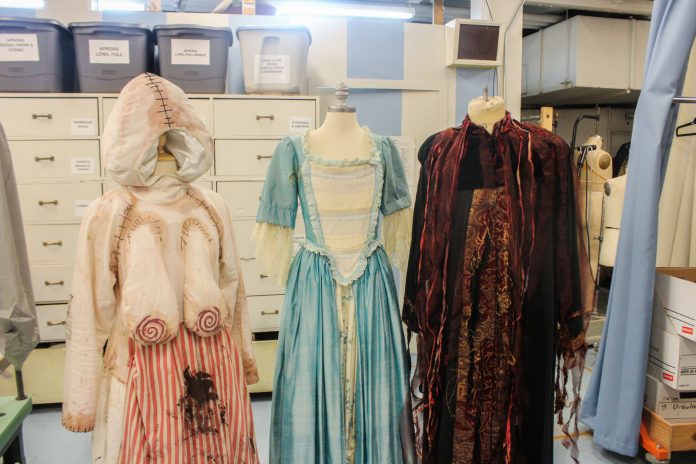
Students looking for unique disguises to wear this October 31 were invited to Freddy Wood Theatre last Wednesday for priced-to-clear costumes, courtesy of UBC’s Film and Theatre program.

From vintage bling to corseted Shakespearian dresses, all items were under $10; the sale helped to reduce the department’s inventory as well as raise funds for upgrades to their costume shop.

Some of the more outlandish costumes — such as a ghost getup from their production of Ubu Roi that is supposed to evoke the sense of a “loutish royal glutton on the prowl” — were up for a separate silent auction during the sale.

With files from The Ubyssey


Student residences hotbed for unsolicited form of trick or treating known as ‘break-and-enters’

Fanshawe College students are in danger of losing more than just miniature versions of candies this Halloween. According to London Police, there has been a 60.8 per cent increase in residential break-and-enters in the neighbourhood containing the school’s student residences in the past year.

The main items that have been targeted by thieves have not been little Snickers or Starburst, but electronics such as mobile phones and laptops.

Police have recommended that students keep their doors locked and windows closed, as those are the main points of entry for thieves, as well as humans in general.

With files from The Interrobang


Being a video game ‘zombie’ could be healthy

A new study conducted at Ryerson University suggests that playing video games before meals contributes to lower calorie intake for teenage boys.

According to nutrition professor Nick Bellissimo, when the subjects, who ranged from nine to 14 years old, played Angry Birds, they consumed, on average, 50 fewer calories than when they didn’t have any screen time.

The study concluded that after 30 minutes of gaming, the kids both ate less and were in a happier mood, which further contributed to their desire to eat less.

With files from Ryerson University