Home Blog Page 1057

Simon Fraser vs. Louis Riel

1

While most SFU students probably have at least a basic knowledge of Louis Riel, the controversial Métis-Canadian who led two rebellions against the government in the 19th century, his name holds a very different meaning at our school than anywhere else.

The majority of utterances of the words “Louis Riel” on our campus are in reference to Louis Riel House, one of SFU’s oldest residence buildings and, quite frankly, one of the most awful places at our school. Mouldy walls, rotting wood, bursting pipes, non-functional heaters — Louis Riel has become synonymous with the worst of SFU.

As residents of the building have slowly been forced to leave and rumours circulate that the building may soon be closing, Simon Fraser looks like it may finally be erasing the name “Louis Riel” for good.

Forty-six years ago, though, our school almost became Louis Riel University.

Although the two men never met and neither one of them ever even set foot on the land in which our school was built, Simon Fraser and Louis Riel have a long and storied rivalry at our campus. These two names just don’t like each other one bit.

Simple Simon


When British Columbia’s newest university opened in 1965, it already had a name with a story. It was of a “Loyalist, fur trader, and explorer” who in 1808 “completed one of the greatest journeys in the annals of Canadian history by descending the mighty river which  today bears his name,” lore which was plastered all over the university.

His name was Simon Fraser, and while his legend may sound impressive, the way he became associated with the school is far less extraordinary.

Unlike James McGill, another fur-trader who earned himself the title of a Canadian university by putting up the money to make it happen, Fraser was in no way a benefactor of SFU and had no history of supporting education. Instead, he earned his spot because someone didn’t want to leave blank spaces in a document.

“People may dismiss symbols as irrelevant, but they are not. Psychologically they are not.”

John Conway, LRUSS vice-president

That person was George Curtis, the dean of law at UBC. In early 1963, under the command of premier W.A.C. Bennett, Curtis drafted the legislation which allowed for the creation of a second university in the greater Vancouver area.

Curtis initially wrote the school name on the form without much thought, and, quite logically, called it “Fraser University” after the river that opens up the metropolitan area that the school would be serving.

While the name certainly sounded better to the committee working on the project than previous working titles “Mainland” or “Delta,” Sperrin Chant, the dean of arts at UBC, was the first to realize the unfortunate acronym they had almost created.

“Do you really want a crowd yelling FU at your football team?” Chant asked, so Curtis decided to add the first name of innocuous explorer Simon Fraser, for whom the river is named, for the purposes of euphony.

Unbeknownst to them, this simple decision to avoid a profane chant would end up stirring the pot for a radical student government to attempt to tear the name — and school — apart.

Fraser Slain


“Simon Fraser, celebrated shamelessly in our university calendar as a ‘Loyalist, fur trader and explorer,’ was, in fact, a member of the vanguard of pirates, thieves, and carpetbaggers which dispossessed and usurped the native Indians of Canada from their rightful heritage.”

This was the message that the student council’s second vice-president John Conway and arts-representative Richard Apostle brought to the SFSS’ Executive Council meeting on June 24, 1968.

The pair were part of the most radical student government in our school’s history, with the majority of the members belonging to the rapidly expanding Students for a Democratic University (SDU) organization which opened a chapter at SFU in January of that year.

The SDU were a self-proclaimed group of radicals who wanted to create an alternative system of education and a democratized university that would play an activist role in society. They were decidedly anti-establishment and anti-administration; that summer, they also became anti-Simon Fraser. 

Although the university was already embroiled in a number of controversies in the summer of ‘68, it was the school’s name that particularly concerned Conway, a PhD student who had previously been a high-profile student activist in Saskatchewan and had only arrived at SFU that year.

He believed, and had a number of sources to back it up, that the man for which SFU was named was not a hero at all, but was in fact an illiterate racist, who destroyed Aboriginal culture without hesitation. For Conway, continuing to have the school named for such a man was a celebration and legitimization of the worst parts of Canadian history.

Beyond his racism, Conway also claimed that Simon Fraser did not even discover the Fraser river — several explorers had beaten him to it — and that the only reason he was ever here was the result of a failed attempt to get to the Columbia.

His answer to the Simon Fraser problem? To name the school after “the single man who, by his actions to gain justice and freedom for the Canadians of Indian ancestry, courageously wrote the single page of the history of the Canadian West of which we can be thoroughly proud.”

He demanded that SFU be re-named Louis Riel University.

Riel Talk


While Riel’s name may have meant more in Conway’s home province of Saskatchewan, or in Manitoba, the province Riel founded, Louis was a controversial figure even as far west as BC.

While debates over Riel’s actions and sanity live on to this day, Conway and the rest of student council were convinced that he was a much more deserving figure than Simon Fraser.

The motion to demand that SFU become LRU was carried 6–2 by council, and in subsequent meetings they also agreed to authorize the expenditure of approximately $107 for the manufacture of one thousand “Louis Riel University” buttons, to be sold on campus.

Furthermore, they allowed the creation of an informative — albeit biased — flyer about who Fraser and Riel were. It was co-written by Conway and fellow ‘LRUSS’ vice-president Jim Harding and provided a more detailed description of the reasons behind the movement.

In a section of the flyer entitled “Why Louis Riel University,” it was explained that the name change was necessary to promote a re-interpretation of Canadian history and diminish the “deadly provincialism” which existed in BC. They believed that the name Louis Riel could create a link between the province and an important figure of both native and French Canadian history of which they said the northwest remained generally ignorant.

The publication also revealed the SDU’s own believed connection to the name, as they wrote that the “demands here for democratization of the campus, amounting to representative and responsible government in this institution” directly related to the life of Louis Riel.

For Conway and Harding, Simon Fraser represented a negative colonial history that they believed was being mirrored at SFU by the authoritarian leadership of chancellor Gordon Shrum and president McTaggart-Cowan. They wanted Louis Riel as he was a more inspiring namesake that would better suit their own rebellious spirit. 

As they would soon learn, however, they may actually have been a little too similar to Riel. Even their name-proposal was destined for the same fate as their hero, a swift killing at the hands of unsympathetic white men.

Simon Stays


The summer of 1968 was one of the most volatile times in SFU’s history. After ousting their inaugural president, the university cycled through three presidents over the course of three months; the school was put under censure from the Canadian Association of University Teachers (CAUT); and the SDU held countless rallies and protests demanding more democracy at the university. But only one of these rallies raised questions of impeachment of the student council.

It was the Louis Riel issue.

Despite selling over 500 “Louis Riel University” buttons and making headlines in The Province and the Vancouver Sun, Conway did not quite have the support he thought.

Local papers received several responses to the proposed name change, immediately following their coverage of the proposal, with the public expressing varying degrees of bewilderment and outrage. 

Mrs. Ann Hanley of White Rock BC wrote in to the Sun and accused Conway and SFSS president Martin Loney of being “completely off their rockers.” She contended that Louis Riel was a poor choice and had no connection with BC, and that Simon Fraser did not mistreat native people, citing her master’s degree in Northwest history as proof.

Even those who agreed with Conway on Fraser’s legacy did not all love the idea. Andy Robb, a graduate student in History, wrote an article in The Peak that did not argue with their assessment of Simon Fraser but took issue with the choice of Riel.

He informed Conway that Riel was not a positive figure in the history of native people, and that he actually had a rather flippant attitude towards any non-Métis that nearly rivalled the racism of Simon Fraser. While he wasn’t against a name change, Robb simply thought they could do better than Riel.

A third perspective suggested that instead of doing better than Louis Riel or Simon Fraser, they could just find a better Simon Fraser. In his letter to the Sun, concerned citizen R.S.T. Fraser told the council that there were plenty of other “Simon Fraser”s to pick from, including Simon Fraser, Lord Lovat, who attended the opening of the school in 1965 on behalf of the Fraser clan in Scotland.

After several weeks of debate and campaigning for and against the Louis Riel name, a student meeting was finally held on Wednesday July 10th in convocation mall.

The outcome could not have been more disappointing for Conway and the SDU. After a three-hour rally, a crowd of 300 — which had dwindled down from 800 at the start — raised their hands to show three-to-one support for the name Simon Fraser.

While President Loney tried to insist that the issue was only up for discussion at this stage, the crowd became unruly and student Robert Danielson countered with a motion of confidence in the Simon Fraser name.

“We could just name it after a different Simon Fraser. There are dozens of them to pick from.”

R.S.T. Fraser in a letter to the sun


After some debate which included comments from Robb, Harding, and Marie Baker, an Aboriginal student, the vote killed the name-change. To add insult to injury, Danielson then swiftly put forward a motion of non-confidence in the student council.

The following week, student John Misera presented council with a petition bearing 138 signatures in support of taking Danielson’s motion to a vote. Two-thirds support in the motion would have meant impeachment for the council.

While president Loney claimed that the Louis Riel issue was simply being used as an excuse by those wanting to impeach a council that was in favour of radical action, two things were clear at this moment: the SDU’s days in charge of the Simon Fraser student body were numbered, and Simon Fraser would remain Simon Fraser.

Unlucky Louie


Although the SDU maintained control of the student council for the rest of the summer semester, come fall they were replaced by a more moderate group.

While the craziness at SFU wasn’t quite over, Louis Riel University was now nothing more than an idea which existed in the minds of few dejected students. While proposed referendums to get a wider student vote on the name change never came to fruition, the Riel name would come back a few years later — without a vengeance.

In August 1969, potential tenants of SFU’s new apartment-style residence voted 95 per cent in favour of calling it Louis Riel House. Names like “Mountain View” and “Hillcrest Manor” were voted down in favour of becoming the first place outside of the prairies to be named in honour of Riel.

It was a minor victory for the name Louis Riel at SFU, as it achieved a status that had only previously been earned by heroes like Madge Hogarth and the Shell gas corporation.

Being the namesake of a student residence may have seemed like slight compensation for failing to replace Simon Fraser, and right from the get-go the Louis Riel House was not a particularly popular place.

Within a month, Louis Riel was already charged with a litany of student complaints. From parking difficulties to a lack of cigarette and Coke machines, these problems eventually dissipated, but over the years they have been replaced by even more pressing concerns including unfit living and air quality concerns.

The reputation of the residence building has only furthered the damage to the name Louis Riel on campus, already besmirched in favour of Simon Fraser in ‘68.

Yes, Simon Fraser, a figure who Allan Cunningham, the inaugural head of history at SFU, once stated had a story which didn’t justify “more than a monograph,” remains the namesake of our school.

Much like what Louis Riel the man means to Canada, ‘Louis Riel’ the name represents a portion of SFU history where students had the passion and energy to rise up and demand change. Having our university bear his name would have been a tribute to our radicalism.

But is that really what the SFU story is about? Or is our school’s almost 50-year history better represented by a somewhat glorified but mostly boring and insignificant journey, like that of Simon Fraser?

Either way, it looks like “Simon Fraser” will probably live on forever as our institution’s namesake. Maybe there will be another movement someday to change it, but just like those who dreamed up Louis Riel University, they’ll probably just be invited to consult our original name, FU.


Build SFU’s construction plans lack clarity on sustainability

0

Watch the SFSS Town Hall meeting, November 27, 2014:

(The time stamps refer to this recording of the SFSS Town Hall meeting)

____________________________

At the SFSS Town Hall of November 27, 2014, the board of directors and Build SFU general manager Marc Fontaine were made aware of misconceptions surrounding the environmental responsibility of the two Build SFU construction projects. Many students, including some involved in the SFSS and Sustainable SFU, seem to be under the impression that the buildings would meet the highest standard in sustainability, a falsity which the board resolved to ensure clearer communication about. (51:00)

In a December 2 post on the official Build SFU Facebook page, students were told that the Student Union Building (SUB) “is being designed to be as sustainable as possible, and will be built to Leadership in Energy and Environmental Design (LEED) Gold standards.”

However, even within LEED guidelines, Gold is not “as sustainable as possible.” The highest standard is Platinum, which Fontaine stated would be too difficult or too expensive to achieve given the scale and location of this project. (48:05)  With planning already under way, the sustainability of the 2500-capacity stadium “hasn’t [yet] been discussed,” according to Fontaine. (32:55)

In addition to this evident lack of clarity on the issue of Build SFU’s sustainability, let’s explore what LEED Gold standard actually means. LEED is a point-based rating system for environmentally friendly (or ‘green’) building. To achieve points, LEED customers select from a range of sustainable features and practices in construction and building usability. While LEED is certainly a step in the right direction, many have raised concerns about LEED as a sufficient answer to environmental degradation.

‘Green’ building has become a trend to sell unnecessary construction to the environmentally-conscious.

Often, the points system favours high-tech ‘gizmos’ over practical, tried-and-true considerations such as selection of construction materials and strategic architectural design. Once construction is completed, the energy efficiency of a LEED-certified building depends entirely on the proper use of technology by unregulated building users; this often results in LEED buildings with energy costs and outputs equal to or worse than conventional buildings. Studies have estimated that LEED buildings have, at best, 25-30 per cent more energy efficiency than traditional buildings, but different methods of data evaluation actually put many LEED buildings at 29 per cent lower efficiency.

It’s also worth noting that, according to UNEP, approximately one-third of greenhouse gas emissions may be attributed to the construction and operation of buildings, and Prism Environment, based out of the UK, states that construction material constitutes over one-third of landfill waste. We also need to consider the sources of building materials. Even replacing an old building with one built to new standards of sustainability is of questionable value, as it can take decades to offset the environmental impact of construction.

‘Green’ building has arguably become a trend to sell unnecessary construction to environmentally-conscious communities — you may have heard some variation of the phrase “the greenest building is the one that doesn’t get built.” At the Special General Meeting on January 21, students may decide to proceed with Build SFU; ideally, they will do so with full awareness of the impact of their decision, which in the future we hope the SFSS, Sustainable SFU, and Build SFU will facilitate.

Reframing last year’s failed New Year’s resolutions

0

“Resolution number one: Give up coffee.” The number of times this failed resolution, along with many others, has seen my new year’s list borderlines on hilarity. Honestly, why do I keep scribbling down this resolution year after year?

There’s something about the terribly clichéd “new year, new me” phrase that rings true. As another year full of embarrassments and failed resolutions comes to a close, a new chapter begins — a fresh page, a blank slate that welcomes rejuvenated confidence and motivation.

For me, this usually means jotting down a boatload of brand new failure-bound resolutions, most of them the same ones I so confidently inscribed last year. And as I sit here chugging back the Folgers like there won’t even be a new year, I find myself pondering the reasons for why I can’t seem to stick to the same stupid resolutions. Am I just that unmotivated? Do I have to tattoo this list onto my forehead?

I think the key to transforming your scribbled goals into scripture is to focus not on what you aim for, but on how you aim for it. For example, I find that most of my resolutions are framed by negativity; they focus on what I shouldn’t do rather than what I’d like to do. When one commands oneself to “stop eating past midnight,” the focus is placed on one’s deficiency, which may cause anxiety-ridden defeat. Promising to “have your last meal at 8 o’clock” would allow for a more positive and motivational outlook on your aims.

Picking ourselves back up to give our resolutions another shot shows we have an underlying confidence.

Another piece of advice would be to set reasonable goals — focus on the process and not the outcome. For example, I can tell myself to “achieve an A+,” though a goal that tells me I should “work towards achieving an A+” would be far more appropriate. Resolutions focused on process reflect the realities of the work that we’ll have to undertake to successfully meet our objectives. We often underestimate or disregard this work, which leads to failed resolutions year after year.

One idea would be to limit the number of resolutions you make. A list of 25 objectives is, quite frankly, ridiculous, and can become overwhelming. How can we get through the year anxiety-free with a dauntingly extensive to-do list looming over our heads?

When we don’t meet our goals, we tend to lower our self-worth. But resolutions shouldn’t be burdens. Instead, they should be personal challenges that we look forward to. They’re goals that we set for ourselves to try to live in a healthier, more fulfilling way — for the most part, anyway.

Personally, I think these ideas are fantastic, no matter how many times we fail to achieve our goals. The fact that we keep picking ourselves back up to give our resolutions another shot shows an underlying confidence in ourselves — a glimmer of hope that one year we just might achieve what we set out to accomplish last year, and the year before, and the year before. . . you get the idea.

So try and re-frame your small list of resolutions to something a little more positive this year. Remember that , should you fail, there will be a new year to collect yourself and give them another chance. With any luck, 2015 just might be the year that I dump coffee down the drain for good.

Upcoming English Learning Centre to assist international students

10

The SFU Faculty of Education is in the process of launching a new initiative to address the needs of English as an Additional Language (EAL) students, in the form of the Centre for English Language Learning, Teaching, and Research (CELLTR).

The centre will be located in the West Mall Centre near the Centre for Online and Distance Education, with plans to launch sometime next year.

The idea for the space came in 2011 after a “report on EAL came through the senate,” explained David Paterson, associate dean of the Faculty of Education and acting director of the centre.

Since then, he said, “There has been a great deal of talk on how you coordinate the services for EAL students and teachers, and how you understand the kind of diverse community we have here at SFU in terms of your pedagogy and practice.”

According to Paterson, the goal of the initiative is “to curate and try to understand and bring together and organize all of the existing services for EAL learners [as well as staff and faculty] on campus, and then to look at designing programs that may complement those existing resources.”

Ena Lee, an SFU lecturer in the faculty of education whose research is related to EAL learning and teaching, explained that the CELLTR  is unique as it “offers services for students, staff, and faculty.” Not only are EAL students welcome to use the centre, Lee notes, but the programs will also benefit faculty and staff who interact with EAL students on a daily basis.

The centre will address needs that go beyond traditional academic areas, such as language support and language ability, in order to address a broad spectrum of challenges that EAL students face in a post-secondary environment.

Lee explained, “We are looking at overall socio-academic needs [and] how that works for someone who may also be coming from a very diverse language background or a different cultural background.”

She noted that while there are existing services that address such needs — such as health and wellness — “accessing those [services] may be an issue of linguistic access [. . .] or having somebody to assist them and let them know what exists.”

The CELLTR will also be able to connect individuals with services such as Health and Counselling, the Student Learning Commons, and International Student Services, among others.

Although still in its preliminary stages, the centre has already launched several initiatives, including a workshop and seminar series.

The centre will address a broad spectrum of challenges that EAL students face in a post-secondary environment.

The first workshop was called ‘10 Tips for Effective Feedbacking of EAL Students’ Writing.’ The workshop discussed the difference between mistakes and errors, and how to ensure that an instructor is giving feedback when something is actually a linguistic need and not necessarily a simple error.

According to Lee, the need for the workshop arose from the fact that, while faculty members may wish to help EAL students, they may not necessarily have the background to know the most effective approaches to pedagogy.

The centre has also begun a partnership with the Beedie School of Business, the goal of which, as described by Paterson, is to “assess the language and literacy of students who are new to the school and then develop service plans [which could be used] to match students early on with the kind of literacy and communication services they might find useful.”

Paterson added that, in evaluating the success of such programs, “the research component is inextricably woven into all the other goals that we have” and that the centre’s organizers “are looking at [their] key deliverables or performance indicators all the way along through the process.”

While the centre has begun to conduct “preliminary programs that are proof of concept,” the launch date for the physical space will be announced sometime this month and will be scheduled after the spaces’s ongoing renovations are complete.

Protesting professors launch course on civil disobedience

0

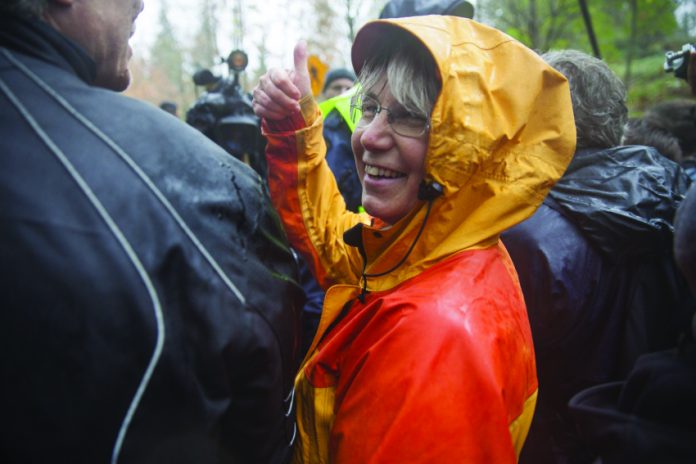
Two SFU professors are bringing their experiences from the front lines of the Kinder Morgan pipeline protests to the frontiers of the classroom in this spring’s President’s Dream Colloquium, titled “Obedience and Disobedience: Taking Action on Climate Change.”

The colloquium invites leading thinkers to give a series of talks on what the organizers describe as “two intersecting crises”: the ongoing issue of anthropogenic climate change, and the “failure of democracies [. . .] to adequately preserve common goods, especially those that are global.”

The speakers include John Borrows, the Canada Research Chair in Indigenous Law at the University of Victoria law school; Chris Hedges, a Pulitzer Prize-winning journalist; and Tamo Campos, the founder of the non-profit organization, Beyond Boarding, and David Suzuki’s grandson.

In addition to attending six public lectures by experts in the field, students enrolled in the colloquium will take part in pre-seminars taught by Lynne Quarmby, SFU professor of microbiology and biochemistry, and Stephen Collis, SFU professor of English. The two have spent the last few months on the front lines of the protests, with Quarmby being arrested at the end of November.

“Probably half of our speakers at the colloquium were actually arrested on the mountain.”

Stephen Collis,

SFU professor of English

“I am excited to do this course in light of the experience that we’ve just been through,” said Quarmby. “Burnaby Mountain was a real life version of the course.”

Although its content has become particularly timely following the protests, Quarmby and Collis began planning the colloquium in 2013 in anticipation of the 2015 federal elections.

“We started talking about it then just in terms of a desire to hold a panel or a discussion around civil disobedience in the context of climate change, and it just snowballed from there,” explained Collis.

Quarmby added, “With the federal election looming and with there being such a large push on [large scale fossil fuel infrastructure] projects both provincially and federally, I think we’re going to see a lot more of this [sort of civil protest.]”

Collis commented that nature of the course has changed in light of the recent protests on Burnaby Mountain in opposition to the proposed Kinder Morgan pipeline expansion.

“I think probably half of our speakers at the colloquium were actually arrested on the mountain,” said Collis. “It certainly makes this intellectual and public discussion we wanted to have that much more real and immediate. It tends to raise the stakes.”

The colloquium seminars are open to the public; however, each colloquium will provide an opportunity for approved SFU students to gain course credits. These students will also participate in pre-seminars, and will complete supervised research papers relating to the colloquium’s theme.

When asked what she hopes to achieve by offering this course, Quarmby replied, “We really hope that people will get a deeper appreciation for the role of civil disobedience in a democratic society, but also for the situation that we have right now in our country around climate change and Aboriginal rights.”

For Collis, now is a crucial time to engage the community and students in discussion. “We’re in a moment where the realities of climate change are becoming that much more clear all the time, and [also] the reality that our democratic system is failing to deal with them.

“What I hope for this course to accomplish is to get people better informed about what the complex issues are.”

Guard.me arbitration results in no settlement

0

Negotiations between the Teaching Support Staff Union (TSSU) and the university regarding the Guard.me insurance plan will continue in 2015 after both parties failed to reach a settlement in early December.

The TSSU filed a grievance on July 16, 2013, regarding the Guard.me health and dental insurance plan, in which every international student is automatically enrolled.

The Guard.me plan costs $336 per semester, over twice the amount of the previous insurance plan, which costed $126. The coverage is required for the three months of residency in Canada before international students may sign up for the BC Medical Services Plan (MSP).

The TSSU and university administration entered into an arbitration over December 4–5, resulting in no settlement.

Aspects of the plan that were most concerning to the TSSU include automatic re-enrolment, the fact that SFU chose the most expensive plan available, the overlap period in services with legally required MSP coverage, and the five per cent returned to SFU out of every fee collected.

TSSU chief steward Reagan Belan told The Peak, “The disclosure that we were given has a lot of truly damning information about the motivation for implementing Guard.me in the way that it was, and the glib attitude International Student Services [ISS] has toward imposing unnecessary fees on the students they are there to serve. It doesn’t paint SFU or ISS in a positive light.”

The university administration was unavailable to comment before press time.

Following the mediation, the TSSU published a post on their website saying that, “Despite TSSU’s best efforts to find a reasonable and affordable solution and avoid a public airing of SFU’s dirty laundry in a hearing, SFU has remained unwilling to find a fair solution to the Guard.me problem.”

“We were disappointed that we didn’t get to a resolution after two days of mediation,” Belan said, frustrated over the results of the arbitration.

“The disclosure that we were given has a lot of truly damning information about the motivation for implementing Guard.me.”

– Reagan Belan, TSSU, Chief Steward


“Our dispute over Guard.me has been ongoing for over two years and we want SFU to stop charging our members this illegitimate fee and start refunding our members as soon as possible,” she said.

Belan continued that SFU withheld 1,700 pages worth of internal Guard.me documents — thrice the amount the university claimed to have provided — until a week before the arbitration, leaving “almost no time to sort through a mountain of evidence.

She pointed to this as an example of how SFU is trying to “bury” the issue: “This is the behaviour of an institution that is trying to hide, not an institution that is willing to settle a dispute.”

Both parties are now awaiting recommendations from a mediator on how to resolve the issue.

If no settlement can be reached at that time, the TSSU intends to pursue a formal hearing in which each party would make their case and leave it in the hands of a neutral third party arbitrator.

“TSSU is firmly of the position that SFU should avoid inflicting further financial hardship to its international student population and not renew its contract with Guard.me when it comes to term in August of 2015,” Belan concluded, adding that the university should seek to “properly facilitate [student] enrolment into BC MSP.”

Ask Professor Peak: Week 1

0

Are you an SFU student or faculty member who needs some relationship, student, or SFU related advice? In 150 words or less, send your issues anonymously by visiting the-peak.ca/professorpeak. Your entry could be published in our next issue, along with some helpful advice from Professor Peak!

_________________________________________

Help! SFU residence is ignoring my safety!

DEAR PROFESSOR PEAK: I’m a 21-year-old female and I live with three girls in a townhouse on SFU residence. Since we moved in, our front light has been burnt out. Our front door is not only secluded by trees, but is completely black during the night. This has been a big safety concern for me. I have sent the SFU housing department multiple requests asking for it to be fixed and, an entire semester later, nothing has been done. I even talked to my CA about it multiple times, but to no avail. I personally do not feel safe walking back to my own dorm, and SFU residence apparently doesn’t value protecting its female residents enough to ensure a safe walk back to their homes.  It makes me angry that my safety is being ignored.
ANGRY FEMALE RESIDENT

| | |

DEAR ANGRY: I suspect the SFU housing department does value their student’s safety; if something happened, it would be a PR nightmare for them. Try to understand the situation from their perspective: a single burnt-out lamp may not be high on their list considering all the time-sensitive things they have to deal with, like flooded bathrooms, broken beds, and insect infestations.

Your best option is persistence: send the request again and try talking to your CA about why it makes you feel unsafe. Until the light does get fixed you could temporarily put a lamp in the front window or carry a small flashlight with you. If you’re concerned with the safety of women on campus, I would also recommend getting in touch with the SFU Women’s Centre. They work to address the roots of gender issues like this one, and may be able to provide you additional resources and address your concerns further.
 
PROFESSOR PEAK

_________________________________________

Oh no! I need help but the communications department’s advising is terribly inadequate!

DEAR PROFESSOR PEAK: At the beginning of last semester, I went to the communications department for drop-in advising. There were about 10 people in the queue and only one advisor, who was working for only a few hours each day. As I waited, I realized that the advisor would spend up to 40 minutes with a student. You’d think that a faculty as popular as communications would employ a few more advisors, and for longer hours each day, especially during the start of the semester. I wasn’t able to meet with an advisor that day, and I left feeling very frustrated. Now that the semester is about to begin, I’m scared that the same advising inadequacies will occur. I considered writing a letter to the dean, but I feel I’m just a small voice in the crowd and it would be useless. What should I do?
FRUSTRATED COMMUNICATIONS MAJOR

| | |

DEAR FRUSTRATED: SFU bureaucracy can be extremely vexing, especially during busy periods. Unfortunately, students are often pitted against each other to get ahead of the game. This means you’ll have to trawl the communications department advising calendar for open appointments to book online, or angle for drop-in times other students may avoid. Better yet, plan to do your advising at the end of the previous semester to ensure you’re set far in advance.

That said, voicing your concerns about the system to the dean is a solid idea. Just make sure to do your research and reflect on potential solutions carefully. Consider, for example, whether additional advisors have enough work the rest of the semester to make it worth employing them. You could also try contacting the CMNSU to advocate on your behalf, or just to advise you on the best person to respond to your concerns!
 
PROFESSOR PEAK

A month (or so) in review

0

Cross country teams wrap up seasons at new heights

Image Credit: Kyle Terwilegar

In November, for the first time in the NCAA, the women’s cross country team finished first place in both the Great Northwest Athletic Conference (GNAC) championship and the west regionals. The men also broke new ground, qualifying for their first ever national championship.

While winning both the conference and regional titles guaranteed the women a spot at the national championship, the men just made the cut, placing sixth at regionals, as the top six teams qualified for the national championship.

At nationals, however, the women placed seventh, matching their previous year’s performance. They did beat their fellow regional competitors and GNAC rivals, Alaska Anchorage and Western Washington.

“We can’t be disappointed finishing seventh because we were the number one team in the region,” head coach Brit Townsend told SFU Athletics. “The course was slow, wet and muddy so it was tailor-made for the tough mudders. We are a team of track athletes running cross country so the course really slowed us down.”

Runner Jennifer Johnson achieved all-American status cracking the top 40 at 30th,  while Rebecca Bassett — who led the team at the GNAC and regionals — just missed the honour at 43rd.

Meanwhile, the men’s team, coming into the tournament unranked, placed 20th out of 32 teams. Sophomore Oliver Jorgensen led the team placing 88th, while runners Marc Antoine-Rouleau and Cameron Proceviat finished 128th and 129th.

Men’s basketball wows with high-octane offence

Image Credit: Ron Hole

The Clan men’s basketball have jumped out of the gate ending 2014 with a 6–3 record, winning their only Great Northwest Athletic Conference (GNAC) contest so far.

Although the Clan usually dominate this time of the year — having gone 6–3 to wrap up 2013 before finishing the 2013–14 season 10–16, struggling in the GNAC — it’s their offence that has been drawing attention.

Last year, even when winning all but one game against non-conference rivals, they only scored in the triple digits three times: twice non-conference and once in the GNAC. Their highest single game score was 112 points and averaged 78.4 points per game.

This season, they have not scored less than 90 points in any game, including the Division I exhibition matchups which did not count towards their record. In 11 games (including the exhibition games), the team has managed to reach 160 points twice.

Although the game was much tighter than much of their non-conference contests, in their one GNAC matchup in December they still managed to score 123 points.

Point guard Sango Niang leads the GNAC in scoring with 21.8 points per game while Roderick Evans-Taylor and Justin Cole are third and ninth in the conference, respectively. Niang ranks 19th in the NCAA.

Though it is usually the second half of the season that turns the record negative for the men’s basketball team, it appears that this year they might be able to keep it going.

Swim teams host Clan Cup

Image Credit: Hamed Yaghoubi Shahir

On the weekend of November 21–23, SFU’s swim teams hosted the 18th annual Clan Cup International. Both the men’s and women’s put up dominant showings, ending the swim meet first in total points with 1591 — with second placers Oregon State at 959.

Freshman Adrian VanderHelm became the the first member of the men’s swim team ever to qualify for an NCAA national championship, having qualified in men’s 200m freestyle as a result of beating the NCAA Division II ‘A’ standard which guarantees qualification. His time, 1:36.29, was the fastest time this season.

Now, SFU faces four more swim meets — four more opportunities for swimmers to qualify for the national championship — before heading to the national championship held in Indianapolis, IN on March 11.

Clan edge Yellowjackets on New Year’s

0

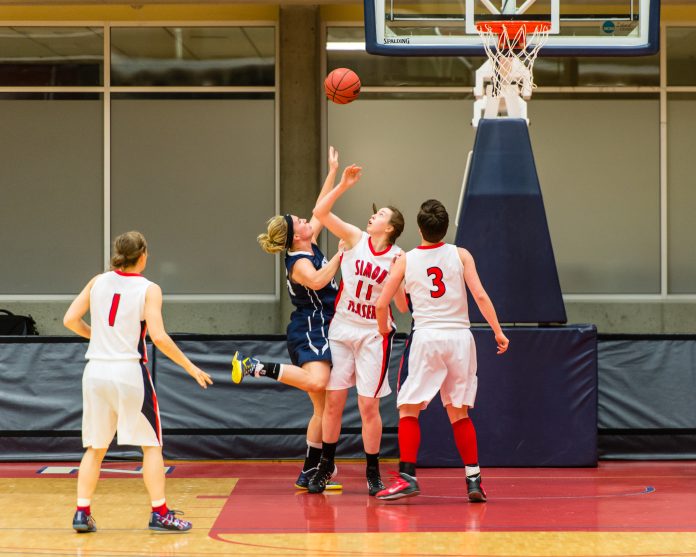
SFU’s women’s basketball team kicked off the new year with some fireworks as they put up 74 points and defeated Montana State University Billings (MSUB) by a single point in a home game.

Although the Clan had a comfortable lead heading into the second half, the Yellowjackets were resilient, overtaking them to grab a five point lead with less than four minutes to go.

Screen Shot 2015-01-02 at 10.55.15 PMSFU fought back hard and managed to regain their lead with only 1.7 seconds left on the clock, thanks to a Samantha Beauchamp layup off a superb dish from sophomore point guard Ellen Kett. 

“It was a good team effort, and everybody was clicking at different moments of the game,” explained Erin Chambers, who once again led the charge offensively for SFU with 22 points. “It was a good start to the new year.”

Chambers, who is averaging a GNAC-leading 24.7 points per outing this season, was a big part of the Clan’s comeback, as she converted on a crucial three-point play when the team was down 71–67 to bring them within one.

“[MSUB] is always a hard team,” Chambers told The Peak, adding that she was not surprised the game ended up coming down to the wire. “I knew it was going to be a battle from the get-go.”

The matchup certainly was not without firepower, as Chambers was joined by both the number two and number three scorers in the conference, MSUB’s Kayleen Goggins, who led her team with 25 points, and Alisha Breen, who had a disappointing performance with only 9 points.

Screen Shot 2015-01-02 at 10.55.30 PMFor the Clan, senior guard Katie Lowen impressed early with four three-pointers in the first half before cooling down in the second and ending the game 4–9 from deep. Beauchamp, on the other hand, was 5–5 from the field and also dominated defensively with a team-best four blocks.

The win moved SFU to a perfect 2–0 record in GNAC play and 6–4 overall. Chambers noted that the their performance was definitely a good sign for the year to come.

“We always want to be the hardest working team,” Chambers explained of any ‘resolutions’ for 2015. “We just want to keep pushing through as our season is starting off.”

Letter to the Editor

1

Dear Editor,

It is absolutely stunning that SFU still has not divested from fossil fuels. Despite calls from over 100 faculty members, the SFU Student Union, and various other SFU departments, student organizations, and associations, SFU continues to refuse to agree to fully divest. What is particularly frustrating is that after SFU said “no” at the Pipeline Rally last fall, the pressure increased to a point where any sane university administration would have reached out to Divest SFU.

What is concerning is that SFU is now leaving students, faculty, and organizations no alternative but to increase pressure to shame SFU on the world stage. Among looming Freedom of Information requests to find out exactly why SFU is so tied to fossil fuels will also come information on how much our university just lost due to the fossil fuel crash. We are tired of petitioning, rallying, meeting, writing, networking, and marketing this. We know that it must be done, not just for the future of our planet, but for the future of SFU’s income. How many millions were just lost from our coffers due to the stubborn refusal to divest? Enough is enough: drop the stocks.

Sincerely,

Cody Wicks