Home Blog Page 1056

How to make the most of your Sir John A. MacDonald Day party

1
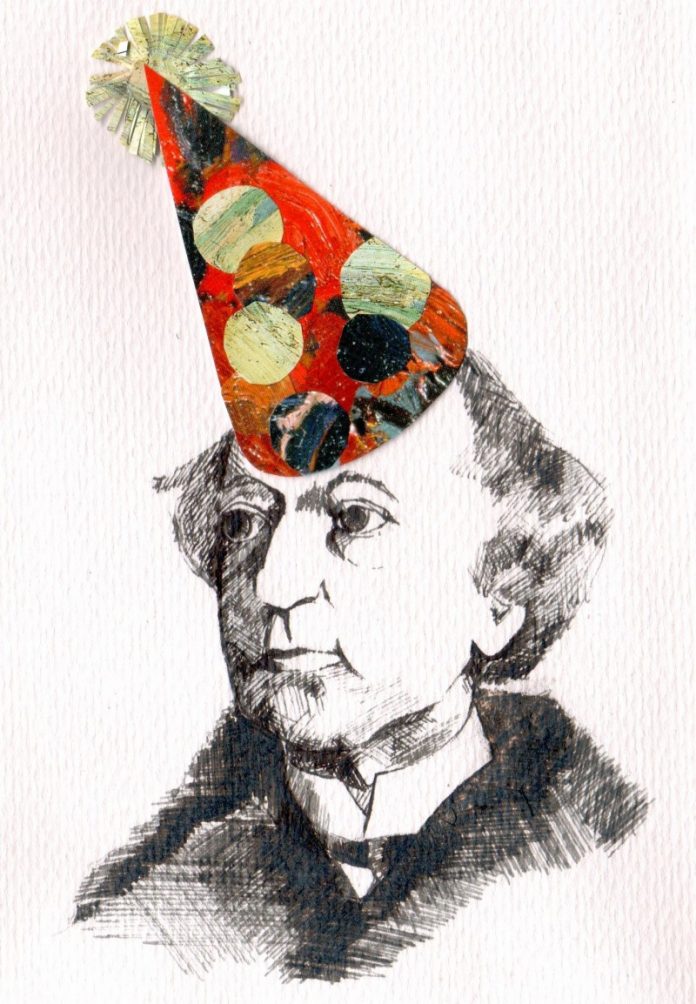
Illustration by Lily Li

It creeps up faster every year. On January 11, Canadians everywhere will be coming together to celebrate the most magical holiday of the season: Sir John A. MacDonald Day.

Since its inception in 2002, Sir John A. MacDonald Day has grown into a time of festivities and traditions as cherished as the politician it was dubbed after. Since many of you will find yourselves throwing parties on or around this holiday, we at The Peak have compiled a list of several tips and tricks meant to help you survive this Sir John A. MacDonald festive season — and maybe even start some new family traditions along the way!

The feast

People always think that they have to do all of the holiday cooking the day of, but a lot of the prep work can be done the night before a party. The more you can cross off your list ahead of time, the less you’ll have to worry about when guests come over. If you have the foresight to do so, pickled watermelon rinds just scream Sir John A. MacDonald Day and can be served as either an appetizer before the meal or during dinner as a side dish.

As for the most contentious of holiday dishes, nothing can bring down a Sir JAM Day feast like an overly dry boiled eggplant salad. If it’s done right, this festive dish should be served moist and (if possible) right out of the pot, so the eggplant makes the lettuce wilt from the heat. Try letting the eggplants marinate overnight to really kick up the flavour.

The decor

Is it old-fashioned to think that part of the Sir John  A. MacDonald Day magic comes from the decorations people put up every year? If you’re on a budget but still want to help bring the festive spirit into your home, holiday lava lamps and stacks of gently used Solo cups are relatively inexpensive and can make any room feel like a Sir John A. MacDonald wonderland.

The question I get asked the most: should I buy a real Canadian actor and comedian Colin Mochrie for the living room, or should I get a fake one? Growing up, my father always insisted that it wasn’t Sir John A. MacDonald Day without a real Colin Mochrie, but getting a new one every year can be costly — plus a lot of apartment buildings don’t allow real ones because of the mess they make and the potential fire hazard.

The phrase “fake it until you make it” never sounded so clear when it comes to festive Colin Mochries: if you go with a fake one, your guests will hardly be able to tell the difference underneath all those ornaments and tinsel anyway.

The activities

Okay, so the festive atmosphere has been set and you’ve rocked the feast — now what? It can be difficult finding something to do that’s fun for everyone, regardless of age or religious beliefs.

Thankfully, whether you’re a six-year-old celebrating Sir John A. MacDonald Day or an 89-year-old who practices Trudeau-kuh, there’s one tradition that transcends age and religion during the holiday: singing! The festive season is the perfect excuse to gather around the piano and be merry with some carols, with old classics like “The 12 Days of Parliamentary Debate” and “John A. the Red-Nosed Prime Minister.” Sing, laugh, and be merry!

The message

With all the hustle and bustle of Sir John A. MacDonald Day, it’s easy to forget about what the early-January season is truly about. Aggressive commercialization be damned, this holiday is still about spending time with your loved ones and being thankful for what you have.

So on Sir John A.  MacDonald Eve, when you’re hanging ripped pantyhoses by the water heater for the ghost of Canada’s first prime minister to bring toys and unsalted almonds for children, take the time to remember what’s really important. Happy Sir John A. MacDonald Day, everyone!

Board Shorts

0

Society opposes international student fee increases

The SFSS has issued an open letter expressing their official opposition to the proposed 10 per cent increase to international undergraduate student tuition rates for the 2015/2016 academic year.

This move follows the university’s refusal of certain requests by the SFSS, which included exempting current international undergraduate student from the increase as well as freezing international undergraduate tuition fees at their existing level.

One of the main issues raised by SFSS president Chardaye Bueckert concerned transparency over how the revenue generated from these fee increases will be spent. “We know that $6 million in additional revenue will be realised, but we don’t know [how] it’s being spent, being beyond 25 per cent of the eight per cent tuition increase going to scholarships, awards, and bursaries, which accounts for $1.5 million,” she said.

VP finance Adam Potvin added his support: “I think it’s good of us to hold their feet to the fire.”

Bueckert also officially invited students to demonstrate their opposition at the next SFU Board of Governors meeting on Thursday, January 29. The final decision regarding fee increases for the 2015/2016 year will be made at the next meeting in March of this year.

Funds reallocated for Food and Beverage deficit

The board moved to transfer $24,642 from the society’s unrestricted surplus to account for “worse than expected losses” from Food and Beverage Services, as stated in the agenda.

VP Finance Adam Potvin explained that the deficit “is just accounting for the losses that have already piled up by September 30, so there’s not much of a choice here.”

Potvin estimated that the remaining balance of the unrestricted surplus is now approximately $45,000.

Clan drops third straight game

0
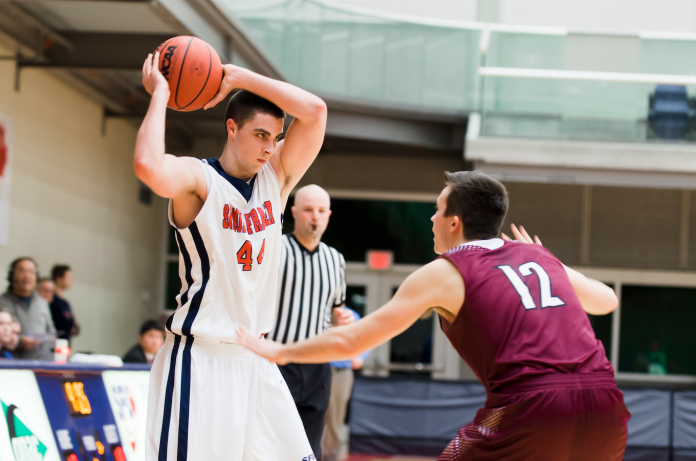
Guard Hidde Vos had a single three-pointer and two assists.

On Thursday, the men’s basketball team played a home game against the Great Northwest Athletic Conference (GNAC) scoring defence leader, the Seattle Pacific Falcons — who have not allowed 100 points in a game since 2010.

Unfortunately for the Clan, the Falcons were in fine form, keeping SFU to only 81 points, the lowest point total all season for the NCAA Division II scoring leaders.

“We’re not flying around, we’re not getting threes, there’s only a couple of runs where we really got to see that action happen,” head coach James Blake commented after the Clan’s third straight loss. “A lot of people know how good this action can be and our guys got to remember how good that action can be and get back to what we were doing.”

The Falcons opened the match by jumping to an 11–4 lead. Initially, it looked like Seattle Pacific might run away with the game, as they were shutting down all of the Clan’s offensive attempts.

The Clan countered by shooting seven straight points — five of them notched by SFU scoring leader Sango Niang — and though they ended the first half down 52–42, they played a relatively close game in the first.

But the wheels fell off for the Clan in the second half, when their field goal average went from 56.2 per cent in the first to 34.3 per cent.

The high-octane offence that served the Clan so well in December gave way to a sloppy defence which allowed the Falcons to rack up the points. In the end, a 10-point lead became a 34-point victory for Seattle Pacific, with a final score of 115–81.

“Our guys didn’t really pressure them and make them put it on the ground,” reflected Blake. “We didn’t get them to turn the ball over, so they were just able to move the ball around. It was like playing organized keep-away.

“It was almost like we wore ourselves down running around rather than having our technique down when we controlled the ball,” he added.

Aside from just the loss, Clan forward and guard Roderick Taylor-Evans went down with an injury in the second half. Taylor-Evans scored six points in the game before the injury.

Among the positives for the Clan were a 27-point performance by Sango Niang, as well as a 14-point performance by freshman Patrick Simon — 10 of which were scored in the game’s second half.

SFU

Points: 81
Field Goals: 28–64 (43.8%)
3 Pointers: 5–21 (23.8%)
Free Throws: 20–25 (80.0%)

SPU

Points: 115
Field Goals: 44–72 (61.1%)
3 Pointers: 8–15 (53.3%)
Free Throws: 19–30 (63.3%)

Player of the Game: Sango Niang

Currently the scoring leader of the Clan with an average of 22.5 points per game, Niang proved one of the bright spots of the otherwise disappointing game, putting up an impressive 27 points. Even when SFU’s offensive attack started to flounder, Niang was able to drive the attack and put up some points. He also ensured that the Clan didn’t finish with less than 80 points, with two successful free throws late in the game.

Points: 27
Assists: 5
Rebounds (Off-Def): 1–2

Series of quakes hits BC coastline

0
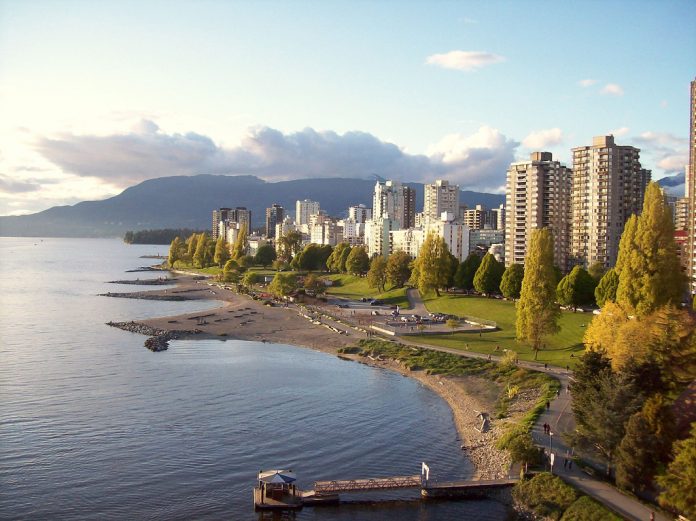
The last incidence of a major earthquake near Vancouver was around 300 years ago.

A cluster of earthquakes that rattled BC’s coast last week has elicited renewed questions around the geological vulnerability of the region.

Over the past few weeks, there have been at least eight quakes off the northern coast of the province, the majority of which ranged from 5.0 to 6.0 in magnitude.

Despite the buzz around the potential for a damaging quake off the southern coast, SFU professor of earth sciences John Clague says that citizens should not view these rumblings as a precursor to a larger event. “It’s kind of interesting, but it doesn’t present a risk to us,” he assured The Peak.

Vancouverites have been warned over the course of their lives of the possibility of a potentially disastrous earthquake, akin to those that hit the coast of Sumatra in 2004 or Japan in 2011. Similar geological conditions to those regions exist off the coast of Vancouver Island, where the Juan de Fuca Plate is subducting beneath the North American Plate.

Clague explained the risk: “That’s what we call a subduction zone, where one plate is colliding and going down beneath another one, and that’s the kind of environment in which you get earthquakes like the Japanese earthquake a few years ago.”

“It’s kind of interesting, but it doesn’t present a risk to us.”

John Clague, SFU professor of earth sciences

While the earthquakes last week were related to the Queen Charlotte Fault — not the subduction zone that would be the cause of the “Big One” — Clague does find the events of last week scientifically curious.

“What struck me as a little odd was that there was a cluster of [earthquakes],” he remarked. “That was interesting because normally they would occur more spaced in time, and to get a cluster like that, it makes you wonder what’s going on.”

For Brent Ward, SFU professor of earth sciences, the events are common. “We quite often get clusters of these small earthquakes,” he said. “It’s fairly typical, it’s just that there have been a few that have been above 4.0 and above 5.0 [. . .] which is a little bit surprising.”

Both researchers emphasized that a larger event cannot be predicted based on these incidents. Clague explained, “These really big ones, these magnitude 8.0 and 9.0, they’re not preceded by foreshocks, so we don’t get kind of a build up in small earthquakes and then ‘boom,’ the Big One occurs. Typically they seem to occur without warning.”

The last large-scale earthquake on our coast occurred just over 300 years ago, “so we’re getting into the range of when we might expect one,” said Ward. “It could happen tomorrow, it could happen in 300 years. It’s really hard to plan for these low-frequency high-consequence disasters.”

Despite the inability to predict the Big One, Ward stressed the importance of common sense: “It’s always good to have a reminder for people that we are in an earthquake zone, and just to take some basic precautions.”

SFU Transit Pet Peeves

0

Schools back, and with it comes these annoying SFU transit pet peeves.

Torture doesn’t lead to truth

0

A recent bombshell report released by the Senate Select Committee on Intelligence on the CIA’s Detention and Interrogation Program has shocked the globe with its findings. It was revealed that the CIA engaged in torture which far exceeded their much-maligned ‘enhanced interrogation techniques,’ and that torture ultimately proved ineffective at producing intelligence.

Prime Minister Harper has responded to the report by claiming that it “has nothing to do whatsoever with the government of Canada.” Canada has facilitated torture by handing over prisoners to Afghan forces and the CIA, despite being aware of the possible torture they might undergo.

The Senate Committee Report detailed that the torture went beyond waterboarding. The CIA used stress positions, sleep deprivation, solitary confinement, sexual abuse, rectal feeding, and beatings. These acts are war crimes according to international law. Torture is the epitome of inhumane treatment, and the state has a fundamental obligation to respect human dignity.

To a certain degree, one must divorce the debate on torture from the tangible benefits of such programs. It is not the government’s mandate to accomplish its objectives at any cost necessary, nor are people’s human rights abandoned as soon as it seems profitable to do so. An individual’s right to life, personal security, and affordance of the most basic human dignity ought not to be subject to a political debate.

An individual’s right to life and personal security ought not to be subject to political debate.

The brutality inherent in torture programs necessitates a shroud of secrecy and deception. Were the public ever allowed insight or the government ever permitted oversight over torture programs, it is unlikely that they would exist. The Senate Committee report found that not only had the torture programs exceeded their mandate, but key CIA officials had misled the government about the nature and efficacy of such programs.

CIA Director Michael Hayden had testified in 2007 to the Senate Select Committee on Intelligence about the interrogation techniques used on Abu Zubaydah, an al-Qaeda operative captured by the CIA in 2002. In Hayden’s testimony, he claimed, “we knew he knew a lot. He would not talk. We were going nowhere with him.” Information gathered from CIA records contradict this characterization, and detail that Zubaydah was cooperative before torture was used. In fact, he provided far more intelligence before he was subject to torture than during and after the torture was inflicted.

An individual under inordinate amounts of physical and psychological duress cannot be trusted to yield legitimate intelligence. Such an individual will say anything to stop the abuse; the information they provide can in fact compromise intelligence gathering. The report found that seven of the 39 CIA detainees profiled produced no intelligence and “while being subjected to the CIA’s enhanced interrogation techniques [. . .] multiple CIA detainees fabricated information, resulting in faulty intelligence.”

Moreover, the excessive amount of resources devoted towards torture programs diverts resources away from effective counter-terrorist initiatives. According to Nathan Vardi of Forbes, the CIA’s program cost “well over $300 million in non-personnel costs,” which does not take into consideration the “millions of dollars in cash payments to foreign government officials” to shore up their cooperation. Perhaps most crucially, torture feeds into terrorist narratives about the west and contributes to a radicalized environment.

The Senate report provides damning evidence that torture is ineffective and often compromises intelligence operation. Furthermore, this program is an assault on democratic values and human rights. With brutal terrorist attacks shocking the globe in recent weeks, it is unclear what, if anything, torture programs have done to keep us safe. If anything, we are even more defenceless in an increasingly dangerous world.

Point / Counterpoint: How should misogyny in academia be addressed?

0

Restorative Justice is key!

By Calvin Chou

Dalhousie University recently announced that they will use restorative justice to address the recent scandal at the Dalhousie Dentistry School in which 13 men in the fourth year of their program posted sexually violent and misogynistic comments about their female classmates on Facebook. The university’s decision has sparked immense outrage from the public, with protesters calling for the students’ expulsion. The fact that these students would be allowed to return to their program only adds fuel to the fire.

While I believe people should be held accountable for what they say, expulsion for inappropriate Facebook comments feels too extreme a solution. This scandal represents only a small part of a much larger issue, namely how deeply entrenched misogynistic attitudes are within the Dalhousie academic setting. There have been frequent complaints throughout the school year about misogyny within the Dalhousie dentistry faculty, with little action being taken. In order to create an academic setting that is friendly to women, critical discussion of misogyny has to start within the community through restorative justice processes.

Elizabeth Elliott, the late founding director of SFU’s Centre for Restorative Justice, writes about the community development potential of restorative justice processes in her book Security with Care. Specifically, she suggests the process provide a safe space for discussion, and present opportunities to broaden the community’s understanding of issues that affect them.

The key is to have a concrete plan towards change where progress can be observed.

Restorative justice processes address harms done towards both the victim and the community, by allowing the parties involved to discuss how the offender can repair the harm they have caused. Using restorative justice to deal with misogyny can mean encouraging offenders to enroll in extra gender studies classes, make a public apology, perform community service, or even seek counselling services. The key is to have a concrete plan towards change which allows progress to be observed.

Community members are often invited to take part in this process, serving as either mediators or contributors to the overall discussion. In this sense, women are provided a safe space to not only share their experience, but also contribute their thoughts on what needs to be done. Done correctly, restorative justice processes can become a community-building experience that fosters collaborative effort in addressing and understanding issues of misogyny.

It’s sometimes easy to forget, in today’s fast-paced and career-focused culture that the university institution is a place to learn. I feel much of the misogynistic attitudes and bigotry we find within the academic setting are born out of ignorance. If we intend to address misogyny in academia, we need to shift our approach towards informing and understanding through dialogue on the issue, rather than simply punishing.

Perpetrators should be expelled!

By Leila Bonner

The recent case of misogyny involving male members in Dalhousie University’s Dentistry faculty is but a reminder that such attitudes are still very present in universities. Despite the disappointing lack of expulsion in this incident, such a sentence must be considered as a potential punishment for acts of misogyny in academic settings.

Acts of misogyny are not accidental; they are committed willingly and willfully, whether or not the offenders mean for anyone to view their actions. The recent  Dalhousie incident is no exception; the students involved posted their words online without regard for their classmates, humiliating the women they targeted.

When a deliberate act of misogyny is committed, especially within an academic setting, the perpetrators should have the experience and knowledge to understand that such acts are inappropriate, and should be subsequently punished.

Some thinkers may consider free speech an apt excuse to write off the actions of the Dalhousie students, as Mark Mercer of the philosophy department at St. Mary’s University argued in a CBC article last December. But freedom does not justify callous behavior. It is one thing to speak your mind and be heard; it is an entirely different matter to tear down the reputations of innocent people.

Acts of misogyny are not accidental; they are committed willingly and willfully.

The offending students did not commit physical violence towards women, but their actions are no less harmful. Their victims — the female students they wrote about — have been severely ostracized and objectified, and will have to live with that knowledge for the rest of their lives.

Misogynistic attitudes, even if only spoken, are the first step towards acts of greater impact, and must be properly addressed as such. We cannot expect things to change if we uphold tolerance towards such attitudes, even if that requires expulsion.

We have reached a point where hearing about misogyny in the university environment is unnerving, yet not unexpected, and where we see parents warning their children about safety rather than celebrating the ability for Canadian women to attend university — a privilege not all women across the globe enjoy.

As a nation committed to the protection and security of the individual, we must respond strongly to any acts of discrimination towards women. If we intend to deter and condemn rape culture as a whole, then we must target the issue at the source and set a firm precedent. Otherwise, such actions will only continue to escalate.

The Interview: Hollywood ignorance at its prime

2

I wonder how the American people would respond if a foreign high-budget film flashed a fiery scene depicting the gruesome death of President Obama. Allow me to suggest that the country would be beside itself. A direct attack on American pride would have the media reeling with exaggerated messages of terrorist threats and foreign enemies. Relations between the two countries would plummet, and American tension and skepticism toward these foreigners would surely increase.

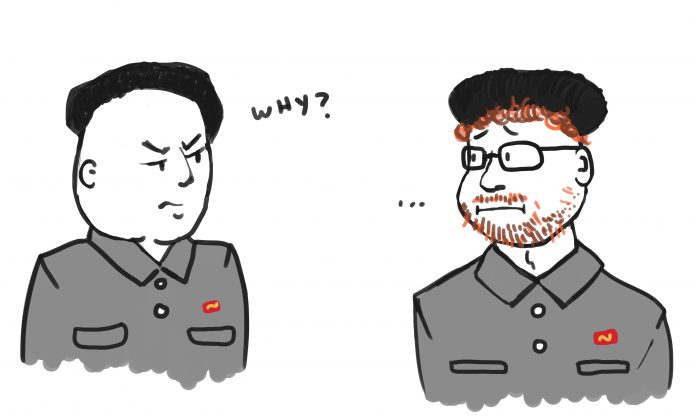
This is why I find it immensely disconcerting that Hollywood feels it can film such offenses without consequence. Many Westerners claim that Seth Rogen’s new film The Interview, depicting the fictional assassination of North Korean supreme leader Kim Jong-un, is a comedic tool for freedom of expression.

This “freedom of speech” excuse has pelted my ears so often that I wonder how nobody else realizes this film is the epitome of Hollywood ignorance, and should never have been produced.

In response to promotion for the film, Sony Pictures’ data was hacked in November, resulting in the release of private and often embarrassing information, as well as threats of terrorism against cinemas screening the film. Among other things, the hack has since angered the defensive US — its relations with North Korea have already nose-dived through a slew of accusations and threats.

I’m left wondering why Seth Rogen, his filmmaking squad, and Sony themselves didn’t bother to conduct a little research into the festering tensions between these two countries in recent years. After North Korea threatened in January 2013 to unleash a nuclear test against the US, “the sworn enemy of the Korean people,” you’d think these filmmakers would adopt a little common sense. When a Korean spokesperson this past June denounced The Interview as an “act of war” and promised a “merciless countermeasure,” you’d assume Hollywood would stop to think past itself.

These rich, white celebrities are blind to the world outside the American entertainment industry.

Rather, I read disappointingly shallow statements in The New York Times from Rogen and his buddy and co-star James Franco, who argued “they don’t have freedom of speech [in North Korea], so they don’t get that people make stuff.” Apart from sounding completely childish, statements like this only confirm that these rich, white celebrities, backed by Sony, are very much blind to the world outside the American entertainment industry.

Westerners often feel their democratic freedoms allow them to mock foreign countries’ political regimes as being ‘inferior’ or ‘barbaric’ in comparison, but we must remember that countries ruled by tyrannical autocracies do exist and have real global power. To flaunt one’s ignorance and create a film that mocks such political regimes and their public figures is antagonistic, arrogant and potentially dangerous.

Many may argue that comedies like The Daily Show poke fun at North Korea on a regular basis. However, The Interview is an entire creative work that explicitly satirizes the country’s dictatorial nature. With North Korean political colours, missiles, and Kim Jong-un’s head plastered on the film’s theatrical poster, I can understand how this would be taken as a direct insult. The film derides the North Korean government and humanizes its ‘almighty’ leader; any Korean citizen in possession of this film could be subject to brutality.

Kim Jong-un, a man of merely 31 years, still has a lifetime ahead of him before he passes the autocratic torch to the next generation. Those in Hollywood must realize that reality exists outside the ‘land of the free,’ and that the ‘home of the brave’ should really exercise caution when it comes to depictions of evil authoritarian leaders — especially those who are still in power.

Me, Himself & I

1

couldn’t sleep. My mind was going crazy. It was the night before my first day of high school and I couldn’t have been less excited.

Facing the prospect of my first day of eighth grade in a strange new school and a terrifying new town, I felt scared and alone. Doomsday scenarios went around and around in my head leaving me physically exhausted. I needed help. 

That’s when I turned to my friend Bill Cosby.

Lying in bed overcome by anxiety, I scrolled through my iPod and clicked on The Best of Bill Cosby. I closed my eyes and immediately felt better.

The way Cosby told stories with a mixture of sincerity and silliness both cracked my ribs and warmed my heart. He wasn’t only my favourite comedian, he felt like a friend. He was someone who could cheer me up when I was down and made me feel as if life was worth living even at my lowest points. Plus, he seemed like a really nice guy.

Needless to say that when I heard the allegations coming against him late last year, I was devastated. Just weeks prior, I had shaken my head in disbelief as people defended Jian Ghomeshi’s sexual abuse. I didn’t care how people felt about his radio show, the charges against him were unforgivable.

But this was totally different.

Except it wasn’t, at all. In fact, Cosby’s allegations were even more heinous than Ghomeshi’s. The real difference was that while I didn’t really ever care about Ghomeshi’s show and always thought he was kind of a pompous ass, Cosby was my hero — and in my head, he was my friend.

I’ve always heard that you need to separate an artist from their art, but until now I’d never actually had to face this dilemma.

Of course, I know that celebrities are not always as they seem in movies or on TV, and more than a few have dark secrets. But Bill Cosby wasn’t just an entertainer to me. Even though we had never met, I felt a personal connection to him.

He was there to keep me company on all those days I stayed home “sick” from school and watched endless re-runs of The Cosby Show at my grandma’s house. He was there to give me a boost after my parents bought me his stand-up movie Himself for my 12th birthday, which I watched over and over as a go-to cure for whatever ailed me.

He had even been there a couple of years ago to provide me and my family a wonderful vacation to Seattle, where we watched him perform live. Isolation, loneliness, social anxiety, depression, heartbreak — he took it all away.

He was one of the few people who could take me out of my own head. He brightened my day. He made me happy. And he’s an accused rapist.

Now, I’m not writing this to argue for or against the allegations against him. It seems pretty obvious to me that whether or not he is guilty of all these crimes, he has done a lot of wrong and he is not the person he wanted the world to think he was.

But even if it’s all true, every awful allegation, that shouldn’t change how I view his art, right? I should just be able to separate his personal life from his professional career, shouldn’t I?

Well, I can’t. Maybe some people can make that separation, and I might be able to with another celebrity, but with Bill I wear my heart on my sleeve and am proud of it.

I remember when I saw him live in person performing at the majestic Seattle Concert Hall — one of the greatest moments of my life — he first spoke to the crowd from backstage on the God mic.

His opening remarks were unsurprisingly hilarious, but it was who he introduced to open for him that was a shock. Before delivering his three hour set he had a young fan suffering from a severe form of muscular dystrophy and bound to a wheelchair come out and perform his classic ‘dentist routine.’

I realized at that moment how much Cosby’s stand-up and Cosby himself meant to people beyond just me. While the personal connection I felt to Cosby may have helped me through my various problems with mental illness and adolescent angst, that paled in comparison to what he had helped the person he had invited onto the stage get through.

Memorizing Cosby’s routine was one of the only things that provided joy in what was otherwise a very difficult life for this kid. Just like me, it was a personal connection with Cosby that had helped him get through a lot of challenges in his life.

He didn’t just adore Cosby’s words. He adored Cosby. I adored Cosby. Millions of us adored Cosby beyond his jokes, and now millions of us have felt betrayed.

For me, the allegations which are now out in public can never be forgotten — and even if I felt like I could disassociate them with Cosby’s stand-up and television career, I would choose not to.

It was the belief that the person I admired was truly a good soul and a kindred spirit that turned an artist from being entertaining to meaning something real to me.

As dumb as it may seem to put so much personal stock into a celebrity, my love and honest appreciation for him as a complete person and not just an artist was worth it for all those moments I was dug out of despair by our bond.

When it comes to those I feel a true personal connection to, I will not separate my heart from the artist. I will love again. And yes, I’ll probably get hurt again, but it’ll be worth it.

Just don’t turn out to be a murderer, Bob Odenkirk. Please.

Simon Fraser vs. Louis Riel

1

While most SFU students probably have at least a basic knowledge of Louis Riel, the controversial Métis-Canadian who led two rebellions against the government in the 19th century, his name holds a very different meaning at our school than anywhere else.

The majority of utterances of the words “Louis Riel” on our campus are in reference to Louis Riel House, one of SFU’s oldest residence buildings and, quite frankly, one of the most awful places at our school. Mouldy walls, rotting wood, bursting pipes, non-functional heaters — Louis Riel has become synonymous with the worst of SFU.

As residents of the building have slowly been forced to leave and rumours circulate that the building may soon be closing, Simon Fraser looks like it may finally be erasing the name “Louis Riel” for good.

Forty-six years ago, though, our school almost became Louis Riel University.

Although the two men never met and neither one of them ever even set foot on the land in which our school was built, Simon Fraser and Louis Riel have a long and storied rivalry at our campus. These two names just don’t like each other one bit.

Simple Simon


When British Columbia’s newest university opened in 1965, it already had a name with a story. It was of a “Loyalist, fur trader, and explorer” who in 1808 “completed one of the greatest journeys in the annals of Canadian history by descending the mighty river which  today bears his name,” lore which was plastered all over the university.

His name was Simon Fraser, and while his legend may sound impressive, the way he became associated with the school is far less extraordinary.

Unlike James McGill, another fur-trader who earned himself the title of a Canadian university by putting up the money to make it happen, Fraser was in no way a benefactor of SFU and had no history of supporting education. Instead, he earned his spot because someone didn’t want to leave blank spaces in a document.

“People may dismiss symbols as irrelevant, but they are not. Psychologically they are not.”

John Conway, LRUSS vice-president

That person was George Curtis, the dean of law at UBC. In early 1963, under the command of premier W.A.C. Bennett, Curtis drafted the legislation which allowed for the creation of a second university in the greater Vancouver area.

Curtis initially wrote the school name on the form without much thought, and, quite logically, called it “Fraser University” after the river that opens up the metropolitan area that the school would be serving.

While the name certainly sounded better to the committee working on the project than previous working titles “Mainland” or “Delta,” Sperrin Chant, the dean of arts at UBC, was the first to realize the unfortunate acronym they had almost created.

“Do you really want a crowd yelling FU at your football team?” Chant asked, so Curtis decided to add the first name of innocuous explorer Simon Fraser, for whom the river is named, for the purposes of euphony.

Unbeknownst to them, this simple decision to avoid a profane chant would end up stirring the pot for a radical student government to attempt to tear the name — and school — apart.

Fraser Slain


“Simon Fraser, celebrated shamelessly in our university calendar as a ‘Loyalist, fur trader and explorer,’ was, in fact, a member of the vanguard of pirates, thieves, and carpetbaggers which dispossessed and usurped the native Indians of Canada from their rightful heritage.”

This was the message that the student council’s second vice-president John Conway and arts-representative Richard Apostle brought to the SFSS’ Executive Council meeting on June 24, 1968.

The pair were part of the most radical student government in our school’s history, with the majority of the members belonging to the rapidly expanding Students for a Democratic University (SDU) organization which opened a chapter at SFU in January of that year.

The SDU were a self-proclaimed group of radicals who wanted to create an alternative system of education and a democratized university that would play an activist role in society. They were decidedly anti-establishment and anti-administration; that summer, they also became anti-Simon Fraser. 

Although the university was already embroiled in a number of controversies in the summer of ‘68, it was the school’s name that particularly concerned Conway, a PhD student who had previously been a high-profile student activist in Saskatchewan and had only arrived at SFU that year.

He believed, and had a number of sources to back it up, that the man for which SFU was named was not a hero at all, but was in fact an illiterate racist, who destroyed Aboriginal culture without hesitation. For Conway, continuing to have the school named for such a man was a celebration and legitimization of the worst parts of Canadian history.

Beyond his racism, Conway also claimed that Simon Fraser did not even discover the Fraser river — several explorers had beaten him to it — and that the only reason he was ever here was the result of a failed attempt to get to the Columbia.

His answer to the Simon Fraser problem? To name the school after “the single man who, by his actions to gain justice and freedom for the Canadians of Indian ancestry, courageously wrote the single page of the history of the Canadian West of which we can be thoroughly proud.”

He demanded that SFU be re-named Louis Riel University.

Riel Talk


While Riel’s name may have meant more in Conway’s home province of Saskatchewan, or in Manitoba, the province Riel founded, Louis was a controversial figure even as far west as BC.

While debates over Riel’s actions and sanity live on to this day, Conway and the rest of student council were convinced that he was a much more deserving figure than Simon Fraser.

The motion to demand that SFU become LRU was carried 6–2 by council, and in subsequent meetings they also agreed to authorize the expenditure of approximately $107 for the manufacture of one thousand “Louis Riel University” buttons, to be sold on campus.

Furthermore, they allowed the creation of an informative — albeit biased — flyer about who Fraser and Riel were. It was co-written by Conway and fellow ‘LRUSS’ vice-president Jim Harding and provided a more detailed description of the reasons behind the movement.

In a section of the flyer entitled “Why Louis Riel University,” it was explained that the name change was necessary to promote a re-interpretation of Canadian history and diminish the “deadly provincialism” which existed in BC. They believed that the name Louis Riel could create a link between the province and an important figure of both native and French Canadian history of which they said the northwest remained generally ignorant.

The publication also revealed the SDU’s own believed connection to the name, as they wrote that the “demands here for democratization of the campus, amounting to representative and responsible government in this institution” directly related to the life of Louis Riel.

For Conway and Harding, Simon Fraser represented a negative colonial history that they believed was being mirrored at SFU by the authoritarian leadership of chancellor Gordon Shrum and president McTaggart-Cowan. They wanted Louis Riel as he was a more inspiring namesake that would better suit their own rebellious spirit. 

As they would soon learn, however, they may actually have been a little too similar to Riel. Even their name-proposal was destined for the same fate as their hero, a swift killing at the hands of unsympathetic white men.

Simon Stays


The summer of 1968 was one of the most volatile times in SFU’s history. After ousting their inaugural president, the university cycled through three presidents over the course of three months; the school was put under censure from the Canadian Association of University Teachers (CAUT); and the SDU held countless rallies and protests demanding more democracy at the university. But only one of these rallies raised questions of impeachment of the student council.

It was the Louis Riel issue.

Despite selling over 500 “Louis Riel University” buttons and making headlines in The Province and the Vancouver Sun, Conway did not quite have the support he thought.

Local papers received several responses to the proposed name change, immediately following their coverage of the proposal, with the public expressing varying degrees of bewilderment and outrage. 

Mrs. Ann Hanley of White Rock BC wrote in to the Sun and accused Conway and SFSS president Martin Loney of being “completely off their rockers.” She contended that Louis Riel was a poor choice and had no connection with BC, and that Simon Fraser did not mistreat native people, citing her master’s degree in Northwest history as proof.

Even those who agreed with Conway on Fraser’s legacy did not all love the idea. Andy Robb, a graduate student in History, wrote an article in The Peak that did not argue with their assessment of Simon Fraser but took issue with the choice of Riel.

He informed Conway that Riel was not a positive figure in the history of native people, and that he actually had a rather flippant attitude towards any non-Métis that nearly rivalled the racism of Simon Fraser. While he wasn’t against a name change, Robb simply thought they could do better than Riel.

A third perspective suggested that instead of doing better than Louis Riel or Simon Fraser, they could just find a better Simon Fraser. In his letter to the Sun, concerned citizen R.S.T. Fraser told the council that there were plenty of other “Simon Fraser”s to pick from, including Simon Fraser, Lord Lovat, who attended the opening of the school in 1965 on behalf of the Fraser clan in Scotland.

After several weeks of debate and campaigning for and against the Louis Riel name, a student meeting was finally held on Wednesday July 10th in convocation mall.

The outcome could not have been more disappointing for Conway and the SDU. After a three-hour rally, a crowd of 300 — which had dwindled down from 800 at the start — raised their hands to show three-to-one support for the name Simon Fraser.

While President Loney tried to insist that the issue was only up for discussion at this stage, the crowd became unruly and student Robert Danielson countered with a motion of confidence in the Simon Fraser name.

“We could just name it after a different Simon Fraser. There are dozens of them to pick from.”

R.S.T. Fraser in a letter to the sun


After some debate which included comments from Robb, Harding, and Marie Baker, an Aboriginal student, the vote killed the name-change. To add insult to injury, Danielson then swiftly put forward a motion of non-confidence in the student council.

The following week, student John Misera presented council with a petition bearing 138 signatures in support of taking Danielson’s motion to a vote. Two-thirds support in the motion would have meant impeachment for the council.

While president Loney claimed that the Louis Riel issue was simply being used as an excuse by those wanting to impeach a council that was in favour of radical action, two things were clear at this moment: the SDU’s days in charge of the Simon Fraser student body were numbered, and Simon Fraser would remain Simon Fraser.

Unlucky Louie


Although the SDU maintained control of the student council for the rest of the summer semester, come fall they were replaced by a more moderate group.

While the craziness at SFU wasn’t quite over, Louis Riel University was now nothing more than an idea which existed in the minds of few dejected students. While proposed referendums to get a wider student vote on the name change never came to fruition, the Riel name would come back a few years later — without a vengeance.

In August 1969, potential tenants of SFU’s new apartment-style residence voted 95 per cent in favour of calling it Louis Riel House. Names like “Mountain View” and “Hillcrest Manor” were voted down in favour of becoming the first place outside of the prairies to be named in honour of Riel.

It was a minor victory for the name Louis Riel at SFU, as it achieved a status that had only previously been earned by heroes like Madge Hogarth and the Shell gas corporation.

Being the namesake of a student residence may have seemed like slight compensation for failing to replace Simon Fraser, and right from the get-go the Louis Riel House was not a particularly popular place.

Within a month, Louis Riel was already charged with a litany of student complaints. From parking difficulties to a lack of cigarette and Coke machines, these problems eventually dissipated, but over the years they have been replaced by even more pressing concerns including unfit living and air quality concerns.

The reputation of the residence building has only furthered the damage to the name Louis Riel on campus, already besmirched in favour of Simon Fraser in ‘68.

Yes, Simon Fraser, a figure who Allan Cunningham, the inaugural head of history at SFU, once stated had a story which didn’t justify “more than a monograph,” remains the namesake of our school.

Much like what Louis Riel the man means to Canada, ‘Louis Riel’ the name represents a portion of SFU history where students had the passion and energy to rise up and demand change. Having our university bear his name would have been a tribute to our radicalism.

But is that really what the SFU story is about? Or is our school’s almost 50-year history better represented by a somewhat glorified but mostly boring and insignificant journey, like that of Simon Fraser?

Either way, it looks like “Simon Fraser” will probably live on forever as our institution’s namesake. Maybe there will be another movement someday to change it, but just like those who dreamed up Louis Riel University, they’ll probably just be invited to consult our original name, FU.