Home Blog Page 1055

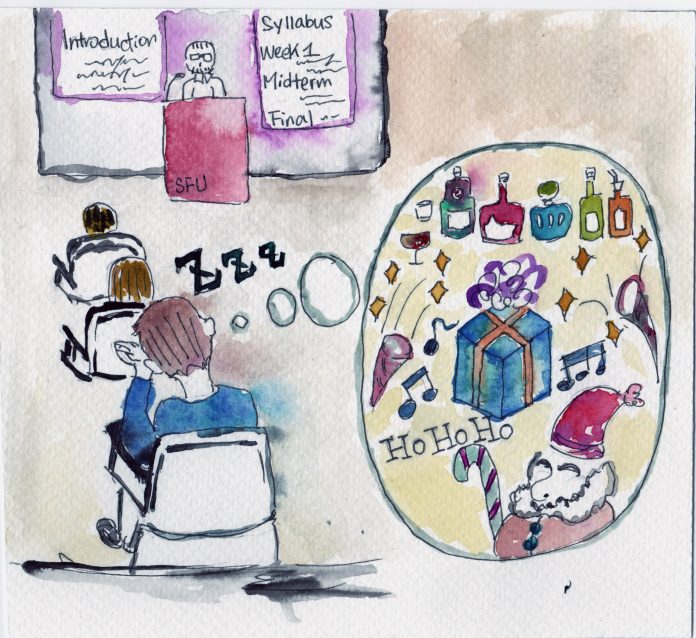
Structure and routine are crucial when getting over a holiday hangover

0

According to an SFU adjunct professor, quickly getting back into a routine can lessen the difficulty of returning to the classroom after weeks of holiday feasting, socializing, and general merrymaking.

Psychologist and SFU adjunct professor Joti Samra explains why returning to the daily grind in the new year is so tough, and what you can do to make the transition easier.

Samra said that the month of December is different for most people in regards to their day-to-day activities. They change their sleep patterns, their diet, and their exercise habits, which can make returning to a regular routine jarring.

“If we go weeks with having our usual structure and routine off, it’s quite hard for us to get back to it,” Samra stated. “We’re creatures of habit, as human beings, and we like structure and routine. When that routine is off, it’s hard to get back into the flow of things again.”

After the break, people typically experience an excess of fatigue and a lack of motivation. “A lot of people feel this kind of let-down after Christmas.” she said. “They’ve been a lot more social, seeing people that they like and love, and they really enjoy that.”

Samra continued, “All of the sudden, it’s back to responsibility, back to bills, back to usual routine.”

She went on to say that the post-holiday blues is often not only the result of indulgement, but also the stress of the season: “It can be a difficult time of year. There might be stresses that come along with the holiday season, with family and financial stresses being at the top of the list.”

Combining those stresses with the fact that days are shorter and the weather is consistently bleak makes for several factors that contribute to a sort of slump after the break.

Samra offered The Peak some pointers on how to minimize the holiday hangover and to ease yourself back into work or school. “An important thing is to manage your expectations and to remind yourself that most of us usually feel like this every year,” she advised.

She encouraged people to take “good measures for self-care” and also warned to be “mindful of the usual suspects” that can interrupt your healthy lifestyle, such as sleep, exercise, diet, and alcohol intake.

“Remind yourself that the semester will go fast, and if you’re taking good measures for self-care — eating healthy, exercising, managing your stress levels — all of that can help make it go smoother,” she said.

Samra’s last piece of advice was to incorporate what was enjoyable about the holidays into your regular routine. She concluded, “Scheduling in rest breaks [and] social activities that give you a kind of reprieve from the usual grind of school can just recharge you, and help you feel a bit more rejuvenated for more studying.”

Satellite Signals

0

Surrey

To ring in the new semester, SFU Surrey students feasted on free pancakes last Wednesday, January 7. The SFSS Surrey Campus Committee hosted the annual free breakfast to welcome students back to school for the spring semester.

Surrey Council Chambers

While most SFU students have returned to lecture halls this semester, the students of Business 361 are now attending class in the Surrey City Hall council chambers, which neighbour the Surrey campus. The popular project management course will be taught by business professor Kamal Masri.

Woodward’s

Last Saturday, January 10, SFU Woodward’s hosted the 130th annual Modern Language Association convention. The event included an evening of presentations from various artists and academics in the field of Asian diaspora studies. Among the speakers were several authors, including Lydia Kwa, past SFU writer-in-residence Madeleine Thien and incumbent Rawi Hage.

University Briefs

0

U of T students aim for infinity, and beyond!

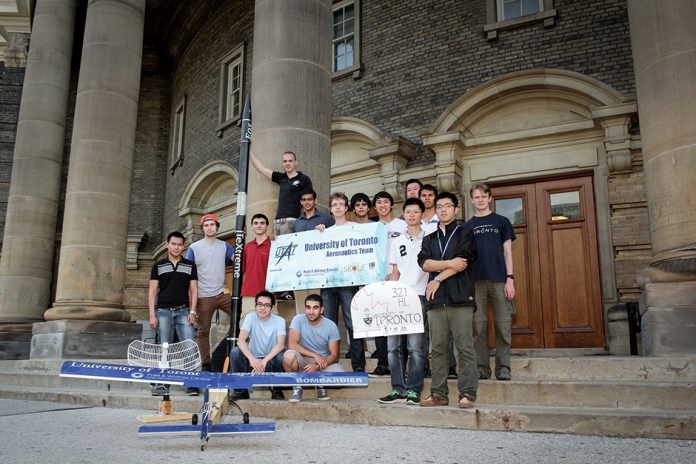
The University of Toronto Aerospace Team (UTAT) is reaching for new heights with their latest project: a small-scale spacecraft.

Jeffrey Osborne, UTAT president, told The Varsity that the team is designing a small satellite, with the intent of eventually launching it into space. The satellite’s mission would be to investigate the effects of space on the human body. Osborne believes that that the group may be able to launch a spacecraft every three years, should they receive proper funding.

The team also welcomed experts from the field on January 10 to review the spacecraft’s current progress.

With files from The Varsity


Scientists search Antarctic skies for Big Bang origins

A team of UBC scientists based out of Antarctica have launched a telescope that may reveal clues that shed light on the very beginning of the Big Bang.

The device, called SPIDER, was launched on December 31 and will remain airborne for 20 days, riding the circumpolar winds around Antarctica’s coast.

The telescope will attempt to locate patterns of polarizations that would have occurred only moments after the Big Bang. If it succeeds, the telescope, “would be a smoking gun of how the universe began,” said UBC professor Mark Halpern, a member of the SPIDER team.

With files from CBC News


Dalhousie suspends 13 dentistry students for Facebook controversy

Dalhousie University announced on January 5 that 13 men who were formerly involved in a controversial Facebook group have been suspended from clinic work until further notice.

The men belonged to a group called Class of DDS 2015 Gentlemen, in which the fourth-year male dentistry students posted misogynistic comments about female classmates. Among these comments were a poll about drugging women and having “hate” sex with female classmates.

While the suspensions are in place, the men cannot graduate and may not be able to attend their classes.

With files from CBC News

If dating game show questions were more intellectually stimulating

0
Illustration by Chen Chen

First question goes to Bachelor #1: If I were an ice cream cone, how would you explain the rise of and crisis surrounding ISIS without resorting to racism or overgeneralizations?

Bachelor #3, you’re up: It’s the night of our one-year anniversary and you forgot to make reservations for dinner. Would you agree that the gender pay gap is clear-cut evidence of an inequality between sexes, or is the argument skewed because of disparity between the work fields in which men and women generally gravitate towards?

My next question is for Bachelor #2: If you were stranded on a desert island and you could only bring three items with you, how would you propose we shift the world’s food industry away from the unsustainable trajectory it’s on without causing a drastic loss in jobs for the agriculture sector or requiring people to completely change their eating habits?

Back to Bachelor #3: Say you’ve just won a million dollars. Is Plato’s Allegory of the Cave meant to embody the potential consequences of mankind’s ignorance or can it be dismissed as an anti-pragmatist’s wet dream?

Bachelor #2 again: It’s your first time meeting my parents. How would you unbiasedly discuss the principles of the black hole information paradox?

And we’ll end where we started, with Bachelor #1: Do you think it’s acceptable to kiss on the first date, and how can proportional representation in Canadian politics help to provide fair and accurate governance of the population? 

This week in Comics

0

Pun 2 3 (Sarah Walker)
cmyk- Pun23 (Sarah Walker)

Peers (Leslie Lu)CMYK-Peers 2

The Adventures of Agoraphobia Man: World Defender (Jacey Gibb)Agoraphobia Man (Jacey Gibb)

Ski Ninjas (Kyle Lees)

Now that everyone hates Comic Sans, which font should we all gang up on next?

0
Photo courtesy of Wikipedia Commons

First off, I’d like to congratulate everyone on doing a stellar job. Without your unrelenting disdain and vocal opposition, Comic Sans wouldn’t be the almost-universally hated font that it is today.

I remember how some of you were worried when that curvy young whippersnapper came onto the scene back in ‘94. “All of our favourite fonts are done for,” some of you panicked. “It’s casual but fun, and works with almost every kind of situation. How will they ever compete?!” Can you remember what I said that day?

“We will make it through this. Because we are the Typographic Secret Society, and we never give up.”

Ostracizing Comic Sans was the most successful propaganda blitz we’ve run since Wingdings. Convincing people that these nonsensical hieroglyphs left behind by a now dead-and-gone alien civilization were deserving of their own font was both hilarious and brilliant. A skull and crossbones standing for an “n”? No one else in the world would think to come up with this stuff. It’s genius — or should I say γενιυσ, if you catch my drift.

I know I’ve said it before, but I’ll say it again: thank you all for your hard work and dedication. Without it, the Typographical Secret Society wouldn’t be the internationally successful organization it is today.

Okay, now we need to ask ourselves: What font are we going to pummel into the ground next?

I know that some of you are still wondering why we had to knock Comic Sans down so many pegs. I had someone ask me if we’d been a bit too harsh on the font, but let’s remember the whole mission statement of our secret society: to protect, curate, and dictate the typography world for the rest of the design-impaired population and for future typography enthusiasts.

What do you mean, maybe we shouldn’t gang up on any font? Do you realize how crazy that sounds?! Without one font out there attracting all of the negative attention, being the butt of every typography joke and acting as a go-to for moms just learning how to navigate Microsoft Word, people won’t know where to direct their slander. Font hatred would become anarchy; people would start developing original, more objective opinions about fonts that maybe aren’t Comic Sans or whatever other campy font we decide to throw under the bus. There’s a natural order to the typography world and it is our duty to preserve it.

No one is more passionate about fonts than us. People are going to hate whatever font we want them to hate.   

Now, I know we’re not deciding on which new font to bully until next month’s meeting, but I would personally like to put forward Tahoma for consideration. It has everything we’re looking for: no one’s crazy about it in the first place, it’s ugly, and the name sounds like an accidentally racist alias Homer Simpson would come up with. It’s perfect.

The month you take your Christmas tree down and what it says about you

0
Photo by versageek (Flickr)

December: You must really hate Christmas — and happiness in general. Did you even get a chance to look at the tree before you tore it down?

January: The holidays are a busy time for everyone, so makes sense that you wouldn’t get around to taking your tree down until January. You’re only human.

February: Either you’ve just awoken from a two-month coma or you really need to work on your time management skills. There’s nothing festive about spruce needles on the living room floor in February.

March: Really? I guess trees are green and so it’d be appropriate for St. Patrick’s Day — except there’s no way anyone’s tree is still alive at this point. It doesn’t even seem safe to have a tree in your house for this long. Just toss it and be done with it.

April: April showers bring roommate glowers, am I right? But seriously, there’s no plausible reason why anyone would still have their tree up in April. You’re lying.

May: Is this part of a bet or something? What are you trying to prove? That you can keep a decaying tree in the house longer than anyone else can? Better get Guinness World Records on the phone because we have a winner for them.

June: Good work! It’s been six months since the last Christmas so the next one’s only six months away; your tree can only become more relevant from here on. You’ve successfully crossed the threshold from being slobbish to overly eager. Congratulations, weirdo.

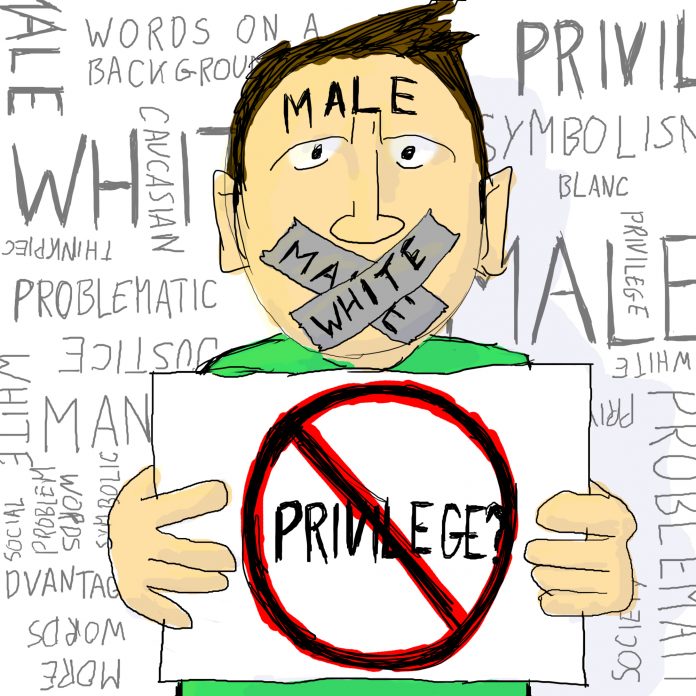
Why white male privilege is problematic

1
Illustration by Benjamin Buckley

It’s no secret that white male privilege is problematic. But what exactly is privilege? What does it mean to be a white male? And why is all of this so problematic? While many authors would answer these questions with a buzzword-filled thinkpiece devoid of content, I would like to get to the bottom of white male privilege and explain why it’s so problematic in our society.

We’ve all seen it, in our classrooms, in advertising, and in social media. The privilege possessed by white males is problematic. Some males (usually white males) claim that their privilege doesn’t exist, or that it’s not problematic. To them, I say: just look around you. It is clear that white males are in a privileged position, and I, for one, think that that is problematic.

As a male, I know that I am privileged. And as a white person, I know that I am even more privileged. So it is problematic to me that, as a white male, I have more privilege than someone who is neither white nor male. This is why it is so important that I, and all white males, work hard to recognize how privileged we are.

It would be problematic for me to claim that white males are bad people for having privilege. This isn’t what I’m saying at all. There is a problematic misconception among white males that privilege is something to feel guilty about, which isn’t always the case. There is nothing inherently problematic about being white or male; nobody chooses to be white or male, and thus nobody is allowed to choose their privilege. However, white males, like myself, still benefit from having privilege, and that is where things become problematic.

When white males deny their own privilege, it is problematic for society. It is problematic for our schools; it is problematic for our workplaces; it is problematic for every individual who cares about how privilege affects them and their loved ones, including white males themselves. That is why it is necessary for every male, white or otherwise, to educate themselves about the nature of privilege and how problematic it is.

We, as a society, need to come together and have a conversation about white male privilege and what we can do about it. Even if we can’t get rid of the influence of white male privilege entirely, perhaps we can at least find ways to make it less problematic.

New forensics course sparks program expansion

0
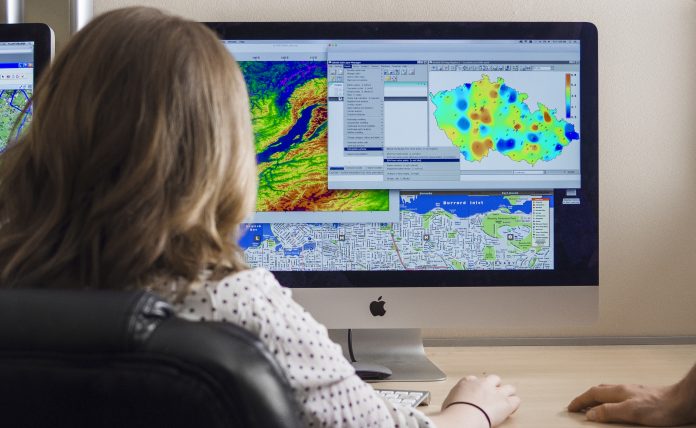
The course gives students hands on experiences with programs used by law enforcement, giving students access to authentic data from VPD and Homeland Security.

Due to the overwhelming interest in SFU’s latest course, CRIM 449: Major Crime and Forensic Analysis for Law Enforcement, the School of Criminology will be expanding its offerings even further this year.

Ryan Prox, a special constable with VPD and adjunct professor at SFU, has begun teaching CRIM 449 at Surrey campus this semester, home to a state-of-the-art virtual forensic analysis lab.

The course will give students hands-on experiences with programs used by law enforcement, as well as offering access to authentic data from VPD and Homeland Security records. Prox said that this will also give students who want to take career paths in law enforcement a practical advantage before graduating.

IBM and ESRi have gifted the software to SFU Police Studies Program to support the initiative. “They see it as a way the industry is going, and believe the training in technological solutions is critical before going into the actual field,” said Prox.

He continued, “There’s a lot of students taking my course because a lot of them want job ready skills and it is a good augmentation to their criminology program.”

Students will have the advantage of learning how criminological theories are applied in a real-world setting.

“Having the hands-on experience on this software is almost unheard of in the academic setting,” according to Prox.

He continued, saying the opportunity lies in more than just the law enforcement field; the skill set students will acquire from this course will be transferrable to other private sectors as well. These skills will apply to non-standard and non-policing industries, as a lot of private companies are now looking to expand internal capacity.

As such, the department is expanding its offerings in this area to keep up with an evolving field and increased student demand.

“We’ve got two tracks now in terms of crime and intelligence analysis, CRIM 449 and CRIM 909,” Prox explained.

“Having the hands-on experience on this software is almost unheard of in the academic setting.”

Ryan Prox, VPD special constable and SFU adjunct professor

CRIM 449 was originally introduced as CRIM 417: Special Topics in Criminology, but it has developed into a permanent standing course as CRIM 449 after the waitlist reached more than double the course capacity.

CRIM 909 is a non-credit course that is only open to law enforcement practitioners, and as such it is considered a professional development course under adult education in the Police Studies Program.

SFU will also offer a new CRIM 417 in the fall, titled Disclosure, Analysis and Evidence Management for Serious Crimes.

“The ultimate goal is to have a full certificate in crime and intelligence analysis under the Police Studies program,” said Prox.

In regards to expanding SFU’s influence regarding professional development programs, Prox said he plans to offer CRIM 909 in Ottawa this spring.

“The world of crime and intelligence is evolving at such a rapid pace,” Prox said. “I find that it is exciting time, because there’s a lot going on, and there are a lot of new innovation and new developments.

“It is a good place for students to be moving into, because they are not going to be bored.”

We Are The City succeed in both filmmaking and music

0

“It feels like happiness. It feels like remembering faces and words. It feels like water. It feels like electricity. It sounds like a humming fridge.” What is the girl who utters these words after every chapter of Violent describing?

In the film’s twist ending, we finally discover what is lying beneath the surface of this emotive film’s plot. However, Violent is aiming for an effect that is more visceral than intellectual; it’s how the film goes about achieving this feelings that makes it so fascinating.

Violent, currently being featured in Canada’s Top Ten Film Festival at the Pacific Cinematheque, is structured like a musical composition. This makes sense given that Vancouver band We Are the City are behind it. Drummer Andrew Huculiak is credited as director, but he insists that this was a collaborative work with other members of the production company Amazing Factory. The band went to Norway to make an album and an accompanying short film. They came back with their 2013 album, also titled Violent, and this feature film which is spoken entirely in Norwegian — a language none of the band members understand.


The film has verses linked together by a chorus, and a melody that ends the film where it began. It opens with an image of a car driving over a bridge with a power plant in the background — a visual motif that appears in every movement of the film, linking it all together.

The film’s five verses focus on five different people remembered and loved by a young woman named Dagny, who is stranded in a small town. The chorus is the visual depiction of the girl’s subjective experience during pivotal events that cause her to remember the narrative portions of the film.

The movie is less interested in telling a story than evoking a feeling, and often focuses on mood rather than plot. Through this mood, we learn about the experience of the protagonist. The film’s choruses resembles the experimental works of filmmaker Stan Brakhage, while the verses it appears to be inspired by the narrative realism of films such as Oslo, August 31st. The melding of these two styles of filmmaking makes this a staggering directorial debut.

The visual style of Violent shifts from the typical wide compositions and lengthy takes associated with narrative realism to the enigmatic imagery typical of experimental works. The film is told through Dagny’s point of view, and what she chooses for us to see tells us about her inner thoughts. The film’s naturalistic tone and unobtrusive direction shows us her behaviour before we experience her perception through the discontinuous editing and abstract choruses of the visuals — this includes surreal floating objects, and what appears to be a combination of light and scratch marks on film.

Instead of being purely reflexive like most experimental works, Violent uses its abstract imagery (with some staggering visual effects and an ominous musical score) to explore a subjective feeling. Admittedly, this has been done before, such as in the hyperdrive sequence of 2001: A Space Odyssey; however, it has never been such an integral part of any film’s storytelling that I’ve seen. 

Violent effectively captures a certain feeling by using experimental techniques without sacrificing its conventional narrative style. Through sights and sounds Violent does what few films could hope to achieve: it gives us a gateway into an experience we could have never felt without a white screen, a projector, and surround sound.

Violent is screening January 10 at the Pacific Cinematheque. Visit thecinematheque.ca for more information.