Home Blog Page 1008

The loud, the quiet, and the ambiverted

0
Photo Credit: Phoebe Lim

I used to believe I was extroverted; I was a loud, ‘in your face’ kind of kid. I enjoyed spending time with friends, and I drew my strength and confidence from them. Then I hit the middle school years and things changed a little. I was no longer drawing strength from those I spent time with; rather, I frequently found it exhausting.

I craved time for myself to engage in hobbies and activities that only I really enjoyed and understood. The down-time was safe and soothing. I’d go for runs, read books, shoot hoops, play music, watch strange movies. Introversion began to dominate my personality. I didn’t want to engage with people as much as I once did. Then I’d find myself sinking into anxiety and depression when I was away from my friends for too long. Was there something wrong with me? Or was I just a normal moody teenager?

At first, it worried me to discover my introverted self; I’d always associated introverts with being feeble, weak, bereft of social confidence needed to succeed. Outgoing people were strong and overtly confident, self-assured and courageous. After 15 years of having everyone label me as an ‘extrovert,’ I felt I was letting people down and that they would think there was something wrong with me.

Now in my early 20’s, having lived a few years of life without teen angst, I’ve come to learn the reality of my situation: I’m an ambivert, equally displaying traits of both ends of the personality scale.

You see, there is no black and white, left or right, up or down. Everything in life is fluidly changing, evolving, grabbing at a spectrum of traits from an infinite number of sources. The same concepts apply to one’s personality type. Swiss psychologist Carl Jung once said that “there is no such thing as a pure extrovert or a pure introvert. Such a [person] would be in the lunatic asylum.”

I’d always associated introverts with being feeble, weak, and bereft of social confidence needed to succeed.

I tend to be a neutral, middle-ground hippie. While I energize from those around me, I crave to spend a day on my own, and vice versa. I love the rush of adrenaline, loud noises, an excitable environment, but when those drain me, I turn to quiet early mornings, solitary walks, and simply contemplating life for a while.

But what about those who literally always keep to themselves, or who always seem to socialize? People may have predominantly introverted or extroverted traits, but we all grab a little from another place in the personality line. In that respect, you could say we’re all ambiverts to some extent.

Unfortunately, this concept seems difficult for people. Some say I’m loud, while others say I’m more quiet, and when these people meet it can create all-out confusion. Is there something wrong with him? Maybe he’s manic.

I simply enjoy a flexibility that allows me to adapt as outgoing or reserved in social situations. I interact well with others, but in a targeted, purposeful way.

Why do we have these dumb, left-right labels that we throw all personalities into? It’s because society wants simplicity. Categories and labels are a way for people to understand how the world works. And in a society where the complex realities of life are  written off as ‘too hard,’ people act mindless, throwing everything into false categories because it’s what everyone else does.

Yes, I love to socialize, but I also don’t. Go ahead and be confused; life can be immeasurably confusing. Maybe we should first wrap our heads around this fact before we ask why the same guy who was keen to go out today just wants to sit and read a book tomorrow.
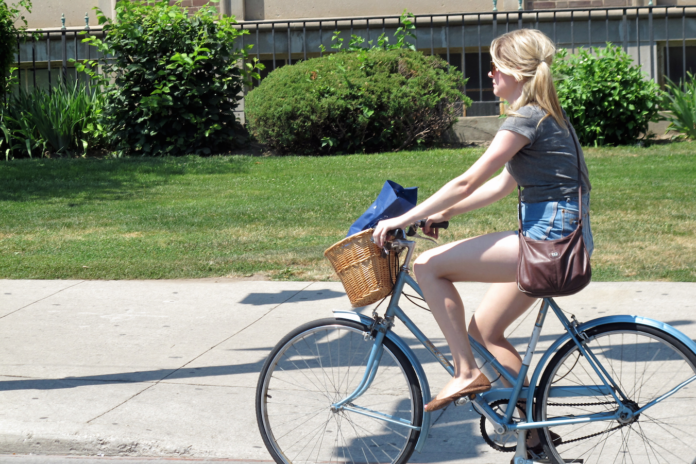
There’s a revolutionary alternative to wearing a bike helmet

0
Photo courtesy of Christopher Porter (Flickr)

Drier, warmer weather outside means it’s time to grease up your chains and get exploring the Lower Mainland on your bicycle. But the one thing standing in the way of you taking on the world? That clunky bike helmet that makes you look like something from rejected Transformers concept art. Thankfully, there’s an alternative for those who are sick of wearing protective head gear while on the go: introducing Muerte®, the stylish new substitute for bike helmets.

So what is Muerte®? It’s nothing. That’s right, the minimalist and sleek design of Muerte involves wearing absolutely nothing on your head, meaning you’ll never arrive at your destination with embarrassing helmet hair again.

Here’s how it works: instead of strapping on a bike helmet when you’re about to leave the house, just tell yourself that you probably don’t need one. After all, accidents are things that only happen to other cyclists. Next, use those mime skills you learned in grade seven drama class to go through the motions of putting on a helmet without actually doing so. Voila, you are ready to go in your state-of-the-art Muerte®.

Muerte®’s custom fit design means you’ll never have to compromise style for safety again. Sure, studies have shown that helmets can substantially reduce the risk of neck injury in the event of a crash — between 63 to 88 per cent, in fact — but is that really worth it to look like a boggle head? And how about when you arrive at your destination and remove your helmet, only to feel that your hair is sort of damp from the bike ride? It might be illegal to not wear a helmet while cycling, but you know what else should be illegal? Showing up for social situations with already sweaty hair.

The benefits of biking instead of driving are abundant: not only does it contribute to leading an active lifestyle, but you’re also reducing carbon emissions and alleviating congestion in already burgeoning urban landscapes. You’d never call yourself a hero, but real heroes rarely do. With so many upsides to choosing a bike over any other mode of transportation, don’t you deserve something as unique as Muerte® on top of your melon?

Where can you purchase this revolutionary helmet and how much does it cost? The Muerte® helmet is available anywhere and is absolutely free. Seriously. Why would it cost anything? You’re simply choosing to not wear a helmet, so of course that wouldn’t cost anything. With a price so low, Muerte® is the perfect fit for any budget.

A poll conducted in 2014 found that over 17 per cent of cyclists admitted to feeling self-conscious about the potentially life-saving device worn on their heads.

Don’t be just another statistic. Try Muerte® today!

Disclaimer: before wearing Muerte®, ask your parents and loved ones if not wearing a bicycle helmet is right for you. Side effects of Muerte may include a slight increase in rider’s visibility, increased volume in your hair, decreased protection in the event of an accident, and a 90 per cent increase in people telling you to wear a fucking helmet.

Bud Light ads should encourage proper consent

0
Photo Credit: Phoebe Lim

“We’ll be heading out for drinks after. Where do you want to go?”

“Oh, anywhere. . . I’m up for whatever.”

This is the social dialogue that many of us use with our friends when we go out. We wish to seem ambivalent, easy going, easy to please, and ready to have a good time.

Bud Light drew on this attitude for their recent advertising campaign titled, #UpforWhatever, in which their main tagline read, “The perfect beer from removing ‘no’ from your vocabulary for the night.” However, the wording of this slogan is worrisome; it perpetuates rape culture and the acceptance of sexual harassment through its dismissal of a person’s right to consent to any activity.     

This is not the first time that rape culture has been perpetuated within media. In fact, the culture surrounds us, hidden in catchy song lyrics like those in Robin Thicke’s “Blurred Lines” and in the erotic fan fiction Fifty Shades of Grey. The message given is that sex can be taken at any point, even if one person involved says ‘no.’

The brand has diminished the experiences of sexual assault survivors.

I understand the concept behind the ad — people associate alcohol with having a good time, having a fun night out with friends, letting go of their inhibitions, and, well, being up for whatever. This campaign is supposed to be fun, one that people should not take too seriously. After all, the easiest way for rape culture to be accepted in society is when it can go down easy, disguised as having a good time, am I right?

However, we must consider that survivors of sexual assault did not find sex a pleasurable experience. According to Sexual Assault and Rape Statistics Canada, one in four women in North America will be sexually assaulted during their lifetime. Furthermore, it says 57 per cent of Aboriginal women and 83 per cent of disabled women will experience sexual assault. Men and children are also victims of these crimes.

Given these statistics, sexual assault is far more common than we would like to believe. These incidents are also vastly underreported to authorities, meaning that the numbers are actually greater than what statistics have gathered.

In regards to the Bud Light campaign, removing “no” from one’s vocabulary does not mean that somebody is “up for whatever.” Consent for an activity is given with an enthusiastic, affirmative, “yes,” and can be retracted at any time. Silence does not equal consent, and most importantly, it cannot be given when someone is drunk. Having enough alcohol in one’s system until they become agreeable to anything is a worrisome and dangerous attitude to promote, as what happens after that night could lead to a lifetime of regret and pain.

The Bud Light slogan wishes to remove “no” from a person’s vocabulary for the night, but the removal of that word also implies the removal of a person’s right to consent to sexual activity, and diminishes the experiences of sexual assault survivors in the process.  Being able to say no is just as important as being able to say yes. If Bud Light prioritized the concept of consent in their ads, then everybody would be having a good time.

Apathy and earthquakes don’t mix

0
Photo Credit: Rachelle Tjahyana

I’ll admit, I haven’t yet taken the time or $20 to make my own earthquake survival kit. It’s a simple thing to do, really. Nothing a sheer half hour spree at Canadian Tire couldn’t accomplish: flashlight, first aid kit, radio, bottled water.

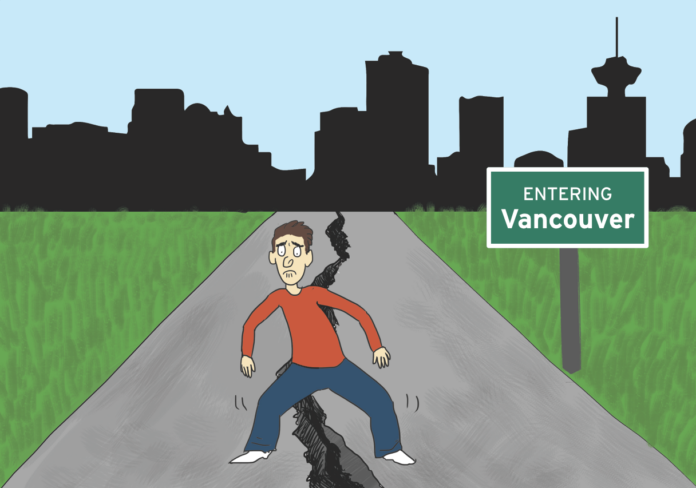
So why haven’t I yet? I’ve been aware of the possibility of a massive-scale earthquake for ages — even before I rolled into this city. Come to think of it, hundreds of earthquakes greater than magnitude 1.5 hit the West Coast last year alone. BC’s Pacific Coast, according to Natural Resources Canada, has the highest potential to be struck by an earthquake — more than any other place in the country.

The recent disaster in Nepal has sent BC media reeling with fresh warnings of our continent’s impending doom: the big one, the lurking monster that bubbles menacingly beneath the ocean surface, and potentially only for another 50 years. The question clearly isn’t ‘if’ an enormous earthquake and its offspring tsunami will come roaring over the coast, it’s ‘when.’

Yet amidst the constant Internet babble, the newspaper warnings, the editorials, flyers, and radio announcements, Vancouverites, along with the rest of the province, continue to sit with their thumbs up their butts. It’s not that we aren’t aware, we just don’t care. And I mean we really don’t care.

Not one person I know living in the Lower Mainland (myself included!) is prepared for a possible disaster similar to, or even worse than the terror that struck Nepal.

“Yeah right, it’ll happen in like 5,000 years,” my roommate scoffed the other night.

“Yeah right, it’ll happen in like 5,000 years,” my nonchalant roommate scoffed in our kitchen the other night. “Scientists never seem to know what they’re talking about.” A blatant air of doubt has clearly helped to foster our widespread apathy towards the issue, an apathy also rooted in our subconscious denial.

I got to work. I go to school. I go for runs. I sleep. My life occurs in a city that’s solid and secure every single day. It rains, it shines, then it rains a lot more. This is normalcy, nothing will change. How could it? Life is perfect here. Our uncertainty toward our current predicament has led us to be inactive; we’re sure that something terrible could never happen to us, and in turn we become falsely optimistic. Ho hum!

Well sorry to bombard you all with pessimism but here are a few factual projections. According to CBC, if a 7.3-magnitude earthquake were to hit the District of North Vancouver alone, hundreds would die, 2,000 would need emergency attention, and another 1,300 would be homeless for over a year. If this study included the entire city, there would be thousands more casualties. A south coast tsunami would cause $75 billion in damages to infrastructure according to Insurance Bureau of Canada, and could destroy hundreds of businesses and interrupt essential services. Vancouver Island would be pretty much ‘SOL,’ and our North American economy could be set back for a decade.

That’s quite a hefty sum to be apathetic towards, wouldn’t you say? How about you, provincial government? Your Emergency Management BC team has been criticized on multiple occasions for its lack of adequate earthquake response plans, procedures, and public awareness programs.

Politics aside, let’s do away with our doubt, denial, and laziness, and do ourselves a personal favour. Preparing physically and financially for this kind of disaster will only require a minuscule amount of our time and could possibly save our lives.

Have you ever heard of earthquake insurance? It exists. Google it.

SkyTrain art installation showcases SFU student photography

0
snəw̓eyəɬ (teachings), at Waterfront Station - SFU University Communications

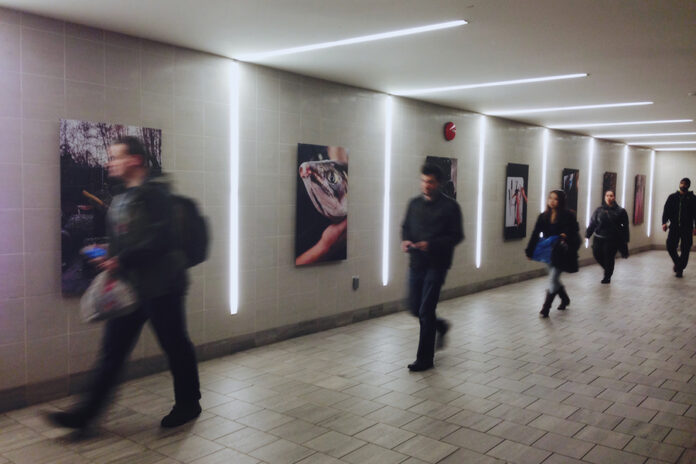
The art of SFU design student Reese Muntean was selected to hang in the hallway leading to the Canada Line at Waterfront Station for public viewing.

Her collection, snəw̓eyəɬ (teachings), is one of many Canada Line exhibits, documenting different fishing technologies in the Musqueam First Nations community through a series of photographs.

The photo installation project is a continuation of c̓əsnaʔəm,; the city before the city, a larger multi-institution partnership by the Musqueam Indian Band, the Museum of Vancouver (MOV), and the Museum Of Anthropology (MOA) at the University of British Columbia. c̓əsnaʔəm is a 4,000 year-old traditional Musqueam village, sometimes called the Great Fraser Midden.

Muntean’s work was initially created for another project, ʔeləw̓k̓ ʷ– Belongings. The collaboration between SFU’s School of Interactive Arts and Technology and the MOA resulted in a showcase for this interactive tangible tabletop project. The museum exhibit is meant to show the continuity of culture and knowledge in the Musqueam community over thousands of years.

The photography by Muntean and her co-curator Jordan Wilson captures the everyday salmon processing practices of community members at the Fraser River in Vancouver.

“For ʔeləw̓k̓ ʷ– Belongings, we focused on fishing technologies to show the continuity of Musqueam culture,” Muntean explained. “The photographs at Waterfront Station document the contemporary preservation practices.”

The series of photographs shows the tools and technologies used in the processing and preserving of salmon, such as axes, hoses, containers, knives, sharpeners, and the smokehouse.

The interactive tangible tabletop installed in the MOV, which is available until the end of the year, features replicas of six ancient Musqueam belongings excavated from c̓əsnaʔəm and six contemporary day-to-day items.

“Drawing on contemporary community voices and Musqueam’s ancestral language, hən̓q̓əmin̓əm̓, you learn about how the past connects to the present by connecting something ancient to something contemporary,” said Muntean.

The idea for a photo installation occurred when Kate Hennessy, Muntean’s graduate supervisor at SFU SIAT, was asked to curate a selection of photographs to be placed in Waterfront Station for Vancouver’s Capture Photography Festival. The whole Canada Line exhibit is focused on presenting Musqueam and c̓əsnaʔəm traditions.

“Kate [Hennessy] is very familiar with the images that I had taken for ʔeləw̓k̓ ʷ– Belongings and wanted to present them here,” added Muntean.

For Muntean, the use of the SkyTrain as a base for exhibiting public photography speaks to finding creative ways of showcasing different installations and tapping into different audiences to make art more inclusive and accessible.

Although the art installation projects were initially created thinking they would be on a tabletop in a museum setting, Muntean commented that “having these [photos] on display at Waterfront SkyTrain [Station] really opened up these images to a wider audience.”

She continued, “Now, our audience is anyone who is going through the Waterfront Station. I think it is really wonderful to have all of the Canada Line for photography relating to c̓əsnaʔəm and Musqueam.”

Satellite Signals

0
Image credit: Eleanor Qu

Woodward’s

SFU Woodward’s hosted a film screening and panel discussion on May 7, entitled “Sister: An Intimate Portrait of a Global Health Crisis.” The film told the stories of Ethiopian, Cambodian, and Haitian health workers, their experiences, encounters with human rights violations, and maternal and newborn deaths.

Their stories highlight the state of maternal health in these different countries and how a lack of resources affects the women who live there.

Harbour Centre

Your Home: expectations, needs and what’s real” was the topic of the latest City Conversations presentation on May 7 at Harbour Centre. The discussion delved into the issues surrounding the seemingly never-ending inflation of housing prices.

Twitter campaigner Eveline Xia, software developer Adrian Crook, and economic planner Yazmin Hernandez spoke on the causes of inflation and how to make do with Vancouver’s housing options.

Board Shorts

0

The newly elected board of directors moved last Thursday, May 7 to remove the timesheet system by which they account for director’s hours of work.

The proposed change was put forward on the grounds that the completion of timesheets confuse the role of board members, which, as VP Student Services Darwin Binesh put it, “is not to work, it’s to govern and direct.” He cited past board discussions that favoured defining the board as a “governing board,” not a “working board.”

Board members discussed how this removal could be seen as decreasing transparency and Binesh emphasized a need for further investigation into how best to measure directors’ work.

VP Finance Barbara Szymczyk expressed doubts as to how the system of remuneration would operate without timesheets. “The concerns are very valid,” she said. “However, the mechanism that is going to be in place following an elimination of the timesheets does seem lacking.”

She pointed to past cases where faculty reps and at-large members did not bill their maximum hours and therefore, without a timesheet, there’s the risk that they would be compensated for work not completed.

The motion carried with Szymczyk’s opposition noted in the minutes.

University Briefs

0

Ryerson collects over $125,000 on student phone fees

Students living in residence at Ryerson University are required to pay $156 a year for an in-dorm phone line — a service that has become increasingly under-utilized.

Many students feel that this additional fee is an unnecessary financial burden, especially since most use their cell phones exclusively, rendering the landline service obsolete. The university collected $127,452 this year for providing these phone lines, which according to The Eyeopener are rarely used.

The director of student community life, Ian Crookshank, explained that any left over funds are used on other forms communication.

With files from The Eyeopener

TRU accidentally sends out over 400 acceptance letters

Over 400 letters of acceptance to Thompson Rivers University (TRU) were sent out in error on April 16. Only 103 of the 504 applicants who received acceptance letters to TRU’s nursing program for the Fall 2015 semester were legitimately accepted into the school.

TRU school of nursing dean Donna Murnaghan said, “We understand how awkward this situation is and how disappointed prospective students and their families may be. We sincerely apologize for any inconvenience this mistake may have caused.” 

With files from The Omega

University of Winnipeg introduces a Fall semester reading week

Students at U of W will be given some extra time off as the university introduces a second reading week to allow students more study time and to lower their stress levels.

The break will coincide with the Thanksgiving long weekend in October and will begin in Fall 2016. The university will ensure no academic days are lost, by starting classes a day early and shortening the break between the end of classes and exams.

The president of the university’s student association, Peyton Veitch, explained that the additional reading week will give students an opportunity to “recharge and decompress during a hectic time of year” and promoted a “holistic approach to mental health and wellness on campus.”

With files from CBC News

Theatresports goes medieval with parody improv show Throne and Games

0
Photo courtesy of Vancouver Theatresports League.

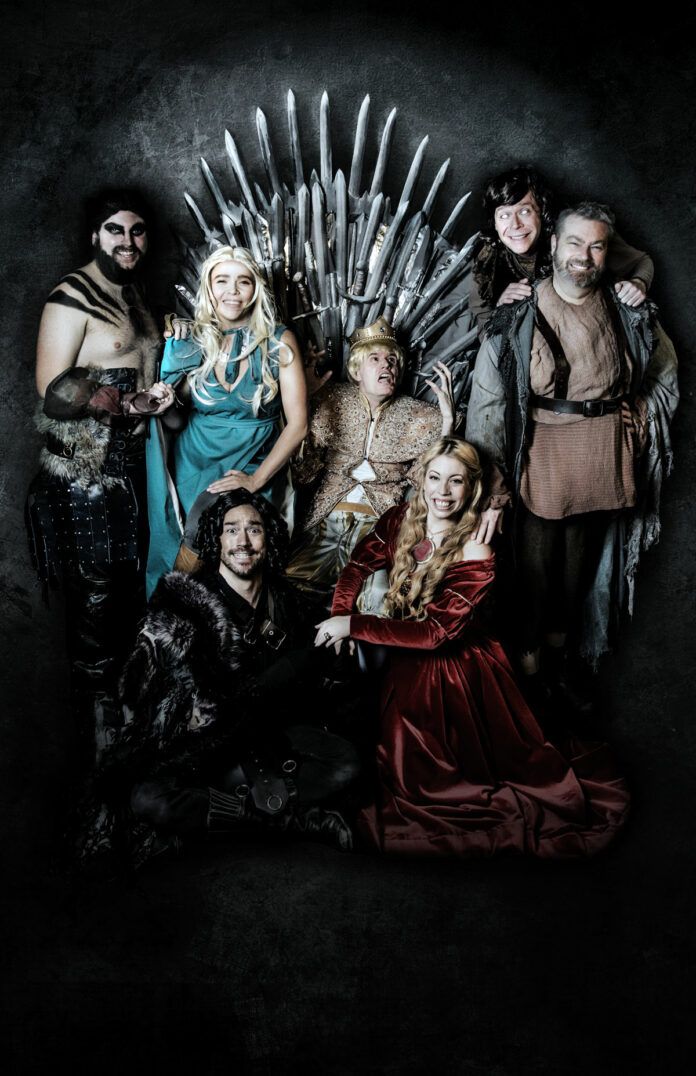
It seems like I’m one of the few who is not watching Game of Thrones, but for everyone who is a fan of the hugely popular show, Theatresports has created an improvised parody show that puts its characters into some hilarious scenarios, all with the help of audience suggestions. Cleverly titled Throne and Games, the show features three families battling for what they feel is their rightful place on the Throne of Games.

Hosted by Petyr Baelish (Graeme Duffy), bloody battles were fought as the families took turns striving for glory. The Targaryens’ rivalry with the Lannisters came to a head as Daenerys Targaryen (Denise Jones) and Cersei Lannister (Lauren McGibbon) went one-on-one with the help of an audience member who was controlling their movements.

The characters were put through many creative scenarios that tested their ability to think quickly, and the audience rewarded them with cheers when they managed to also incorporate clever references to the show. Jon Snow (Michael Teigen) is hilarious as a blunt taxi driver, and Cersei and her father Tywin (Pearce Visser) are forced to speak as one voice while subtly guiding each other as they go. Some of the scenes dragged on a bit too long, but apart from a few minor breaks in their straight faces, the players all kept in character very well throughout their challenges.

Daenerys and Drogo (Allen Morrison) were all over each other, and the audience loved Drogo’s monotone, blank-faced, caveman-like demeanour. Jon Snow’s vocabulary was not much sharper, as he answered “I am Jon Snow” to almost every question.

Jon’s sidekick Samwell Tarly (Nathan Clark) was perfectly dimwitted and naïve, and the two made a charming pair. Snow was a hit with the audience during a segment where they were encouraged to shout “You know nothing, Jon Snow!” to interrupt the scene and then ask Jon any question they liked. Some that the audience came up with included, “Why is the sky blue?” to which he replied, “Because if it were green, you wouldn’t know when to stop mowing,” and “How do you cook a turkey?” which he answered by suggesting they simply go to KFC.

The Throne of Games, apparently made from forty thousand swords (more like forty, as Baelish pointed out), sits empty, and only one family can claim it. With shocking betrayals and alliances, savage death, and unlikely contexts, Throne and Games is a wonderfully creative improvised parody that will have you laughing even if you have no idea who ‘Khaleesi’ is.

Throne and Games is presented by Theatresports April 9 — Aug 1 at The Improv Centre on Granville Island. For more information, visit vtsl.com.

Quiz: should you call your mom?

0
Photo courtesy of The WoW Style

Should you give your mother, the woman who housed you in her womb for nine months, a call? Or should you not phone her and save your time for more important things, like aimlessly browsing Facebook for the next hour? Take our quiz to find out what you should do — even though you should already know the answer.

Question one: Well, don’t you think you should call her?
A. Yes, I should! I owe her so much already, the least I could do is give her a quick phone call.
B. Yes, thanks for reminding me.
C. Probably, but I’m not really sure when I’ll have the time.

Question two: When was the last time you phoned her?
A. Today, but there’s no such thing as talking to your mother too much.
B. Wow, has it already been a week since our last phone call? Better fix that right away.
C. I don’t know. Weeks, maybe months. Time is relative, you know.

Question three: She really does appreciate you phoning her, even if she doesn’t always show it. You know that, right?
A. Yeah, I know. I’m going to call her as soon as I’m finished doing this quiz.
B. Couldn’t have said it better myself. The least I could do is give her a quick call.
C. If she likes talking on the phone so much, then why doesn’t she call me instead of me always having to call her?

Question four: You wouldn’t even be here if it wasn’t for your mother. Are you aware of everything she’s done for you?
A. Really? I already said I’d call her. What more do you want from me?
B. I get it! Most moms go underappreciated by their kids. You don’t have to make me feel bad about it.
C. I’m not going to call her. After all, you only get one mother and a limited amount of time together, but why should any of that affect my decision?

Question five: Has anything note-worthy happened in your life recently that might be good to update her on? Maybe you’re seeing someone new?
A. I bet it’d make her day to hear from me!
B. Okay, okay, I’ll call her right now.
C. I’m ungrateful for everything my mother has done for me.

Results:
If you answered mostly As and Bs, then you’re a wonderful son or daughter. Your mother is proud of you — always has been, always will be — and you didn’t need a quiz from a student newspaper to tell you that.

If you answered mostly Cs, then you should likely watch your tone, and call your mother anyways. Ask for forgiveness, since you were probably this unappreciative growing up and she deserves to be treated better.

If you answered a mixture of As, Bs, and Cs, then you should probably recognize that simply calling your mother in the first place would have taken less time than calculating those results. Tsk tsk.