


By: Zach Siddiqui, Humour Editor
Ever since Britney Spears’ iconic post about wealth redistribution went viral on Twitter, long-time fans have been scouring her past music like The Da Vinci Code looking to retroactively uphold their idol’s woke honour.
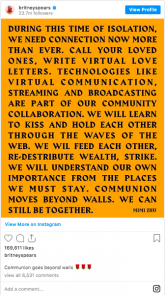
Luckily for you, we at The Peak have done the work for you! Ready to tear down a politicized economy from the comfort of your own home? Do it to the tune of these historic bops.
“Toxic”
Britney whispers, “A guy like you/should wear a warning,” and we all know who she’s talking about: a guy named Canada. That’s right: she’s making social commentary on the continued patriarchy of this country and our failure to warn outsiders that inequality does exist here. “With a taste of a poison paradise” is an apocryphal malaise of a future where Canada “guarantees economic stability” with pipelines, tank farms, and a second-rate oil sands industry.
“You’re toxic/I’m slippin’ under,” Britney ultimately belts as she drowns in the rushing flow of what used to be the Arctic Circle.
So enraptured were we with “It’s Britney, bitch” that we all missed the real point of the song: sustainable public transport. When Britney sings, “Every time they turn the lights down/Just want to go that extra mile for you,” she’s obviously talking about switching to the bus for that last mile to the grocery store, once the sun is blotted out by CO2 emissions from the corporate world. And that refrain of “Gimme more”? She means she wants more electric vehicle infrastructure.
“. . . Baby One More Time”
In this iconic song, Britney once again tapped into her inner Delphic oracle to talk about representations of romance and social relations in media. “Oh baby, baby, how was I supposed to know/That something wasn’t right here?” is a dramatic re-enactment of how Grey’s Anatomy showrunner Shonda Rhimes probably felt after stepping back to let others take over the writing. “I never should have let you go” refers to what we like to imagine Rhimes felt after seeing Krista Vernoff force us through 1000 Grey’s Anatomy/Station 19 crossovers.
Conversely, “Boy you got me blinded” comes from the perspective of the fans. Many of them have been blindfolded by Derek Shepherd’s hair for years, never noticing that he basically workplace-harassed Meredith into dating him, repeatedly. Yikes!
Here, Britney makes a scathing critique of food service middle-management. “I made you believe we’re more than just friends” highlights the common practice of squeezing extra labour from low-income employees — by promising promotions that just never materialize! Her refrain of “Oops! I did it again” caricatures the words silently spoken by franchise coffee shop managers, repeated every time they fire someone and guzzle up their last two weeks’ tips.
“I’m not that innocent,” she concludes over and over, proving that shift-leaders everywhere know and relish their own darkness.
If the other songs were critical, then “Piece of Me” is Britney’s Utopian vision. Becoming the avatar of the 1% — “Miss American Dream, Mrs Lifestyles of the rich and famous,” Britney asks the public again and again if they would like “a piece of [her].” Does she mean a piece of her net worth for the bank, or a piece of the rich’s flesh to be eaten like blueberry pie? We might never be sure, left in a longing mystery.


