



By: Kim Regala, Staff Writer
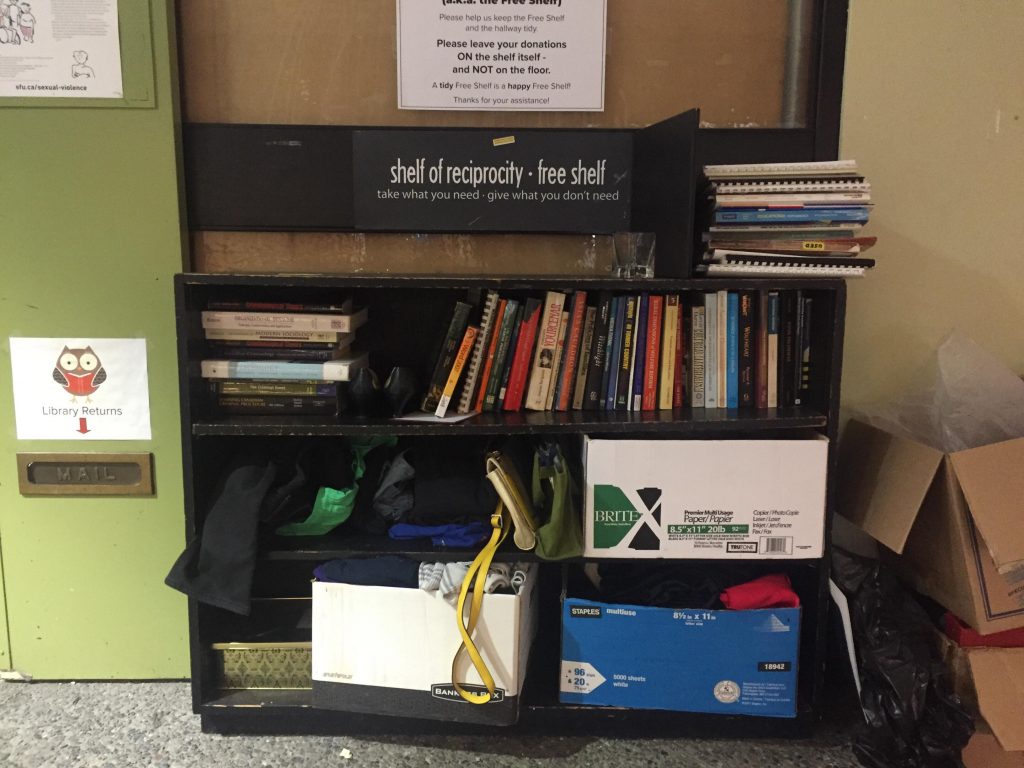
Across the Burnaby Rotunda and in front of the Simon Fraser Public Interest Research Group’s (SFPIRG) office rests an assortment of books and cardboard boxes overflowed with clothes and other personal items. This is SFPIRG’s Shelf of Reciprocity, a designated space for any and every member of the school eager to donate items that — while no longer serving a purpose to them — may serve a newfound purpose for someone else. All the items displayed on the shelf are free to take with no strings attached, except for the voluntary option to reciprocate the kind gesture of leaving something in return.

Given the Shelf of Reciprocity’s name, I expected to find only a bookshelf filled with tons of old and worn out books stacked in every row. I was pleasantly surprised, however, to see plenty of cardboard boxes filled with more than just literature. Sitting on top of one the boxes was a fairly sizeable blanket, along with a variety of sweaters and jackets tucked neatly inside. I found the warmth and comfort of these items especially suitable for our current chilly climate, perfect for anyone who may be looking to add to their possibly lacking layers department.
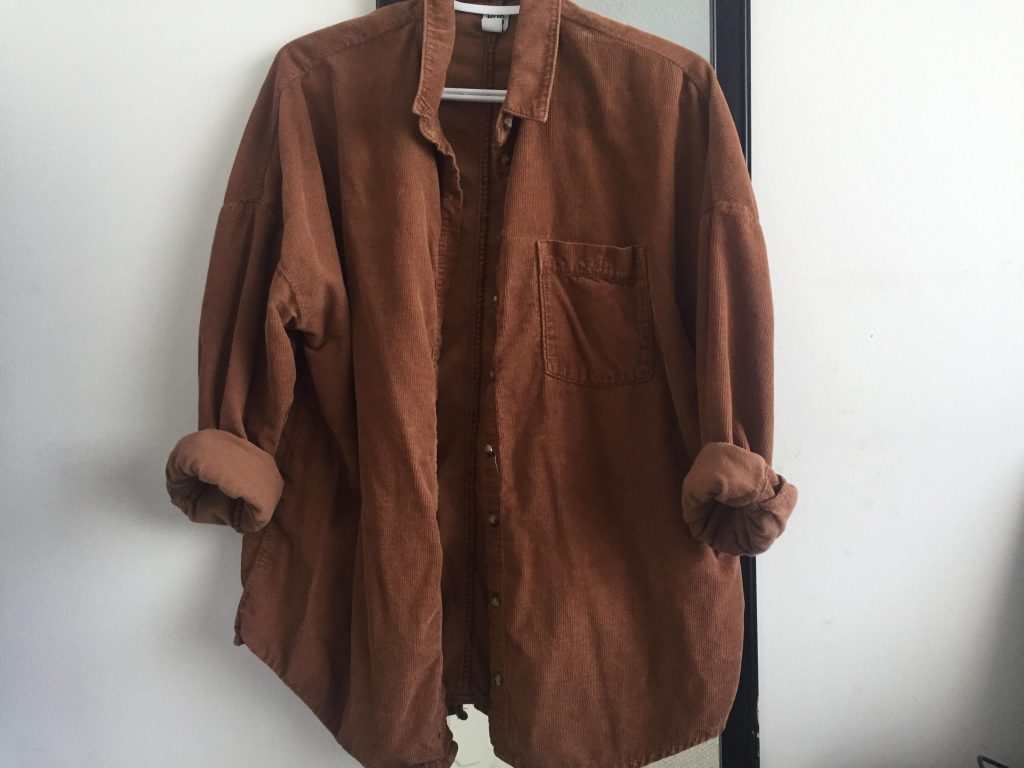
While I personally wasn’t too sold on keeping those for myself, I was instantly attached to a brown corduroy button-up hidden in one of the clothing bundles. Any good friend of mine knows that I’m a sucker for anything brown and corduroy, so naturally I grabbed the gem with no hesitation and made a run for it. That may explain why this photo is taken straight out of my bedroom. I found it incredibly heartwarming to know that I could extend the longevity of this piece again, and at no cost.
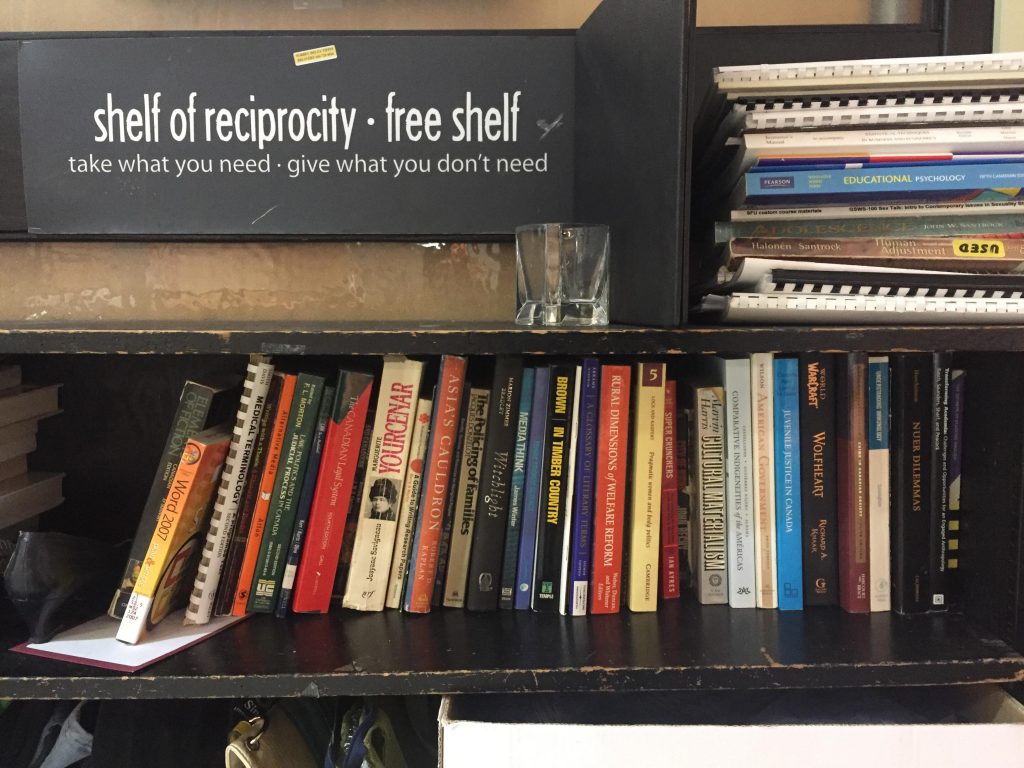
The Shelf of Reciprocity also has a plethora of books resting on its shelves. Various texts with a wide scope of genres stood out as interesting reads to me. One was the adventurous World of Warcraft: Wolfheart by Richard Knaak, a fantasy fiction. I also eyed a biography detailing the curious life of Belgian novelist Marguerite Yourcenar.
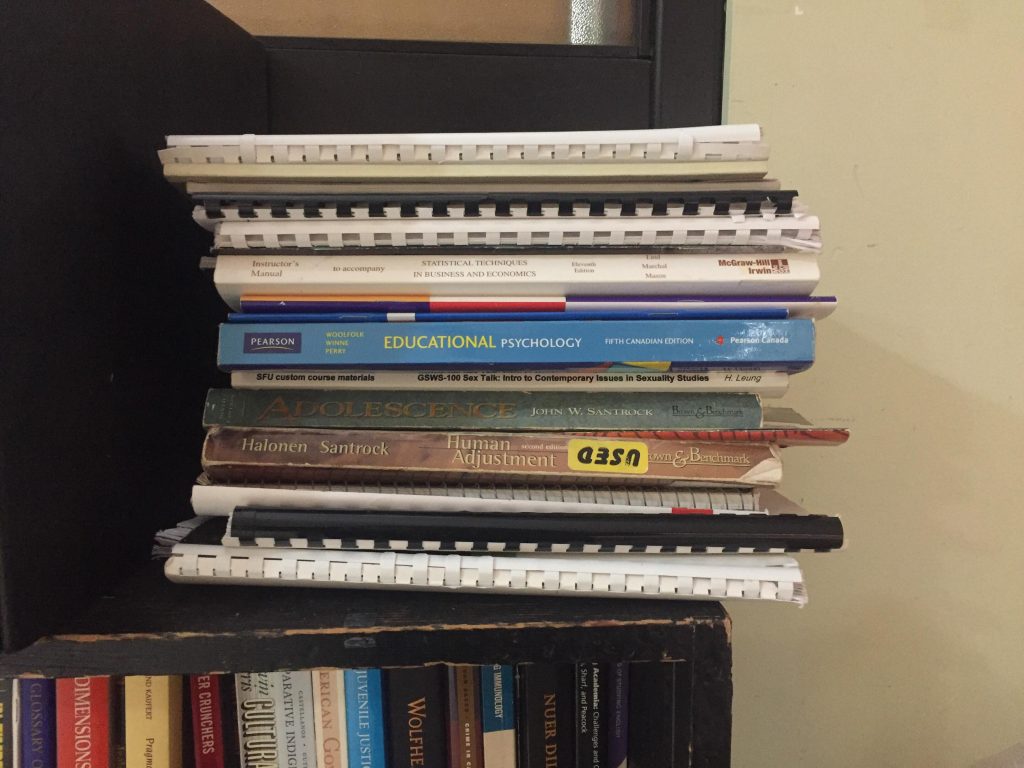
What I didn’t expect, however, was to spot plenty of course materials for a variety of subjects. Textbooks were available for classes in educational psychology, sociology and criminology, while instructor manuals for gender studies and business courses were also up for grabs. As we all know, buying course materials through the SFU bookstore can be extremely time-draining given the long line-ups. And frankly, as one of the many students on a budget, these expenses can easily add up to our already dreaded school tuitions. It was refreshing to see an alternative to attaining these costly requirements — an option that is both easily accessible to anyone and is free of charge.
The Shelf of Reciprocity offers a great source to students looking to donate items that may no longer require space in their lives, but could still be meaningful to someone else. So the next time you walk by SFPIRG, be sure to glance over and stop by the shelf, and you may just find yourself coming home with a new treasure.


