Home Blog Page 998

Life is short. Don’t lie to your spouse.

1
Photo Credit: Phoebe Lim

Beside a painstakingly airbrushed image of a manicured finger pressed against rosy, seductive lips, Toronto-based adultery website Ashley Madison whispers its slogan to philanderers: “Life is short. Have an affair.”

It seems the little devil on 37 million shoulders has managed to heat up the lies, deceit, and lust that foster untrustworthy relationships. Damn. My thoughts go out to all those unknowing spouses; I’m really very sorry.

But the unfaithful idiots out there might have just been given a good kick in the pants. A cyber-hacking collective who call themselves The Impact Group have left me silently cheering at my kitchen table after learning that they’ve stolen all the names, nude photos, and credit card data from millions of lustful fingers, and are threatening to release the information if Ashley Madison refuses to delete its website.

Incidents like this make me realize that people will do anything for sex. Sadly, this includes posting all of one’s personal data on a terribly immoral website that’s practically begging to be hacked. Though bereft of a civil tongue and exclusive of the women involved, the group leaves a statement that I echo as probably the only time I’ll ever endorse an act of cyberterrorism: “Too bad for those men, they’re cheating dirtbags, and deserve no such discretion.”

To all those with an Ashley Madison state of mind, I’ll offer you some practical advice: if you’re willing to cheat on your partner or spouse, maybe a monogamous, faithful marriage isn’t your slice of pie. Maybe you’re bored, tired, or just feeling the need to start fresh. I get it. You’re only human and something just isn’t working out for you.

If you’re willing to cheat on your spouse, maybe a monogamous, faithful marriage just isn’t for you.

However, honesty is the best policy, and I urge you to think twice before you desperately divulge a thoughtless VISA number to a website with employees who’ve created thousands of profiles for women who allegedly aren’t even real. Yep, you read that right!

Instead, sit your husband or wife down and find some way to resolve your hidden issues, before website hackers publicly expose you for the faithless individual that you are.

A healthy monogamous relationship is based on trust and acceptance between partners, and those who’ve agreed to such relationships (much less marriages!) should not be lied to by their other halves, point blank. Which is why I’m astounded that a website happily advertises “discreet encounters” between “thousands of cheating wives and [. . .] husbands.” Pardon me, business-owners, but what the . . .?

It gets juicier! The site charges a $19 fee for those who wish to erase all their personal data. And judging by the fact that the site garnered $1.7 million in ‘delete revenue’ last year, I’d say this was the point of Ashley Madison to begin with: manipulation at its finest. Further, according to The Impact Group, they still kept the profile information they promised to erase before this fiasco.

For the sake of the spouses who’ve been cheated on, and for those 37 million ‘suppressed’ lovers stupid enough to believe that the Internet can be anonymous, I hope that these threats have really taught some folks to keep their nude shots solely on their cell phones, and I can’t say I’d be that disappointed if this stolen information was publicized.

Normally, I’d say have a heart and let them pay the $19 err in their ways, but then I remember that Ashley Madison itself should stop swallowing up human indecency.

Life is short, and if it’s just not working out, take the steps to effectively resolve this with your spouse.

Then go join eHarmony or something.
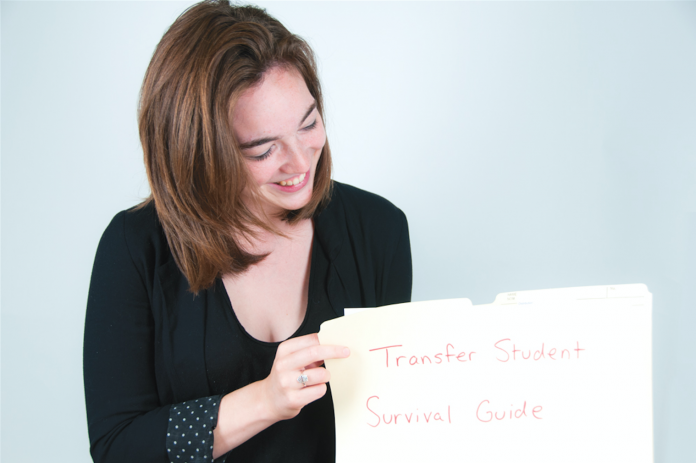
Transfer student survival guide: make connections

0
Photo Credit: Phoebe Lim

You know those friends that you don’t really know but you have on Facebook because you met once at a party? Well, in August 2014, I convinced a ‘kind-of’ friend of mine to meet me for coffee, and that is how I made my first real friend at Simon Fraser University.

A short three months earlier, I’d wrapped up my first two years of my university career at Capilano University. I’m a person who craves change, and despite the fact that I would be leaving my employment at a newspaper I loved and a campus I reveled in, I left my job, my friends, and my incredible instructors to expand my education at a new school.

When I met with my ‘kind-of’ friend in August that year, I asked her how to get a job at The Peak. After working at Capilano’s student publication, it seemed like an easy transition. Three weeks later, I was hired; five weeks later, I had gained an entire staff of friends; five months later, my ‘kind-of’ friend became my roommate. It sounds easy written in three sentences, and sometimes making friends isn’t simple, but putting yourself out there is rewarding because it can help you gain friends, a job, or maybe just simple directions.

While I knew about Nietzsche and Marx, I didn’t know that West Mall isn’t full of clothes.

I didn’t have a typical beginning at SFU: my first time to Club’s Days was not spent learning about different clubs, but promoting this paper. Being a transfer student means that although I might have known about Nietzsche and Marx, I still didn’t know what “the” avocado meant, or that West Mall isn’t full of clothes. Honestly, I still don’t know where the gym is, but I can definitely tell you all about Marshall McLuhan.

This is how I learned that one of the great aspects of transferring to a big school like SFU is that you can Google anything. I have Googled incredibly niche questions and there are always results. Not everyone on campus is excited to give directions, but the search engine on your phone will not let you down (as long as you find wifi).

My best advice for transfer students is to make connections constantly. Again, I know this is often easier said than done, but university is the time to try new things, and that includes talking to people you may have shied away from in the past. Networking is key and it is how I’ve found myself working for this newspaper and the Communication Student Union, along with being involved with two other clubs.

Talk to everyone in class and make the most out of every conversation you have. Making friends can seem scary, but being lost at SFU is scarier, and having a phonebook of people to call from the basement of the Shrum Science Centre is most definitely an advantage.

Speechless in Ukraine in The Tribe

0
Photo courtesy of Arthouse Traffic.

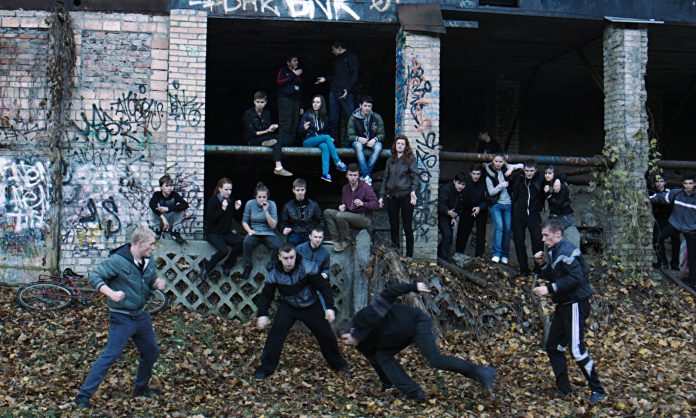
Over the course of 130 minutes, not a word is spoken, and none of the sign language is translated. In The Tribe, we are left to interpret every interaction, every gesture, and every expression without the help of narration. The film feels like it could have been made by F.W. Murnau in the late silent period, alongside Sunrise or The Last Laugh: synchronized sound would soon be available, but some filmmakers still resisted the change.

Directors like Joseph von Sternberg argued that talkies would stunt creativity, as stories would be explained orally instead of expressed visually. Their conservatism aside, these early auteurs were somewhat right: cinema has always been better with actions than with words. The Tribe, the debut of Ukrainian writer-director Miroslav Slaboshpitsky, is a daring and experimental testament to the visual power of the medium that Murnau and von Sternberg sought to preserve.

The film could have been made at almost any point in cinema’s history, yet it fulfills the ambitions of the great silent filmmakers — to tell a story without intertitles or words — while still demonstrating the failure of many contemporary films in their lack of cinematic storytelling. Often you can just shut your eyes, sit back in your seat and understand the vast majority of the narrative. During The Tribe, you may want to close your eyes, but only because the imagery is so unbearably raw.

A boy comes to a new boarding school for the deaf and is confronted by the bullies and ring-leaders who run the school’s distribution of drugs and prostitution. As the nameless entrant (we know none of the characters’ names) begins to get involved in the routine of the criminal ring, which appears to be led by a principal and carpentry teacher, he forms a sexual relationship with one of the prostitutes. On the surface, their relations seems to depict the only altruistic acts in the entire film, yet is still based on a commercial exchange of money for sex.

The film is so meticulously ambiguous, leaving the spectator to decipher the wordless social contracts that rule this private, self-contained world. The prostitutes adhere to their classmate pimps; the classmate pimps follow the command of the principal and shop teacher. There are silent codes that rule this world and all of them are guided by barbaric self-interest.

Aesthetically, the theme and story is delivered with precise camera movements and compositions that place us as outside observers to this society. Slaboshpitsky has a unique visual style, in that he never cuts within a scene. Every scene features the camera lingering to track characters or observe statically, and we are never told that any of what we’re seeing is less than important. The long takes — a current filmmaking fad popularized by Russian Ark, Birdman, and Children of Men — are not self-indulgent or showy, but always used to serve a purpose: to create a deliberate pace that is painfully slow in the most visceral way possible.

In a scene that made me reach for the escape button on my computer, a prostitute has an abortion performed over the course of a single shot: we follow the patient onto the operating table while the woman performing the procedure walks around her house gathering the necessary utensils. The prostitute waits in the room, and we feel the agony of her anticipation. The length of the single takes makes what follows, the gritty depiction of the abortion, feel that much more immediate. In direct contrast to the suffocating silence that came before it, the whimpers of the prostitute feel amplified to a deafening effect.

Throughout The Tribe, Slaboshpitsky uses his quiet and gritty aesthetic to produce excruciating results. This is a film with no words that will leave you speechless.

Amanda Bath shares her Disaster in Paradise

1
Photo courtesy of Harbour Publishing.

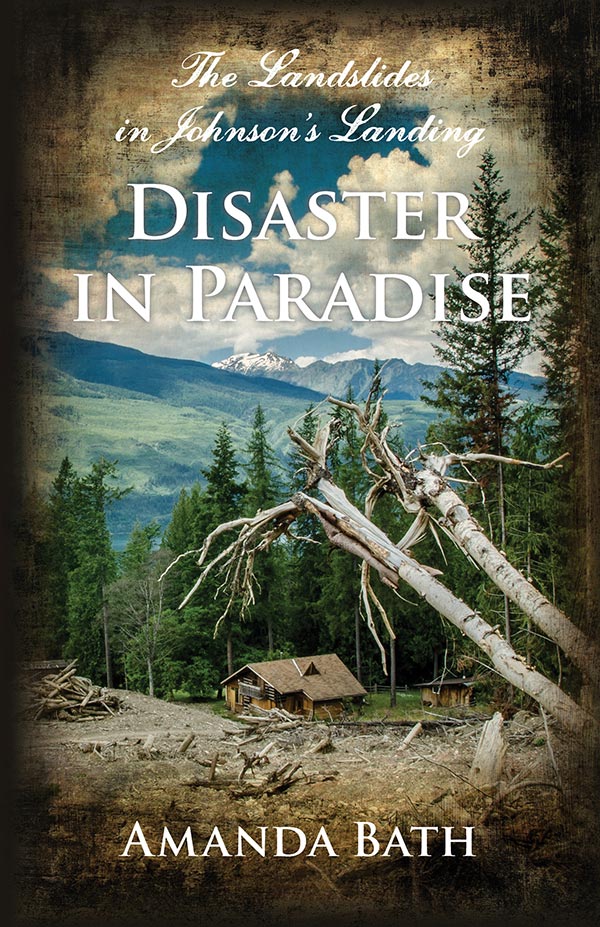
Amanda Bath’s 2015 book Disaster in Paradise recounts the devastating 2012 landslides of Johnson’s Landing, BC. Written in a biographical, creative non-fiction style, the book provides insight into Bath’s life and how she and several others were affected by the landslides. In her words, it is a love story about place, home, friends, “love of one’s pet [and the] things that identify you.”

In a remote location, Johnson’s Landing provided a peaceful home for a small, close-knit community. The town’s beauty took the form of wildlife, fresh mountain air, ancient trees, and pristine water. Residents tended home gardens that yielded fruits and vegetables and neighbours worked together on community construction projects. However, the peace was rudely interrupted when disaster struck.

The trauma resulting from her loss is explored as an inevitable result of enduring a natural disaster. Having lost her home, her belongings, her cat, and four members of her community, Bath struggles to cope and find a way to move forward.

Through her journey she discovers that writing provides a much-needed outlet for her thoughts. “The book was channeling through me and it wanted to be written down,” she explained. “It helps to make it real, helps people to accept what happened.”

Many people who have experienced trauma will be able to connect to Disaster in Paradise. Whether someone has endured a massively destructive force of nature, such as an earthquake or a massive flood, or is suffering the loss of a loved one, there is something in Bath’s words for everyone.

Her book is an inspiration and proof that even someone who has experienced a tremendous loss can find a way to move forward. She highlights the emotional whirlwind she felt during and after a disaster. “When a disaster happens, and you think that life is over,” she said, “you will recover, and life may even be better afterwards. There are hidden gifts under the mud.”

In addition to using writing as a coping mechanism, professional counselling also helped Bath to move forward. As she explained, counselling provides one with a safe setting for someone to express themselves, come to terms with drastic changes that have occurred in their life, and find their happiness again. She recommends that anyone who has suffered a traumatic event should seek out counselling as it helps to prevent post-traumatic stress.

The landslides damaged much of the property in Johnson’s Landing, which still presently challenges community members’ ability to function on a daily basis. Bath hopes that her book will motivate improvements in the provincial government’s response to disasters.

“The big problem that people have on the south side [of Johnson’s Landing] is they still don’t have a permanent water system,” Bath explained, “and this is an absolute outrage. The government has let Johnson’s Landing down very badly.” Bath explained that the provincial government needs to take responsibility for the repairs because the destruction occurred on Crown Land.

Few authors’ first books are written with such sophistication, and Disaster in Paradise is well worth the read. Bath is an insightful writer and her book is a masterful telling of emotional events, life lessons, and overcoming adversity. Readers should also keep an eye out for a potential upcoming prequel detailing Bath’s initial arrival in Johnson’s Landing.

Comic Connoisseur: Moose perfectly encapsulates the cruelty of bullying

0
Photo courtesy of Conundrum Press.

High school is typically depicted through a superficial lens in books, television, and film. What is often showcased is a glammed up and hyperbolized take on a tumultuous half decade in our lives. However, to their credit, these mediums typically get one thing right on occasion: the ruthless and cruel nature of teenagers.

In the graphic novel Moose, we are reacquainted with the more cutthroat time in our education — when school was neither heaven nor hell, but an inescapable purgatory for those that were different.

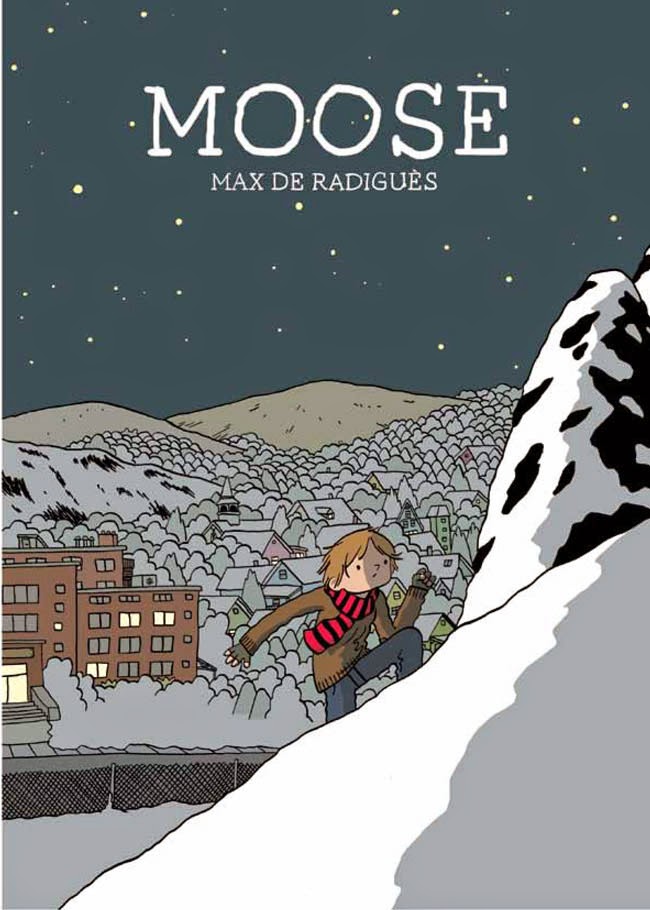
Moose is a story about a timid student named Joe who is viciously bullied every day in high school. Jason, Joe’s tormenter, takes sadistic pleasure in making Joe’s life as miserable as he can. However, this all changes one fateful evening when a moose attacks Jason in the forest while he is accosting Joe. The moose knocks Jason down a chasm for which he cannot escape. Joe is then faced with the conflicting decision of saving his tormentor or leaving him to suffer in the wild.

Joe is a relatable character for audiences. He is an introverted teen who keeps to himself and would love nothing more than to read his Lord of the Rings novel in peace; Moose’s abundance of charm relies heavily on its shy protagonist. At his very core, Joe is a kind-hearted soul whom audiences will dread seeing in pain. However, he is also a testament to strength and the will to endure — qualities which make him a strong lead.

Max De Radiguès, much like the late John Hughes, has a strong sense of what it means to be a teenager, although his perceptions are much darker than they are jovial. Moose’s depictions of bullying are at times hard to read; every cruel assault on Joe tugs on the readers’ heartstrings. Likewise, Radiguès renders scenes of Joe’s sexual development with poignant tongue-in-cheek that can resonate with everyone.

In the world of Moose, teachers and adults have a presence that is solely physical — mentally and socially they are disconnected from their students. They are ignorant to the torments Joe faces in the story — which is a fitting commentary that voices both the strong sense of complacency some teachers have towards bullying and the solitary battles young students must face in high school on their own.

To those of us who were outsiders in high school, Moose encapsulates a frighteningly familiar rendition of what it felt like to not fit in. While the art is simplistic and easy to overlook, it is never without its complexity and nuance. Above all, Moose is a rich and thoughtful work that will stay with readers long after it’s over.

The Wonders is an idyllic coming-of-age story

0
Photo courtesy of The Match Factory.

As someone who spends most of his day in front of computer, TV, and cell phone screens, I felt a magical connection to the slow lifestyle in Alice Rohrwacher’s beautifully simple The Wonders.

No matter how hard we try to lead a quiet life, relax without any interferences, or connect with people on a personal level, there always seems to be an obstacle that gets in our way — a text, an email, or a tweet. I think Rohrwacher knows that life’s gentle, melodic rhythms may not be easier, but they have an aura and a wonder that seems to be lacking in our cold routines.

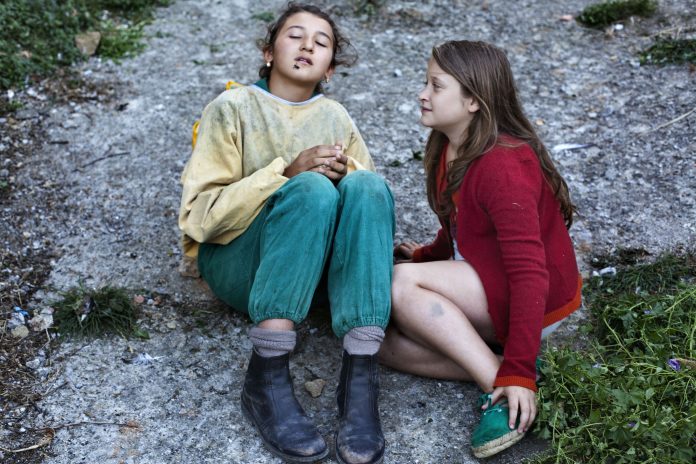
Rohrwacher’s second feature, which won the Grand Prix at the 2014 Cannes Film Festival (second place after the Palme d’Or), in many ways is an autobiographical portrait of her childhood: she, like the protagonist Gelsomina, grew up in a small town in Italy with a German father who was a beekeeper and an Italian mother who helped keep the home.

The two through-lines in the film are the family’s struggle to preserve their rural farm, and Gelsomina’s coming-of-age story. The latter is caused by the arrival of a troubled boy who is adopted into their home; as one grows and matures, the other withers and passes away.

These two themes are connected by the kitschy reality TV show that comes to town, Countryside Wonders. The show acts as an opportunity for Gelsomina to act as a minor celebrity and participate in something beyond the mundane tasks on the farm. But this comes at a cost: the show that celebrates the contributions of farmers also depicts it as a glossy bourgeois fantasy (the competitors on the show wear ancient Roman clothing and luxurious robes) which, paradoxically, will attract tourists and end that very way of living.

Somehow, Rohrwacher manages to walk the perfect line between gritty realism and nostalgic fantasy. The beekeeping scenes burst with sights and sounds where you can almost smell the sweet warmth of the honey — at the same time never forgetting the pain and hard work that goes into it.

Shot mostly hand-held on super 16mm film, The Wonders has a look that feels marvelously nostalgic, as the grains in the image meld beautifully with the light and landscape, but it is also immediate and grounded. Also, by integrating the fantastical elements of Countryside Wonders, the film adds a layer of dreamscape in what could have been a monotonous retread of Italian neo-realism.

Although the coming-of-age aspects of the story are mildly underwhelming and derivative, the real stars of the film are not the naturalistic and amateur cast, but the Italian countryside, the farmhouse walls, and the old and unsanitary equipment — all aging, breaking, and decomposing. This is a film that for two straight hours made me forget about the notifications on my phone, and enraptured me in a world that I wish existed.

I think I’ll shut off my phone and go for a walk.

Daniel Wesley’s “beach music” comes to Shorefest

0
Photo courtesy of Universal Music.

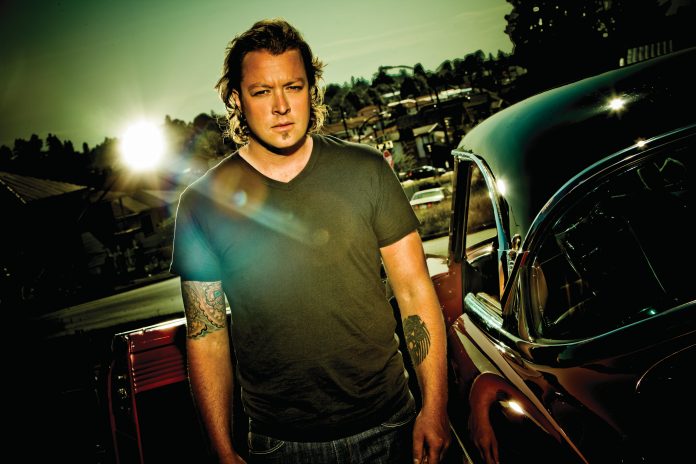
Vancouver’s Shorefest kicked off on July 25, and I had the opportunity to catch up with Daniel Wesley, a BC artist playing at the festival. Wesley has toured all over the province and will be making a stop at Shorefest an August 1 on the Sunset Beach stage.

Wesley discussed how his interest in music began. He recounted being a part of a large family and driving to various sports practices in the family’s old Volkswagen van and singing to classics by Neil Young, The Doors, and Michael Jackson. Music was always welcomed in his household.

Just like any other kid, having fun and playing, he remembers singing songs into the microphone, which just so happened to be a candle stick (we all did it). When he was a child, his parents let him and his siblings experiment with various sports and instruments; however, he didn’t decide he wanted to be in a band until the age of about 15, when he joined one with friends.

Fast-forwarding to the present, Wesley has recently released his seventh studio album, I Am Your Man. This album brings back some of the feelings and acoustic sounds of his previous work, but also captures unique qualities and displays his amazing musical progression. 

“My music is always evolving with my experiences,” Wesley said, noting that he enjoys artists like Neil Young who refuse to remain stagnant with their work. When asked about where he is now in his life and work, Wesley noted that he is expecting his second child soon, which gives him a new creative outlook.

Performing at Shorefest seems like the perfect venue for this local artist. Wesley describes his music as “beach music”; surely, the laid-back setting of English Bay will create a stunning atmosphere for the performance. Adding to that vibe, Wesley notes that the festival is free, further promoting an inclusive atmosphere.

Shorefest runs July 25, 29, and August 1, and is followed each night by the Celebration of Light fireworks. Be sure to catch a few of the many bands featured in the festival including The Harpoonist and the Axe Murderer, Chilliwack, and what is sure to be an amazing set by Daniel Wesley on on August 1.

Feelin’ feline: life advice from a cat

0
Ciabatta Lebowski, Furred Guru

Have your own life dilemmas or crises you need consoling on? Send them our way at [email protected]

I’ve been with my current partner for almost two years now, but I’m at a crossroads: while he’s constantly hinting that we should move in together, I’ve been considering breaking things off. There’s nothing particularly wrong with our relationship; I just feel like I’m losing part of my own identity from being with him, and I see moving in together as the next stage of decline. What should I do?

My Own Woman

Have you tried meowing insistently at nothing, then scratching at your human’s living room furniture? I find that usually elicits a response.

Well, it finally happened. After balancing everything throughout my first year of university, I put my time at the gym on the backburner and, seemingly overnight, I became acquainted with the infamous freshman 15. And during the summer semester, when I should be spending time on more important things, like working on my tan. Any advice on what I can do to beat the bulge before my entire summer’s spoiled?

— Summer pudgin’

First, you’ll want to creep up on your human while he or she is asleep. Lie silently atop of their stomach and then just as they’re entering the deepest part of REM sleep, execute a single paw swipe towards the facial area. Before the human has a chance to awaken, scamper away and pretend to be sleeping in the next room.

Help! I’m on a performance-based scholarship and my marks this semester are dangerously close to falling beneath the minimum GPA allowed. What can I do to motivate myself to spend more time studying, aside from the obvious looming doom of being kicked out of university?

—Down But Not Out

I would recommend finding the nearest sunbeam and falling asleep in that spot for the next eight hours.

The person I’m writing about is a reader of your column, so I have to be cryptic: I have an increasing suspicion that a member of my family (I still live at home) has stolen something of mine that’s of great financial and sentimental value. Despite casually bringing up its disappearance on a number of occasions, no one seems to be coming forward. Making things worse is the family member most likely to have taken it is a recovering addict. How do I confront the situation, but in a way that won’t divide the household?

—Case Of The Missing Trust

First off, you need to make a decision right here and now on what’s more important to you: maintaining the relationship with this family member or whatever the item is you think they stole. Objects are just objects and no matter the value of the missing item, you only get a limited amount of family in your lifetime. When you decide what’s more important, you’ll have your answer for what to do. Alternatively, you could always try sprawling across the family’s laptop and hope this will draw attention to the fact that they haven’t pet you in several minutes.

With files from Jacey Gibb

Twelve ways to celebrate BC Day like a true British Columbian

0

On August 3, residents across the province will celebrate the statutory holiday British Columbia Day, or BC Day. What are people supposed to do to commemorate such an occasion? No one’s really sure, but here are 12 activities that we’ve decided are certifiably-authentic ways to celebrate BC day in Vancouver.

1. Partake in a yoga class.

2. Complain about people doing yoga outside on Aboriginal Day.

3. Complain about Christy Clark and her push for LNG expansion in this province.

4. Complain about Kinder Morgan and how futile complaining about Kinder Morgan probably is.

5. Complain about how warm the weather’s been.

6. Complain about how it rained on the one day you had plans to go outside.

7. Complain about TransLink and how much money you think they probably waste.

8. Complain about Vancouver being a “No Fun City.”

9. Complain about how expensive Whole Foods has gotten.

10. Complain about how there are too many (or too few) bike lanes.

11. Complain about how expensive it is to live in Vancouver.

12. Complain about how people complain too much.

Tips on how to have the best ginger-beach season of your life

0
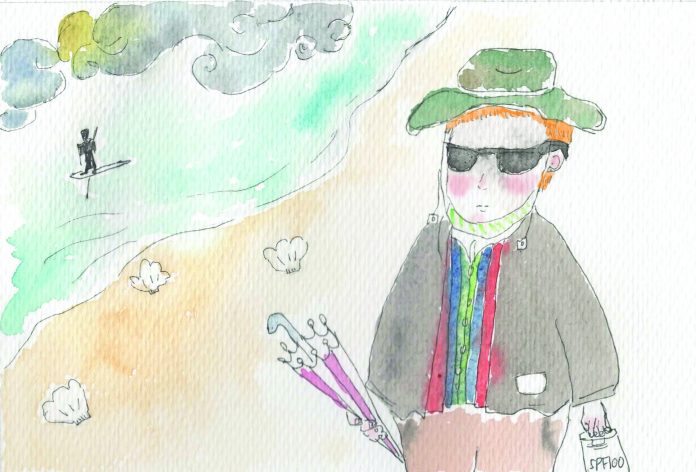
Illustration by Momo Lin

It’s almost August, which means beach season for all you red-haired beach bums is only a few months away. And while you might be wondering how the season snuck up on you so quickly, much like the full-body suit you usually wear to avoid getting sunburnt, The Peak’s got you covered. Here’s a quick breakdown of everything you need to know about the forthcoming ginger-beach season, including which long-sleeves to buy and how many SPFs is too much. (Spoiler: no such number exists!)

The latest styles: There have been a few useless seasons in-between now and last ginger-beach season, so anything from last year is obviously tacky and awful. What fashion experts won’t tell you is that Mountain Equipment Co-op actually receives their winter stock at the tail end of the summer, so you can start assembling your wardrobe months ahead of everyone else.

Must-have accessories: Most people focus so much on what to wear to the beach that they completely forget about what accessories they should pair with their outfit. Sunglasses, broad-brimmed hats, beach umbrellas, and those suits that beekeepers wear are just a few cute extras that can take your ginger-beach look up to the next level.

Sleeve lengths: If The Peak had a FAQ section for ginger-beach season inquiries, this question would be at the top of the list. A good rule of thumb to use is this: if that part of your body is visible, it’s probably going to get sunburned and you’ll develop melanoma and die tragically. Treat your appendages like Brendan Fraser’s career in 2015: keep them out of sight.

Sunscreen: Did you know that sunscreen that’s SPF 100 and sunscreen that’s SPF 30 protect against roughly the same amount of Ultraviolet B (UVB) rays? There’s only about a three per cent difference  (99 to 96.7) between the two, but you’d probably feel better having a sunscreen with three digits of SPF in it instead of just two. There’s no scientific evidence that says the our sun is prone to the placebo effect, and yet there’s no evidence that says it isn’t prone. Science!

Caking yourself in mud: Not just for protagonists evading the titular Predator at the end of a movie, covering your body head-to-toe in mud is a great way to make sure you avoid getting sunburnt while also giving you an excuse to lather yourself up in nature’s clay. Just remember to reapply the layer of mud every two hours, or after every time you go in the water.