Home Blog Page 997

SFU research says Canada needs electric cars

0
Using electric vehicles could reduce BC’s GHG emissions by 80 to 90 per cent. - Momo Lin

According to SFU professor and researcher Jonn Axsen, the future of electric vehicles and the key to their popularization is already here, but the lack of government support and promotion is limiting accessibility and sales.

The 2015 Canadian Plug-In Electric Vehicle Study led by Axsen and his colleague Suzanne Goldberg, both professors in the School of Resource and Environmental Management (REM), analyzed the current influence on electric vehicles sales, and identified measures that could be taken to increase their popularity.

They found not only that current electric vehicle availability and sales are extremely low, but that current methods of promotion are ineffective. “Electric vehicles are not likely to make up more than one percent of vehicle sales in the next decade and no more than four or five per cent by 2030,” explained Axsen in a SFU media release.

However, Goldberg identified that improved government support and promotion has the potential to increase sales to more than 20 per cent by 2030.

The study split Canadian consumers into three groups: those who already possessed an electric vehicle as “PEV (plug-in electric vehicle) pioneers,” those who would buy a vehicle after the pioneers as “potential early mainstream buyers,” and those who would not buy a vehicle as “later mainstream buyers.”

There are two main types of passenger electric vehicles examined in the study — plug-in electric vehicles and hybrid-electric vehicles.

Plug-in electric vehicles are further divided by their use of gasoline. Vehicles that start by using electricity and use gasoline during latter parts of a trip are referred to as plug-in hybrid vehicles (PHEVs), an example being the Chevrolet Volt.

Plug-in vehicles that rely solely on electricty, in exchange for a reduced range of driving on a single charge, are referred to as battery electric vehicles (BEVs), with the Tesla Model S being the most famous.

Hybrid-electric vehicles (HEVs) like the Toyota Prius hybrid have no plug-in charge available, but offer improved fuel economy and thus greenhouse gas (GHG) emission reductions.

The study found that “mainstreamers” were generally confused about the different types of electric cars, and the very existence of plug-in models in Canada. However, after being educated on the topic, a third of the potential consumers expressed their desire to purchase a plug-in electric vehicle.

Furthermore, two-thirds of mainstreamers already possess the capability to charge an electric vehicle in their homes, with a conventional wall socket within 50 feet of their vehicles. The study found that public chargers did not increase awareness for plug-in electric vehicles.

According to Axsen, the lack of vehicle choice and the lack of public awareness of electric vehicles identified are problems identified by the study that can be eliminated with increased government support and promotion.

Axen and Goldberg referred to California as a successful model, where they have the Zero Emissions Vehicle Mandate imposing a set percentage of vehicle production to be electric, as well as Norway, which already has a 20 per cent “new vehicle market share” for electric vehicles due to successful policies like a vehicle tax exemption.

In BC, electric vehicles can reduce greenhouse gas emissions by 80 to 98 per cent in comparison to traditional gasoline-based passenger vehicles. With transportation accounting for nearly a third of British Columbia’s GHG emissions, an increase in use and awareness of electric vehicles could significantly decrease BC’s GHG emissions.


My university is letting me down

0
Photo Credit: Adam Van der Zwan

Recently, I have taken no pleasure in telling people that I am an SFU student. The source of my newfound shame stems entirely from the university’s union busting and poor labour relations with the Teaching Support Staff Union (TSSU).

In April 2014, the collective agreement between the TSSU and the university expired. Considering SFU prides itself on becoming Canada’s leading “engaged university,” I had no reason to believe that negotiations would be delayed and that the union would have to wait so long without an agreement. Sadly, negotiations were, and the union is still waiting. For over a year now, the university has dismissed the union and their core issues.

It’s extraordinarily hypocritical to ask students to “engage” in research, their community, and real issues when the university continuously neglects the needs of union employees by ignoring their pleas, and withholding a contract from them.

Simon Fraser University, the school I have cheered for and called my own, now leaves me feeling ashamed.

Andrew Petter, our current president, served as Minister of Advanced Education from 1998 to 2000 here in BC. During that time, he provided leadership and direction to post-secondary institutions, but that experience has yet to be put to use at SFU, since he seems to have been MIA amid this 15 month-long conflict between the university and the union. Our president should know better than anyone else that SFU students are bright and attentive, and that they would notice if he shied away from a leadership role in the current conflict.

SFU, the school I have cheered for and called my own, now leaves me feeling ashamed.

So Mr. Petter, this message is for you: I want you to know that as an SFU student, I’ve noticed. I’ve noticed you’ve let SFU slip in its rank as a reputable institution. I’ve noticed you don’t respect unions and the bargaining process, and that you haven’t engaged with the TSSU to provide the leadership all presidents should when their employees are unhappy and their students inconvenienced.

The TSSU, which does the majority of face-time teaching, deserves a fair and timely negotiation process. As TSSU chair Derek Sahota says, the negotiation team representing the university is from an administrative background, and they don’t understand the problems faced by TAs and sessional instructors in the classrooms and lecture halls, dismissing them as not being real ‘issues.’

If job security, protection from underpay and overwork, expanding opportunities for current Grad students, and guaranteeing union members the basic protections of BC law for health and safety training and wage payment aren’t considered ‘issues’ or don’t merit more conversation, then I don’t know what does.

Simply put, the university appears to have no real grasp on the core issues the TSSU members have. This is likely the root of many problems in the negotiation room.

When I graduated high school I didn’t just want to earn a degree — I wanted to experience higher learning and attend an institution committed to thoughtful debate, progressive policy, and fostering a community on campus. It was these desires that brought me to SFU in 2012. Now, I wonder if I made a mistake when I assessed how committed SFU was to ensuring such ideals.

The recent bargaining between the university and the union gives me hope for an agreement, but I still see no end in SFU’s blatant disrespect of labour organizations such as the TSSU.

I worry about SFU students, as the strike affects them just as much as it does our hardworking TAs and sessional instructors. I am truly ashamed my university has had such poor relations with the union, and has continued to display a distinct lack of empathy for everyone affected.

Board Shorts

0
Photo courtesy of SFU

Increased funding for BuildSFU bursaries

The SFSS board of directors unanimously passed a motion in favour of doubling the funds allocated from the Build SFU levy to SFU Financial Aid and Awards from three to six per cent.

The funds are to be distributed through the Build SFU Undergraduate Student Bursary, which was established for “students who demonstrate financial distress to apply for assistance in paying the Build SFU levy.”

Approval of financing Hi-F.I.V.E. stipends

VP Student Services Darwin Binesh presented a motion for the SFSS to contribute towards compensation for the volunteer position of “Project Coordinator” of the Hi-F.I.V.E. (Friendship, Invite conversation, Value everyone’s gift, Eliminate stigma) Movement for Mental Health.

Hi-F.I.V.E. is student-run initiative currently supported by the SFSS and Health and Counselling Services, who will be co-funding the stipend. The board moved to allocate $3,300 for the position, which will pay $300 biweekly for 44 weeks between August 2015 and May 2016.

Library hours extending for exam period

VP University Relations Brady Yano announced that the Burnaby campus’ WAC Bennett library will be open 24 hours for the first time during the summer semester exam period.

Beginning Friday, August 7 until the end of the exam period, students will be able to access the facilities at any time, with a student ID required after regular hours upon entrance.

University Briefs

0
Photo courtesy of The Runner

KSA campaign to increase student voting for upcoming election

[SURREY] — The Kwantlen Student Association (KSA) is aiming to encourage students in their school to vote in the upcoming federal elections this October with a new campaign called Get Out the Vote.

According to The Runner, “The KSA chose perhaps the most interesting Canadian election in recent memory to roll out this new program,” with the possibility for the opposition NDP party to win — making this election particularly historic.

The KSA plans to get students involved by exposing them to debates and other politically-related events situated on their campus.

With files from The Runner

Queen’s professor’s papers removed due to plagiarism

[KINGSTON] — Four academic papers written by a Queen’s University professor were removed from the website of the CDIO Initiative, a Swedish educational organization which focuses on engineering, and consists of over 120 academic institutions globally.

The papers were removed after the university advised CDIO to do so, due to elements of “plagiarism.” Despite the incident, the professor in question hasn’t made any statements concering the papers.

With files from The Queen’s Journal

Stand with Nepal volunteers raise funds for victims of Nepal earthquake

[KELOWNA] — UBCO students have started a program called Stand with Nepal, to lend help and support to victims that suffered from the recent earthquake. 

So far, the students have successfully raised $6,000, and are aiming to raise $10,000. The funds will be put towards initiatives in Nepal to rebuild and restore the homes of the earthquake’s victims.

With files from The Phoenix News

Satellite Signals

0

WEB-woodwardWoodwards

CreativeMornings is back at Woodward’s this week. Visit the Djavad Mowafaghian World Art Centre at the Goldcorp Centre for the Arts on Friday, August 7 at 8:30 a.m. for a talk by Dana Chisnell. Her claim to fame is that she has established effective design literacy techniques that help government workers to create the best local election design for voters. Considering Canada’s upcoming election, Chisnell’s talk is not to be missed!

vancouverHarbour Centre

The next event of the City Conversations series titled “Future of the Viaducts: The City Staff’s Report” will be held on Thursday, August 6. The session is centred around a report prepared by Vancouver City Council staff regarding “the condition of the Georgia and Dunsmuir Viaducts, and [. . .] what opportunities might exist if they were to be removed.” Bring your lunch and join the conversation at 12:30 p.m. in room 1600.

The Shwanga Show brings AFRIKOMEDI to SFU Burnaby

0
Photo courtesy of Ally Baharoon.

On August 5th, a brighter side of African culture will emerge from behind tears of laughter at AFRIKOMEDI. No, it’s not just a charming play on words, but a student-funded evening that will feature the wit of five talented local comedians.

Headlining the event are two comics who focus on a variety of issues including race, student life experiences, and social boundaries. First to headline the event is Vancouver native Ryan Mutama, a comedian who tackles the awkwardly avoided questions regarding African American culture.

Mutama is followed by Gavin Matts, a graduate of film production at VFS and a regular at the Comedy Mix downtown. Matts has also performed at the 2014 Pemberton Music Festival.

The show is also a platform for encouraging young stand-up comics, and will feature several comedy acts performed by SFU students: Virginia Ukpabi, Benjamin Manishimwe, and Mufaro Mbudzi.

The Peak caught up with AFRIKOMEDI host Ally Baharoon to ask what audiences could expect from the jovial evening. “You get to learn more about Africa in a way that isn’t really widely understood,” he said. “We don’t have talking lions as pets, Ebola is not a major town [. . .] the point of comedy is to push comfort zones and boundaries.”

For those of you who feel like outsiders to the world of African culture, asking questions about the subject can feel awkward, thus they are avoided altogether. If that is the case, this show is right up your alley. You can leave all of your worries and awkward feelings at the door.

It’s not very often that comedy events are hosted at SFU. There are trivia nights and workshops galore, yet very few comedic acts; take this chance to catch one before the long wait for the next one.

AFRIKOMEDI’s “evening of a thousand laughs” comes to SFU Burnaby on August 5. The event will be held in Shrum Science Centre 9200. Doors open at 6:30pm. Tickets are $5.00.

EDM and rap reign at Pemberton

0
Photo courtesy of Pemberton Festival.

The Pemberton Music Festival took place from July 1619 and offered a host of interesting artists. The main focus of the lineup was rap and EDM, featuring big acts such as Kendrick Lamar, J. Cole, and Jack Ü complemented by smaller acts like Logic, Earl Sweatshirt, and RL Grime. The sheer size and scope of the festival meant you wouldn’t be able to see all the acts, or even all your favourite acts. I had to make some pretty hard choices to make over the course of the weekend.

Thursday had the weakest lineup, with the only two notable acts being Billy Talent and J. Cole. Billy Talent were terrific, and it was a great nostalgia trip to hear songs such as “Red Flag,” “Fallen Leaves,” and “River Below,” which I constantly played in my early teen years. J. Cole played to a packed crowd on a the main Pemberton Stage, and performed mostly songs off his newest album, 2014 Forest Hills Drive, at the expense of some of his older work (though he still managed to include favourites “Work Out” and “Crooked Smile”).

Friday featured Kid Cudi who played the remixes to his popular songs “Day n’ Nite” and “Pursuit of Happiness.” Not to say that Kid Cudi wasn’t good, but those were the only two songs that seemed to really get the crowd going. After that was The Black Keys. I saw them when they were in Vancouver in October, and was curious if they would improve on what I thought was a pretty poor performance. They didn’t. It was a really boring set, and I now realise it’s because all of their songs sound exactly the same. I left them early to catch Tiesto who redeemed the night for me. His high energy set was terrific, and my EDM-inclined friends were going nuts.

The first act I attempted to see Saturday was Earl Sweatshirt. By “attempted,” I mean it was too damn hot, so I ended up leaving to avoid getting heat stroke. Plus, he stopped rapping halfway through his set to start DJing, which was odd. Also on Saturday, Alice Cooper was excellent. He is a great showman, coming out in a giant Frankenstein costume during “Feed My Frankenstein” and having his head chopped off in a guillotine. Ludacris was the best artist of the day by far. He knows how to work a crowd, and his performance of “Move Bitch” was a highlight. I was also pleasantly surprised by RL Grimes.

Sunday featured indie rock group Real Estate, whose mellow, almost psychedelic style was very soothing on another hot day. A$AP Ferg followed. His style of rapping over trap music was interesting. He even played “Wild for the Night,” a song by fellow A$AP member A$Ap Rocky.

Kendrick Lamar was a standout. His set can be described in one word: fire. After showing up late to last year’s festival and only playing half of his set, he showed up on time this year and absolutely killed it. He played all his best songs from Good Kid m.A.A.d City, including “Swimming Pools,” “Bitch Don’t Kill My Vibe,” and my personal favourite, “m.A.A.d city,” along with a few songs from To Pimp a Butterfly and Section .80. His was by far the best performance of the festival.

While I enjoyed many of the acts I saw at Pemberton, one problem with the festival was the scheduling. There were a lot of great comedy acts I wanted to check out, such as Tim & Eric and Nick Offerman, but they were at the exact same time as some musical acts I wanted to see. Another issue was some major acts being scheduled right after each other, forcing you to stay the whole time, or leave early to avoids the crowd of thousands. There also wasn’t much available in terms of rock groups, so if you weren’t into rap or EDM, you were out of luck.

Overall, though, the festival was an excellent experience and I am curious to see how organizers will improve on a strong lineup next year.

SFU’s legacy song finalists, ranked

0

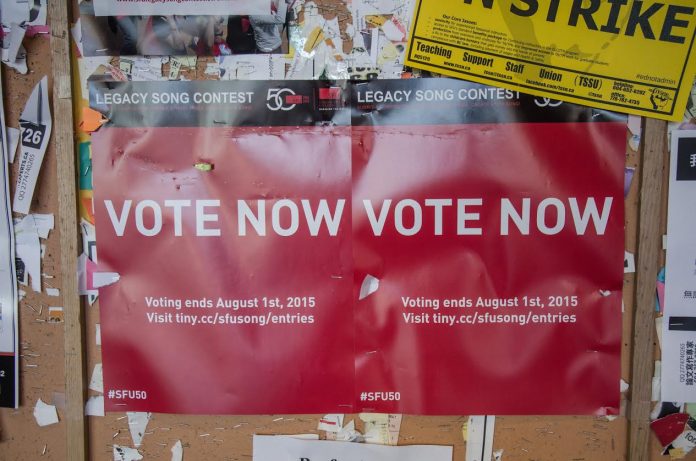
Have you ever been on campus at an event or a convocation and thought, man, I wish SFU had an official school song? Well, me neither, but the team behind our school’s 50th anniversary celebrations have introduced a contest to choose one anyways. Despite opposition, the Legacy Song Contest has whittled down its 35 entries to six, one of which will gain the honour of becoming SFU’s school song a full half-century post mortem. If I’m going to be forced to sing one of these things at my own convocation, you’d better believe I’m going to vote for my favourite.

Voting closes tomorrow, so if you’re not sure which song to support, The Peak has ranked each finalist from best to worst for your convenience.

  1. “Make a Simon Fraser U” by Brendan Bernardo

First impressions: The eighties are alive and well at SFU. I’m getting a bit of a “Piano Man” vibe, but with cheesy synths and a stuttering tempo and less charm. Seriously, there’s something wrong with the tempo on this one. I feel like I’m watching an infomercial on local access cable, and not the funny kind.

Sounds like: The song they play over Scientology recruitment tapes.

Verdict: The singer really sells it, but there’s just not enough material here to make for a good school song. Most of the lyrics seem like thrown-in references to check off a list, and the chorus at the end doesn’t really make sense. I don’t know how to make a Simon Fraser U, and I don’t think I want to know.

  1. “Engage the World” by Caleb Sung and Brett Janzen

First impressions: Oh lord, those strings. For real? How would we ever actually perform this thing? I get that the whole pounding-drum thing is supposed to be inspirational, but I just end up thinking this sounds more like Christian rock for rebellious teenagers. I can see why this song has so many votes, but it just leaves me cold. Extra points for the “native land” reference, though.

Sounds like: The biggest hit Disney song since “Let It Go.”

Verdict: There’s some talented musicianship going on here, but this one is just a little too cheesy for me. Still, it’s not the worst.

  1. “We’re SFU (We Are)” by Mubanga Clifford Ngosa

First impressions: Okay, the soft guitar in the background is pretty lame, but you’ve got to love the way he rhymes SFU with “red and blue” — those are totally our colours! There’s even an engage bomb. It’s a little slow paced to imagine actually singing it at an event, and I doubt a crowd of bored students could ever pull off those vocal harmonies. The untrained singing voice is actually pretty endearing, though.

Sounds like: A mediocre Jeff Buckley cover band on open mic night.

Verdict: Meh. It’s short, which is a plus, and the lyrics have that perfect balance between jingoistic collectivist fervour and rugged individualism. I’m not totally sold on the tempo, but you could always speed it up and add an awesome guitar solo at the end. In fact, every song on this list should have an awesome guitar solo.

  1. “We Are SFU” by Daniel Moxon

First impressions: This guy can totally sing! Dang. Again, not sure what the deal is with these slow tempos — shouldn’t we be upbeat and happy about our school? — but I think it captures the whole engaging-the-world thing pretty well. It doesn’t really go anywhere, which can be good or bad depending on what sort of mood you want to convey.

Sounds like: Sam Smith backed by Edward Sharpe and the Magnetic Zeros.

Verdict: As far as school songs go, you could do a lot worse. I can see myself singing this thing half-seriously, even. Getting sick of the “we are SFU” metaphor, though.

  1. “We Are All SFU” by Rich Chambers

First impressions: Whoa, talk about a fast tempo. This is what I’m talking about. Some cute lyrics and a fun call-and-response chorus make this one very likeable. It kind of seems like a cross between a kindergarten song and a sea shanty, which describes SFU pretty well, I think.

Sounds like: A pub singalong starring Joe Strummer and Raffi.

Verdict: It’s almost two minutes long, which makes it a little unrealistic for a school song, but this one has lots of personality and the energy that’s missing from a lot of the other finalists. But seriously, can we not think of any other title for a school song?

  1. “SFU (A Flag Unfurled)” by Adam Janis

First impressions: Okay, I like this one. I like it a lot. The lyrics are pretty bad, but so are the ones from all the other songs, and he rhymed “best in you” with SFU, which is either the greatest or worst thing ever. I like the whoas — they seem like a good way to get the crowd involved even if they don’t know the words — and I really like that the song doesn’t say “we’re SFU.” It doesn’t even say it once. At this point, that’s enough for me.

Sounds like: The Police reimagined as an indie rock one-hit-wonder.

Verdict: This one will never win the popular vote, but it won my heart. I like the ska vibe, and it’s the only song that stayed stuck in my head for hours after I listened. It’s a tough call, but this one takes the cake for me.

The judges: Apart from voters, the judges for the competition include Anne Giardini, SFU’s chancellor, and Enoch Weng, president of the SFSS, and accomplished musician in his own right.

The prize: The winner of the contest will receive $2,500 and a chance to perform their song for a live audience at SFU’s 50th anniversary celebration in September. Two runners-up will receive $500 and an inferiority complex.

The controversy: One of our writers publicly spoke out against the contest, arguing that SFU’s status as a radical school precluded us from adopting something as traditional as a school song. My problem with the contest has more to do with the fact that the winning song will instantly become SFU’s intellectual property, meaning the composer basically gives up all rights to authorship and future revenue. Thanks, neoliberalism!

SFU research shows ad-blockers save data

0
Ad-blocking extensions do more than remove ads from your surfing experience. - Phoebe Lim

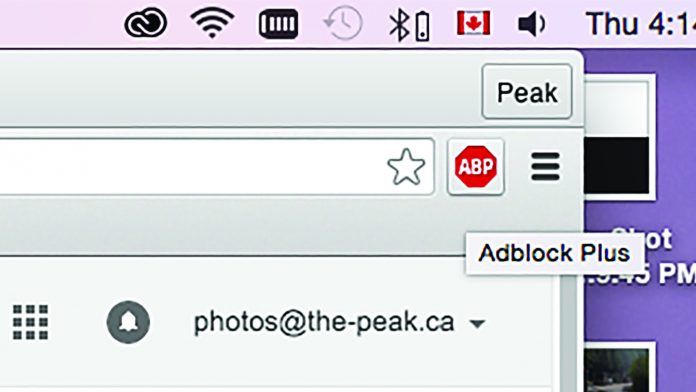
Installing an ad-blocking software to your web browser is saving you data, SFU research shows.

Ready Labs Inc, a spinoff company of SFU’s Stavros Niarchos Foundation (SNF) New Media Lab, has produced new research regarding the efficiency of ad-blocking programs through their new Adblock Plus Efficacy Study, shining new light on a previously overlooked field of research.

Adblock Plus is an internet extension available for various web browsers that can block computer ads for website users. While it is not associated with AdBlock, a popular free extension used to block ads, both programs serve the same purpose. Through Ready Labs, Christopher Dickert, a Hellenic Studies research associate examined the quantitative effect of using Adblock Plus, a pay-to-use software program, on network usage.

To run the trials, two computers, one with Adblock Plus and the other without, were used by student volunteers to surf various websites, such as CNN, the New York Times, and eBay. The study found that Adblock Plus can reduce network usage by 25 per cent, and up to 40 per cent if used only for video surfing sessions.

The immediate effect of using ad-blocking software is not limited to the decrease in network usage. Dickert explained that indirectly, it could also save time for users, especially for students, by eliminating distracting ads, potentially increasing productivity.

For individuals, the reduction in network usage may not amount to major savings, but for companies and universities operating large networks being charged byte for byte, reductions in usage could lead to significant savings.

Ad-blocking software could also reduce administrative and maintenance costs for servers running with high usage volumes by reducing the load. For SFU, this could mean more capital reallocated for students and companies by upgrading existing technologies.

The survey concluded that Adblock Plus can do more than save money for users in the long run, as suggested by Dickert. “Ad-blocking software such as Adblock Plus represent somewhat of an existential threat to many of the largest technology companies who depend on online advertisements for their bottom lines,” he noted.

Dickert explained that this could have ramifications for how freely accessible some web services are: “In fact, online advertisements represent the economic foundation for much of the content online that we, as Internet users, enjoy free of charge.”

He concluded, “Understanding the impact of ad-blocking software on these foundations is an important part of an ongoing public policy discussion that ultimately impacts us all.”

This week in comics

0

EDIT agora week 12
The Adventures of Agoraphobia Man: World Defender (Jacey Gibb)


Peers 11Peers (Leslie Lu)

Seagull Square 12
Seagull Square (Jill Mandrake)

Water conservation over sanitation
Water conservation over sanitation (Serena Chan)

Screen Shot 2015-07-29 at 9.58.07 AM

Creator’s Pet (Destiny Hsu)