Home Blog Page 987

Laugh Track: Cameron Macleod

0
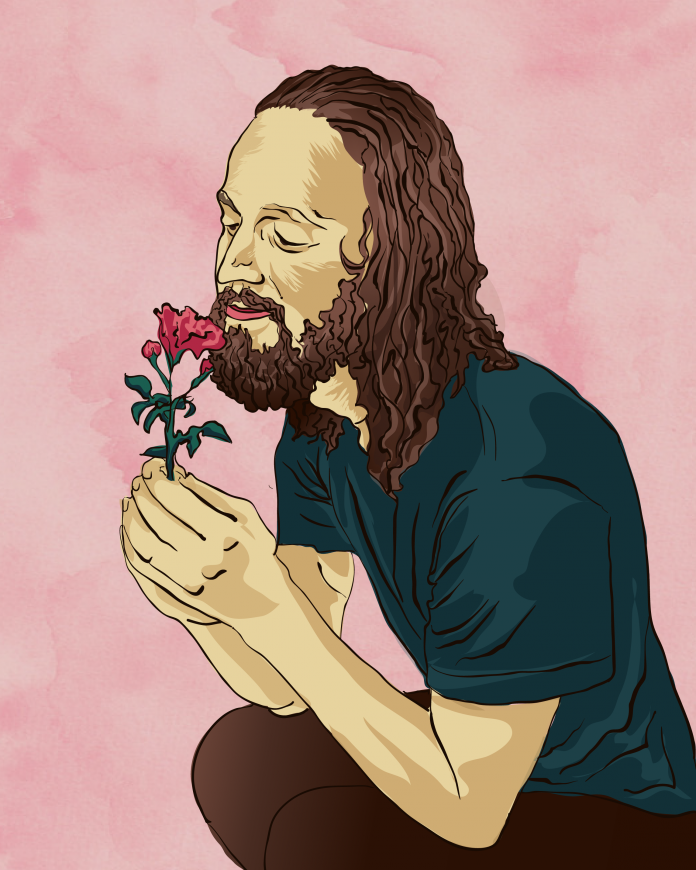
Illustration by Saida Saetgareeva

When it comes to comedy, Vancouverite Cameron Macleod has done it all. In addition to producing The Hero Show at the China Cloud Theatre every month, as well as participating in other Vancouver staples like Rapp Battlez and Weird Al Karaoke, the comedian has also begun dabbling in writing and directing films. Read on to learn more about his current improv group Matterhorn Improv, what makes The Hero Show so special, and his dream of one day filming a full penetration shot for comedy’s sake.

[Interview has been edited and condensed for print]

Tell people what you do in the Vancouver comedy scene.

I’m a producer and a writer and a performer. In the past I was the comedy curator for Olio Festival and the comedy curator and producer of Comedy Waste, but I handed that off last year. I produce a lot of live shows, mainly The Hero Show, as well as help produce and promote its sister show Sidekicks, which is every second month at China Cloud. I also produce the Matterhorn Improv show, which is a monthly with Brian Cook and Andrew Barber. Lately I’ve gotten into directing. I used to direct sketches but I’m trying to get into bigger projects. I started with Orgies Happening Tonight, which is my first written and directed full short film. I do improv as well with Vancouver TheatreSports League, Matterhorn, and other shows around town.

What’s your favourite project right now?

Matterhorn’s been great. We’ve been performing together for three years, but now that we’re performing at the China Cloud, it really feels like we have a style of how we do an improv set. [. . .] Brian and Andrew are two of my best buddies and when you get to improvise with people who you’re tight with, it’s so easy and fearless. You can go on stage and do absolutely anything you want and you know that they’ll have your back. You can do the craziest thing you want and it’ll somehow work out.

What can you tell me about Orgies Happening Tonight?

The idea for the script came from me and Brandi Bertrand having drinks on the patio one day, talking about Dan Savage’s Hump!, which is a film festival that tells people to be a porn star for a weekend and make a five-minute porno. In that festival there’s a $1,000 prize for best comedic short, so we thought, “How can we write a comedy porno?”

It was just a joke, but then I went home and wrote down our idea. It started out as a comedy porno because I wanted to have a full penetration shot that was happening right beside a guy’s face during a scene, so it started as pitching this comedy porno to comedians being like, “Would you play this character in this comedy porno?” [I soon] got in touch with Daniel Code, and we started talking about logistics and costs and if we were to make this a comedy porno, what kind of festival could we actually apply to other than Hump!? After thinking about all that, I decided to scale it back.

It’s a comedy that’s very sexually charged [with] nudity in it, but there’s no graphic sex. The full penetration shot is still a dream of mine to have in a comedy, because in newer films like Borat or Walk Hard, there are all these gratuitous male penis shots. I just figure that the next step is a full penetration shot, but have it in a way that’s not sexualized; it’s just a joke, seeing it as a joke instead of a pornographic image. But for the purposes of this short we decided to take that out. Orgies Happening Tonight is the story of a guy who works a shitty office job and hates his life, but then the janitor, who’s his guardian angel, tells him that he should go to an orgy and that it will change his life.

Tell me about your monthly comedy night The Hero Show.

It’s become this show where the audience is a theatre audience; they’re not a stand-up audience. It’s not a crowd that wants immediate jokes. They have patience and they’ll watch and see what the payoff is and even if there’s no payoff, they’ll still just watch and they’re open to that. You can take the weirdest idea you’ve ever had and do it at The Hero Show, and it’ll probably go over really well.

At the first show we did at the China Cloud, I got a cheap door and had it onstage with a curtain around it. I opened the show by doing a monologue through the door to my girlfriend, who was really mad and wouldn’t let me in [. . .] I got scared that she was dead because she wasn’t talking to me anymore, so I axed through the door, Shining-style, and that’s how the show opened.

Those are the things you can do at The Hero Show. People come ready for and open to anything, so it’s nice. It’s a safe place for people to try new things and not worry about getting heckled on stage.

What’s one piece of advice you’d give to someone trying to break into the Vancouver comedy scene?

Go out to as many shows as possible, introduce yourself to as many comedians as possible, do as many open mics as you can, and get comfortable. But don’t expect to be put on the shows you want to be on right away. It’s about immersing yourself in the scene.

The next Hero Show is happening on June 18, and the next Matterhorn Improv show is on June 30. Both shows are at The China Cloud.


Last-minute Father’s Day gifts to help perpetuate hyper-masculinity

0

Father’s Day is just around the corner, and you still haven’t bought dad a present? Here are a few gift ideas to help make the day extra special for your manliest of old men.

  • A pair of tickets to see his favourite sports team
  • Motor oil for his car
  • Two pairs of whisky stones (one for home, one for the office)
  • A new set of tongs for the barbecue
  • A six-pack of generic domestic beer
  • The complete James Bond series on Blu-ray
  • A new golf shirt
  • Twelve-month subscription to Playboy
  • A big juicy, raw steak
  • A new mug that says “World’s Manliest Dad”
  • An old-timey straight razor for shaving
  • A set of ear plugs to drown out those darn kids
  • A new tool belt
  • A new set of tools
  • A new set of power tools
  • A gift card for Home Hardware so he can buy his own tools
  • Novelty plastic balls to hang from the back of his truck

Let’s build some affordable homes already

1
Photo Credit: Phoebe Lim

When it comes to purchasing a single-family detached home in increasingly unaffordable Vancouver, it appears that millennials literally can’t even. The hashtag #donthave1million, begun by 29 year-old environmental scientist Eveline Xia, has become a rallying point for disgruntled young urban professionals frustrated that they will never be able to afford a home.

Xia recently attracted a crowd of over 500 people, sharing their grievances at the Vancouver Art Gallery. The message here is clear: both the municipal and provincial governments must snap out of their blissful ignorance and take action on a housing market that only services the rich and neglects the middle class.

A popular target for Xia and her supporters is the issue of foreign investment, which they believe inflates prices in Vancouver when wealthy foreign buyers purchase property as a high-earning, low-risk investment.

The data that backs this theory up, though, is difficult to find. The Globe and Mail reports that “45,000 millionaire migrants arrived in Vancouver between 2005 and 2012.” Additionally, Business Vancouver reported on June 10 that foreign investors estimate around 5 per cent of the housing market, but “no hard number on foreign buyers [. . .] exists.”

These numbers don’t reveal the true scale of foreign buying, though they do suggest it could be a problem. More action should be taken to prevent wealthy buyers from sinking money into luxury Vancouver homes, which have risen in value by 63 per cent since 2001. For reference, salaries have risen by only 36.2 per cent in the same time period.

An absentee homeowner tax would impact wealthy owners who leave their residence empty.

A solution to this could be an absentee homeowner tax which would introduce a property tax on owners who leave their residence empty for a large portion of the year. This measure would specifically target those who either purchase holiday homes in Vancouver or those who buy homes for purely speculative purposes, with no intention of living in them.

Perhaps even more important than cooling down the breakneck inflation of the housing market is to rethink housing development in Vancouver. Maybe the age of the single-family home has come and gone. Vancouver is dwarfed by geographic barriers such as mountains, bodies of water, and farmlands, which prevent the city from sprawling in all directions.

As space reaches a premium, the “Vancouver dream” may have to shift from a detached family home to a condo or townhouse. The City of Vancouver must be more proactive in rezoning neighborhoods to accommodate higher density living, as well as creating incentives for high density development.

What is immediately apparent about mostly privileged millennials who are unable to afford a spacious detached house as their first property is that homeless people and those living under the poverty line are completely neglected from the debate. Any property taxes or rezoning investments will only marginally reduce housing price inflation and will primarily help the upper middle class. But British Columbia remains a province where approximately one child out of five lives in poverty.

While Ms. Xia’s group, Organized Vancouverites for Affordable Housing Rally, channels the ire of twentysomethings looking for a foothold in Vancouver’s property market, it is unclear who is advocating for the interests of those in extreme poverty. For these people, a single family-home may never be a reality and affordable housing initiatives must consider this.

The most pressing priority on the government’s agenda should be the creation of more public and subsidized housing across the entire Metro Vancouver region. While making homes more affordable is desirable and important for the city’s economy, as long as homelessness and poverty remains an issue, Millennials like Xia will have to stick it out with landlords.

Tourism Burnaby and SFU unveil “Sport Burnaby”

0
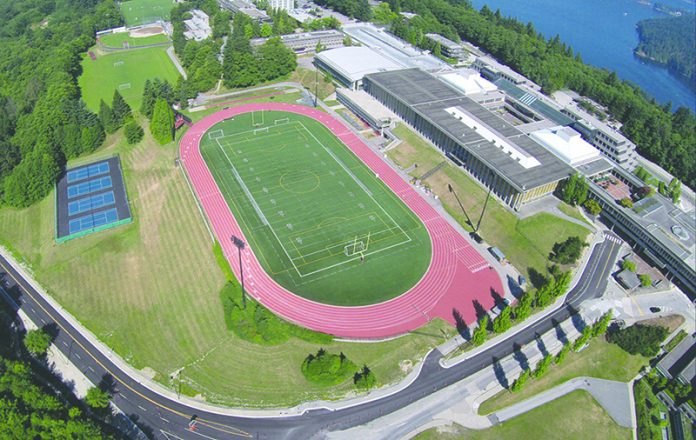
SFU will play host to future Tourism Burnaby events. - Photo courtesy of Ocean Marker Sport Surfaces

Tourism Burnaby has announced a new brand entitled Sport Burnaby, and SFU will be playing a significant part in it.

Sport Burnaby has been established with the goal of attracting sports championships to the city, and will help organizers book things such as transportation and accommodations for their events.

“Our goal is to target directors and organizers and connect them with venues in the city that work for them,” explained Jennifer Scott, Sport Burnaby manager. “There’s always been a strong partnership with Simon Fraser University. [. . .] SFU is the only NCAA school in Canada, so it’s a great partner to have in terms of tourism.”

SFU has a strong partnership with the new Sport Burnaby brand, and will be hosting its first event — the GNAC women’s soccer conference championship — next year.

“We’ve always had a board member [on Tourism Burnaby’s board of directors], and I’ve served on it for two years,” said SFU Athletics Director Milt Richards.

“They’ve given us money to bid for the GNAC championship, which was a $1,500 fee. There is a working committee which is headed by our compliance director Kelly Weber that will put on this tournament,” explained Richards.

On Tourism Burnaby’s role in bidding for the women’s soccer conference championship, Richards said, “They were our partner from the beginning. They helped us write the proposal, they helped us bid on it   [. . .] they’re kind of like the icing on the cake.

“The university steps in and says, ‘look, we have the facility, we’ve got the staff, and we can put this on,’” Richards added. “But now for the extra stuff, we now have the support of Sport Burnaby, which will really [help] us get this bid.”

Richards believes this new partnership will be the start of something special for the SFU athletics department. “I think it’s positive,” he said.

“We will continue to discuss with [Tourism Burnaby] about an overall sponsorship with the athletic department, because [with annual tournaments] we probably bring in over 1,000 [hotel bookings].”

“They’ve always helped us. For example, one thing we did bid on but didn’t get was the Men’s and Women’s Basketball championship, and Sport Burnaby actually put up $15,000 to help us get that bid.”

When asked if this means we can expect more events like the Women’s soccer championship, Richards said, “I think so. One of the things I’ve emphasized to my staff is we really want to do a great job on this event, because we want to host other events in the future.”

FIFA must end its corruption

0
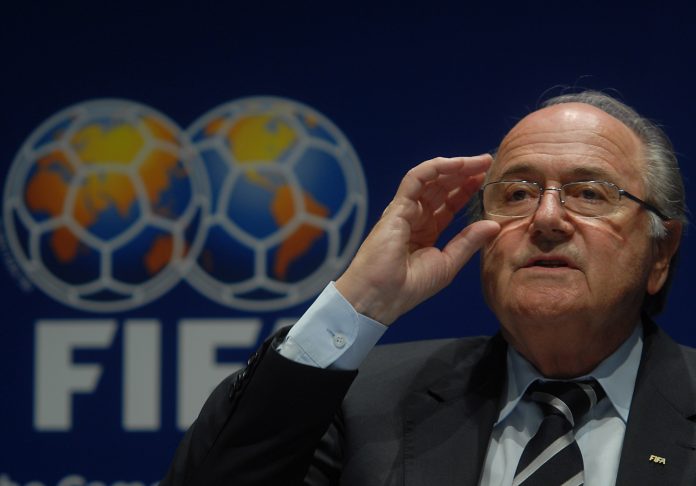
Photo courtesy of Marcello Casal Jr. (Wikimedia Commons)

FIFA has never been the poster child for well-run, squeaky clean organizations. There have been rumblings for years about corruption within the management ranks, but no concrete evidence or charges were brought up. Through it all, FIFA survived, seemingly more powerful than ever.

Of course, that all changed recently, with 11 FIFA executives  banned for bribery or corruption charges dating back two decades as a result of criminal proceedings from the US and Switzerland.

The public face of all that was wrong with FIFA was President Sepp Blatter, and he did nothing to help himself, either. He awarded the 2022 World Cup location to Qatar, where migrant labourers are continually being worked to death and homosexuality remains illegal. According to the Washington Post, 1,200 workers have already died in Qatar since the games were announced. and 4,000 are likely to die while working on these sites.

On the problem of racism within global soccer, Blatter stated that most of it could be settled with a handshake. In another one of his most infamous comments, he said that to increase the popularity of women’s soccer, the athletes should wear tighter shorts. Then, of course, there’s the numerous accusations that he gave out bribes for his vote in his re-election attempts, and like any man addicted to power, said that he wasn’t going to run for re-election in 2011, but did so anyway in 2015.

With Sepp Blatter’s resignation comes hope that change will come. It’s obvious why he is resigning now after denying he would a few days earlier: like a long-winded car chase, the investigation is soon to close in on him. Vice-President Jack Warner is now under investigation, and ex-FIFA official Chuck Blazer admitted that FIFA did in fact accept bribes for the 1998 and 2010 World Cup Bids. Unfortunately, Warner’s official last day in power will be in December, but hey, that’s better than nothing.

The new President will have a heck of a job in front of them. FIFA needs to elect someone who embodies the respectful spirit of soccer. Former players such as Luis Figo and Michel Platini would be perfect for it. Luis Figo is a former Real Madrid and Barcelona star, and was running for election in 2015 until he pulled out stating that the “election process is a plebiscite for the delivery of absolute power to one man — something I refuse to go along with.”

Michel Platini is also a former player, and is the current head of UEFA. He has experience running a soccer federation, and like Figom is already well respected within the community. It took some outside force, but FIFA has finally gotten rid of the man who was holding them back. Now they have the chance to focus on their future.

He only had eyes for her

0

DSCF2739

Non-humans of SFU

0

ONLINE NONHUMANS

BC continues to push for open textbooks

1
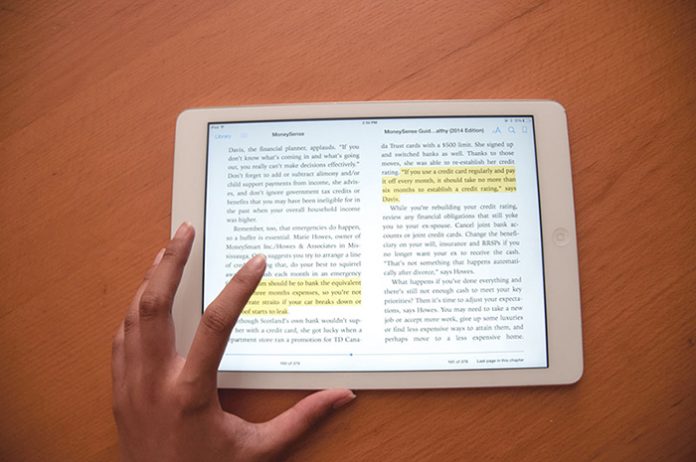
Open textbooks can be updated online on a constant basis. - Phoebe Lim

SFU students may no longer have to bust open their piggy banks to buy course materials for popular courses.

Recently, the Minister of Advanced Education for the provincial government Andrew Wilkinson announced that BCcampus would add 50 new open textbooks to the already 70 strong database this fall. Open texts are freely accessible ones available digitally.

The Open Textbook Program began in 2012 when the government pledged $1 million to BCcampus to develop low- or no-cost materials for the most commonly taken courses. It is now used by around 5,000 students across BC.

Minister Wilkinson explained to The Peak some of the potential benefits he sees in open textbooks: “[Students] get [a] curriculum that is very much related to British Columbia priorities and British Columbia teaching standards.”

He acknowledged, “We all know that the published textbook is in danger of becoming obsolete the minute it’s printed.” However, open textbooks, as he explained, can be updated online on a constant basis.

The Simon Fraser Student Society (SFSS) has been involved with the Open Textbook Program since 2013, when former SFSS president Chardaye Bueckert emphasized it in her election platform.

Brady Yano, current VP University Relations, and other volunteers began to reach out to students by starting a petition which collected 2,500 signatures from undergraduates who were interested in the university exploring open textbooks.

Yano remarked that most students were unaware that such textbooks were freely available. He said, “The majority of students were interested in the potential cost savings that were associated with open textbooks.”

Wilkinson expanded, “Our goal is to provide affordable educational tools for students, and if that means we’re going to compete with the academic publishers who revamp textbooks every year or two with essentially the same content, we’re quite happy to compete with them.”

Yano acknowledged that a small number of students were opposed to open text. Their complaints, in his opinion, boiled down to the textbooks threatening student jobs at the SFU bookstore and that physical books were preferable to digital ones. Yano was quick to point out that all open textbooks can be printed for about $13.

Furthermore, the SFU bookstore exist as a break-even operation. Yano predicted that open textbooks would save SFU money by eliminating the need to return unsold textbooks back to the publisher at a loss. He referred to the bookstore’s losses from the 2013/2014 fiscal year, totalling $481,000.

According to Wilkinson, the most significant challenge for the open textbook program has been getting faculty on board. He noted that utilisation of the open textbooks was higher in teaching universities and colleges compared to research universities such as SFU.

Yano noted that while SFU provides the highest number of faculty that review these texts, no open textbook has been adopted at any of the university’s three campuses.

Said Yano, “I think if professors were reminded of the fact that tuition is significantly more expensive today than in previous times, hopefully they can empathize with students and help save students money.”

Wilkinson further explained that “one of the priorities of this program is to [understand] the decision-makers and sort out why they aren’t making more use of these texts.” He added, “if it’s because they’re concerned about content, then we want them to participate in improving the content.”

Where does Minister Wilkinson see the program in the next few years? “We’re hoping it continues to expand,” he said, “Now we have to get the instructors to catch onto the idea [. . .] that these materials are every bit as good as the ones available commercially.”

Cement the Freedom Square plaque or get rid of it

1
Photo Credit: Gabriel Yeung

Last week, thousands of new graduands walked across the Academic Quadrangle to Convocation Mall to receive their degrees from SFU. On their way, they passed through perhaps the most historically significant location at our university, which was made famous as a rally point for the struggle for academic freedom: ‘East Convocation Mall.’

At least, that’s what you would think it was called if you were a visitor to our campus last week. Though for the rest of the year this area is known as ‘Freedom Square,’ and during the time that SFU receives more visitors than ever, the podium and explanatory plaque were unfortunately re-settled to a dark corner next to the AQ.

Although the plaque was just “temporarily moved for convocation ceremonies” according to officials at SFU through their official Twitter account, this ‘temporary move’ is the latest act in a long line of disrespect for the plaque, which increasingly suggests it should just be taken away for good if it isn’t going to be treated with any reverence.

While few students really know the history of what occurred at Freedom Square in 1967, the legends of the plaque’s misadventures have been well-documented. Just this fall The Peak covered its latest triumphant return, after it was ‘discovered’ by the student society.

While this account (which mirrored a very similar recovery story reported by The Peak 15 years prior) highlighted the time the plaque spent as a TV-stand at UBC after their engineers stole it as a prank, it neglected to mention the biggest opposition to the plaque becoming a permanent fixture: SFU’s administration.

The idea to commemorate, with a bronze plaque, the rallies that occurred following the firing and reinstating of five TAs who publicly defended a local high school student who was suspended for writing a satirical poem, was first approved by SFU’s student society in April 1967, and purchased that summer before being delayed by administrative bureaucracy.

The student society’s original plan was for it to be “installed in the cement on the Mall” but since permanent fixtures had to be approved by the university (or else removed), the project was delayed for over a year as the society jumped through bureaucratic hoops; eventually, the plaque was placed on the front of a podium instead of the ground.

Since then, the Freedom Square plaque has never stayed mounted for very long, and while pranks are partially to blame, SFU has been in possession of the monument for the past 15 or more years, making minimal effort to keep it up.

The plaque should just be taken away for good if it isn’t going to be treated with any reverence.

Observing the convocation ceremonies last week, there’s no way the podium would have been in the way of anything (if our pipe band is as good as we always say they are, they should’ve been able to work around it), and there was clearly no real reason to move it. But as always, it seems obvious that SFU’s administration, past and present, just isn’t interested in a public recognition of Freedom Square’s legacy. Why is this so?

As a public defender of academic freedom, doesn’t president Andrew Petter like the idea of a plaque that commemorates “the students, teaching assistants, and faculty who gave themselves in the cause of academic freedom” being front and center during convocation?

Or is the idea of students and teachers fighting up to control their school like they did in ‘67 too frightening for SFU’s administration? On that note, shouldn’t our student society, who so proudly returned the plaque this fall, work harder to keep it visible during major events?

I can understand why the administration would not have been in favour of the plaque back in 1967, when the climate of radicalism was reaching extreme highs. In fact, at that time the plaque may have even gone a little too far in pushing SFU’s buttons.

Commemorating an event that occurred less than a month prior with a bronze plaque was certainly an excessive gesture, and the name Freedom Square probably came across as a little hyperbolic. Taking into account that the president of the ‘67 summer student society who ordered the plaque was Martin Loney, one of the five TAs dismissed in the incident, it was also a tad self-serving.

However, those elements of the story have long been forgotten and the plaque has evolved into a more expansive symbol than one based on a single event. Its message may be in recollection of a couple days in March 47 years ago, but what is most important is that it is a tribute to academic freedom.

Academic freedom was fought for in many ways throughout the late ‘60s and early ‘70s at SFU, and the plaque and the name Freedom Square are some of the only reminders of how much our community once valued those ideals.

It’s a fight that isn’t over either and needs to be revitalized now more than ever. With the TSSU (Teaching Support Staff Union) once again in the midst of early strike action, issues surrounding academic freedom and the fair treatment of our TAs resemble quite closely the problems of our past. We need to be able to look to Freedom Square and what it represents as inspiration for the future, but a roving podium and plaque make such a process difficult.

The significance of Freedom Square is something that all students should be aware of, and although it may not seem like a big deal, this plaque is an important link to our past and a crucial reminder to continue to make academic freedom a priority in our future.

SFU is soon to celebrate 50 years, and it’s time for this plaque to either be cemented to Freedom Square permanently or be removed entirely.

Or maybe we could just give it back to UBC. At least it seems like they respected their TV stand.

The ‘Toblerone’ Scare

0
Photo Credit: Phoebe Lim

So there we were, sitting beside each other in a bustling Tim Hortons, reading-but-not-actually-reading a nondescript issue of the New Westminster NewsLeader, waiting to find out if there was indeed a human-to-be growing inside of my girlfriend’s uterus.

I’m hesitant to say that pregnancy-scares are just another part of growing up. Obviously there’s the factor of some people practicing abstinence, either intentionally or accidentally, and therefore entirely avoiding such distresses in the first place. But aside from that exception, I’m going to take a leap and say that almost everyone who’s been in a heterosexual relationship will have to go through a pregnancy scare at least once in their life.

Our day had started off like most should: lazily and with a stack of pancakes. Over the mess of syrup and battered remains left on our plates, my girlfriend at the time mentioned that she’d missed her last few periods. Even though she was on the pill and sometimes missed a month here or there, she still wanted to take a pregnancy test to be sure. Our lazy morning itinerary of pancakes and hanging out suddenly included a layover stop at Shoppers Drug Mart.

For the uninitiated reader curious to know, you can generally find pregnancy tests in the drugstore aisle under “family planning,” which reads like a twisted joke when you’re young and stupid and scared of what an unexpected pregnancy might possibly do to your life’s trajectory. After declining help from a friendly employee who asked if we needed “help looking for anything in particular,” we settled on a pregnancy test that hovered around the mid-price range (because you don’t want to get the cheapest one, but you also don’t need to pay top-dollar for something you’re going to pee on once and then throw away).

For the uninitiated, you can generally find pregnancy tests in the drugstore aisle under “family planning.”

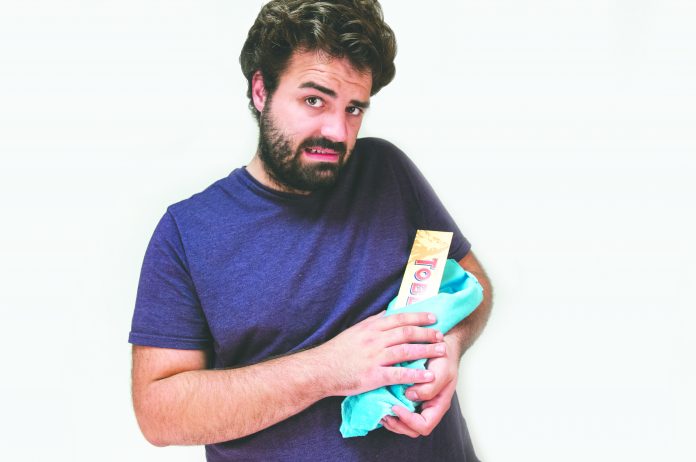
But as we waited at the checkout and the line grew shorter, I unexpectedly became more and more uncomfortable with the thought of our cashier — a young-looking girl, who in all likelihood was probably around our own age — knowing the real reason why we were visiting a Shoppers so early in the morning. Eager to deceive her, I reached out and grabbed the closest thing: an over-sized Toblerone chocolate bar, one of many that were stacked in a bin and boasting a discount.

“There,” I remember sighing with relief, holding a giant Toblerone in one hand and a pregnancy test in the other, “now it won’t be as awkward.”

After that we ducked into the nearby Tim Hortons and both went into separate bathrooms to do the same thing for different reasons. I remember reconvening outside of the restrooms and pulling up a pair of stools to the nearest counter.

“I set an alarm for three minutes,” she said, a time window too narrow to do anything but too long to do nothing. I grabbed a nearby community newspaper and began casually flipping through pages while my free hand held my girlfriend’s.

Before long, our grasp had grown warm with sweat, though I couldn’t tell if it was from my hand or hers.