Home Blog Page 979

And the Fringe goes on – more Fringe Festival reviews

0

Starstuff: Per Aspera Ad Astra

Starstuff: Per Aspera Ad Astra is a beautifully crafted piece of performance. True to its name, the performance is about the hardships and difficulties of trying to reach the stars.

On the surface, Thomas Malinsky is an astronaut on a journey to locate a sudden transmission from beyond Jupiter. He travels alone, past the stratosphere and into the unknown territories, traversing the deep resonating expanse of space. On the side are the interesting and amusing personalities of Thomas’ parents, Mama and Papa, and the man in the control room on Earth.

The performance incorporates multiple set pieces and utilizes simple technologies, such as projections and small speakers, to add texture to the scenes. The overall audiovisual presentation plays a large part in the immersive nature of Malinsky’s journey.

The set pieces are manipulated in a way that invites the illusion of what is actually there. In one scene, pieces of the spaceship are taken apart. The performers move slowly but fluidly, creating the effect of anti-gravity and the intensity of watching an inevitable situation unfold. In another scene, a table is created simply by the performers holding the “tabletop” a certain way.

The magic is in knowing how some things work and telling them from a different perspective. It is in creating something knowing that it is not real but still inviting the audience to participate in the illusion.

Derek Chao, the director and playwright of Starstuff, has a wonderful way with words and creating multiple layers within the text. The pacing and dynamics within the performance work well with the overall construction of the story.

A heartwarming and an intriguing experience to explore, Starstuff draw parallels from seemingly unrelated events. It peers into the cruel and lonesome venture of space exploration while probing the equally heavy burden of childbirth.

For more information, visit riceandbeanstheatre.com.


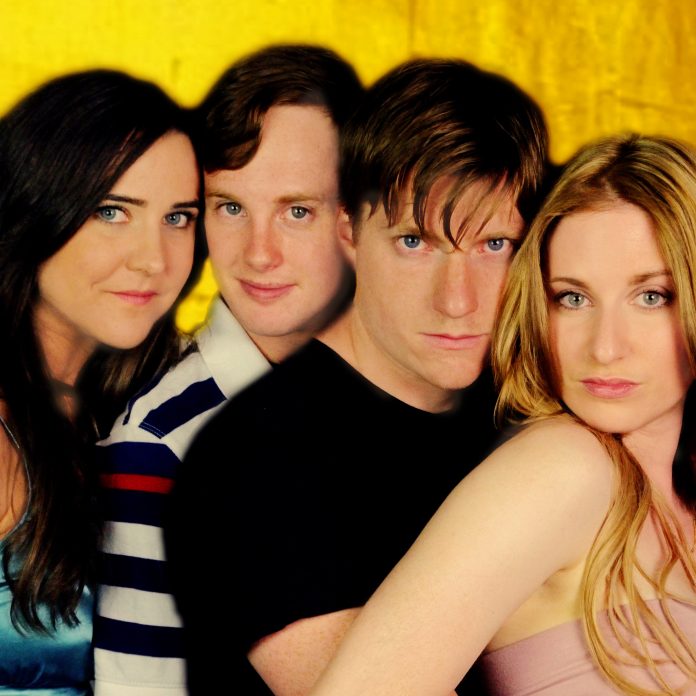
The OC: The Musical

California. . . here we coooooome. Hearing that opening song to The O.C. will forever bring back memories of Ryan, Seth, Marissa, and Summer as they struggled to find their way. This hilarious spoof of the popular show was well cast and squeezed the show’s plot and as many jokes as possible into an hour and a half.

Bad boy Ryan Atwood comes to town after his lawyer, Sandy Cohen (Brandon Miller), takes him in. Sandy’s wild stick-on eyebrows start the show as exaggerated and expressive and end in preposterous positions. The first time we see Seth Cohen (Mark Dozlaw), he’s playing Tomb Raider in footed pajamas and is immediately excited that he has a new brother. Marissa Cooper (Grace Newson) and Summer Roberts (Laura Geluch) are also exaggerated, and Summer’s song “Rage Blackout” makes fun of her short fuse. And of course the show wouldn’t be complete if they didn’t parody the scene where Marissa shoots Trey.   

All of the songs, including the crowd pleasers “Welcome to the O.C., Bitch” and “The Summer of Summer” are well written and poke endless fun at these characters and their ridiculous situations. Ryan is constantly correcting people about his age, telling them he’s actually 16 when they ask if he’s 26. Marissa’s mom is played by Stewart Yu in drag, and it suits her character wonderfully.

It’s clear that the live band, ensemble, and entire cast and creative team poured their hearts into this production, and I thank them for bringing me back to The O.C.

Unbuckled was an immersive country picnic

0

The enthusiastic female voice on the microphone, commentating on the events, could be heard from a distance. As I walked towards the Brockton Baseball Diamond in Stanley Park, I could see the smoke from the BBQ. The energy of Unbuckled was so vibrant I got a contact high before I stepped through the entrance. Unbuckled is a new, annual social event featuring music and outdoor games that heavily embraces the country lifestyle. Organized by Wet Ape, this was an engaging, immersive experience with casual sporting competitions, country music, and barbecued food for all.

The event embodied the world of country by affecting the senses of sight, sound, and taste. Brockton was completely transformed aesthetically. From the presence of hay, wooden stands, barrels, and other objects reflecting a farming and country lifestyle, the organizers seemed to pay much attention to detail.

People were encouraged to contribute as much as possible to the immersive experience of being country by dawning full country attire. In terms of sound, apart from the interesting live performances, country music could be consistently heard in the background. The Ranchman’s grill and Tippler’s Saloon controlled taste with their respective country food specialties and beverages.

Unbuckled thrived on the interactions between people as they shared an experience and had fun embodying their country characters.

The interactions between strangers that I witnessed as well as the people I came in contact with proved that events like Unbuckled are great ways to make connections in Vancouver, something that can be daunting and difficult for many. In playing the country characters, people seemed to let go of their defences and embraced the event for what it was — an interesting, fun way for a group of people to spend their Saturday.

The many SFU connections of Word Vancouver

0

This year’s Word Vancouver festival (formerly Word on the Street) is in full swing, and gearing up for a weekend full of literary fun. With free workshops for writers and publishers, musical performances, panel discussions, and many talented Canadian writers, there is something here to fulfill any literary hankering.

One of the festival’s best features is the chance to meet authors, and gain insight into the mind of a writer. I had the opportunity to do just that when speaking to two of the festival’s featured authors, Kristi Charish and Bonnie Reilly Schmidt, who both owe at least some of their success to SFU.  

Kristi Charish, author of Owl and the Japanese Circus, completed her BSc and MSc from SFU in Molecular Biology and Biochemistry, and then went on to complete a PhD in zoology at UBC. Not exactly the writer’s path, yet she credits much of her work and work ethic to her science background.

We were all taught scientific methodology in grade school (hypotheses, testing, observations), but Charish has found a way of applying this to her writing: she’ll visualize a storyline, and then hypothesize the reality of how it could transpire, creating a real-world backdrop to her urban fantasy novels.

Charish’s inspiration reaches beyond her scientific background, finding a little help in her favourite movies The Mummy and the Indiana Jones series, films with adventure-hungry leading men. But Charish chooses a female lead, Alix, in an attempt to overturn the typical characteristics of female protagonists. It’s not an easy task. As she says, “if you break the mold there is some backlash, [but] it’s important.”

Bonnie Reilly Schmidt, author of Silenced: The Untold Story of the Fight for Equality in the RCMP, also takes on a heavy task as she tells the untold stories of Canada’s female history. The inspiration for her work came primarily from the work she did on her Master’s thesis and PhD (both at SFU), and of course the time she spent as an RCMP officer.

But she never wanted to create a memoir, and so enlisted the help of many men and women of the RCMP to help round out the history and fill in the blanks of her own experience. The process was difficult at times, resurfacing memories that had long been suppressed or forgotten — like the specific history she wanted to tell.

When Schmidt was studying, there wasn’t a lot of information on Canadian women in history, and it is only within the last five to 10 years that the RCMP has attempted to change their image and acknowledge the role of women in its history. It’s for these reasons, among others, that Schmidt was compelled to write these histories; she believes it’s “important in Canada—[we] need to know that women were active in the history of the country.”


SFU connections at Word Vancouver

Self-described poet, chapbook enthusiast, and doodler, Kevin Spenst took part in SFU’s monthly poetry exchange, Lunch Poems. He is the author of Jabbering with Bing Bong, his debut poetry collection, which covers everything from sitcoms to mental health.

Kristi Charish can thank SFU for her BSc in Molecular Biology and her MSc in Biochemistry (although UBC enchanted her away for her PhD). Since then she’s worked hard on her Owl series, and has a new project set in Seattle, Kincaid Strange, that concerns a voodoo practitioner and grunge ghosts.

Jordan Abel, whose first book, The Place of Scaps, won the Dorothy Livesay Poetry prize, is a Nisga’a writer residing in Vancouver. Already published in Canada’s best literary magazines, he is currently completing his PhD at SFU, focusing on digital humanities and Indigenous poetics.

Irina Kovalyova’s collection of short stories, Specimen, varies in setting and subject matter: covering Minsk to Vancouver, hot dogs to Botox. Previously an intern at NASA, she is now working at SFU as Senior Lecturer in the department of Molecular Biology and Biochemistry.

Bonnie Reilly Schmidt is well-educated; having first worked ten years for the RCMP, Schmidt decided to go back to school and completed a double major before joining SFU for her Master of Arts and PhD. Her first book, Silenced: The Untold Story of the Fight for Equality in the RCMP, was released this year, and she is currently keeping her next project a secret.

Catherine Owen is a Vancouver poet and writer, but fans of her work can be found all over, including New Zealand and Australia. She shared her poetic point of view at SFU’s Lunch Poems, and her last book of poetry, Frenzy, won the Alberta Literary Award in 2009.

Chelene Knight is a graduate of the Writer’s Studio at SFU. Her work is influenced by her experiences of mixed ethnicity, giving voice to the secret poetry she wrote as a child.

Deborah Hodge prolifically writes children’s books. Originally hailing from Moose Jaw, Saskatchewan, Hodge headed out west to complete her BA of Psychology at SFU, and is now proud to call Vancouver home (sorry, Moose Jaw).

Fiona Tinwei Lam is currently teaching continuing studies at SFU, and is the upcoming poetry mentor for The Writer’s Studio Online program. Born in Scotland and previously a lawyer, you may have read her poetry while awkwardly squished on the 135, as she was featured on BC’s Poetry in Transit project.

Stella Leventoyannis Harvey was born in Cairo, has family in Greece (and speaks the language), and grew up in Calgary. She completed a Certificate in Creative Writing at SFU in 2004. Now writing from the foothills of Whistler, her latest book, The Brink of Freedom, will be released October 1.

Lucas Crawford teaches in the department of Gender, Sexuality, and Women’s studies at SFU. He is the Ruth Wynn Woodward Junior Chair, and focuses his teachings on
Queer theory, film studies, fat affect, and trans* architecture. Crawford has two upcoming projects: The High Line Park Scavenger Hunt and Transgender Architectonics, both scheduled for release this year.

Mercedes Eng teaches and writes in Vancouver, and took part in SFU’s Lunch Poems. Her book, Mercenary English, explores the potential of documentary poetics.

Prior to his life as a writer, Michael Christie was a sponsored, travelling skateboarder. After landing his last ollie, and completing a BA at SFU in psychology, Christie switched gears to writing. His debut collection of short stories, The Beggar’s Garden, won the Vancouver Book Award.

Raoul Fernandes doesn’t combine his two passions, poetry and leaf sweeping, in his first book of poems, Transmitter and Receiver. But he did complete the Writer’s Studio at SFU, back in 2009.

Word Vancouver runs September 23 – 27. For more information, visit wordvancouver.ca.

Students vote yes to Build SFU project

1
Eighty-six per cent of students voted in favour of the SUB project.

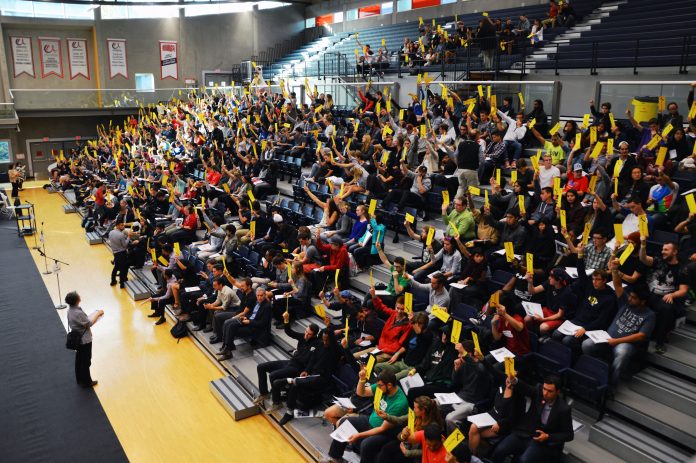
After a year of uncertainty as to how Build SFU would proceed, SFU students voted “yes” to both the Student Union Building (SUB) and Stadium projects at the Annual General Meeting (AGM) held in the West Gym on Tuesday.

The decision was prefaced by roughly an hour and a half of discussion, including presentations from many members of the Simon Fraser Student Society (SFSS) as well as from the opposition movement, No to Build SFU. The votes on the SUB and Stadium were split into independent motions in response to criticism towards the society’s Special General Meeting in January.

Ultimately, the motion to approve the debenture for the SUB passed with 86 per cent of voters in favour of approving the debenture. The Stadium passed by a slightly smaller margin, with 81 per cent casting a yes vote.

Check back for a full article on The Peak website later in the week.

Build SFU: Yes or No?

0

The Build SFU project has been the topic of heated debate among Simon Fraser University students since it was first introduced. We had two of our contributors duke it out over whether students should vote “yes” or “no.”

Created by Paige Smith & Adam VanderZwan

TSSU Demonstration at SFU 50th Celebration

0

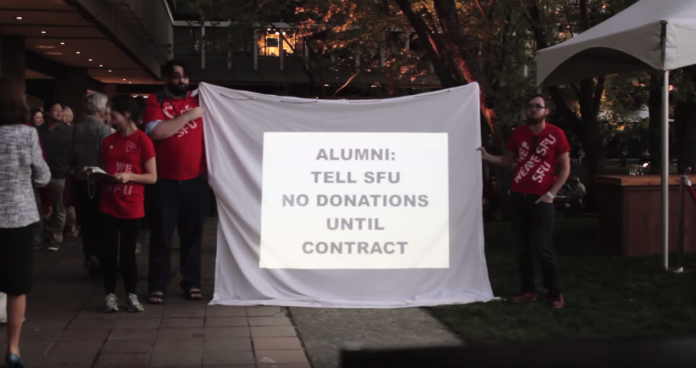
Simon Fraser University’s Teaching Support Staff Union demonstrates at the Celebrate & Savour Food Festival during the school’s 50th anniversary celebrations.

Professor Lynne Quarmby is Running on Climate

0
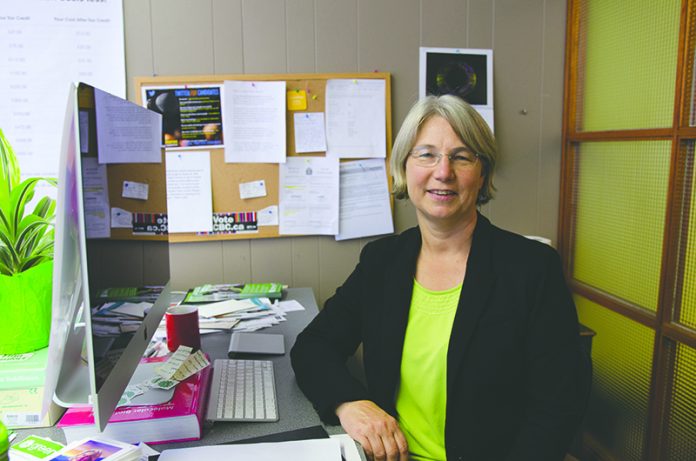
Photo by Lisa Dimyadi.

In the face of serious climate change, environmental crises, and a federal election campaign, perhaps we shouldn’t be surprised that scientists are emerging as the “new political radicals” in Canada, as the film Running on Climate says. Produced and directed by Robert Alstead and co-produced by Joanna Clarke, the documentary introduces us to these scientist-activist leaders in BC, perhaps the only politicians who will remind us of what we learned in science class: if you have a finite system, you cannot have exponential growth.

The insightful film tells the story of Dr. Andrew Weaver, a Nobel-Prize-winning climate scientist at the University of Victoria, who decided to try a different kind of experiment by running for political office. Equipped with a passion to “change things from the inside,” he ran for election for the BC Green Party which, in its 30 year lifespan, had never won a seat. He was driven by the idea that “if the politicians are not dealing with [climate change], what we need is people to get elected who aren’t afraid to raise this issue, to discuss this issue, and who are doing it in a manner that is not thinking about their reelection, but are doing it in the best interests of broader society.”

“How the hell do you make a decision on this if you don’t at least have some sort of scientific background?”

Lynne Quarmby, award-winning professor and Chair of Molecular Biology and Biochemistry at SFU, is a leader in the dual profession of scientist and activist. Perhaps best known for her arrest on Burnaby Mountain last year for civil obedience in opposing the Kinder Morgan TransMountain Pipeline Expansion Project, she too has stepped up to the political plate to stand up for our planet.

Tired of hearing from MLAs, MPs, and groups like the Vancouver Port Authority and so on who, according to Quarmby, say “it’s not our job to think about climate change,” she took things into her own hands and is now a Green Party of Canada candidate in the new riding of Burnaby North-Seymour.

Igniting civic engagement around environmental and social issues on top of her established career in academia is no easy task, but, she states, “the SFU community has been very supportive.” On the campaign so far, she notes that her “immersion into the political process has been transformative.” Concerning her probability of winning, she notes, “if everyone who tells me that I’m the best candidate votes for me, then I will win by a landslide.”

Weaver’s campaign in the film is set against the backdrop of serious climate injustice in BC, Canada, and the world. The film introduces us to the political battle to tackle climate change, and the scientists who are called to act politically. David Suzuki, who has endorsed Quarmby’s campaign, explains why our scientists are needed in office: “These are people who are going to have to make major decisions about carbon capture and storage, geo-engineering, iron filings in the ocean, and the spread of mountain pine beetles over the rocky mountains. How the hell do you make a decision on this if you don’t at least have some sort of scientific background?”

SFU’s academic leaders have been at the forefront of this battle. Kirsten Zickfeld, a climate scientist and SFU geography professor, also stars in the film, as well as Mark Jaccard, an Environmental Economist at SFU. Jaccard states, “I believe that science is unequivocal, that climate change is a huge ecological and humanitarian crisis of our age.”

At the core of this film is hope and determination. Hope that Canadians will take climate change seriously so that we can start solving the problem, and the determination to get science a seat in parliament.

Running on Climate is available on Vimeo On Demand: vimeo.com/ondemand/runningonclimate

Coeur de Pirate’s new album is the best of both worlds

0
Photo courtesy of Coeur de Pirate.

I’ll understand if the name Coeur de Pirate fails to register with you. Despite eight years’ worth of material, including three original studio full-lengths and one album of covers, the stage moniker for French-Canadian artist Beatrice Martin doesn’t command the immediate attention it probably should. A Quebec native and musician since the ripe age of three, most of Martin’s accolades so far have been those reserved for French musicians — but the standard seems poised to be shattered with her latest album, the grandiose Roses. 

In the past I might have filed Martin’s music under the made-up genre of “French heartbreak-pop,” but this might now be a dated assertion with Martin’s latest foray. A lot has changed for the singer since 2011’s Blonde, including (but not limited to) marriage and motherhood, and the maturity that inevitably comes with such major life events are aptly reflected in the album.

There are still notes of tragedy in Coeur’s fourth studio album, but there’s a lightness that’s unfamiliar to her discography. Look to lead single “Carry On” for an example of how Coeur’s style has shifted: while still several notches lower than other notoriously upbeat acts (think Brooklyn’s Matt & Kim), the track would be better fitted for, say, a pleasant bike ride along the seawall than for an emotional breakup. Even “I Don’t Want to Break Your Heart,” a song about the reluctant but eventual acceptance of the end of a relationship, features a verse from Minnesota rapper Allan Kingdom.

Aside from the tone, the most notable shift in Coeur’s latest is the expanded presence of English in Martin’s songwriting. (If we’re being specific, only four of Roses’ 11 tracks have French titles, including a French version of “Carry On.”)  Martin has stated she’s interested in reaching a wider audience, an understandable goal for any musician, though I can see how the transition might be alienating to those used to hearing Martin sing in her native language.

Overall, Roses marks a bold departure for Martin in the form of a glass half-full, bilingual gem.

Joe Laughlin’s 4our unites generations

0
Photo courtesy of Michael Slobodian.

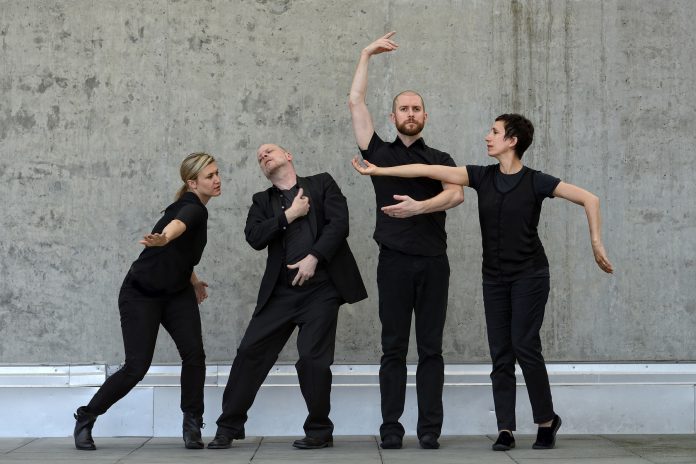
After 10 years, Joe Laughlin is returning to the stage to dance in 4our, a monumental work featuring four dancers spanning 30 years. Laughlin is joined by Gioconda Barbuto, Kevin Tookey, and Heather Dotto. This cross-generational collaboration touches on the themes of memory, family, history, and bridging the divide between different generations as it explores the many milestones of our lives. 

Laughlin has known Barbuto since 1985 and they have worked together over the years; he met Tookey when he was 17, and has been working with him for the past four years; he met Dotto three years ago when she performed in Joe Ink’s 25-year retrospective.

“We found a unique chemistry,” said Laughlin, explaining that the creative process involved evoking memories and exploring how they formulate over time. Through their different experiences and cultural touch points, the four dancers each brought a unique perspective to this piece. While Laughlin conceived, choreographed, and directs the work, he said that he always works in a collaborative manner with the dancers. “We had a lot of conversations translated into physical equations,” he said.

Although the show is about the major moments in our lives, it doesn’t follow a linear narrative, as is so often the case with dance, especially contemporary dance.

“We’re coming to a time where there’s more older dancers still engaged,” explained Laughlin. “I was inspired by working with these other dance artists. I had been thinking about the mature dancer and aging.” His own return to the stage felt natural in many ways, but he admits, “I struggled to get back to rehearsing four to five hours per day.” He originally thought of returning to the stage for a piece like this while choreographing a solo for Barbuto. “I thought maybe I’ll go in and move with her and that would inform me,” he said, and once he was in the studio it felt right. As he said, “you’re always a dancer in your soul.”

Laughlin did have to do some work to get back into shape, and he said that Barbuto helped with that process. “She helped me to navigate my way back into my body,” he said. With age comes finding a new way to be in your body, he explained. There is a lot of muscle memory, but there is also a need to learn what the body is still capable of and to reconnect memories to movement. “Sometimes I have to reign it in and be thoughtful about what my body can do,” he said, “but at the same time there’s an emotional intention driving the movement.” 

The set will feature wooden furniture pieces to create a striking scene, and there will also be video projections bringing a kind of otherworldly, magical element to the show. “It’s a representation of society in a way,” Laughlin explained, saying that the various pairings and groupings of dancers each have a significance. “It’s different to have a 50-year-old and a 29-year-old on stage together — even visually,” said Laughlin. “I like the look of us all together, the range of ages.”

Laughlin feels strongly that we’re lacking intergenerational interaction, and Joe Ink’s Move It program addresses this by providing a physical literacy program that often brings together teenagers and seniors. “You see how the different generations affect each other,” he said. “I was inspired by that; I think society’s lost that.”

While Laughlin said that he would like the audience to leave the theatre entertained, he also hopes they will have an emotional connection to the work. “I hope we invite them to think about people in their lives that have moved them. I hope it evokes memories for them.”

Comic Connoisseur: The Valiant come together in an action packed crossover

0
Photo courtesy of Valiant Comics.

On paper, a comic book crossover is everything you ever wanted and just a little bit more. It gives readers a chance to see dissimilar characters team up in unique ways. As well as this, it allows audiences to enjoy larger than life epics where the stakes of good versus evil have never been higher.

However, in reality, the crossover in the comic book industry has become more synonymous with a cash grab than a timeless masterpiece. These days the average crossover is more concerned with generating the attention of new readers and bringing in a temporary boost in sales. However, not all crossovers are so unabashed to economic frivolousness; there are still some that take care to tell good stories.

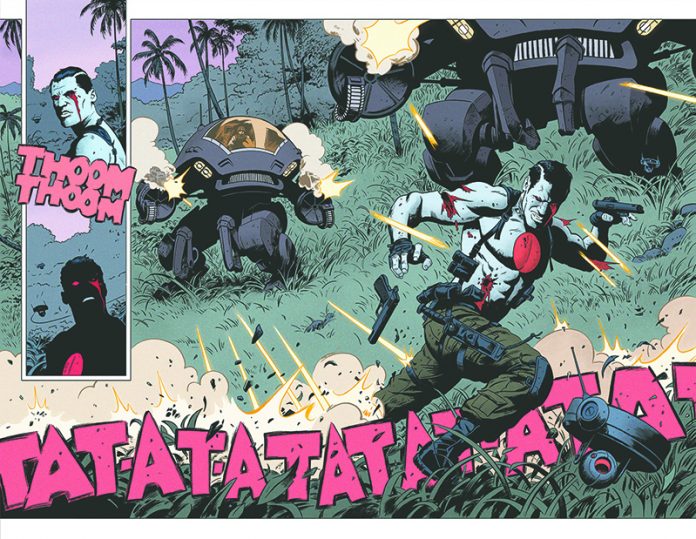
Jeff Lemire, Matt Kindt, and Paolo Rivera’s The Valiant is a story which brings together all the heroes of Valiant Comics against a millennia old adversary who threatens the safety of the whole world. While this crossover has its share of fun and heartfelt moments, it ultimately leaves readers wanting more — and not in the good way. 

The story follows the Eternal Warrior, an ageless guardian to the Earth who has been locked in a tumultuous feud with The Immortal Enemy, a force of nature out for destruction. After centuries of defeat, The Eternal Warrior dispatches the help of every hero available to end the conflict once and for all. What ensues is a battle for the ages — except not really.

Just when readers are starting to get settled in for an action-packed comic equivalent to a blockbuster popcorn flick, the story ends just on the precipice of gaining momentum. The saying often goes that less is more, but in this case of The Valiant, there were hardly enough scenes in the story’s entirety to justify a conflict, never mind an epic crossover.

The Valiant is in a lot of ways like the first Avengers film. It features a ragtag assortment of heroes all coming together to save the world. The only difference is that in The Valiant, considerably more characters are present, and even less backstory is given to those with important scenes in the story. There is just not enough time dedicated in the story to allow audiences to grow any attachment to the ensemble of heroes. 

Paolo Rivera’s artwork is perhaps the one true constant in this action-packed graphic novel. Well-constructed pencils bring to life the characters and setting of The Valiant in a really visually stimulating manner. Rivera shows a magnificent amount of versatility as he draws scenes of the story from all kinds of different historic timelines. Above all, though, Rivera’s art achieves a perfectly harmonious balance; it is visually exciting and easy to consume, but still heavy with exposition and well-characterized mannerisms.

The Valiant is an action-packed miniseries with its share of cool characters and badass moments. However, the story suffers ultimately by being too short. The Valiant could have been foreseeably more entertaining if the conflict had been stretched out to focus on more of the main characters and supporting cast.