Home Blog Page 978

How freshmen can make the most of their time in university

0
Photo Credit: Alfred Zhang

In hindsight it’s all so clear, but looking forward, it’s as cloudy as a November morning in Vancouver. University is somewhat of a big deal, and as you go through it you become better at it. But for the newcomers who are scared or hesitant, I have some advice on how you can conquer it.

First things first: majors. Deciding on a major is a big deal, but it doesn’t have to eat away at you during your first year. While all of your credits ‘count’ in university, you can spend a little time figuring it out at the start. Since you’ll have to complete 120 credits regardless of your major, and since most majors only consume roughly 80–90 credits, you have some leg room for other courses.

This isn’t to say you should just write your first year off by taking every random course there is. But you shouldn’t sweat those first two semesters. For your first year, take some courses towards what you think you might major in, and take a few outside that particular field. Also, remember that no one ever said you could only have one major.

Secondly, how do you snag all the As? Before I flat out say “work your butt off,” I want to address this: there is more to getting great grades than endless studying. I’ve found through my own studies that what is most important is studying strategically.

In regards to this, there’s a hard and fast pointer here: go to every single lecture and tutorial. No if, ands, or buts. Not only do you learn the material, but you’ll always gain subtle hints about the test through lectures and tutorials. Professors, TAs, and sessionals usually drop hints about certain aspects of the tests, assignments, or papers that aren’t specified on the syllabus or handout. Do otherwise and you’ll end up studying the heck out of some minute details which, in lecture, the prof had excluded.

Thirdly, get to know your professors and TAs. You’d think that university tests would be highly standardized and would not reflect the interests of the profs or TAs. Wrong. And some of you science majors may think, ‘well, science professors don’t insert their own interests into their tests.’ Wrong.

While there are always going to be reoccurring questions based on the course fundamentals, profs and TAs can put more or less emphasis on certain aspects. So, ask a lot of questions, probe your TAs, and basically know as much as you can about your instructor’s interests and what they find important about the material.

Lastly, become involved. As much as course work can drag you down, it’s in your best interest to be engaged in extracurricular activities. Join clubs, get involved with a laboratory or with Build SFU, or write for the student newspaper. The more you throw yourself at university, the more you’ll get out of it.

Fall ‘kicks off’ with a bang

0
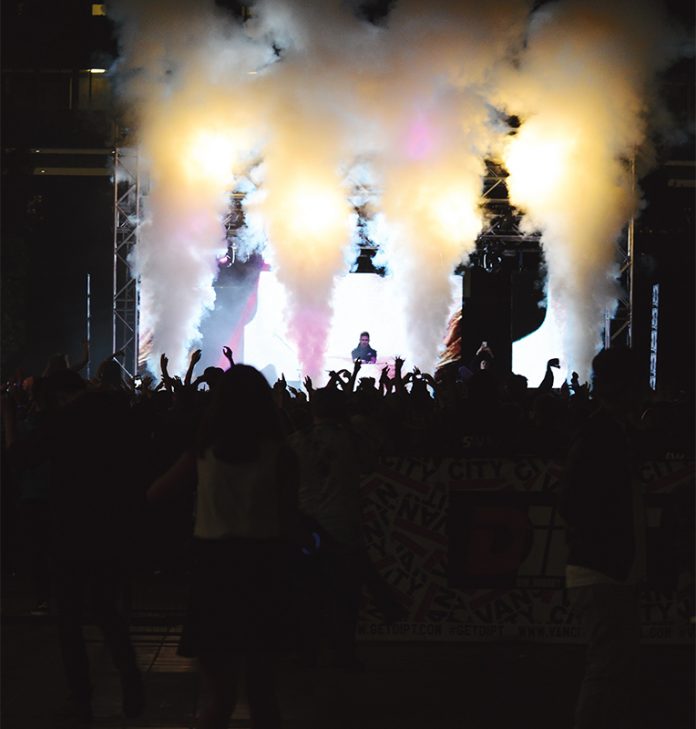
DJ Felix Cartal spins beats, lets the bass drop. - Photo by Lisa Dimyadi

An estimated 1,850 students crowded the Convocation Mall on Friday night for the largest Fall Kickoff yet, and one of the largest concerts the Simon Fraser Student Society (SFSS) has ever hosted.

“We almost sold out,” said VP Student Life Deepak Sharma. “We’ve never done that before, where we have no hard tickets left, no online tickets left. That’s the largest number we’ve had in history.”

A short time after five o’clock, the show opened with local DJ NuBe, followed by fellow DJ Guiliano Rascan at 5:30 p.m.

For most of the first two acts, there was not a large crowd. However, people started to file in during the third act, Sleepy Tom, a Squamish-born DJ who charmed the audience with a laidback presence and some shocking revelations.

“I was here for one year, but dropped out,” Sleepy Tom shared with the slowly growing crowd. “Good to be back.”

“I feel like I didn’t party enough,” he said of his time at SFU.

Earlier in the day, the SFSS announced that there would be no “beverage garden,” due to “circumstances beyond [their] control.” For some, it was a deterrent, including one anonymous student on Chitter who remarked, “Wait so no beer at fall kickoff? Maybe I’ll pass.”

Sharma explained, “This morning, unforeseen circumstances took place where we weren’t in the position to have a beverage garden.”

He continued, “I was very upset about it, because it adds to the experience of the event — SFU students here are very responsible, it’s not like they’re going to go into the beverage garden and be a bunch of hooligans.”

However, judging by the free-flowing smell of liquor in the air, and a few overly happy dancers, the last minute change did not appear to be much of a hindrance to a good time.

“If you go out there, and you see still, lots of people having the times of their life. We just threw the biggest concert in SFU history, it didn’t hurt the event,” said Sharma.

The fourth act was Botnek, a Montreal-based duo who describe their musical genre as “mp3.” Among the songs they played were “I’m Gonna Be (500 Miles),” the Rocky theme song, and the always crowd-pleasing “Bohemian Rhapsody,” which allowed the audience to join in on the “galileos.”

The fifth performer, Big Data, brought a welcome change of pace with a Brooklyn, NY-based electropop and indie rock band. The group kept with the electronic theme of the night, but brought some quality instrumentation and high-powered vocals.

“We always end up doing electronic dance music or DJs, just because they’re a lot more inexpensive than someone like Hedley or Coldplay, or even nearby bands that would add variety to it,” Sharma said.

“It was different than what we’ve done before [. . .] it’s [a] right step towards changing and diversifying our membership, and accommodating all membership, I don’t want to accommodate just one niche or group, I want to accommodate everyone.”

The concert wrapped up with Vancouver-based DJ Felix Cartal. The crowd, at this point, was jumping up and down, playing with the multiple balloons in the air.

However, the night didn’t end with the concert. An after party held at 10 p.m. featured an encore  Botnek, marketed as a top secret mystery guest.

Blood: it’s in everyone to give

0
Photo Credit: Sean Michael Ragan

“Blood, it’s in you to give.” We have all heard this advertising pitch from Canadian Blood Services before, but what we don’t hear is the invisible asterisk for the fine print regarding who can and cannot donate blood.

There are two specific groups of people who are unable to donate blood — not due to any underlying medical reason, but due to sexual orientation. Any man, which they define by their “current anatomic sex,” who has had sex with another male (MSM) within the past five years is banned from donating blood, due to this being an act that allegedly places those people at a higher risk of infection from HIV.

While HIV/AIDS is a blood-borne infection, the new testing that Canadian Blood Services implemented in 2001 can detect HIV in the blood as early as two weeks after infection, yet the ban is still in place after five years. While this is better than the ban that is in place in the US — where the ban is for life — it is significantly worse than Australia, where the ban is only for a year.

The length of the Canadian ban prevents males and trans women, who are otherwise healthy, from donating blood based solely on those with whom they have sex. This ban, which seems to be based completely on the AIDS epidemic of the 1980s and was reduced to five years from a lifetime ban in 2013, does not seems to acknowledge other groups who may not be included in the high-risk HIV/AIDS category, but are still engaged in high risk sexual practices.

For instance, a female who has had multiple sexual partners is allowed to donate blood as long as there was no exchange of money or drugs for sex. As one of my gay friends pointed out, “A girl could go and have sex with the whole hockey team and then give blood, but because I’ve had [healthy] sex with someone I’ve been in a monogamous relationship with for the past year I won’t be able to give blood just because we are both men.”

This comment has always struck me; what makes one group of people allowed to engage in high-risk sex and still donate blood while another group cannot? Other activities, such as getting tattoos, piercings, or having acupuncture with non-disposable sterilized needles — all of which carry a high risk of hepatitis C infection — only have a six-month ban attached to them.

Canadian Blood Services needs to reassess the length of the ban that they place upon men and trans women who have had sex with men. It seems grossly unfair to place one group of people who engage in high-risk sex activities under a long-term ban when others are still able to donate blood.

The testing that is currently in place should be more than enough to prevent any infected blood from entering into the system, and to keep those receiving blood safe. A new policy should state that MSM individuals simply be tested for HIV and AIDS before donating blood, or, at the very most, reduce the ban to one year, as it is in Australia and the UK.

It’s upsetting to hear of such discrimination in medical practice, and it makes me reconsider just how fair or progressive our country really is.

Christina Dickson leads women’s soccer to victory

0

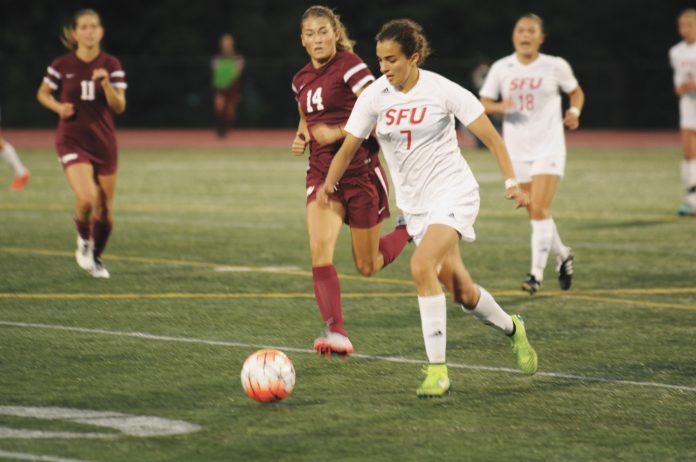
Women’s soccer kept their unbeaten season alive Thursday night with freshman forward Christine Dickson scoring the only goal in a 1–0 contest against the Central Washington Wildcats in front of 147 fans at Terry Fox Field.

Going into the game, SFU had two wins and two ties, with their only conference game being a 0–0 tie last week against Seattle Pacific. There was some concern considering the women’s team jumped out of the gate last season with two straight wins early in the season, only to lose every other game of the season.

“First and foremost, we’re super happy we got a win,” said assistant coach Anna Picarelli. “We were really scared we would have a two-win block and that would be our forever-most wins in a season, but we got the win, the girls fought it out, we get the clean sheet so we can’t be anything but happy with the result.”

Despite solid chances for both teams, the first half was a scoreless affair. A well-timed tackle by junior defender Teagan Rae Sorokan to force a corner 20 minutes in helped SFU keep the game 0–0. For much of the half, the Clan dominated possession; however, a few defensive lapses gave the Wildcats solid breakaway chances.

It would be SFU’s leading scorer Christina Dickson who ended the standstill with just over 24 minutes left in the second, tapping in a rebound. Dickson is the team’s leading scorer with three goals and an assist in five games in her inaugural season. Her twin sister, Allyson, is second in team scoring with a goal and an assist.

“When we were looking at [Christina] as a recruit, we knew that’s what she had to offer already and now we’re just happy to see it transition into playing here,” said Picarelli. “She’s just a competitor. I mean, this girl’s not going to stop at anything. We love to see that she’s getting in on the end of goals, and hopefully [she] just gets more and more every game.”

SFU held the lead for the rest of the game, but not without a few scares. Central Washington seemed to take it to another gear, nearly tying up the game, if not for the work of second-year goalkeeper Priya Sandhu.

Christina Dickson nearly had a second goal in the 84th minute; however, it was comfortably palmed away by the Wildcat goalkeeper.

Picarelli believes that despite the solid start to the season — the third win is the most for the women’s soccer season since 2010 — the team still has a lot to work on.

“I think they’re still getting used to staying composed no matter what the scoreline is,” she said. “The other thing they need to work on is, judging by our score lines, is getting more goals, getting a bit of an easier win as opposed to, ‘Oh my gosh, two minutes are left, are we still going to hold it out?’

“I think that’s going to be our big focus — putting things away.”

Five things to watch for this NHL season

0

A new hockey season is now upon us, and with that means some intriguing new storylines to pay attention to. From off ice issues to rule changes, it has been an offseason of change, good and bad, for the NHL. There are plenty of them, but here are just five things to look out for this upcoming season.

The Patrick Kane investigation

With Kane being allowed to take part in training camp for the time being, it will be interesting to see how long this arrangement lasts. As of now, he is being investigated for sexual assault, a result of an incident between himself and a woman back on August 2. If this case goes to trial and doesn’t get settled, will Patrick Kane still be allowed to play?

Three on three overtime

The last few season, too many games were going to shootouts. The NHL decided back in June that they way to solve this problem was with three on three overtime. The thinking is, with more open ice, there will be more opportunities for players to score, and this will end more games before they go to a shootout. It remains to be seen if this theory will play out, as there is still no incentive to end a game in overtime rather than in a shootout.

Eichel vs. McDavid

This season will have two of the most talked-about prospects in Jack Eichel and Connor McDavid play their rookie seasons. Not since Crosby and Ovechkin have two rookies caused so much hype with hockey fans around the world. McDavid in my mind has serious potential to break the point per game mark as a rookie, something we haven’t seen since Crosby and Ovechkin. Buffalo and Edmonton’s first meeting of the season Sunday, December sixth will be must see TV.

The Central Division

This division will probably be the most tightly contested of all the divisions this year. With St. Louis, Minnesota, Winnipeg, Nashville, an improved Dallas, and, of course, the defending champs Chicago, we could potentially see five of these teams in the playoffs come season’s end. As of now, it’s too close to call who will be on top come April. St. Louis is always a contender, but don’t count out Chicago or Nashville.

Babcock

Mike Babcock arrived in Toronto with much fanfare and a few extra dollars in his pocket (50 million extra, to be exact.) Now comes the challenge: living up to all the expectation. Babcock will try and do everything in his power to make his team as competitive as possible. But after trading away Kessel, the Leafs probably won’t be a very good team again this year. How quickly will the fickle fans in Toronto turn on their prised acquisition?

The world isn’t ready for an Orwellian worklife

0
Photo Credit: Janis mcMath

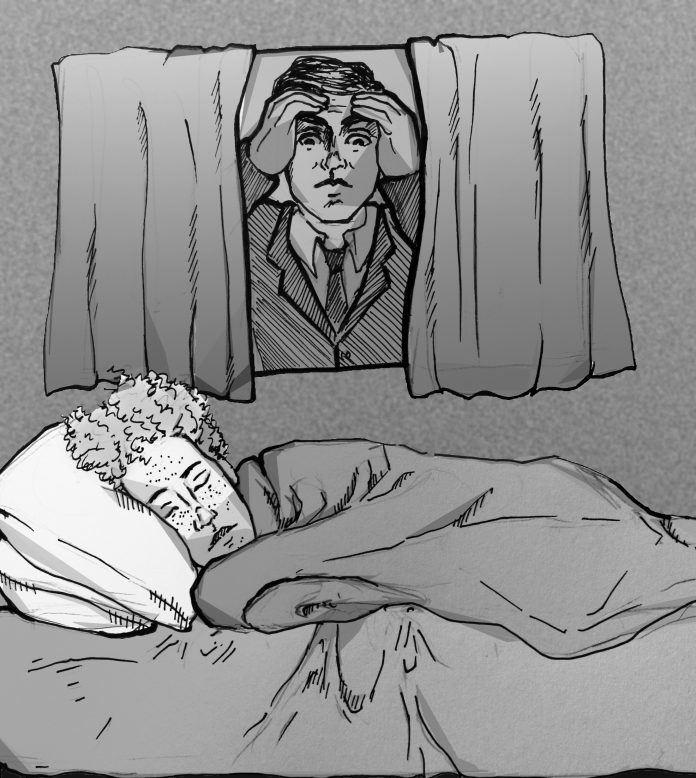
Maybe it’s a good thing I’m currently unemployed, or else I might have my bosses monitor me while I’m writing this article.

That is probably a tad hyperbolic, but it might not be within a few years, depending on companies who are pioneering 24-hour employee monitoring.

As first reported by CBC in May, businesses like Buffer in California and The Outside View over in the UK are providing their employees with wristwatches that allow them to monitor things like sleeping habits, exercise, nutrition, and happiness (which would be interesting to see how they quantify). That information is then shared for purposes of increasing productivity and efficiency, and other reasons you’d likely hear your ex say when you catch them creeping on your life when it clearly isn’t appropriate.

Vameesha Patel, president of the Human Resources Student Association at SFU, ultimately believes that it is okay for our employers to find out more information about us, but said that she wouldn’t like being monitored, and that this can be detrimental to workplace efficiency.

“This is harmful to overall company morale, which as a student studying Human Resource Management, is crucial to the success of an organization,” said Patel through email correspondence. “Without company morale amongst the workers, there can’t be trust, and if there is no trust, then how efficiently and effectively does the company accomplish its goals?”

There needs to be a very solid line between your corporate life and your private life, unless you want to totally give up those boundaries personally. Despite how preachy he came off, Karl Marx was more or less right in The Communist Manifesto when he suggested that defining ourselves by our labour’s worth is to alienate ourselves as an individual in an ultimately capitalist society.

Some folks do, as you can see by incredibly dedicated artists, performers, and — to a lesser extent — professional athletes. However, many of them chose to go into those professions, and don’t have direct employers with whom they have a relation.

If you think this whole thing comes off as creepy and overbearing, you’re not alone. There are also huge security risks associated with this.

Since that information is being collected and stored, it is also available to be uncovered without consent. Just ask people who have had their nudes leaked or their Ashley Madison accounts exposed what having your personal information ripped away from you feels like.

One foreseeable future is that people who don’t have typical eating or sleeping habits could become exposed. Not a big deal if you’re neurotypical, but that becomes an incredibly large risk if your company or hackers find out your struggles with mental illness or anything else by monitoring the data on your personal life. Despite what we’d like to believe about ourselves, we human beings aren’t progressive enough to move past the stigmas surrounding mental health to let it affect job security, much less how we actually treat one another.

Maybe down the road, we’ll be able to perfect this technology so it doesn’t come across as invasive and stalker-ish, but for now the working class just isn’t ready to be subjected to employers monitoring who we are through constant vigilance.

Sadly, airports do not recognize gender sensitivity

0
Photo Credit: Phoebe Lim

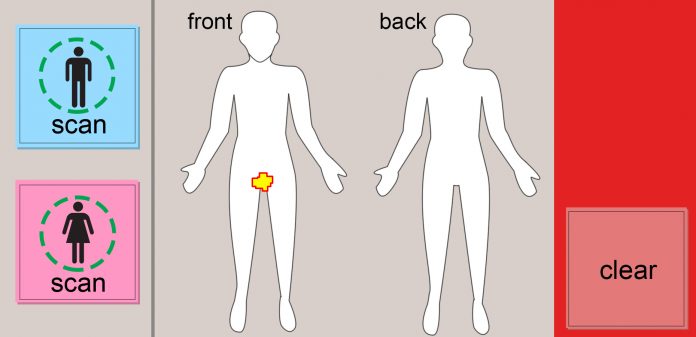
Last week, an issue was hastily slathered onto the news involving a trans woman’s troubles while she — Shadi Petosky — went through security at an airport in Florida. As she made her way through the full body scanner, labelled as ‘female’ by the electronic system, security afterward took her aside to gruffly explain that they found an “anomaly,” or a security threat, in her genital region — also known as her penis. Needless to say she felt incredibly discriminated against while having to explain her genitalia to security.

After detaining her in a room for a short while, security then released her, but not before Petosky saturated social media with her situation, pictures and all. Since then, there has been an abundance of controversy over the reasons for a ‘male’ and ‘female’ setting on airport scanners, as this discriminates against anyone from trans communities.

This issue is tough one. It’s multi-faceted, and incredibly sensitive, so I’ll tread carefully.

Firstly, there’s no doubt in my mind that airport security guards could do with extensive sensitivity training. I’ve definitely heard my fair share of security horror stories which involve sexual misconduct, invasions of privacy, and verbal and physical violence. The way Petosky was treated was probably far more harsh and emotionally damaging than it should have been. To top it off, security demonstrated their utmost ignorance by demanding that Petosky return to the scanner “as a man or it would be a problem.” The whole encounter was, without a doubt, insensitive.

However, I’m cognizant that security was maintaining protocol — that is, to be suspicious of practically everything! The unfortunate truth is that airport security takes precautions based off of concrete, physical truths. In this case, the truth was that male and female anatomies look physically different from each other. Both sexes have their own distinct shape; there are visible, unchanging lumps, bulges, or curves in different places, and these are what scanners check for.

Gender, however, is a social construct. The typical traits that we associate with a ‘man’ or ‘woman’ are a cultural creation, and when a culturally constructed woman has a penis, it defies the stereotype and confuses the system.

Airport security takes precautions based off of concrete, physical truths.

Point blank, airports scanners don’t take into account the cultural traits that we humans associate with ourselves, they scan for the sex binary — the blatant differences in biology between males and females.

If a person of one sex arrives at an airport with the attributed traits of the opposite gender, security believes they could be hiding ‘weapons’ in the regions where the lumps and bumps of their sex exist. This is why Petosky’s genitalia was so confusing to security guards, who were suspicious of what might be hidden down there.

The guards do not insert their personal views regarding someone who is transgender. In fact, most of them surely don’t care, and some probably support and sympathize — as I do — with those who feel they were born in the wrong body.

Having said all this, the question looms: Should airports get with the times and create a body scanner that disregards the male or female anatomy? Would this make it fair and comfortable for everyone? Yes, absolutely. Though I have trouble picturing how this would make for thorough security checks, as the system would technically be attributing both male and female body parts to every individual. Though, unless everyone underwent a physical pat down, passengers would be able to sneak in undesirables.

Before the current system came into place, a previous scanner did full x-rays, providing explicit detail of a passenger’s body — but people complained it was too invasive. The new system, while more respectful of the body, is also overly specific and insists on stereotypical body types.

Perhaps scanners should include a ‘male to female,’ and a ‘female to male’ setting? Of course this idea would be bombarded with criticism regarding why this distinction should even matter. Trans people shouldn’t have to feel labelled or separated from the rest of society. I agree!  But in a world where biological sex is considered fixed, to scan based off the sex binary may be necessary for maintaining proper security.

I sincerely hope that security devises a system that thoroughly scans people while completely disregarding their sex, but until then I’m afraid airports will continue to be a hub of discomfort and embarrassment.

Coeur de Pirate steals our hearts

0

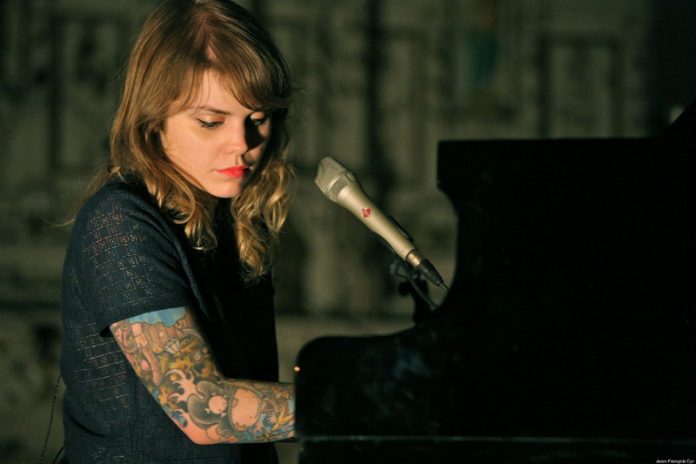
I’ve been a fan of Coeur de Pirate (Beatrice Martin) for years now, and a lot of her charm came from the fact that she sang in French. The beauty of the language and the cultural references added strength to her music and complemented her wistful lyrics and soft voice. With her new album, Roses, she seems to be attempting to cross into the Anglophone market and broadening her appeal within Canada and internationally.

In true Canadian fashion, she started off her set at The Commodore by saying that she was going to do a bilingual show, repeating everything she said in both official languages. I’m glad that more people are discovering this talented musician now that English speakers are listening, but I felt like many people in the crowd were waiting for the English tunes they had heard on the radio. I was doing the opposite.

Coeur opened with “Then I’ll Fall,” one of the English tracks off her latest album, and followed up with a few classics from her self-titled debut and Blonde. With black and white projections behind her and expressive arm and hand choreography, Coeur performed with sincerity and passion.

Highlights of the show for me were “Saint-Laurent,” which she described as being the song for anyone who’s ever been lonely at a bar, and “Comme des enfants,” which is painfully romantic. She also did a Rolling Stones cover of “Dead Flowers” which sounded great and was a captivating rendition with her slightly raspy voice. Coeur explained that “Way Back Home” was written for her daughter, and she hopes that it will make up for her career that takes her away from home so much.

The show was a good blend of French classics and new English songs that kept the crowd happy. Her current single, “Carry On” was saved for the encore, and I think that might be the song many people were waiting to hear. I hope she always carries on and never loses her Francophone charm.

The Best Laid Plans doesn’t live up to expectations

0

With the federal election campaign in full swing, this musical couldn’t be timelier. I had high hopes that this show, based on Terry Fallis’ novel, would poke fun at our democratic institutions and political parties all through engaging song and dance, but I couldn’t help but feel there may have been a rush to get it on stage before the election, leaving it a bit premature.

The other reason that this show should have been much better is the creative team behind it. Benjamin Elliott and Anton Lipovetsky teamed up for the show’s music and lyrics, and I have been impressed by their work numerous times, but many of these songs fell flat. The humorous premise and performances by Andrew Wheeler and Nick Fontaine carried the show.

Wheeler previously played Stephen Harper in Proud at the Firehall, and in this production he plays Angus McLintock, the unlikely Liberal candidate for Cumberland-Prescott — a sleepy Conservative-dominated riding near Ottawa. Daniel Addison (Fontaine) is a speechwriter for the Liberals who is tasked with finding a candidate for the unwinnable riding, and when he moves in with McLintock, they make a deal that he’ll be the candidate if Addison teaches his dreaded English for Engineers course at the university.

Addison’s plans never seem to go smoothly, and what ensues is a wonderful satire of our electoral process.

One of the best scenes involves David Cameron (Gordon Roberts) giving a press conference about family values that turns into an erotic rock ‘n’ roll performance. He is later caught in bed with his campaign manager, wearing a diaper and soother while she sports a dominatrix outfit. ‘Diapergate’ was the perfect counterpoint to the recent ‘peegate’ scandal, and goes to show that this story isn’t as farfetched as we might think.

Aside from the political antics, the characters have typical personal lives. Addison is the quintessential misguided fool who almost falls back in love with the woman who cheated on him before coming to his senses. McLintock is a sensitive widower who is building a hovercraft in his spare time — all run-of-the-mill plot devices in terms of rounding out these characters and giving them material for emotional songs.

The two characters who did stand out and add something different were Kris and Qris (Steffanie Davis and Hal Wesley Rogers), two gender-neutral best friends who work on McLintock’s campaign. I also enjoyed the addition of the senate chorus who were dressed in sequined jackets and showed up to advise Addison, and of course the jabs at omnibus bills and scandals were wonderfully relevant.  

For anyone who enjoys political humour, this show will be entertaining, but I have a feeling it could have been even better given a bit more time to come together.

The Best Laid Plans: a Musical is presented by Touchstone Theatre and Patrick Street Productions at the York Theatre from September 17 to October 3. For more information visit touchstonetheatre.com.

Cadiz de la Frontera headlines Flamenco Festival

0

Flamenco Rosario proudly presented the 25th anniversary edition of the Vancouver International Flamenco Festival this year. The festival is dedicated to presenting innovative international, national, and local artists and fostering the evolution of traditional and contemporary forms of flamenco.

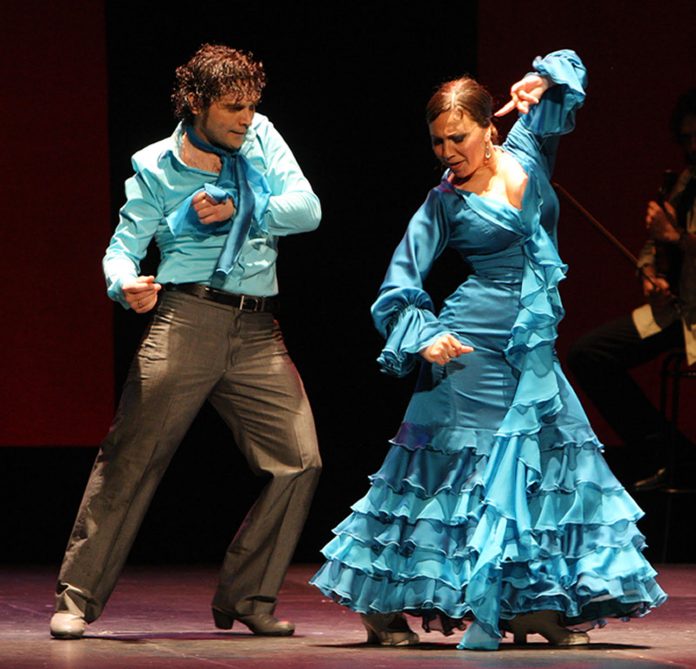
An extraordinary festival lineup was bolstered by the centerpiece show Cadiz de la Frontera, which was choreographed and performed by the renowned Spanish flamenco dancers Andrés Peña and Pilar Ogalla to the accompaniment of song by Inma Rivero and guitar by Juan Campallo.

Pilar and Andrés, partners in both life and dance, have garnered much international acclaim for their mastery of flamenco dance. Cadiz de la Frontera is their second collaborative piece, and their collective devotion to traditional flamenco forms shines throughout the performance.

Cadiz de la Frontera portrays the juxtaposition of earth and sea elements symbolic of the Andalusian cities of Jerez and Cadiz. The lively seaport city of Cadiz, open to diverse external cultural forces, was the birthplace of Pilar. Flamenco forms from Cadiz are more expressive, fluid, dramatic and invigorated, reflecting the characteristics of the city and its people.

The inland city of Jerez, where Andrés hails from, is more conservative and inward-looking, a place where hard work in the vineyards and a connection to the land prevails. Flamenco forms from Jerez are more rough and rooted yet deep and rhythmic, mirroring the ways in which the inhabitants live.

The duet performed by Pilar and Andrés deftly embodied the entwinement of these two lives from these respective cities and showcased the distinct ways that flamenco forms are interpreted and expressed in the flamenco capitals Cadiz and Jerez.

The story, emphasized by the minimal backdrop of coloured lights and blackened silhouettes, was interactively conveyed through the dancers, singer, and guitarist. Three wooden chairs placed close together on the center of the stage reflected spaces where conversations, observations, and relationships unfold.

Throughout the performance the dance, song, and guitar moved among the melancholic, somber, and mellow, and the animated, elated, and uplifting. I was immersed in the melodic fingerpicking and strumming of guitar and the perfectly emotional tones of the song.

The oscillating rigid to fluid body movements, facial features and hand gestures of the dance were synchronized to rapid-fire footwork, and rhythmic palmas (hand clapping) and pitos (finger snapping). As the story unraveled on stage, it caught in my throat. It was beautiful to ears, eyes, and heart.

The artists seemed incredibly proud to showcase their roots. There was much celebration and adoration for these talented artists in the room, and this was all too evident in the raucous cheers and comments coming from the audience. Cadiz de la Frontera was an exceptional performance of raw, passionate emotion and energy, which consistently left the audience captivated.

Cadiz de la Frontera was presented as part of the Vancouver International Flamenco Festival September 19 at the Vancouver Playhouse. For more information, visit flamencorosario.org.