Home Blog Page 917

Laugh Track: An interview with Amy Goodmurphy and Ryan Steele

0
Illustration by Serena Chan

For over eight years, Amy Goodmurphy and Ryan Steele have been crafting comedy gold together. They were once part of an ensemble sketch show, whose other members all eventually went in other directions; Steele and Goodmurphy were left to collaborate and create as the pair they are today — as The Ryan and Amy Show. When they’re not busy filming and releasing digital shorts online, you can usually find either of them dabbling in one of the city’s other comedic ventures, most notably the prominent sketch comedy monthly The Hero Show. Read on to learn about the pair’s humble beginnings, their experience with a corporate partnership earlier this year, and how these are all just steps along the comedic journey.

How did The Ryan and Amy Show come to be?

Amy Goodmurphy: Well, Ryan and I met eight or nine years ago. I wasn’t in the comedy scene but I’d always wanted to be; I just never knew if that was a possibility or where to start, and Ryan was doing The Ryan Steele Show, which was a sketch comedy show.

Ryan Steele: I had just started comedy too. I was only six months in.

AG: We just hit it off and he asked me to come to one of his shows, since we had the same type of humour. We were in The Ryan Steele Show for three years together and then people started getting different jobs and we were all getting older, and Ryan and I decided we wanted to keep doing what we were doing. We had like-minded ideas of what we thought was funny and where we wanted to be, so we formed The Ryan and Amy Show together.

What was it that drew you to sketch comedy specifically?

AG: I’ve just liked playing characters all my life. I always felt comfortable doing something, or being someone other than myself. It’s really neat getting to play so many characters, instead of something like stand-up where you’re kind of just yourself or you have your shtick. Some stand-up comedians are characters, but they don’t really switch from that. So I like that idea, I like the wigs, I like the makeup, I like being able to put on an entirely different persona.

RS: For me, it’s similar in that it started at a young age, but I’m not much a character guy. I just loved sketch. When I was younger I watched Second City Television, and even though I didn’t totally understand it, I just knew that I loved it. I did acting throughout high school but I just never thought I could do anything with it, and then I took one of those Tony Robbin’s-type of workshops and the woman told me I should do sketch comedy.

Amy and I work well together too, because she’s more of the character person and I’m more of the idea person/straight-man to her zaniness. It works out well.

How would you describe the sketch comedy scene in Vancouver?

AG: It’s a smaller scene, but I think the quality is unlike I’ve ever seen. People are always talking about Toronto, and I get it, because there are some fabulous comedians out there, but there’s this little untapped community here of sketch, of improv, of lots of types of comedy, but sketch for sure. And I’m really happy that we’re a part of it.

RS: There’s so much room for growth though. When I tell people what I do and that I’m a comedian, the first thing is always, “Oh stand-up! Tell me a joke, where do you perform?” No one ever thinks sketch. They go right away to you’re a stand-up comedian, so obviously it has a long way to come in Vancouver. If you say you’re a musician, people ask what kind of music. With comedy, it’s rare. If you say sketch, a lot of people don’t know what you mean.

Earlier this year you did a collaboration with the website Jack’d, and company partnerships are already a mainstay in the music industry. Could you see the same thing happening in the comedy scene?

RS: I feel like we kept our integrity in that video; it was still a Ryan and Amy Show video, so we did it smart enough that we promoted their app and still shined 100 per cent our sense of humour. It was exactly our type of thing without selling out. We want to do more of that — kudos to anyone who can do similar things, as long as they don’t lose who they are.

AG: Not that it’s necessarily selling out for us. It would be if we only did comedy that had nothing to do with what we really believe in. We’re very thankful for everything we’ve ever gotten, but we’ve done some television appearances or other projects where you know it’s not funny. Not that we’re not thankful. When we did Jack’d, the particular guy found us and said he loved our videos and wanted to work with us, so we did all that ourselves from start to finish. Projects like that are amazing. You get paid, which is fabulous, you get it put on a higher platform, and you get to keep true to yourself. The ultimate goal isn’t to keep doing that, but definitely I’d love to sign up for more projects to get us to where we want to be.

What other projects do The Ryan and Amy Show have on the go?

AG: One thing we’re really excited about is we just signed a contract with a production company out of Los Angeles called World of Wonder. They produce a show called RuPaul’s Drag Race and some other great productions, and we just signed a contract with them to create content. We’ve also been writing a TV show pilot, which is the ultimate goal we should mention. We’ve been writing it for two years with a producer in LA as well, and we’re finally wrapping the bow on it. We’re about to start shopping that around, and that’s what all of this is for. Portlandia’s the best comparison to our script, because there’s a girl and a guy duo who do sketch. We’re really excited about that.

Don’t miss your next chance to see The Ryan and Amy Show live: the pair is presenting two separate evenings of sketch comedy at XY Nightclub on November 17 and 19.

HUMOUR: Dissecting the mannerisms of human texting behaviours

0
Illustration by Janis McMath

Most people might not notice the hints about their personalities revealed through their texting habits; we have become such an antisocial culture that our texts now contain inflection. We can’t sit in a crowded room anymore and start a conversation with that cute guy, but instead we retreat back to our phones and turn our caps lock on full-blast: OMG HE IS BEAUTIFULLLLLLL I THINK I AM GOING TO DIEEEE.

So, what do your little quirks say about you?

For starters, let’s look at the above 20-something femme who loves her caps lock. She thinks that you can hear how loud the letters are. We can then deduce that in real life, she would be yelling at you. “But that’s pretty basic,” you’re probably saying. Let’s look a little deeper: note her elongation of words. The more L’s she adds to the word ‘beautiful’ makes me want to believe that this guy is Patrick Dempsey or something. The extra E’s at the end of ‘die’? Completely unnecessary, but rest assured that this girl will be saved by Dr. McDreamy if she does go into cardiac arrest.

And what’s up with her run-on sentence? My third-grade teacher would cringe at that. It’s almost like she has one last breath to use, and this lack of punctuation demonstrates that maybe she didn’t learn anything about punctuation as a kid.

While lack of punctuation can make you come off as dense or crazy-excited, there are some people who take punctuation to a whole other level. Texting is instant, for crying out loud! It’s supposed to be quick snippets that leave you hanging, inviting more conversation to follow. I once dated a guy that would end every one of his texts with a period, the way one would when they finish a sentence in a paper. Even after a smiley face emoji, there would be a period. That period, to me, cancels out your smiley face emoji. You sound passive aggressive, dude! You sound upset and/or bored, and sometimes it seems like you don’t even want to talk to me! If you don’t want to talk to me, just tell me. But don’t pull this “I just love punctuation” garbage on me.

And speaking of punctuation, let’s hear it for those who overuse exclamation points! All! The! Time!! I admire your enthusiasm, but save it for cheering on your favourite team. It gets exhausting to see all those upside down i’s at the end of your sentences. Add that to the Caps lock and it’s like you’re trying to make me deaf. But in a battle between two evils, I suppose I would rather talk to a hyperactive person than someone that doesn’t really want to talk to me — even if it means getting yelled at over and over.

With that said, I’m sure everyone will now retreat back to their phones and become incredibly self-conscious about their typing. Take this as a kind of personality checkup that no one will TBH tell you. If you really want to win that guy over, maybe unstick your pinky from the caps lock, okay?

This week in comics

0

AgoraphobiaThe Adventures of Agoraphobia Man: World Defender (Jacey Gibb)
ApartmentThe Vancouver Housing Crisis (Eric Smith & Jacey Gibb)
CP_015Creator’s Pet (Destiny Hsu)

Seagull Square 11Seagull Square (Jill Mandrake)

Three PieceThree Piece (Rosemarie Perkin)

Screen Shot 2015-11-13 at 9.11.46 PMJeremy’s Excuses (Reuben Newton)

Poor offence still a problem for the Whitecaps

0
Pedro Morales is the only true creative midfielder the team has.

It was a poor finish to what was a good season. The Vancouver Whitecaps simply could not break down the Timbers’ defence. There were too many misplaced passes, and not enough urgency with possession, especially after conceding. You got the sense that after the first goal of the game, scored by Portland’s Fanendo Ali, it would take a monumental offensive effort for the Whitecaps to come back and win.

After all, in the 10 previous matches in all competitions heading into this one, the ‘Caps had only scored six goals. And three of those had come against a Houston Dynamo side that had nothing to play for on the last day of the season.

And therein lies the problem. The Whitecaps’ main issues that have to be addressed lie on the offensive side of the ball. Defensively, they are set. David Ousted has been nominated for Goalkeeper of the Year, along with Kendall Waston for Defender of the Year. You can easily make a case that both those players are the best at their respective positions within Major League Soccer (MLS).

In the midfield, the ‘Caps need to find some more creative players. They have Pedro Morales, but he by himself is not enough. Yes, he had a poor game against Portland, but at his best, Morales is the one midfielder the team has that can unlock an opposing defence. They have Matias Laba, Gershon Koffie, Nicolas Mezquida, and Cristian Techera, who all basically play the same role: all are hard-working, defensively-minded midfielders who are good tacklers, but lack the vision to pick out a pass. Some of these players may need to be sacrificed in order to bring in some more offensive-minded midfielders.

This lack of creative midfielders is showing up front, as often times down the stretch lone striker Octavio Rivero wasn’t getting any service. You could replace Rivero, but I’d argue he should get another chance next season with perhaps a revamped midfield. What the team should, and need to do, is build their offence more around Kekuta Manneh.

Manneh’s pace throughout the year was a treat to see, not to mention it caused opposing defenders a lot of trouble. At only 20 years old, he still has time to improve, and he could soon become a dominant player in the MLS. Moving him up further on the pitch will create more goal scoring opportunities not only for himself but for the team as a whole.

In all, the Whitecaps season was a success. However, its end will leave a bitter taste in the mouth for many over the offseason. With a focus on bringing in more offensive players, the ‘Caps can hopefully go on to bigger and better things next year.

Course Diggers shows grade distribution of SFU courses

0
Ryan Tavakol (left) and Preetpal Sohal (right) began to work on Course Diggers as part of a project management class. - Photo by Lisa Dimyadi

Looking for an easy elective? Try HSCI 181. Course Diggers, a website designed by SFU students, says that 24.5 per cent of the grades for this class are in the ‘A’ range. Students rate the difficulty and workload as 1.0 on a five-point scale.

Course Diggers is a website designed and developed by SFU business students Ryan Tavakol and Preetpal Sohal. The pair met in a project management class last Spring, where they first developed the idea for the site.

The website takes data that SFU releases on the grade distribution for various classes and aggregates that data into easy-to-read graphs. It also has a user input feature where students can rate difficulty and workload of courses and also add comments. After launch, a ranking feature was added to rank courses based on how much of a “GPA booster” they were.

The website might appear similar to another popular site, Rate My Prof, where students can submit reviews for professors. Said Tavakol, “In a way it is [like Rate My Prof], but we’re not competing at all. It’s a complement. You use Rate My Prof once you know which course you want to take. [. . .] But before you decide on the course, the idea is, you use Course Diggers.”

Tavakol’s own experience registering for classes was an inspiration for the initiative: “I was using SFU’s published grade distribution data in the past and that was [. . .] super messy, but I found it super useful because I could see for example what percentage of A’s and B’s certain classes had.”

The two estimate they spent over 100 hours working on the website, with Sohal handling back-end coding and Tavakol doing HTML coding and layout tasks on the front-end. The website launched in its beta stage on July 11. They began to advertise their project by putting up posters and doing in-class presentations to get the word out.

While the project has gone far beyond the walls of a classroom and the pair are paying out-of-pocket for server costs, they have no plans to turn a profit in the near future. Said Sohal, “The main thing is helping people. [. . .] People are finding it useful and we’re keeping it online.”

Student feedback has been positive, says Tavakol. “Overall the feedback has been really great. [. . .] One person online told us that the site gave him, so far, two solid A’s.” The site, thus far, has received over 250 reviews for SFU courses, 4,050 grade distributions, and has seen usage by over 6,000 individuals since its launch in July.

Currently, Course Diggers is primarily tailored to SFU, with some information available for UBC as well. However, Sohal mentioned that UBC’s data is much harder to aggregate. In addition, the user base for UBC is small, which they suspect is due to the fact they have not advertised there yet.

Tavakol expressed that faculty and administration support for the project has been helpful.

Associate Dean at the Beedie School of Business, Andrew Gemino, met with Tavakol and expressed interest in referring him to marketing professors who could help reach more students.

“They were giving me ideas of ‘how could you reach more students,’ ‘how could you improve the site’,” said Tavakol. “What I really like about Beedie in general, is they’re very supportive of student initiatives and projects.”

University Briefs

0
Female students at UBC (from left to right): Jessica Horner (Electrical & Computer Engineering), Sareena Mohammad (Geological Engineering), Kate Burnham (GEO), Meagan Fabel (First Year), Paula Morales (EECE), Rhea Sideris (Integrated Engineering). - Photo courtesy of Ubyssey

UBC seeks out more female engineering students

The Faculty of Applied Sciences at UBC is working on increasing enrolment rates of women in engineering programs to 50 per cent.

The faculty aims to achieve this goal by 2020 through creating awareness and increasing supportive learning environments for women. Over two thirds of UBC engineering students are males, and the initiative has been taken to ensure gender balance.

UBC aims to achieve this goal through professional development days with BC teachers as well as student and parent outreach workshops.

With files from Ubyssey

UVic film festival encourages amateur filmmakers 

UVic students Moiz Karim, Tahir Chatur, and Matt Power have launched their very own film festival. The Shoreline Film Festival is meant to provide student filmmakers with a platform to show their work.

A live audience and a panel of judges will be on hand to view the participating 5–10-minute-long films. The festival will host a gala event at the end of March 2016 which will feature live music and dancing, as well as awards for best cinematography, screenplay, and best short film.

With files from The Martlet

Nap rooms for de-stressing at U of C

The University of Calgary students’ union is setting up nap rooms on campus between November 30 and December 4 to emphasize the importance of sleep in overall well-being.

Students can take a nap while soothing music plays in the background. The nap-takers are encouraged not to use their cellphones or any devices like alarm clocks, as volunteers will wake them up.

With files from The Gauntlet

Independence is a relationship prerequisite

0
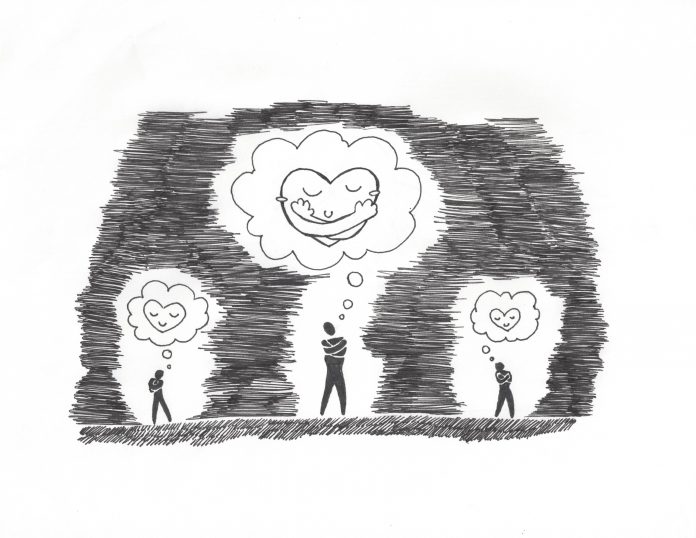
Love yourself before you fall in love with anyone else.

One of the most important lessons I ever learned was the difference between enjoying being single, and simply being comfortable on my own. For the majority of my brief life, the idea of being single was incredibly hard. I watched as some of my friends thrived within the realm of what we call ‘the single life,’ while I gradually came to hate it.

But I completely misjudged my situation. What I hated wasn’t that I wasn’t in a relationship, but rather that I wasn’t comfortable with who I was on my own, and therefore needed the validation of another person to feel whole.

While I’ve read the endless accounts of people claiming the importance of loving yourself before you love someone else, I’m not making the same argument. In fact, I think learning to love somebody else is a good way to help you learn to love who you are, and a big reason I’ve grown out of my ‘anti-single’ status was because I’d been in a relationship while growing up.

If you don’t have the ability to be comfortable on your own, you can get caught in the trap of relying on another. In short, vulnerability seeks a companion, and people have a general tendency towards not wanting to be alone. But we fail to realize that the hands of others shake just as frequently as our own, and that building a foundation on anybody other than yourself is a sure way for it to come crumbling down.

While vulnerability does seek a companion, confidence can often appear in solitude. Being solitary can do a lot for your own anxiety and self-esteem. Suddenly, there is nobody to rely on but yourself. And when you take the time to look in the mirror, you’re generally a lot stronger than you ever thought. I mean, you kind of have to be.

I didn’t understand this until I had invested my own self-security within the fragility of another person before it was taken away. I then entered back into the realm of singleness, and my mentality shifted. When you’re used to the presence of another person, it’s not always the case that you’ll feel lost when they’re gone. In some cases, you simply find yourself.

It’s cliche, but for me when my relationship’s foundation came crashing down I began to build a foundation for myself. I began to like being alone. My independence fuelled a sense of confidence I had never experienced before, and the thought of another relationship was no longer something I craved but something I completely rejected. There is nothing more motivating than being comfortable with who you are — when your confidence can emerge from only yourself.

You don’t have to like being single, but you do have to be comfortable on your own, and it’s in your best interest to know the difference. I am not advocating against relationships; they’re a definite learning experience. But in order for them to truly thrive, they require the separate independence of two people, and often times that independence has to be found apart from one another.

Boohoo, Woohoo

0

Boohoo: Netflix and Chill

Is it just me or is this phrase simply everywhere? I log in to Facebook. Netflix and chill. I open chat messages. Netflix and chill. I even search through the news. Netflix and . . . oh, for god’s sake!

How many times must my eyes be stabbed with this ridiculous phrase describing something we clearly don’t have the guts to actually say? These trending words have run long past their course, and they must now be left to shrivel and die. The trend has even gone so far as to be haphazardly spray-painted on the corporate sign at Netflix’s official headquarters. Though, I’ll admit I did see that one coming.

But what bothers me most is that the smug little brats of our generation think we’re geniuses for ‘inventing’ a saying that describes something people have actually been doing since the television was invented. “Hey baby, wanna come back to my place to watch Netflix and chill?” Please. Is it really too rude to just say, “let’s have sex on the couch with a movie in the background, just like my parents probably did to conceive me?”

Woohoo: Netflix and Dill

Yesterday, I made a trip to the grocery store. Amongst the abundance of fruits and vegetables I did not buy was an incredibly rare jar of dill pickles. What can I say? Deep down throbbed an unbearable longing I’d harboured for far too long.

Upon stumbling home in the heat of passion, I flung off my shoes, hastily dropped my shopping list to the floor, and threw myself upon the couch. Panting and sweaty, I caressed the remote control in one hand, and my beautiful jar of pickles in the other. I then popped the tin lid and searched up The X-Files, season two.

That night I made sweet love to my pickle jar while Scully complained in the background that aliens don’t exist. At least, I think that’s what happened. As I blissfully crunched and munched, I think I recall Mulder being abducted by a UFO. Or maybe it was the cops; I can’t quite remember.

Being caught up in the ecstasy of Netflix and dill was a pleasure like no other. After polishing off the jar, I exhaled with relief and made a mental note to book a future date with my pickles. Swelling with pride, I had become a man.

So, speaking from experience, if you’re squirming to scratch that itch for pickles, I recommend you relieve yourself by popping open some dill and flipping on the TV. It’ll be a wondrous night filled with excessive dopamine.

“Undoing Stigma” at the Gay Men’s Health Summit

0
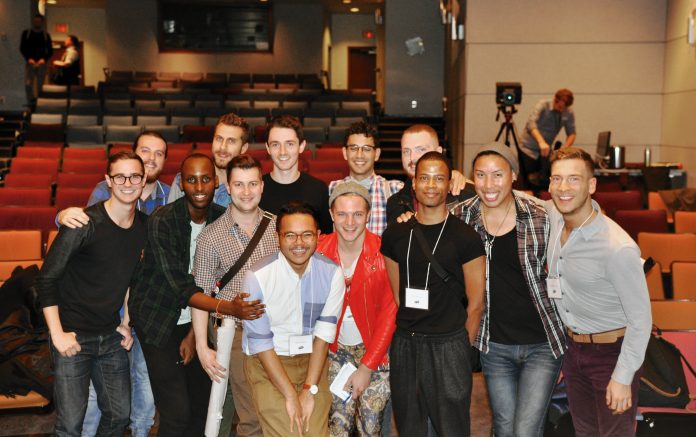
The summit drew many young people and had a large focus on gay and bisexual youth issues. - Photo by Jessica Whitesel

The 11th Gay Men’s Health Summit welcomed guests to learn about how sexual minorities cope with stigma. The theme of the event, which washosted at SFU’s Harbour Centre campus, was “Undoing Stigma.”

Over two days, the summit hosted numerous panels, workshops, and keynotes that addressed issues specific to the gay, bisexual, trans, and queer men’s community and their health, which encompassed mental, social, and physical health.

Each part of the program provided insight into how the health of LGBTQ+ men faces three different kinds of stigma: personal, which is psychological; interpersonal, which encompasses micro aggressions and hate crimes; and structural, which is created by broad social norms at the societal level.

One initiative that was presented was Totally Outright, which was created to reduce stigma and create strong youth leaders within the community. The goal of Totally Outright is to educate “young guys who like guys” in all aspects of gay men’s health.

There was a panel discussion that focused both on issues pertaining especially to young gay men, as well as initiatives launched as a result of Totally Outright. One such initiative is “Think Before You Type,” which addresses sexualized racism common in dating apps such as Grindr.

Panelist Vincent Francoeur spoke of the creation of a space for young gay men as a possible initiative: “a place that would be sexy and cool enough to attract all the guys, not just the ones who are living through difficult time. A place that would put education and communication at the top list of its priorities. A place where there [is] no judgement, and that is inclusive.”

The Resist Stigma project, which will launch towards the end of the year,  focuses on “[engaging] gay, bi, queer, and trans men from all across the country to work towards resilience, community, and empowerment — a challenge for many queer guys,” according to Francoeur.

“We’re creating space and conversation about race, colonialism, sexuality, health, and bodies — topics that a lot of queer guys might not feel safe to talk about,” said Brent Saccucci, Education & Research Coordinator for the Gender-Based Violence Prevention Project started by the University of Alberta Students’ Union, on the Resist Stigma project.

The summit also featured the work of numerous SFU-affiliated researchers, such as Ben Klassen and Patrick Aubert. Klassen’s research focused on the effect that Angles — a Vancouver based gay men’s publication — had during the height of the AIDS epidemic in the 1980s in reducing the stigma surrounding people who were HIV positive or living with AIDS.

Aubert’s research focused on end-of-life planning for older gay men, and the negative effects of stigma on their lives. For these men, stigma could represent health care providers neglecting the importance of their partners, or lacking strong familial connections.

Throughout the summit, it became clear that speaking out and sharing your own story — as well as listening to others’ — is a key step they wanted to share for reducing stigma. Sizwe Inkingni, committee member on the Resist Stigma, remarked, “Our stories have power.”

Why you should think twice about porn use

0
Too much porn can hurt your sex life!

In light of Playboy announcing its transition to non-nude imagery, I feel like we should talk about porn use leading to brain damage. Stick with me for a second. There is logic behind this, and I’m not the one with brain damage.

I’m also not writing this to argue the evils of porn (composed of high STI rates and sexual abuse on-set, among other injustices inflicted upon porn actors), but rather about how it damages its users. No joke. This is a practical argument for thinking twice about porn use.

Given that 40 million people in America regularly watch porn, with two thirds being men, we should be aware of the effects it has on us.

Let’s start with understanding addiction as a concept. Drug use overtime leads to higher tolerance of the substance, requiring more to get ‘high’ or even to function normally. Specifically, drugs overload the brain with the pleasure chemical dopamine, and the brain adapts by mitigating the ability to enjoy dopamine.

As tolerance develops, control over drug use degrades and the brain’s neural pathways overwrite previous pleasure pathways. The brain starts changing, addiction forms, and other formerly pleasurable activities become benign.

Changes in the brain occur because of neuroplasticity, the brain’s way of adapting. This adaptation can be taken too far, which can lead to great damage to the brain. For some, healing may take years.

JAMA Psychiatry found that increased porn viewing correlated with less gray matter in the striatum, and a worse connection between this are and the prefontal cortex.

Now, I know what you’re thinking: “But Jean-luc, porn is not a drug.” And while this may be true, porn does have the dopamine-flooding effect of a drug. It’s not a drug, but it can most definitely become an addiction.

If you’re not convinced, then I encourage you to look up scans of a porn-addicted brain compared to a drug-addicted one; you’ll sadly see the same type of brain patterns. And we haven’t even talked about the real-life consequences.

The website High Existence states that as you look at increasing amounts of porn, you rewire your brain to find pleasure in an image on-screen, and not with a living human. Real-life attractive people can lose their luster, or become valued just for their image. The pleasure of real sex and beauty can diminish.

Studies suggest that the increased rate of erectile dysfunction amongst men under 40 is in part because of porn. Guys, if you need to pop pills to sleep with the attractive person next door, you might want to double check your porn intake.

Don’t think it’s a problem for you personally? Maybe it is, maybe it isn’t, but one other statistic should caution those thinking about marriage at some point in life: Psychology Today reports that porn use is cited in 56 per cent of divorce cases. Just some food for thought.

Pulling these facts together, as more of us obtain access to the Internet with time, it seems like we may be heading toward a society rife with greater divorce rates and poorer sex. If guys can’t get aroused or if real-life people aren’t as attractive, overall sexual satisfaction will diminish. I know of one man who can’t sleep with his wife without a porn mag on the pillow. Do we want more instances like this?

Bottom line is that porn isn’t as safe as many think it is. It might be fun, it might be enthralling, but is it safe? I’m doubtful.

I’m only asking you to think twice about porn. Isn’t that worth avoiding a shrinking brain?