Home Blog Page 91

I’m proud of my mobility aids

0
PHOTO: Abbey Perley / The Peak

By: Olivia Visser, Opinions Editor

Around 57% of adults in Canada use a mobility aid. If that doesn’t sound correct to you, it’s probably because you’ve never realized that glasses are an assistive device. However, glasses have become commonplace in society — with over 2 billion people globally having vision impairments. Perceptions of disability are often tied to preconceptions; for instance, those with invisible or less visible conditions are often overlooked in discussions about disability. The visibility of my condition changes regularly, and when it’s invisible I feel that way, too. But when I do require a noticeable mobility aid such as a cane, I still struggle to feel accepted. July is Disability Pride Month, and for me that looks like practicing self-love by embracing my mobility aids. 

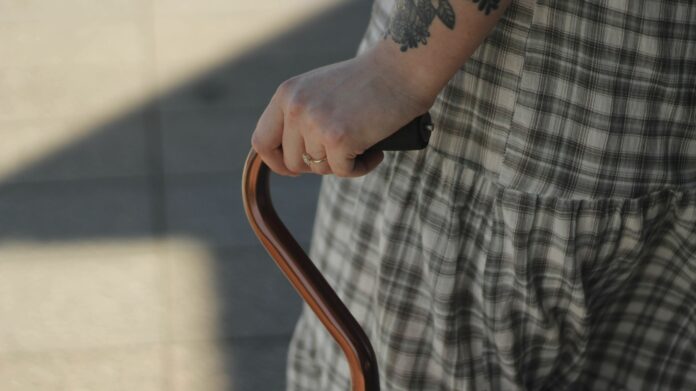
I regularly rely on custom orthotics and braces, which aren’t noticeable to others. The most visible device I use is my cane — something I’ve struggled to come to terms with needing and displaying. I’d like to think I’m proud of my cane, but I still can’t shake the shame I sometimes experience when using it. On my good days, I’m capable of many different types of exercise. I sometimes feel embarrassed when I use my cane after a long bout of good health, because I worry people will think I’m faking. I also feel pressured to fit into popular beauty standards, which tell me a mobility aid somehow “takes away” from an outfit. The Guardian reported only 0.02% of models in fashion campaigns have visible disabilities. As a result, mobility aids are often overlooked in media and fashion culture — leading people like me to assume we’re unwelcome. These ideas are all rooted in internalized ableism, which is when a disabled person takes on some of the stereotypes imposed by society. 

I struggle to avoid internalized ableism sometimes, with uncomfortable glances from folks who know nothing about me. The other day, my cane triggered a conversation among a couple behind me. They recalled a friend who they thought was exaggerating their illness, wondering why they’d need a wheelchair at their age. I know they weren’t necessarily assuming the same about me, but no one wants to know their appearance reminds you of someone you assume is “faking.” What they didn’t see was my partner begging me to use my cane earlier that day, after seeing how much pain I was in. It can take time for some people to accept their mobility aids and actually use them when needed.

Sometimes the best response to “what happened?” is a brief “I decided to use my cane today.”

Situations like these remind me of the stigma associated with young people using mobility aids, and the idea that we should be able to outgrow these devices with physiotherapy or lifestyle changes. Knowing that some people hold these beliefs makes it difficult to feel comfortable in public spaces. Those who have dynamic disabilities — disabilities that affect your level of function differently depending on the day — also face unique prejudices. Yes, I can walk without my cane, but it can be difficult. It can hurt. It may mean I have to spend the next day resting. It doesn’t mean I don’t truly need a cane. 

Many mobility aids are not easy to use, which is why it baffles me when people assume young folks use them for attention or aesthetic. My cane makes it difficult to manouevre around people in tight spaces, and challenging to do two-handed tasks or carry multiple items. It can slow down my walking time, lead to fatigue in other parts of my body, and is a pain to find space for when I sit down. This is partly because most public spaces aren’t accessible enough, but it’s also just clunky to have to lug around an extra item of its size. With or without mobility aids, please don’t assume someone is faking their illness. You’re not entitled to know about their medical condition unless they divulge that information voluntarily. 

There’s also this stereotype that a mobility aid means someone is unwell, when it can be quite the opposite. Sure, I wouldn’t need my cane if I were able-bodied. But, my cane allows me to stay healthy and protect my body. Sometimes the best response to “what happened?” is a brief “I decided to use my cane today.” Normalize not needing a deeper explanation. 

I’d be lying if I said it’s always been easy to feel pride about my disabilities. What is there to be proud of? Chronic pain? Debilitating fatigue? I don’t personally feel like my disabilities define me as a person — but they’re a huge part of who I am. And while I’m not a big fan of calling disabled people brave for surviving within their circumstances, I’m proud of myself for what I continually overcome. To deny space in my identity for my disabilities would be to deny an entire part of myself. Disability pride is the joy of being unapologetically yourself — disability and all. 

To deny space in my identity for my disabilities would be to deny an entire part of myself.

I love my mobility aids. I love the places they’ve helped me reach, and the pain and discomfort they’ve saved me from. I love the stickers I cycle through on my cane, which make me grin when I look down. My favourite devices are my cotton candy-coloured wrist braces and moon bunny compression gloves. Feeling cute on a bad pain or mobility day makes a world of a difference sometimes. I’m not fond of my awkward ankle casts that I once had to wear for six weeks straight, but they helped preserve my ankle mobility after multiple injuries led to the end of my running career. I’m grateful that my body can still walk, hike, climb, swim, and more. I’m proud that my assistive devices make this possible for me.

There’s an exhausting feeling of defeat when I receive unsolicited questions or advice, because I know it means I’ve stood out from the crowd. No, I’m not interested in how your friend’s cousin cured her joint pain with some fad diet or tea. No, you don’t have to feel bad for me. I’m doing just fine most of the time. While I know their intent is likely not malicious, privacy is still appreciated. Still, I know it doesn’t reflect poorly on me, but is a reflection that disability awareness still has a ways to go. Leave your assumptions at the door when you see a mobility aid user, and remember that we’ve likely heard it all before. 

I’m proud of my mobility aids because they’re an extension of myself. They represent the mental strength it takes to take a stroll around my neighborhood when I’m not feeling well. They signify my ongoing commitment to physical strength and endurance — something that has taken extensive effort. I also know that each individual’s experience with mobility aids is so different from the next. You may not always notice us, but we exist.

Vancouver’s lack of public bathrooms is problematic

0
photo of a public washroom entrance in Vancouver
PHOTO: Victoria Lo / The Peak

By: Zobia Khalid, Peak Associate

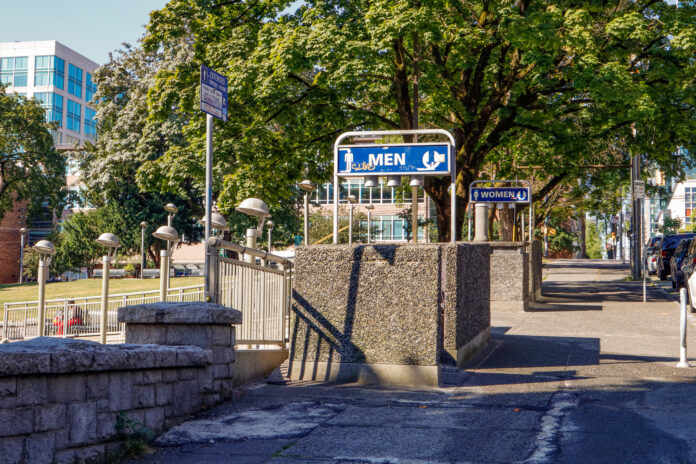
Using the bathroom in seclusion is a basic right we all deserve. Bathrooms provide a private area to maintain our bodily needs, clean ourselves, apply makeup, and even have a safe haven to cry. They’re essential for an equitable society. However, for the houseless or those who may use the restroom more frequently, this need is barely being met due to the lack of public bathrooms in Vancouver. 

It’s no surprise the city has decided to remove two public restrooms in the Downtown Eastside, as the municipal government has continually shown it doesn’t care about the marginalized populations that live there. Earlier last year, the forced displacement of people living in tents on East Hastings left a vulnerable population without a safe or familiar area. This was home for many people — the streets, people, the local shops. And street sweeps are a common occurrence, as this year in January the city continued the displacement of houseless individuals in East Hastings again. 

While many may argue the closure of public restrooms is due to cost, keep in mind that the city spent $409,000 dollars just to dispatch police officers for the decampment in January. A public toilet costs about $37,000–$48,000 annually. Moreover, the city’s willingness to spend $645,000 on a public toilet in Yaletown, a higher-income neighbourhood, clearly shows an ulterior motive. 

People can only walk in that discomfort for so long before they end up having an accident or get an infection.

Many businesses who have bathrooms restrict them to paying customers only, or discriminate against houseless people. Often when requesting a key, houseless people are told the bathroom is out of order, despite seeing others come out of it. One individual told Global News they ended up having an accident at the sixth shop they approached. The incident was very embarrassing and dehumanizing — no one should have to go through that. 

Being a menstruating houseless person is an even more cumbersome process. While shelters provide a limited amount of menstruation products, it’s not even enough to last an average person a day. Many people resort to rolled up toilet paper, which can only last so long before it leaks. Walking around from business to business just to get denied only lengthens that journey to privacy. People can only walk in that discomfort for so long before they end up having an accident or get an infection

Vancouver is slowly expanding their decampment efforts beyond East Hastings, destroying rich communities and cultures. The ongoing CRAB Park evictions on Waterfront Road continue to displace houseless people under the guise of safety. The truth is, the city does not care about them as much as those with more privilege. They just want to have the highest paying individual in every area, and the start is by denying basic human rights like bathrooms. There’s no doubt the city can afford to increase access to public restrooms for everyone, and it’s about time they do so.

Vancouver isn’t prepared to host the FIFA World Cup

0
BC place as seen from across False Creek at night
PHOTO: Aditya Chinchure / Unsplash

By: Kaja Antic, Staff Writer

The FIFA World Cup will be hosted by Canada, the US, and Mexico in 2026, with Vancouver hosting seven of the 13 games being played in Canada. Vancouver has had some experience with major international sporting events in recent years, with the 2010 Olympic Winter Games and the 2015 FIFA Women’s World Cup. However, with mounting concerns about affordability in the region, the decision to host the upcoming World Cup overlooks the needs of locals. 

The FIFA World Cup is the most-watched sporting event in the world, and is predicted to generate significant short-term revenue for the City of Vancouver. However, the up-front cost of hosting is difficult to overlook. An estimate from 2022 put the cost between $240 million and $260 million for five games. With an extra two games, plus costs rising across the board, the most recent estimate was nearly double that figure. 

If you’re wondering where this money will come from, you’re not the only one. Vancouver taxpayers will be on the hook for funding at least part of this event, though the exact amount is not yet known. The Canadian Taxpayers Federation is urging the provincial and municipal governments to be transparent about the tournament’s costs, as it’s questionable whether Vancouver can actually afford this. There is a cost of living crisis across Canada — especially in Vancouver. While some of this financial support is coming from the federal government, there is still some warranted hesitation regarding the high price tag. A recent poll found that 61% of Metro Vancouver residents believe the potential short-term economic benefits are “not worth” the cost.

The World Cup is supposed to help raise tourism profiles for host cities, which can be seen as a worthy investment — though it’s not like Vancouver is hard-pressed for generating tourist interest. The provincially-funded tourism organization Destination BC claims the seven games will generate over $1 billion for the provincial tourism sector during the tournament and the five years following. Officials also estimate that over one million visitors will visit in this time frame, with approximately 350,000 fans arriving for the tournament alone — but where are they all going to stay?

This money would be better spent on the ongoing housing and grocery crises, among other needs.

Vancouver already has a hotel room shortage without accounting for hundreds of thousands of fans wanting to catch some of the World Cup action. Destination Vancouver has warned the demand for hotel rooms during the tournament will “exceed supply,” with no direct plans to address the disparity before 2026. One method Vancouver used in the past to aid in rooming demands was docking cruise ships nearby — though this was only done for security personnel during the 2010 Winter Olympics. The hopes that this tournament will generate mass revenue for the tourism industry can be dashed if said industry is incapable of accommodating these visitors.

The housing crisis is another issue being ignored while the hype for the 2026 World Cup grows. 1,100 housing units were developed in Vancouver’s Olympic Village for the 2010 Olympics. Only 125 — half of what the city originally promised — were affordable housing units. How does that benefit locals? The largest construction projects for the World Cup will be renovations to BC Place and the addition of Fan Festival amenities at the new PNE Amphitheatre. However, we should still worry about Vancouver’s houseless population and what’s to come in the lead-up to the 2026 festivities. 

Vancouver mayor Ken Sim has shown no remorse for displacing many in the Downtown Eastside, and while developments for the World Cup aren’t slated for that direct area, there could be drastic consequences for residents in that region. Sim has used the Vancouver Police Department to remove residents from the Downtown Eastside for years, and is now talking about making neighbourhoods “more vibrant” to have a “successful FIFA 2026.” If his idea of success depends on displacing people from their homes, no one should support the city’s decision to host the tournament.

With the cost of living looming heavy over the region, it’s understandable that many are hesitant to fully support the World Cup decision. The event is a massive expenditure, and this money would be better spent on the ongoing housing and grocery crises, among other needs. The city has less than two years before kickoff in June 2026, and with a myriad of issues ahead, this World Cup looks set to cause more chaos than celebration.

Council Chats: The Forum discusses their wishes to collaborate with the SFSS

0
This is an illustration of a graphic that reads “Council Chats.” The image also has two text boxes to symbolise messages being sent.
ILLUSTRATION: Andrea Choi / The Peak

By: Hannah Fraser, News Writer

On July 10, The Peak attended the bi-weekly Simon Fraser Student Society (SFSS) Council meeting via Zoom. The meeting involved a presentation from The Forum on their wishes to collaborate with SFSS student groups, reports from the executive committee members, and more committee elections. 

Presentation from The Forum

Max Qiang, founder of The Forum, and Ashley Kang, president of The Forum, discussed their organization’s wishes to work with SFSS student unions and clubs to better support SFU student life. The Forum is a student-run events organization focused on elevating SFU’s student life and engagement. Since its inception in April 2022, The Forum has hosted over 22 events, with over 30,000 SFU students attending in total. 

Qiang explained that The Forum is not an official student organization under the SFSS and is fully self-funded through its events, not seeking profit. Qiang also explained that “there may have been some misunderstanding, miscommunication between the SFSS and The Forum in the past,” so his goal was to “establish better communication with the SFSS through this conversation and to improve our transparency in the future.” 

Councillors and executive members voiced their questions and concerns about collaboration. Ariana Shamsuddin, molecular biology and biochemistry councillor, asked Qiang how The Forum would go about marketing events to students if they were to collaborate with Departmental Student Unions (DSU). “Some DSUs do prefer to keep their Instagram pages a little bit more on the professional side,” Shamsuddin began. “I was looking at some of the previous videos that you had from your most recent event, and I’m not sure how that would fly by, especially with the faculties involved.

“What are your expectations moving forward and how would that impact the total turnout if you were to change your marketing style?” she asked. Qiang assured the SFSS they would be able to successfully market events to students no matter which student group they would be working with. The Forum’s president, Ashley Kang, agreed, citing they recently hosted an all-ages event with an average turnout for The Forum. 

Rishu Bagga, vice-president university and academic affairs, also voiced his concern about where the liability falls if something goes wrong, such as a medical emergency, at events. “At the end of the day, Forum is an external organization. We are in a tight budget so our priority will be supporting our own clubs and our own student organizations.” Qiang stated that the liability may fall on the venue where they host their events. Alternatively, Qiang noted The Forum purchases liability insurance if the liability was to fall on them.

“At the end of the day, Forum is an external organization. We are in a tight budget so our priority will be supporting our own clubs and our own student organizations.” — Rishu Bagga, vice-president university and academic affairs

The Forum and the SFSS did not formally agree to collaborate by the end of this meeting. 

Reports from the executive committee 

The executive committee mentioned their plans to start an SFSS TikTok for more student engagement around the SFSS. They also mentioned doing a Fall Welcome Concert at East Parking Lot for students. The Council approved a maximum budget of $65,000.

Read the full article with complete highlights on our website.

Elections for committee positions

Elections were held to appoint councillors to the Accessibility Committee, First-year Engagement Committee, Member Service Advisory Committee, and Vancouver Campus Committee. The open positions were a result of recent resignations and a few remaining open spots that had never been filled. 

Henry Do, vice-chair and criminology student association councillor, nominated Ethan Fukuhara, resource & environmental management student association councillor, to the accessibility committee. Fukuhara accepted the nomination. Do also nominated Hamza Issa, economics student society councillor, to the committee, but no response was given. Do then nominated Kanksha Chawla, TSSU councillor, to the committee and they accepted. 

Tulika Varma, residence hall’s association councillor, self-nominated to the first-year engagement committee and was appointed.

Elections to the member service advisory committee and Vancouver campus committee were postponed until the next meeting as no Council members nominated other members or self-nominated themselves. Each committee still has one more spot open.

BC government launches website to protect against bad-faith evictions

0
This is a photo of a row of high-rise apartment buildings
PHOTO: Aria Amirmoini / The Peak

By: Hannah Fraser, News Writer

On July 18, the BC government launched a website to “better protect renters from being evicted in bad faith.” When evicting a tenant for landlord use, landlords are now required to use the website to document information, such as who will move in after the eviction. This aims to “standardize the process for improved efficiency while increasing transparency.”

Landlord use is a legal reason landlords may evict contract-abiding tenants, involving the landlord or their family member moving into the unit. However, bad-faith evictions happen when “a rental unit is not used for the purpose stated on the eviction notice for at least 12 months.” For instance, if the landlord does not follow through on occupying the unit and rents it again for a higher price, the original tenants “have the right to compensation.”

The update aims to “ensure that landlords who need to legitimately reclaim their units have a straightforward pathway to do so,” such as providing information on the legal requirements for evictions and the risks of issuing them in bad faith. 

The Peak corresponded with Sarah Marsden, director of systems change and legal at First United, for more information. Marsden explained that “BC’s high eviction rate” is attributed to no-fault evictions. No-fault evictions involve tenants being evicted for landlord use or landlord “sell the property, for demolition, conversion, or major repairs.” Marsden noted these evictions “could be financially motivated, which may be a factor in bad faith evictions.” 

The Peak also corresponded with a BC Ministry of Housing spokesperson, who said “BC had the highest eviction rate in Canada between 2016 and 2021, and a significantly higher percentage of landlord use evictions than in other jurisdictions,” according to estimates from a 2023 report.

The spokesperson said, “Not all evictions are reported to the BC Residential Tenancy Branch (RTB),” but now the RTB can collect more “accurate data” on evictions. 

“We’ve worked tirelessly through our BC Eviction project and systems change work to affect this type of change.” — Amanda Burrows, executive director of First United

Starting July 18, landlords are also required to give tenants more time to dispute an eviction. Tenants now have 30 days instead of 15. In the case of evicting for “personal or caretaker use,” four months’ notice must be given, compared to the original requirement of two months. According to the spokesperson, “recent changes have increased the amount of time a landlord, purchaser, or close family member must occupy a rental unit after ending a tenancy for personal occupancy from six months to 12 months.”

The current penalty for landlords is to “pay the tenant 12 months’ rent if they don’t use property for the intended purpose upon eviction.” The landlord could be fined an additional $5,000 per day if they fail to pay. However, the July 18 legislation opens up the possibility for higher penalties. 

“I think we will have to wait and see how penalties are used in the coming months in order to know if they’re likely to be strong enough to deter bad faith evictions,” said Marsden.

“We’ve worked tirelessly through our BC Eviction project and systems change work to affect this type of change,” said Amanda Burrows, executive director of First United, in the press release. The organization’s BC Eviction Mapping project launched in 2022 is a “first of its kind project in BC,” which “seeks to better understand evictions from rental housing across the province and provide evidence for a law reform platform to improve tenant protections in BC.

“There is still work to do and we will continue to advocate for changes to prevent homelessness and displacement because housing is a human right,” continued Burrows. First United has brought the provincial government recommendations centred around amending the Residential Tenancy Act, BC’s law that “outlines BC tenants’ and landlords’ rights and responsibilities.” Recommendations are made with the goals of preventing unnecessary evictions to reduce houselessness and displacement, making eviction a last resort, and improving procedural fairness and appeal rights. The recommendations also focus on promoting diversity and inclusion in housing. 

“We see the new portal as being a step in the right direction, as it puts the responsibility on landlords upfront to provide more detailed information about their intended use of the unit,” said Marsden.

The Ministry of Housing spokesperson stated that the “government is aware of the challenges tenants face in finding safe, secure, and affordable housing.”

Opinions in Dialogue: Should we worry about performative activism?

0
A cell phone on the Instagram login screen.
PHOTO: Solen Feyissa / Unsplash

By: Yasmin Hassan, Staff Writer, and Olivia Visser, Opinions Editor

Content warning: brief mentions of death and police brutality.

Performative activism refers to actions taken by someone to project a persona of allyship without true dedication to the cause in their personal life. This can include sharing social media posts to uphold a desired image. Many have expressed valid concern over rising levels of performative activism, but what can we do about it? How do you know the intentions behind someone’s post, especially if you don’t know them personally? Does calling people out for performative activism detract from opportunities to educate?

Olivia: Allyship is something that looks different for everyone. While you often can’t know a stranger or acquaintance’s intentions when it comes to their activism, that also doesn’t mean you should make blanket assumptions about their motive. Performative activism is a product of your intent rather than your actions. One instance that comes to mind is #BlackoutTuesday. When people changed their Instagram profile pictures to black squares in recognition of George Floyd and police brutality, others expressed caution about the movement. Many critics have rightfully discussed how #BlackoutTuesday was, for many, a fleeting moment of performative support for Black lives. At the same time, mass demonstrations of support are powerful, and #BlackoutTuesday was spearheaded by Brianna Agyemang and Jamila Thomas, two Black women music executives and activists. I don’t think it’s fair to say people shouldn’t involve themselves in a movement to avoid seeming performative — rather, we should continually evaluate our intentions and make sure our actions line up.

Another example is Orange Shirt Day — a day meant to recognize the legacy of residential schools and honour those affected by them. Some have discussed how the movement has spurred performative activism, but it’s more nuanced than saying a shirt itself is the issue. Orange Shirt Day was founded by Phylis Webstad, a Northern Secwpemc residential school survivor from the Stswecem’c Xgat’tem First Nation. Webstad’s orange shirt was “stripped from her” after arriving at a residential school. “The colour orange has always reminded me of that and how my feelings didn’t matter,” she recalled. IndigiNews reported that “if you didn’t know Webstad’s story, you could be forgiven for thinking that Orange Shirt Day is a day for buying and selling orange shirts, and little else,” adding that “what began as a well-intentioned act of solidarity has been tainted by capitalism.” Meaningful movements often get wrapped up in corporate profit, which is why it’s so important to support and uplift the voices of those you’re standing up for. 

Yasmin: Calling people out for performative activism does nothing to actually help — it just demeans the pursuit of standing up for a cause and, in turn, discourages and puts people down for trying. I can understand that when sharing a post, one may not know much about the topic at hand. While I agree that online demonstrations of support are powerful, online activism often loses its impact when it becomes a trend to showcase your support without understanding the intent behind it. It’s easy to be influenced by your friends or public figures on social media and be pressured into sharing or reposting content despite your lack of education on the subject.

Back in 2020, I reposted a lot of stories regarding the Black Lives Matter protests. While I did believe in the cause and I was talking to the people around me about it, in retrospect I was neglecting my own self-education about the topic. I believe that first and foremost people should be well-informed on a subject before clicking share, especially with the presence of unreliable news sources and social media posts. For a high school research paper, I used AllSides, a site that compares and contrasts biases in news. I found that by isolating the hidden biases in individual articles, it was easier for me to learn about topics. People shouldn’t rely on social media alone for their activism. Changing your profile picture, reposting a story, putting an emoji in your bio —  these are all ways of showing your support through a screen. But, they shouldn’t be the extent of your support. Educating yourself, engaging in dialogue, attending rallies or protests, and donating if you can are all acts that contribute to change. 

How you come across on social media is never more important than the cause at hand, and it takes a personal effort to make sure you show up on and offline.

Olivia: Small modes of action are important and add up. It’s also worth considering that there are people who can’t attend rallies or organize offline, whether due to disability or various life conflicts. Online activism is valid, and while for many it’s just one part of their allyship, this isn’t true for everyone. Considering how easy it is to reach a mass audience online, social media movements can and do make waves. The #MeToo movement comes to mind, which saw women across the world sharing their experiences with misogyny and sexual abuse. It resulted in many men in positions of high power being called out and boycotted by brands and labels. Today, the #FreePalestine movement has brought crucial information to the news feeds of many who may not otherwise be up to date with current events — especially considering the biased and incomplete reporting from publications. In cases like these, social media activism has the potential to fill the gaps in mainstream media coverage. 

However, you’re right that misinformation (and even disinformation) runs rampant in online spaces — even when intentions are good. Last week, The Lancet published a report estimating that the death toll in Gaza may eventually reach 186,000. Many publications and social media users misinterpreted the article and claimed it says the current death toll is 186,000. While the prediction being made isn’t any less significant, it goes to show how important it is to fact-check your information before sharing. Cross-checking your information with multiple credible news sources is important, as many of these misinterpretations came from Instagram graphics. I’m not saying that online activism is performative in this case, but that it comes with a level of responsibility to avoid spreading misinformation.

Yasmin: Absolutely. Outreach and advocacy knows no bounds, and whatever someone is able to do for a cause should be valued and acknowledged. Online traction is essential for movements, especially those that uplift marginalized groups. The #MeToo movement is a great example of women coming together to engage in dialogue about their experiences and also bringing light to those at fault or who refuse to take action. With enough traction and attention online, it carries over into real-world consequences.

Something that crosses my mind are protests or shows of activism that seem to backfire from their original intent. I think back to the environmental activists who threw soup at the Mona Lisa. Sure, there are different forms of protest and activism, but I feel like the point is lost when it comes to disruptive acts like that. It’s good to have spirit but it’s even better to know how to direct it wisely and effectively

Just searching things up online, coming to a conclusion, and leaving it at that, isn’t right. Talking with your peers and engaging in conversations about an issue, especially with a variety of people, broadens our understanding about topics and can even strengthen our beliefs. I do believe there should be a line drawn at some point between progressive discussion and hostile disagreement — but that’s ultimately in the hands of whoever’s participating. Effective activism is rarely, if ever, an individual effort. That’s why it’s so important to make sure we continue doing what we can and having these conversations outside of social media when possible.

How to spend a day in…Downtown Langley

0
A large outdoor space with blue, yellow, and red streamers strung above it. A band made up of four individuals plays under a colourful tent while individuals and families watch while sitting on the wooden stairs of the outdoor space.
PHOTO: Courtesy of Downtown Langley

By: Zobia Khalid, SFU Student

Downtown Langley blends a small-town vibe with the liveliness of a city. This place showcases the talent and culture of artists such as Langley muralist Judy Pohl. An afternoon walk here can reveal the beauty and culture of Langley with attractions such as shops, art, and nature. In Downtown Langley, you’re bound to find something to pique your interest, so here is a guide on how to spend a day in this charming town.

If you’re feeling tired, you can energize before starting your day with a coffee or tea from Hot & Toasty Café, which is home to creamy matcha lattes that match the lime-green colour of the walls. Cozy Bean Bakery is another option for your morning caffeine-kick, where you can enjoy a smores drink or sparkling lemonade while sitting near their hand-painted windows. This area along the Fraser Highway boasts a variety of cafés and restaurants, making it a fantastic spot to begin your adventure. If you’re in the mood for brunch, EGG BOMB is an excellent choice. While they do have lovely egg-based dishes, their honey butter bread is a must-try. Make a reservation in advance though, as this restaurant is quite popular.

After fuelling up, explore the thrift stores just up the street, each with their own unique charm. Cherry Pick Vintage provides a comforting atmosphere with their lighting, cozy seating area, and friendly staff. Nova & Co Consignment Shop is a classy boutique where you can bring your sparsely-used clothing to find them a new home. Thrifters’ Paradise and PENNY PINCHER are budget-friendly options with more than just clothing up for purchase — I was able to get a pot for just 50 cents at PENNY PINCHER.

For later in the day, don’t miss Krazy Bob’s Music Emporium. This gem offers CDs, cassettes, vinyls, and more at very affordable prices. Plus, the sweet-yet-hilarious staff often give out small free gifts, enhancing the overall experience. A few minutes’ walk away is the Hayloft Vintage Mall, a large space with piles and piles of antique furniture and small decorative pieces such as pillows, candles, vases and tables — all of which you’re sure to get lost in.

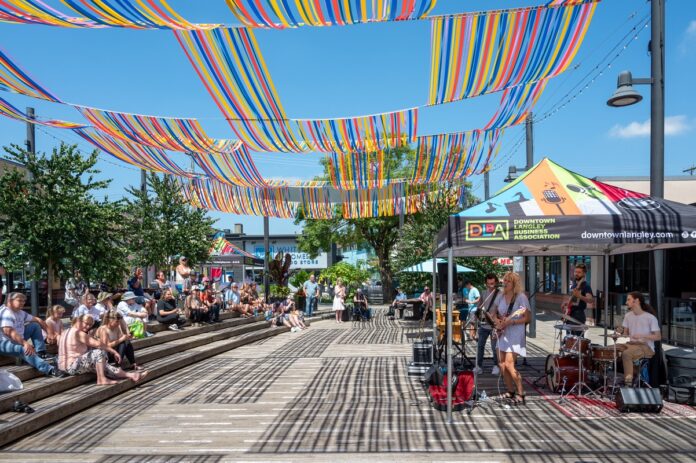
Downtown Langley is renowned for its beautiful murals, making it perfect for a mural walk — visit the Downtown Langley website to plan your route. After, you can people watch or enjoy lunch at McBurney Plaza, an outdoor space that hosts local performers at various points during the summer. The Tacoholic Taco Shop is a great spot for authentic Mexican food, such as their street tacos and carnitas. Naka Bistro has tons of options in terms of vegetarian food, like their rama delight and tom yum soup — for most dishes, you can substitute any meat ingredient with vegetables or tofu. Looking for a place to eat and park for a bit with friends? The Raving Gamer Bistro lets you play board games while you eat and talk. You can take a look at which games they have available to play on their website

When you’re ready to explore more, Sendall Gardens is just a 20-minute walk, bus ride, or five-minute drive from Downtown Langley, and hosts beautiful plants and wildlife. Nearby, check out the duck pond at the Nicomekl River Trail, or stop by the Pleasantdale Creek Trail. You can plan a bike trail or walking route by taking a look at what’s listed on the City of Langley website. Remember to stay safe and hydrated when doing so! 

Why do we live in a world where the only reward for hydrating is a large amount of piss?

0
Person running towards a washroom while holding a roll of toilet paper.
ILLUSTRATION: Victoria Xi / The Peak

By: C Icart, Humour Editor

Calling all members of the overhydration nation! 

Why did you recruit me? I can’t live like this anymore; I have things to do other than constantly running to the bathroom. There is such a thing as performative hydration, and I’m calling it out today. There are THREE main ways this doctrine manifests online (which is the same as everyday life, duh). 

  1. WaterTok
This phenomenon taught us there is no consensus over what is and is not water. How many sugar-free Skittles drink packs can you add to your water bottle before it’s no longer water? In some ways, it’s similar to this question that also rocked the Internet: what corpse2water ratio would you not be willing to swim in? In other ways, it’s not similar at all, and I just wanted to squeeze that question in there. Edit: I’ve been asked to explain this for those of us who are not constantly surfing the web for little hits of dopamine. Humans sometimes swim in bodies of water that definitely have corpses in them, like oceans, but would not swim in a pool with a corpse in it. Thus, there is an acceptable corpse2water ratio to swim in. What’s yours? Discuss. Now let’s get back to our regularly scheduled programming. WaterTok makes drinking water (or juice or punch or wannabe KoolAid) an event, and the FOMO is causing me to chug more water than there was in Finding Nemo.

It’s hard to believe that just earlier this year, people would bodycheck strangers at Target for this stainless steel bottle. Then, they would decorate it and attach fancy accessories to remind you they’re not poor. Many WaterTok beverages have been made in Stanley Cups. People attribute this behaviour to the cult of consumerism, but I think there’s a much darker truth behind this all. You know how some of us are just possessed by demons that make us overwater our plants? I think there’s a demon of overhydration that controls certain segments of the population. (Yes, I’m aware that that sentence made me sound like the type of person who would buy M.I.A’s tin foil hat that allegedly “blocks 5G waves”). 

3. 75 Hard

The 75 Hard challenge is the cockroach of fitness trends. It won’t dieeeee. I have beef with the entire thing, but I gotta stay locked in and talk about how this challenge is clearly pushed by Big Water. Why is it making people drink one GALLON (3.8 litres for the metric girlies) of water a day? I’m not a bio major so I cannot tell you how big my bladder is but it is not that big! Why is 75 Hard called a mental toughness program? It should be called a bladder toughness program! I have never had that much water in a day and I have still had days where my pee came out so clear I could bottle it and call it Dasani. 

I never thought I’d say this, but clearly some of y’all have too much access to safe drinking water. You have forgotten how to act. I know you want to fight back against beverage companies like BlueTriton (Nestlé in a trenchcoat) extracting water in our communities for profit at the expense of the land and people. But chugging it all at once is not the solution. I am breaking free from the overhydration movement once and for all and I’m sure my toilet paper costs are going to go down too #FrugalEra.

Campus shopping experiences at New Gen Markets

0
A rack of colourful clothing perched under a tent in front of a skytrain station.
PHOTO: Courtesy of Amrit Kamaal / The Peak

By: Amrit Kamaal, Peak Associate

Step into a cute and quaint world of shopping at New Gen Markets! Many SFU students may already be familiar with this market, as they’ve set up stalls on the Burnaby campus many times this year. One too many times I’ve been late to lectures, work, or even missed a bus due to these small businesses’ alluring products. As “a new generation of small biz’s uniting,” this market provides opportunities for shoppers, vendors, and those looking to build connections with one another.

Every few weeks, New Gen Markets will park themselves at a new or frequented area to give their customers an opportunity to shop in a variety of settings. Their locations vary from being in the city’s most populated areas, such as Robson Street, to universities such as UBC and SFU. I visited their marketplace on June 9 at Surrey Civic Centre. There were so many wonderful stalls to check out such as fine jewellery from Juve Collection and AW DESIGNS, as well as divine handmade candles by Loft & Light Atelier. Juve Collection is an AQ staple and the perfect place to grab accessories like a gold pendant or delicate leg chain to spruce up your outfit before heading to class.

You can satisfy your hunger with some of New Gen’s foodie favs like delicious cookies from Connie’s Cravings, drinks from the popular mobile tap bar The Rollin’ Taps, and mouthwatering elotes (Mexican grilled corn) from Los Elotes, a reoccurring must-have. Many of these food stalls also offer pre-made snacks, such as pastries and cookies, which are perfect for indulging in mid-transit ride.

What sets New Gen apart from other markets is its modern, trendy vibe and aesthetic. It combines elements of traditional flea markets while supplying unique and innovative products focusing on the most recent or popular fads.”

Each of these businesses have their own story and sustainable practices, from handpicked ingredients to reselling new items from older materials. New Gen combines elements of traditional flea markets while supplying unique products focusing on the most recent or popular fads, and brings them to university campuses for students to check out in their free time. Products can range from sporty, hand-picked fashion must-haves at Baldylox Thrifts to reusable press-ons from Kelly’s Choice.

New Gen’s other business, New Gen Social, hosts events to help entrepreneurs and business networks flourish through immersive experiences. They launched their first “Mix and Mingle” event in May, where business owners can connect.​​ They also offer appetizers and a free drink — the only requirement is to purchase a ticket through Eventbrite

It’s great having markets like these located only steps away from our lecture halls — taking a short break to peruse some local products might introduce you to your next favourite local business! Don’t fret if you missed their visits to SFU, as you can sign up to their newsletter and follow their Instagram to get notified of the next pop-ups to add to your calendar.

AI isn’t just unethical, it’s inaccurate

0
A laptop open to the ChatGPT website.
PHOTO: Matheus Bertelli / Pexels

By: Hailey Miller, Staff Writer

The use of artificial intelligence (AI) is unethical, and it takes away from our originality and skill development. There are many reasons to avoid AI chatbots and writing assistants, but what’s the point of using them when they’re often extremely inaccurate in the first place? 

AI platforms like ChatGPT and Grammarly were never great to begin with, but as of recent months they’ve been going further downhill. A 2023 study shows that ChatGPT has become less accurate over time and reports on certain information — notably medical and legal — with a level of inaccuracy that’s deeply concerning. ChatGPT and other AI platforms such as company chatbots have also reported information that isn’t real, or events that never happened. An Air Canada chatbot gave bad advice for plane tickets to a customer, and, as a result, the airline company had to pay compensation based on their misleading information. 

Using a more personal example, if you ask ChatGPT about the ghost at The Peak’s offices, it’ll reply with this: “The office ghost at The Peak, Simon Fraser University’s student newspaper, is a lighthearted and longstanding legend among and contributors. The ghostly presence is often playfully referenced by members of The Peak as part of the newspaper’s lore and culture.” For your reference, this has never been a topic of conversation among staff.

Any work generated with AI will never compare to properly-researched content.

The inaccuracy of AI is not only legally concerning and confusing — it’s harmful. It has significant consequences that aren’t good for any usage, whether professional, academic, or creative. We can’t rely on or trust inaccurate content. When AI is used in pieces of writing, it’s evident the work is not original. AI is a waste of time — it fails to provide accurate information, struggles to write a proper draft or paper, and is often too robotic to sound genuine.

The risk of misinformation and falsehoods makes it difficult to know what to believe when using AI. Since it generates information from many unidentified internet sources, there’s a chance your result will be inaccurate or even plagiarized from someone else’s work. In the academic world, AI takes away our ability to learn and absorb content. Unlike properly researching information from books or scholarly databases, most AI software doesn’t disclose sources for their responses. We will never learn about the world around us if we rely on inaccurate or incomplete information, and any work generated with AI will never compare to properly-researched content. It isn’t fair that those who choose not to use AI do all the difficult work and research, only to have their work either stolen by AI or in competition with those who used it.  

Consequences stemming from AI errors need to be taken seriously. Corporations and organizations found to be using AI should face social pressure to stop their use of these programs. Education institutions should create universal mandates surrounding AI usage, and hold students accountable. If you really care about the quality of your work, you should avoid AI at all costs — it’s not helping you as much as you may think.