The Crapside (Darien Lechner)

Creator’s Pet (Destiny Hsu)

Mystic Man (Reuben Newton)

Peers (Leslie Lu)


The Crapside (Darien Lechner)
Creator’s Pet (Destiny Hsu)
Mystic Man (Reuben Newton)
Peers (Leslie Lu)

The Peak attended the 78th Canadian University Press Conference in Toronto, Ontario. Along with being nominated for two JHM awards, we also visited many iconic attractions.
#NASH78 coverage
Created by Paige Smith & Eric Smith

By: Sarah Finley, Max James Hill, Courtney Miller, and Jessica Whitesel
Check out and follow The Peak‘s Spotify account for the latest New Music Friday picks.
Jessica Whitesel: It’s Dr. Dog so naturally it is an awesome song. But, to be fair, I love Dr. Dog so I might be a bit biased. Overall this song manages to be upbeat and chill at the same time which is perfect.
Sarah Finley: Very chill, relaxed. Honestly, it’s Dr. Dog. If you like them, you’ll like this song. Praise be Dr. Dog.
Max Hill: Opening kind of reminds me of “Dry the Rain” by The Beta Band, which is a much better song. This is okay, though. A grower, not a shower.
Courtney Miller: Though pleasantly surprised that this song wasn’t rap, the melody and backing track were rather unimaginative. Sadly, the vocalist couldn’t pull up the slack with his own unimpressively whiny voice.
JW: We get it the colour is purple. You told us that like every other line. The beat is good, but also generic. All in all not a huge fan, and I do actually love the colour purple.
SF: Initially wasn’t a fan. The lyrics were super repetitive, and not in the catchy rap way I enjoy. It’s a fairly cookie-cutter recipe for a modern hip-hop-radio-hit-wannabe. That being said, there are a few exceptions: it has a nice souped up high hat that brings together the new hip hop sound that’s so popular on the radio lately. The flute playing over the chorus also gives it a rich and organic sound that nicely differentiates it from the typical synthesizer-and-chime-heavy tracks today.
MH: Oh man, Young Thug totally overshadows Rich Homie Quan on his own song. I guess the refrain is supposed to be a reference to the novel? Or the Steven Spielberg movie starring Oprah Winfrey? Not exactly a similar tone.
CM: No. I‘m not a fan of rap by any means, but this song just blurred into the idea of what a rap song is and had nothing unique to say about itself.
JW: Gravelly vocals always will have a soft spot in my heart. You could be singing about cauliflower and I would still consider it a good song. Like in this song, when the lyrics are well written, even if slightly repetitive, I am sold on the song.
SF: I loved it! This is the perfect kind of song to listen to while pensively staring out a bus window as the sun either rises or sets. Very cool climbing guitar hook in the introduction. The lyrics are fairly cliché, but in the way that I love — basically along the lines of: “you and I are really cool, let’s get out of this town and be quirky together.”
MH: I’m gonna be the naysayer here — this song didn’t do it for me. It sounds like what you’d get if you put the keywords “indie rock” and “emotionally fragile hipster guy” into a computer and waited for the algorithm to plop this out. Pretty forgettable.
CM: The music and the guitar especially are really spot-on. Only critique is that the vocals could be less like sandpaper and more melodic.
JW: This song is The 1975, as soon as you hear it you know it is their song. But, with that being said, it is still relatively okay. It’s not “Chocolate,” but it fills the void, although not really, since you can understand the words.
SF: This is the classic The 1975 sound, with the exception of a vocal break near the end of the song. Memories of ‘80s pop come to mind at the beginning of the song, and are reconfirmed with the chorus and backup vocals. The instrumentation gives off a hybrid retro sound, while simultaneously combining elements of modern production. The song’s light-hearted and fun-bouncy attitude make this song fun to dance to while you’re getting ready in the morning.
MH: Sounds kind of like One Direction? Not that that’s a bad thing. Reminds me of my high school prom. I got drunk and stepped on a girl’s toes. She ran out of the room crying. Anyway, the song is okay.
CM: Another catchy, fun to jam to song about sex with excellent lyrical choices. Show me one other song with “Epicurean philosophy” in it.
JW: Good vocals and good lyrics. Everything about this song makes me want it to not end, but the fade at the end was the best way to do so.
SF: This gave me a very Western-y vibe. The sound of a snare and high hat accompanies soulful plucking and scratching guitar sounds (which eventually switch over to an electric guitar) and a deep voice. The song is very earthy and tragic-sounding.
MH: Very chill. Sort of like Sun Kil Moon with a singer who can actually — you know — sing. Not super memorable but definitely wouldn’t feel out of place at a Starbucks first date.
CM: At the beginning it sounds totally like throwback-country, a Johnny Cash wannabe trying to make his mark. But it does more, it builds into a lovely falsetto juxtaposition.
JW: It’s a good song but it is not memorable. While the vocals are spot-on, they get lost in the instrumentals as the song progresses. Normally I love Daughter, but “How” is a miss.
SF: My love for Daughter is endless. She’s one of the few artists who continued being on all my playlists after high school ended.
MH: Actually, I really dig this one. I’m a pretty big Daughter fan and this has plenty of their usual post-rock inspired charm and sugary sweet melodies. Goes down smooth.
CM: While the intro is dissonant, with cacophonous guitar, it becomes much more palatable once the lyrics hit. It’s nothing special, but would make good background noise.
JW: I found myself dancing along to this song. It manages to make the synth heavy sound work, and the repetitive lyrics work. The decision to use actual talking in the song to break up the repetition was fresh. I will probably dance along to this song all week. No shame.
SF: Beautiful vocal fluctuations from the lead singer transforms the chorus from repetitive and dance-y to more soulful. The ending with the discordant “plink” sounds provide the closing of the song with its atmosphere.
MH: Fuck yeah, Chairlift. I loved their first album, as well as their recent hit “Cha-Ching.” This is more of the same good stuff, and makes me insanely pumped for their new album. Best of the bunch so far for sure.
CM: I’m not a huge fan of the vocalist, but the chorus is super catchy. For me, the really interesting percussion coupled with the poignant piano notes are the aspects that really carry the song.
JW: WHY!? There was nothing wrong with the Fleetwood Mac version — in fact it is one of my favourite songs to sing along to. Hilary Duff broke it with her bass- and synth-heavy cover. That is all, this song is a mess and needs to not be listened to ever again. Period.
SF: Not really a fan. Admittedly, I was probably biased when I initially saw that Hilary Duff was the artist, but it lowkey reminded me of a song that would’ve played at one of my middle school dances. There’s a mild ‘bass drop’ and added synthesizers, and just. . . nah.
MH: Cards on the table: I’ve never been a fan of the original song, so naturally this didn’t do much for me. I miss Lizzie McGuire era Hilary, and the dubstep-inspired background is really not a good look for her.
CM: What I can hear of the lyrics are great and Duff’s voice is better than I expected, but despite the stellar beat it comes across as just another dance pop song.
JW: I can get behind this song. It feels ‘80s inspired, but fresh at the same time. The mix of solid vocals with a relatively simple electronic beat makes it pretty catchy.
SF: This song has a simple 4/4 time kept by the drum, which keeps the song moving and upbeat. This is highly contrasted by the melancholic lyrics that are paired with almost Gorillaz-esque vocals. Beach rock guitar provides a haunting backing to the vocals and staccato organ sounds. This new age indie rock song is fun to listen to if you’re in the right mood, but could easily be critiqued for its simplicity.
MH: Man, what happened to you, Bloc Party? You used to be cool. This song is okay but it feels so anonymous compared to their early work, which was so unique and singular. Sounds like a washed out TV on the Radio cover band.
CM: The too-wavery vocalist is redeemed by the excellent beat, but they missed a prime lyrical opportunity: “Temptation hides in the space between [your thighs].”
JW: It’s a Majid Jordan song, so solid vocals with a super bass heavy backing track. Although he is singing, “You’re so damn special,” this song is not. It is pretty damn average.
SF: This song was pretty “meh” for me. The electric keyboard provides its motion, while the clapping/snapping rhythm contrasts and creates almost a visual stillness and tranquility. While the main vocals appeal to me, the back up vocals are too try-hard-y for me, and it’s entirely repetitive.
MH: Majid Jordan will probably go down in history as that dude who sang backup on “Hold On, We’re Going Home.” I’m with Jess — this song is supes average.
CM: The music sounds like it was pulled straight from the ‘80s to pair with the great range of a Sam Smith-esque voice. I couldn’t make much out of the vocals though, so I’d delegate it to background noise.
JW: Easy to dance to and sing along with, this is the perfect song for getting ready. It could work both for getting ready in the morning singing into a hairbrush, or for a night out dancing around your house with a drink you may or may not have poured too much booze into.
SF: This song reminds me of the song “Little Numbers” by BOY. The vocal sounds are similar enough to where initially, I thought it was BOY (side note: this is a good thing.) That being said, I loved it.
MH: What is up with Scandinavia and catchy pop? Robyn, Icona Pop, Lykke Li, The Knife, and now AURORA. It’s definitely not perfect, but for three minutes it’s a slice of unadulterated pop heaven and I’m 100 per cent along for the ride.
CM: This was my favourite out of this week’s choices. She’s got an awesome voice with just a touch of vibrato, and the melody is super fun pop with a touch of alt folk.
JW: The lyrics are cheesy as hell. But they are catchy and well written. They also remind me of my best friend which is weird considering it is a love song, but ¯\_(ツ)_/¯ . I like it and will listen to it probably more than once.
SF: These artists reminds me of Edward Sharpe and the Magnetic Zeros, and not just because of the song title. Adorable sound accompanied by string instruments (which hold a soft spot in my heart 5ever), the cutest lyrics ever, and an upbeat pace. This is the kind of song whose lyrics you would choose to get tattooed with your best friend since elementary school — if you were the type to get matching tattoos with someone.
MH: Yeah, not for me. I’m not against pop country as a rule, but this feels like a song I’ve heard 100 times too many. I feel like the fun police for saying so, but it’s just a bit too sparkly for my liking.
CM: First things first: harmony = A+. Other than that, it’s an easy-listening, sweet-as-pie country tune with solid vocals.

The SFU Clan Men’s Basketball Team fell to 1–13 on the season and 0–8 in GNAC Conference play with a 76–72 defeat to Oregon’s Concordia University Crusaders. The Clan started out by building a 21–14 lead on the strength of an 8–0 run. The run featured a low post bucket by Tyrell Lewin, followed by back to back three-pointers by JJ Pankratz and Hidde Vos.
Momentum quickly swung back to the Crusaders with back-to-back fast break baskets. The SFU offence then went cold, missing five straight three point attempts, but soon, Gibran Sewani provided a spark for the Clan with two quick layups in transition to give the team a 25–22 edge. In a wild close to the half, athletic Crusader Martin Drew went up and dunked an offensive rebound in one breathtaking motion. Sewani followed with an offensive rebound and put back on the final possession of the half. Next, Oshea Gairey drew a foul and converted the free throws to give SFU a 29–28 halftime lead.
After Thursday’s game, coach Virgil Hill emphasized that the Clan have struggled to match the intensity and execution of their opponents in the second half of close games. In this contest SFU played tough, determined, and energetic basketball, which produced a thrilling back and forth slugfest as the teams traded baskets in contentious fashion. SFU responded early with two baskets by Michael Harper and Oshea Gairey to build a 33–28 edge. The rest of the game saw four ties and seven lead changes.
Highlights during this incredible stretch of basketball included beautiful drives to the basket by Andrew Nicholson and Michael Harper, a low post layup by Tyrell Lewin, a clutch three point basket by Oshea Gairey and an offensive rebound and put back by JJ Pankratz, followed by a huge Pankratz blocked shot on the defensive end. With the Clan down 63–61 the Crusaders were called for an offensive foul with 4:07 remaining.
Unfortunately, SFU was unable to capitalize on the ensuing possession. Trailing 65–63 with 2:04 remaining, SFU was called for a charge on a very questionable call in which the defender appeared to not only be moving, but also in the restricted zone. Just seconds later, the Clan found themselves in their biggest deficit of the night, down 69–63. SFU, down 69–65, was called for another charge with under one minute remaining.
This was a backbreaking lost possession which resulted in a successful free throw for the other end. In the waning seconds, a Sewani dunk closed the gap to 74–72, but Concordia’s Riley Hawken coolly knocked down both free throws to put the game out of reach.
SFU played their best game of the season Saturday and even though they are stuck in a losing streak, the effort, will, and determination are there. The team’s leading scorers were Oshea Gairey with 22 points, Michael Harper with 15 points, and Gibran Sewani with 13 points.
The team is on the road for two games before a home date with Western Washington on Tuesday January 26.
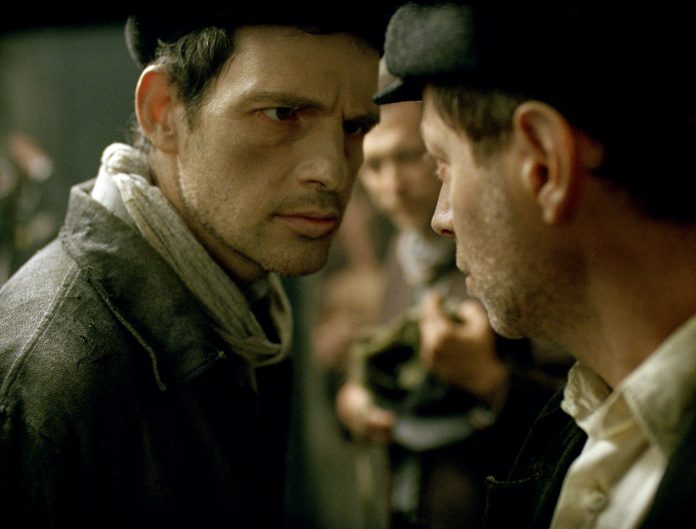
Most films we view emotionally and cerebrally but Son Of Saul, the holocaust drama from first-time director Laszlo Nemes, is experienced physically: it hits like a truck, leaving bruises under your skin; it pulverizes like a wrecking ball, smashing the core of your being into broken pieces. Although I saw it months ago at a festival, where I watched and recovered from dozens of other films, writing this review has been like peeling back a bandage over an old wound, revealing an aging and soiled disfigurement that hasn’t healed.
The film’s subject matter, the inner workings of Auschwitz-Birkenau as told from the perspective of a Sonderkommando named Saul, is inherently harrowing. It’s Nemes’ depiction, though, of the stoic efficiency, the mundane horrors, and the mechanical labor that make it groundbreaking and devastating.
The Sonderkommando were prisoners in the concentration camps who were forced to do the grimiest and most repulsive jobs — disposing the bodies, cleaning blood-stained floor tiles, and collecting the victims’ belongings — but were given basic amenities like food and beds. For these men, remorse and grief left long ago, a general numbing that ignores the pain remains: carrying corpses becomes like moving supplies, shoveling ashes feels like moving sand.
In order to evoke this perception and avoid exploiting the subject matter for cheap thrills like a horror film, the cinematography by Mátyás Erdély leaves all of the atrocities out of focus, off-screen or at the edges of the claustrophobic frame (the film is projected in the narrow academy ratio). There is no time to look and even less to mourn. Our gaze is instead directed towards Saul as he works, scrubbing, shoveling, carrying — except his trade is the disposal of the dead who are forgotten as fast as they burn. Nemes’ style is a slow social realism that recreates banal mass murder, where human experiments on children don’t raise eyebrows, where any sense of human empathy have been insidiously stolen.
The opening sequence before the title card, which might be the film’s most brutally effective moment, traces a group of Jews that are escorted by Saul and the other Sonderkommandos into the camp where they are stripped to their bare-skin and forced into the gas chambers. As soon as the door is sealed, not an instance is wasted; the Sonderkommandos immediately grab the victims’ belongings, collecting it for the camp’s officers.
In another film, we might stop, enter into the chamber with those being killed, or have a character stop to contemplate the murder wistfully. Son Of Saul is a film too unrelenting for such sentimentality; it is a step beyond eliciting tears. It takes place after the ducts in the characters’ eyes have dried up, when the only thing left to do is raise productivity, to kill as many in the least amount of time as possible.
But amidst the horror, genocide, and hatred is a conflict of Saul’s attempt to find dignity, altruism, and humanity. Although most of the film is plotless, tracing our protagonist’s everyday existence in the camp, a plot emerges when he discovers a corpse of a boy that may have been his son. He risks his life to give him a proper Jewish burial. The film is bleak and unrelenting, but proves itself not pointless or pornographic. It is about a man’s search to find meaning or humanity in a nihilistic and nefarious environment.
Despite the formal virtuosity, the compelling acting, and the unique perspective on the inner workings of a concentration camp, many might wonder what the worth in watching such horrific images is. We know what happened but we haven’t come close to feeling it. Here is an important film precisely because it is impossible to forget: close your eyes, hear the aching shrieks, and walk out of the theatre; the overwhelming images will lurk behind. It still hurts. The wound will never heal.

Social Stirrups — Analyzing our online social world is a brand new web exclusive column, in which Kendra Nelson delves into the hidden meanings of our online social media world. Check back soon for more bi-weekly content!
[dropcap]R[/dropcap]inging in every new year allows us to reminisce on the social media events that transpired over the last 365 days. With 2016 now well underway, I can’t help but notice most of what last year presented in the form of a hashtag. This is emphasized especially by websites and TV shows that prominently tell us which hashtag trends were most popular throughout the year.
The biggest moments of 2015 seem to have occurred in the online world, rather than the physical one. What does that mean for us? What does it say about the direction our generation is taking?
I can remember as a child in the early ‘90s that during the holiday season, the Edmonton Journal would publish a special issue filled with photographs from the year, highlighting major news and events that took place. On Christmas Day the media would essentially take a break, as no newspaper was delivered that day. The Internet was still in its Web 1.0 version and was not yet the driving force it is today. The emphasis was on the here and now — the physical world.
Jumping to today’s media environment, these hashtag events started off the way any regular old-fashioned news would: with a physical story. However, it seems that what overshadows the story itself is the online dialogue spread and shared on social media. People are now more aware of #blacklivesmatter, #thedress, and #ParisAttacks than they are of the stories behind them. It seems we are all guilty of jumping from one #SocialJustice to another #Opinion without much of a thought.

I am not knocking the idea of social media, but I’m having a harder time believing in the masses as becoming responsible and informed citizens as a result of it. Jumping on each of these social media bandwagons is not conducive to truth; it dilutes democratic information and thus breeds ignorance.
Though I am not going to go as far as to argue that not all people are becoming more ignorant, but the fact that we are currently arguing over how a dog would wear pants raises some serious red flags for me regarding the manner in which we choose which information is spread and shared.

We cannot ignore that social media has given us increased power to bring to light important social issues. It’s an anomaly of sorts, bringing us together whilst simultaneously separating us further as people. The ‘60s had been accused of doing much the same thing, with the Black Panthers civil rights movement, the second wave of feminism, and other various movements pushed people away by fighting for rights.
While Web 2.0 has given us a platform to discuss what matters to us, is arguing back and forth between tweets and status updates constructive? Or is it merely distracting us from seeing the big picture of our current society? I can’t help but feel we are missing out on key information that lingers in the background as our phones flash hashtags in the foreground.
I can’t conclude this article in a neat and tidy way, tying up all these loose ends. I would, though, invoke in you a responsibility to think about how you decipher social media, and how you question trends, popular opinion, and what you allow the media world of hashtags to surround you with.

Tim’s Bit is a new web-exclusive column featuring Tim Mottishaw’s comedic tirades on some of our humanity’s dumbest problems, with regards to culture, society and politics. Read more Tim’s Bit here!
[dropcap]R[/dropcap]ecently I was asked my opinion on whether the BC Liberals should regulate or ban businesses like Uber and Airbnb. My first response is always, “Too late, these businesses are already here.”
The sharing culture is picking up steam, with businesses like Uber, Car2go, Airbnb, and Kickstarter changing the way we consume items like cars, or services like taxis or hotels. The ‘share economy’ is increasingly becoming a way of life for Vancouverites, and for other Canadians. However, the BC Liberals are now trying to contain the cat by asking four million plus people to hold the bag.
Full disclosure here: I have, more than once in the past, voted for the BC Liberals. I was not voting so much for the party as I was voting for my local constituent, who truly spoke for the people in the riding. I didn’t mind which party they were in, so long as when we as a population spoke, they listened. Now that I live in Metro Vancouver I am learning that, in my former riding, we were spoiled that way.
Easy things to change that would please the most people, like getting rid of Daylight Savings Time, are ignored. Meanwhile we are spending gobs (yes, that’s the technical term) of money on things like polls and plebiscites. I appreciate that the government is asking us what we think, but I simply don’t think it needs to be as often or as binding as it has been.
Unfortunately, most of the time the people don’t see the bigger picture. This is why we elect governments.
Take the TransLink plebiscite for example. The tax increase would have benefitted more than hindered us; it would have provided more services, such as the unmanned trains to run past 12:30 a.m. However, as a result of the plebiscite, the government went with ‘what the people wanted.’ Unfortunately, most the time the people don’t see the bigger picture. This is why we elect governments. They are meant to know the questions, see the bigger picture and determine the best courses of action.
There is a point where the MLAs must make decisions, as a government, on a course of action. Do we allow ‘x’ to happen? Do we make it easier or more difficult for ‘y’ to happen? Do we lower taxes and increase service fees or drop services altogether? These are the questions a government exists to answer.
We do not live in a direct democracy, we live in a representative one. We elect people to represent us as a collective and to make decisions for the province. It is not an easy job. I am not sure I could do it myself; I’m a little too vocal about my beliefs. Nonetheless, these MLAs are meant to be making the decisions and convincing us they are the right ones before the next election. That seems to have stopped happening lately.
Questions in polls and plebiscites are often ‘yes’ or ‘no’ questions. Rarely in life are the questions we face that simple.
So, BC Liberals, stop asking the population and start doing the job of governing. Do you want to allow Uber in and create new regulations? Is it something the province would benefit from? If yes, then do it. If no, then find another solution. A prof doesn’t ask its students if we want to do the project, a boss doesn’t ask if we want to clean the bathroom.
There are parts of your job that suck, and this may be one of them. Guess what? You still have to do it. We voted you in, so show us why it was worth it.

Believe it or not, I’ve been a huge fan of Hedley’s music since their 2nd official album Famous Last Words. The album established their genre as alternative rock/pop-punk, and although they were not consistent with this, transferring over to this genre helped produce their top game work like their more recent albums Wild Life and Storms.
That being said, this new digital-age album Hello introduces an electronic based sound that completely crushed my dreams. It deconstructed and reinvented the classic Hedley sound that I so admired and stayed faithful to throughout the years.
The album begins with the song “Lost in Translation” and wow, did it ever make me grimace. This may be the worst song in the entire album, a song I can only describe as the Hedley equivalent to Justin Bieber’s “Boyfriend.” Jacob Hoggard’s beautiful voice was literally unrecognizable as he was RAPPING his verses. The song “Hello” is a significantly more tolerable it would have been a much better and hopeful opening to the album.
I think I have the greatest “fight me” attitude with this album mainly because Jacob Hoggard’s voice sounds much more edited than in his other works — the beauty of his music was always his incredible, soulful, filter-free pop rock vocals that brought chills up your spine. And although songs like “Can’t Slow Down” are nostalgic of this classic style, there are parts in which Hoggard sounds like a white Jason Derulo, and it’s truly horrifying. Just lyrically as well, songs like “Lose Control” and “Man Killer” make me want to cry. They are so unoriginal and unlike Hedley’s previous albums which clearly prove their lyrical capabilities.
I will end on a positive note, however, by giving Hedley credit for “Alive,” “Back to Basics,” and “The Knife.” With absolutely ravishing instrumentals and lyrics, this is some of their best work to date. If only the entire album longed to preserve their classic piano-and-vocals simplicity.
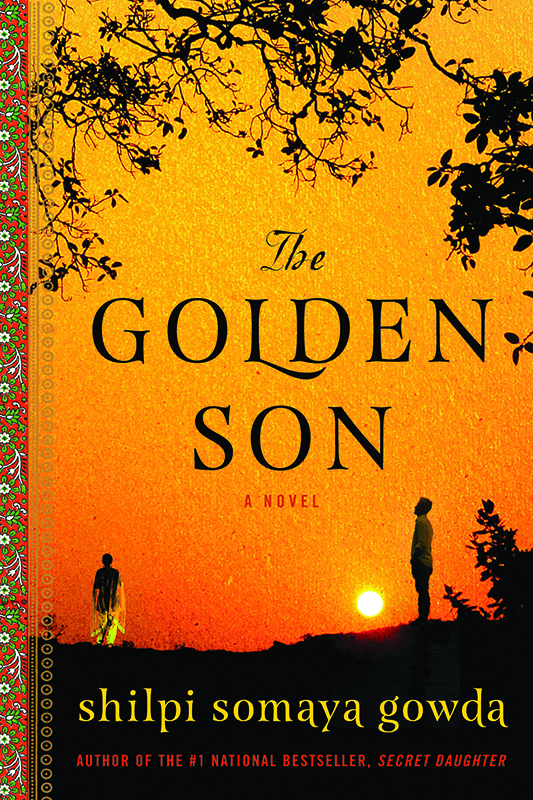
With two novels written, it is clear that Shilpi Somaya Gowda knows a thing or two about familial love and obligations, and how they can shape people as they start to create an identity for themselves.
Five years after making The New York Times bestseller list with Secret Daughter, Gowda’s second novel, The Golden Son, focuses on the bond between Anil and Leena. Anil comes from a highly regarded farming family that is at the head of settling village disputes. He is also the first in his family to get a higher education, being that he studied medicine in America, leaving his inheritance behind. Leena is the eldest child in her family, who is strong, and has supported Anil since childhood. As Anil leaves India to pursue his dreams, Leena dreams about marrying into a love like that of her parents’.
Within Gowda’s writing you find fantastic characters to empathize with. The traumas that they endure do cause you to feel bad, but witnessing their lives unfold makes the characters more relatable. Their experiences are every-day. Gowda’s influence from a trip to India for her first novel, and the medical research she undertook for this one really shine through, as she uses both to craft believable characters into an exquisitely woven storyline.
The non-static secondary characters also bring the story to life. The well-rounded group of characters play well off each other, and work logically together in terms of creating pivotal plot points. As Anil does his residency at a hospital in Dallas, Texas, the trials of his roommates are intriguing with bits of endearing humour. They serve as catalysts for important decisions that Anil realizes he must make either benefiting his career, or maintaining his family bonds and duties overseas. As Leena marries into another family, she comes to realize just how bitter life can be made by the hands of others.
Gowda excels at telling this delicate storyline by alternating chapters between Anil and Leena. The idea of fate becomes more and more prevalent as you read further into the story, as we must question the inevitability of things as Anil and Leena grow from experiences in work, relationships, and the heartbreaking results of decisions made long ago by their families.
The Golden Son will not disappoint, especially in its ending. Gowda is a master storyteller, and with this only being her second novel, it’ll be an antsy wait to see what she will follow up with.

In a shocking move, The Best Master Key Church of Khaled — or DJ Khaledism, as it more commonly referred — has been given recognized faith status by the United States government.
For those not in the know, DJ Khaled is a Miami producer, spinner, and ad-lib master of the millennial generation. He is widely recognized for his profound statements on the nature of success and good hygiene. For many young people, Khaled’s social media postings are tantamount to hearing the Gospels of Christ live on the mound. As such, the strong devotion to the maxims of Khaled have now led to the formation of a modern faith around his tenets.
Based out of Biscayne Bay, Miami, the faith was founded by devotees to the DJ who strove to take their reverence to the divine level, forever touched by his sizzling bangers and enlightened Snapchat swagacity.
Modern theologians are puzzled by the new faith, as devotees genuinely believe their religion is not a parody, unlike previous fads such as Pastafarianism and Dudeism.
Pamphlets produced by the church emphasize “being the best” in the mould of Khaled’s own record label, We the Best Music. The journey of a DJ Khaledist involves self-discovery of the various keys of life and blessing up to the most, all in the high hopes Khaled will snap another piece of wisdom to further his devotees’ spiritual journey to happiness.
Snapchat, being a key aspect of Khaled’s life, must also be an active part of his disciples’ lifestyle. DJ Khaledists regularly snap pictures of themselves winning every day in their life and doing something that proves they are the best.
Repentance is also important in DJ Khaledism, especially when a devotee fails to instantly stay up to date on a Khaled’s Snapchat stories. It is reported that disciples must pray at an altar to Khaled and acknowledge that “they played themselves” to be number one again.
Modern theologians are puzzled by the new faith, as devotees genuinely believe their religion is not a parody, unlike previous fads such as Pastafarianism and Dudeism.
Religious scholars have drawn parallels to older faiths, such as Christianity. Dr. Balthazar Bibliographia, a Harvard Divinity School professor, has written a paper comparing Christ’s twelve apostles with the first followers of Khaled’s.
There are even dissertations being developed by religious scholars in search of further parallels in Khaled’s own life to that of Christ. There are also rumors of a small offshoot of the official Church of Khaled, with followers who believe Khaled is the reincarnation of Jesus himself.
DJ Khaled himself has never officially endorsed the faith. But a priest of Khaled, Don Dada Jason Knight, has announced that Khaled sent a series of coupons to the church so devotees could get discounts on We the Best merch. Whether or not the faith will stand the test of time is questionable, but DJ Khaledists promises to bring their message worldwide, and promises that their church in Miami will be surpassed by “another one.”


