Home Blog Page 88

An SFU background extra tell-all

0
People playing table tennis in the convocation mall, sweating nervously. Joy Johnson is hiding behind a concrete pillar to the right, holding a megaphone and saying, “Look engaged people!”
ILLUSTRATION: Angelina Tran / The Peak

By: Petra Chase, Editor-in-Chief

SFU students have been observing a strange phenomenon across campuses — more and more common areas filled with students just hanging out. 

At first, The Peak assumed it was some conspiracy. But the tips have been impossible to ignore — eyewitness accounts swearing SFU hires background actors on campus have been flooding our inboxes.

“I walked by a student tour one day, as the guide was giving them this speech about how student life here is unmatched,” one anonymous student wrote. “All those fresh faces with dreams and preconceived notions of university based on what they see in movies, like Monsters University.

“Then I got to Convocation Mall, and it was packed with students enjoying themselves and socializing. People were lining up to play corn hole. Table tennis balls were bouncing between laughing faces. I’d never seen anything like it.

“All of a sudden, I heard a voice from behind a pillar saying, ‘Get back to your places!’ and everyone froze in strange positions. One group huddled together looking at an upside down textbook. When the student tour approached, the voice yelled, ‘ACTION!’ and everyone was in motion. People were giving each other noogies as they roasted marshmallows and mouthed words to each other.”

Another student wrote to The Peak about what they saw when they stumbled into a tent in the Blusson parking lot. “Racks with nothing but SFU hoodies, backpacks full of stuffing paper, and a line of people who looked like regular students sitting to get their hair and makeup done. Someone with short blonde hair and a bushy mustache was saying, ‘Give them dark circles but not too dark — we want to be realistic, but still make them look engaged.’”

The Peak was also approached by Cornelius Cucumber (this is a name we have created to shield them from retribution). Cucumber claims to be a professional background actor hired by SFU in 2022 after he did background work on Nickelback’s “San Quentin” music video, famously shot at Convocation Mall.

“President Joy Johnson was scouting for actors that day, wearing her usual disguise (Fuzzy Puzz Mustache Glasses from Party City). She approached me after filming and complimented my ability to look engaged with such young people hipster music,” Cucumber said. “Her words.”

Johnson told Cucumber they were looking to hire full-time extras to look like “regular university students who love SFU.” He signed a contract for full-time work, which stated he could not disclose that SFU was hiring background actors.

Cucumber’s role since then has been as a whistleblower in the AQ — blowing his whistle when the foosball ball goes out of bounds. “It’s been quite repetitive, and after two years, I don’t feel like I’m learning much that will help advance my career, and there aren’t many foosball referee roles out there.”

Cucumber says you might recognize him for his roles in such films as Oompa Loompa #48 in Charlie and the Chocolate Factory (1971) — a role he got to reprise in Glasgow earlier this year — and Chipmunks Fan #2 in Alvin and the Chipmunks: The Road Chip (2015).  

When The Peak asked Cucumber if SFU’s recent budget cuts and layoffs have impacted the background extras, he said there have been zero layoffs among the extra crew. They’ve actually been working more hours and given more dialogue, such as, “We sure do pay a fair tuition here at SFU, no cap!” and, “This is certainly an institution that puts people above profits, dawg!”

“SFU cut their football program, but hired more ‘football jock’ roles,” Cucumber explained. More recently, SFU shut down its Woodward’s Cultural Programming, but the SFU extra casting director has allegedly been told to represent more arts and theatre students to make SFU appear like it “cares about the arts.”

“They want me to be a whistleblower — I’ll show them whistleblower!” Cucumber attempted an evil villain laugh as he walked away, and we never saw him again.

Your pain is your endometriosis’ gain

0
Uterus lined with anthropomorphized endometriosis. The endometriosis has devil horns.
ILLUSTRATION: Yuki Cai / The Peak

By: Cynthia Piña, Peak Associate

Content warning: mention of blood, graphic description of laproscopic surgery.

Hi!!! I’m endometriosis, and I’m not going to leave you alone 🙂 My life’s work is growing excess tissue and nothing will stop me — not your silly little birth control pills, multiple brands of heat pads, or whatever natural remedies you are trying to give me. Peppermint tea? I don’t care. Exercising and stretching? Any movement just pisses me off. Turmeric? OK, maybe I will calm down for a few hours, but I will act up again tomorrow. 

I know you wanted to go to the grocery store today, but I don’t feel like it. We are not going and I will make sure of that. You should run any plans by me first, and even if I say yes, I’ll probably make you cancel at the last minute anyways. You have bloating in your abdomen? Well, my side job is spawning endometriomas everywhere, and I love them so much! They are my babies! They are filled with blood, unlike other cysts, which I think is really unique and cute 🙂 Wait, is that a scalpel? What are you doing?!?! WHY ARE YOU SURGICALLY REMOVING MY BABIES? I do not think so. I will make more!!!!! You can’t remove all of them!!!!! 

Why am I like this, you ask? I don’t know, I would say ask the scientists, but honestly, they haven’t studied me at all. I don’t think they know either. Apparently, one of the only ways to get rid of me is to cut you open and scrape me out, but we aren’t doing that now, are we? We are going to be together forever <3 Even if you decided it was worth going through all the trouble of another surgery, I can just grow back! So, you will see more of me eventually anyways! 

Xoxo, 
Go piss girl (it might hurt, though)

Horoscopes June 10 – 16

0
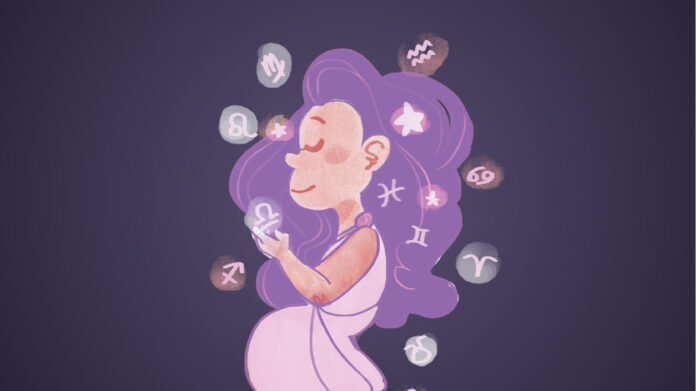
An illustration of a girl, stars and astrological signs strewn in her hair.
ILLUSTRATION: Marissa Ouyang / The Peak

By: Amrit Kamaal, Peak Associate

Aries
March 21–April 19  
You’re built completely different. Look at you getting last-minute candy in the Burnaby campus vending machine room, which is a real room solely dedicated to vending machines. You also made sure to hit up those random gumball and hard fruit candy dispensers at the laundromat that are like $0.25 (the low price is to account for the fact that they’re not sure when the last restock was). Your best score was from sweet-talking the tables at club day. #NoShameInYourGame

Taurus
April 20–May 20
I know it’s June now, but happy late Mother’s Day; you really serve mother energy every time. Taurus, you are the parental figure of the group, and I know how desperately you want the perfect TikTok video. You’re the one who set this whole thing up! You are the type to bring an extra box of fun-sized candy, two bottomless bags of peach rings, and the literal BOWL. Unlike the usual beige Instagram mom post, the bowl has a plethora of colours. #NoMoreSadBeigeBabies

Gemini
May 21–June 20
Now, Gemini, you guys not only understood the assignment, you MADE it. I see you basically making the salad on your own with over six bags of candy. Not just any candy, but the expensive, Costco-sized bags of Sour Patch Kids, Trolli, and Maynards (Swedish Berries are the best, argue with the wall).  

Cancer
June 21–July 22
Honestly, HiChews and Starburst are an automatic win in my book. Those candies and I are like this insert crossed finger emoji here. But please, for the love of god, unwrap before we hit record, honey! The keyboard warriors will be furious in the comments over the 0.2 seconds it takes to unwrap each piece. But it’s all love. I appreciate the vision and the immaculate taste.

Leo
July 23–August 22
Sweetie, I need you to give us all a break here and put away those KitKats, m’kay? Bringing chocolate to the candy salad is one thing. It’s considerate and cute, so we love that. I’m more of a chocolate girlie myself. However, do not even think of combining them to melt in the same bowl with the fruity, sour salad. That’s absolutely foul! I went to Candy Salad Island and they have several laws against this. 

Virgo
August 23–September 22
As a Virgo, sometimes y’all are a bit extra with the whole “quirky” girl persona, but it’s lovable. You’ll, of course, bring a good amount of candy, no questions asked. However, the candy is just so unexpected. You’ll choose the most bodacious, unheard-of flavours, like “seawater chocolate” flavoured gummies with a random background character of Spongebob (if you know, you know). You do you, I guess.

Libra
September 23–October 22
Libra, we are supposed to build this candy salad together. If you’re going to gatekeep candy, don’t get caught! As a certified sweet tooth, I understand that the parasites and demons in you want the candy, but be cautious of any cameras when you’re gripping that Skittles bag like it’s going to run away. You wouldn’t wanna have to set up the tripod and throw your hair in a messy bun for your fourth apology video this month. 

Scorpio
October 23–November 21
I know that while waiting for that one ex to call you back, you may start scarfing down the whole bag you brought through tears. I guess your contribution still means something, but try not to get tears in the Nerd Gummy Clusters, OK? 

Sagittarius
November 22–December 21
OK look, the vintage look is cute, we love to see it. But the vintage taste, is a whole other thing. Raiding your grandmother’s purse for those caramel and strawberry candies that seem impossible to find instore. That’s fine, OK, we’ll tolerate it, but word of advice, lose the raisins, yeah? 

Capricorn
December 22–January 19
You are just plain evil, you want to watch the world burn. Keep yourself at home with those prank Russian roulette games like Bean Boozled. No one is looking forward to biting into some random brown jellybean that’s either “Swedish caramel” or “gargoyle surprise.”

Aquarius
January 20–February 18
What do you mean you bought “candy” from a thrift store? 

Pisces
February 19–March 20
Hey bestie, we need you to turn off that “Do Not Disturb” mode and set up an extra loud ringer because the plans just changed last minute (again). You find out one hour before the function that the group decided to do a “candy salad” instead of “slime” night. So, once you get to the nearest Walmart after panic-driving from Home Depot with a gallon of clear liquid glue in the passenger seat, just buy the “default” candy, AKA the package everyone brought. #90PercentSkittles

In Case You Missed It: Children of Men explores being sedated to injustices around you

0

By: Yildiz Subuk, Peak Associate

Content warning: violence, racism, Islamophobia, and genocide.

Alfonso Cauron’s 2006 film, Children Of Men, tells two thematic stories that overlap  throughout its nearly two-hour run time. The first story focuses on the protagonist, Theo (played by Clive Owen) as he aimlessly goes about his days in the year 2027. Residing in London, he ignores the harsh reality the film presents us with: the world is coming to a slow but imminent end as infertility has plagued the planet. No new children have been born for more than 18 years. In the opening scene, many are shown cramped inside a coffee shop watching a news report of the youngest person on the planet passing away. The members of the crowd are struck with horror and dread, but Theo, who appears a few seconds afterwards, brushes past everyone to order his coffee and go about his day. 

Theo is sedated. It’s not that Theo doesnt care about anything, but his faith in humanity has died. He remains complicit in his sedation in order to cope, with no intentions of finding ways to make the world a better place until he is asked to transport a girl across the map for a large sum of money. After an event that presents him with a glimmer of hope, Theo slowly becomes more aware of the inequalities around him.

As the film progresses, Theo’s story overlaps with the xenophobic and dystopian setting. Cauron’s film world is not overtly futuristic, but instead is a bleak rendition of current reality sprinkled with some minor technological innovations. It is not the techno aspect the film decides to focus on, but the extent of xenophobia and disregard for oppressed individuals that the film showcases. While the film’s cinematography is unconventional, it’s a masterful work in storytelling. The shots are a series of long takes — often unbroken sequences that track Theo while also emphasizing the background. It presents the audience with footage of people who are wounded or immigrants detained. The London we see is a façade, trying to pose as one of the only places left that hasn’t fallen into total anarchy and chaos. However, the truth is slowly revealed as immigrants are forced to live in poor conditions. This occurs while privileged individuals live their lives, ignorant to the suffering around them.

Children of Men is not a story about where humanity is headed, but an examination of where we are now. The rise of xenophobic beliefs amidst largescale crises, as well as ethnic minority groups facing the most brutal violence, are issues that are prevalent in the world today. In China, Uyghur Muslims are systematically placed in camps and dehumanized for their beliefs and identity. In occupied Palestinian territories, Palestinians are systemically displaced, expelled, and live under apartheid while their suffering is ignored by western powers. While Palestinians are having their history and identity violently erased, the Israeli government tries to present their country as a thriving, idealistic nation. In both these examples, minority groups are facing unfathomable suffering, while many of the country’s privileged population stay sedated to what is going on around them

It may be easy to get caught up in our own lives and filter out the world around us, but we have a responsibility to act against injustices. Acknowledging and learning about these injustices and their roots can inspire action and advocacy. Instead of trying to prophesize a bleak future, Children of Men confronts us with the present in the form of a dystopian tale. 

NTKNTG: Exhibits highlighting Indigenous communities

0
an illustrated calender that says "Need to Know, Need to Go"
ILLUSTRATION: Courtesy of The Peak

By: Izzy Cheung, Arts & Culture Editor

PHOTO: Elyana Moradi / The Peak

snəxʷəł: an art exhibit by Mekwalya (Zoe George) 

Vancouver Maritime Museum, 1905 Ogden Ave., Vancouver 
Runs until November 2024 
Every day 10:00 a.m.–5:00 p.m. 

The title of this exhibit, snəxʷəł, means “canoe” in hən̓q̓əmin̓əm̓ (traditional Musqueam language). It uses photographs, videos, and traditional canoes and paddles to highlight the significance of canoe culture for the səlil ̕wətaʔɬ (Tsleil-Waututh) people. Zoe George, whose Sḵwx̱wú7mesh (Squamish) ancestral name is Mekwalya, grew up in Squamish and on North Vancouver’s Tsleil-Waututh reserve. “I have been a war canoe paddler my whole life,” she said in her biography, with her typical paddling location being səl̓ilw̓ət (Burrard Inlet).  She hopes this exhibit allows all who attend to “understand the importance and presence canoe culture has in First Nations communities across the Lower Mainland.”  

PHOTO: Elyana Moradi / The Peak

GEORGE CLUTESI: ḥašaḥʔap / ʔaapḥii / ʕac̓ik  / ḥaaʔaksuqƛ / ʔiiḥmisʔap 

Bill Reid Gallery of Northwest Coast Art, 639 Hornby St., Vancouver 
Runs until January 19, 2025 
Friday–Wednesday 10:00 a.m.–5:00 p.m. 

GEORGE CLUTESI: ḥašaḥʔap / ʔaapḥii / ʕc̓ik  / ḥaaʔaksuqƛ / ʔiiḥmisʔap delves into the legacy of the titular artist, George Clutesi (19051988). Put together, the exhibit’s title means “to be protective,” “generous,” “talented,” “strong-willed,” and “treasure.” Clutesi, a Tseshat teacher of song and dance, was a multi-faceted artist who also contributed to the Native Voice, which was the first Indigenous-centred newspaper in Canada. The exhibit, located just a few blocks from SFU’s Harbour Centre, “is an exploration of the life and legacy of Clutesi, whose actions have left an indelible mark on the preservation and celebration of the Nuu-chah-nulth community’s cultural traditions and customs.” 

PHOTO: Elyana Moradi / The Peak

To Be Seen, To Be Heard: First Nations in Public Spaces, 1900–1965

Museum of Anthropology, 6369 NW Marine Dr., Vancouver 
Runs until March 30, 2025 
Open Monday–Wednesday and Friday–Sunday 10:00 a.m.–5:00 p.m., and Thursdays 10:00 a.m.–9:00 p.m. 

After 18 months of renovations, the Museum of Anthropology will be reopening on June 13. To celebrate, they will be featuring To Be Seen, To Be Heard until March 30, 2025. The multimedia exhibit touches on Indigenous peoples’ representation of themselves in public spaces, like “parades, protests, royal visits, tourist markets, civic jubilees, and intertribal gatherings.” It will consist of archival materials, such as old photographs, and voice-overs from members of various Indigenous communities that will play throughout the display. 

Fitness misinformation proliferates online

0
A femme-presenting East Asian person lifting dumbbells among a group of people
PHOTO: Bruce Mars / Unsplash

By: Yasmin Hassan, Staff Writer

Content warning: mentions of dieting and eating disorders.

If you’ve been active on social media in recent years, you might remember seeing (or even doing) those at-home workouts that got so popular back in 2020. While promoting physical activity isn’t inherently toxic, the methods and attitudes promoted by many fitness influencers can be. Social media can perpetuate diet culture and spread misinformation under the guise of quick fixes. Fitness trends often promote an unhealthy obsession with appearance over genuine health and well-being.

Diet culture refers to ideas that falsely frame food as “good or bad,” and promote thinness as an ideal image of health. One study found that most fitness videos on TikTok are weight-normative, focusing on weight as a major indicator of health. For instance, as appealing as those “abs in 10 days” workouts may seem — they just don’t work. Achieving visible abs depends heavily on genetics and diet, and it’s rarely attainable without unsustainable long-term lifestyle changes. Promises of quick fixes like these will likely worsen your mental health, giving you unrealistic expectations, and lead you to over-exert yourself against professional recommendations. 

Chloe Ting’s popular “abs in 2 weeks” routine also doesn’t bother to explain proper form or the importance of rest days. While the “shred challenge” and FAQ on her website does include rest days and notes there’s no guarantee that everyone can achieve the same results — this information is harder to find, and could have been included in the video itself. The video has a disclaimer in the description about her titles being intended to get clicks, though it’s still misleading as many viewers don’t read descriptions. 

You shouldn’t compare yourself to people who make a living off their diet and exercise. Our fitness goals should ultimately come from a place of building strength and feeling good. 

Trends that sound too good to be true often are.

What I eat in a day” videos have also become popular on social media, involving creators sharing their daily eating habits. These videos can provide inspiration and meal ideas. However, they often lack nutritional context and can promote unrealistic or unhealthy eating patterns if not viewed critically. This trend is another example of how social media can perpetuate diet culture, ultimately ruining the enjoyment of food for many people. Popular low-carb or keto diets aren’t the answer to most health or fitness concerns, and you can’t always tell if influencers are being honest about what they eat or endorse in their videos. While it’s great that people can share their personal experiences with nutrition, these videos rarely consider individual nutritional needs or credible, scientifically-backed information. Other trendy ideas like spot-reduction for fat or extreme monthly fitness challenges are common forms of misinformation. Trends that sound too good to be true often are; they can cause physical harm and disappointment when people don’t achieve the promised results. We should always be critical of the content we consume, but especially in relation to health.

Why should I hate my body if it looks a certain way? People should focus on their functional health, not “washboard abs.” When we prioritize aesthetics and dangerously impractical appearances, it damages our sense of self. These “fitness” trends contribute to body dysmorphia and unhealthy relationships with food and exercise. Activity and nutrition are important, but good things come in moderation. Don’t convince yourself that activities like gentle walking are ineffective. And when it comes to nutrition, focus on balance in your diet, getting all the major food groups, and consuming a variety of vitamins and minerals. 

You only have one body — it’s worth being kind to it while you can instead of punishing it with unrealistic expectations. Being thin or muscular doesn’t equate to being healthy. Listening to your body and making gradual, long-term changes rooted in science is a better approach to health and nutrition than conformed routines based on physique. The most important thing is to consult a certified healthcare professional, dietician, or physical trainer if you want to learn what works for you. But don’t forget it’s also about your mindset; having a holistic approach to health that includes mental, emotional, and social well-being will help establish a stable bond between your mind and body. As for social media, learn to control what media you consume — don’t let it consume you! 

AI is harmful for musicians

0
PHOTO: Gudrun Wai-Gunnarsson / The Peak

By: Hailey Miller, Staff Writer

Computer generation was first used in music composition by Alan Turing in 1951. Known for his work with World War II enigma code-breaking machines, Turing once predicted computers would “learn from experience.” His ideas and inventions eventually formed the basis for what we now know as artificial intelligence (AI). In recent years, AI has been creeping into the music and arts scene. This not only degrades creativity in the music industry — it also creates financial barriers for artists. 

Many musicians are condemning AI use, and asking fans not to support AI-generated music. This April, more than 200 artists signed a letter against AI in music through the Artist Rights Alliance, including Stevie Wonder, Pearl Jam, Billie Eilish, Arkells, and Norah Jones. The letter states that AI is an “assault on human creativity,” and can “substantially dilute the royalty pools that are paid out to artists.” Although AI-generated music doesn’t get royalties, it still takes opportunities for royalties away from artists who don’t use AI.

Instead of sampling, which means incorporating portions of songs into new tracks — AI can generate “original” sounds using patterns from real songs. However, sampling usually involves consent. AI-generated music is essentially plagiarism of other artists’ sounds and styles. Some have used it to generate fake songs using someone else’s likeness, while others copy musicians’ styles and present them as their own. Despite the number of people condemning AI-generated music, a few artists — such as Canadian musician Grimes — are embracing it to supposedly support their music-making process. When it comes to music production, some professionals believe AI can be helpful in the sense of streamlining the process of finalizing audio engineering elements in the studio. They also argue AI can help with promotion and marketing. However, this still hinders originality and makes for an unfair industry.

Although AI-generated music doesn’t get royalties, it still takes opportunities for royalties away from artists who don’t use AI.

For new musicians who are trying to make a name for themselves in the industry, AI use gives them less of a chance to stand out and showcase their originality. Since AI can generate compositions faster than humans, it’s difficult for artists to compete and keep up with AI-generated songs. Artists who choose not to use AI during the promotion process are also at a financial disadvantage, as it physically takes longer to promote and market their work. 

AI is already abundant in many technology sectors, but when it comes to art, it’s being taken too far. People create music because of their original ideas, the overall process, and the satisfaction of the final product. AI can’t replace the level of emotion expressed in an artist’s work. If it continues to take over the arts at this alarming rate, it will further degrade originality and put livelihoods at risk. To take a stance against AI, we should support musicians’ original works and boycott AI art in all forms — don’t buy into technological trends that plagiarize genuine creativity.

BC increases ambulance services in 60 rural communities

1
a row of three ambulances parked outside a hospital
PHOTO: Amirul Anirban / The Peak

By: Hannah Fraser, News Writer

On April 1, BC Emergency Health Services (BCEHS) improved paramedic staffing models in 60 rural and remote communities in the Vancouver Coastal and Fraser Health regions for better 911 responsiveness and consistent out-of-hospital care.

Previously, paramedics worked under the scheduled on-call model, carrying a pager. They were then required to access the local ambulance station once they received a page. However, many rural communities had concerns that this model was not quick enough to respond to 911 calls. 

Mayor Andy Morel of the City of Rossland said the city’s year-round active, outdoor community and population of aging residents required ambulance services that could more readily support their health care needs. So, in more muti-generational communities, the scheduled on-call model could not support the city. 

Given the new staffing models — 24/7 alpha, mix shift, and kilo shift — many communities now have two to three times more paramedics in ambulance stations than the previous on-call model did. 24/7 alpha involves full-time paramedics on duty 24 hours a day, while mix shift has eight paramedics that work 16 hours in their stations and eight hours on-call. Some communities have a mix of kilo/on-call shifts, similar to the scheduled on-call model where a full-time unit chief and staff are entirely on-call. 

The Peak corresponded with Bowen Osoko, a spokesperson for BCEHS, for more information on the changes. Osoko said recruiting and filling the new emergency and health roles has been ongoing for several months now. While the BCEHS fills these positions, existing paramedic staff have been filling in extra positions to compensate for the new roles. Osoko notes the backfill “has been successful to date.

“We’re also working hard to connect with local community members who want to join BCEHS and provide excellent pre-hospital care to their neighbours and community.”

Jason Jackson, Ambulance Paramedics of BC president said, “Patient care is the most important thing to us, and this new approach helps us better recruit and retain paramedics to work in these smaller communities, improve how we respond to 911 calls, and most importantly, help paramedics provide better care to our patients.” 

In addition, the BCEHS has brought more Indigenous paramedics onto their team. Indigenous Peoples have historically faced injustices in healthcare due to racism, and rural communities away from urban centres make accessing care much harder. Over a third of Indigenous people in BC reside in the north of the province. Tania Dick, the Indigenous nursing lead at UBC, noted that she and other nurses are flown into rural communities to provide aid. However, visits often aren’t made for weeks due to barriers with travel. These communities often depend on external resources from the government and organizations for this basic care.

“We’re actively working to bring Indigenous people into all levels of our organization,” Osoko said. “Doing so helps build trust, which helps improve patient care across BC.” 

The Peak reached out to the First Nations Health Authority and the First Nations Health Council for more information, but did not hear a response by the publication date.

Advocates condemn BC’s decision to recriminalize substance use

0
A busy street in Downtown Vancouver
PHOTO: Aria Amirmoini / The Peak

By: Hannah Fraser, News Writer

Content warning: mentions of death and overdose, colonialism, and intergenerational trauma.

The BC government received approval to recriminalize illicit substance use in public spaces, one and a half years into a decriminalization pilot. Advocates from the Harm Reduction Nurses Association (HRNA) expressed discontent. The HRNA is a Canadian organization working to “advance harm reduction nursingand “the rights and dignity of people who use drugs.”

In January 2023, Health Canada granted BC a “three-year exemption under the Controlled Drugs and Substances Act to decriminalize people who use drugs.” This meant of-age British Columbians found carrying small amounts of illicit drugs for personal use would no longer be arrested or charged. Instead of confiscating their drugs, they would be directed to health and social support. 

Now isn’t the first time the BC government has attempted to reverse this exemption. Less than a year into the exemption, they passed Bill 34, the Restricting Public Consumption of Illegal Substances Act, which would undo this, and allow for confiscation of illegal substances and potential police arrest. At the time, the HRNA filed an injunction, which is a legal challenge, meant to prevent Bill 34 from coming into effect. 

The injunction was overturned in early 2024 after the HRNA proved the Act “would cause irreparable harm to people at risk of injury and death from fatal drug poisoning,” winning the case. 

The HRNA alleged the Act would subject more people to fatal overdose, create a barrier to healthcare outreach, and “drive racial discrimination, particularly against Indigenous people.” In 2021, the First Nations Health Authority explained Indigenous people are overly-represented in the toxic overdose crisis due to the intergenerational trauma caused by the residential school system and other discriminatory policies

However, recriminalization has been enacted just a few months later, renewing these concerns. The BC Assembly of First Nations said, “We feel we need to move away from criminalizing behaviors that are the direct result of the harms of colonialism” and “the toxic drug crisis needs to be treated and addressed as a public health issue, not a criminal justice issue.”

“We need to move away from criminalizing behaviors that are the direct result of the harms of colonialism.” — BC Assembly of First Nations

“The BC government’s actions today will put people who use drugs and people who rely on public space at further risk of harm and death,” said Corey Ranger of the HRNA in a press release. “By imposing these restrictions on the decriminalization pilot without offering real solutions like expanding overdose prevention services and access to housing, the province has declared some lives unworthy of saving.”

A report from the BC government revealed that 93% of accidental deaths in the province’s houseless population were due to the toxic drug supply in 2021. 

Caitlin Shane of Pivot Legal Society and co-counsel for the HRNA said, “Bill 34 is punitive, political and lacks evidence.” President of the Union of BC Indian Chiefs, Grand Chief Stewart Phillip, said the response to the overdose crisis requires “culturally appropriate treatment and recovery services, housing, and tools to address a range of intersecting trauma that for Indigenous peoples, is very much wrapped up in the destructive impacts of colonialism.”

The HRNA “reached out to the province with an offer to collaborate to address concerns without causing further harm, through a range of legal and policy changes.” They suggested implementing “rapid scaling-up of supervised consumption sites.”

“More than a century of prohibition has demonstrated that [police] enforcement has not decreased drug availability or use, is extremely expensive, and is clearly linked to an increased risk of overdose and cycles of homelessness,” said the HRNA. 

“When we see public drug use, it is because people do not have housing, services, or safe places to go — and because people want to stay alive, not die alone and out of sight.”

Crooked Teeth is a queer Syrian refugee’s reconnection “home”

0
ILLUSTRATION: Courtesy of Yasmin Hassan / The Peak

By: Yasmin Hassan, Staff Writer

Crooked teeth is the young boy who swears he likes women. Crooked teeth are in the mouth of an officer staring back at you coldly. Crooked teeth is being the only racialized panelist discussing refugees. Crooked teeth is the wet sand on English Bay after a painful breakup. In Danny Ramadan’s newest work, Crooked Teeth: A Queer Syrian Refugee Memoir, incisors and molars take on a whole new meaning. 

Right off the bat, I knew this was written brilliantly. Syrian Canadian author Ramadan’s track record with his award-winning works, The Clothesline Swing and The Foghorn Echoes, further confirms his literary genius. 

The first chapter of this new memoir, “Truth,” explores the shift from writer to reader, culminating in an agreement between two people to bare each other’s scars. Expertly, he weaves the motifs of “crooked teeth, shy smiles, playful bites” into his writing as stand-ins for the deeper conversations of racial injustice. 

“I’m telling you these stories as I would tell them to a friend,” Ramadan says in the memoir. 

“This is my treasure trove of all of the images from my childhood that I will never have access to ever again. It feels like, in a way, those images are not just me trying to tell you about those places, but also me trying to protect them, to keep them for myself.” —Danny Ramadan, via CBC

Crooked Teeth retells his childhood growing up in Damascus, Syria. Slowly but surely, he realizes and comes to terms with his sexuality, despite his family, society, and government casting out any idea of queerness. Ramadan makes a point, however, that too often people in the west fail to realize that his home wasn’t always war and catastrophe, but that it was home first and foremost. 

This is my treasure trove of all of the images from my childhood that I will never have access to ever again,” Ramadan told CBC of his memoir. “It feels like, in a way, those images are not just me trying to tell you about those places, but also me trying to protect them, to keep them for myself.”  

He talks about his personal life amidst the backdrop of a degrading economy and the seedlings of revolutionary outburst in the 2000s. His journey takes him to underground networks of queer-safe homes, Arab Spring uprisings, imprisonment, becoming a refugee, and then rigidly settling in Vancouver.

Ramadan doesn’t skimp out on the finer things in his life. He celebrates the joys, finding his chosen family, and creating a meaningful career. He wanted to include these snapshots of his life in Canada because his story didn’t stop when he arrived here. 

“Arriving in Canada is a beautiful milestone. But it’s the beginning of a new life,” he told CBC. “I think the balance between what your life was before arriving and what’s life after arriving is what is important.” 

This memoir is beautifully written, with intense descriptions and comedic quips. It truly feels like a conversation between two friends. If you have the chance, pick up this book and give it a read. Find out the meaning behind those crooked teeth!

Purchase Crooked Teeth at storestock.massybooks.com.