Home Blog Page 815

Burnaby Distribution Manager

0

Purpose:
The Burnaby Distribution Coordinator exists to deliver physical copies of The Peak to stands in a timely and efficient manner, to collect information on circulation and pickup, to maintain The Peak’s distribution infrastructure at the SFU Burnaby campus.

Duties:
Responsible for meeting courier at the Burnaby campus and receiving each new issue of The Peak
Shall distribute an appropriate number of copies to The Peak’s distribution points at the Burnaby campus
Shall keep track of the number of unused copies on each stand in this jurisdiction, report these numbers to the Business Manager on a weekly basis, and dispose of unused copies in the appropriate recycling boxes
Shall inspect all distribution points at the Burnaby campus at least once mid-week and restock and tidy as necessary
Shall ensure each Peak newsstand in this jurisdiction is kept tidy and clean from posters and graffiti and that the area around the stand is kept tidy
Shall dispose of unauthorized advertising materials placed on Peak distribution points and report large-scale unauthorized use to the Business Manager
Shall maintain all Peak newsstands including cleaning, painting, and coordinating replacement of damaged or stolen boxes
Shall provide weekly email to Editor-in-Chief and Business Manager reporting on distribution and plans for the week (unauthorized advertising, pick up, etc.)
Shall attend all Peak employee meetings
Other related duties as requested by the Business Manager, Board of Directors, or Collective

Qualifications:
Must be self-motivated, able to work and fulfill expectations without direct supervision
Must be capable of carrying large stacks of newspapers

Other details:
Hired on a semesterly basis
4-6 hours per week
Paid $165 per week

NOTE: not meeting the stipend requirements may result in dismissal or pay reduction.

 

Board of Directors meeting: 28 July 2016

0

Peak Publications Society Board of Directors Meeting Agenda

July 28, 2016

The Peak offices

Chair: Max Hill

In Attendance:

  • Maia Odegaard (Board Secretary, non-voting)
  • Max Hill (Editor-in-Chief)
  • Paige Smith (Collective Rep)
  • Kevin Rey (Collective Rep)
  • MuhammadQasim Dewji (Employee Rep)


  • Call to Order


  • Approval of Agenda


  • Approval of past minutes from June 23, 2015


  • Financial update


Maia to present the state of the Society’s finances through June 2016.


  • Pay scale for volunteer proofreaders


Paige to present Natalie’s proposal that we set up a system for paying our volunteer proofreaders.


  • Election of board member for hiring panel


Max will lead the election of a board member to serve on the hiring board to decide the paper’s staff

for the Fall 2016 semester.


  • Adjournment


Peak Publications Society Board of Directors Meeting Agenda

June 23, 2016

The Peak offices

Chair: Max Hill

In Attendance:

  • Maia Odegaard (Board Secretary, non-voting)
  • Max Hill (Editor-in-Chief)
  • Tamara Connor (Collective Rep)
  • Kevin Rey (Collective Rep)

Regrets

  • Thadoe Wai (At-large Rep)
  • MuhammadQasim Dewji


  • Call to Order: 5:38 p.m.


  • Approval of Agenda


Tamara/Kevin


  • Approval of past minutes from May 26, 2016


Tamara/Kevin


  • Financial update


Maia presented the Summer 2016 budget as of end of May.


  • Continuation of Kevin’s proposal


BIRT the Peak Publication Society divest from all energy sector investments and redistribute those funds to our existing portfolio according to the advice of our Vancity Investment Advisor, Rakesh Mehta.

Kevin/Tamara

All in favour


  • Restructuring the Contributor Pay Policy


BIRT the PPS strike section 1. c) from the Contributor Pay Policy effective the beginning of the 2016 summer semester.

BIFRT that section 4. is rewritten to say: Contributors must not submit their invoice until after the final issue of the semester has been published and invoices must be received by the Business Manager no later than the end of the month in which the last issue was published.

BIFRT a section 7. is added to the Contributor Pay Policy to state that: Contributors who complete an assignment which is not published due to circumstances beyond the contributor’s control, shall still be paid the full amount, subject to the discretion of the section editor and ultimately the Editor-in-chief.

Tamara/Kevin

All in favour


  • Contributor Pay Policy


See above.


  • Infographic creation website subscription


BIRT the PPS allocate $240.00 of the office supply budget for an annual subscription to Venngage.

Kevin/Tamara

All in favour


  • Adjournment 6:41 p.m.

Album Reviews

0

What We Live For

by American Authors

What We Live For is the sophomore studio album from American Authors, an indie-pop-rock band. If you’re looking for that feel-good soundtrack to your summer, this album needs to be in your hands ASAP. Bursting with infectious riffs and catchy lyrics, it’s highway karaoke-approved.

Zac Barnett’s vocals have an indie edge, but pure rock power. The musicality throughout the record is amazing, and it feels like every song is better than the last. “I’m Born to Run” has all the makings of a youth anthem with A+ songwriting: “Give me grace / Bury my sins.”

“Pride” is a bit experimental with banjo and spoken word. “Superman” and “Mind Body Soul” are relatively slow and mellow jams, but the former picks up with lots of confidence building up throughout, and the latter waits until the last moment to kick it off with big sound.

There’s no way to go wrong with this album.

Conscious

by Broods

Conscious, the sophomore effort of sibling duo Broods, traverses the darker sides of life with emotional clarity and underpinnings of hope. The indie-pop album as a whole is saturated with melodramatic hyperbole and sentimentalism. It’s an ambitious confession dressed as an album that will feed not only your soul but your mind as well.

“Free” is an anthem full of passion and fire that starts off the album at a high. The lyrics are pure determination and strength, and this flows all the way through the record. “Heartlines” is another favourite, sounding more like a Lorde track (she co-wrote it) than a Broods one.

If you’re looking for something closer to Broods’ sound from their debut, then check out the more minimalist “Worth the Fight” or “Bedroom Door.” If you’re looking for a mellow ballad, Tove Lo is featured on “Freak of Nature,” and the dual vocals are incredibly impressive.

Where the Light Shines Through

by Switchfoot

Damn, have there really been 10 albums by these guys already? I feel like it was only last week that I was jamming to the Switchfoot-laden A Walk to Remember soundtrack (circa 2002!). Where the Light Shines Through opens with the uptempo “Holy Water,” just in case you forgot that Switchfoot is a Christian alt-rock group.

They build upon their tried-and-true songwriting to deliver an album that echoes the successes of their previous records. However, they also branch out a little, as shown best by “Looking for America.” Featuring a rap by Lecrae, the lyrics work well with the beat and overall feel to the tune, and the rap is apropos for the sentiment.

“If the House Burns Down Tonight” has a classic rock vibe, whereas “I Won’t Let You Go” is the more classic Switchfoot ballad with powerfully emotional lyrics. However, the best track might just be “Float,” with its prominent bass, soft but liberal percussion, and well-written melodies.


How to balance friendships and a successful GPA

0

[dropcap]U[/dropcap]niversity is the lily pad of life that bridges high school and professional work. But is that all university is? A period in your existence where you stockpile grades to prove to some future employer or grad school that you’re a smart cookie? Isn’t this the time where we’re supposed to be finding those friends who we’ll still be meeting up with 20 or 30 years into the future?

I’ve mostly lived by the idea that university is a place to obtain a great GPA. Theoretically, I can make friends anywhere, when I’m not paying money for education that will impact my applications to jobs and graduate school. With all that in mind, making friends hasn’t been at the top of my SFU to-do list.

However, as I enter my third year atop Burnaby Mountain, it has slowly dawned on me that friends are just as important. After all, you’re going to school with the next generation of game changers, policymakers, and executives. This is a prime opportunity to make some great connections and try to find some of those ultra-rare friendships that do indeed follow you to the final senior class.

It’s not easy trying to balance a social life and a top-notch educational career — particularly if you’re also working full-time. The key is to try and find people who share your values; the ones who are totally cool with study group sessions on Bennett’s second level, or the ones who join you at Starbucks and Tim’s to have writing wars so those essays get done quickly.

My own balance is about 50 percent school, 25 percent work, and 25 percent friends.

Finding those particular people can be a pain in the ass — not only do you have to actually find them, but you have to talk to them and see if you like each other. Walking up to a group of people in MBC or a club can be absolutely petrifying. I didn’t enter The Peak office for months after I started writing for this wonderful collective. I was incredibly anxious and, honestly, scared of this group of people, who for me were more ideas than actual human beings at the time.

But a lot of those people and others that I’ve met in classes, bonding over medieval literature or shitty Kant puns, share my drive for educational excellence as well as the desire to make friends and meet the people of tomorrow.

My own balance is about 50 percent school, 25 percent work, and 25 percent friends. I feel like this ratio works really well for me, especially when I can overlap school and friends by studying together over sushi or coffee. While I recommend favouring school over friends (because the friends worth keeping will be the ones who understand), this balance isn’t for everybody.

If you’re only here to barely pass your classes, then party it up. SFU has tons of people on campus looking for a good time, and those will be the connections you need to make in order to stay in a drunken stupor for the majority of your degree.

But if you’re trying to get into medical school, law school, or some other post-undergrad life that requires miraculous grades, then it’s just nice to see you surface for an hour or so every week. The only people who see you are the ones in your classes, going to the same MCAT prep courses or sequestered in the same range of bookshelves that house law records.

So study hard, but leave a little room in whatever way you can for friendships, old and new.

Five movie roles Daniel Radcliffe will take to make you forget he was Harry Potter

0

Let’s face it: being associated with a single role isn’t easy, especially if you are a young actor in Hollywood. For Daniel Radcliffe, it has been a struggle to divorce himself from the Harry Potter role he is best known for and find a place as a well-respected actor with a versatile range of acting abilities. To paraphrase the great Juicy J, it’s hard out here for a boy wizard!

Radcliffe has tried plenty of roles, from a white supremacist to a guy with horns, to escape the shadow of Potter. We here at The Peak speculated about some roles that Radcliffe might take on next to reinvent himself.

Wolverine

Say what you will, but a brutal and badass mutant with claws is way cooler than some dorky kid with a wand and glasses. Radcliffe could find himself seen in a different light and associated with a whole new character that could earn him the respect of a dedicated audience. On the other hand, with Wolverine’s fan base of geeky readers, this might not be the 180-degree turn he’s looking for.

Vanilla Ice

Everyone loves a musical biopic, especially the Academy, come award season. So what better way to get some attention than with a role as a troubled white rapper struggling to succeed in a black genre? Unfortunately, seeing as Eminem already killed it in 8 Mile, Radcliffe’s stuck with the next, erm, best thing. That’s right, I’m talking about the story of Robert Van Winkle, a.k.a. Vanilla Ice. Just imagine Radcliffe bringing to life the creation of musical hits “Ice Ice Baby” and — well, I guess that’s kinda it.

An animated, talking penis

Radcliffe’s already taken on a role as a dead body with a hard-on, so an animated, talking penis can’t be that much of a stretch. Before you say no, this could make for a great animated adult comedy film. With movies like Sausage Party on the horizon, this could be a great opportunity to cash in on an awakening market. It would be absolutely ri-dick-ulous. (OK, OK, I’ll show myself out.)

Himself

This one is a sure-fire good idea. Think about the art-house appeal: he knows the character inside-out, and it’s self-referential. If Neil Patrick Harris can revitalize his career by appearing in Harold and Kumar, then Daniel Radcliffe can also exaggerate his personality for a cult-hit stoner comedy. Charlie Sheen’s made a living playing himself, and look how that’s turned out: he’s washed up and infected with HIV! On second thought, maybe playing himself isn’t such a good idea.


Inevitable gimmicks SFU admin will use to distract you from real campus issues

0

Dr. Petter Magic Mould Eraser

magic eraser

The Dr. Petter Magic Mould Eraser is tough on university-eating fungus. This product is also guaranteed to keep nosy health and safety officers off your campus, so you can do more of what you’re good at: studying for bell-curved classes you’ve already failed!


SFU Residence blinders and earmuffs

muffs

Whether it’s the shrill cry of TAs fighting for a living wage or alleged security scandals in the SFU dorms, help the admin keep your campus just the way it is by blocking all of it away. After all, nothing says engaging the student body like sensory deprivation!


SFU condoms

condom

Getting fucked over by high tuition and book costs from SFU? Grab a pack of SFU-brand condoms! They won’t give you all that much relief, but they are ribbed for your pleasure, and way overpriced — just like everything else at the bookstore.


Another SFU legacy song contest

legacy song

Whether you love our current song, hate it, or had no fucking clue we had one to begin with, get ready for the inescapable torture of another contest for something nobody gave a shit about the first time. And no offence, Brett and Caleb, but “Simon Fraser Anthem (Sh*t SFU Says Remix)” did it better. 


CINEPHILIA: It’s the little things that make Our Little Sister outstanding

0
Moments like this one form the backbone of Our Little Sister.

“He was kind but useless.”

“He was useless but kind.”

This minute reversal frames Hirokazu Koreeda’s eternally generous Our Little Sister. In every sense — thematic, formal, structural — this film is distinctly Japanese. Its serene, quiet power wrapped up in traditions is at odds with how we think and make movies in the West.

Like the work of Yasujirō Ozu, the film is influenced by philosophical and religious ideas of immutability; namely, that life’s meaning is wrapped in one’s contribution to a cycle of birth, death, and rebirth — memories and traditions being the things that keep this pattern together. For a character to change the order of a sentence is to offer a place in this paradigm, to remember them, to grant them a meaningful legacy.

This act of kindness and forgiveness is not without cost. A father ran off with another woman when his children were still young. He has passed away, and his three daughters have grown up and adjusted to a life with absent parents. The sisters live together in an old, creaky home that has been in their family for generations. The eldest utters the first sentence of this review as their father is being cremated, his ashes ascending to the sky in a cloud of smoke.

There is a natural cycle in Our Little Sister: the cherry blossoms bud, bloom, and wither, the plum trees bear fruit then curl up, the seasons change, generations pass and new ones are born.

Our Little Sister is a film about rewriting someone back into a family, giving them a place in the eternal. After the patriarch’s death, the three sisters find out that their father had another child, their half-sister, whom they take back to their seaside town. She isn’t just adopted but fully immersed into the family, quickly considered one of their own. She is taught traditions, making her part of the family lineage.

The climax is simple and easy to miss. The eldest sister, the matriarch of sorts, pens her half-sister’s height on the door frame along with the rest of the family, permanently engraving her memory into the foundation of the family.

This idea manifests in the very structure of the film. Our Little Sister is free-flowing, like the tides that wash and retract along the shore. It is not organized around three acts, but moments of beauty, sadness, humour, and most of all love. For Koreeda, this cycle of death and rebirth is given meaning in the everyday: existence as a thing of wonder unto itself. Koreeda’s elaborate staging of these seemingly mundane moments, which would likely have been cut out of most American films, become the backbone of this one: a bike ride underneath cherry blossom trees, fireworks reflecting off the ocean, and sparklers spraying flashes of light in the backyard.

Our Little Sister’s worldview is all-encompassing, linking natural processes like life and death to changes in economic and social conditions. It is also the story of one family’s place within this paradigm and the kindness and inclusion offered to those outside of it. Although the film tackles many subjects, such as the changing place of women, the effects of globalization on Japan, and the literal and economic death of a small town (the Japanese title translates to “Seaside Town Diary”), these things give way to something new and vibrant, yet also ephemeral.

Our Little Sister begins and ends with a funeral, but you’d be hard-pressed to find a more vivid and alive film this summer.

Ice Age: Collision Course mixes sci-fi with prehistory

0
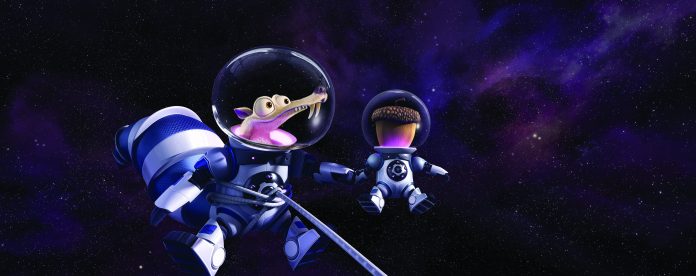
Once again Scrat sets the whole plot in motion chasing an acorn — this time in space.

Ice Age: Collision Course is the latest instalment of the Ice Age franchise. Directed by Mike Thurmeier and Galen T. Chu, this film follows Manny, Sid, Diego, and the rest of the Ice Age gang as they try to stop asteroids from colliding with and killing every animal on Earth. As usual, the impending disaster was caused by the acorn-obsessed, sabre-toothed squirrel, Scrat, who sets off into space in an abandoned alien ship and accidentally sends asteroids towards Earth.

Ice Age: Collision Course is a fun, visual experience that children will particularly enjoy. The film brought a colourful world to life that worked perfectly in 3D. This movie explored themes of love, family, and romance. Although the plot was inconsistent in some areas, the characters were witty and cheeky enough to keep the audience interested.

Audiences that were already familiar with the franchise could appreciate the progression of their favourite characters, from Manny to Scrat. Aside from the potential apocalypse, the characters had to deal with issues concerning love and family. From major familial changes to romantic failures, Ice Age: Collision Course tried to make their characters relatable to both adults and children.

Towards the end, the film felt rushed. There were too many distinct parts of the plot that had to come together in the end, and the climax was also quite cheesy. As a result, the film could potentially annoy any adults watching it. This Ice Age film may not be as good as the first instalment, but it’s entertaining enough. It would be easy for someone who has never watched any of the previous Ice Age films to follow and enjoy this one.

Ice Age: Collision Course works by adding fresh elements to its basic formula. Since the premise of the entire franchise is a group of prehistoric mammals trying to save their world from impending disaster, it fit the mould perfectly. This instalment is also infused with colour and current cultural references. Even though the plot is somewhat rushed and geared towards a younger audience, I would still recommend this movie for simple entertainment.

On the anxieties of a soon-to-be graduate

0

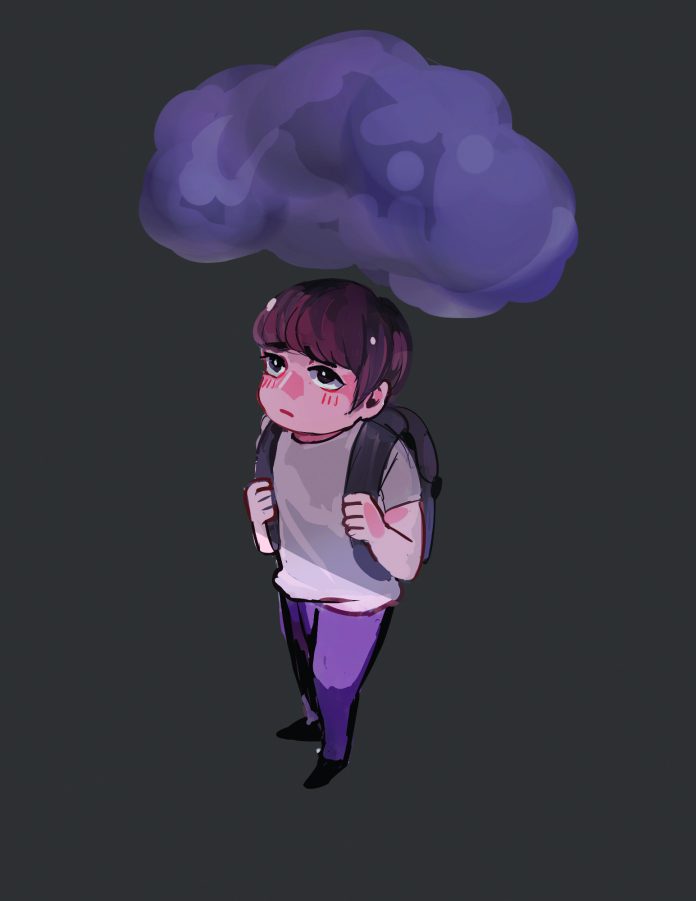
[dropcap]T[/dropcap]he end of university for me is nigh, and it feels like an impending disaster. For some reason, I assumed I would feel ready and excited for the future. Instead, my days have been filled with anxiety.

Will I find a decent job in my field? Will I find any decent job? What skills do I have? Am I qualified for anything? Have I just wasted the last four years of my life learning nothing?

Go to a good university and get a good job. That is the narrative I have always been fed. But as I look at job applications for the positions I’m interested in, all I see are qualifications that I don’t have. As my graduation date edges closer, my stress and fear increase.

Nobody wants to be that college graduate who couldn’t handle the ‘real world.’ Maybe I am an anomaly. Maybe I did not handle business the way I should have. Whenever I speak to other students like myself, the conversations highlight my anxiety and uncertainty. The underlying fear for me has consistently led to one question: “What if I’m not good enough?”

University is a security blanket. I know the classes I need and how to pass them. I am hitting something that society considers a major milestone. I am in an environment that nurtures my thoughts and ideas. I am the focus of a system. Once I leave that security blanket behind, I will no longer be nurtured. I will have to fight for my voice and my ideas to be heard. I will have to start from the bottom again.

So, if this is the true beginning of life — having to start a career from scratch — what happens when you do not know exactly what you want? You may have a vague idea of what you want your career to be. You may be overwhelmed by the many things you are interested in trying and the limited time you have to try them.

Personally, the former is the root of my anxiety. The reality is making itself clear: vague dreams do not help you. I am at a point where if I dream about doing something or working somewhere, I have to make a plan that is practical and reliable. I envy people who are sure of what they want and how to get it.

More than ever, I will have to face the kind of human being I really am. Will I take this fear and work hard to be a useful member of society? Will I fall into despair and let the uncertainty and anxiety rule my ability to dream? The truth I find may not be what I want to see, but this is all part of being an adult, I guess. It sucks.

Why I’m not jumping on the Pokémon Go bandwagon

0

[dropcap]O[/dropcap]ne of the fondest memories of my childhood is marathoning all 10 (at the time) Pokémon movies in a 24-hour period. I wept when Entei sacrificed himself for Molly and cheered when Latios and Latias rocketed over the city of Alto Mare. From the half-broken Pokémon Red cartridge I acquired at a garage sale to the Pokémon Diamond game that I bought two full guidebooks for, I have long been a Pokémon fan.

Now, Pokémon Go has swept over the world, but I remain skeptical. I have been in Europe for the past 11 days, so after hearing whispers of Pokémon mania sweeping Vancouver I thought that returning home would be like Jim waking up in 28 Days Later — the city barely recognizable. OK, so returning has not been that dramatic, but there has been a noticeable change. Many friends have downloaded the game, and I constantly see strangers chasing their next catch around campus.

Pokémon Go may require players to explore their surroundings in real life, but it would be a stretch to claim that this is actually encouraging social interaction or exploration.

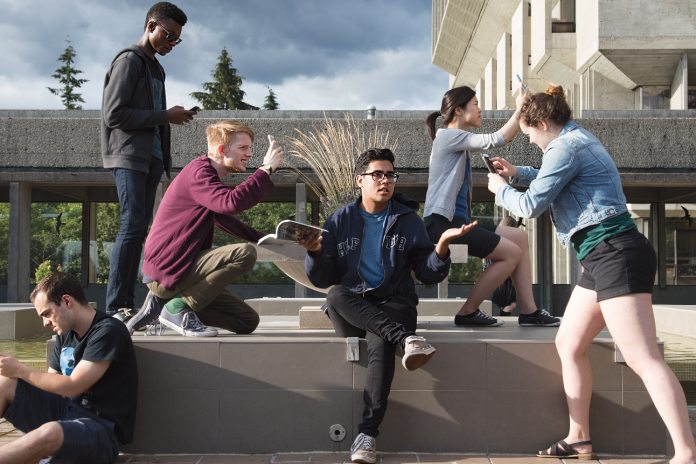
Look at any picture of one of the many Pokémon Go meetups currently happening around the world and you’ll see large gatherings of players. One might even think that this is a positive thing. But a group of 100 people staring blankly at their phones while ignoring each other does not constitute a ‘social’ experience.

Look at the outrageous headlines about Go players getting run over by cars, wandering onto private property, or even onto SkyTrain tracks in Vancouver. This doesn’t seem like the behaviour of those who are truly experiencing the world around them in an attentive or meaningful way.

The game uses the world as its game environment, without any regard for the real world’s complexities and dangers.

Instead of living in the real world, Go players are stuck behind yet another screen. Moreover, exploration in the game isn’t about exploring new areas or things, and even if that were to happen it wouldn’t be a direct consequence of the game.

There are simply too many dangers and risks associated with this game for it to be excused entirely. So far there have been numerous incidents of individuals getting hurt while playing Pokémon Go, which include a sexual assault during a Go meetup, and even a teenager being shot and killed near Guatemala City. The game’s PokéStop feature has been exploited in many cases, with a memorial site for a toddler, the US Holocaust Museum, and cemeteries attracting large groups of ‘trainers.’

The danger with an augmented reality game like Go is that it uses the world as its game environment, without any regard for the real world’s complexities, dangers, and sensitivities. This is far from the sanitized and picture-perfect lands of Sinnoh or Kanto.

So, where does the game go from here? Part of me believes that, like many crazes, the Pokémon Go fad will fizzle out in a couple of months. On the other hand, it is one of the most downloaded game apps of all time and may stay with us for a while yet. In this case, the developers need to improve the game to make it safer, and implement features that ensure players don’t engage in risky behaviour while playing. This will at least mitigate some of the harms I’ve mentioned.

I also wonder whether the game’s popularity is simply a sign of the times. While I err on the side of social networks making us more social rather than less, Go seems like an entirely different beast. Perhaps it may be time to accept that games like Go are the new status quo: technological innovations that promise social interaction, but instead provide only meaningless distractions.