Home Blog Page 80

Sick leave shouldn’t be up to professors

0
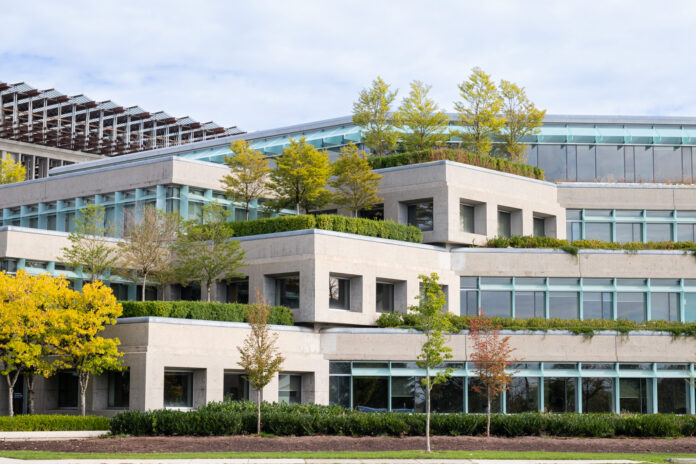
SFU’s Maggie Benson Centre as seen from the sidewalk outside
PHOTO: Emily Le / The Peak

By: Tam Nguyen, Staff Writer

Life is unpredictable and often beyond our control. As students, health conditions or personal emergencies can impact our ability to stay on top of courses. Things like contagious illnesses, mental health issues, or loved ones passing away can take a heavy toll on someone’s day-to-day functioning. There are all kinds of emergencies that can happen to anyone. It’s hard enough to go through these events, but it’s even worse that SFU students must rely on professors’ discretion if academic concessions are needed.

Academic concessions can include things like being excused for missing classes, or not completing exams and coursework. At SFU, they’re granted when “unexpected situations or circumstances prevent students from participating in course-related activities.” While this sounds like a good option, the system in place is not standardized. SFU states that “concessions are normally granted at the discretion of individual instructors” and “students should always speak to their instructor as a first step.” Some professors may be empathetic and grant academic concessions after you send them an email, but others will require you to go through bureaucratic hoops and get extensive documentation — which takes additional time and sometimes money — just to prove you’re incapable of keeping up with the course.

Some might suggest going through SFU’s Centre for Accessible Learning (CAL). After you register with them, SFU has a legal obligation to provide required accommodations. However, CAL doesn’t accommodate non-disability related matters such as personal or family emergencies. They also require extensive documentation and appointments to set up accommodations, which are still ultimately at the discretion of your disability advisor. Unlike accommodations, academic concessions are not bound by any laws or standardized process — and it’s often up to your professor to accept or deny your request. 

This leads to different outcomes for students depending on the professor, which is unfair. It’s also absurd that a student struggling with their physical or mental health may be asked to book an appointment with their physician and pay for a doctor’s note — something that isn’t covered by most insurance plans, and can cost up to $100. That is to assume students are even able to get in to see a doctor in a timely manner, and can afford a doctor’s note. It’s inhumane and no one deserves to go through this when they’re already in a bad place.

SFU needs to have a more standardized system for navigating unexpected health conditions and personal emergencies. Hiring additional trained staff to grant academic concessions in accordance with standardized guidelines would make more sense than expecting professors to make unqualified decisions. This would ensure fairer, more consistent outcomes for students, and also reduce the amount of work for professors. This solution is not new. For example, UofT has their ACORN Absence Declaration system to help students self-declare their academic consideration requests. UBC also has their self-declaration form to support academic concessions without documentation from doctors. Putting academic concessions at the discretion of individual professors does nothing but make matters worse for students who need support. 

BC Premier plans to expand involuntary care

0
This is a photo of David Eby speaking in front of a podium that says “StrongerBC for everyone.”
PHOTO: Province of British Columbia / Flickr

By: Sofia Chassomeris, News Writer

Content warning: brief mentions of substance use, mental health disorders, brain injuries, death, and involuntary detainment.

On September 15, BC Premier David Eby’s office released a statement detailing plans to open more involuntary long-term care facilities in the province. Individuals with severe mental health combined with substance use disorders, or brain injuries from drug poisioning, would be detained at the facilities under BC’s Mental Health Act (MHA). This comes amid BC’s eight-year opioid crisis, as those with substance use disorders are being detained under the MHA at increasingly high rates.

Involuntary treatment is not a new concept. Under BC’s MHA, courts and police have the authority to transport individuals to designated mental health facilities for involuntary assessments. There, a doctor or nurse practitioner can certify and detain them for involuntary treatment. 

The provincial government is currently “building more than 400 mental health beds at new and expanded hospitals.” The government also plans to include a “designated mental health unit” for at least one BC correctional centre to provide treatment to those held on remand or in custody. 

The BC Association of Social Workers (BCASW) raised concerns about infringing on people’s autonomy, urging the provincial government to take “an evidence-based approach” to involuntary treatment. The Peak interviewed Michael Crawford, president of the BCASW. Crawford said the government already has a “significant” amount of power under the MHA to enforce involuntary treatment, yet they are proposing an expansion of that. 

Crawford referred to the MHA’s existing policies as “archaic” and “badly in need of multiple revisions, if not a complete rewrite.” BC has the highest rate of involuntary detainments in Canada with around 20,000 individuals apprehended each year. According to the Canadian Mental Health Association BC (CMHA), “people with substance use disorder are the fastest growing population being detained.” The CMHA, in agreement with the BCASW, raised the concern that there is a “lack of evidence” in support of involuntary treatment’s efficacy for people with substance use disorders. Existing evidence “suggests that involuntary treatment leads to an increased risk of death due to drug poisoning upon release.”

“Relapse is a part of the problem with addiction,” Crawford said. “It happens, and you don’t punish people for relapsing, you double down on your efforts and continue to make those services available.” He stated that BC’s over-reliance on involuntary care and detention is a “reflection of our inability to deal with mental health problems earlier on.” 

Crawford also discussed social determinants of health like housing status, employment, and educational opportunities that impact a person’s quality of life. “That’s the investment that we need to make and that’s the investment that we have failed to make.”

He said the same for the government’s response to the toxic unregulated drug supply. Both BC’s Provincial Health Officer Dr. Bonnie Henry and former Chief Coroner Lisa Lapointe recommended expansions to the province’s safer supply programs as a meaningful way to prevent overdose deaths. Safer supply makes a “range of medications” accessible through prescription to “reduce the risk of drug toxicity death due to accessing the illicit drug supply.” However, the government rejected this recommendation in November 2023.

The BC Green Party proposed their plan for addressing BC’s toxic supply crisis, while the Conservative Party of BC plans to end the safer supply program. John Rustad, the Conservative leader, has criticized evidence-based harm reduction practices. 

“We’re not having a good debate about this proposal, and we won’t have one until after the election,” said Crawford. “You can see the split between harm reduction proponents and treatment proponents, and probably the best way forth is with both, not either or.

“We just need a government that really is determined to invest in people,” said Crawford. “Are we going to put our money into prisons, hospital beds, and policing, or are we going to do something that is much more meaningful?”

Increase in SFU students sleeping at Burnaby campus

0
This is a photo of an SFU student in West Mall Centre pretending to be sleeping for the photo.
PHOTO: Katelyn Connor / The Peak

Editor’s note (12/10/24): The Peak reached out to SFU for a statement but didn’t receive a response by the publication deadline. We failed to initially include this fact in the article when it was published.

By: Hailey Miller, Staff Writer

Over the past few months, the number of SFU students found sleeping at the SFU Burnaby campus has increased. The lack of affordability and accessibility to housing and Burnaby campus dorms are reported to be a major problem. 

The Peak spoke with SFSS president Emmanuel Adegboyega, who said he has “seen certain students living on campus and staying in academic buildings.” Housing in the Lower Mainland has skyrocketed to unaffordable amounts over the past few years. This year, Vancouver was ranked the third-least affordable housing market globally. “We see students not being able to afford to live on or off campus,” said Adegboyega. 

He said another part of this problem is the continual increases in tuition and other student fees, alongside the overall cost of living in BC. The cost of living has increased to almost $4,000 a month — nearly a 3% increase from the previous year. 

The SFSS president explained that those most impacted by the housing crisis are international and out-of-province students. Many international students aren’t guaranteed housing upon arrival to Canada for their studies, and out-of-province students don’t have the potential option of living with family or friends. Adegboyega said inaccessible and unaffordable housing only poses more challenges to studying in a new country. For one, international students have to maintain specific requirements, like working below a certain amount of hours, to continue studying at SFU.

The housing crisis is not only of concern to post-secondary students in BC, but all across Canada. While inflation drives up the costs of university operations and maintenance, universities respond by increasing student fees.

“When it comes to trying to find a safe space to live, it’s a challenge for students because having to meet those monthly rents is almost unsustainable for students if you compare the ratio of how much university students make and how much their total expenses add up to,” explained Adegboyega. 

In order to address the problem, he said SFU needs to do more to help alleviate the struggles of students. Adegboyega expressed that addressing the housing accessibility issue on campus would allow for better housing options. “That’s been the frontline of our advocacy to the university,” he said, on behalf of the SFSS.

A new housing project has been announced to increase the number of beds on the Burnaby campus by 445 in fall 2027. This would bring the total amount of beds on the mountain to about 4,445. Adegboyega stressed that this doesn’t begin to put a dent in the waitlist for on-campus housing, nor the housing crisis overall. He said this does nothing for students currently waiting for housing on campus because by fall 2027, most of these students will have graduated.

The SFSS is proposing for SFU and the provincial government to expand housing beyond Burnaby campus.

“The university cannot take on all the costs and the responsibilities that comes from having to ensure that students have a safe place to live in,” said Adegboyega. He explained that another option is getting Burnaby city council involved in rezoning areas surrounding the campus to include more student housing options. 

The SFSS is also proposing for SFU and the BC government to start company partnerships that will help students find housing. “When it comes to resources outside the university, I think there’s a lot of businesses that are very much invested in student housing — some of them non-profit. There are resources out there that are willing to partner and be a solution to the current problem.” 

The Peak reached out to SFU but did not receive a response by the publication deadline.

Need to Know, Need to Go: Latincouver

0
Large blue, orange, yellow, and red kites with elaborate curling patterns are flown in the sky by various people.
ILLUSTRATION: Den Kinanti / The Peak

By: Abigail Streifel, SFU Student

October is Latin American Heritage Month (LAHM), and with it comes plenty of great events. Latincouver’s LAHM Festival invites us to “discover the rich vibrancy of Latin culture” through a series of workshops, art exhibitions, and ceremonies. The festival, which runs from October 15 to November 3, includes many different events celebrating Latin American communities and traditions. There’s something for everyone here, and these are just a few of the free activities you won’t want to miss.

Cuban Salsa Class
Ocean Art Works, 1531 Johnston St., Vancouver
October 19, 11:00 a.m.12:00 p.m.
The festival offers many hands-on workshops and classes focused on multiple cultural art forms. For those who like to get moving, or who are interested in dance, Latincouver will be hosting a Cuban salsa class at Ocean Art Works. The class is open to everyone, no matter your experience level, so beginners are encouraged to attend! Come to this exciting event to learn the basics of salsa, meet some new friends, and appreciate Cuban music and dance. 

Make Your Own Barrilete from Guatemala 
Ocean Art Works, 1531 Johnston St., Vancouver
October 20, 1:00 p.m.2:00 p.m.
In parts of Guatemala, barriletes (giant kites) are an important part of the Festival de los Barriletes Gigantes, which honours the dead and celebrates the living in a unique way: with tremendous, colourful kites, some of which are “more than 40 feet in diameter.” These kites have been said to “create peace for the good spirits” when flown at cemeteries, allowing them to rest undisturbed. 

Literatura Indigena Latinoamericana Workshop 
Ocean Art Works, 1531 Johnston St., Vancouver
October 26, 3:00 p.m.4:00 p.m.
The Literatura Indigena Latinoamericana workshop focuses on the significance of Indigenous languages in Latin America. This workshop is perfect for anyone interested in literature, languages, or learning more about various cultures. It is led by Silvana Goldemberg, an “educator and award-winning author of over twenty books published in Spanish and English.” 

Day of the Dead Market
1500 Old Bridge St, Vancouver and Ocean Art Works, 1531 Johnston St., Vancouver
November 2 and 3, 11:00 a.m.8:00 p.m.
Celebrate Día de los Muertos with this festive market on Granville Island! The Day of the Dead honours deceased loved ones with offerings of food and personal items, festivals, visits to cemeteries, music, and decorations. Join in the celebration at this lively market which will feature food, live music performances, and workshops. You can also enjoy the art exhibitions, including a live mural painting “Harmony,” led by artist Efrain Orellana

Anti-SOGI protests outnumbered by counter-protests

0
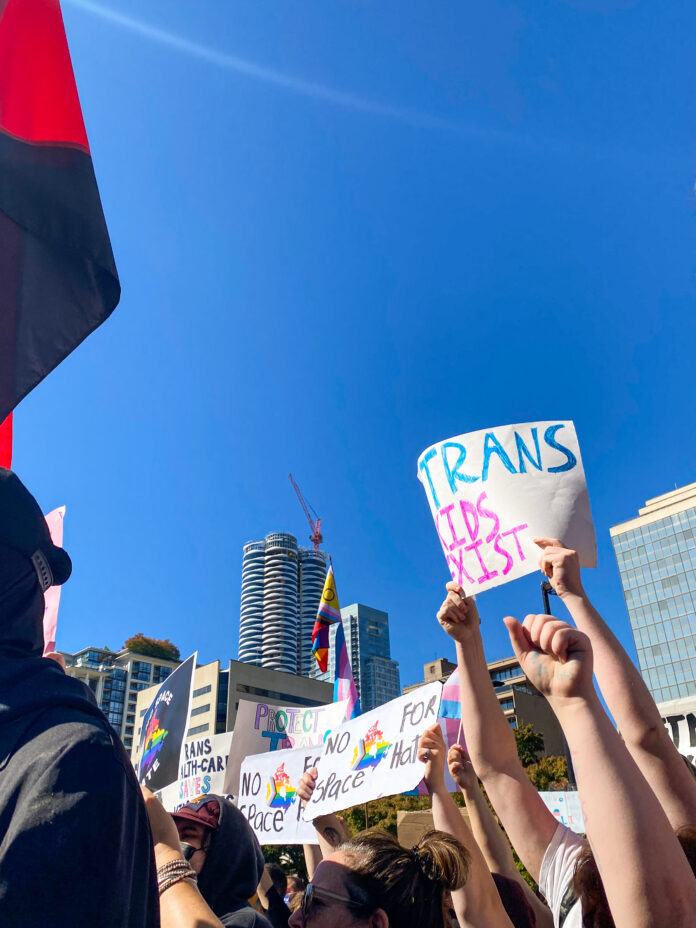
This is a photo of multiple pro-SOGI posters at a counter-protest in Vancouver. One reads, “TRANS KIDS EXIST.”
PHOTO: Gudrun Wai-Gunnarsson / The Peak

By: Sofia Chassomeris, News Writer

On September 20, parents against the addition of the Sexual Orientation and Gender Identity (SOGI) program to public schools organized “1 Million March 4 Children” protests across BC. Global News reported that the turnout for these protests was “sparse in comparison to previous years,” with more counter-protests that formed in opposition. 

The SOGI program describes itself as an “inclusive education initiative” that offers educators tools, resources, and strategies needed to address discrimination, foster inclusivity, and create welcoming classrooms. The resource package is not in the BC curriculum and its use is not mandated, but some classrooms use it. The provincial education ministry endorses the program.

Anti-SOGI protesters marched claiming to defend “parental rights” in deciding what their children learn. Wilbur Turner, 2SLGBTQIA+ rights advocate and president of Advocacy Canada, said opposition to SOGI was “spurred by misinformation” about the program’s role in public education. In 2023, the 1 Million March 4 Children drew “massive turnouts” from both anti-SOGI protestors and counter-protests across BC. This year, Global News reported “protests failed to materialize at all in Victoria or Vancouver.”

The SOGI program has been a point of contention since its introduction in 2016. The discussion has been raised in light of the upcoming provincial election, with the Conservative Party of BC campaigning for the removal of the SOGI program from classrooms. Leader John Rustad defended the protests, saying, “There’s no hate in that. The issue is around parental rights and parents being involved in their children’s education.”

The Vancouver Sun reported that SOGI “angered some parents who are religiously opposed or who argue it could encourage children to change genders.” The Peak interviewed Dr. Travers, professor of sociology at SFU. In response to parental concerns, Travers said, “Not having queer-inclusive and trans-inclusive education doesn’t make queer and trans students and people go away, it just makes us more miserable.” They said that the program provides instructors “guidance about how to create inclusive spaces for queer and trans students. 

“It doesn’t actually increase the number of [queer and trans] people, it just creates an environment where those who are queer and trans feel more comfortable being visible.”

The SOGI website has many resources for educators who are committed to fostering inclusivity. Travers explained the importance of the resources, saying, “We know that when queer and trans students don’t feel included in school spaces, they struggle with mental health issues, self-esteem, etc.” They also mentioned that creating safe school spaces “benefits all students,” citing a reduction in violence and bullying against 2SLGBTQIA+ students in schools where SOGI resources are used.

“People think you’re bringing sex and gender into the schools. No, we’re just interrupting the way that it normatively structures the institutions and curriculum,” they said, referencing the “taken-for-granted” normalization of heterosexuality that marginalizes queer and trans people. Heteronormativity assumes that all people are heterosexual and cisgender, which can exclude queer folks. 

In contrast to Rustad’s claim that there is “no hate” in anti-SOGI protests, Travers said “they’re anti-LGBT.” They spoke about the rise of politicians who are “using fear-mongering around queer and trans inclusion. 

“It’s a very deliberate creation of a moral panic that’s designed to help conservative politicians and movements seize state power in a way that is going to be very harsh for everyone,” said Travers. “All the advancements in social justice are on the table with these groups.”

The sweet potato in cupboard is my inspiration

0
C is holding a sweet potato in front of a white background. The sweet potato is sprouting and there are two leaves growing out of it.
PHOTO: C Icart / The Peak

By: C Icart, Humour Editor

They say you shouldn’t meet your heroes, but some of us didn’t have a choice. Some of us met our heroes way before they became our heroes. We met them at the grocery store in the produce aisle. They were chilling with all the other sweet potatoes, and taking a sweet potato home is a pretty normal thing to do when you’re at the grocery store. So, we brought the little spud home even though we don’t even really like sweet potatoes and stored it in our cupboard for the day we wake up with completely different taste buds. 

They say all the cells in your body get replaced every seven years. We haven’t had the sweet potato for seven years, so we still don’t like sweet potatoes because we still don’t have completely different taste buds. But that little orange trooper is not deterred by the fact that we’ve abandoned them. And one day, while we’re opening the cupboard to retrieve a potato that actually tastes good — russet — we notice the little guy has grown a leaf. 

They say Tupac wrote “the rose that grew from concrete” as a metaphor, but the sweet potato growing in our cupboard was real. It had managed to convince itself it was underground and decided it was time to be a parent. This entire time, we thought we needed to get our finances in order to do that, but our sweet potato has inspired us to jump in head first, no matter how shallow the pool is. 

All this to say, even if you’re a weird vegetable no one likes, even if you get deserted in the back of a dark cabinet while your owner hopes you disappear, you can grow! This will not result in your owner planting you, BUT at least they’ll take a picture. So, don’t forget to smile. Be fearless, be brave, be sweet potato. 

Highlighting BC’s Paralympians

0
A man in a Canadian uniform tearfully shakes hands with a woman. Hanging from his shoulders is a gold medal.
PHOTO: Courtesy of @cdnparalympics on Instagram

By: Hailey Miller, Staff Writer

39 Paralympians with ties to BC have just returned home from a successful trip to the Paris 2024 Paralympics. Riding off the high of the most prestigious world stage in sport — and hungry for competition — 11 of these BC-based Paralympians scooped up medals. Altogether, 126 paralympic athletes from the Canadian national team were named to the Paris 2024 games. Team Canada returned home with 29 medals — 10 gold, nine silver, and 10 bronze — tied with Rio 2016 as the most hardware won by Canadian Paralympians at any summer Paralympics to date. 

The heated competition buzzed with records made in para swimming, athletics, cycling, wheelchair basketball, boccia, and more. Canadian Paralympians competed in 18 different sports across countless events in the City of Love . . . for sport. Among those, BC-based athletes made up 31% of the team roster and 45% of the national team winnings, respectively.

The Paralympics are held alongside the Olympics for athletes with physical and intellectual disabilities, as well as visual impairments. In order to accommodate various levels of ability, different classifications are implemented for each sport to allow for fair competition. Each athlete is evaluated per classification type for each sport and event they compete in. 

This year’s Paralympics marked the first time that these Canadian athletes were paid for their podium placements — something that has typically only been done for the Olympics. Paralympians are competitive athletes too, and deserve to be paid for their podium placings and hard work as they are just as worthy as any competitive athlete in sport.

Greg Stewart from Kamloops, who competes in para athletics, launched his way to a gold medal in shot put at the 2024 games. He stood on top of the podium in his second visit to the Paralympics, following a personal best silver at the Para Athletics World Championships this past May. He’s also previously competed internationally in sitting volleyball.

Danielle Ellis from White Rock, captain of the Canadian para sitting volleyball team, served her way to a bronze medal alongside her teammates. Paris was Ellis’ third Paralympic Games, and her first time placing on the podium to take hardware home. She’s been a member of the national team since 2009.

Para swimmer Nicholas Bennett, from Parksville, made waves in the pool for a total of three medals — two gold and one silver — alongside breaking three world records in the 100m breaststroke, 200 IM (individual medley), and 200m freestyle events. This was his second Paralympic appearance.

From West Vancouver, para cyclist Nathan Clement pedalled his way to silver on his tricycle. Paris was his second Paralympic games, following his debut at Rio in 2016 (when he was a para swimmer at the time) and a hiatus from Tokyo. He has a plethora of world champion winnings and pan-American titles under his belt for both para cycling and para swimming. Clement won multiple bronze medals at world championships throughout 2023 and 2024 before upgrading his hardware in Paris.

Congratulations to all the athletes for one of the most successful Paralympic Games in Canadian history to date. May you enjoy your well-deserved moments of celebration and rejuvenation before hitting the ground running — or rolling, swimming, walking, serving, and cycling — once again for the next competitions on the world stage. Until then, we’ll be cheering you on as you prepare for Los Angeles 2028.

SFU Student Bulletin: Week of October 1 – 6

0
Graphic that reads “Student updates.”
ILLUSTRATION: Courtesy of The Peak

By: Hana Hoffman, Peak Associate

Announcements

  • OCTOBER BOO-PASS NOW AVAILABLE — This spooky season, all SFU students are eligible for the limited-time BOO-Pass, which allows access to all haunted areas of the old SFU buildings. Go on, admire SFU’s boo-talist architecture, but beware of what you might see if you look too closely (as-boos-tos). Boogattis driven by ghosts will also be available in place of the campus shuttle, but there is no guarantee of where you’ll end up. 
  • CROWDED BUSES — Be sure to do your morning stretches and wear comfortable shoes to stand in if you’re taking transit because you probably won’t find a seat. We also recommend bringing gloves with a good grip so you can safely hold on to the handles during the bumpy ride or lugging a foldable lawn chair so you’ll always have your own seat reserved.

Important dates this month:

Opportunities

  • JOB POSITION AVAILABLE — We are now hiring for the sky-watching position at SFU! Since it will gradually get darker at earlier times, your role is to watch the sky every evening to see exactly what time the sun sets, then share the outcome with the SFU community. With that, students will know exactly what time to go outside the next evening to take the perfect sunset pictures to post on Instagram! And, in contrast to boring jobs out there with all that paperwork and direct deposit stuff, this position will pay you in sunset-coloured bubble teas! Deadline to submit application: National Fried Scallops Day.
  • WE NEED S’MORE S’MORE TUTORS — SFU s’moreology course offerings are struggling to keep up with the rising demand for s’more research classes. The National Institute of S’mores Committee is hiring immediately for s’more tutors to support the education of the next generation of s’moreologists who will add much-needed capacity to BC’s s’mores production system. Applications open until position filled. Eligibility: 
  1. Must have completed the following courses with a grade of 86% or higher.
  • S’more History & Evolution 101
  • Impact of S’more Availability on University Student Life 120
  • S’more Building Techniques 201
  • Chocolate, Marshmallow, and Graham Cracker Intensive Flavour Study 235

2. Must have a passion for s’more development and have conducted a minimum of 15             lab experiments

      3. Work experience as a s’more chef is an asset

Resources

  • SFU STRATEGY TO HELP PREPARE STUDENTS FOR UPCOMING EXAMS – As announced last week, final exams have been rescheduled from December 5–17 to October 16–23, which is coming up soon. We ask that students get off their Nintendo and switch to a win-tendo mindset to try achieving the highest grades possible. In preparation for exam week, we will double all lecture and tutorial durations to get that extra study time in. If your courses overlap and you can’t be in two classrooms at once, then you clearly need to catch up on your multitasking skills. Good luck!
  • For anyone who is still mentally recovering from the overwhelming crowds of young, energetic first-year students during Welcome Day, here is a 30 minute soothing meditation video to eliminate fatigue and stress and help you regain your inner peace. 

Oh, what a September to remember.

Jiaozi.com is committed to creating more than just delicious dumplings

0
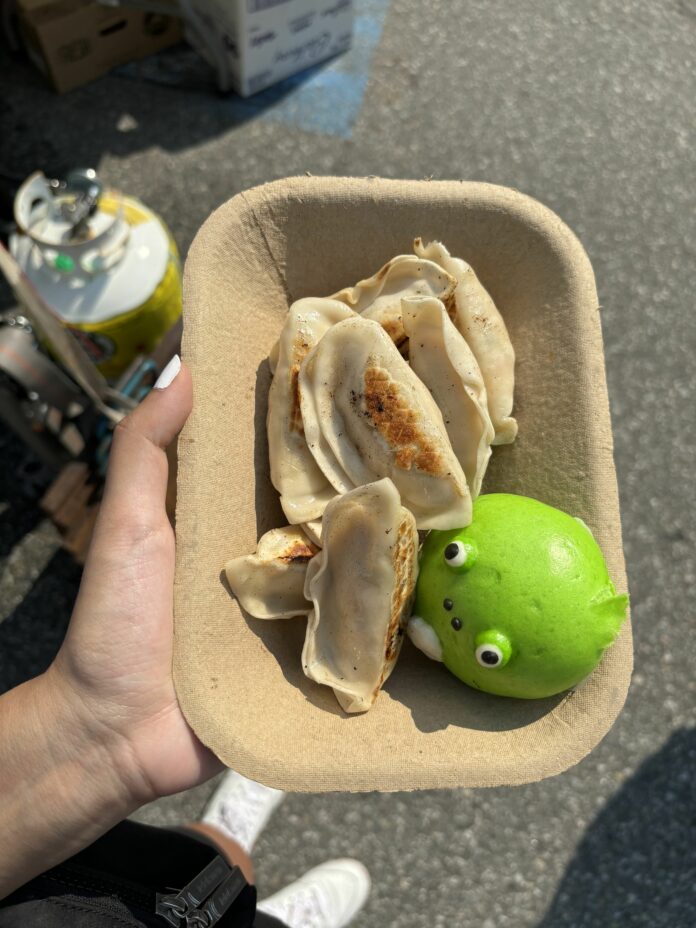
A container filled with pan-fried dumplings and a green frog bun.
PHOTO: Izzy Cheung / The Peak

By: Izzy Cheung, Arts & Culture Editor

This summer, Coquitlam’s Town Centre Park hosted the 3rd annual BC Dumpling Festival. As an avid foodie, I went to check out this festival with my family expecting to find more luscious local eateries and mouth-watering treats. However, as I perused the colourful stations, I came across a story with a flavour even deeper than what was provided by their plump chicken Jiaozi, also known as potstickers. 

PHOTO: Izzy Cheung / The Peak

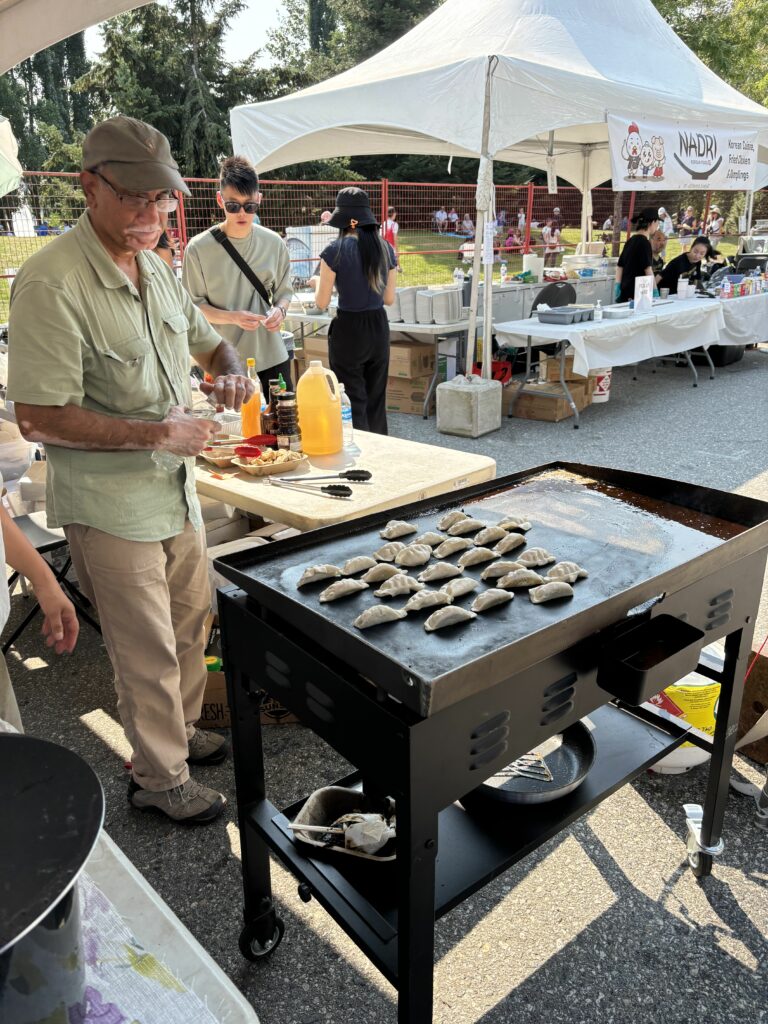
With a bright orange banner decorated with adorable characters in bun-like forms, Jiaozi.com stuck out for more reasons than just their décor. Situated under their tent was a flat-top grill, where a swarm of potstickers could be seen steaming up a storm, their smell wafting throughout the festival grounds. Drawn in by the smell of yummy steamed dumplings and the smiling aunties who worked the till, I pulled out my phone to research the vendors. 

PHOTO: Izzy Cheung / The Peak

Jiaozi (jau-zee) is a Chinese staple referring to dumplings that have become most prevalent around the Lunar New Year or Mid-Autumn Festival. The pronunciation of this dish is similar to a phrase meaning “transition from old to new,” which has made it a more popular dish to be sampled during these holidays. They’re typically filled with a type of ground meat and served with a sauce filled with a slight tang of vinegar. It’s a simple dish that Jiaozi.com executes with an artfully crafted story. 

On their website, Jiaozi.com’s mission statement is clear — and that’s “to raise awareness of anti-Asian racist discrimination and violent attacks on seniors.” They do this by making bao, with their proceeds going towards East Asian elders who were affected by racially-motivated attacks that occurred on April 11, 2021, and the Canadian Caring Community Alliance. Their social media and online presence are permeated by eye-opening stories from East Asian seniors about being attacked. Not everything is negative, however, as they also share recaps of some of their volunteering events, a truly tight-knit community. 

PHOTO: Izzy Cheung / The Peak

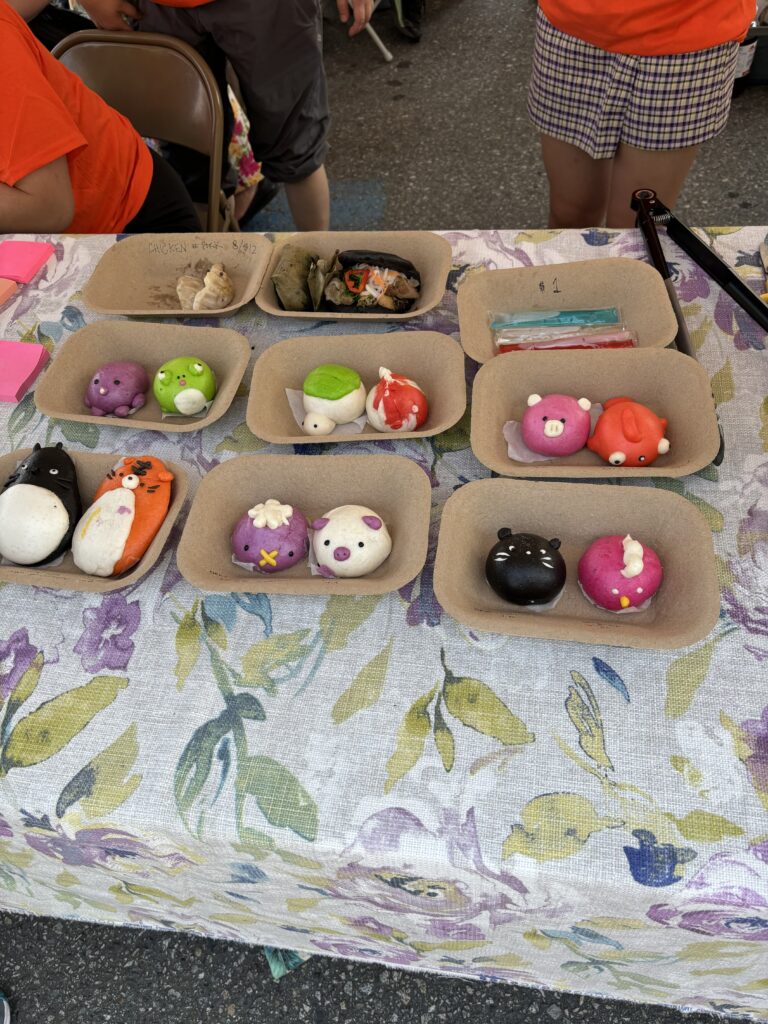
I made sure to order some of Jiaozi.com’s specialty — their jiaozi, of course! — as well as one of their adorable character buns filled with red bean paste. They had a small display of each of their character baos next to the till, with the designs ranging from cute chickens to Pokémon like Drifblim. The food came out quickly despite the heat from the beating sun and the small line ahead of me. 

PHOTO: Izzy Cheung / The Peak

Once I collected my dumplings, my family and I took a seat under the shade of a nearby tree. We were going to grab some sauce for the dumplings, but took a bite out of one and decided that it didn’t even need it. The jiaozi were packed with flavour and filling. The ground chicken was salty without being too overpowering, and the vegetables inside were still slightly crunchy. Every   corner of the dumpling had filling in it — there were no open pockets of just the doughy wrapper. Our red bean bao came in the shape of a wide-eyed frog, wrapping the paste in a soft yet warm hug.  

While Jiaozi.com’s dumplings are definitely delicious, there’s much more to this bao shop than what meets the eye. Their dedication to amplifying the voices and stories of East Asian seniors in Canada is admirable, and the fact that they do so while making dishes that these elders perfected in their respective countries acts as a tender love song to the growth that emerges from each generation. Elderly immigrants have helped us first-and-second generation immigrants establish our roots in Canada, and it’s heartwarming to see the favour returned. 

Check out @jiaozi_official on Instagram to see which events they’ll be at next! 

BC United withdrawing isn’t the worst thing

0
A British Columbia flag on a flagpole
PHOTO: Dennis Sylvester Hurd / Flickr

By: Yasmin Hassan, Staff Writer

On August 28, the BC United Party (formerly known as the BC Liberal Party) pulled out of the election and endorsed the BC Conservatives. While it may have shocked some, the indecisive nature of the party led to this result. BC United’s moral inconsistency shows they lack commitment and were better off pulling out. Their idea to float members of the party over to the Conservatives and publicly endorse them calls into question the integrity of the values they claim to uphold. 

In May, BC United Leader Kevin Falcon said he would not merge with the Conservatives because of the timing and the extremist ideals of Conservative candidates. Even with United’s promises to hire back unvaccinated workers, Falcon stated he still “can’t merge with a party that has candidates that equate vaccinations with Nazism or apartheid.” Why backtrack on this claim weeks before the election? Is this Falcon’s way of going with the lesser of two miseries to him, and compromising his so-called morals in favour of a chance at toppling the NDP? Or is this John Rustad and Falcon coming together and hand-picking a team of favourable MLA’s as stated in his letter? 

The BC United rebranding was the death knell of this party — even United inadvertently admitted this when they sought to add their old name onto voting ballots. First, they attempted to distance themselves from liberalism with their name change, then they openly endorsed their Conservative opponents. Catering toward both sides of the isle feels like blatant pandering. It makes you wonder how BC United ever expected to be perceived as anything but BC Conservatives Lite. And the embarrassment of an announcement letter while praising someone you kicked off the Liberal caucus two years ago for climate denialism? 

The displacement of members for “strategic advantage” by merging with the Conservatives further undermines the party’s integrity. It just leaves a bad taste in the mouth when a party so openly breaks trust with their supporters, effectively discarding all the party members’ work to build relationships with their riding. And what does it say about the Conservatives that they were so ready to take United members under their wing? What is even the difference between the two parties?

It’s beyond important to vote. If you care about the well-being of yourself and others, putting in your vote should be a high priority. You don’t have to know everything about these parties and their policies, but doing what you can to educate yourself is crucial. Although it may seem daunting, there are resources that break down the general ideas of each party, like we did at The Peak. Talking with peers, reading a variety of information from party websites and political analysts, and researching what your local riding is standing for can make a difference. The polls are closer than ever right now, so BC residents need to prioritize getting their vote in. Your vote isn’t just a paper ballot; it’s the power to shape your future — don’t let someone else make that decision for you.