Home Blog Page 782

Dick pics don’t make for a good first impression

0

Recently, I made a short-lived decision to give the dating apps another go. I’d forgotten about one of the big things that drove me away last time: dick pics as a greeting. I’d like to say this is a “gay guy thing,” except I hear from friends on other apps that it’s not an exclusive phenomenon. When did it become OK to show your penis as a greeting on dating apps, with no warning?

I’m a gay man in university, I am sexually active, and I feel very little shame. Nonetheless, sending me a shot of your Mr. Willie is not going to get you anything but blocked.

I know male queer culture is known and commented on for its promiscuity. There are many factors that may tie into that: the fact that many still have to be closeted, which makes coming out akin to being a kid in a candy store; the relative anonymity of the Internet which lets people say things without fear of consequence; or the fact that sex has played a big part in the gay and civil rights movements.

But that doesn’t have to translate into a dick pic for a hello. Apps like Grindr, the biggest culprit, have a certain element of “this is what it is; people are on here to hook up” to it. Maybe how I use the app challenges the status quo a bit, but still, I question why it’s OK on these apps.

Jack’d did a great example almost two years ago about what it would look like if behaviour on gay dating apps were taken to real life. Grindr and apps like it are like modern-day versions of bathrooms from the early days of hiding your sexuality in the ‘50s, ‘60s, and ‘70s. Guys would go in knowing they would find a hookup or glory hole. You don’t really go in blind or ignorant.

I’m no angel, so I’m sure there’s an NSA file somewhere with my pics in it too. I also appreciate that dating apps are like TV, in that if I don’t like what I’m seeing, I can always change the channel — or in this case, delete the app.

Nor am I coming from some moral high ground saying I don’t agree with hookups or being overtly physical. It may not be for me, but that doesn’t mean it doesn’t work for others. Yet that also doesn’t excuse the pic as a greeting, or without request.

Feel free to send and share sexual pics — there are some relationships where that’s acceptable for everyone involved, and even some fetishes and kinks that rely on it, and that’s OK. What isn’t appropriate is using a dick to start a conversation with a stranger, no matter how “horned up” you may be. Instead, say “Hi,” comment on my profile, and above all, ask me before you send one.

In the end, my foray into the apps only lasted a couple weeks. Jack’d said, “Don’t be an #apphole” — unfortunately, there were still too many of those to avoid.

Early holiday celebrations kill my vibe

0

I believe you when you say you love Christmas. You love the lights on the trees, Mariah Carey’s “All I Want for Christmas is You,” and Starbucks starting to smell like eggnog. Even as the temperatures drop, you feel warmer on the inside knowing that another year is ending.

December becomes a stress-buster when you realize that you’ve survived yet another year. It’s also the time of inconsequential reflection on how you’ve grown, and a time to comfortably decide on your clichéd New Year’s resolutions. However, the real clichés are the days leading up to the holidays, stuffed fit to burst with decorations and celebrations.

The lights on a million Hastings Street avenues, stocking caps stuck on most stores, and music that sounds like it belongs in a hotel lobby — all appearing a month or more prior to Christmas. All of it makes me say “WYD?” to every Santa lover. Maybe that seems self-contradictory, but hear me out.

If the holidays are a month away, you might want to start thinking about it approximately two weeks before. Little delights are defined by their short-lived nature (unless you’re going to Los Cabos — then you can think about it all year, boo!). Initiating celebrations way before their time sucks the charm and excitement out of the upcoming occasion.

December for me started becoming a banal, mundane month every year, because the decorations are a constant reminder that life moves in preset patterns, whether or not you’re ready to move on to the next stage.  With your surroundings covered in aggressively cheery hues of red, green, and gold, you feel constantly attacked and out of place for having gloomy days.

The environment demands that you feel ecstatic for an entire month, but it doesn’t really work that way. It’s just forced happiness, which raises questions about how our society celebrates. That brings me to one particular word I have for all you Santa lovers, accusatory though you might find it: authenticity.

Christmas is for families, for sitting by the fire while you drink some hot chocolate, for everything that is genuine. Yet our beloved malls take advantage of it to allure and manipulate us. They need you to give in to their consumerism and start contemplating what gifts you’re giving and getting two to three months before the occasion — all while forgetting that your mother would have appreciated you calling her twice a week to talk to her far more than she would a Tag Heuer watch this year.

In the glitz and glamour of what Christmas is portrayed to be, we ignore the real essence of why we celebrate it in the first place. We start to associate this festivity with materialist notions, and I’ve seen an overwhelming number of holiday interactions based around luxurious indulgence and nothing else.

The magnificent exhibition of lights in your front lawn, laid well in advance, becomes a more common way to communicate with your neighbours than simply knocking on their door. But there’s more to the holidays than that showiness.

Why I love being in a sorority

0

I am a sorority girl.

I bet when most people read that sentence, they think I go out and party a lot, or that I spend all my time making girls’ lives miserable to pressure them into being a part of my organization. This is how movies depict sorority life, and they couldn’t be more wrong.

When one of my best friends approached me back in January about joining SFU’s newest sorority, Alpha Pi Phi, I was skeptical. It wasn’t a subject anyone had broached with me before, and the stereotypes that we are all familiar with began to play out in my mind; I thought to myself that this would be one of the last organizations that I would consider associating myself with. I am never one to judge based on assumptions, though, so I went to a rush (recruitment) event, despite my reservations.

When I first met the women who would eventually become my sisters, what struck me the most was how crazy, genuine, and down-to-earth they were. I bonded with one girl, who later became my mentor, over books and The Walking Dead, and found out that the sorority’s president enjoyed cracking groan-worthy puns just as much as I did. I was immediately comfortable around all of them, and felt that I didn’t need to be anyone other than myself.

That feeling has never gone away. I study with my sisters, volunteer with them, and more recently, I’ve taken on the leadership role of philanthropy chair for the organization. Yes, there are parties sometimes, but being as attached to Netflix as I am, I prefer staying at home and my sisters don’t judge me for it. Best of all, they are among my closest friends, and I know they’ll always have my back.

There are currently three active sororities at SFU: Kappa Beta Gamma, Delta Alpha Theta, and the one I’m part of, Alpha Pi Phi. There are also three fraternities: Phi Kappa Pi, Delta Kappa Epsilon, and Omega Theta Delta. Two additional fraternities, Alpha Kappa Psi and Phi Delta Epsilon, are co-ed business-based organizations designed for members to develop their professional networking skills, with the latter more specifically catering toward people who hope to get into medical school.

The variety of organizations that comprise SFU’s Greek life makes for one of the most unique and all-encompassing experiences that a student could have at this university. It provides one with a means to grow professionally while developing amazing friendships. There are plenty of chances for someone to find their fit, just like how I have found mine.

So I am a sorority girl — a studious, Netflix-addicted, pun-loving sorority girl. I will continue to wear my Greek letters with pride, and I’ll forever be “Greekful” for all that sorority life has given me.

Making a Murderer evens the score on a rigged justice system

0

In 2007, Brendan Dassey was sentenced to life in prison. His case garnered renewed public attention a decade later, due to the Netflix series Making a Murderer. State investigators interrogated the then-minor without a lawyer present, and falsely offered him leniency for a confession. The misconduct revealed by the show led a US magistrate to order Dassey’s conditional release, though his future is still uncertain with a federal appeals court in Chicago blocking his immediate release.

The Dassey case seems to be, prima facie, a case of gross impropriety from the investigators. But consider this: would his trial have gone differently if he was born with a silver spoon, lived in a coastal liberal city instead of coming from a small county in rural Wisconsin, or had a famous last name?  

Prestige and wealth tilt the justice system’s scales. Such parameters determine the quality, quantity, and experience of the legal team fighting your case — which, in turn, affects your case’s strength. Your kitty’s size also decides how long you’ll be able to appeal an unfavourable verdict. If he’d had the resources, Dassey could have appealed to a higher court, and challenged his verdict years sooner.

We’ve normalized socio-economic inequality as part of the current justice system. In light of that, I don’t mind the spotlight of mercy being placed on someone like Dassey for once. He lost a critical decade of his life being incarcerated for a crime he may not have been guilty of, in part because he didn’t have the right kind of financial or social standing.

Making a Murderer had an imperative role to play in his corrective verdict. That show converted two data points on US prison statistics to two real people with faces and families, while shining a light on the errors of a much-revered system. The public interest that Making a Murderer piqued placed considerable pressure on the magistrate to review Dassey’s case.

The public prosecutor in this case, Ken Kratz, argued that the documentary “presents misinformation” and accused its creators of having an “agenda.” The creators responded by stating that they had included the key points from the other side. Their lawyer added that “no one’s going to watch a 600-hour movie of gavel-to-gavel, unedited coverage of a trial.”

With documentaries such as this, there’s always going to be someone crying foul, and they could be right. These documentaries are heavily chewed down to fit their allotted show time and appeal to their audience. Yet that doesn’t negate the purposes of producing these shows in the first place, or the role they’ve played in drawing attention to injustice.

It may be tempting to take them as gospel truths, because that way, there’s no thinking needed to form an opinion. It may be equally tempting to disregard them entirely as a waste of time. But the truth lies somewhere in between.

The real lesson is this: don’t blindly follow what you’re given without doing further research. Be cautious about how much you buy into this kind of media, but at the same time, don’t discount its ability to resolve the injustices caused by gaps in economic class.

In other words, question what you know, and be conscious of what you don’t know. Justitia can occasionally have blinkers on, her scales slanted by the weight of money and influence, but she can be corrected — by we, the people.

Kinder Morgan pipeline project approved by Justin Trudeau, cabinet

2

Prime Minister Justin Trudeau announced today the approval of the controversial Trans Mountain pipeline expansion, set to triple the oil transported to the Westridge terminal at the base of Burnaby mountain.

The National Energy Board recommended the project for approval in May this year, under 157 conditions.

The decision was expected following an announcement earlier this month that the Federal Government would be providing $1.5 billion to improve oil spill responses on Canada’s coasts. Trudeau announced that the Line 3 pipeline replacement in Alberta was also approved, and the Northern Gateway project on BC’s coast was rejected.

At a press conference, Trudeau explained that after “rigorous consultation and examination of the evidence,” the government felt that their decision was “safe, responsible, and in the interest of all Canadians.” When asked by journalists about the groups that opposed the pipeline in BC, Trudeau said in French that “it is difficult to achieve consensus on any matter.”

Speaking to the near future of the tar sands, Trudeau said that “the fact is, oil sands production is going to increase in the coming years.” He went on to explain that transporting oil by pipeline is safer and more efficient than transporting it by rail.

The $6.8 billion Trans Mountain pipeline expansion has been a controversial topic in BC, drawing thousands of protesters to Vancouver City hall earlier this month. Opponents to the pipeline include Vancouver Mayor Gregor Robertson, Burnaby Mayor Derek Corrigan, the Simon Fraser Student Society, and many environmental, community, and Indigenous groups.

Simon Fraser University released a report earlier this week, examining the safety risks that would accompany the pipeline expansion and the corresponding tripling in size of the oil tank farm at the base of Burnaby Mountain. The report found that the expansion to the tank farm would increase safety risks to SFU, particularly due to the risk of fire and that the new oil tanks would be located closer to roadways. The Burnaby Fire Department has previously raised the same safety concerns.

SFU president Andrew Petter sent an email to the university yesterday community citing this report. In his email, he stated “Any increase in risks to the health and safety of the SFU community resulting from this expansion is unacceptable to the University.”

Reaction to the announcement has been polarizing, with Mayor Robertson releasing a statement saying that he was “disappointed with today’s decision.” He added that he would “keep speaking out against this pipeline expansion that doesn’t make sense for our economic or environmental future.”

Green Party Leader Elizabeth May told Huffington Post Canada just before the announcement that she was “more than prepared to [. . .] be arrested and go to jail” over the project.

An emergency protest against the expansion is taking place at 5 p.m. today starting at CBC Vancouver (700 Hamilton Street)

Tanks farms, pipelines, and the safety of the SFU community

3

Hidden in plain sight

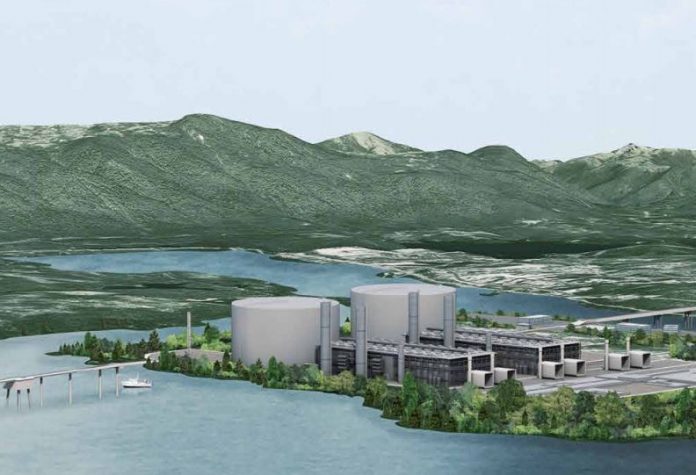
Upon starting your post-secondary studies at Simon Fraser University’s Burnaby campus, you might not notice at first that it is located above a tank farm. It is tucked away just below the Gaglardi Way and Hastings Street exits, where 13 barrels hold approximately 1.685 million barrels of crude oil and other refinements for Kinder Morgan’s Trans Mountain pipeline system.

What you might be aware of is that Kinder Morgan wishes to expand their pipeline. This expansion includes an additional 13 tanks, to double the Burnaby tank farm if the federal government rules to approve the expansion on December 19. The proposal produced by Kinder Morgan intends on building a $6.8 billion pipeline that will carry diluted bitumen — a kind of crude oil which has been diluted for transport — from Alberta to British Columbia.

Recently, The Peak reported that the Burnaby tank farm poses a potential safety risk to students and the Burnaby Mountain community if the controversial expansion is built. Grayson Barke, council representative for the Environmental Resource Student Union, explained “the risk of something terrible happening will go from one in one million to one in 2,000 after this expansion is done.”

Indeed, many residents, faculty, and students have been opposed to the pipeline expansion plan. Many individuals are asserting that the SFU community should be made more of aware of the potential hazards if the pipeline is expanded.

Stephen Collis, SFU English professor, protester, and a recipient of the Nora and Ted Sterling Prize in Support of Controversy award, explained that initially “at the global end of things I was deeply concerned about climate change, I take very seriously what scientists are saying. We literally cannot build a pipeline right now and still say you are doing something about climate change.”

Collis was previously threatened with legal action by Kinder Morgan during the 2014 protests on Burnaby Mountain.

Collis didn’t initially oppose the pipeline due to safety concerns at SFU; rather, they shifted towards that. “Once you start hearing reports from the Burnaby Fire Department and then [SFU] that there is no real escape plan if there is a serious fire, and there is a real chance there could be a fire, that’s all super alarming.” He added that the safety issue “is a bit under the radar.”

As a member of the Burnaby Mountain community and activist for opposing the Kinder Morgan pipeline, Ann Jarrell expressed her concerns about the lack of public consultation regarding safety. “The problem is, we don’t want to scare people,” she said. “But they need to know that this is happening so we can prevent it because it’s so scary.”

Looking at potential risks for students and Burnaby Mountain residents

The most recent report from the Burnaby Fire Department in the Trans Mountain Tank Farm Tactical Risk Analysis in 2015 outlined that the “Burnaby Mountain terminal is not the appropriate location for the expansion.” The report broke down the risks which further endanger the SFU community and Burnaby Mountain residents.

In expanding the pipeline, the possibility of exposure to sulphur-based gases will increase, exposing many residential areas where “Smoke outfalls from fire event may contain sulphur dioxide (SO2), in which KMC [Kinder Morgan Canada] analysis shows a potential health concern could be felt up to 5.2 km downwind.”

The chemicals which students and residents may be exposed to could increase the likelihood of asthma and cardiovascular illness for those living in the area. In the longer term, the potential effects are as yet undetermined, but could include an increased likelihood of developing cancer, the report explained.

In an interview with The Peak, Barke explained that he heard complaints during hearings in regards to the air quality surrounding the tank farm. “I heard about a dozen people say that just when they have been walking around, just being in that area, they are smelling strong gasoline fumes, to the point where it’s suffocating and they have to move out of the area.”

Jarrell, a resident of the UniverCity condo complex, has submitted a 10-page document to the National Energy Board as a commentator. She expressed that the tank farm was of particular concern because she wasn’t even aware that the tank farm was located on Burnaby Mountain until she had some breathing problems. She explained to The Peak, “I was driving up Burnaby Mountain one evening in October and I suddenly started coughing violently and  momentarily lost control of my car”.

Not only is the SFU community likely to experience an increase in health-related concerns if the pipeline is approved, but the Burnaby Fire Department has also reported increased possibility of tank farm “boilover” leading to forest fire and toxic smoke plumes.

A major concern for students is the contents of the new oil mixture that will be stored at the tank farm. In the November 1 report from the Ministerial Panel for the Trans Mountain Expansion Project, “presenters reported that the mixture is much more explosive than crude oil and more difficult to clean up when it spills.” There is also increased likelihood of boilover and fire due to the explosive nature of the the mixture that will be in the tanks on Burnaby Mountain.

Jarrell also pointed to an ongoing issue of the land on which Simon Fraser University is located: “the possibility of an earthquake.” She cited that “the fire department describes it as located on an unstable mountain slope susceptible in an earthquake area.” She added that she has researched and tracked that “there are 400 earthquakes or so in BC, so far, this year.”

Jarrell also stressed that the risk assessment previously conducted by McCutcheon and Associates for Kinder Morgan describing the Burnaby Mountain area is thoroughly inaccurate.

She mentioned a specific part of the Risk Assessment Final Report that states  “[. . .] the probability of an incident happening is low enough when compared to the acceptable level of risk identified by the MIACC [Major Industrial Accidents Council of Canada]. This probability equates to [. . .] up to about 86–224 metres from the dike wall for a fully involved dike fire, which is acceptable for an industrial area.”

However, Jarrell said “this is not an industrial area. There are residents in this area on a regular basis. I’m not sure if the Forest Grove Elementary School is within the 86–224 metre area.” Not to mention the tens of thousands of students who are on the Burnaby campus each day.

What SFU plans to do about it

Collis shared his thoughts on SFU’s stance over safety for the SFU community and the pipeline: “I don’t think they have talked about it nearly enough, frankly, and as far as I understand there has been a kind of lack of transparency.”

The latest statement from SFU’s chief safety officer Mark LaLonde stated in an email to The Peak that “SFU’s position consistently remains that we view as unacceptable, any expansion that would result in an increased risk to the health and safety of the SFU community.”

The report from the Ministerial Panel for the Trans Mountain Expansion Project outlined that the location of the tank farm and the limited access to SFU by only two roads “creates a scenario in which thousands of students and residents would have to ‘shelter in place.’” The report cited that “officials from SFU suggested that the tank farm expansion should only be considered with the provision of an alternative public access to — and egress from — the mountaintop.”

According to LaLonde, “SFU has a comprehensive emergency plan that is updated annually and provides for a range of emergency situations that could occur. We also conduct a series of regular training events to practice and test various emergency plans, which include the involvement of emergency first responders such as fire and police at our campus locations in Burnaby, Surrey, and Vancouver.”

Recently, LaLonde told the Burnaby Now, “If it’s a large event, we’re probably going to have to shelter in place, so where do we put people? What HVAC [heating, ventilation, and air conditioning] systems can we turn on quickly to stop the fumes from coming inside?” In the article, the Burnaby Now expressed that the pipeline expansions remain top priority and that LaLonde is developing a plan, hopefully by September 2017 when construction on the project would begin, if it is approved.

What the next few months hold

“In terms of what the SFSS [Simon Fraser Student Society] is doing, we are very close to having a survey come out [. . .] This seems like the best way to inform students and engage their level of concern, in a time-sensitive way, so that should be happening pretty soon,” Barke said to The Peak.

There “is one thing that we definitely need to do, is get some people out here in the next month to look at the area and see how just unsuitable it is for the expansion,” Jarrell said. On why she moved to Burnaby Mountain, she said, “it’s beautiful up here and I think that what my husband and I are trying to do is ensure that it stays beautiful for everybody.”

Most recently, an organized rally and march which started at Vancouver City Hall through to Library Square, invited people to walk in solidarity in opposition to the potential approval of the Kinder Morgan pipeline. Roughly 3,000 protesters marched from City Hall along the Cambie Street Bridge. Speakers including Vancouver Mayor Gregor Robertson and Tsleil-Waututh elder Amy George talked about their opposition to the pipeline. Other attendees included Grand Chief Stewart Phillip and Green Party Leader Elizabeth May.

The overall message of this march called for Trudeau to keep his commitments as prime minister, even though many feel that this pipeline project will be approved. At the protest, Phillip said to Global News, “from what we’ve been hearing through the grapevine, we’re anticipating Prime Minister Trudeau to approve the Kinder Morgan Trans Mountain pipeline project.” Both Collis and Barke expressed that they feel this project will be approved.

Collis said that in the activist world, “there is a lot of opposition out there, but a lot of work to do to get people organized. I expect that if the pipeline does get approved, I expect it will, that we are into a phase with a lot of protests [. . .] because people really do not want this.”

Barke said that he intends to focus on “prevention, mitigation, and adaptation” following the approval of the pipeline. While safety risks are posed to SFU students and the Burnaby Mountain community, both Barke and Collis mentioned there will be increased engagement from faculty members and students at SFU; some wish to organize a town hall meeting at SFU in the near future, to educate students and the Burnaby Mountain community to have greater awareness and concern for safety if the project is approved.

It is clear that both residents, faculty, and students of SFU and Burnaby Mountain are increasingly concerned over the upcoming decision that is to be made by the federal government.

Collis described the ongoing speculation over the pipeline approval as a “shell game”: “Why are we even in this game if we recognize climate change as a real thing, if we recognize indigenous rights, and if we have these local dangers to these projects? Why are we even trying to play the shell game of trying to sneak one past the public?”

SFU hockey wins 5–1 over Selkirk College

0

It took just one week for SFU to find the goals that they were looking for. After scoring only one goal last week against Trinity Western despite having 35 shots, the Clan got five against Selkirk College in a penalty-filled game.

“It was kind of a tale of three periods,” said head coach Mark Coletta after the game. “I thought the first period we were good. Second was [. . .] I think it was indicative of everything. Poor officiating, poor play by us, and the third period was outstanding, especially when guys are hurt and guys are filling different roles and we did a good job.”

The first period was controlled by SFU, who ended it with a 2–0 lead. Tyler Basham opened the scoring at 9:31, with Sam Chatterley scoring just over a minute later. It was the second straight game Basham scored in after returning from a shoulder injury.

“Basham puts a lot of pressure on himself to score goals” Coletta commented. “[. . .] I think guys just have to realise, look, you’re going to play, you’re going to get opportunities to score goals, and when you do, score them. Especially when you’re a goal scorer. Tyler is, and that’s what he is doing.”

However, the second period was marked by a flood of penalties, 68 minutes of them in total. Coletta was honest on his thoughts of the officiating afterward.

“Refs are human, no different than us,” he said. “We all make mistakes. I just think he was not in control of the game and some of the calls he made, I think, were just not well thought out in my opinion.

Perhaps the strangest call came on Jaret Babych. The forward appeared to say something to the officials and was promptly given 30 minutes of penalties and tossed from the game.

“All I know is that at the NHL, NCAA, CIS, Junior, WHL, whatever it is, officials have to have thick skin,” said Coletta on what happened in that instance. “Didn’t look like anything was said. I would imagine Selkirk would have the same things to say about the refereeing tonight.”

In the third, SFU was able to buckle down and kill the game off with a three-goal effort. Newcomer Daniell Lange got two of them, after being bumped up to the top line with Adam Callegari and Brendan Lamont.   

“Wherever he’s playing, he’s playing with a skilled guy,” said Coletta on what’s working for Lange. “We know what his attributes are, his nice hands, his ability to score goals. We have to feed off that and that we are putting him in positions to succeed.”

“You always play hunches as a coach, and sometimes it works.”

Next up for SFU is the University of Victoria in a back to back situation next Friday and Saturday. Two wins by the Vikes and they are back in the first place conversation, while two wins for SFU will give them some much-needed breathing room entering the holiday break.

Coletta remarked on the keys to get two wins: “Team speed and we can’t have an emotional letdown.”

“This was an emotional game, and it’s going to take six days to get back at it. But we have to keep that intensity for the week and end the semester on a high note. Two wins is important, and like I told the guys, anything less than that is not successful. We have to finish off with two.”

SFU women’s basketball wins its two-game series against Cal Poly Pomona

0
Tayla Jackson (#12) finished the game with 10 points and three rebounds.

Anyone who has seen SFU women’s basketball team defend its home territory knows what they’re capable of on a basketball court. The Clan took over Cal Poly Pomona Broncos for the second time in a row on Saturday in a 56–47 win.

“We came out with a totally different game plan today,” said Head Coach Bruce Langford. “That was a challenge because it takes us out of our style. When push came to shove, we did hit some shots in a crucial time — but that came despite [the fact] that we were annihilated on the boards, we shot a poor shooting percentage, and it wasn’t one of our best performances overall.”

The Clan played a total of four games in five days and are now on an eight-game winning streak, with only one loss on the table against California Baptist University for the 2016/2017 season so far. SFU displayed a much stronger performance defensively, but their offence was not at its peak, with a 36.7 percent shooting percentage.

Ellen Kett stood strong in the defense with a total of five steals. The senior guard, who played 40 minutes, had seven rebounds and eight assists during the game.

The Bruce Langford era continues to provide some talented players on the court. Ozi Nwabuko, who was described as one of the fastest players by head coach Bruce Langford, made the storyline against Cal Poly Pomona during the first contest of the two-game series. Nwabuko filled the score sheet in both games with 19 on Friday and 13 points on Saturday.  Freshman guard Tia Tsang notched 11 points, while Tayla Jackson added 10.

“I think [they are] all contributing in some various ways. I’m pleased with our rookies, they’ve come along nicely. I think we just need to get a consistent performance out of everybody. We are going on a hell of a hard road trip,” said Langford.

“I thought we had a reasonable number of skills, more than we usually get, so that was a bit of a positive thing. I think our turnovers were down. That piece was good.”

Despite a tight point difference at the beginning of the second stanza, sophomore Sophie Swant and freshman Tia Tsang came back with some quality shots from behind the three-point line and increased the difference to 14 points (50–36) with approximately five minutes left into the contest. A late-game effort from Cal Poly Pomona was not enough to get around the Clan’s skill set, and the game resulted in a nine points difference victory.

The Clan, who faced major issues with lining up healthy players on the court last year, is currently deprived of Vanessa Gee and Elisa Homer. An official statement on the player’s’ ability to play against Alaska Anchorage has not been made yet, but head coach Langford said he thinks “they’re both going to travel, but we still haven’t heard officially.”

The Clan will head to Alaska, as they prepare to take on Alaska Anchorage Seawolves. The game is scheduled for Wednesday, November 30.

Living abroad, studying abroad, thinking broadly

1

“Setting foot on campus is like entering into a different world,” were the words my roommate translated from Arabic over coffee. And in the midst of my first semester abroad, those words could not have rung more true.

From the moment I arrived in Morocco, I felt my experience was atypical. After all, I am (almost entirely) anglophone and have only ever lived in a so-called Western society. On my university campus, I do not feel that either of these factors have changed.

My classes are conducted in English. My peers and our professors come from all over the world. We fulfill our role as students by complaining about cafeteria food and readings on weekdays and heading out for drinks on weekends. The local student confessions page is often a venue for the constant debate between conservative and liberal voices. The only thing I have found inescapable is the ascribed gender identity which arises from living in sex-segregated dormitories.

However, I think it is accurate to conclude that beyond the campus grounds, Morocco is a relatively conservative country. The freedom I experience here is not shared by every woman. That said, living here has challenged many of my own views which I had thought to be progressive, in very unexpected ways.

There are many stereotypes and preconceived notions about a country like Morocco, especially if you group it in with other countries in the “Middle East.” For some, this may conjure up images of oppression, especially of women, or a susceptibility to violence. Coming here, I hoped to find these stereotypes discredited. And I did.

The personal beliefs of the people I meet are as varied as in any other society. Choice of clothing ranges from the more traditional djellaba to a look that resembles something you would find on a street in any of Canada’s major cities. I have never felt my safety was threatened walking city streets at night in my neighbourhoods. To be honest, at first things did not seem this way but, if anything, it was only my own lack of understanding that was dangerous to me.

Morocco also, interestingly, has another reputation for being a leader in the region, taking steps to uphold the rights of women and allowing young people the freedom to express themselves. But this is not something I can get behind either. These are a few of the realities: sex outside of marriage is criminalized, as is homosexuality, and alcohol is, in some ways, if not prohibited, at least taboo.

Now, I want to be clear: such restrictions are not something that I as a foreigner experience. But they are human rights concerns and adopting them as my reality has been more challenging than I expected.

Before going abroad, I figured I had solved my ongoing moral dilemma about cultural sensitivity by resolving to at minimum respect, if not push myself to see the rationale behind others’ prevalent values, particularly those which are not so easily digested by secular, liberal society. But this is not so simple.

It soon became apparent that this was easy enough for me to do. There is a huge divide between the rules set for me as a foreigner and those for locals. When you are not affected by something, it is much easier to accept it.

Applying cultural sensitivity became, for me, just as problematic as defining a society by its conservative values or making a value judgement on something you are not familiar with. I found myself asking: how do I reconcile that?

This is not a problem I can confine to Morocco. At home, I am often torn between challenging others on their beliefs or trying to accept them. If anything, I am going home with more questions than answers, and quite possibly feeling I know less about Morocco than I thought I did in the first few weeks.

My time at Simon Fraser University has taught me many things. But what it couldn’t teach me was the experience of being here.

Graduate Student Society election to take place this week

0
Graduate students will have three days to vote on three different Directors for the executive committee, as well as a referendum question.

With the undergraduate students of Simon Fraser University just recently wrapping up their byelection for their student society, the graduate students are preparing for their biannual election.

The Graduate Student Society (GSS) roles of Director of University Relations, Director of Finance, and Director of Graduate Services are all being voted on. While University Relations is running unopposed, there are some choices for the other two positions that grad students will have to make.

Director of University Relations

Chantal Turpin, a third year PhD student in criminology, is the lone candidate for University Relations. A council member for the GSS since 2015, she has also been “very involved in the currently ongoing sexual violence and misconduct policy consultation process as a strong voice for graduate student concerns,” according to her platform.

Director of Finance

There are four students who are running for the position of Director of Finance. Here are a snapshot of the candidates, based off the statements they submit for the election.

  • Heather Baroody, a PhD student in computational electrochemistry, focused her platform on financial transparency, honesty, and responsibility.  
  • Francisco Caniego, who touts serving as CIO for PUBLIESPAÑA (a media company in Spain) as his main platform point.  
  • Diana Leung, first-year student in the Graduate Liberal Studies Program, advertises that as a trained accountant, she is a designated CPA, CGA, and also holds an MBA degree.
  • Panjak Tiwari, an international student in his second year of a Masters program at the Beedie School of Business, wants to ensure all GSS students know their available resources.

Director of Graduate Services

For the position of Director of Graduate Services, there are only two candidates running: the incumbent Michelle Aslan and newcomer Dewi Tjin.

During Aslan’s term, arguably her biggest project was implementing the GSS mini school, which offers “one to two hour workshops to graduate students as a perfect energy booster for reducing anxiety, and finding much-needed relief from the general stress inherent to studying at a university,” according to its website. She is a Masters student in Education and Curriculum Planning, and wants to get re-elected to bring together all three campuses for inclusion and to make the lives of all graduate students better.

A student in the Management of Technology MBA program at SFU, Tjin promotes herself as a skilled communicator and someone who is passionate about software programming. According to her platform, she will “work diligently with the Committee to ensure the strategic direction of the Graduate Services benefit students, research and propose opportunities to improve our existing services, and liaison with as many students as possible” if elected.

Referendum Question

Finally, there is only one referendum question, and it comes from the same group who just got a referendum question approved in the SFSS election. Embark is seeking the same deal they just got from undergraduate students, as they want to up their levy to $3.50 per semester for full-time students, and $1.75 for part-time. They currently collect $2 and $1 from those groups respectively.

The vote for this question and all candidates will be open from 8 a.m. on November 29 to 11:30 p.m. on December 1. Announcements will be announced on December 2 at 5 p.m.