Home Blog Page 675

Album Reviews

0

By: Solomon Etuk, and Neil MacAlister

Effected by Cozz

Los Angeles rapper Cozz’s new album serves as further proof that just about every artist on J. Cole’s Dreamville label is putting out more interesting music than the label founder himself. Effected is Cozz’s third release since signing to the label. While the hungry aggression of his early work has mellowed out a bit, there’s a sense of cohesion and maturity that makes Effected his most solid record to date.

     Not every track stands out, but Cozz certainly brings his best work to his sophomore album. The laid back “Badu,” the pure groove of “Bout It” and “VanNess,” the quintessentially west coast “Effected,” and the narrative-driven “Hustla’s Story” (featuring a typically excellent Kendrick verse) prove that Cozz is an impressive rapper with a diverse style. He could stand to experiment a little more in the future, and maybe bring back some of the pure energy that made his debut single “Dreams” such a hit, but Effected is nevertheless a consistently great album. – NM

Victory Lap by Nipsey Hussle
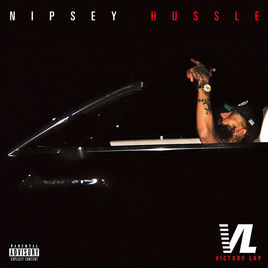
In recent years Crenshaw, LA’s Nipsey Hussle has been one of the strongest voices on the west coast. The unapologetically Crip-affiliated rapper has translated his gang lifestyle into a sound that’s as progressive as it is indebted to old school G-funk. While each successive project of his has been better than the last, Victory Lap feels like Nipsey Hussle at his peak. Everything from the writing, to the production, to the overall message shows the LA rapper exceeding (the already lofty) expectations for a modern west coast legend.

     Frequent collaborators YG, Buddy, and Dom Kennedy join impressive feature placements that include Kendrick Lamar, Puff Daddy, and Marsha Ambrosius — providing a plethora of talent to complement Hussle’s raps. “Dedication” and “Hussle & Motivate” are immediate standouts, but Victory Lap works best as a front-to-back tour-de-force. Whether it’s addressing political issues, or simply flexing his industry awareness and indelible position in the rap scene, this album is Nipsey at his best. – NM

Veteran by JPEGMAFIA

Baltimore-based JPEGMAFIA (Barrington Hendricks) — who is actually a US Air Force veteran — gives us a collection of interesting experimental hip-hop tracks in his fourth album, Veteran. Hendricks packs Veteran full of both satirical (dare I say, edgy), and serious political commentary. At times, Veteran’s edginess might be off putting, however, this album is carried by its unique production.

     “Real Nega” and “ Thug Tears” show off his impressive use of sampling; the tracks “1539 N. Calvert” and “I Cannot Fucking Wait Until Morrissey Dies” get you lost in their glitchy production.  Hendricks mixes both old school hip hop one-liners, and impressively forward-thinking production in Veteran. He really proves his versatility in this album. It’s a refreshing sound for rap in 2018. Basically, if you like Death Grips, you’ll like this album. – SE

Little Dark Age by MGMT
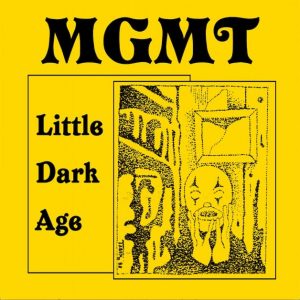
MGMT breaks their five-year hiatus with their new comeback release, Little Dark Age. Many of the tracks on this album reflect on their rising and falling out of mainstream success — and how quickly both occurred. “Me and Michael” is a synth-pop ballad about pop-stars who steal an obscure song and become popular. The track is a satire on how MGMT felt about their success.

     In an interview with VICE News, MGMT said they always felt that they engaged in a “self-sabotage” of their band, not really caring about fame — heavily implying that their fall out of the mainstream was intentional. The lyrics “When you’re small/you don’t have very far to fall” in the track “When You’re Small” beautifully encompasses the sentiment that MGMT tries to get across: downsizing wasn’t a bad thing. Little Dark Age is a fun listen for both old and new fans, and is the start of a new MGMT. – SE


Help a needy child: Donate to our charity to see where your money is REALLY going!

0
Illustration by Cora Fu

By: Simrin Purhar

At our charity, Needy Kids of Canada, you can select a specific area of support or tangible good to gift an underprivileged child. With our donation model, you know exactly where your money is going!  

Grape vine: $26

Give the gift of nourishment! All grape vines donated will be planted directly in our CEO’s vineyard. Once the grapes have been harvested and fermented, we will send one bottle of wine to a needy child. With purchase of this gift, you will also receive a postcard from our CEO’s vineyard.

Golf bag: $55

Give the gift of sport! Our corporate team will use all golf bags donated during tournaments. We pledge to donate 4% of all monetary prizes won by our team to a needy child, so that they can use it to join a community sports team.  

Vibrating chair: $310

Give the gift of comfort! All vibrating chairs donated will be sent directly to our corporate headquarters. Studies show that a comfortable chair can result in increased productivity. Therefore, this donation will result in our employees maximizing their potential at their charity work — rather than spending time at a doctor’s office with an achy back.

Fishing rod: $119

Give the gift of food! Our executive team will use all fishing rods donated during chartered fishing trips. One out of every twenty fish caught will be donated to a needy, malnourished child.  

Housing: $550

Give the gift of housing! All housing donations will be used by an executive at our organization towards a down payment on a house closer to our corporate headquarters. This way, executives can spend less time commuting and more time finding solutions to help needy kids.

School tuition: $1,020

Give the gift of education! Our executives will use all school tuition donations to send their own children to the top-ranked boarding schools in the country. This way, their children will have the necessary education to take over Needy Kids of Canada and keep it functioning in hopes of supporting the next generation of underprivileged kids.


Stuff we like and don’t like

0
(Elena Hsu / The Peak)

By: Hannah Davis

Stuff We Like:

People who let us pet their dogs

In my experience of approaching dog walkers to ask if you can give their pup some pats, there are two basic ways the person can react. The first is that they avoid eye contact, shorten the leash, and pick up their pace a little to avoid a conversation — this is understandable. A lot of dogs do not like to be touched by strangers, and so I respect these people protecting their furry friends from unnecessary anxiety. The second (and best) kind of reaction is that the dog walker will grant you permission to meet their pupper. Then you get to ask all sorts of questions about the doggo, like what their name is or “Are they a good dog?” (obviously yes). The only individuals who one-up the people who let you pet their dogs, are the ones who carry treats with them and let you feed their pupper. Those people are amazing.

Stuff We Don’t Like:

Having to buy iClickers

It is now my third year of university and I have managed to avoid buying an iClicker . . . until now. Walking into the bookstore at the beginning of the semester, I was mostly disappointed because I didn’t know how much iClickers go for on the university bookstore market (it’s rough). My disappointment only increased when I walked into the first day of lecture, only to find out that iClicker questions were worth just 5% of our grade. I immediately considered returning the stupid little gadget and forfeiting that tiny percentage of my mark. Against instinct I held onto my iClicker for all it’s worth, and now, about halfway through the semester we’ve used it a whopping three times. Goodbye $50, hello micro-increase in my grade.

SFU researchers develop simulated reality game to showcase trans youth experiences

0
The team hopes to develop 12 avatars and a range of scenes. (Photo courtesy of Metro News)

SFU sociology researchers are teaming up with master’s students from the Centre of Digital Media to develop an immersive game where players assume an avatar and navigate the Lower Mainland as a trans youth to better understand the daily experiences of the young trans population.

Associate professor of sociology Dr. Ann Travers is the principle investigator behind the game, called Gender Vectors of the Greater Vancouver Area, and is working alongside Dr. Jennifer Marchbank, an SFU professor in the gender, sexuality, and women’s studies department, and Dr. Sharalyn Jordan, an SFU assistant professor in the faculty of education, to develop the project.


Understanding through experience

In an interview with The Peak, Travers elaborated on her inspiration behind developing Gender Vectors: “I wanted to find a way to get knowledge out there in a more accessible format, so that people who wanted to understand what life was like for trans kids could get a sense of that without going through an article.”

She hopes that the game can also be useful for policy makers, who can use the information provided within the virtual reality of the game to gain a first-hand experience of the obstacles faced daily by trans people, which can then inform their relevant policy choices. “If you’re not trans, you don’t notice the things that make life difficult for trans people,” said Travers. “But if you play the game as a trans person, you go, ‘Oh, wow, I can’t go in that washroom.’”

Travers also wants to use the game platform to amass a set of resources available to trans youth in the Lower Mainland area. “We want youth to be able to play the games and identify places they can go,” she stated.


Life in different shoes

The ultimate goal for the team is to develop a game that allows players to pick from a number of avatars and navigate various places in the Greater Vancouver area. “We wanted to make visible the challenges that trans kids experience in their daily lives, and draw attention to some of the supports that do exist,” said Travers on the design process.

At its current stage of development, the prototype of the game involves three scenes and one avatar.

The first scene begins when a trans youth from a different part of the country arrives in Vancouver to live with their queer aunt, as their former home is an unsafe environment for them as a trans person. The aunt’s home is filled with LGTBQ+ resources that players can explore with their avatar. The second scene occurs on the SkyTrain, allowing players to navigate the experiences of a non-binary youth on public transit. In the third scene, the avatar visits Youth for a Change, an organization in Surrey, where they encounter a group of youth as well as adult facilitators who provide support for trans kids.


Virtual, but still reality

To develop the storylines for the game, Travers, Marchbank, Jordan, and the graduate students interviewed 30 trans youth and their parents in the Greater Vancouver area. They used the data and experiences to then write storylines that the avatars in the game could follow.

The team is looking to develop storylines for multiple avatars — the goal currently stands at 12 — to ensure even representation of the different ways one can be trans across racial, gender, and socioeconomic boundaries.

“To talk about the experiences of a relatively well-off, white, relatively conforming trans person is a lot different than for people who are racialized or immigrants, defy binary classification, or identify as trans consistent with binary, but who either don’t have access or don’t wish to access trans-affirming healthcare so they’re constantly misgendered,” said Travers.

“There are so many different kinds of trans people, and we don’t want to limit representation to just a few.” – Dr. Ann Travers, SFU associate professor

To gain further information that can be used to inform game design, the team is holding a workshop on May 6 where they are inviting trans youth to come and provide feedback on the game prototype and to facilitate a discussion with the community.


A learning curve

The team behind Gender Vectors have been working on developing the game for three years. According to Travers, the most unexpected challenge the team has encountered so far is the price tag associated with developing a game.

“One of the things we discovered is that it’s incredibly intensive to make a game,” said Travers. So far, the team has invested between $25,000 and $30,000 into the game development process, and they are estimating another $200,000 to get the project to its envisioned end.

The project has been a learning curve for everyone involved, affirmed Travers. “[The game developers] learned a lot about trans issues, and we learned a lot about what is involved in building a game.”  


Future paths

Travers estimates that the game will be available for public use in approximately three or four years. They are looking for additional grants and hopefully an industry partnership as they continue along the path of game development.

The final version of the game is envisioned to be playable on mobile phones through an app, specifically for the resource porthole aspect, and the full version of the game to be accessible on laptops.

SFU hockey defeat UVIC in final game of 2017–18 BCIHL season

0
UVIC is likely to replace SFU in the playoffs due to the ineligibility issue. (Photo courtesy of SFU hockey)

By: Dylan Webb

On Saturday night at the Bill Copeland Sports Centre, the SFU hockey team closed out its regular season schedule on a high note with yet another defeat of one of their main rivals, the University of Victoria (UVIC) Vikes. Beating the Vikes for the fourth time this season in dominant fashion with a 5–2 win after the Vikes eliminated them from the playoffs last year was a satisfying finale of what had been a dominant second half for SFU. Despite being currently embroiled in a heated dispute regarding an ineligible player ruling that appears to have cost the Clan a shot at playoff glory, the Clan ended the regular season in peak form irrespective of their playoff fate that is to be determined and finalized in the next few days.

Before puck drop, the Clan celebrated the achievements of their graduating seniors and honoured their contributions to the success of the program in a thoughtful ceremony that allowed the players’ parents to join them on the ice preceding what would be their final game in an SFU uniform. The graduating seniors’ class included captain Brandon Tidy, Lyndon Stanwood, who was last years BC Intercollegiate Hockey League (BCIHL) MVP, as well as veteran forwards Pavlo Zerebecky, Robert Izsak, Tyler Basham, and Mak Barden. A strong effort would send the seniors off with a victory before one of the bigger crowds the team has drawn to the Bill Copeland Sports Centre this season.

Following the ceremonies, the puck dropped on the final regular season game of the year and the Clan’s dominance began in the first despite a brief hiccup to start the game. After a giveaway that resulted in an early UVIC goal, possibly related to the fact that all five graduating seniors were on the ice to start the game and they are all forwards, the Clan responded quickly with newcomer Nicholas Holowko scoring the first of his two goals on the night.

In the second, the Clan would open up a two-goal lead on Holowko’s second of the night and Zerebecky’s shorthanded marker that, assisted by Barden, was the only all-senior goal of the night. SFU would carry a 3–1 lead into the third with Zerebecky’s tallying proving to be the eventual game-winning goal.

The third period saw the team increase their two-goal lead to three and secure the victory with Ryker Moreau and Austin Adam chipping in on the score sheet. Adam finished the year with a measurable offensive uptake scoring in at least four of his last five games played. With a 5–2 final, the Clan succeeded in demonstrating that they were more deserving of playoff action than UVIC, having outshot them 39–15. Clearly, the frustration of the ongoing eligibility committee review of SFU’s roster spilled over into the game as line brawls marred the second and third period action.

In goal, Stanwood secured his league leading 16th win of the season to cap an impressive BCIHL career that saw him earn league MVP honours last season. Stanwood gave way to backup Ryan Sandrin to start the third period. Sandrin was making just his third appearance this season, as Stanwood was an absolute workhorse this season starting more games than any other netminder in the league.

Asked about the controversy surrounding the ineligible player review and its implications for playoff hockey, coach Mark Coletta emphasized his frustration on behalf of the players and fans while vowing to fight to the end to maintain SFU’s playoff hopes. “While the ruling certainly deals with an eligibility violation that was made, our frustration is with the particular application of the ruling and interpretation of the ruling with respect to points allocation in a situation like this,” he said. Netminder Sandrin echoed these sentiments, also emphasizing his sympathy for the graduating seniors that will likely see their expected shot at playoff glory evaporate with the loss of points that the eligibility committee has recommended with respect to the ineligible player fielded by SFU in eleven games this season. “It’s definitely frustrating,” he said, adding, “It is something we will have to learn from going forward into next season and beyond.”

With the regular season appearing to have concluded on a shockingly bitter note for the Clan pending a final appeal of the decision, the team now looks forward to next season and a summer of recruitment with an eye toward filling the gaping holes left by graduating seniors such as Stanwood, Tidy, Basham, Barden, and Zerebecky. The frustration of ending what had been a strong season and unbelievably dominant second half without playoff action was expressed by many of the players, especially the seniors that will not get a chance for redemption next season.

Look for another article in the sports section of The Peak in the next couple days that will further detail the ineligible player review and its implications for SFU’s playoff hopes in the next few days as details emerge and the decision is finalized.

Local poet Shiraz Ramji talks about a life of activism and education

0
Ramji has been an educator all his life, and so his involvement with SFU makes a great deal of sense. (Photo courtesy of the Lyre)

By: Alex Bloom

Shiraz Ramji is currently the director of the Edmonds Seniors Society, and has long been affiliated with SFU in several capacities. He was a student at the university, and has been a staff member, researcher, and guest lecturer in subjects such as education, gerontology, and First Nations studies. He is still a prominent member of the SFU community; as previously noted when The Peak interviewed him in 2013, if you’re a student at Burnaby campus, the chances are high that you’ve spoken to him or read his poetry. Ramji has devoted his life to activism and education, and his poetry reflects these pursuits. The Peak sat down with him to discuss his life, his work, and his art.

     As mentioned previously by The Peak, Ramji began writing poetry at a young age. He was encouraged by his elementary school teacher, who said “You speak like a poet, write it.” That same teacher had Ramji’s poetry published in the school magazine soon after. “. . . I was writing poetry for years and I didn’t know what it meant — I still don’t know — but slowly, I kept on writing.” As time went by, he started getting published in more newspapers and magazines. “Mostly it was about promoting friendship . . .” he said.

     Ramji is passionate about a variety of issues that people face around the world. “I’m quite interested in gender justice and global peace . . . So the whole idea was to make [my art] more educational,” he noted. This passion for social justice and education was inspired by his growing up in what was, at the time of his birth, called Tanganyika. Tanganyika was the name given to the mainland of what is now Tanzania under colonial rule. Ramji was born in 1948, and it wasn’t until 1961 that Tanganyika gained independence from the British. In 1964, the Protectorate of Zanzibar (a region off the coast) gained independence as well, and together they formed the United Republic of Tanzania that October.

     Even after Tanzania gained its independence, the lasting effects of colonialism had an impact on Ramji. “When I was in high school — I finished my grade 12 in 1965 — it was a time when Zimbabwe, which was called Rhodesia, was [still] taken over by the settlers . . . we had a history teacher who taught us about this whole struggle,” he said. “When I went on to university, there were a lot of students involved with African liberation movements, and anti-apartheid struggles, so I was quite involved with that.”

     Ramji’s friend Karim Hirji wrote about him in his 2014 book, Growing Up With Tanzania. Memories, Musings and Maths, saying, “Among the activist students [Shiraz Ramji] was known as a man of the people . . . Always smiling, he befriended the old and young, and was considerate towards everyone.” Also according to Hirji, Ramji continued in his passion for activism after graduation. He went on to teach physics at Mkwawa High School in Iringa. There he started a student magazine, organized community improvement projects for the students to participate in, helped to expand the school library collection, and invited scholars and members of African liberation movements to speak to the students about African history, politics, science, and economics.

     Ramji said that he was also inspired by figures such as Angela Davis, Malcolm X, Martin Luther King, and John Lennon. He noted, “I was always on the pacifist side.” He went on to say, “. . . our president [at the time], Julius Nyerere, was quite involved with the theology of liberation.” Social justice movements and education have always been prominent in Ramji’s life, and so it comes as no surprise that his poetry talks about justice of all sorts: in one poem he mentions dozens of different kinds of justice.

     One of the kinds of justice Ramji mentioned in his poem was “Grandparents Justice” and his latest project — the Grandparents Film Festival — aims to provide just that. The monthly festival is open to all, and offers free screenings of films focusing on elders and grandparents. Part of the inspiration behind the festival began during his time teaching nurses in Tanzania, Mozambique, and Zimbabwe how to evaluate vaccination programs, where he often met with grandparents in the community as part of his work. “I started a lot of [promoting] of grandparent-grandchildren friendship,” he said. He also taught grandparents postnatal care since, in his experience, many of the children that were not vaccinated were in the care of their grandparents.

     Ramji came to Canada in 1994, following a family tragedy, where he began volunteering in film festivals. At these festivals, he noticed that there were relatively few movies about elders. This is where he first thought of starting Grandparents Film Festival. The goal of the festival was simple: “We want to have films with elders and grandparents,” he said.

        The next Grandparents Film Festival screening will take place on March 18 from 4–6 p.m. at the Edmonds Community Centre. The film shown will be Birth of a Family directed by Tasha Hubbard. It’s a documentary that tells the story of four siblings from the Dene Nation who were separated from each other by the Canadian government at a young age, and their eventual reunion.

     When asked about the process of decolonization in Canada, Ramji replied, “When I was in elementary school . . . we were given a lot of comic books called ‘Cowboys and Indians’ . . . I was quite interested in the ‘American Indians’ because my birth certificate said I was ‘British Indian’ . . . I wanted to see how ‘British Indians’ and ‘American Indians’ are related.”

“I wasn’t very interested in cowboys because I could see cowboys right in front of me, as [colonizers],” he explained. “So when I came to Canada . . . I did nine courses about Indigenous Peoples.”

        Ramji, who identifies as a global citizen, leads a life full of activism, art, and education. He continues to work on his poetry, among other things, today — and one thing is clear: he is still passionate about social justice of all kinds.

BC Budget 2018: what you need to know

0
(Andres Chavarriaga / The Peak)

BC Budget 2018 was released on February 20, outlining the provincial government’s initiatives and financial commitments for the next year. The budget is the NDP’s first full financial plan since assuming power in government last July. The announcement prompted responses from groups across the region.


Housing for students

The 2018 budget saw the government committing $450 million over the course of the next three years to a student housing program. The money will be used to provide loans to housing projects in post-secondary institutions.

The Alliance of BC Students (ABCS) celebrated this announcement as a “historic housing investment.” According to ABCS, post-secondary institutions other than UBC have been struggling to construct housing on-campus for the past ten years. In a press release, ABCS chair Caitlin McCutchen called the investment “[. . .] a transformation in the way the provincial government views student housing.”

“We now have a government that is putting the focus on students, and that is a welcome benefit for access to education.” – Caitlin McCutchen, chairperson for Alliance of BC Students

The financial investment will directly contribute to the construction of 5,000 living spaces on campuses across the province, to accompany an addition 3,000 that will be funded by the institutions. The aim of this initiative is to give more students access to on-campus housing, freeing up housing spaces in the rest of the province.


Housing for the rest of the province

The government leveraged the budget as an opportunity to take another stab at the housing crisis in BC. A new annual speculation tax was introduced, which will apply to out-of-province homeowners who don’t pay income tax in BC. The province hopes this will target owners of vacant properties in the region, and so it will exempt homeowners who rent out their homes long-term to tenants.

The foreign buyers tax was also increased from 15% to 20%, and will apply to anyone from outside the province.

BC finance minister Carol James called the measures “bold”: “We’re the first province in Canada that is bringing in a speculation tax. [. . .] These are ‘firsts’ here, and we’ll track it carefully.”

SFU professor Andrey Pavlov commented that the sweeping plan fell short of what the province needed to improve the housing crisis: “Prices may be lower a year from now, but people are facing higher taxes in this budget. So at the end of the day, I can’t imagine many people are going to keep the same level of disposable income. [. . .] The key is to increase income and keep the prices the same or lower at the same time.”

“Everyone is going to be poorer.” – Andrey Pavlov, SFU professor


Indigenous culture and communities

The budget included $50 million to preserve and revitalize Indigenous languages in BC.

CEO of First People’s Cultural Council Tracey Herbert commented, “In BC we have 60% of Canada’s Indigenous languages and they’re all severely endangered.” She called the budget announcement to devote financial resources to the maintenance of these languages “exciting for the organization.”

The budget also involved a $158 million commitment alongside Indigenous housing societies and and First Nations to address Indigenous housing needs by building and supporting 1,750 living spaces.


Historic investment in childcare

The government made the largest investment in childcare in BC’s history, totalling $1 billion. The benefit aims to reduce child-care costs by up to $1,250 per child per month, and increase the number of families supported from 26,000 to 86,000. The budget aims to add 22,000 new child care spaces across the province.

When asked by The Peak to comment on the investment, associate professor Jennifer Marchbank said that the investment “in conjunction with the agreement with the federal government to bring in an additional $153 million (over two years) is a good start to building a policy of universal child care.”

“As my own research on child care in Europe has shown there is a direct correlation between child care availability and the ability to be economically active (especially for mothers) which improves families’ ability to earn money,” added Marchbank. “I also think that the policies to slow down the housing market prices and the investment into training more Early Childhood Educators can also help.”

While running for office, the NDP had promised $10-a-day childcare. No mention of that goal was made during the budget announcement.


Carbon tax

Carbon tax was increased by $5 per tonne. The increase is expected to bring in an additional $200 million of revenue.

The move was favourably received by the David Suzuki Foundation: in a press release, science and policy director Ian Bruce called the tax “an incentive [for BC citizens and businesses] to be a part of the solution, by switching to clean energy or adopting more energy-efficient practices.”

However, the Foundation called for the government to increase pressure on the oil and gas industry via a similar tax levied on the methane emitters. “Citizens pay their fair share of carbon tax. It’s only fair that the province’s largest emitter — the oil and gas industry — pays a carbon tax on its methane emissions too,” commented Bruce.

The tax had been frozen since 2012.


With files from CBC News, Burnaby Now, The Vancouver Sun, Global News, and The Globe and Mail.

Sports Analytics Club: The Peak stat of the week

0

By: Dani Chu and Matthew Ryers

With SFU golf set to begin for the 2018 season, it’s a good time to brush up on the stat that revolutionized the way we evaluate golfers. The “strokes gained” family of statistics evaluates a golfers performance against his peers, instead of simply looking at basic counting statistics. In 2011, Mark Broadie, a professor at the Columbia Business School, noticed that traditional golf statistics such as putts per green are limited as they are affected by the distance of the putt. He proceeded to develop the strokes gained metrics to account for the proximity of the ball to the hole, using newly available ShotLink data.

It is common sense that a long putt is harder than a short tap in. However, the classic metric putts per green weighs conversions of the previously mentioned shots equally. Strokes gained: putting fills this gap in our intuition by assigning values to putts based on the performance of other professional golfers from the same distance. This means that if the average number of putts to the hole in the Professional Golfers’ Association (PGA) from a specific distance is three putts and a player takes only two putts from that distance, that player will have one stroke gained putting on the field. Furthermore, if the player instead takes four shots to putt-out from the same distance they will have -1 stroke gained putting on the field.

This concept can be generalized beyond the green, to strokes gained: off-the-tee, strokes gained: approach-the-green, and strokes gained: around-the-green. These statistics, in combination with strokes gained: putting, complete the strokes gained family. Additionally, strokes gained: total measures how many shots better or worse a player is than the average player on a given day.

In order to compute the baseline number of strokes to hole out from every distance on a course, the PGA Tour uses the data captured by ShotLink. Locations are split up by distance with the green being separated into one-inch increments from the hole and all other locations being segmented into one-yard bins. From this information we can determine the distance needed to give a Tour-average player a 10% chance of a one-putt — 25 feet. These baseline averages allow us to form a coherent expectation of the number of shots it should take a PGA player to hole-out from a given distance. For example if Jason Day is about to attempt a 30-foot putt, we know it should take a PGA Tour average golfer roughly two putts to hole-out. With this information we can understand before a shot takes place what Jason Day needs to do to separate himself from the field.

Dustin Johnson, Master’s Green Jacket winner in 2016 and current number one in the Official World Golf Ranking, is known for his powerful drives and not so much for his putting. His strokes gained: putting statistics reflect that as he is the 52nd golfer in this metric with a strokes gained: putting of .382 on the PGA Tour this year. However, Johnson is ranked second in strokes gained: tee-to-green where he gains an average of 2.175 strokes compared to the field. By breaking golf into these distinct areas with the strokes gained family of statistics, we can better identify the strengths and weaknesses of Johnson. These statistics, however, go beyond the professionals and can be used by anyone. So be sure that next time you hit the fairway to measure every putt!

SFU softball falls to Montana State Billings University in complete-game shutout in game one of home-opener doubleheader

0
The game was delayed two hours due to snow. (Photo courtesy of SFU Athletics)

After a two-hour game delay which saw the SFU Clan out shoveling snow off the field, the team seemed understandably tired when the game finally began. Once SFU’s pitcher, Alia Stachoski, hit the first batter from Montana State University Billings (MSUB) with a pitch, it was mostly downhill from there for the Clan.

The Clan showed some strong defence throughout the first game, with Hailey Gearey making some clutch contributions. In the second inning, she caught a line drive to help push her team along. She also helped make the fourth inning quick, with help from catcher Katherine Murnaghan, by tagging out MSUB’s Shayla Felix on her return to third from a steal attempt.

On the pitching side, Stachoski’s change-up messed with a few of the MSUB Yellowjackets, contributing to three strikeouts, but it didn’t take long for the visitors to have Stachoski’s number, knocking three homers (Myrissa Prince, Megan Dettling, and Heather Tracy) over the fence. It was the top of the sixth inning and the Clan quickly brought in Kyra Watson to pitch.

Unfortunately, the change didn’t trigger some much-needed momentum for the Clan, as the first batter Watson faced, Dettling, opened things right up with another over-the-fence home run. Though things were dire and SFU had yet to crack the scoreboard, it didn’t feel truly hopeless until later in the sixth inning, when MSUB’s Kelsee Bushell smacked another ball over the fence with bases loaded.

After that, the game ended with the Clan’s search for some offensive momentum pushed into game two.

The second game went much better for the Clan, who managed to keep a stable defence with pitcher Jessica Tate and scored some runs early in the game to break out of their funk. Both Taylor Lundrigan and Alex Ogg managed to double in the first inning, pushing an offensive momentum that resulted in two runs. In the second, the Clan followed with another couple of runs, this time thanks to Victoria Saunders’ sacrificial fly.

It took MSUB two innings to catch up to SFU, tying the game at four in the fourth, but SFU came out back on top in the fifth, following a Chelsea Hotner two-run double and Dallas Tilley’s single to bring Hotner home. At this point, the Clan was up 7–4.

The Yellowjackets worked to catch SFU again, but fell short, only managing one run in the sixth to leave the final score at 7–5.

SFU coach Mike Renney commented that “taking it on the chin in the first game was potentially a sign of the week catching up with them,” but added, “I was nonetheless very proud to see how they bounded back [in] game two [to] get the split.” Renney further noted that “in years past, one [lop]sided loss was often followed by another” so it was great to see the Clan really get to work in the second game.

The Clan is 1–1 for the weekend so far, and plays another doubleheader against MSUB today, with the first game starting at noon. Although the team has been tired, they managed to rally yesterday evening, and Renney agrees that “today will certainly test our fitness and resolve.”

Neck Deep’s The Peace and the Panic was in Vogue

1
(Image courtesy of Hopeless Records)

By: Eva Zhu

Neck Deep played a headlining show with Seaway and Speak Low at the Vogue Theatre on February 23 as part of their The Peace and the Panic tour.

     It was, without a doubt, the best concert I have been to. One might assume that Seaway and Speak Low are only mediocre opening acts with no real substance, but that turned out to be a very wrong assumption. I already knew of, and loved listening to both bands, but even people who only came for Neck Deep were bobbing their heads enthusiastically and learning lyrics as songs progressed. Speak Low transformed his set with loud guitars, a talented bass player, and a drummer who really should have toned it down a little. To be honest, I wish he performed his songs the same way they were recorded — acoustically — since he doesn’t possess a voice strong enough to match the heavy instrumentals.

     Seaway played afterwards, and were practically perfect. Their lead singer Ryan Locke really knew how to get the get the crowd pumped (while wearing a floral blazer that I desperately want). Before playing one of their more well-known songs, Locke stood on the stage with a mischievous grin and waited until the mosh pit took up most of the floor before putting the microphone to his lips. Seaway played an incredible half-hour set, keeping the hype strong without having to remove any items of clothing. By the end, my vocal chords felt like sandpaper from singing along so loudly and I desperately craved water. On the topic of water, kudos to the security guards. In between set changes, they took turns squirting gulps of water into concert goers’ mouths, gave out candy (I stuck my hand out, but received no candy, and I’m still salty), and made sure none of the crowd surfers fell head-first onto the floor.

     Then, after two already amazing bands, Neck Deep came out with a bang. Almost literally. Their first song “Happy Judgment Day” blew everyone’s socks off with an impressive opening riff. They played through song after song effortlessly, setting the tone for the rest of the concert. Again, following Locke’s example, Ben Barlow (the lead singer of Neck Deep, with whom The Peak spoke to recently) knew how to pump up a crowd. I mean, nothing makes a pop-punk concert more pop-punk than a mosh pit. Also, the amount of crowd surfing made me wary of the possibility of getting kicked in the face.

     Towards the end of the concert, Neck Deep played a three-song acoustic set, resulting in tears from anyone with a functioning heart. Barlow sang “Wish You Were Here,” a tribute to his late father Terry Barlow, and it was hands down the saddest moment of the night. The night ended with sore throats and ringing ears. Neck Deep’s picks and drumsticks were thrown, and everyone left a venue littered with empty beer cans and discarded joints. It was a concert I’m still going to be reminiscing about years from now.