Home Blog Page 633

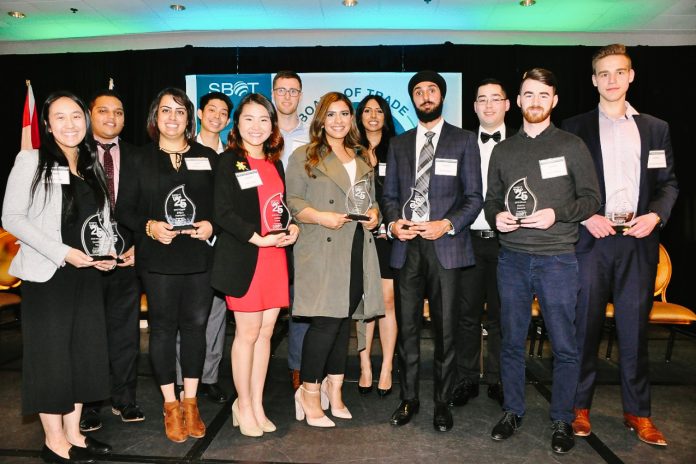
13 SFU students and alumni awarded Top 25 Under 25

0
(Photo courtesy of SFU News)

13 of this year’s Top 25 Under 25 awards were presented to SFU students and alumni by the Surrey Board of Trade. The annual awards recognize youth for their business and community involvements. This year’s award ceremony was held at the Sheraton Vancouver Guildford Hotel on April 26.

     The Peak reached out via email to talk to award recipients about their projects, their experiences at SFU, and what the award means to them. We were unable to contact all of the award recipients by the time of publication. Profiles for the students and alumni we were unable to contact were put together using available information from the SFU News story on this topic.


Larissa Chen

Larissa Chen, a former Simon Fraser Student Society (SFSS) president, is also a 2018 fellow at RADIUS SFU, a hub for social innovation, and co-founder of Böues. Böues, a beauty company that utilizes locally-sourced organic ingredients, won first place at the 2017 #MadeBySFU competition.

     When asked what achievement she is most proud of, Chen responded that it was “the person [she’s] evolved into through hardships.”

“I’ve grown to approach challenges with a sense of curiosity and collaboration, rather than paralysis and apathy. [. . .] Now, when assigned responsibilities outside of my expertise, I seek practices and try. Even when faced with moments of disturbance and apprehension, I inquire about what I feel and why” – Larissa Chen


Gurneet Dhatt

Gurneet Dhatt graduated from SFU with a degree in criminology. She went on to found Fast Lane Traffic Mangement Ltd, a company that provides traffic control services and training. She has expanded the business to several municipalities, making over $1 million in sales. Her future hopes include growing her employee base.


Prabh Dhillon

Prabh Dhillon founded SFU’s Students for Humanity — a humanitarian organization which strives to “welcome anyone and everyone,” according to their club profile on the SFSS website. Events hosted by the organization include Paint your World, an art night for mental health awareness, as well as blood drives.

     Dhillon wrote about how starting the organization changed his life in many respects.

“The people I have connected with, the friends I have made, and the lives we have impacted as a team are some invaluable things that came as a result of Students for Humanity. It has opened so many doors, not only for me but also for those who are members of the executive team and for those who volunteer alongside us.” – Prabh Dhillon


Stefanie Huffman

Stefanie Huffman is a member of the Enactus SFU team, a student-run organization that executes initiatives to help communities and help students build leadership and business skills. Within the organization, she acts as program manager for Axis Consulting, a program that provides pro bono student consulting services to companies that make a positive impact in the community. Inspired by her involvement in Enactus SFU’s Hunger Actions, which helped mothers learn more about finances through meal-planning, Huffman developed Refresh, a brand of jam which utilizes bruised fruit.

     Huffman is also a certified figure skating coach.


Harleen Jagpal

Harleen Jagpal is a Beedie alumni who went on to found Cambridge Doors Ltd, and currently leads over fifteen employees. She also participates in health care initiatives with Fraser Health and the Cancer Society of B.C.


Cody de Leijer

Cody de Leijer is currently the president of Enactus SFU. He calls his decision to apply for the president position of Enactus SFU “one of [his] life-altering moments.”

“There will always be and always have been people who doubt you. I strongly believe in respecting other’s opinions but at the end of the day, you have to believe in yourself. ” – Cody Leijer

     De Leijer has worked with SFU Innovates, RADIUS SFU, and Coast Savings Venture. When he’s not working, his favorite place to hang out on campus is the red couches in West Mall Centre, since they’re close to both Tim Hortons and Starbucks.


Shilpa Narayan

Shilpa Narayan is involved with Enactus SFU’s Coast Cards, which upcycles used restaurant coasters into greeting cards. The goal of the initiative is to provide employment opportunities for individuals who have overcome addiction.

     Other initiatives Narayan is involved in include Youth for a Change, the Lookout Emergency Aid Society, and the Kelty Mental Health Resource Centre.


Dorothy Ng

Dorothy Ng is currently involved with Enactus SFU as program manager for Axis Consulting, and was previously the director of marketing for Soap for Hope, a project that upcycles slightly used bar soap from hotels into liquid soap which is sold to vendors throughout downtown Vancouver. The profits from the liquid soap sales are used to pay the wages of the individuals who volunteer in the Mission Possible Recycling program as they help produce the liquid soap.

     Ng also spent eight months last year as a project management intern at Blackberry.


John Nguyen

John Nguyen co-founded and is currently the president of Technovus SFU, a group that aims to create a welcoming community for students to collaborate on creative technical projects. Technovus has hosted 15 community events, including its annual Mechathon which attracts over 100 competitors.

     Ongoing projects Technovus members are working on include Swarmbots, a cluster of bots which will be programmed to work in unison using computer vision; and Biped, a pair of robot legs.


Chirag Patel

Chirag Patel graduated with a business degree from SFU, and is now pursuing his Certified Public Accountant license while he runs the janitorial service he founded, Lower Mainland Building Maintenance, and works for the accounting firm PwC. Patel is also the director of finance for SOAR Philanthropic Society, a non-profit that works to provide resources for youth in the Lower Mainland to help them obtain access to post-secondary education and achieve their full potentials.

“Believing in my ability that I could and can make a positive difference among like-minded individuals was the most important decision that I feel led me here.” – Chirag Patel 

     “When we think community leadership, we often  immediately assume having to make a difference to a large group of individuals — this can honestly become very overwhelming. However, I am a strong believer that bringing positive change to just one person is as powerful as contributing to the greater good of the community.”


Gerogiy Sekretaryuk

Gerogiy Sekretaryuk is a computer science student at SFU who co-founded Cering Technology, a company which produces wearable technology that allows wearers to discreetly signal for help. The jewelry line was aimed at female wearers to provide them with greater security. The company is now partnering with local jewelry designers, as well as smart gem technology designers in China to continue developing the brand.

“It’s hard to pinpoint the one pivotal decision that has led me to where I am today because there simply isn’t one.” –Gerogiy Sekretaryuk 

     Sekretaryuk attributes his success so far to his self-discipline when working towards his goals: “I believe that my relative success so far has been the result of many small decisions made on a daily basis. Every day I make small choices that help me work towards my goals — my days are scheduled, I exercise daily, eat a fixed diet, network, set aside time to do work and learn, and most importantly, look for and take on new opportunities to help me grow.”


Tony Jure Vukasovic

Tony Jure Vukasovic is a SFU business student who co-founded Smart Parks Canada, a platform that enables monitoring of parks and facility usage through sensors. The cloud-based platform utilizes proprietary technology, which is currently being trialed by the City of Surrey.

     Vukasovic developed his Smart Parks Canada during his time as a co-op student at SFU’s Charles Chang Institute for Entrepreneurship, a hub for innovation at SFU that encourages collaboration between students, faculty, community members, and researchers. The Institute offers various programs from pre-university to graduate level, including Change Lab and TechnologyEntrepreneurship@SFU.  


Marco Zenone

Marco Zenone is a SFU health sciences student who co-leads the SFU Student Health Advisory Committee, which takes a campus-wide approach to create conditions on campus that promote well-being.

     Zenone is also the youth engagement lead for the Bridge for Health Initiative, an initiative that was founded by SFU health science lecturer Paola Ardiles in 2013 as a volunteer network. Bridge for Health promotes collaboration and community engagement to address health issues from various spectres such as spirituality, economics, and environmental dimensions. In 2017, Bridge for Health received SFU’s Coast Capital Savings-Social Impact Venture Award.  
Coping with anxiety: Jennifer Parkhouse has an app for that

1
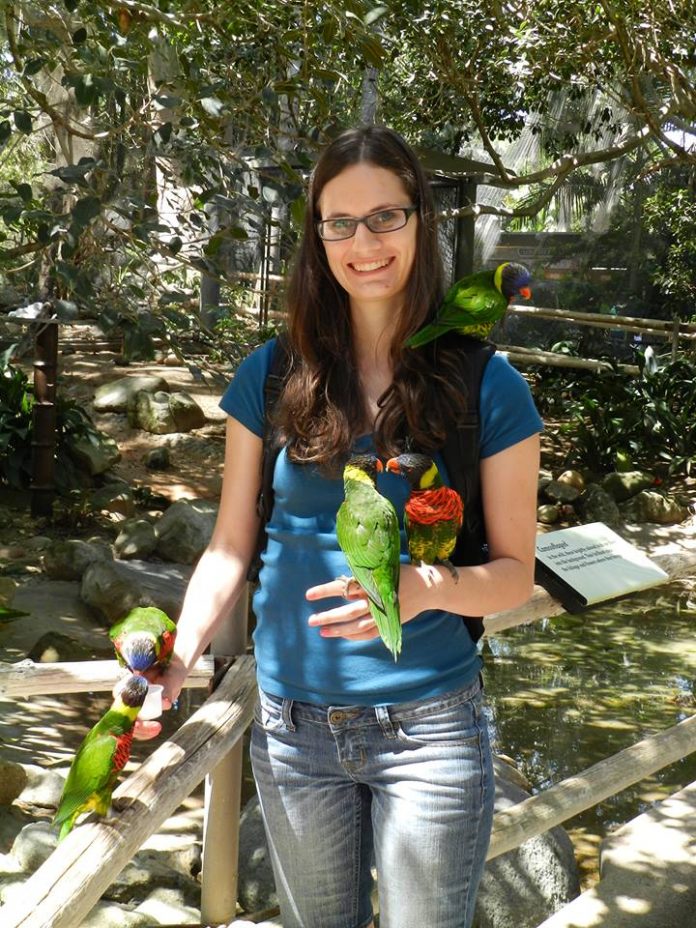
Photo courtesy of Jennifer Parkhouse

Fast facts  

    • Name: Jennifer Parkhouse
    • Pronouns: She/Her/Hers
    • Department affiliation: Masters of Science in Statistics, in the Department of Statistics and Actuarial Science
    • Business name: CBT Anxiety Aid
    • Hometown: North Vancouver, BC
    • Hobbies: Jennifer enjoys horseback riding, dog training, soccer, and gardening
    • Fun fact: She has a dog named Rascal Flatts who she trains in dog agility.

Jennifer and I have been corresponding back and forth for over a week, going over both her time at SFU and her current projects. Because of Jennifer’s long journey with anxiety, it has taken her about the same amount of time to complete her masters degree as it did to complete her undergraduate degree. Far from being discouraged, Jennifer has an idea to help make life easier for those in a similar boat.

Her app is the CBT Anxiety Aid app. Though the first version will be coded for Android devices, she hopes to make the app available on Apple devices as well — and it will be free.

Jennifer is building the app based on her own experience working with cognitive behavioural therapy (CBT). CBT is an evidence-based psychological treatment to help manage anxiety, depression, addiction, anger problems, and a slew of other mental health disorders and their symptoms. It works by identifying and changing the ways of thinking and behaving that negatively affect our lives. Jennifer’s app includes a four-pronged approach to managing anxiety and other mental health problems, including:

  1. An in-app calendar to track medication, activity, and coping mechanisms.
  2. A journal where users can input their thoughts, of two different kinds: generic, and specific to certain fears. The app will then be able to suggest coping devices, and encourage better thinking habits.
  3. A section where users can input fears, so that the app can break them down into smaller and more manageable fears thanks to behavioural therapy suggestions.  
  4. A database of coping mechanisms that users can access when needed.

According to the Canadian Mental Health Association, one in five people in Canada every year will experience a mental health problem or illness.  Despite how common mental illness is, treatment is much harder to come by.

“I have been struggling with anxiety and agoraphobia for over two years now,” Jennifer says. “I have tried many apps and have been left wanting. Therefore, I decided to create my own app based on my personal experience getting treated using CBT by a trained psychologist as this is something that many people don’t get to experience. I wanted to capture as much of this experience as I could within the app.”

Jennifer’s advice for those of us who can relate?

“Talk to someone early on, the sooner you get help the better. Even if you only talk to your best friend or parent you don’t have to to this alone. You are stronger than you think.”

She also insists on making sure to prioritize your own well-being. “I would say that you come first, not your schooling. There is no shame in taking time off to take care of yourself.”

Still, Jennifer acknowledges that treatment isn’t always easy to come by — either because of the financial realities of seeking help, the fact that many medical plans don’t cover treatment fully (if at all), or the stigma and social barriers that may stop individuals from reaching out. She hopes to make her app as accessible as possible to provide a helping hand to anyone suffering from anxiety or another illness that can be treated by CBT.

“This app is unlike any on the market today, the only other app that comes close lacks a lot of the user input that my app offers and it doesn’t allow for a calendar or history to track your progress or keep track of medication. My app will be an all-in-one CBT treatment unlike the other apps…” Jennifer says.

This is an impressive feat, especially considering that this is Jennifer’s first app. Before getting around to grad school, Jennifer followed her long-time interest in mathematics to SFU. She earned both a bachelors in science with a major in applied mathematics and a minor in computing science, and a graduate diploma in financial engineering from the Beedie School of Business. Now, she’s pursuing a masters of science in statistics.

“There is a lot more freedom doing graduate school and the sense of comradery within the department is great. We often do department activities with all the grad students,” Jennifer says.

To students who may be considering grad school, Jennifer suggests thinking long-term. “Think about what job or field you want to go into and then consider what grad program fits that goal.”

She goes on: “After completing my undergraduate degree I was looking into grad school and I had done some summer research assistant jobs within the stats department and really enjoyed myself and found a prof that I liked working with so it was a natural fit for me.”

Though the statistics aspect of her degree doesn’t really apply to her app, she has experience in building websites, including the original cost-of-living calculator for SFU graduate students. However, Jennifer tells me that: “There is a whole new program to building an app. It is like learning a new language. There are some similarities and rules that both follow, but overall it is completely different.”

Jennifer is fundraising for the app through kickstarter and starsomegood fundraisers ( both of which are fully funded) and the CBT Anxiety Aid’s website. She hopes that the app, currently in development, will be ready to go by the end of summer.

“What we need now is to get the word out and have people look over the mock-ups and offer advice as to what they would like to see changed or added to the app,” Jennifer says.


Editor’s note: SFU students can also access Health and Counselling services. You can make an appointment online or call to book an appointment at 778-782-4615 (Burnaby campus) or 778-782-5200 (Vancouver campus) or 778-782-5200 (Surrey campus).

If you are experiencing suicidal thoughts or need to see a counsellor immediately due to a sudden loss or critical incident, notify the front desk of the clinic when you arrive.

Health and Counselling also recommends the Crisis Centre of BC, which you can call toll free and 24 hours a day at 1-800-784-2433. You can also chat with them online at www.crisiscentrechat.ca  

Distance education: worth your troubles?

2
Image courtesy of PhysioGuru

By: Anindita Gupta 

When I think about online courses, my mind goes into a little bit of a panic:  racing heart, breathlessness, a sense of terror. . . I think back to my terrible experience with the Earth Science course that had lectures that lasted an eternity, and exams and assignments that were more demanding than those of my three other courses combined.

The one semester where I had an online course was one of my worst semesters so far; therefore, I am a little negatively biased towards online courses. But does everyone that takes an online course feel the same way? I decided to do some digging and find out how online and distance education courses work here at SFU, and elsewhere.

At SFU, the Centre for Online and Distance Education (CODE) handles the admissions and administration of online courses. After contacting CODE’s director, Brian Naicker, I found out that they actually act as a middleman between the faculties that wish to provide certain courses online and the students who take those classes. CODE is a base budget-funded operation, which means that they get a regular budget from the university to operate like any other department. Departments bring to the table courses they want to offer online, and CODE takes care of bringing them to students, modifying courses based on changing curriculums, and modifying classes in response to student complaints.  

An online course is just like a regular course, says Naicker, where “there is a maximum enrolment and tutor markers are assigned for grading and support.” In terms of exams, they are either held in classes at SFU, where they are invigilated by staff, or at selected locations off-campus, monitored by proctors. CODE also works closely with the Centre for Students with Disabilities (CSD) to accommodate all students equally.

Based on all of this, the CODE staff seems to be helpful in every way. However, what do the students think of these courses that are said to be “more convenient?” I reached out to students from SFU and elsewhere with a survey, and had them share with me their experiences with online and distance education courses.

The first few responses that I received were from closer to home, and a majority of the respondents, unfortunately, did not like their online course experience here at SFU. The SFU courses which respondents talked about included (but weren’t limited to) PSYC 241, CRIM 301, and ENGL 207, and the students were not very enthusiastic about taking an online course again after their experiences. Students reported that they felt overburdened and as if they hadn’t learned anything. They disliked working online for so long, and being unable to get personalized feedback from their instructors, communicate with instructors directly, or discuss course materials, problems, and assignments with their peers.

One recurring reason behind anyone taking SFU courses online seemed to be that the courses were degree requirements, and doing them online was the only feasible way to take them. If left to choose, 45.5% of students would not take an online course in the future, and 18.2% of respondents would only take them if they had no choice.

One student, however, had a different and a better experience, for a change. Working toward a publishing minor, her experience with an online course was exceptionally good, wherein she was acquainted with helpful tools that made learning easier. So, if any one of you are out there looking to do a helpful online course, PUB 372 may be one of your options!

Non-SFU students had other, more positive opinions. In fact, a large chunk of them were so happy with their experiences that they would not mind doing their school’s online courses again. Though they were forced to take these required courses because no alternative was offered, they said these courses were easier than in-person lectures and courses. One of the most satisfied respondents was in fact a working executive who pursued his Masters of Business Administration (MBA) degree through an online course offered at Warwick University in London, while living in Kenya! Through him, I also found out how easy it is becoming for anybody sitting in any part of the world to choose online courses through online databases.

One such database is Courseroot, developed by Dutch student Valentijn van den Hout. I reached out to him over email, and he explained to me that Courseroot is very new in the field of helping prospective online students find the best suitable courses for their needs. Courseroot currently runs on commissions, but the database is trying to become self-sufficient. They hope to begin offering their own courses, rather than simply linking up students to other websites where their online education journey can begin.

Now, between the two of us, van den Hout is the expert of the field, and according to his time in the venture, some of the advantages to online education he identifies are the ones that both SFU and non-SFU students also recognized: choosing what you want to study (when your options are wide and plentiful enough), working at your own pace, and paying lowered prices. Van den Hout notes that when students choose what to study, “the motivation will, therefore, be so much greater because it is something [they] really want to learn.” At SFU, though, tuition for online courses is the same price as regular classes.

In van den Hout’s experience, he has found that online courses are starting to attract the same credibility regular courses have — in other words, that having an online degree, like an online MBA from an esteemed institution, is starting to be seen as equally valuable as a degree one may get by attending in-class courses. Van den Hout also noted that online and distance education courses are a bigger hit amongst graduate students who are looking for more niche courses to increase their knowledge, and amongst working professionals who don’t have the time and schedule to attend regular classes or night courses at colleges and universities. Additionally, many students living in countries that do not have good reputation for higher studies are thankful for online courses and universities that offer a variety of them.

So, are distance education and online courses worth your troubles? Unfortunately, not at SFU, according to most of the students to whom I reached out, but they seem to be popular through other universities and platforms. And if CODE and Courseroot can teach us anything, it’s that a successful education is tailored to what kind of student you are. So keep an open mind and give them a try.

SFU Conspiracy Theories

0
Chris Ho / The Peak

By: Victoria Lopatka

Conspiracy Theory #1: Graduation doesn’t exist

For real, though, do you personally know anyone that’s ever graduated from SFU? I don’t mean a friend of a friend or your mom’s friend’s daughter, I mean someone you actually know.

“But what about the people we see in their graduation gowns and caps? In the grad photographs?” Actors and Photoshop, I say! In reality, SFU, with shitty enrollment dates and grading curves that never work in your favour, is too difficult to graduate from. But they want you to think that you will, so you’ll continue paying ridiculous amounts of money to try.

Conspiracy Theory #2: Construction at SFU is apocalypse preparation

I’ve been at SFU for two years now, and ever since I’ve set foot on campus I’ve noticed that there’s always construction going on. You walk into the AQ – construction! You walk past the Reflecting Pond – they’re building something! Walk into West Mall – what’s with all the loud machinery sounds?

Despite this constant construction, I’ve never actually seen a new building, walkway or statue created. So, does SFU just like wasting money on irrelevant projects? Maybe. More likely, though: SFU is creating safe spaces and underground bunkers for the most important staff, alumni, and administrative figures to hide in when the apocalypse comes.

Conspiracy Theory #3: Horrible snow day procedure is SFU’s natural selection

If you’ve ever had the misfortune of being stuck on Burnaby campus on a snow day, this one may resonate with you. On snow days, students who transit are often left with no bus to take them down the mountain, and those with cars get to inch down the icy, steep road. Some students choose to make the nearly one-hour trek down the snowy mountain, risking slipping and falling.

It seems as if SFU simply leaves students to problem-solve and get down however they can … or risk not getting down at all. Students who match SFU’s expectations – clever, determined, and/or physically fit – can probably survive, leaving the others to freeze or fall.

Conspiracy Theory #4: They don’t want you to leave…

Shortly after I first moved into residence at SFU, I was showing a friend of mine around campus. Afterwards, she remarked, “Wow, you pretty much never have to leave, huh? Everything is right here for you.” She was right. You can get a prescription, you can get groceries, you can get a haircut, and you can get some beer, all without leaving campus.

Then, if you finally decide you want to leave, you’ll wait 10–30 minutes for a bus, then take one bus, walk, get on the Skytrain, and finally, an hour later, arrive at the closest possible useful destination off campus. It’s almost like SFU is trying to ensure students don’t leave and spend all their money on the mountain…

Conspiracy Theory #5: The blue triangle

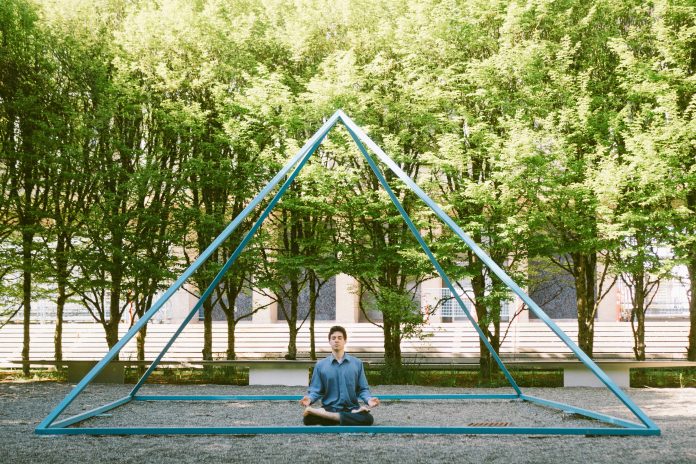
If you walk past the Reflecting Pond, between the Avocado/Egg and the Terry Fox statue, hidden behind a thin patch of trees, you’ll find a blue triangle. Officially called “Energy Alignment Sculpture: Pyramid in the Golden Section”, it was installed at SFU in 1977. Since its initial installment, students have debated the “power” the triangle holds.

Rumour has it, if you sit within the pyramid, it’ll grant you energy, smartness, and erasers that will actually erase your initial incorrect answers on Scantrons completely. I decided to test this out myself, and sat within the pyramid. Unfortunately, I wasn’t seated directly under the peak, but instead a little to the left. Honestly, everything has been a-little-left-of-good since then.

Long story short: Being married means choosing a different student experience

0
Image credit Tiffany Chan

By Jessie Morton 

It always comes up in conversation somehow, within the first few weeks of a new semester. “What did you do this weekend?”, “Do you live on campus?”, “Are you seeing anybody?” All of these are innocent, friendly questions that classmates ask each other as they wait for class to begin or finish. School has never been the hub of my social life, but that doesn’t mean I want to sit by myself and never make friends or have a study buddy — even if we never cross paths after the semester except for the occasional invite on LinkedIn. It’s these friendships that have been the most enlightening about our culture as a generation, and a university, especially when other students find out that I’m married.

I’m nearly finished my fourth year, I’m 23 and in August I’ll have been married for a year. Being a married undergraduate student has thrown some people for a loop, and others don’t bat an eye. I admit, I’m an anomaly. In every other way I am the statistically probable SFU student, except in my relationship status. A US Census in 2003 stated that around 7% of university undergraduates are married. I’m not going to stand here and say it’s for everyone; we made our choice for our own reasons and those reasons don’t to apply to everyone. I’d assume the percentage of students in committed relationships, and those living with partners without being married jumps significantly.

From here, people can have some polarizing opinions about my life. They range from “you will regret not playing the field” to “true love does exist!”

Now, we expected all these comments and opinions to some extent. They came from family members, friends, mentors, co-workers and classmates. What we didn’t expect, was the people closest to us to have some of the strongest opinions. I’ve always perceived strangers to be the most judgemental people. Because they don’t know you personally, understand your circumstances, or see your history they are quick to judge things that are unfamiliar as negative, and are inherently skeptical of others lives. But in this circumstance, some of the people closest to us had the harshest opinions, and my school acquaintances were some of the most open-minded, despite being from different backgrounds, religions and families. They were curious, positive, excited and respectful. Everything a cliché university student should be really.

Like I said, my school friends are not close friends, so why would they bother caring about some classmate’s personal life to the extent that they would form an opinion or say crappy things? I guess that’s the positive thing about being in an urban society with a wide range of people — there is no norm to follow. People are used to you doing you and don’t bat an eye when you are different from them, because that’s what is expected. Variety is the spice of life and if a semester friend has a different world-view from you, it doesn’t affect you. You just glean a new perspective and move on with your life. This in comparison to the people in your life who know you and your story deeply, they have an opinion because they care. Care equals conflict, or so I’ve found inlife.

Contrasting with the social response to matrimony at a young age came institutional and structural hiccups. From a married student’s perspective, it’s not that university doesn’t have a space for us or allow us to exist, but the most common issue I run into is the lack of information that pertains to me. What benefits does my spouse receive under my health plan? How do I change my name and what implications does that have on my experience with the school? Is there a social space or niche for married couples? While all of this information obviously existed, it was sometimes a pain to find it. Worse, was to find out it didn’t exist. I’ll admit, this didn’t happen often, but when I was curious about the possibility of living on campus (cheap housing am I right), that was soon kiboshed. As far as the SFU residence website goes, there are no options for couples who aren’t graduate students, as all bedrooms are listed as single occupancy only. So market rate off-campus housing is our only option.

In terms of events and clubs, while none of them are relationship specific, one of the main reasons people join is to meet people. Some of our family told us we were missing out on the university experience by not being active in clubs, societies and events, and that we would regret sacrificing experiences like this for each other and for the sake of strengthening our relationship.

I would argue that we haven’t missed out on experiences, just chosen different ones. I mean, I’m writing for the school paper, that counts as involvement right? What I won’t argue against is that my school experience has been vastly different from others in the sense that while studying I planned a wedding, traveled abroad for our honeymoon, and I had a constant partner through it all. My biggest rebuttal to people who say I’m missing out is that maybe I am, but I’ve always got someone in my corner. I no longer pay for rent and groceries alone, I have someone to listen to me read 35 page psych studies out loud because that’s how I retain the most information. Yes, sometimes I wish I had more “me” space, but that’s what the library is for (not that I ever find space in there). All that matters at the end of it all is that we made the best choice for us, and we did. So for now, I’m happy with being an anomaly, and people’s comments don’t come home with me.

Album versus Album: Keith Urban

0
Photo courtesy of Getty Images

By: Courtney Miller

Graffiti U (2018)

In a word? Boring.

      Honestly, I hoped for better. The album doesn’t open strongly, despite a feature from Julia Michaels; “Coming Home” has too much string-bending from the guitars to be truly pleasurable. The album feels a little lost, like Urban isn’t sure what makes music sound good. “My Wave” is the title of two songs on this album, and I would have cut both. There are brief moments of almost-palatability, but overall, it’s a miss. Don’t even get me started on the problematic lyrics relating to sexual politics in songs like “Female,” “Gemini,” and “Drop Top.”

Golden Road (2002)

In a word? Bless.

      Maybe it’s just because of the wave of nostalgia, but this album still holds its own. It’s not trying to mix in EDM or club music elements, and it’s not trying so hard to be different only to fall short and fail. No, this album is country pop, and it owns that. It’s basically a collection of bops that doesn’t get tired or monotonous — it’s just a fun time with some slick banjo, soulful bass, and some of Urban’s best guitar riffs.

Verdict

Keith Urban can still handle a guitar like a boss, but he’s lost these days. While some songs on Graffiti U start off sounding promising, they can’t deliver. Reminisce with Golden Road instead so that you don’t hate yourself.

SFU extends its communication channels to alert students on time

0
Emergency channels at SFU are most commonly used for campus shutdown notifications during extreme weather. (Chris Ho / The Peak)
By: Srijani Datta, Assistant News Editor


Snow days at SFU leave students in a bind, as classes are cancelled mid-day, exams are postponed, and, sometimes, the whole campus is suddenly closed off, often leaving students stranded. To address this problem head-on, SFU has recently enhanced its crisis communications channels.

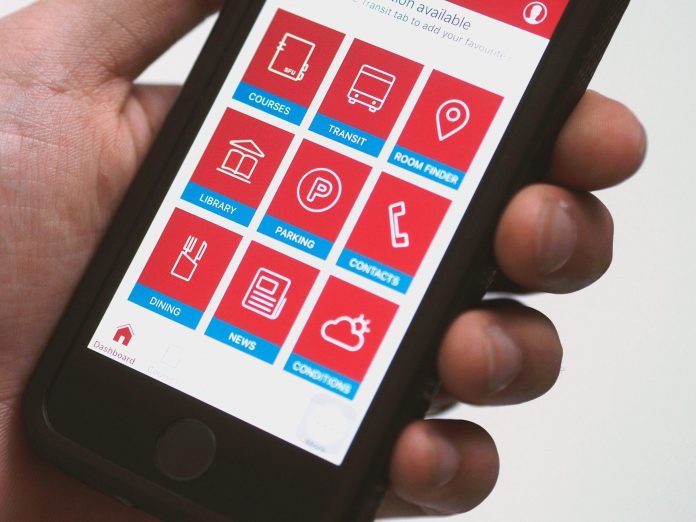
     The new additions include Alertus Desktop Notifications and SFU Snap, which are part of SFU Alerts. So far, the emergency communications channels have been limited to the SFU social media pages, emails, and school website. The goal behind the new effort is to reach out to the university community in a timely manner.

     In an interview with The Peak conducted by email, SFU’s Chief Safety Officer, Safety and Risk Services Mark Lalonde stressed that, “The safety and security of the SFU community is always our number one priority.

“We believe that our current channels for emergency messaging will allow us to get emergency messaging out both promptly and reliably.” – Mark Lalonde, Chief Safety Officer, Safety and Risk Services

     We asked Lalonde to break down the new extended channels for emergency notifications and ongoing crisis communication for us.


The Peak: What has been some of the safety security challenges of the SFU community?

Mark Lalonde: SFU is a community of some forty thousand people, spread across three municipalities. Similar to other universities, safety challenges we prepare for include earthquake, fire, extreme weather, critical events in laboratories, personal safety and sexual violence, to name a few.


TP: Exactly what kind of problems are the new communication channels supposed to address?

ML: By far the most common use of our emergency communications channels is during snow events. In the case of closures due to severe weather such as snow, the university community will be advised via email notification, SFU Twitter, the SFU Website, and on-campus digital screens.

After every winter season SFU administration reviews the Severe Weather Plan to identify lessons learned and seek feedback from our community, all of which is incorporated into the planning process for the next winter.


TP: What are the extended communications channels?

ML: SFU Alerts is a suite of urgent notification systems that allows the university to quickly notify students, faculty, and staff using a variety of methods. The university has extended the communication channels to include Alertus Desktop Notification, which is a pop-up alert on SFU-managed computers, and the SFU Snap app that delivers push notifications on mobile devices.

Urgent notifications include any security or safety situation that requires you to leave or avoid an area of the university.


TP: How are the new additions going to complement existing ones?

ML: Our community is diverse in how it receives information and no one single channel meets the needs of all, hence the requirement to offer multiple channels simultaneously to reach as many people as possible – all at the same time. We are constantly researching new innovative technologies and best practices when it comes to emergency and crisis communication to ensure the safety of the university community and may add more channels in the future.


Lalonde informed us that, while increasing the number of crisis communication channels, the university has a multi-year plan to study and test its emergency response and notification capabilities through drills and exercises. Because of this effort, on Tuesday, May 15, SFU will be testing its campus lockdown procedures on the SFU Surrey campus.

     As Lalonde explained, a campus lockdown is an emergency procedure to ensure that the occupants of university buildings are protected from an active threat. This measure is implemented only when necessary. He further mentioned that, to ensure everyone’s safety, it is essential that all campus community members understand what is expected when a lockdown situation occurs.

     “On the morning of May 15, the SFU Surrey campus community will be notified of the drill through a number of channels including the annunciator system, SFU desktop alerts, digital screens, and social media,” he wrote. “If you are on campus, we request your cooperation to allow the SFU community to participate in the drill, which is expected to last 10 minutes.”

     Lalonde stated that SFU is constantly researching new and innovative methods and best practices when it comes to emergency and crisis communication to ensure the safety of the university community. In Lalonde’s words, “The university is committed to the safety of the community by ensuring that our plans, practices, resources and personnel are appropriate to our context.”

The hit new diet of the student

0
Illustrated by Alice Zhang

By Tiffany Chang

We all know how fabulous students are when it comes to eating healthy, right? This is especially true during finals season. We always promise ourselves that we’ll stick to a strict diet of instant, pre-packaged foods, filled with amazing artificial flavours and preservatives, as well as different types of sugary snacks!

This diet has a name. If you haven’t heard of it already, it’s the “Student Diet.” To give you some helpful tips, here are some of the main go-to dishes that are a part of the dominant university student cuisine:

Frozen pizzas: Perhaps the most satisfying part of the student diet, and a great way to provide students with sufficient nourishment from all four food groups! The crust is the grain product. Tomato sauce hopefully has tomato in it — tomato is considered a fruit, right? Ah, and the delicious cheese from the dairy group. . . Cheese just gives us the high-fat goodness we constantly crave. Finally, pepperoni is the deliciously greasy meat! God only knows what’s in that meat. Nothing excites me more than taking the delectable frozen pizza out of the box, ripping off the plastic wrapping, and popping it into the oven for twenty minutes, knowing that I’m making such an easy and healthy choice!  

Ramen noodles: Carbs! It is impossible to live without carbs. Eating ramen seven days a week does have its benefits. Carbohydrates do in fact turn into glucose, so it gives students the energy we so desperately need for late-night studying. The more carbohydrates, the better! There’s no question about it; ramen has become a trend, and the ultimate staple for everyone. Keep up the ramen consumption! You can do it!

Fuzzy peaches: Who needs breakfast? All of those doctors and health tips on MSN are completely useless! They say that breakfast is the most important meal of the day. Let’s be totally honest with ourselves: breakfast just makes you sluggish in the morning. Why spend all that time preparing a filling breakfast, or going out to buy it every morning, when fuzzy peaches are a cheap alternative? I mean, of course it’s fine to substitute breakfast with a quick sugar-fix from the sweet confectionary! Try it first thing tomorrow morning. You’ll thank me later.

Any kind of coffee: “Coffee” is every student’s mantra. Who hasn’t seen someone around campus drinking coffee from Starbucks or Tim Hortons? Stop drinking water or juice and just drink coffee! The university student’s body is conditioned to run on coffee once freshman year begins. It’s actually healthier for us to drink coffee than water! Can you believe it? Needless to say, don’t hesitate to go for that extra cup when you feel a little drowsy.

Be consistent with eating these types of foods, and you’ll be a perfectly healthy student!

Stuff we like and don’t like

0
(Elena Hsu / The Peak)

By: Amneet Mann

Stuff we like

Quality bagel service

There is at least one sane bagel supplier on campus — our beloved Renaissance Coffee. Yes, they may put all their chocolate chips in the middle of their cookies, and yes, their pseudo-Iced Capps are made with a questionable amount of sugar, but when I ask for peanut butter on a bagel, I get peanut butter on a bagel.

     You can find disappointment in a lot of places, but not in a Renaissance cinnamon French toast bagel that comes slathered with a thicc layer of peanut butter and cut into halves. That is what I call quality bagel service.


Stuff we don’t like

Do-it-yourself bagels

Twice this week, I needed food under a time crunch, and so I dropped by my local “convenient” campus food suppliers, Starbucks and Tim Hortons, with a simple request: “Can I get a toasted bagel with peanut butter?” Turns out, no, I can’t. What I can get is a toasted plain bagel with a separate packet of peanut butter and a plastic knife. Or, if I’m at Starbucks, I can get a separate packet of jam because they don’t even carry peanut butter.

      Campus bagel providers: I did not pay $1.69 so that I could take a pit stop to assemble my own bagel and contribute extra waste to our devastating landfills.

New student support program for mental health to be launched online

1
The multiplatform service aims to increase accessibility of mental health services for SFU students. (Chris Ho / The Peak)
By: Srijani Datta, Assistant News Editor


A joint effort by SFU and the Simon Fraser Student Society (SFSS) has led to the development of a two-year pilot program extending a new student support service for mental health.

     On August 1, keep.meSAFE Student Support Program (SSP), a 24/7 multi-platform mental health and support service, will be made available to SFU students. The program is the end result of five months of collaboration between representatives from the university and the society.

     The new initiative will be offered online and is to be integrated with the Health and Counselling Services of SFU.

“This is one of the most exciting developments I have seen in my time at SFU.” – Martin Mroz, director of SFU Health and Counselling Services 


Goals of the program

Martin Mroz, director of Health and Counselling Services (HCS) explained that the goal of the pilot is to address three factors. The program is meant to create and provide increased access to health services for students, spread education about mental health and services while working to remove the stigma attached to mental health, and foster a more inclusive and empathetic community where people are able to talk about mental health.  

     According to Mroz, while HCS already did substantial work in the university, it needed more articulation. He talked about involving and training staff members to help spread education and “change the setting.” The hope for the two-year pilot is that it will be a key step in increasing accessibility to mental health services and ensuring the mental wellbeing of students.  


Service accessibility

When asked how he would summarize the overarching goal of the pilot program, Mroz simply stated, “Access.” The new support service will be accessible 24/7 and through multiple platforms such as phone, app, and website. Mroz stressed that existing HCS staff and resources will be very involved with the implementation of keep.meSAFE.

     Under the current system, students are able to secure appointments with counsellors every two weeks. Mroz highlighted the common situations that are not covered in the current scheduling system, such as when students have an immediate need for a mental health service or when they need to speak to someone only once. The new pilot is aimed at filling these gaps by meeting immediate needs of students through ongoing short-term counselling support over the phone, video, or in-person.

     Another gap keep.meSAFE is meant to fill is access to mental health services for students who are not able to physically visit the campus, such as those living or studying abroad.


Privacy concerns

As the pilot is going to be launched on an online platform, the team working on the program has been addressing potential privacy concerns regarding the information that student users would share. According to Mroz, the team has been in contact with SFU Safety and Risk Services (SRS) for expert advice on privacy concerns. While the provider of the service and their databases are stored on Canadian soil, SFU loses some control on the data when a student residing or visiting a foreign country accesses the services.

     Having addressed this concern, Mroz stressed that, over the years, significant work has been done on Telehealth. He mentioned cases in the past where students have asked for videoconferencing services from HCS, a platform that keep.meSAFE can provide SFU with.


Finance matters

SSP will be provided by Guard.me International Insurance and Morneau Shepell. Access to keep.meSAFE will be available to all students of SFU.  The two-year pilot has a fixed cost and is being funded by the university and the SFSS. The SFSS Board of Directors has approved a one-time financial contribution of $75,000 to the program.

     Mroz expressed his excitement for the program, calling it “a positive initiative” and a unique service for a post-secondary institution to be offering.