Home Blog Page 6

NTKNTG: Events for the late winter

0
PHOTO: Adi K / Pexels

By: Sarah Venkatesh, SFU student

A performance of Legally Blonde

Evergreen Cultural Centre 

1205 Pinetree Way, Coquitlam, BC 

January 1517, 7:30 p.m.

January 18, 3:00 p.m.

January 2124, 7:30 p.m.

Cost: $2530, $18 for upper seats

Stage 43 Productions is bringing Legally Blonde to life right in one of Vancouver’s most popular theatres. Whether students are fans of the movie, or want to see a musical for the first time, the classic story of Elle Woods comes to life in this performance. Students can purchase a ticket for $25 through Stage 43’s website or in-person at the venue; however, the organizers are offering a special discount of $20 tickets, only for January 21


Ballet BC’s INFINITY program

Queen Elizabeth Theatre

630 Hamilton St, Vancouver, BC

February 2628, 7:30 p.m.

February 28, 1:30 p.m.

Cost: Ticket prices may range

For those interested in contemporary performances and pieces, Crystal Pite’s Frontier and Jiří Kylián’s 27’52” are bringing their work to the Queen Elizabeth Theatre. These performances feature experienced dancers from Ballet BC’s INFINITY program. Tickets range from $19 to $195, depending on how soon students purchase and the seating time. Those that have subscribed to Ballet BC can guarantee 20% off ticket prices, including other perks, such as early access, free ticket exchanges, and priority service. This is a great opportunity to enjoy phenomenal theatrical nuance performed by a talented team. 


Lafarge Lake Christmas Lights

1299 Pinetree Way, Coquitlam, BC

November 28–February 16, 4:00 p.m.

Cost: Free

Lafarge Lake hosts the largest free light display in Metro Vancouver every year until February 16, perfect for those that want to spend a fun night out without paying. Those visiting can explore the lights from dusk until 11:30 p.m. daily, although it is recommended to visit on the weekdays or from 6:00 to 8:00 p.m. to avoid large crowds. Lafarge Lake’s lights include festive zones and installations, and food trucks and warm drinks are also available!


Destination Downtown

Various locations across downtown Vancouver

December 1–February 28, times vary according to activity

Cost: Varies depending on activities

Although the winter break is over, Vancouver’s own winter festival, known as Destination Downtown, is still running until February 28. The festival includes a Ferris wheel located at the Vancouver Art Gallery North Plaza, free ice skating (with a $5 rental fee) at Robson Square, and live entertainment. Students are recommended to use public transit, since it can be difficult to find parking and some of the events are located near Waterfront Station and accessible with bus routes.

Enemy Alien: Tamio Wakayama at the Vancouver Art Gallery

0
PHOTOS: Jamal Allad / The Peak

By: Noeka Nimmervoll, Staff Writer

Enemy Alien: Tamio Wakayama is on display at the Vancouver Art Gallery from October 3, 2025, to February 22, 2026. Curated by Paul Wong, this postmortem solo exhibition of the photographer Tamio Wakayama features collections from a career spanning over 50 years before his death in 2018. Wakayama was born in 1941, a time of aggressive discrimination against Japanese Canadians by the Canadian government, with around 21,000 people detained and dispossessed, many of whom were forced into internment camps. Japanese Canadian prisoners were labelled “enemy aliens” due to rampant racial prejudice and political fear of a Japanese invasion. Furthermore, the government seized their possessions, homes, and businesses, sold them to pay for the costs of their internment, and never returned them to their original owners. In exploring injustice and discrimination against his community, Wakayama turned to photography, launching his first foray into activism.

Wakayama photographed and participated in many political events throughout his life — including the Civil Rights Movement and the redress movement of Japanese Canadians. He also embarked on personal journeys for meaning and connection, which became an integral part of his work and life. The exhibition featured his memoir, Soul on Rice, now published posthumously via the Vancouver Art Gallery, as well as a film entitled Between Pictures: The Lens of Tamio Wakayama (2024) by multidisciplinary artist Cindy Mochizuki. After a visit to the gallery, I hereby share my musings.  

The gallery is quiet on the eyes when you enter, black and white, the only colour in the room being a violent red with these words: Enemy Alien Tamio Wakayama. I began viewing photograph upon photograph of this man’s work. Even with these harsh words in mind, I began to see the world through the eyes of a man who loved people. His photos, beginning with his time with Black communities in the South, captured the tangible tension of the time, as well as the joy, resilience, and wisdom of the African American community there. Some images evoked a warmth of community and life-in-motion, while others captured the raw, tumultuous spirit in every individual of a crowd. It occurred to me that pictures like his can only be taken when the photographer, and the camera, are accepted by the community.

The exhibition displayed many of Wakayama’s journeys on his lifelong fight for social justice. He photographed Indigenous life in Saskatchewan, the struggle of Doukhobors maintaining their traditions in BC, anti-war protests in Ontario, and more. On one personal journey, he visited Japan and captured scenes of families cooking, strangers mingling in parks, communities planting trees, and people enjoying life. These photographs were often composed around a single person in a group, capturing them in a candid moment of simple pleasure and living. Some of his other works were much more dramatic. He later became the official photographer of the Powell Street Festival in Vancouver and served this post for almost twenty years. His photographs from this time are filled with action and captured a thriving community in moments of intense focus, flow, and fun. 

The story of Japanese Canadians isn’t told enough, and such a remarkable life and career as Wakayama’s is long overdue for its time in the spotlight.

He was a resilient activist and artist, devoted to pursuing justice, who searched grandly for community in a world hostile to his existence, and seemed to have found it, time after time.

I am in love with the tenderness and humanity that is so prominent in his work and displayed at this exhibition, and my visit to Enemy Alien inspired me to continue my own work for a community in the place that I call home, and beyond.

#InfluencerQueen: Rating my 2025 achievements

0
PHOTO: Zulfugar Karimov / Unsplash

By: Zainab Salam, Influencer of Influencers

Hey, girlies! Life’s so interesting and hectic as a baddie influencer. This past year has been a year of many successes. I think I smashed it, to be honest. Everyone should follow my lead. 

I want to say that I can’t believe it, but like, I already lived it . . . the Met Gala was iconic on so many levels. I got to bump shoulders with everyone who is someone (and at least three people who pretended not to know who I was #rude). The vibes were immaculate. I got to browse racks upon racks of 70% off bags like there’s no tomorrow. The liquidation theme of the event was superbly executed. And it was like, totally awesome. I think it was revolutionary to hold such a prestigious event in Surrey! #MetGala2025 #MetGalaInSurrey #OnlyCoolPeopleGetInvited #YouWishYouWereMe

My Met Gala experience taught me that I can have a seat at the table. Prior to the invitation, I thought I was just a small content creator, with no following. But the event changed the trajectory of my life. I now know that even celebrities use plastic folding tables! #WhoKnew

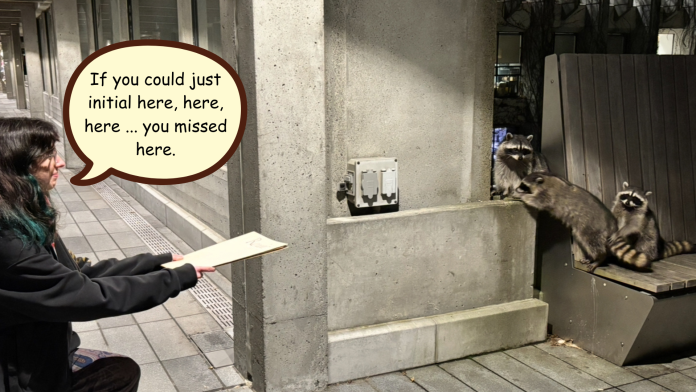
Another career highlight was being there for Tay Tay. Photographing her engagement to her football beau, a true dream came true! I think my photos were aesthetic and totally matched their vibes. The raccoons sneaking in the background of the photos truly made their engagement photos to die for. Haters say that she was Temu Taylor, but back off!!! Taylor LOVES Stanley Park. #DreamCouple #IAmAPhotographerNow #TotallyProfessional #NothingIsAsRomaticAsAPublicParkProposal #PPPForTheWin

All the likes and comments that my photos received catapulted me to a prestigious clientele — and they have given me great ideas for my 2026 New Year’s resolution! I will finally respond to the message requests from so many people requesting that I photograph their engagements to their Nigerian princes (omg there are so many of them!!). Unfortunately, in the past, I had to decline them all because I didn’t have time for anyone — I was focusing on my career as a stay-at-home daughter. And I didn’t actually have a camera. And the job market is kinda down. 

To the cousin who won’t stop questioning that I’m Taylor Swift’s engagement photographer: Don’t doubt me, Adam! I always knew you didn’t like me; I just didn’t think you would take your dislike to this level. I’m gonna tell your parents about it at the next family gathering.  

Overall, 2025 me showed initiative, confidence, and an inspiring resistance to criticism. Haters tried to get me many times throughout the year, but I was resilient! Every hateful comment left under my Insta posts was reported. I hit every hater that tried me with a block, block, block.

To be hella honest, I would rate 2025 with a 10 out of 10. Everything I did was great. I broke the stereotype of SFU girlies not being invited to the Met Gala. And I became the first ever SFU student to have trended on social media with the #IsSheBeingForReal? 

So here’s to an even better 2026. Although I’m not sure how I, or anyone for that matter, could top my 2025 achievements . . . 

The Peak investigates: Students falling down the stairs from Blusson Hall to the AQ

0
PHOTO: Aitore Zholmukhan / The Peak

By: Heidi Kwok, Investigative Journalist-In-Training

As a wannabe-investigative journalist, I was determined to follow in the footsteps of my predecessors at The Peak Investigates column. Thus, donning my fedora, beige-coloured trench coat, and with one too many coffee enemas in my system, I ventured out from the bowels of The Peak office to solve a very complex (yet seemingly straightforward) case

After making my way to the AQ, I squeezed my way into the long table near Renaissance Coffee to begin my observations. The case was simple enough: recently, an unusually high number of students have been reported falling down the stairs that connect the AQ to Blusson Hall. Sources say that people have been too busy texting and scrolling on their phones to notice the 50-foot drop right in front of them. However, I was unconvinced surely, this bright and highly-educated group of youths would know to keep their eyes peeled forward to watch where they’re going. Right?

Target #1: The clueless first-year

The first person to fall victim to the stairs was a first year speeding down the hallway, glasses askew, backpack slung haphazardly over one shoulder, its unzipped-compartment trailing behind a mess of crumpled-up class syllabuses. “Where is that damn lecture hall?” Distracted by the SFU room finder app, they almost made it down the stairs unscathed until one misplaced step sent their arms flailing like a windmill. For one glorious second, they soared like a bird before diving downwards, landing in a crumpled, defeated heap at the base of the stairs. Ouch. 

Target #2: The repeat offender

This one was easy to spot. Given the way they hung onto the handrails for dear life as they analyzed the stairwell with a concentration that world-class mountaineers reserve only for climbs as perilous as Mount Everest — this was far from their first rodeo. “You’re not getting me this time,” they muttered under their breath, and as if to prove their point, they brandished two sets of sling and carabiner, clipping one end to the rails and the other to the harness across their waist. They slipped on a pair of rock climbing shoes, secured on a helmet, before slowly beginning their descent. This was going to take a while . . . 

Target #3, 4, 5, 6, 7 . . . : The campus tour group

An hour later, and while still observing the rock (or stair) climber who had made it almost halfway down, a chorus of animated voices started drifting from above. “. . . And this,” announced a student tour guide decked out in SFU merch, “is one of the seven archaeological wonders of Canada: the Saywell Hall Atrium!” Her enthusiasm was met with a round of “oohs” and “ahhs,” as the prospective students whipped out their phones and excitedly snapped selfies. “Now folks, please direct your atten . . . aaughhhhhh!!!” The guide, with her back turned, failed to see the impending drop. Fortunately, her hands managed to find purchase on a nearby structural support. Unfortunately, that support turned out to be a member of the tour. In an effort to help the guide, the entire group also surged toward the ledge. The aftermath was almost elegant, as the tour group spiralled, spun, and flew down the stairs, one after another, like a synchronized Olympic diving team. The illusion was unfortunately broken when the rock climber cried out in desperation as one of the prospective students took them along for the fall.

A couple days later, a sandwich board appeared overnight, telling passersby to put their hands on the handrails of the stairs rather than using their phones. It appears my work here is done — the mystery behind students falling down the stairs can be chalked up to pure student-ness. 


Calls emerge for increased program funding for BC sex workers

0
A woman’s lower body is pictured in black and white while her face is cropped out. The lighting is serious. The woman’s arm is crossed over onto her shoulder, and she looks off to the side.
PHOTO: Levin Anton / Unsplash

By: Niveja Assalaarachchi, News Writer

On December 16, 2025, 10 organizations — including sex worker-led groups, feminist organizations, and First Nations groups — released a statement marking the International Day to End Violence against Sex Workers. In their statement, the groups called for the provincial government to increase funding for programs serving BC sex workers. 

The push comes amid a crisis in Vancouver’s Downtown Eastside, where centres serving unhoused women, those who face gender-based violence, and support for substance use are closing. In July, the PACE Society, a drop-in centre in the area, permanently closed down. In February, the WISH Drop-In Centre closed temporarily. Most recently, The Tyee reported that the Kingsway Community Station, Vancouver’s last drop-in centre for sex workers, was on the brink of closing as a result of funding changes tied to the City of Vancouver’s 2026/27 budget

In their press release, the groups noted that these centres are essential, given the mobile outreach, peer occupational health, and safety training services they provide. “We have seen first-hand sex worker-serving organizations having to close or reduce services over the past year and how detrimental this is to sex workers who need these programs day to day,” said the organization Living in Community. These centres are also essential amid the increasing prevalence of gender-based violence — violence which has seen a 54% increase in Canada since the start of the COVID-19 pandemic

The Peak spoke with Kaley Merritt, a mental health advocate at the Downtown Eastside Women’s Centre, on the impacts that the province’s cuts have had on sex workers and services. The Downtown Eastside Women’s Centre provides services to the sex worker community, such as temporary shelter spaces, recreation, and self-help assistance. Merritt noted that her shelter serves an average of 500 people a day — an increase of 200 people compared to the previous year. “There’s been a real demand on services, being that we are one of the organizations that are still operating in the Downtown Eastside,” she said. Merritt said the demand for increased services comes alongside increasing mental health struggles that are more noticeable among sex workers.

In BC, certain aspects of sex work are illegal — specifically, the ability for people to purchase sex services. However, it is permissible, in narrow instances, for sex workers to offer services. Merritt noted that the nature of how the province governs sex work has left many in the dark about how it applies in reality. She said this, along with the stigma that comes with their employment, makes sex workers hesitant to look into support services. 

The joint statement urged the government to pay attention to how these effects and the closures are tied to the criminalization of sex work: “We cannot accept the violence perpetrated against sex workers being minimized or overlooked,” as “continued closures, underfunding, and service reductions in the context of ongoing criminalization are putting sex workers’ lives at risk,” stated the press release. Andrea Krüsi, principal investigator at the research project An Evaluation of Sex Workers’ Health Access, stated, “Decades of peer-reviewed evidence highlight how criminalization undermines health equity and human rights of sex workers.”

Merritt noted that decriminalization reform “would really put a lot of autonomy in sex workers’ hands and reduce fear and open up possibilities.” She said, “Sex workers would really get a voice to decide what is it that they need and how can we come together to create different things that protect sex workers.” 

As for concerns around the shelters themselves, Merritt said more people seeking services that are gradually closing down put “a lot of financial strain” on her shelter. “It’s been difficult to maintain staff and carry on with a lot of the other supports and services that we need.”

For these compounding reasons, organizations like the Downtown Eastside Women’s Centre called on the provincial government to “allocate stable and enhanced funding for critical programs serving sex workers, following many existing recommendations, including those contained in the Final Report of the National Inquiry into Missing and Murdered Indigenous Women,” the final report of the Missing Women’s Commission of Inquiry, and the province’s gender-based violence action plan. “We often see that marginalized populations face the most impact from a lot of this, and they are very connected to one another,” said Merritt. “There’s a lot of systemic harm that falls into all of this. So, when we’re looking at sex worker issues, we’re also looking at Indigenous populations, BIPOC populations, [and] disabled populations.” 

When it comes to discussions centred around helping sex workers and tackling gender-based violence, Merritt said,

“It’s always important to remember that sex workers are people. They are human beings. They are mothers, daughters, sons — they’re people just like any of us. Sex workers deserve dignity and respect.”

— Kaley Merritt, mental health advocate, Downtown Eastside Women’s Centre

Brighter Side: music nostalgia

0
a black and white photo of a stack of CDs on top of a CD player.
PHOTO: KIBOCK DO / Unsplash

By: Zainab Salam, Opinions Editor

Art has a way of preserving time. My favourite albums are basically an auditory photograph of what life was like when they were on repeat; music is a time capsule. Lately, I’ve been packing up my room for a move, and I stumbled upon my collection of CDs that included my favourite songs and my stay-up-all-night companions. Like plenty do while going through their items, I had to listen to some of them. So, I metaphorically and literally wiped the layer of dust that coated my far too-long-neglected shelved memories. And oh my god. Nostalgia hit me like a wave — swept me back in time to revisit all my past crushes, and all my now-dead friendships. 

There’s a melancholy in this kind of nostalgia. Music can remind us of what we once were before all of our hopes and aspirations were buried under piles of responsibilities that appear never-ending. But music does more than recall moments; music echoes the past into the present. As cultural historian Jeremy Eichler suggests, music can act as an emotional bridge to the past, carrying forward the resonance of lived experiences in ways that facts or photos alone cannot. In other words, music allows our past self, for a brief while, to interlock itself to our current selves. For a moment, we stand in front of past selves and dialogue. 

Clichés contain pearls of human wisdom

0
a girl lying down on her bed, in a room that is slightly messy. There are three posters on the wall that read: live, laugh, love.
ILLUSTRATION: Olivia Blackmore / The Peak

By: Noeka Nimmervoll, Staff Writer 

The question of “what do I do with my life?” seems to occupy the psyche of many people. Which isn’t odd considering the relevance of existential questions and their resulting answers on shaping the trajectories of our lives. As we get older, we start to realize that nobody really knows what they’re doing. How do we find meaning in this vast continuum that we call life? One method that I’ve found to figure out the answer is through clichés like live, laugh, love. We all love to harp on the white mom who has found comfort in a cursive sign boasting this statement, but there really is something to this message. 

On a personal level, figuring out what’s important in my life has been difficult, but the answer came to me in a rather casual, non-academic setting: sitting at the bar talking with my friends. Laughing, enjoying others’ company, relaxing after work. That’s when the epiphany hit me: it really is just live, laugh, love! How corny, I know. 

It’s unfortunate that clichés have gained a negative reputation as phrases that are overused, and indicate a lack of original thought from the speaker or writer. Of course, there may be cases where this is true. If you’re to declare that your New Year’s resolution is to get fit and be healthier, you don’t want to hear someone tell you, “Well, actions speak louder than words.” You just want that person to hush. However, it seems that oftentimes they don’t understand the meaning behind the clichés that they hear, leading to undeserved judgment. However, clichés can be a tool of incredible insight into the human condition if they are understood. Instead of rolling your eyes at home decor that proudly boasts live, laugh, love, consider why this phrase has become immortalized in our context. 

Ignorance is bliss is another phrase that echoed around me many times in childhood, and now provides me with a different perspective on aging and knowledge — and makes me jealous of my baby cousin. But it also makes me grateful for my childhood, even the times where I was utterly lost and confused. Part of understanding the meaning behind clichés is getting older and experiencing life.

Clichés are a fascinating subsection of speech that provide a log of common human thoughts throughout history.

If you ever want insight into your circumstances, it might help you to know what the common consensus is.

PR-lady from athletics department holds mandatory teach-in on why football is problematic

0
PHOTO: Dave Adamson / Unsplash

By: An unsuspecting student

I was walking to the bus loop after a long day of classes when a shadowy pink and yellow figure suddenly appeared out of nowhere. A bag was then shoved over my head and my hands were zip-tied together. All I could smell was Chanel No. 10 Eau de Toxique Florale Gaz — don’t ask me how I know. The next thing I knew, I felt myself being pulled in all directions and down endless steps before finally coming to a stop. I heard a door creak open eerily. Someone then grabbed my shoulders and plopped me into a seat. 

When the bag came off my head, I found myself in a cramped and dimly lit lecture hall packed with hundreds of trembling undergrads. I was trying to gather my thoughts when a high-pitched voice rang out. I traced it to a blond woman in a pink blazer, peering out from behind a dilapidated podium.

“Helloooo my lovelies! My name is Tiffannee, with two f’s and two e’s, and I’m the new public relations manager for SFU’s athletics department. Thank you for voluntarily attending this talk about why it’s time to abolish college football!” I suddenly knew where I was. It was an SFU propaganda event dedicated to self-affirming their decision to get rid of the football team. 

Tiffannee beamed. “Now, as most of you know, the university officially ended the football program earlier this year, and I’m here to address why football no longer has a place in higher education. Football has literally been giving major #DestroyingTheEarthCore vibes since day one.” 

An overhead projector flickered to life. The words: Football — It’s Giving No More Hot Girl Winters appeared alongside a stock photo of a football helmet next to the earth on fire. Tiffannee began shuffling through her cue cards. “First off, we must protect our precious environment. Who knew tackling opponents at 100 km per hour would emit more carbon dioxide than the entire university combined? Yes, that’s right! Traumatic brain injuries are just not in this season. SFU wants to nurture academic success not the destruction of the ozone!” Blank expressions plastered the faces of the unwilling audience.“I’m an environmental science major,” a voice echoed from across the room. “What about the fact that we leave all of the lights on in our buildings? Doesn’t that account for more emissions than a little old football? In fact, where’s the science there . . . ” The person was then suddenly dragged out of their chair and out of the room. “Let’s get back to this informative session! I love this!” someone called out. 

“Yaaaas, thank you Todd! But the real problem here? The fact that football helmets are made from plastic. And plastic comes from digging wells or whatever. And wells? They’re bad for the environment, babes. This clearly points to a reasonable explanation as to why SFU would get rid of the program — because we love the environment! Even though we still invest in fossil fuel companies — UGH who put that on my cue cards??? Anyways, live, laugh, breathe the fresh air at SFU!” The same voice shouted from the audience: “Yeahhh! We love the environment!” 

“That’s right, Todd. You love everything except for me. Ugh. And moving ooonnn, football is just distracting. Pushups, burpees, bicep curls? 6:00 a.m. laps at the stadium? Noooo thanks. Just imagine how much more time players could spend on pesky coursework instead of dislocating knees and spraining ankles.

“Last thing, school spirit has gone completely out of hand.” A photo of a group of maple leaves wearing Red Leafs jerseys and chugging beer flashed on the wall. “We must preserve our identity as a commuter schoolTM. Rowdy pep rallies and free popcorn are out, period. Bus lines and broken R5s are sooo in!”

The audience erupted in an uproar of protest just as a thick fog that reeked of synthetic florals descended from above, knocking out several students, including me. I woke up slumped outside the library with a giant foam finger that said: “PROTECTING THE ENVIRONMENT (AND SCHOOL SPIRIT) SINCE 1965.”


Vancouver’s SkyTrain is now Bitcoin-powered

0
PHOTOS: Diego Mazz / Unsplash (skytrain) and Courtesy of @kensimcity / Instagram (Ken Sim)

By: Ashi, senior writer for imaginary infrastructure 

In a move described by aides as “inevitable, visionary, and definitely not a parody of governance,” mayor Ken Sim announced Thursday that Vancouver’s SkyTrain system is soon to be powered entirely by Bitcoin. Not metaphorically. Not financially, even. The trains, he says, will now run on pure belief. 

Sim, a self-described financial expert, takes his job as the city’s unofficial Bitcoin mascot rather seriously. In fact, this long-time evangelist for crypto solutions to non-crypto problems has previously appeared on at least seven YouTube channels dedicated to Bitcoin, spoken at the Virgo Crypto Summit, and repeated (patiently and faithfully) that Bitcoin is the greatest invention in human history.  

“A 20th-century mindset of electricity that comes from somewhere has trapped transportation for far too long,” Sim told The Peak. According to city documents (Sim’s doodles) obtained by a Freedom of Information Act request from The Peak, each SkyTrain car will now be tethered to the blockchain, drawing energy from the collective faith of earth’s billionaires and the raw metaphysical force of scarcity. Commuters may notice minor changes, including a new announcement in Sim’s voice reminding riders that any delays due to market volatility are only temporary. Compass Cards are now gone. Riders must scan a QR code and wait for the blockchain to validate their existence. Flares fluctuate minute to minute. And in the event of a sudden, unscheduled stop, passengers are advised to stay inside and loudly insist nothing is wrong.

Funding for the project will come from Sim’s personal donation of Bitcoin worth $10,000 and strategic budget cuts. The arts, culture, community services, planning, urban design, sustainability, and various city jobs have been trimmed or frozen, freeing up resources to expand the Vancouver Police Department’s crypto enforcement department and ensuring trains run on “trust me, bro” vibes. 

Conventional currency systems, Sim continued, are “basically a Ponzi scheme,” unlike Bitcoin, which is . . . different . . . somehow. For those with a profound distrust of institutions, Sim insists that Bitcoin is backed by math and the City Council. “Trust me, bro,” he explains. 

None of this, Sim insists, has anything to do with his personal investments, his friendships with billionaires, or recent political endorsements of Bitcoin elsewhere. Clearly, this project is for the people. After all, a whopping 29% of them approve of his performance as mayor. Which, when counted by blockchain, actually equals 100%.

The environmental rationale for the SkyTrain overhaul is, according to Sim, “rock solid.” Using “inverted sustainability,” he argues, the massive energy demands of Bitcoin mining are actually good for the planet because they encourage the construction of renewable energy projects. Somewhere. Eventually. By someone. Just not by him. 

“Demand creates innovation,” he said, “And if a few glaciers melt along the way . . . well, that’s what the bros call liquidity.” 

Crypto YouTuber Julian Figueroa applauded the decision. “Everyone who spends time in Vancouver will inevitably hear someone on the SkyTrain talking about the lack of affordable housing . . . This doesn’t fix that, obviously. But Bitcoin, eh?” he told The Peak.

“I have hope,” Sim concluded. “Not just for Vancouver, but for the world.” That hope now hums quietly, encrypted and immutable, always just one technological breakthrough away from solving housing, climate change, and the meaning of life itself. 

Community-Engaged Research Initiative celebrates fifth anniversary

0
Ten people raise their arms in the air in celebration. Some of them sit in chairs, while others stand near the back of the room.
CERi staff celebrate their fifth anniversary. / PHOTO: Kiara Okonkwo / CERi

By: Lucaiah Smith-Miodownik, News Writer

SFU’s Community-Engaged Research Initiative (CERi) marks its five-year anniversary of “community-driven research.” The organization focuses on “the capacity of SFU’s researchers and students to engage respectfully and ethically with community organizations, Indigenous Nations, community members, and leadership.”

CERi places community members who are directly affected by social issues at the forefront of their projects. Otherwise,

“When universities or other institutional researchers go into communities to investigate and explore the challenges communities face, the research doesn’t necessarily serve the direct or immediate interests of the community,” 

— Stuart Poyntz, co-director, CERi

Research that is not community-engaged may focus on “its own ends and its own ambitions” without prioritizing community needs or addressing challenges.

As CERi recognizes half a decade of community-focused work, The Peak is taking the opportunity to look back at the organization’s highlights. The Peak reached out to the organization for an interview, but did not hear back by the publication deadline. One of CERi’s accomplishments is the 312 Main Research Shop, “which offers low- or no-cost research services to local non-profits, providing access to academic resources and training to support community-driven projects.” The project is “inspired by the ‘science shop’ model widely practiced in Europe,” and allows SFU graduate students and faculty to work with community partners on addressing concerns. The shop has inspired over 14 community partnerships, including the Downtown Eastside Climate Resilience Roadmap. The roadmap “looks into the current and projected climate impacts to Downtown Eastside residents and organizations.” It also focuses on “further developing a strategic guide that integrates best practices in the social sector to minimize climate risks and emissions, alongside equity, health, housing, and other organizational goals.”

CERi also collaborated on the Indigenous-centred Knowledge Exchange, which “matches community-identified knowledge needs and strengths with institutional research support, ensuring research directly benefits and empowers Indigenous communities.” The initiative “provides funding to support researcher costs and offers community-based opportunities such as youth internships and the involvement of knowledge keepers (Elders, artists, youth activists, etc.) on a case-by-case basis.” One publication tied to the knowledge exchange describes “a practical application of a Two-Eyed Seeing approach in knowledge synthesis as part of Phase I of the First Nation Health Authoritys ‘Indigenizing Harm Reduction Study.’Two-Eyed Seeing “refers to learning to see from one eye with the strengths of Indigenous ways of knowing and from the other eye with the strengths of Western ways of knowing and to using both of these eyes together.” A full list of manuscripts connected to the exchange can be found on the Centre for Collaborative Action on Indigenous Health Governance site.

The initiative also worked on “Quiet Alarm: A Review of CBC’s Climate Reporting, a collaborative effort with the Climate Emergency Unit aimed at better understanding CBC’s approach to climate reporting. Doing so allowed the organizations to “make the case for reforms related to committing more resources and daily reporting to the causes of, solutions to, and urgency of, the climate crisis, connecting the dots between extreme weather events and fossil fuel combustion, and being more critical of false solutions that delay climate mitigation.”

Those interested in learning more about CERi’s work can view their five-year report on their website