Home Blog Page 531

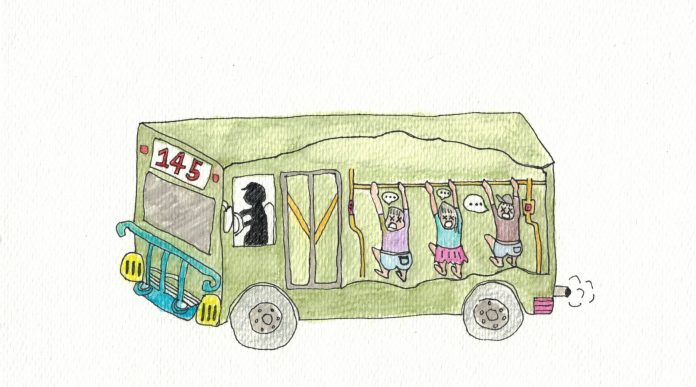
Yoga on the Go

0
Illustration curtesy of Mo-Molin

Written by: Ana Staskevich, Staff Writer
Illustration by: Mo-Molin

The start of a semester is messy. Most chaotic of all are mornings. You find yourself hitting snooze five times, brewing a new pot of coffee with your eyes barely open, and then rushing out the door with mismatched socks on your feet. In the midst of all this fresh-faced chaos, it becomes way too easy to forget the necessary self-care that every millennial on Instagram is preaching about. But meditation and yoga especially can do wonders for you.  

So what better way to practice this self-care than squeezing it into your morning commute?

With commuter yoga, learn to shut out the world, stretch back, and productively kill time. Here are a few moves that can get you started!

The Awkward Crotch-Level Stretch

This one is probably the easiest, because it can be done if you’re standing up even in a crowded SkyTrain or bus. Shorter folks, this may not be your favourite.

First, raise hands to grab the handle bars above your head. The closer you are to someone who is comfortably sitting down, the better (trust me, people LOVE being as close as possible on public transit). Part your legs to allow yourself to tower over those in front of you like the king you are — it’s your space, after all.

Feel free to release your inner stress by letting out low grunts (no one will mind), or dabbling in “rage yoga,” where you scream out your anger and frustration to your surroundings.

This is a beginner pose, but it is perfect for anybody looking to acquire a newly vacant seat.

The Murder Victim

This one is particularly good if you’re coming back from late-night classes and the SkyTrain/bus is emptier.

Find a few side-by-side seats that are open. Then, gently lower yourself onto the seats while on your back, and even out your breathing as you relax your arms. Remember: you’re not actually trying to get closer to death, just reaping its benefits.

This is a great pose for anyone needing a pick-me-up before heading home to retire for the night, but keep an eye out for any commuters dialling 911.

The Daddy Long-Legs Bend

This one requires you to be sitting down. It can be completed by yourself or with others (#sharingiscaring), and it is perfect for anyone looking for the vainglorious rush of impeding transit traffic.

All you do here is lengthen your personal space bubble. Stretch out your legs as far as you can, staying mindful of those hamstrings, preferably getting in the way of other people while you do so. Here, you can truly exert your dominance. Once you have established that you are the Alpha, your boosted ego can help you take on the day.

To master this at its professional form, just look at any crowd of loud teenagers sprawling around.


Dr. Elizabeth Dingle helps make science more accessible with Pint of Science Festival

0
Photo courtesy of Centre for Natural Hazards Research

By: Kelly Chia, Staff Writer

Fast Facts

  • Name: Dr. Elizabeth Dingle
  • Pronouns: She / her / hers
  • Departmental affiliation: Geology, postdoctoral research fellow
  • Education: PhD (University of Edinburgh), Geography MSc (Durham University), and  Natural Sciences BSc (Durham University).
  • Work experience: Dr. Dingle has worked part-time as a senior geomorphological surveyor as part of the Scottish Environment Protection Agency. She has also worked as an environmental scientist, mainly in geomorphology, water resources, and water quality, and as a Research Associate on various projects at the University of Edinburgh.
  • Fun fact: Dr. Dingle’s PhD thesis is titled “River dynamics in the Himalayan foreland basin.

When I entered Dr. Elizabeth Dingle’s office, my eyes were instantly drawn to what was hanging over her seat, a painting of a vivid mountain landscape with flowing rivers. She would later tell me that it was her first painting. To me, this immediately stood out as a symbol of Dr. Dingle’s passion for the environment.

As a postdoctoral fellow in the geology department (as of September 2018), Dr. Dingle primarily studies how rivers and landscapes interact with each other, which includes flooding. When asked to talk more specifically about her work, Dr. Dingle laughed, commenting that she is “kind of … all over the place,” as she has worked in the Himalayas and will be doing work in the Andes and in Canada.

For her thesis, Dr. Dingle completed fieldwork in the Nepali rivers to investigate how the size and location (i.e. the height of some river channels) affects how heavily flooded some areas get. Aside from that, she made a few return trips to Nepal for other projects. In 2015, Dr. Dingle returned to observe how the Bhote Khoshi, Narayani, and Sun Kosi riverbanks were affected by “landslide sediment inputs.”

Dr. Dingle has received many awards for her work, including Best Post Graduate Student 2017 from the Scottish Alliance for Geoscience, Environment, and Society (SAGES).  Dr. Dingle has given talks on sediment dynamics in the Himalayas at Western Washington University and the University of California, Berkeley.  

Currently, Dr. Dingle is researching what controls changes in the mobility of river channels, what causes rivers to move around, and other facts surrounding this process. This entails how sediment moves out of mountain ranges and how it gets deposited when it reaches floodplains.

When asked what spoke to Dr. Dingle personally in her research, she chuckled, pointing at her office window. Outside, we could see lovely mountain peaks, if somewhat obscured by the campus. Dr. Dingle then told me that she was fascinated with “how landscapes get to looking the way they look and what processes drive that evolution.”

Previously having done work in the University of Edinburgh and the University of Glasgow, Dr. Dingle had heard of the Pint of Science initiative during its beginning stages in London. At the time, she was a PhD student. Dr. Dingle described the creation of the event as an effort to “bring science to people.”

I felt an instant connection to this idea of bringing science to the people and Dr. Dingle was happy to share her thoughts about the importance of public outreach events like Pint of Science. It dawned upon me that as an SFU student, I had easy access to research publications. However, the general public has to face off putting paywall. On top of that, Dr. Dingle and I discussed how research can feel alienating for the general public because of how intimidating the language can be.

“The idea of it isn’t that we’re going to get a bunch of scientists to come give you really easy science. They’re going to tell us about the cutting-edge stuff they’re working on, but in a way that we can understand it or anyone can understand it.”

Pint of Science, Nerd Nite, and other non-profit initiatives like Cafe Scientifique are events that help close the gap between the general public and scientific experts. Dr. Dingle states “Pint of Science is special I guess because it is part of this big international festival which is happening in so many places at the same time.”

The event format of Pint of Science in particular aims to be more interactive than a typical lecture format. Freedom is given to the organizers on how they wish to run the event, as well as to attendees, who can choose the subjects or speakers they are interested in.

When she moved here, Dr. Dingle had looked into speaking at a Pint of Science event, but was shocked to discover that it had not reached Vancouver yet. Dr. Dingle, then, found herself in the interesting position of coordinating Pint of Science’s debut, along with her graduate students.  Pint of Science is coming to Vancouver for the first time since its start in three UK cities in 2013, and it’s one of 25 Canadian cities participating. The reception has been great so far, too; at the time of writing, four events had already sold out in advance.

This year, the Vancouver festival focuses on three themes: Beautiful Mind (neuroscience, psychology, psychiatry), Our Body (medicine, human biology, health), and Planet Earth (geosciences, plant sciences, and zoology). Ordinarily, the festival would focus on a total of six themes, but this was a manageable amount for the festival’s first year and played off the strengths and passions of Dingle’s team of volunteers. Dr. Dingle expressed particular excitement over the topic of Planet Earth, as her passion lies in that subject. A fan of learning, Dr. Dingle was excited at the prospect of attending some of the talks surrounding the other themes in order to learn something new.

When asked her most important objective with Pint of Science in Vancouver, Dr. Dingle takes a moment to thoughtfully answer the question.

“I think it’s just trying to engage people in the city with the research that is going on within the city. I think that science is often just put behind a closed door and you don’t really know what’s actually going on. It’s really just nice to share what local researchers are doing and try to engage more people.”

While Dr. Dingle explained her work to me, I thought of how I would not have thought about how sediment factors into flooding deeply on my own. This conversation with her illuminated how many factors controlled river channels, which I had thought of as simple. Just so, initiatives like Pint of Science will bring so many lightbulb moments for the public.

Editor’s note: Tickets and more information on Pint of Science can be found on their website.

 

Survival guide: Talking about Game of Thrones

0
Photo curtesy of Flickr

Written by: Nathaniel Tok, Peak Associate

“What did you think about Game of Thrones last night?”
Freeze.

Take a deep breath and look contemplative before you spiral into panic because you’ve never watched this show. After eight straight years of being tormented by this question, you can’t admit to your nerdy friends that you just don’t care about that lady with the 10,000 different egotistical titles.

Game of Thrones (GOT) is mercifully ending, and everyone who has still not seen it must’ve been really busy this whole time with, say, pirating any other of HBO’s shows. Fans always expect that a show with this much incest and dragons would surely have already been seen by everyone (Ironically, the first Targaryen dragons probably had incest, since Aegon the conqueror only brought three to Westeros and one died during the conquest . . . yet somehow there were 50,000,000 in the Dance of the Dragons).

Now, if a friend ever actually tries to talk about dragoncest with you, you’ll know you’re backed into a conversational corner about Game of Thrones. Here’s how you talk to your nerdy friends whose YouTube algorithm only recommends GOT reviews, like me.

Distracted by the dumbassery

It’s no secret that characters in GOT constantly make terrible decisions, getting themselves beaten, captured, or killed. (Cough, cough, the Starks.) If there’s one thing Game of Thrones fan love, it’s giving out a dissertation’s worth of opinions on these characters.

If trapped in a trial-by-combat GOT conversation with a diehard fan friend, let your adult friend with an entire full-sized map of Westeros in their bedroom do all the conversational work.  You don’t even need to know anything! Just say something like, “I can’t believe how dumb [random character] is this season . . . ” Watch your friend either go crazy to defend said character or give reasons why they agree with you.

Simply talk about coffee

Why? Because of the Starbucks cup in season eight, episode four. It’s that easy.

Beat them at their own game

Just as most of your friends don’t actually speak classic high Valyrian, many of them also never actually read the books. If they only watched the show, they’ll only speak common Westerosi like peasants and they’ll know nothing of the books’ character cast. This is a sneaky opportunity to impress them by stringing together fantasy-sounding names to make it sound like you know more than they do. Talk confidently about how supposed Valyrians like Daemion Celtigar and Victor Velaryon should have made it from the books to the TV series. They’ll never know which character you might be truly making up.

Use catchphrases to show that you’re definitely a fan

Self-explanatory. I imagine that being a scriptwriter for GOT is easy at this point because half of the lines are phrases used repeatedly like, “The North remembers,” “A Lannister always pays his debts,” or “You know nothing, Jon Snow.” The other half of the script is set-up for characters to use said catchphrases.

The escape hatch

If you really, really don’t want anything to do with the TV show, make up an excuse about how slowly the books are coming out. Say you’re waiting for all of the books to be released before reading them all and then watching the show. You get to demonstrate to your friends your “superior scholarly prowess,” and there is no way to refute this logic, since none of them will read the books.

Of course, neither will you. I mean, each book is basically a textbook and there are, like, five of them.  The best part is that George RR Martin procrastinates writing these books better than a student can procrastinate writing a term paper, so this excuse will last for at least another year.


The Labour of Love Throughout Merata: How Mum Decolonized the Screen

0
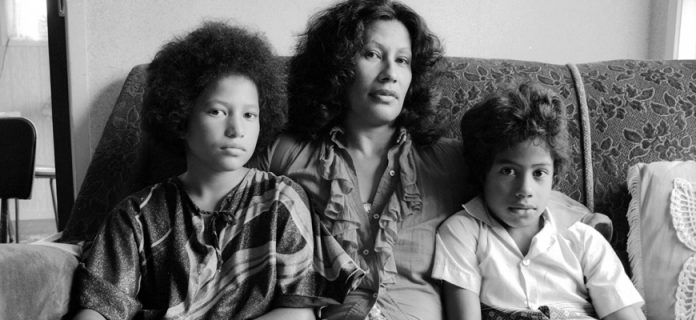
Photo of Merata Mita and her Children. Sourced via Doxa

By: Kate Olivares, Peak Associate

Merata: How Mum Decolonized the Screen is directed by Heperi Mita, and it chronicles his journey of archiving and learning more about the life, art, and activism of his distinguished mother, Merata Mita. This was the closing screening for Vancouver’s DOXA Film Festival, celebrating the finest in documentary film.

Going into this film I had not heard of Merata Mita, but it turns out that I am deeply invested in everything she left behind. As a struggling single mother, she stumbled into filmmaking in the 80s out of desperation to show the struggles of her fellow Māori people in New Zealand. After this, she became a crucial — and sometimes solitary — voice, heard not just in New Zealand but worldwide, speaking up through film about Māori rights. Merata sheds light on this crucial contributor to Indigenous activism.

Merata Mita was adamant in drawing the connection between the dominance of white male voices in film and their overall dominance in society. Indeed, the colonial grip on film embodies the colonial grip on human consciousness — invisibly yet pervasively, white society keeps Indigenous peoples seen as inferior through dominating the narrative of human life. No better medium of storytelling proves more important in this regard than film.

Underneath the filmmaking and the activism, this documentary sheds light on Merata as a Māori woman and what this has meant throughout her life. This includes poverty, sexual exploitation, and the fixed presence of her five children in all of her endeavors. However, it also highlights how her identity gives her strength. Part of why Merata’s story is so remarkable is that it illuminates how these seemingly separate pillars are intricately intertwined; her motherhood, activism, and artistry rely on each other to exist.

As such, Merata’s story extends beyond her work and family. One of the film’s highlights are the interviews with Māori filmmakers today that spoke lovingly of Merata’s mentorship. I was thrilled to see one of these interviews featuring Taika Waititi, a Māori filmmaker who I think carries one of the most exciting voices in the film industry today. Part of why Merata endured violence and marginalization throughout her career as the lone Māori director was to prevent such struggle for future Indigenous artists.

I don’t have the space to discuss the artful way Heperi brings his mother’s never-before-seen, decades-old celluloid into big screens, or the clever ways in which the narrative is able to morph into the different aspects of Merata’s legacy. At the crux of it all, the film leads me back to the notion of decolonizing. Decolonizing will take more than reclaiming land and dialogue, but the arduous process of reclaiming consciousness, to see each other in a new lens.

Merata has given us this lens, along with a new path. Now, we must follow it.

While there are currently no listings for Merata: How Mum Decolonized the Screen in Vancouver, it will start to expand to theatres following its initial May 11, 2019 release date.

10 reasons why Alyssa Milano’s #SexStrike reminds us that not all activism is created equal

0
SONY DSC

By: Gabrielle McLaren, Editor-in-Chief

Content warnings for this piece include: abortion, pregnancy, and sexual violence.

In May, the state of Georgia passed House Bill 481, nicknamed the “heartbeat bill.” Business Insider sums it up nicely: “While the bill’s main goal is to outlaw abortion after five to six weeks of pregnancy, the law’s provisions establish fetuses as full people under the law — meaning women could be held criminally responsible for seeking an abortion or even for having a miscarriage.”

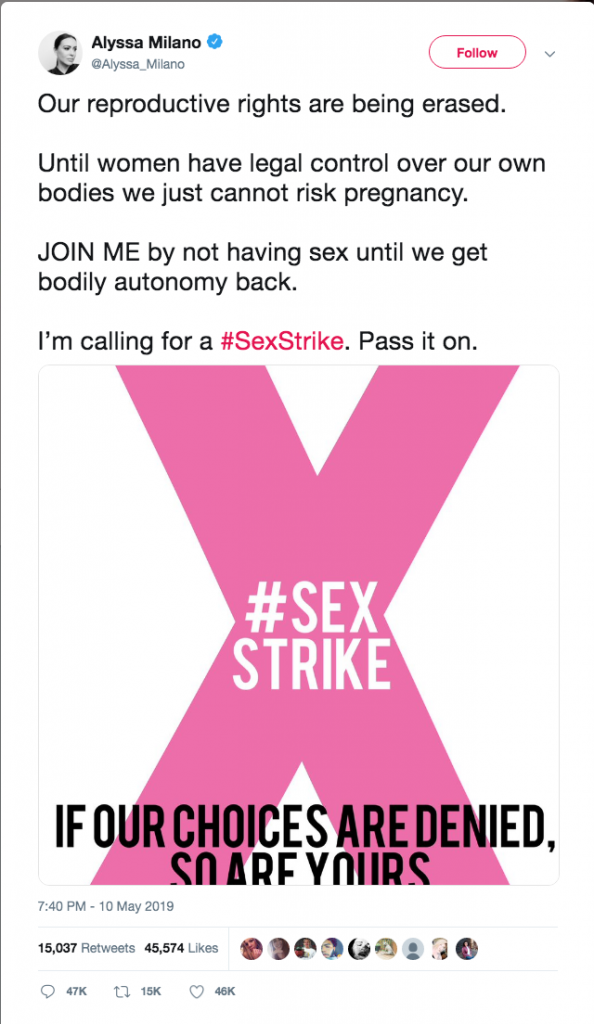
The public outcry coming from both the general public and the medical community in response to this bill is somewhat encouraging. But one proposal from Alyssa Milano, an American actress and #MeToo activist, blew my mind.

Georgia’s recent decision to take the first step in making The Handmaid’s Tale canonical reality was met with instantaneous backlash.

This could literally be the plot of an Ancient Greek comedy. At first I was sure this was satire. But no, Milano is proposing that women actually refuse to have sex with men until abortion laws are fixed and women have full access to legal reproductive health services.

I’m going to go ahead and provide a point-form list of why her strategy is flawed because there’s a lot of inherent privilege and discriminatory undertones to unpack.

  1. There’s a heteronormative, penetration-focused definition of “sex” at work here that makes the entire project inherently non-intersectional. Feminism fails when it isn’t intersectional. It also begs the ever important question: does Milano allow blowjobs?   
  2. Similarly, this line of thought assumes that all women are able to conceive a child as a result of sex — which is untrue for many women with various health conditions, as well as many of our trans* sisters. Motherhood and womanhood need not be so interdependently connected.  
  3. The #SexStrike assumes that women have been giving sex freely to men in the first place, which is not true for many women in abusive relationships.
  4. This plan really sucks if you’re a woman who legitimately enjoys sex. Since that’s not accounted for, what ends up happening is a reinforcing of the trope that women don’t enjoy sex, and just do it for the benefit of their male partners.
  5. This plan treats sex as a carrot on a stick for men to run after — “Go fix problematic legislation and your partner will give you a prize.” I think that’s offensive to anyone in a healthy relationship where sex is reciprocal, including men.
  6. This plan reinforces the idea that women only exist for men to have sex with, and that not having sex with women is a punishment outside of the status quo. A feminist movement shouldn’t share discourse with incels.
  7. Similarly, weaponizing sex is a slippery slope. Withholding sex to get what you want is a sign of a toxic relationship, and fits into emotional and sexual abuse. Sex with an intimate partner should be about bonds of closeness and mutual gratification, not power and punishment.
  8. This plan suggests that women only have the power to affect change indirectly. You can deduce from Milano’s tweet that her line of thought is that if women don’t have sex with men, men will get angry and enact political change for them. That’s a disempowering way to view women, who have historically been the main movers and shakers of the reproductive rights movement.
  9. The strike implies that men should only care about women’s issues when there’s something for them to lose, which isn’t true — women’s rights and women’s health are human rights and public health.
  10. The #SexStrike seems disconnected from reality. Will one Sex Striker’s decision not to have sex actually reach, impact, influence, or otherwise put pressure on Governor Kemp and other state politicians who have put through these policies? It’s not likely, because it doesn’t take into account the misogyny and motives of the GOP lawmakers behind the bill.

Ultimately, this strike exemplifies ineffective performative activism. Other forms of action, such as letter-writing campaigns, donating to sturdy pre-existing organizations such as Planned Parenthood, or even the film industry’s slow but steady backing out of Georgia are much more effective. These more grounded, less gimmicky methods signal public disapproval to the right people, and actually help the people who are affected by these bills.

Look, I get it, our current world feels as if someone tugged on a stray thread in the fabric of reality and the whole thing is unspooling around us faster and faster. Sometimes it’s hard to figure out how you can even start solving overwhelmingly large social problems. But my gosh, not only is a sex strike not going to fix the Georgian abortion laws, but it relies on and reinforces so many problematic notions about sex, sexuality, womanhood, and consent itself. It’s an important reminder that activism can do more harm than good if applied incorrectly, and that critical intersectional analysis will beat a hashtag any day.  

A Look at Snotty Nose Rez Kids’ new Album ‘Trapline’

0
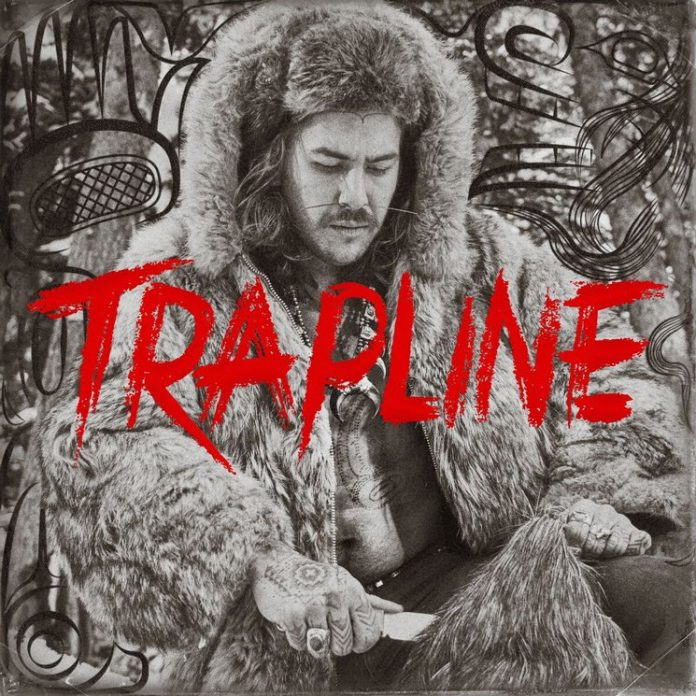
Album Artwork for trapline courtesy of Snotty Nose Rez Kids Music / Fontana North

By: Ana Staskevich, Staff Writer

Snotty Nose Rez Kids, composed of Darren “Young D” Metz and Quinton “Yung Trybez” Nyce, are a Haisla hip hop/rap duo currently based in Vancouver. They recently released their third studio album, Trapline, on May 10, in time for their Trapline Tour starting in the Netherlands and crossing through Canada.

Having risen in popularity all across Canada after the debut of their 2017 album The Average Savage and subsequent tours, the two have established a name for themselves by highlighting issues of racism and marginalization in their music, where they centre Indigeneity. Snotty Nose Rez Kids are known for their lyricism and catchy beats, and the pop culture references in their songs tie up their self-image as artists.

Trapline is an overall strong album, with a focus on lyrical structure in songs such as “Creator Made An Animal.” The lines “500 years my people been humble / 500 years we dealt with the struggle / 500 more years for all of the my youngins / For 500 years we been drumming and drumming” speaks not only to the impact of ongoing colonialism on Indigenous peoples, but also, more importantly, of Indigenous resistance and resilience.

Tracks such as “Mama’o Su’Ames” are part of The Skits in Trapline, which are all delivered in the Haisla language and are performed quite differently than the rest of the songs. They give us a better glimpse of the cultural values that are embedded in the album.

Finally, one of the more jarring and creative tracks on the album is “I Can’t Remember my Name,” which is my favourite of mine after “Boujee Natives.” It offers us an upbeat track that transitions into a harder rhythm, and it emphasizes keeping true to one’s Indigeneity despite society’s attempts to stifle it.

Trapline is an amazing follow-up to Snotty Nose Rez Kids’ previous work, and delivers to us energetic and refreshing pieces that tackle Indigenous generational livelihoods and the importance of empowering First Nations identities. You can catch them live on their tour on May 30 at Fortune Sound Club.

Council Corner Tuesday, May 14

0
Chris Ho/The Peak

By: Ana Staskevich, Staff writer

Graduate Council brings forth issues surrounding the coffee machine funding

Nicholas Page, director of graduate services, recommended a decreasing subsidy approach to counter the per-cup costs of providing free coffee in the Graduate Student Society (GSS) lounge.

Staff have determined that the cost per cup fluctuates based on users, where less users meant higher costs and vice versa.

The next step will be to develop proposals for a new service delivery mode as, according to staff, the cost per cup is at least $1, which is significantly higher than anticipated. Council is still discussing how to alter the servicing of the coffee in order to reallocate some of the $22,500 currently used for coffee toward other programs. Page asked for feedback that had already been gathered from caucuses to be e-mailed to him.

Graduate student housing project at UniverCity

Sibo Chen, a GSS member, brought to Council’s attention the upcoming development of graduate student housing in UniverCity.

While the project is still underway, Chen proposed the possibility of the GSS getting involved in order to potentially oversee the management of the housing when completed. It was noted that this management could operate under a residential college model similar to that of the University of British Columbia’s Green College. Council may be looking for ways to initiate discussion of their involvement to the university administration.

U-Pass referendum and challenges

Page announced that the GSS has been in contact with SFU regarding a joint information campaign after the 20% against-vote on the U-Pass Referendum. The campaign would aim to inform people of the benefits that TransLink provides that go beyond bus service.

Graduate Council resolved to appoint Stephanie Yu, GSS administrative assistant, as secretary of Council.

Learning Together Conference, organized by SFU Faculty of Education graduate students and faculty, to be held on May 25, 2019.

A free drop-in sports program for graduate Students, Graduate Sports, to start on June 7, 2019 from 5:30 p.m. to 7:30 p.m.

Group projects require everyone in one place — like in the classroom!

0
Photo courtesy of JESHOOTS.com via Unsplash

By: Nicole Magas, Opinions Editor

Oh, the humble group project. We know how this will go: four students enter, two disappear on the second day, one doesn’t seem to be in the right class, and the final student shares the grade they earned with everyone else. Group projects are a hot mess and can constitute a legitimate reason for you to peace straight out of a class when you spot them on a syllabus, depending on how much of the grade they’re worth.

When students tap into their masochistic side and choose to stick it out, though, there’s an understanding that the experience is not going to be pleasant. It’s not going to be fair. It’s going to test your interpersonal skills to the breaking point. And there’s definitely going to be public speaking. But quite possibly the most frustrating thing of all is that it’s going to be like herding a mess of caffeinated cats into a single carrier case after screaming, “We’re going to the vet,” at the top of your lungs.

Here’s what professors never seem to take into account when assigning group projects: students very, very rarely have schedules that line up with other random students in their classes. Hell, it’s been months since I’ve been able to fit myself into my friends’ schedules, let alone that of complete strangers. If professors would grant their time-strapped students even 30 minutes in class to work in their groups, it would take a lot of the stress off of trying to align the planets into that sweet spot when everyone is free to meet.

Students are balancing work, course loads, family drama, and yoga classes into a day that never feels like it’s actually 24 hours long. And yet we’re still expected to magically find a few unaccounted for seconds to all meet up together on a construction crane somewhere to discuss who is going to make the PowerPoint slides.

And yes, it would be wonderful if we could all agree to connect remotely over the electronic ether, except Greg is a hipster who doesn’t believe in social media. (There is always a Greg. You can look this up.) As the emergence of new communications technology begins to outpace new generations, even finding which platform groupmates all share can be a chore.

Instructors of SFU: if you’re going to include a group project on the syllabus, then please, for the love of anything good left on campus, give us some time to work on it in class. All we ask for is just a few minutes to make sure everyone is on the right track. And to touch base with Greg.


CO-OP Comic

0

Comic by Ryan Blackwell

Comic by Ryan Blackwell

Do Michael Phelps and Caster Semenya both share an unfair competitive advantage?

0
Photo courtesy of Steven Lelham via Unsplash

By: Ana Staskevich, Staff Writer; Alison Wick, Arts Editor
Introduced and compiled by: Nicole Magas, Opinions Editor

In a May 2 Washington Post article titled “We celebrated Michael Phelps’s genetic differences. Why punish Caster Semenya for hers?” Monica Hesse criticizes the International Association of Athletics Federation’s (IAAF) decision to ban Caster Semenya from competitive running. As the ban resulted from Semenya’s naturally high testosterone levels, Hesse argues that the ruling creates a sexist double standard that is not applied to other athletes with naturally occurring genetic advantages.

Semenya, a cisgender woman, has been the target of multiple investigations that question her womanhood at the chemical level. The Peak’s Arts Editor Alison Wick and Staff Writer Ana Staskevich discuss the nuances of this issue, and counter some of the arguments in support of it.

Ana: In the case of Michael Phelps and Caster Semenya, I think we are dealing with similar if not identical situations. Phelps has many biological advantages as an athlete: long arms, less lactic acid, more flexible joints — a combination that some of his competitors lack. Semenya, on the other hand, produces a higher level of testosterone, which some believe serves as a biological advantage in sporting performance. I don’t think one should be celebrated and the other condemned (as in the case of Semanya) as they are both naturally occurring.

Ali: I agree. Considering them as different cases is rooted in transphobia and also some racism. However, it’s clear that there is a central difference between them, namely gender identity. In Semenya’s case, the biological advantages — or abnormalities, as they have also been called — are about whether or not she is “woman enough” to compete against other women. Testosterone is considered to be the male sex hormone and estrogen the female sex hormone. In this case, the root of the argument is not so much about competitive advantage, but rather the arbitrary gender divide in sports.

Ana: While I understand that gender differences are important to talk about in sports, I think these situations are rooted primarily in the biological differences that serve as advantages to the athletes. Like you, I believe this issue has been wrongfully dealt with by the IAAF. However, this all falls back on how so called “abnormalities” help the sporting performances of physically gifted athletes. Semenya and Phelps are no different in the sense that they both have attributes that help them succeed over their competitors. Perhaps athletes like Usain Bolt have some quirk in their bodies that make them better than others. I don’t think Phelps’s and Semenya’s identities matter here . . . it is more so what they bring to the table in the athletic world.

Ali: I guess the way I am looking at this is more from the perspective of why they are seen as different — why it’s so wrong to have elevated testosterone if you’re a woman, but if you’re a man with abnormally long arms, it’s fine. While the case is ostensibly about their advantages, the underlying fears actually make it about policing a rigid, binary boundary between males and females. In an op-ed for the LA Times, Ruth Wood writes, “The purported goal of gender verification was to prevent males from posing as females in competition. There has been no recorded instance of normal men passing themselves off as women. And yet sports federations continue to target women who do not conform to feminine norms.”

This is similar to trans-exclusionary “feminists” who feel that trans* women are just men trying to infiltrate women’s only spaces. These arguments that are really only based in transphobia and fear rather than actual fact. This is compounded in sports where gender essentialism is a core part of the culture. But does this “necessary” gender division justify the discrimination? One could make the argument that the IAAF decision creates something of a hormone ceiling for female athletes. No one ever asks men to supply proof of “normal” testosterone levels, because the fact is that culturally we expect men to naturally be “better” than women. And we base this on entirely arbitrary values of what makes a “normal” man and woman, such as testosterone levels.

Ana: I can understand your argument. I think sports are very rigid in how they define and measure gender. It’s unfortunate that sports distinguish between male and female performance, as categories that must be kept separate. A lot of it is arbitrary, of course. I can see where you’re coming from in how men are seen as “naturally superior” in their physical performance. Semenya is now being crucified because she exhibits these so-called masculine attributes in her genetic makeup. There is a double standard in Phelps being praised for his abilities. By competing as male in male athletics, he is afforded unlimited capacity to succeed.

However, I still feel that applying gender to the argument only reinforces the idea that there is something fundamentally different between men and women when it comes to athletic ability. The fact that men and women both produce estrogen and testosterone naturally shoots out of the water the idea that hormones are a definitive or accurate measure of sex. We should be aiming to decentre gender from sports altogether and focus on celebrating all kinds of natural differences that produce extraordinary athletic ability.

Ali: I guess that’s where it gets complicated in the world of sports. Gender is one of the most fundamental structural divisions for athletics, thus in any case about athletic advantage gender is inherently involved. So for many people, to consider Semenya’s higher testosterone levels a fair advantage would be to question to entire gender binary of sports period. I would basically say what I said in the beginning, that these cases are in fact different because of the genders of the two athletes and also the nature of the hormones. In Phelps’s case, his low production of lactic acid is seen as a positive because it doesn’t threaten the gender binary of sports competition. Semenya, on the other hand, whose case is about a gendered hormone, is seen as being unfair because she challenges what are considered the natural abilities for women. And that’s not even beginning to talk about the fact that she is a Black woman.

Ana: Race is absolutely a big part of this. In terms of your earlier points, I still see Semenya’s elevated testosterone as a case of physical advantage. I have heard people argue that Semenya’s testosterone is easier to quantify and “limit” as opposed to Phelps’s wingspan or his low lactic acid, but the reality is that it doesn’t matter . . .  nor does the gender binary in sports. Limiting them, regardless of the effort it takes to do so, is not relevant. We should instead see this as a case of similarities. Both athletes are physically gifted. We should treat them the same, rather than crucifying one and praising the other. What’s the point of doing a sport if you’re not any good at it? Are we just supposed to ignore our natural talents in life and not pursue things that come easier to us?

Ali: Yes, exactly! Limiting athletes because of their natural advantages would require officials to kneecap half of all professional athletes. My main point is that they have limited her in order to protect the athletic gender binary, because her case, while the same as Phelps’s in many ways, is more about what is fair to the other “female” athletes. It’s not about what is fair to her at all.

Closing thoughts: The case of Caster Semenya is fraught with several layers of gender discrimination, transphobia, and racism, all mixed up in an archaic sports culture that still treats men and women as fundamentally different creatures. Undoubtedly, Semenya has been prescribed unnecessary, invasive procedures in an incredibly personal aspect of her life, all to parse where she falls on an arbitrary divide between men and women. Semenya, like many other athletes, has been gifted with a naturally occurring advantage that helps her succeed. She is not a science experiment — she’s a superstar.