Home Blog Page 523

SFU hosts celebration of Rwandan resilience

0
Courtesy of Kwibuka25

By Gurpreet Kambo, Peak Contributor

“We’re titled today: 25 Years: Rwanda Remembers. But we’re here also to talk to the resilience, the renewal of the Rwandan people,” said SFU professor June Francis, at an event on June 6 at the Morris J. Wosk Centre for Dialogue, remembering the 1994 Rwandan genocide in which nearly a million people lost their lives.

“We ask that we all open our hearts and our minds [ . . . ] we’re not here for any other reason than to ensure that these events never happen again. In order to do that, we have to open up to the pain of memory. But we also need to salute the Rwandan people in their resilience.”

The event, officially titled “RR25: Remembering 25 Years of Reconstruction and Reconciliation in Post-Genocide Rwanda,” was organized by the SFU Institute for Diaspora Research and Engagement, along with local organizations Building Bridges for Rwanda and The Hogan’s Alley Society.  

The overarching theme of the evening was “resilience,” and the event hosted a lengthy list of speakers covering topics related to the Rwandan genocide and its aftermath.

SFU alumnus Lama Mugabo spoke about how Rwanda transformed from a “failed state in 1994, to a model state that a lot of countries around the world are emulating.”

“After the genocide, we also have to think about social inclusion,” said Mugabo, on the topic of women’s rights in post-genocide Rwanda.

“To the government’s credit, a new constitution was written that gave equal rights to women. Women now have the same rights as men to own property, but also in terms of elections. Because women were so far behind, they came up with [a quota] of 30% of women [ . . . ] women took that 30% and turned it into 64%,” he said, to applause.

“Oh Rwanda. Oh Motherland,” stated Fraser International College student Sandrine Umuhoza. “Lest I forget how you were bleeding, bleeding the blood of your own. How can we forget the rivers that were flowing blood, and the bodies that were eaten by the birds and the dogs.”

Umuhoza spoke about Rwandan women, particularly from the perspective of a young woman in Rwanda who grew up in the country after the genocide. “Our parents had to sweat blood and sacrifice a lot to ensure we had a safe place to call home. So it is upon us to ensure that our home safe for every Rwandan.”

Dr. Masahiro Minami, SFU assistant professor of counselling psychology, spoke about his work in Rwanda in facilitating reconciliation between survivors and perpetrators of the genocide. He shared a quote from a survivor who talked about the relationship they had formed with a perpetrator who had harmed them.

“Others who sought forgiveness, left when they received it from me. I’ve never seen them since. But he’s different [ . . . ] he continues to show his apologies in actions, and it makes our relationship stronger.”

Minami later noted that an application for an expanded facilitation program had been submitted to the Rwandan government.

There were several other distinguished speakers and attendees, including Soline Nyirahabimana, Rwandan Minister of Gender and Family Promotion, and Dr. Diane Gashumba, Rwandan Minister of Health.

Steven Kega, a student at Thompson River University, discussed his experience growing up in Rwanda and his research on Rwandan plant ecology.

Dr. Regine King, a professor of social work from the University of Calgary, spoke about her research into the long-term psychological well-being of survivors of the Rwandan genocide.

Also announced at the event was the RR25 Legacy Project that will consist of a biannual conference and study tours to Rwanda. Mugabo spoke to its importance.

“Very often, because people don’t understand the complexity of Rwanda history and development history when we have public conversation about Rwanda, the conversations tend to be diluted and before long the discussions veer away to topics that people are more familiar with.

This time we hope to engage people who have visited Rwanda and sharing their experience on Rwanda to understand how the Rwandan model can be useful for the diaspora to build resilient and sustainable communities here in Canada.”  

The event ended with a few words from Dr. Francis. “We heard a lot about resilience, we heard about being better together, about youth and the future, about forgiveness. We also heard a lot about pain, and the hope that this will never happen again. I wish I could say from what we’ve heard that this will never happen again. But what we’ve head here should give us courage.

We had a question at the end that asked, ‘How can we learn to rise from these ashes, and continue on, with a kindness? To stand in the very places that turned a blind eye?’ That is forgiveness from you as well.”

In the Q&A period that followed, one member of the audience asked about what many have called a genocide currently occuring against the Uighurs, a Muslim minority in the Xinjiang region of China. “It’s very sad, I lost contact with my family members over two years ago [ . . . ] all phone numbers disappeared, not in service. How can we help them?”

Though there were few specific answers, Dr. Francis complimented her courage and requested a moment of silence from the audience for the individuals lost and in danger in that conflict.

Reflecting on the event to The Peak, Mugabo stated that: “The feedback from the audience is positive. We are told that the event exceeded their expectations.”

“Most of people who spoke to me said they learned a great deal about Rwandan history. They said it was refreshing to hear what works in Africa. Most of the time, they hear negative news and complaints about what doesn’t work.”

Likewise, volunteer Gaelle S. Ingabire wrote in an email interview that: “I wanted to help in changing the narrative about Rwanda. Given that most of the times stories about third world countries are about wars, poverty, famine, you name it. With this event we were given an opportunity to show more than that and shine a light on the journey led by Rwanda after the 1994 genocide against the Tutsi,” she said.

Concluding, she noted, “choosing to remember is a way to mourn the lives that were lost and also honor every person that helped in putting an end to the genocide. Moreover, in order to make sure that we don’t make the same mistakes, we must learn about the past ones. We need to know and learn about our past in order to have a better future.”
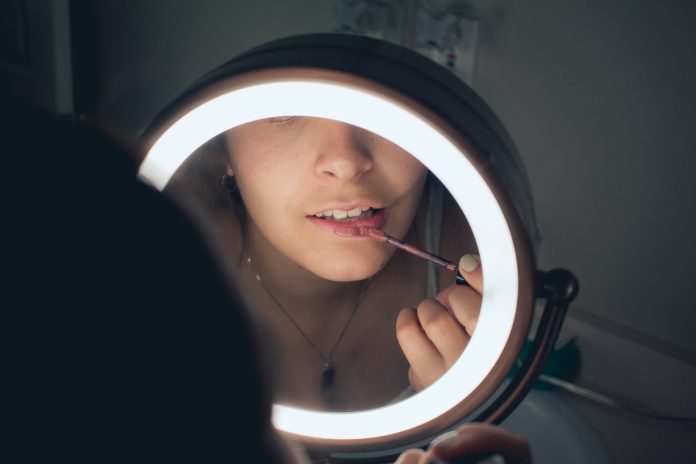

Is make-up a tool of oppression or an expressive medium for empowerment?

0
Who is make-up really for anyway? Photo by Andres Charavarriaga/The Peak

By: Encina Roh, Peak Associate, and Yasmin Khalili, SFU Student. Introduction and conclusion by Nicole Magas, Opinions Editor

Intro: Make-up is a very political item in society. In an October 2018 article for The Walrus titled “Why wearing lipstick is a small act of joyful resistance,” Erika Thorkelson considers the trajectory of lipstick in particular throughout history, and why women have such a complex relationship with it.

In this informal dialogue, Encina Roh and Yasmin Khalili respond to Thorkelson’s article from their own unique perspectives.

ENCINA: Firstly, I’d like to say we exist in a patriarchy, so I acknowledge most things historically practiced by women cannot be completely divested of their patriarchal roots or undertones. For one of my classes, I studied the works of Simone de Beauvoir, who claimed that the historical existence of “women” is relative to that of men. Women are defined by what we cannot do rather than what we can.

This is why feminism seeks to define women on their own terms. Although make-up might be a product of patriarchal oppression, l think women can redefine what make-up means to them.

In fact, the make-up looks considered conventionally attractive to the male gaze — smokey eyes, tinted lips, fully concealed skin — are quite narrow. I find myself using make-up to purposefully challenge these norms. (I think a really sharp wing and odd-colored lipsticks lend to an unmistakable air of “leave me the fuck alone, I’m a lesbian.”)

Nothing feels more empowering than this: knowing that I wear my make-up the way I want to because it makes me happy, rather than the rest of society.

YASMIN: As The Walrus article mentions, make-up owes much of its popularity to how it changes a woman’s appearance to be more “feminine,” and as a result, more pleasant to men’s eyes. Although make-up could also be used as a powerful tool of individuality, unfortunately many women still use it to cover up their flaws instead of using it to channel their creativity. Many young women I know refuse to leave their rooms without at least a “natural” make-up look, fearing the criticism that could result should they leave their homes bare-faced.

I gave up wearing make-up a long time ago, and I’ve found it empowering to be confident and comfortable in my own bare skin. Although I have received comments in the past from partners about how “great” I would look if I wore a bit of make-up, I have decided that if I ever choose to wear make-up again, it will be for me, not my partner.

ENCINA: I definitely see how the make-up industry can be detrimental to self-esteem, and how it capitalizes off of the unattainability of feminine “perfection.” However, I think we need to be careful about generalizing and not gatekeeping what is empowering for women. While some people might feel empowered with a bare face, some might feel more empowered with a full face of make-up.

At the end of the day, the most important thing is that women are able to decide what they want to do with their bodies. Women shouldn’t be pressured to feel they have to act one way or another to be the “right type” of woman.

The issue isn’t make-up. It’s the beauty industry and the patriarchy/system of racialized oppression it operates under, which needs to stop whitewashing models, promoting “pale-skin” beauty products to women of colour, retouching photos, and using rhetoric that promotes the image of flawlessness. As consumers, we should hold the industry accountable rather than attack women who choose to wear make-up.

YASMIN: I agree with a lot of what you have said! It is absolutely true that many women are empowered by make-up, and I have seen how it has started to become a tool of confidence building for some men as well. At the same time, I am all too aware of how many women feel pressured to wear make-up, dress a certain way, and present themselves in ways that are untrue to themselves.

While make-up enables some to feel their best, it may make others unable to appreciate natural beauty. It has caused not only warped perceptions of beauty of ourselves but also unachievable expectations from others.

There have been many times I’ve heard comments such as, “Wow Debbie, you look so tired today! Are you sick or something?” In reality, Debbie wasn’t sick or tried, she just didn’t feel like putting on a full face of make-up.

I am sure make-up is here to stay until the end of time, but I do hope that women will come to see it as an option instead of feeling it is an expectation.

ENCINA: I think once again it comes down to intention and purpose. I don’t think there is an issue with wanting to alter how we naturally look. I don’t think that it’s “unfeminist” to want to wear make-up. Or to wear a certain outfit. I think as long as I want to do what is best for me — what makes me feel confident — and it’s not hurting anyone else, I should be able to do that without other women of all people policing or criticizing my actions.

The patriarchy exists to oppress women and can do so with or without make-up. The antagonist isn’t make-up, it’s the patriarchy itself. It influences some of us to call women who choose to abstain from make-up sloppy or those who choose to wear a full face slutty.

No matter what women do, we will be shamed for it. So I don’t think telling other women to act a certain way with or without make-up does any good. It divides us as a group and makes us feel guilty for our personal choices.

Instead, I think we should stick together to combat the reason we feel like we need to have this discussion in the first place: why women think that they have to dissect their personal choices and seek validation in what’s best for their body from anyone but themselves. It’s honestly kind of alarming.

YASMIN: No matter your personal belief about make-up, the fact of the matter is that while a select few may find empowerment via drawing fake freckles across their faces and perfecting their “glow,” many are also oppressed by make-up and see its usage as a necessity rather than a fun option. No one is “policing” anyone.

I personally couldn’t care less if my peers choose to wear make-up or not. But for those who do so every single day, I can’t help but wonder if it’s really their choice or if they feel like they need to fit in. In the meantime, I’m going to put on my moisturizer and SPF lip balm and enjoy the freedom I feel in my skin. I hope others can find the same freedom in theirs, with whatever they choose to smother it in!

Closing thoughts: In contemporary society, women wear make-up for a variety of reasons that have nothing to do with sexuality. Make-up cannot be fully divorced from its roots in patriarchal gender oppression. However, it is important to be mindful that everyone experiences oppression and empowerment in different ways. We need to be respectful of the various ways that all people choose to express themselves, and avoid snap judgments based on exterior presentation.

Art by and for the community: Emerge Festival 2019

0
Emerge Festival 2019 poster. Courtesy of DTES Small Arts Grants

By: Kelly Chia, Staff Writer

The Emerge Festival is an annual event that showcases the works of Downtown Eastside (DTES) Small Arts Grants Recipients, an award intended to fund people who might not otherwise have the financial means to elevate their creative needs. I went to their gallery exhibition at BC Artscape Sun Wah Centre on Sunday, located right in the heart of Chinatown. As such, I was excited to see Mandarin and Cantonese interpreters at the gallery to translate the artists’ content. The event was also free, making it clear that to anyone and everyone was welcome. This highlights the driving force and core focus of the Emerge Festival and the DTES Small Arts Grants: the community.

Many works were made on canvas, but some grants recipients chose to express their art through different mediums like crochet knitting or photography. The most common feature in the artist statements was how art was helping these artists heal. This highlighted the importance of the grant to these recipients, which clearly not only enabled artists to buy new materials but empowered artists to continue growing. Other artists were focused on provoking conversation about how homelessness is treated in Vancouver.

Rudolf Penner’s pieces on display at the group exhibition in the Sun Wah Centre June 7-9. Image courtesy of Kelly Chia / The Peak

One such artist that drew my attention was Rudolf Penner, who made the pieces, Another View and What the Hell?. In this second piece, Penner commented on how campers “finding daily harassment by local authorities” have to find creative ways to set up ways to sleep. Beside the piece was a notepad where people could leave their comments for Penner, as well as a handout for the Tenting in Vancouver forum, where people can discuss and brainstorm about these ideas.

Les Kinney’s Redemption on display in the Emerge group exhibition at the Sun Wah Centre June 7-9. Image courtesy of Kelly Chia / The Peak

A conceptually similar piece was Les Kinney’s Redemption. This was a sculpture of two individuals on the floor, holding up a television screen that would display the conditions of the Downtown Eastside. Her artist statement reads, “Each day I go to [my] studio and witness the results of poverty and addiction. Having gone through these issues myself, I felt it was time to do a piece that portrays my emotions and experience in this world.” These pieces were particularly moving, as her sculptures create a real sense of struggle and urgency.

The exhibition gave community members and visitors alike the chance to see and appreciate a variety of local artistic talent. It was a space the encouraged both exploration and connection, leaving me with a long list of artists to keep on my radar. The festival happens yearly, but these artists are creating year-round — you can find the full list participants to support and follow at vancouverfoundationsmallarts.ca

It’s time for young people to demand better from their employers

0
The job market for millennials and Gen Z sucks and we really have no choice but to participate in it. Illustration by Alice Zhang/The Peak

By: Gurpreet Kambo, SFU Student

Jobs for young people suck, and unions are the answer.

This is the biggest observation I gleaned from a CBC News article listing the 10 kinds of jobs that receive the most applicants, and the 10 jobs that receive the least. The article points out that the jobs with the most applicants are largely retail and restaurant jobs — in other words, low-skill jobs with high levels of turnover. Many employers in these industries rely on the large number of applicants because by emphasizing business interests over quality of life for their staff, they tend to quickly burn through employees.

Beyond this, the precarity and low-quality of work available for young people in 2019 is also laid bare by the experiences of myself and many of my millennial peers.

When I was younger, my job at McDonalds involved having to ask the manager at the end of my shift if there was anything else I could do before I left, to “pitch in for the team.” Inevitably, the task involved cleaning some machine or sorting and taking out the garbage — an often lengthy, disgusting task that would take more than an hour, and which I was expected to do for free. I quit on a whim for some other crappy job, after realizing I’d put in hundreds of hours of free labour. Many other jobs I’ve had, including restaurants and retail stores, have similarly been exploitative, with poor working conditions and bad pay.

Young people, immigrants, and those with little choice but to apply for these low-quality jobs are easier to exploit by their employers, and when they burn out, there’s always another person waiting. This means that these companies have no incentive to treat their employees well. Unless those employees refuse to be exploited — in other words, unless they form a union.

While these issues are more egregious in some industries than others, in general, worker exploitation is inevitable in a late capitalist society. The capitalist mindset of disposable labour (including freelance work and the gig economy) has made it so that big corporations and organizations have little to no incentive to offer workers long-term job security.

While there are few all-encompassing solutions to the overwhelming problems of being a labourer in late capitalism, unionization is the single biggest thing that could address this problem. Unfortunately, unions have fallen out of favour in the private sector, particularly because corporations have gotten good at discouraging them, and right-wing campaigns have demonized them.

However, the truth is that capitalism needs labour. While reforming or remaking capitalism to be more equitable is a whole other discussion entirely, there is great power in the collectivization of labour. In fact, this is the only thing that large corporations will listen to: the labour force they need speaking with one voice, declaring that their labour will not be had without better conditions.

Young labourers need to disincentivize the mindset of labour being disposable. Perhaps then the restaurant and sales associate jobs that now see so few applicants would be sought after because they would be good workplaces that treat their employees well. It’s time for millennials and Gen Z to flex their collectivist muscle to make this happen.


Work restrictions on international students make difficult situations worse

0
International students pay four times more in tuition, but are only allowed to work 20 hours a week. Photo courtesy of Josefa nDiaz via Unsplash

By: Naaz Sekhon, SFU Student

Canada has always prided itself on being an accepting and diverse nation, home to people of many backgrounds and ethnicities. Especially when it comes to policies: Canada is known to have inclusive laws that work for its people, and not against.

However, work restriction policies are definitely not working for international students. These policies have recently been called into question following the arrest of international student Jobandeep Singh Sandhu. According to Global News, Sandhu was arrested in Ontario for working more than 20 hours off campus — the restriction put on international students with a student visa. His deportation date was set for June 15 despite his graduation being two weeks away.

This policy desperately needs to be amended in order to lessen the burden of the cost of tuition combined with the high cost of living in Canada. International students should be able to legally fund their studies through full-time work, the same as domestic students who are under no working restrictions. Especially when international students contribute $15 billion to the Canadian economy every year, as reported by the Conference Board of Canada. Working more hours should not be considered a crime, as it can be the only option for students like Sandhu.

According to Statistics Canada, the average tuition cost for international students now totals around $27,159, a 6.3% increase from the previous year. This cost is around four times the amount domestic students have to pay, showing how discriminatory this policy is for international students who need to work to fund their education.

Many international students from SFU have similar concerns regarding their tuition and work hour restrictions. Talking to some international students, one voiced his concern about how he feels it is deeply unfair that many of his peers who are domestic students are able to work under no restrictions despite their tuition costs being substantially less. Another stated that the quality of his life would improve if he could work more. Their thoughts reiterate how this work restriction is not working for the betterment of international students, who happen to represent a great number of students in Canada.

International students deal with many barriers when it comes to getting an education abroad and putting a limit on working hours restricts access to this education even more. This policy goes against Canadian values, which have always been to uplift and support. Instead, it puts international students at a clear financial disadvantage.


Long story short: Going to the gym means you need to know how to laugh at yourself

0
Image credit Tiffany Chan

By: Jennifer Low, Features Editor

Until last semester, I’d never gone to SFU’s gym regularly . . .  actually, I’d never been to the gym regularly, period. I tried going a few times here and there but never felt that it was for me. I was scared of the giant machines I’d never used before and the people that seemed to intuitively know what they were doing.

Even though SFU’s gym access is free for students, I made up many excuses for why I couldn’t take advantage of it. “I’m too busy,” I would tell myself. “I don’t know what I would do there.”  

Deep down, I knew what the real problem was; I just didn’t want to admit that I was too self-conscious to work out at the gym.

Growing up, I had never been very good at sports or gym class, and I always felt awkward, clumsy and uncoordinated while doing exercise. I found it easier to chase the soccer ball back and forth across the field without ever having any intention of kicking the ball. I was terrified of the embarrassment I would have to endure when I sent the ball sailing in the wrong direction, or even worse, when I missed the kick completely.

My primary gym experiences had been one-off times with friends who were missing their regular gym partners. Sometimes I went just so I could cross it off my bucket list. I’d taken to working out at home on the treadmill. Firstly, because I could fit that around my schedule, and secondly, because then I wouldn’t have to work out surrounded by people who would judge me for my apparent lack of athleticism.

I found that I could run an even 20 minutes without feeling the need to stop or being sore the next day. Once I’d made this discovery, I didn’t bother pushing myself any further. I figured that this was as good as it was going to get for me. I never experienced the pleasure of exercising that my friends and family talked about, only the feeling of relief and satisfaction when I’d finally gotten it out of the way.

In January, I found myself suddenly roped into going to the gym once a week with a friend. At first I was timid. I wouldn’t go until she assured me we’d stay on the top floor and that we’d hang out on the treadmills the whole time. I repeatedly told her how uncoordinated, slow, and awkward I was, to preface what I assumed would be a highly embarrassing experience for me.

Instead, I ended up really enjoying my time at the gym that day and every time after. Soon my friend and I were excitedly getting ready for our gym days by scrolling through Pinterest to find workout routines and making workout playlists.  We texted each other funny gifs of baby giraffes struggling to stand after our leg workouts. Slowly, I worked up the courage to move from just treadmills to ellipticals to StairMasters and eventually the hand weights.

The most important thing I learned, the thing that helped me truly have fun going to the gym, was how to laugh at myself. I recall standing at the mirror, trying to lift a set of light hand weights. After a few repetitions, my arms had reduced to limp noodles and I realized I was lowering my shoulder to the weight rather than bringing the weight to my shoulder. Instead of turning tomato red and glancing around to see who was looking, I caught my friend’s eye in the mirror as she stifled a giggle and suddenly we were both laughing — and likely disturbing everyone in sight.

I became accustomed to the fact that going to the gym meant that I would 100% be laughing until my sides ached. Whether it was because of a weirdly named workout routine, tumbling over during an exercise because I’d never had to move that way before, or just learning how to use a StairMaster, my friend and I found everything hilarious.  

I was so worried that others were going to laugh at me for my clumsiness that I didn’t realize that I needed to learn to laugh at it. Once I’d done that, I wasn’t so worried anymore. So what if someone else thought I was uncoordinated? I already knew that and I was going to the gym to work on it.

On my last workout day of the Spring semester, I saw a girl at the gym. She wasn’t dressed in the gym regulars’ uniform of lululemon pants and an athletic top. She was dressed like me: oversized T-shirt, probably borrowed from the pyjama drawer, and baggy yoga pants that went out of style years ago. She repeatedly apologized to everyone around her about her lack of gym expertise and overly expressed how glad she was that her more experienced gym friend was with her to teach her the ropes.

Seeing her, I was reminded of how I had felt the first time I started going to the gym. Stretching on the mat next to her, I noticed her watching curiously as I struggled to simultaneously raise my legs and my arms in sync. As my limbs waved awkwardly in the air, I found myself laughing at my own mistake.

“I only pretend I know what I’m doing,” I told her. She laughed, mentioning that she herself was always super confused at the gym. “At least we’re here,” I told her, “that’s half of the workout!”

Even though we never spoke again after that moment, there was a sense of respect between us. There was an understanding that though neither of us were comfortable with exercising, we were comfortable enough with ourselves to try.  

Being Asian: SFU Students reflect post-Asian Heritage Month

1
Image courtesy of Republica from Pixabay

By: Kitty Cheung (Staff Writer), Kelly Chia (Staff Writer), Karina Danielle Lim de León,  Winona Young (Head Staff Writer)

When I was five, my birthday wish was to get a Yoga Barbie. When I was six, my birthday wish was a Spongebob Squarepants backpack. When I was eight, my birthday wish was to become white.

One thing I struggled with a very long time (and still do) is internalized racism. And on my eighth birthday, although I didn’t know those words specifically, I understood that blonde hair, blue eyes, and a button nose meant beautiful. However, black hair, a potato-round nose, and yellow skin decidedly did not.

The thing about me is that I grew up watching North American television religiously. It’s actually how I learned a lot of my English. I loved shows like Rugrats and Jimmy Neutron. I noticed the characters I was most drawn to were the blonde-haired, blue-eyed, and porcelain-skinned white girls. In those shows, I understood that white people, especially white girls, were the beauty standard.

It makes sense that through ages eight to 18, whenever I was around my white-girl friends, I always felt an undercurrent of inferiority.

Don’t get me wrong, I loved my white friends. Many of them, in fact, became the popular and desirable white girl. They wore Abercrombie & Fitch, had pin-straight hair, and told stories about how gross boys were when they made out. I, however, stuck out with unruly hair, an extra forty pounds, and apparent invisibility to guys. Whenever we played pretend, they were always Hermoine or Cinderella, while I was Cho Chang or Mulan.

(I wasn’t even Chinese. I’m Filipino, but I don’t think they even knew the difference.)

For a while, these girls were my most cherished friends, but they never understood my sadness. A vague, tangled-up sadness which was so complex and confusing that I barely knew how to articulate it.

Once, when I was 18, I explained my eighth birthday wish to a friend group, and my white friend knitted his brows in confusion. “But why? You’re gorgeous as you are!” But what he didn’t notice was how, when I said that, another Asian friend of mine solemnly nodded and said, “I feel that.”

I’ve learned to let go from that sadness, and that shame that came with being not-white. By far, what helped me get to this place of acceptance were fellow Asians, who, like me, also mourned their yellow skin, but learned to love living in it.

– Winona


I’m so grateful for my Asian heritage because of the rich history and culture embedded in my ethnic background.

I’m grateful for being Filipino and take pride in the beautiful nature and wildlife which characterize my home country. I also celebrate the spirit of being Filipino — the festive gatherings, colourful fiestas, extravagant dishes, and the loving sense of community shared by families and friends.

The values and traditions I was raised with were heavily influenced by other Asian cultures — Chinese, Malay, etc. I’m grateful for the importance of family and loyalty in Asian culture, shown to me by my immediate and extended family’s unconditional support and love.

I’m grateful to have a story to tell — my name doesn’t sound “Asian” to most people (what they mean is East Asian, really), so explaining why my last name is Spanish, my middle name is Chinese, and my first name is Russian gives me a sense of pride from sharing the rich history of what it means to be Filipino.

I celebrate my Asian heritage every day by being proudly and unapologetically Asian. I don’t hesitate to share where I am from, despite many Asian countries being corrupt and underdeveloped. I encourage my friends to try new “exotic” cuisines from Asia with me. I don’t try to hide my features that make me Filipino, and I warmly speak to other Filipinos in public in Tagalog.

A challenge I face being Asian, as a first-generation immigrant to Canada and an international student, is losing touch with my culture. I speak English with an American accent, so my Filipino doesn’t sound fluent anymore. I feel distant from a part of me that is so integral to my being. I always miss the smell of saltwater, the burning sun, the local food. I miss hearing my language being spoken around me.

Here in Canada, I feel closest to my heritage when I am surrounded by friends who are welcoming and loving. But truly, I feel closest to my heritage when I am in my home country, surrounded by locals and the bustle of the city. I feel closest when I have gone days without speaking English in a country where I don’t feel foreign — I feel at home.

– Karina


I am grateful to be Asian, I admit, because of the delicious food.

I was born in Sabah, Malaysia, and grew up in Singapore, which meant I had a lot of good food everywhere. I think this is because a lot of my childhood memories are family gatherings at a local hawker centre, where we’d chow down on hokkien mee or Hainanese chicken rice. I definitely associate food with spending time with my loved ones. I think that was the most validating part about watching Crazy Rich Asians for me: the characters bonding by making dumplings together or eating at a hawker centre. I also feel closest to my family when we are seated at huge tables, picking away at dishes on a Lazy Susan.

I definitely experience some crisis with my identity as a Chinese person. I have some deep insecurities about not being Chinese enough, some of which range from wondering if I will be able to teach my future children Hakka dialect to not being able to have complicated conversations with my parents in Hakka. I also speak Mandarin Chinese poorly, which contributes to my fears about not fitting in as a Chinese person. Largely, I am troubled how much of my heritage I don’t know well, which is an inherent part of who I am.

On August 8, Singapore’s national day, there is typically a celebratory pop song released to commemorate the occasion. Now that I no longer live there, these songs are what remind me of home. In particular, Kit Chan’s song “Home” strikes a chord with me. The lyrics go: “I will always recall the city / Know every street and shore / Sail down the river which brings us life / Winding through my Singapore.” This song always makes me feel proud of the country I spent part of my childhood in. When I listen to this song, it reminds me of the fond times I have had and how much I miss Singapore.

– Kelly


I spent part of my childhood growing up in Vancouver’s Chinatown.

On grocery trips with my family, I remember begging my mom to buy cartons of Vitasoy from our local supermarkets, gaping wide-eyed at barbecued ducks hanging from butcher shop windows, and having my mouth water at the delectable fruit cakes displayed inside bakeries. The culture was rich and vibrant in our Strathcona neighbourhood; I am so grateful and fiercely proud to have been a part of that.

We moved away when I was eight. It was the first time I felt that my Cantonese heritage made me a minority.

As a result, I feel especially tenderhearted whenever I get to witness the noisy camaraderie of Vancouver’s Chinese diaspora. Whether that be in the form of overhearing gossip slyly spoken in Cantonese during hair salon visits with my mom, observing groups of elderly men come together for Sunday brunch at The Boss (a local diner), or joining crowds of families murmuring in excitement during the annual Chinese New Year parade as lion and dragon dancers bolt through the streets. These fond memories make me grateful for my Cantonese heritage.

Connecting to others who also speak this common language makes me feel closer to the culture. Despite how broken my spoken Cantonese may be, it still makes me happy to be able to speak this dialect whenever I purchase pineapple buns at Hong Kong-style bakeries.

However, some challenges that I face stem from the cultural gap and language barrier between my mom and myself. Neither of us speaks both Cantonese and English completely fluently, so our communication is often stilted and messy. We’ve also grown up in different countries during different eras, and this cultural distance has definitely created rifts between us. Nevertheless, throughout my childhood, we could always bond over dim sum on a Pro-D Day.

– Kitty

Spotlight: Peak Frequency

0

Colten Boushie documentary brings heart and hope

0
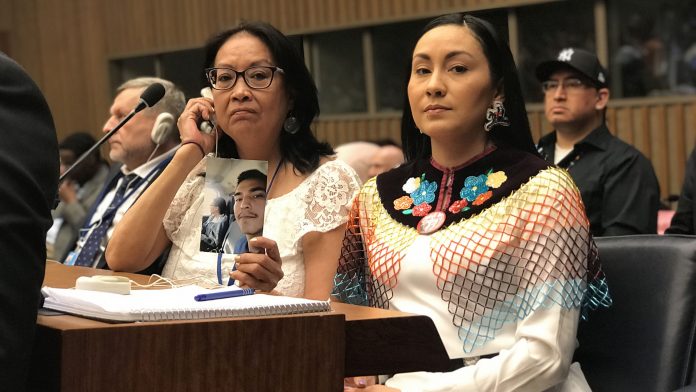
Image from documentary of Colten's mother, Debbie Baptiste, and cousin, Jade Tootoosis, at the United Nations calling for justice. Image courtesy of Hubbard via CBC.

By: Kelly Chia, Staff Writer

In 2018, 56-year-old settler Gerald Stanley was acquitted of second-degree murder charges in the death of 22-year-old Cree man Colten Boushie. Immediately following the verdict, there were public outcries and protests across the country about the unjust ruling. It was another terrible example of how the Canadian justice system is still heavily infected by the colonial racism it was founded on. Boushie’s family spent the next year fighting for justice for their loved one.

This month, the Vancity theatre screened Cree filmmaker Tasha Hubbard’s new documentary nîpawistamâsowin: We Will Stand Up which looks at the aftermath and history of the case. The film follows the family over the last year to make a documentary about the case, its aftermath, and what this means for Indigenous peoples and the country.

In the film, Hubbard explores relationships between Indigenous and non-Indigenous communities through documentary footage, animated sequences, and personal testimonies. She uses animation to picture and explain the history of Canada’s relationship with Indigenous people, contextualizing these issues for viewers who may be uninformed. She also expresses her own concerns about raising her son by including conversations and scenes of the two of them reading old letters and talking about family.

Hubbard mixes calm, beautiful shots of the Prairies with animated sequences to create an authentic and intimate watching experience.  The soft music and scenes of the Boushie family standing together keep the film down to earth and hopeful.

The horror of Colten’s death is also never dramatized in the film. Instead, his death is treated with grace as footage of the family and community celebrating his life on his birthday is included multiple times in the film. Having the filmmaker additionally appear and connect with the Boushie family in a sympathetic way was very unique way of experiencing the case as opposed to following it online through news outlets.

To properly convey the gravity of this story, Hubbard includes harrowing accounts of how unfairly the case was treated from the time Colten died. One particularly difficult story was Debbie Baptiste, Colten’s mother, describing the way she was treated upon hearing the news of her son’s death. She recalls how RCMP officers surrounded her house, searching her home as she grieved for her son, telling her to get her grip, and trying to smell her breath. Obviously distressed over the news of her son, Colten’s mother was confused as to why the officer was being so physical with her.

This incident highlights one of many instances where Indigenous people are still framed by stereotypes. Throughout the film, Hubbard shows racist, hateful comments from Facebook groups, which defend Stanley’s actions as self-defence and attack Boushie. These instances clearly illustrate how disrespectfully, and offensively, Colten’s death has been publicly perceived and treated.

At the end of the film, Hubbard is seen connect with her son as they talk about these histories with her adopted family and her birth father. When her grandfather asks what options someone in Stanley’s position had, her son gives a firm answer: not shooting Colten. It is a succinct ending, and a perfect response to illustrate the ridiculousness of the idea that Stanley was acting in self-defence. Although an incredibly dark topic, the film still offers kindness and hope that the more people see this, the more they can empathize, organize, and resist against injustices like this.

The Vancity Theatre has added an extended date for nîpawistamâsowin: We Will Stand Up. You can see the film June 13 at 6:30 p.m. and tickets, $11 for students, can be purchased online or at the door.

The 2019 Congress of the Humanities and Social Sciences wraps up in Vancouver

0
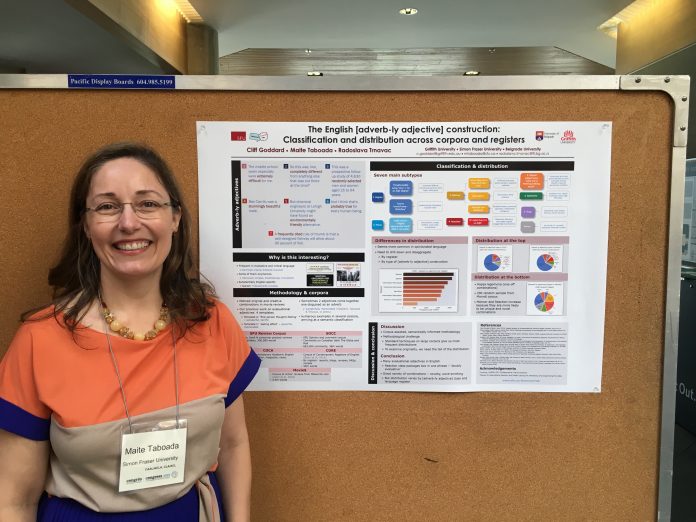
Courtesy of Dr. Maite Taboada

By Paul Choptuik, Coordinating News Editor

The 2019 Congress of the Humanities and Social Sciences has wrapped up in Vancouver. Running from June 1–7, Congress was hosted by the University of British Columbia (UBC).

Organized by the Federation for the Humanities and Social Sciences, Congress was comprised of over 70 scholarly associations including the Canadian Sociological Association (CSA) and the Canadian Historical Association (CHA). It is the largest academic gathering in Canada, with over 5,000 papers being presented according to the event’s media kit.

It is hosted by a different Canadian university every year, with Congress 2020 set to be held at Western University in London, Ontario. The last time Congress was held in Vancouver was in 2008, also at UBC.

The theme for Congress this year was “Circles of Conversation.” Specifically it “aims to foster and encourage circles of conversation among scholars, educators, students, political leaders, activists, and the public at large, so that people can speak with one another, listen and learn together.”

Members of the public could get a complimentary Community Member Pass, which enabled them to attend a section of the programming. This included the lectures in the Big Thinking series, with keynote speakers like environmentalist David Suzuki and author Esi Edugyan, the latter of whom’s talk can be viewed online.

A number of academics from SFU were present as attendees, presenters, or both. SFU academics presented papers on areas that included but were not limited to: Indigenous matters and reconciliation, business and economics, Canadian politics, identity, diversity, equity, and religion.

Dr. Maite Taboada, a professor in the department of linguistics, gave three different presentations. One presentation, presented with colleagues Rada Trnavac, a former member of the Discourse Processing Lab at SFU, and Cliff Goddard, a professor at Griffith University, dealt with a “quirky little construction in English” that they are calling the “adverb-ly adjective” construction.

“Think of ‘extremely interesting’ or ‘terribly boring.’ It turns out, it’s a very productive structure, with thousands and thousands of examples in corpora we have studied. It seems very frequent in book and movie reviews, and there are lots of creative examples like “howlingly funny” or “breathtakingly incompetetent.’”

Speaking to The Peak, she described Congress as “like Coachella, but for academics and perhaps with a more geeky dress code.

“It’s wonderful, because you are often presenting to a small audience of peers interested in your topic of research, but there is something very special when you are in a setting where hundreds of people are doing the same thing in parallel . . . ”

Another SFU academic present was Dr. Stewart Prest, a lecturer for the department of political science. Prest had two papers at Congress, one of which (co-authored by Ian Bushfield) dealt with Vancouver’s municipal election and how it was affected by the housing crisis.

Responding to The Peak via email, Prest wrote, “In brief, we argue that the housing crisis in the city triggered a period of change – a sort of political evolutionary event. The existing strategies didn’t seem to be working, so parties started to experiment with different kinds of responses, and some entirely new parties emerged as well.”

When asked what his favorite aspect of Congress was, Prest noted that he loved reconnecting with colleagues. Even after not seeing some for years, they are able to carry on from where they left off.