Home Blog Page 505

QUIZ: SFU, are you in love with the gondola? Or is he just really, REALLY tall?

0

Written by Carter Hemion, Staff Writer

It’s the question on all of our minds here at SFU: Are you in love with that tall, tall, dreamboat gondola project? Or are you just infatuated with the idea of him? If you’ve been tearing your hair out over the quiet but handsome transit vehicle with his head in the clouds, fear no more: we’ve got just the quiz for you! 

Just answer these five questions, HONESTLY, and find out whether you and the gondola are meant to be or if this is just another passing crush — like that time you thought the public bus was going to be the love of your life . . . ugh . . .


  1. Do you like living in a big city?

a) I loooooooove everything about big cities! From the busy people to the constant, complicated, crazy construction — it’s home!

b) I like the city just as it is, but like, aside from my weird neighbours.

c) I like the convenience, but I also preferred it before I had high rises looming over my house. I mean, where’s the privacy when I want to garden at midnight and ugly-cry into my rose bushes?

2. Do you like guys who are idealists?

a) I just think those guys with their heads in the clouds are so dreamy . . .

b) I think the idea is cool, but he needs to be realistic about his choices!

c) He needs to have his feet on the ground and see where he’s going — we know those guys who don’t think beyond the next step ahead of them. Eww.

3. Do you like to take things slow?

a) I don’t like to rush things. Sure, we could speed, but then how would we see all the sights along the way?

b) I like to plan relationships on an 18-month schedule and see where they go, you know?

c) I take things as fast as they’ll go! 

4. If you were a tree, what kind would you be?

aA dead one. I hate trees.

b) A maple. They look so pretty from above…

c) Evergreens! You know, those tall ones that a gondola would kill or something.

5. Finally, let’s get to the point: how do you feel about our handsome man’s height, at a whopping 8,858 feet and 3 inches tall?

a) He’s tall? He’s cute? That’s really all I need to know.

b) I’d like to see more of him than just his height, if you know what I mean . . .

c) Everyone just swoons over those tall boys with one quirky, niche interest and a kinda boring personality and a little sensitivity to criticism and . . . well, you know that type. I kinda like guys who aren’t as needy, ya feel?


If you answered mostly As . . . your feelings for the gondola are REAL LOVE! 

Yeah, sure, he might have some flaws — like his total disregard for the community living on Burnaby Mountain, or maybe some apathy towards the environment. BUT, you see all of him, and you still love him for all that he is. You’re definitely ready to spend the rest of your life on campus with him!

If you answered mostly Bs . . . you’ve got a HUGE crush on the gondola . . . but that’s ALL it is. 

You’re infatuated with the moving, grinding, whizzing parts of transit, how much money he’s worth, and how pretty he looks on the outside, but this isn’t capital-T True Love.

If you answered mostly Cs . . . you’re coming to your senses and realizing your feelings for the gondola are just another crush. 

Sure, you might have a thing for tall, mediocre guys, but you’d rather keep things casual with the gondolas in your life and enjoy UniverCity as it is.

Once Upon a Time in Hollywood is visually striking, but falls short compared to Tarantino’s earlier films

0
At times, the film feels as though it’s just Tarantino showcasing his talents as a director. Image courtesy of Sony Pictures.

By: Kaila Bhullar, SFU Student

As Quentin Tarantino’s ninth and most recent film, it came as no surprise that Once Upon a Time in Hollywood was executed beautifully and filled with striking cinematography. When it came to overall flow and plot, however, the film strayed from established formats regarding linear storylines, resulting in an atypical viewing experience.

Once Upon a Time in Hollywood is strictly plot driven, as it follows a loosely connected stream of character occurrences. It feels almost as if you’re watching an ad or a music video, in that it lacks a strong sense of storyline or conflict. At times, the film feels as though it’s just Tarantino showcasing his talents as a director, as opposed to focusing on tying together the different character arcs or conveying a message. Further, knowing that Tarantino has, in the past, made films that depicted raw human emotion (like revenge, anger, or lust) very accurately, Once Upon a Time in Hollywood felt a little lacking in the overall character feel.

Despite this, the soundtrack, as always in a Tarantino film, was as good as ever, and the performances given by the main characters were spectacular. There were also many action-packed and riveting scenes, but a lot of them in my opinion felt as though they took an uncomfortably long time to build up to. The film demonstrates many of Tarantino’s strong suits in terms of writing and directing, but it also shows us that in some cases, directors may not want to get too experimental in their techniques.

Overall, if you’re looking for a film that is visually beautiful and enjoyable to watch, in the same way that watching something like a music video can be, then you’ll probably enjoy Once Upon a Time in Hollywood. On the other hand, if you’re intending to watch a film that follows a distinct sequence of events and the standard plot-driven progression that a movie typically does, then you may not enjoy this one.

I watched Once Upon a Time in Hollywood twice, and I feel as though I may need to see it again to perhaps pick up on some subtle details and hidden references. The film is expansive and seems as though it might require deeper examination, though that may just be my bias in the matter, since Tarantino is among my favourites as a director. Decide for yourself! I definitely think it’s worth watching at least once. 

Dangerous noise levels on TransLink’s trains need to be made a top priority

0
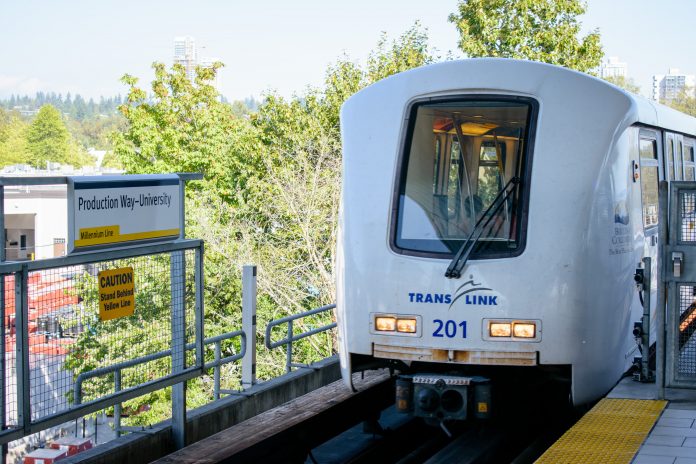
TransLink’s lack of concern for passengers’ health is ear-responsible. Photo: Maxwell Gawlick / The Peak

By: Marco Ovies, Staff Writer

Taking the SkyTrain is one of the most common ways for students to get up to campus, as well as being much better for the environment than driving. But is it worth the risk to your own health? According to a new study, certain sections of the SkyTrain are so loud that they can cause permanent hearing damage. The issue of noisy trains had previously been ignored by TransLink, until residents living near the tracks complained — and that lack of concern is unacceptable.

Noise levels of up to 106 decibels (even louder than active construction sites) have been recorded, and prolonged exposure to this amount of noise is not only extremely annoying to listen to, but can also cause permanent damage to your ears. TransLink is advocating several improvements to our transit system (the gondola, line expansions, extra buses), however, the issue of noise has been ongoing for years now. The fact that nothing has been done yet to address it when these decibels are clearly dangerous is, frankly, shocking.

WorkSafe BC says that hearing loss can occur during prolonged exposure of just 85 decibels, and with students transiting to-and-from classes on the regular, this exposure adds up. Even levels lower than these can create health problems. Being continually exposed to noise of even 70 to 80 decibels could increase the risk of heart disease. 

So why has so little been done to fix this issue? The worst of this noise was recorded on the original Mark I cars, with the Mark III being significantly quieter. But the old Mark I trains won’t be replaced for another five years. If TransLink had any concern for the public’s health then an immediate solution should be put into place. 

Twenty percent of people in the Lower Mainland rely on transit for their daily commute. Many of those people may be unaware of the permanent damage they are doing to their hearing and the risks they are taking with their health. 

Before we can start talking about further line expansions and gondolas, TransLink needs to fix the issue of hazardous noise rather than sweeping it under the rug. However, with no immediate solution in the near future, riders should consider wearing earplugs on their next SkyTrain ride. 


SFU football aims for second win in five years as 2019 opener looms

0
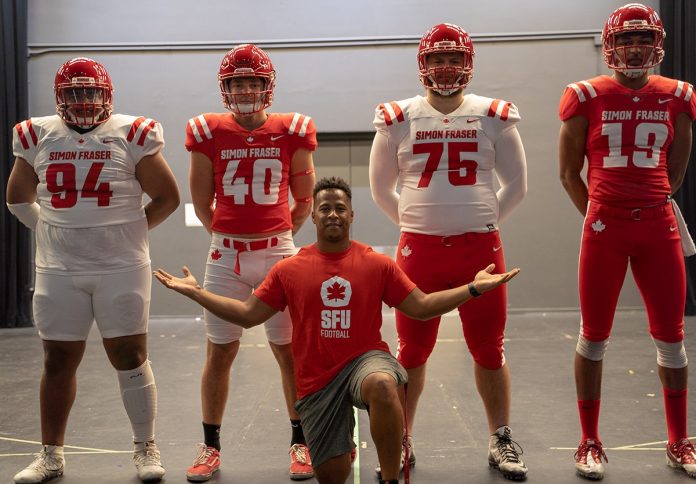
The SFU football team show off the new SFU Athletics logo - Photo credit / SFU Athletics

By: Dylan Webb

When it comes to the SFU football team and their recent struggles, it’s hard not to think of Shania Twain. Anytime talk of Clan football crops up, as it inevitably does when you spend enough time in the SFU athletics community, Twain’s 2002 hit single ‘Up’ rings in my ears as I consider how challenging it must be to maintain focus, commitment, and positivity on-and-off the field when success has been hard to come by over the past five seasons. 

The recent struggles the SFU football team have faced are well-documented and widely known amongst supporters of SFU athletics. While a variety of metrics can demonstrate the struggles the team has faced, the briefest way to summarize these recent woes is to note that the Clan has only won a single football game throughout the last four seasons. 

Despite the historic low, the 2019 season offers another opportunity to turn the page and begin building for a more successful future. An extensive recruiting drive conducted by head coach Thomas Ford this off-season resulted in the addition of a whopping 29 student athletes. Highlighting the list of recruits are siblings Gideone Kremler, a two-time BC High School Provincial title champion quarterback and Zairech Kremler, a BC All-Conference defensive back. Also joining the Clan is Justice Kremler, who will suit up as an inside linebacker after playing for the Vancouver Island Raiders last season. 

Also of note is the addition of Kristie Elliot, the first female football player at SFU, to the roster as a backup placekicker. Elliot impressed the coaching staff and her new teammates throughout training camp with her solid mechanics and ability to perform under pressure despite her lack of football experience. Keeping tabs on Elliots’ budding NCAA football career will be an interesting story throughout the 2019 season. 

Perhaps the most significant addition to this season’s roster is the addition of running back Solomon Hines to the offense. Coach Ford, in conversation with Varsity Letters, expressed his excitement about the Clan’s starting backfield for 2019, which now includes the speedy Hines. “We’ve got Solomon’s speed and an all-purpose guy like Mason Glover, who can catch the ball very well, has very good vision and very good quickness,” Ford told Varsity Letters. The coaching staff believes that an improved offensive line, in conjunction with a potent backfield of Hines, Glover and starting quarterback Justin Seiber, will allow the offense to continue to improve its points per game production. 

These additions will supplement a core of key returning players that includes quarterback Justin Seiber, seniors Stephane Tanguay and Tyler Wood, as well as most of the receivers from last season’s roster.

Having now completed training camp, this new-look roster is set to begin its regular season on September 7 at Portland State. This matchup will be an out of conference affair. The Clan’s first GNAC game is coming on September 28 at home as the team will host Azusa State University at Swanguard Stadium. For 2019, the Clan will play all of its home games at Swanguard while construction on the new stadium continues at the Burnaby campus.

The silver lining is that the Clan, free from the weight of high expectations, “can only go up from here.” Like many SFU sports fans, I hope that the Clan can secure at least a couple wins this season. Not only could an improved campaign potentially bring an end to a stretch of more than 40 games without multiple wins for the Clan, it could also free me from the unwelcome intrusion Shania Twain’s catchy yet irritating lyrics make into my head whenever the topic of SFU football arises. 

Sleepless at Simon Fraser: What you can learn from Vancouver’s first Sleep Expo

1
Sleep is a key element of being a good student

By: Jess Dela Cruz, News Writer

According to SFU’s Fall 2018 Undergraduate Student Survey, 65% of respondents work 10–29 hours per week and 42% were involved in an SFU club.  Factor in a full-time course load and personal responsibilities on top of those students’ lives. Now consider the likelihood that they are getting an adequate amount of sleep. . . 

This is a question that will be on the minds of many people attending Vancouver’s inaugural Sleep Expo, which is part of the World Sleep Congress. Open to SFU students and the general public, attendees can learn more about healthy sleeping habits from sleep experts on Saturday, September 21 at the Vancouver Convention Centre. 

The National Sleep Foundation recommends that young adults aged 18–25 require 7–9 hours of sleep — but students rarely meet this requirement. The Foundation says, “too few of us make those eight or so hours between the sheets a priority.” 

A university student’s packed schedule  often makes it difficult for them to catch a few hours of good quality sleep. With this in mind, The Peak reached out to a few students to comment about their own sleeping habits in their personal lives. Alan Cai, a fourth year full-time economics student who works 14 hours per week, claims to only get five hours of sleep per night. He says, “I am pretty sure that is not enough sleep for me.” 

Another student, Madison Wilson, is a fourth year English major and publishing minor who works 8–10 hours a week. She is also involved with the FASS Peer Mentorship Program, participated in co-op, and believes she averages more hours of sleep than other students — she does, however, still feel she does not get enough. 

However, Jacob Koochin, a third year behavioural neuroscience major, recalls the difficult relationship he had with sleep last year in which he slept too much, sometimes over the recommended hours. He tells The Peak, “I would average twelve to fourteen hours of sleep each night.” Koochin continues by stating, “I had pretty severe depression and found out I had sleep apnea and a deviated septum.” 

Considering the lengthy amount of time that is dedicated to note-taking, lectures, studying, working, and even commuting, many students try to catch up on sleep whenever, and wherever, they can. Cai says, “I usually have classes for four to six hours straight . . . [and] when I feel deprived of sleep in the morning, I try to take some naps during the SkyTrain ride from VCC to Production [Way]. If I still feel sleepy after that, [and] when classes get boring, I might doze off during class.” 

When asked about what other factors contribute to the lack of sleep amongst SFU students, Wilson says, “I think stress is the biggest factor of not getting enough sleep. I’ll catch myself half-asleep thinking about everything I need to get done for the upcoming weeks, and it prevents me from truly falling asleep.”  

For Koochin and the situation with sleep he had last year, he says, “I couldn’t keep up with classes and would struggle to even make it to school. I believed something else was wrong and sought out all the medical help I could get.” He describes the changes he has taken to improve his life and says, “[I] am better and happier than I ever have been in my life. I feel successful as a person and husband, and I know I have the strength to pick myself out of any hole I may get in.” 

Each and every student has their own distinctive relationship with sleep; they struggle with it in a multitude of ways and by different contributing factors in their life. A study from the Journal of American College Health  says “student stress and demands may interfere with sleep habits . . . [which] in turn, lead to further problems and thus create more sleep difficulties. This pattern may become a self-perpetuating cycle that students are unaware of and may be unable to alter.” 

It is a common sight across SFU’s campuses to see people left and right with droopy eyes and firmly held Renaissance coffee cup. Yet the National Sleep Foundation further states that “it is important to note that caffeine cannot replace sleep.” And though students constantly turn to caffeine to help them last throughout their six hour — sometimes even longer — day sleep is the preferred way to recover from tiredness and rest the body. 

SFU Health & Counselling Services (HCS) suggests for students to “avoid screen-time at least one hour before you sleep,” and to “monitor your sleep using a wearable device or phone.” Daily exercise and eating nutritious meals are also recommended for maintaining good physical and mental health, which contributes to easier sleep. 

When The Peak asked Cai about his perspective on the general population of SFU students and their own relationship to sleep, he claimed that, “I feel that most of my friends are lacking sleep, but no one is really putting in effort to change it.”

Renee Boldut, a research assistant at the H-Behaviours Research Lab, has been helping to promote the event to SFU students and the community. Boldut is involved with organizing the, “How to Promote Sleep and Injury Prevention?” symposium, as part of the Sleep Expo. She said, via email, “attendees can expect lively presentations about sleep, injury prevention, how to communicate the importance of sleep [and] facilitate discussion about what can be directly applied in the community.” 

Boldut “hope[s] that students will be able to take away points about how they can be more self-aware of their tiredness and how ‘being tired’ affects their performance — and of course how they can measure tiredness and what they can do about it!” 

As stated on their website, “the congress will feature the most current, world-class scientific content in the field of sleep medicine and research,” that “bring sleep professionals from more than 75 countries together to advance sleep health worldwide.” 

The Sleep Expo event is from 9 a.m. to 12:30 p.m. with speakers from Austria, France, and Canada. Event topics include “Youth, Sleep & Drugs: Vigilance Fluctuations,” “Sleep Deprivation: The Perspective from the Emergency Room & Sleep Medicine,” and more. 

Cai, like many students, is hoping to be able to improve his own relationship to sleep. “I feel that it might have adverse effects later, which could easily be prevented [. . .]” said Cai.

 “We are all too short-sighted to see.” 

Students who wish to attend the Sleep Expo can register to attend at sleepexpo.org

Peak Sports Mailbag: Week 2

0
Photo credit / Brock University

By: Dylan Webb – Sports editor

Hello readers of The Peak sports section,

My name is Dylan Webb and I’m the new sports editor and this week’s host for the inaugural Peak Sports Mailbag. The Peak Sports Mailbag was introduced last week to engage students from every corner of the SFU sports community. 

Thanks so much to all of our readers for submitting their baseball-related questions, and my apologies if your question didn’t make it into this week’s edition. Usually, the Mailbag host will only answer three or four questions. Don’t worry though, as all questions submitted count for an entry into the raffle draw whether or not they are addressed in the Mailbag. Now, onto the questions!

Question 1: “Why does baseball take so long? It looks like a fun and intense sport, at times, but it seems like it takes forever to watch a whole game.” – P.

Answer: It’s no secret that pace of play has become a significant issue in MLB (Major League Baseball). According to Sports Illustrated, the average length of an MLB game rose last season to an average of three hours and five minutes. At the most basic level, baseball takes forever, and seems like it takes even longer sometimes. This is due to the fact that there is no time clock, something commonly used in many other sports. The pace of play is dictated by a variety of factors including: game situations, player preference, and game strategy. A potential solution to this issue that has been discussed is the introduction of a pitch clock that would require each pitch to be thrown within a given time frame. Far more controversially, another suggestion that has been proposed is the elimination of the third out for the team that is leading the game. While the latter idea will likely never be implemented, I would bet that a pitch clock will be introduced in the next few seasons. 

Question 2: “When do you think the Toronto Blue Jays will have a reasonable chance of making the playoffs again?” – Connor 

Answer: In my opinion, the time frame for the Blue Jays to become competitive again will be determined by both the degree of success the team has in developing starting pitchers internally and the extent to which ownership of the team will be willing to spend on starting pitching in the free agent market. You’ll notice that I mentioned starting pitching in both parts of the answer. This is because I believe that the Blue Jays have already successfully established a core of position players that can, at the very least, make the team competitive for a playoff spot in the next three years. Whether or not Guerrero, Bichette, Biggio, and Jansen end up competing in late October baseball together at some point in their careers will be heavily influenced by the evolution of the team’s pitching staff, through development, trade and/or free agency, over the next three seasons. 

Question 3: “In your opinion, why are there so many more home runs in MLB (Major League Baseball) nowadays?” – Ryan

Answer: This question can only really be answered by a comprehensive scientific study of the game and, more specifically, the ball. I believe that it relates to a change in the production of the baseball. Perhaps even more significantly, I believe there has been a change in the general hitting philosophy taught at the major league level. Analytics have had an enormous influence in baseball over the past decade and I think hitters are, almost across the board, changing their approach. This new philosophy emphasizes hitting the ball harder in the air rather than the classic ‘just make contact’ approach that was, for a long time, baseball common sense. 

If you would like to participate in future editions of the Peak Sports Mailbag and be entered in a raffle for an end-of-semester prize, here’s what you can send to [email protected]

  • Sports-related questions that our weekly host will answer
  • Weekly theme ideas to guide our questions

Or: sign up to host the Mailbag (and get paid)!

Thanks to all of you SFU sports fans for blowing up my inbox!

Next week’s theme is: Soccer

Next week’s host is: Keveren Guillou

Send in your questions to [email protected]


More affordable food options need to be provided to students

0
Students in dire need can rely on a few programs to help cover basic nutritional requirements. Photo: Markus Spiske / Unsplash

By: Nicole Magas, Opinions Editor

The student life isn’t an easy one. Many of us have been in the situation at one time or another where we’re forced to cleverly move money around, just to make sure that all of our bills get paid on time, if only just. Sometimes, this means bringing some home-brew coffee instead of feeding that Starbucks addiction. But for some students living much closer to the razor edge of poverty, paying tuition, rent, and utilities can mean that the food budget is gutted entirely.

Fortunately, SFU has a few programs intended to assist students who have traded a full fridge for keeping the lights on. The Simon Fraser Student Society (SFSS) has a food bank program that allows students to anonymously apply for grocery store gift cards of up to $25, three times a semester. Similarly, once a week Embark gives away free fruits and vegetables that don’t meet the aesthetic standards of grocery stores. 

While these programs provide a valuable service for students who have trouble making ends meet, it’s worth taking a step back to consider the conditions that make such programs necessary. Why, in one of the richest countries in the world, are university students in such dire straits that they require assistance just to feed themselves?

To be sure, part of this issue stems from the fact that university is traditionally seen as a vehicle for social mobility, especially for those on the lower end of the economic spectrum. This subsequently means that a portion of the student body begins university from a place of economic insecurity, and therefore may struggle with the balance between the cost of living and the cost of tuition during their four year commitment to this investment. 

However, we shouldn’t discount specific, food-related economic factors that compound these difficulties for students from lower-income households. The BC Centre for Disease Control measures food security as the proportion of income it takes to purchase a nutritionally sound “food basket.” The Centre notes that the rising cost of this basket (an average increase of $45 between 2015 and 2018) predictably hurts lower income families the most. 

Students at SFU are easily able to quantify food costs against their own budgets. Affordable dining options are severely limited at SFU, with Tim Hortons providing one of the cheapest options available for food. Veggie Lunch previously also provided affordable lunch options, however the service has now been discontinued

While it is commendable that SFU provides emergency food aid to students in need through programs like Embark and the SFSS food bank program, it is arguably more beneficial to address issues of economic hardship and food insecurity among students before they reach the point when emergency aid is required. More affordable dining options, especially those provided by the university itself, need to be made available. Similarly, while it is nice to have a grocery store on campus, Nester’s isn’t exactly on the cheaper end of the scale. 

It is important to remember that not everyone who attends university does so from a basis of financial security. Every effort should be made to ensure that the basic necessities of life provided on campus cater to a range of economic circumstances. The existence of emergency food services at SFU highlights the absence of this range, and demonstrates the regrettable reality of food insecurity for some students.


SFU News Round-Up – Aug-Sept 2019

0
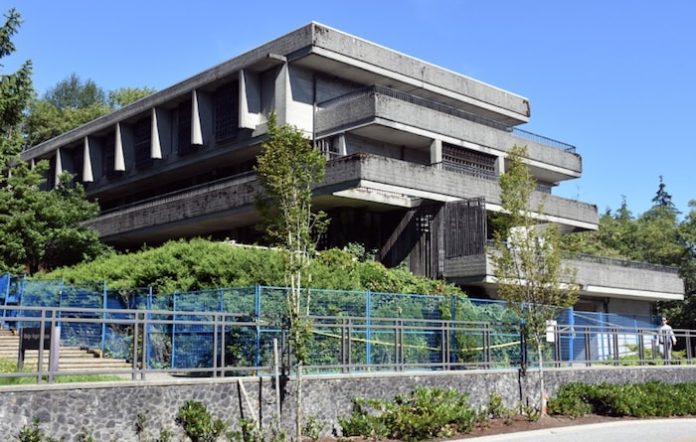
The Madge Hogarth House at SFU (photo courtesy of Burnaby Now)

By: Henry Tran, Peak Associate

SFU community discourages demolition of the Madge Hogarth House

Simon Fraser University administrators have agreed to dismantle the Madge Hogarth House which is currently located in the West precinct of the Burnaby campus. The SFU administration has decided to move forward with its decision in order to meet its plan of doubling the number of residence beds at the Burnaby campus from 1,554 to 3,250 by 2035. 

According to an article written by Canadian Architect, the university explains that upgrading the building to meet the “seismic, fire and life safety requirements is unfeasible.” Thus, the university has no other choice but to demolish it. 

However, a few members of the SFU community voiced their concerns with the university’s decision due to believing that it is a sign of disrespect to the architects, Arthur Erickson and Geoffrey Massey, who developed the architectural framework for the Burnaby campus in 1965. Certain community members worry that the new building design might not blend in with the current architecture of the Burnaby campus including Donald Luxton. Luxton sits on SFU’s campus master plan design review panel, told Vancouver is Awesome that he has “no idea how that building bears any relationship to the architectural vocabulary of the original SFU buildings.”

Furthermore, in a letter to the SFU administration, Phyllis Lambert, Chair of the Arthur Erickson Foundation Council stated  “[. . .] The Madge Hogarth House [is] one of the high points of Canadian civilization. This building is a rare example of the architects’ thought about—and execution of—communal residential structures [. . .]”.

Lambert further urged the university to seek an alternative site on campus for their plans of increased student housing, as well as designated the Madge Hogarth House as a heritage site as an important component of the SFU legacy.

New research finds Canada’s salmon population is decreasing significantly

A joint study conducted by SFU and Fisheries and Oceans Canada has discovered that over the last century, Canada’s wild sockeye population has declined by as much as 99%. 

The study was spearheaded by Michael Price and John Reynolds, a PhD candidate and a professor at the Department of Biological Sciences, respectively. Price and Reynolds analyzed a collection of fish scales that has been preserved since 1912. These scales were collected by fisheries scientists between 1912 and 1948 from commercial fishing operations. 

Most of the current data on salmon population only go as far back as 1960, due to differing technological standards, and methods of sample collection in earlier research. 

“Historical perspectives for exploited species are critical to understanding the extent of decline in depressed populations,” said Price, according to a press release from SFU. “Naturally, the better we understand the past, the more informed our decisions towards recovery will be.” 

Therefore, Price and Reynolds’s study is better able to look at longer-term trends in Canada’s salmon population than most modern research.


Trudeau’s weak showing at the G7 Summit may hurt him in the election

0
Trudeau didn’t bring home much in the way of concrete plans to help Canadians. Photo: C. Barria / Reuters

By: Kelly Grounds, Peak Associate

The G7 recently met in France and the summit was particularly important for Trudeau. With a federal election coming up, everyone expected Trudeau to take a strong, decisive stance on both the economy and climate change — both of which are key pillars of his re-election campaign. That didn’t really happen.

Throughout the summit, Trudeau’s overall tone was reserved. The meeting with President Trump about the United States-Mexico-Canada Agreement (USMCA) was so uneventful that it did not even merit reporting by the press. Talks about the USMCA were especially vital, given the fact that neither country has actually ratified the deal yet. Being able to push for an official ratification date within the US would have allowed Trudeau to confidently return home knowing that the US would not suddenly decide to renegotiate the deal — something that could potentially hurt Canadians.

It was also expected that Trudeau would side with Emmanuel Macron — President of France — and take a strong, unified stance against the fires in the Amazon. After all, Trudeau agreed with Macron in labelling the fires “an international emergency,” and called on the world to take action for future generations on Twitter. Climate change has been a key pillar of the Liberal re-election campaign, so leading a strong response from some of the world’s wealthiest countries would have been a major point for Trudeau. 

Instead, the G7 pledged just $20 million combined to fight the fires — a pledge that the US did not even contribute to. While Trudeau did promise that Canada would donate an additional $15 million, plus other resources, to fight the fires, many still saw the contributions as disappointing, considering that the Trudeau government actually purchased the Trans Mountain pipeline earlier this year for $4.5 billion. This directly counters the party’s commitment to initiatives that promote clean energy.

Both the economy and the environment are major talking points for Trudeau and are areas where he has promised tangible change. Seeing a relatively reserved attitude being taken with some of Canada’s allies should be of concern for voters in the upcoming elections. These are issues that require collaboration and discussion. If Trudeau does not feel comfortable pushing for meaningful change and results by discussing said issues with Canada’s closest friends, voters should wonder if he will be open to discussing them with the Canadian public.


SFU Men’s Soccer looks to secure GNAC title for the second year in a row

6
Mark Talisuna and William Raphael celebrate - Photo credit / SFU Athletics

By: Keveren Guillou

The SFU men’s soccer team will be looking to settle some unfinished business this season after their impressive 2018 season came to a shocking end. The team started the season off on a hot streak with 16 consecutive wins, clinching first place in their conference. This finish was enough for the Clan to be ranked #1 overall in NCAA Division II soccer. All in all, one of the most successful seasons in SFU men’s soccer history resulted in a GNAC title, the top seed in the NCAA national tournament, but, despite those achievements, a disappointing end.

Clinching the number one seed gave the Clan the advantage of playing a much lower-ranked team to kick off the tournament. The opponent wound up being Cal Poly Pomona, a team that they had previously dismantled to the tune of a 3–0 shutout. This matchup was not to be taken lightly though, as Cal Poly had upset the Clan in the two previous seasons. Once again, despite SFU’s dominance throughout the match, history would ultimately repeat itself as Cal Poly scored a gut-wrenching golden goal on their only shot of the game — in overtime no less — sending them to the next round and the Clan home to clean out their lockers.  

Despite this disheartening end to the 2018 season, in a recent poll of GNAC coaches, SFU was unanimously elected the favourite to win the conference title again this year. In 2019, the lads will be looking to live up to the hype, repeat last year’s regular season performance, and, most importantly, make up for last season’s devastating ending by extending their success to the NCAA national tournament. 

Fans of SFU soccer can expect to see many of last season’s top talents returning to represent the Clan this season. However, this comes with one notable exception: the loss of GNAC Male Athlete of the Year Mamadi Camara, who was drafted into the MLS (Major League Soccer) by the San Jose Earthquakes.  

Leading the squad this year, once again, are the dynamic Polisi brothers, who are expected to repeat the amazing seasons they had last year. Matteo Polisi will be leading the attack this season after scoring 18 goals and contributing 11 assists in 2018. Polisi was awarded a spot on the All-GNAC First Team and was also first-team All-American and the D2CCA West region Player of the Year. His chemistry with fellow attacker Connor Glennon, who scored 16 goals last season, will make for a formidable offensive duo. Polisi will be accompanied by his brother Marcello, who started in all 16 of his appearances last year. Marcello was also named to the All-GNAC First Team.  

They will be joined by other familiar faces including midfielders Rahid Raheim, Quinn Dawson, and 2018 GNAC Defensive Player of the Year Michael North. In goal will be last year’s GNAC Newcomer of the Year, Luciano Trasolini, who kept an impressive 11 clean sheets in 2018.

Leading the Clan from the bench in his fourth season is the 2018 GNAC Coach of the Year, Clint Schneider. Under his tenure, SFU has been Northwest champions three consecutive times and expectations will remain high. Above all else, Schneider is likely looking to lead his squad to a break-through against Cal Poly in the national tournament — if the opportunity arises once again. 

Coach Schneider has added eleven new faces to the squad this year, seven of which are from BC.  Those joining the team from within the province are defenders Aaron Colbourne, Christian Comuzzi, and Owen McBride, midfielder Lorenzo De Bei, and forwards Patrick Ruszyzyk, Sidrit Vukai and Devin O’Hea. The four out of province recruits are defenders Peder Syvertsen and Jorick Schilken, midfielder Christian Hanche-Olsen, and forward Jonathan Kisse.  

The SFU men’s soccer team will kick off their season on September 5 at Terry Fox Field against, you guessed it, Cal Poly Pomona. Kickoff is 8:30 p.m. as the Clan looks to overcome the team that dashed their hopes for glory in the NCAA national tournament just a few months ago.