Home Blog Page 473

Dinner with a View gives the rich a place to burn their money — and little else

0
The rich have literally moved into a bubble with this controversial pop-up. Illustration: Tiffany Chan/The Peak

By: Kim Regala, Staff Writer

A new pop-up restaurant opens on January 15 in Vancouver that advertises a novel perspective on dining. Organizers of the event call it “Dinner with a View.” For one hour and 45 minutes (and a $200 reservation fee), guests can sit in a plastic bubble located outdoors and indulge in a three-course meal that costs a staggering $110. It boasts a spectacular view of the Vancouver skyline and Lion’s Gate Bridge. What it doesn’t show, however, is how this pricy “experiential” dining hammers in yet another wedge between Vancouver’s rich and the poor, in order to maintain the facade of an extravagant urban lifestyle that only a few people can attain.

Dinner with a View doesn’t explicitly advertise “rich people only” as a requirement, but it’s clear that the restaurant only caters to the upper class — those fortunate enough to be able to spend hundreds of dollars for a single dinner. The pop-up venue is intended to be a limited time, one-of-a-kind dining experience, for consumers in such metropolitan locales as Toronto, Montreal, and now Vancouver. Dinner with a View emphasizes the potential social media recognition its guests can gain from the event. However, promoting the event this way centers it in a socially detached splinter of reality that normalizes temporary “experiences” without acknowledging the disparity and inequality around them.

While the wealthy absolutely have the right to spoil themselves with lavish experiences, it’s worth keeping in mind that Metro Vancouver is already in the grip of economic equality. Regardless of the event’s intention, sequestering the rich in their own bubbles of privilege creates further divides within the region, where accessibility to the venue — and by extension the luxurious Vancouver life — is dependent on the increasingly difficult ability to afford it. 

The pop-up fine-dining chain first faced controversy when it opened in Toronto last April. The event was held near an area where many people who were homeless had settled for shelter. Upon learning that their tent encampment had been expelled prior to this event, several members of the community gathered in front of the temporary venue to express their concerns, calling their protest, “Dinner with a View . . . of the rich.” Hosting Dinner with a View in this particular location was especially upsetting for anti-poverty advocates, who have long demanded the construction of shelters in the area. 

Dinner with a View isn’t the first time that extravagant endeavours have been prioritized in Vancouver over the interests of the most vulnerable in the community. The city faced similar concerns a decade ago with preparations for the Winter Olympics; street youth were pushed to more dangerous areas of the Downtown Eastside to make room for the occasion. Similarly, neighbourhoods like Chinatown that are filled with so much cultural and community significance are now under threat by urban development. Dinner with a View represents yet another form of gentrification in Vancouver — one that doesn’t even stay long enough to contribute to the city that hosts it.

Events like Dinner with a View put wealthy affairs on a high pedestal, disregarding Vancouver’s growing homeless population in favour of cultivating a false perception of luxurious living in the city. Before Vancouver residents decide to spend hundreds of dollars on this trendy pop-up, perhaps they should try a few unique local restaurants and support the businesses and people who are already in their community.

“Death of the author” doesn’t negate the need for critical readings and re-readings

0
The Harry Potter series deeply impacted an entire generation. Photo: Chris Ho/The Peak

By: Gabrielle McLaren, Editor-in-Chief

When I was in fourth grade I had to do a presentation on “my hero,” which is a pretty standard assignment for a kid’s first foray into PowerPoint. I picked J.K. Rowling, who was my absolute favourite author. Later, when professors first noticed that I was a strong and avid writer, the greatest compliment they could give me was throwing her name in my general direction. 

If I had one of Rowling’s time-traveling time turners in hand, I would go back and tell fourth grade me two things:

  1. You’re gay (this matters in general, but for this story in particular), and 
  2. Heroes fall. Yours in particular is going to disappoint you. First as an artist, by money-grabbing at franchise expansions and adding unnecessary yet unforgettable (and unforgivable) canon about how wizards shit. Then, and more importantly, as a person. 

I don’t know how I’d explain to my younger self how Twitter works, or how to break down the legal court case that Rowling was commenting on — one in which she chose to support a woman who was terminated for tweeting transphobic comments. I encourage readers to do their own research on Maya Forstater, the woman in question, her history, and the human rights case that ensued. Then, scroll through Twitter to see the absolutely heartbreaking messages left to Rowling by trans fans who had previously found solace in her books. 

To be clear, this isn’t the first time trans, queer, and other marginalized Harry Potter fans have pointed out gaps and failings in Rowling’s politics. I’ll be honest, I didn’t want to believe the first few online discussions I stumbled upon about Rowling’s transphobia — and that’s my own fault as a cisgender woman, for not listening to trans folks’ concerns more attentively. 

The truth is, being critical would have been much harder than clinging to a favourite book series, a gateway and foundation for many of my friendships, and a comforting cast of characters, storylines, and quotes. When Rowling first discussed how her depiction of werewolves had metaphoric links to the stigma around AIDS, it gave me something to cling to when I still had questions about what my queer identity meant about my life and the way the world would see me. More generally, the Harry Potter series preached values of equality, tolerance, and peace, which I do think heavily shaped me as a young reader. But my experience doesn’t negate the hurt Rowling inflicted elsewhere. 

Going forward, I’m going to think twice about following and supporting Rowling’s newest creative projects and works, or buying new merchandise that Rowling might get royalties for. But that’s not enough. It’s my responsibility as someone who was influenced by Rowling’s work and who enjoys the world she created to poke at it and look for the cracks that I’ve seen in my old hero. 

It’s my job to listen when, for example, Indigenous people call out Rowling for cultural appropriation and imperial ideologies, or worry when fans point out that the speech of Rowling’s “happily enslaved and happy to serve” house elves presents as an imitation of African American slave dialects. I have to think about what gendered or colonial ideologies I may have passively absorbed elsewhere in her work. If I reread my favourite scene from Prisoner of Azkaban on a bad day, I have to use what I know now — as a more mature and critical adult and as someone who’s seen disappointing sides of Rowling — to worry about what ideologies may have bled into her work and influenced me. 

It is too easy to simply declare the death of the author and pretend that Harry Potter hasn’t profoundly shaped generations of young readers who were hoping that Hogwarts would always welcome them home. 


SFU Hockey looks to extend its winning streak as the calendar turns to 2020

1
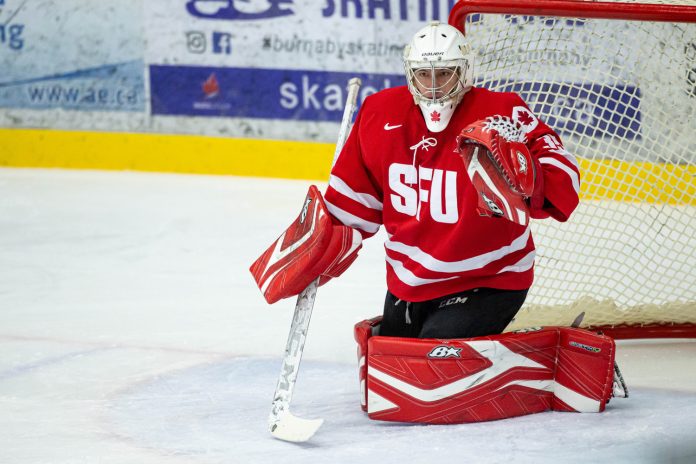
Patrick Zubick, pictured here, has three wins and one shutout in his first year with the Clan. - Photo credit / SFU Hockey

By: Michael Lenko, Peak Associate

As the second half of their season opens up, the SFU Hockey team will look to build momentum from a two-game sweep of the Selkirk Saints as they strive to attain their pre-season goal: a British Columbia Intercollegiate Hockey League (BCIHL) championship. The first half of the season was mediocre for the Clan, as the team posted a 6-5-0-2 record that has them sitting in third place in the league standings. As the playoff race heats up, the Clan will, at least, be looking to catch the Vancouver Island University Mariners for second place. This would ensure they will have at least one series of playoff hockey at the Bill Copeland Sports Centre in 2020. 

To climb into second place in the BCIHL standings, the Clan will have to continue to rely on their top two lines to maintain their elite offensive output. The current top five point scorers for the Clan play on either of the top two lines and have accounted for 26 of the 45 goals the team has scored so far this season. Mitch Ledyard tops the Clan in goals midway through the season with seven, and fourth year forward Mac Colasimone holds the team lead in points with 17.

The Clan has also benefited from strong play in net this season, having allowed the second fewest goals in the league, behind only the undefeated, league-leading Trinity Western University Spartans. Andrew Henderson leads the team in save percentage and goals against average, and is tied for the team lead in wins with Patrick Zubick. Henderson’s strong play also has him ranked second in the entire league in both save percentage and goals-against average.

With all of these positive individual achievements so far, the Clan is likely disappointed to be sitting in third place in the BCIHL standings at the halfway mark of the season. The loss of two overtime games, and a couple of close games against the Vancouver Island University Mariners, have made the difference between second and third place for the Clan thus far. 

To improve upon their mediocre first half, the Clan will primarily look to add more secondary scoring. Second year forward Cole Plotnikoff will look to shake off a slow first half in point production to return to the near point per game pace he set in his freshman season. Another returning forward poised for a strong second half is second year player Arjun Badh. He has already surpassed his point total from last season, and will continue to be relied on for depth scoring. Another player poised for a second half breakout is freshman forward Takato Cox

In his first year on the team, Cox has provided a valuable offensive threat despite his depth role in the Clan forward group. According to Director of Player Experience and Education Ryan Sandrin, consistency will also be a key factor if the team is to find more success in the second half. “We need to play a full sixty, strengthen on-ice communication, and not get complacent with our systems and execution,” he said when asked by The Peak about possible areas of improvement for the second half. 

The Clan will also have two incoming players make their BCIHL debuts this coming semester. Forwards Jacob Lacasse and Mateo Coltellaro will be joining the Clan for the playoff push. Lacasse brings a wealth of junior A and B experience to the team, and can hopefully add toughness and grit to the bottom six of the forward group. Coltellaro brings three years of Junior experience to the team, and is known for having a hard shot that should bring more depth scoring to the lineup.

As winter shifts to spring and the BCIHL playoff drive heats up, look for the Clan to continue playing to their strengths while making some minor adjustments to their forward group. The team begins its pursuit of a home playoff series at the Bill Copeland Sports Centre, and, ultimately, a BCIHL Championship, this Friday, January 10, at home against the UVIC Vikes. Puck drop is 7 p.m.

Affordable housing, not gaudy art, is what Vancouver residents need

1
The decision to hang the installation under a bridge where people seek shelter is cruel. Photo: Chris Ho/The Peak

By: Meera Eragoda, Staff Writer

Picture this: a 3,400 kilogram chandelier shining brightly on the faces of those peering through the lenses of their newest iPhones, attempting to capture the best picture for the gram. On the periphery, homeless folk who once occupied the space are now in the shadows, largely ignored. This is the spectacle the city of Vancouver created when deciding to erect a $4.8 million dollar chandelier under the Granville Street Bridge.

This art piece makes a mockery of a city facing increasing unaffordability and a growing housing crisis. Under the city’s Private Development Program, developers who are rezoning areas over 100,000 square feet are required to install a public art piece or contribute to a fund for future public art pieces. These developers are “artwashing” Vancouver in order to hide the freedom they have in shaping the city to maximize their own profits at the expense of the majority of the existing population. And Vancouver is facilitating this.

Behind the chandelier’s dazzling lights, units in Vancouver House (the building the chandelier is tied to) will go for $6.9–9 million. Vancouver House and other ultra-luxury developments only attract the wealthy, which in turn will invite more expensive businesses into the neighbourhood. This makes it impossible for many to afford both housing and the cost of living in this area.

Instead of public art, why not have public housing? The city should require that developers invest in social or public housing, instead of asking that they erect garish installations to somehow make it seem like they care more about the city beyond a site of profit making. 

The chandelier installation highlights the staggering disparity between the demographics of the city and its recent development decisions. Vancouver is underperforming massively on reaching its housing targets, as reported by The Tyee. Regionally, Metro Vancouver likewise failed to build enough rental units to meet the needs of its residents. It’s safe to say that many of us upon graduation will not be making enough money to fit into a high income bracket. Unless the city wants to chase away new generations of young adults, it should prioritize much more of its allowance for private developments into truly affordable housing.

As students, if we want to live in a place without seven roommates, we need to hold city council to a higher standard. Our politicians need to be asking more of developers. Ultimately, it is our place in Vancouver that is threatened by the city being handed over to developers whose bottom line is profit.


Iron Dog Books marks its territory in a storefront on East Hastings

0
Photo: Iron Dog Bookstore Website

By Yelin Gemma Lee, Peak Associate

Many of us have seen the charming Iron Dog Books truck parked up at SFU’s Burnaby campus near the bus loop, which serves as an affordable haven for all bookish students looking for an impromptu literary escape. While this book truck was beloved, it has now left its semi-permanent parked spot at SFU.

Don’t start grieving yet, because, as of the beginning of December, a permanent store for Iron Dog Books has officially opened at 2671 E Hastings. The location is fairly convenient for students: just a quick zip on the 95, nestled across from the VPL Hastings branch and neighbours to some alluring local shops and eateries like What’s Up? Hot Dog! and Laksa King.

Walking into the bookstore, the first thing I noticed is the spaciousness of the room and a warm, calming aura washing over my fatigued body. The instant feeling I got was relief that they were playing coffee table jazz instead of subjecting me to Christmas songs (it is OVER damnit) or — God forbid — Shawn Mendes. I felt heart eyes as I noticed the meticulously organized and clearly labeled shelves and displays that made books easy to find.

The interior concept was made up entirely of mixed wood, which I thought was a bit of a parallel to how Iron Dog books mixed in new and used books throughout the shelves. None of the wooden furnishings were quite alike; it ranged from walnut to beige, old and rough to new and freshly sanded. From the ceiling-high shelves lining the walls like a cozy living room to the perfect little stacked crates holding overstock beneath the tables, I could tell how much heart was being put into the launch of this store. 

The store was divided into three different sections: fiction, non-fiction, and children’s books. There were endearing and useful “we recommend” displays for cultural studies and biographies, which boasted the staff’s fantastic radical taste. Unlike the rather tight space of the book truck, the store had lots of walking room and almost seemed too spacious — although, the display of notebooks and a large circular rack of book inspired shirts by Out of Print in the main isle helped fill it up. The sci-fi section was looking especially sparse and outdated, but I simply dismissed this as part of the beginning warm-up stages of a bookstore fully becoming itself. Seeing the store in this building state of endless potential and hearing boxes of books being opened in the back room was magical and made my bookish little heart beat faster. 

Warning: The affordable pricing of the books and lovely ambiance at this store will make it very difficult to leave without an armful of new books and in a much brighter mood than when you entered. Come prepared to be delighted.

Paying to cheat is a sign of laziness and immaturity

0
Earn your grades, don’t buy them. Illustration: Joy Tian/The Peak

By: Nicole Magas, Opinions Editor

University is hard work. This is my fifth year flailing around on this mechanical bull of stress and self-imposed poverty, and with the current educational requirements of a tightening job market it likely won’t be my last. It’s difficult and frustrating. It requires stamina, dedication, and discipline. Sometimes it feels nigh on impossible.

But if some students aren’t mature enough to get through university without cheating their way out of the slog, maybe they should wait a few years before wasting the time and resources of students and faculty who are actually ready to put real effort into this crazy endeavor.

At the end of the exam cycle last semester, news broke of a student who had paid to have someone else take their exam. The RCMP subsequently arrested the paid test-taker for possession of forged documents — in other words, for claiming to be someone she’s not on official documents. While no charges were filed, the test-taker will still face legal ramifications over the incident.

While it may not seem like such a big deal if one student cheats themselves out of actually learning anything at university, academic dishonesty has some pretty serious ramifications for the rest of the SFU community. Cheating not only spits in the face of students who actually work hard for their grades, but it also skews class curves, devalues the worth of the degree, and tarnishes the reputation of the university and the students associated with it. Additionally, if not caught, cheating promotes a dangerous lack of ethical care and competency in future careers cheating students may enter.

And while these are all very good, objective reasons to both discourage and punish cheaters, I’d actually like to take a slightly lower road with this issue and just say the following to students who have cheated, continue to cheat, or are considering cheating:

Grow the fuck up.

You think university is hard on you? We’ve all been there. We all have our own personal horror stories of half-killing ourselves to scratch out a decent grade at this school. We may bitch and complain about this class or that professor. We whine about how our grades could have been better and vent to our friends about how frustrating it all is, but at the end of the day, honest students pull up our adult pants and we try harder. If you can’t deal with that, then get out of the deep end and go play in the kiddie pool.

Despite the tunnel vision that the university rat-race forces on us, this experience is about much more than one’s place on a GPA ladder. We’re actually supposed to be learning here. Learning not just how to craft essays or solve equations, but how to prioritize tasks, manage our time, and deal with the stress that comes with being an adult in this particular cultural and economic epoch. Cheating on an exam or a paper demonstrates that students are not even mature enough to handle cut and dry ethical decisions, let alone the complex responsibilities of adulthood.

But above all else, paying to cheat shows not only a critical lack of maturity, but a profound vice of laziness. Spend that money on a tutor if you’re struggling. Put the effort in and actually earn a grade, rather than buying one. Work for it like the rest of us, and own the grades you get. Learn from the grades you get, and be a better person for it.

The Peak Artist Rewind 2019: The best artists of the year 

0

By Kitty Cheung, Ben McGuinness, Madeleine Chan, Zach Siddiqui, Juztin Bello, Kim Regala, Nicole Magas, Kelly Chia, Lubaba Mahmud

cehryl by Kitty Cheung

Screenshot via Instagram

cehryl is a Hong Kong-born artist whose work is full of dreamy, melodic sounds. I came across her floating vocals on Spotify and blew through her first two albums, Delusions (2016) and Slow Motion (2019), which were written and produced entirely by herself. These albums are slow-paced and bittersweet, sometimes moving the listener into an almost ominous lull. From Avril Lavigne punk to Jay Chou pop, it is clear that cehryl has an eclectic list of artistic influences. Her lyricism is full of romantic metaphors; she uses concepts such as fractals and satellites to describe relationships. 

cehryl’s light, feminine voice can be both comforting and haunting, often within the same note. The way in which she manipulates both her voice and the production to complement each other results in a subdued musicscape full of gentle emotion. In particular, the chorus of “Damage Done” includes a sample of plates shattering — a creative quirk in her production style. Even songs such as “Hidden Track Waltz” and “Nothing Is Missing” start off as contemplative instrumentals reminiscent of lofi hip-hop, with cehryl lending in her whispery voice as a haunting addition to the former. For 2020, cehryl’s soothing sound and bittersweet lyrics will be ideal any time you want to relax or be in your feels. 


Lisa Jackson by Kim Regala

Photo: Emily Cooper / The Georgia Straight

I usually have a hard time picking favourites, but I can say wholeheartedly that Lisa Jackson was (and always will be) the highlight of my year. She’s a Canadian Indigenous filmmaker — which by itself is already incredible — but I consider her to be much more than that. In 2019, she created TRANSMISSIONS, a multimedia installation that featured not only her work in film but as well as in projections and sculptures. It was one of the first exhibitions that blossomed my love for multimedia art. I admired it so much I just had to write an article about it at The Peak. Now if that doesn’t scream fangirl enough, I also dedicated an entire 10-page essay on her virtual reality film, Biidaaban: First Light. I went as far as asking the National Film Board if I could visit their office to see it a couple more times — you know, for research purposes. This film, along with her impressive filmography, offers her unique perspective through Indigenous storytelling. And while there were other filmmakers that had me swooning in 2019, Lisa Jackson will always have a special place in my heart.


MUNA by Ben McGuinness

Photo Credit: Photo: Eve Barlow / Pitchfork

Last year I came accross a Los Angeles femme trio called MUNA and instantly fell in love. With two full albums to their name thus far, MUNA captures the aloof, experimental coolness of the indie scene but stands out with punchy electro-pop sounds and chantworthy rock choruses. They fill a vital niche in my library of angst-appeasing songs without straying into Eilishian brooding, keeping things upbeat enough that I could dance around my room looking ridiculous to them. According to their newest music video for “Number One Fan,” that’s exactly their intent. It shows the lead singer being dragged out of a self-conscious funk by a crazed and confident alternate version of herself, a spirit underlying their new album Saves the World. It serves as a complete analog to the sounds and themes of their first album. Aside from the aforementioned single, their biggest hit is “I Know a Place,” which is about bringing someone with scars to a place of love and acceptance. Their vulnerable and empathic lyrics combined with moody-yet-upbeat sounds were something I really needed this year, and I encourage you to let them join your 2020 playlist!


Pale Waves by Madeleine Chan

Photo: Justin Higuchi

Pale Waves was the soundtrack to my sunray-soaked summer of 2019. A relatively new indie Brit-pop-rock band, Pale Waves swam their way into my heart after I saw them open for The 1975 back in April. I loved the dreamy but also youthful and angst-y feeling that came from their music. A few months later I revisited their music on Spotify and discovered a multitude of different songs, ranging from love sick ballads to energetic and highly danceable bops. 

Most of their lyrics follow themes of love, youth, and loss, which is mirrored in the emotion of each song. The lead singer’s anguished and melancholic (but sometimes cheerful) vocals also emphasize each song’s deeply personal and passionate vibe. If I had to choose, my favourite songs of theirs would be “Drive,” “Red,” and “My Obsession” because they embody Pale Waves’ wealth of melodic storytelling and the existential thinking that comes with being young. Though they only have one album and an EP, I find all of their 18 songs easily repeatable if I want to remember the free and fun feeling of last year’s summertime.


Draw with Jazza by Nicole Magas 

Photo: Josiah Brooks

As a student with both limited time and limited money, I sadly don’t have any opportunities to venture outside of my study cave to seek out the arts. So when my YouTube recommendations spits out an artist talented in multiple forms of visual art who is funny on top of everything else, I latch on as if it’s my only connection to the outside world. I only discovered Draw with Jazza at the end of the year, but I can definitely say that the channel has rekindled my love of — and need to do — art. 

Those of you from an older cohort (and I do mean older) may remember the TV show Art Attack. Draw with Jazza is essentially the grown-up version, with more puns and dad jokes. Every episode Jazza challenges himself to a new artistic project, and introduces the audience to a new form or way of doing art. It’s immensely entertaining, and does a good job of showing the range of what can be created with different media and skills. The only downside is the frustratingly long in-video ads. If you can suffer through a 10 minute spiel about Audible to get to the end result of a miniature oil painting experiment, then give this channel a try!


Rex Orange County by Juztin Bello

Photo: Mac Downey

While 2019 provided a surplus of new and wonderful sounds to my Spotify library, there’s one artist in particular that effortlessly accomplished a complete takeover of my most listened to tracks. Alexander O’Connor, known predominantly by his stage name Rex Orange County, is an English recording artist known for blowing up after posting his first album to SoundCloud. The first track I heard by Rex Orange County was “Curduroy Dreams” from his first studio album Bcos U Will Never B Free (2015). I had stumbled upon it while sifting through recommendations on one of my Spotify playlists titled “e z lisnin,” and, let me tell you, Rex Orange County perfectly defines what easy listening is. 

What first captivated me about his sound was how laidback it was, how listening to him managed to immediately shift my mood into something more relaxed or optimistic. After adding “Corduroy Dreams” to my playlist, I fell down a hole I had no intention of climbing out of. From “Untitled” and “Television/So Far So Good” from his second studio album Apricot Princess (2017) to the very popular single “Loving is Easy” featuring Benny Sings, Rex Orange County took me on a journey that demonstrated his musical versatility and consistently strong lyrical abilities. Lucky for me, he dropped his third studio album Pony in late-October, and to say that this album was the music I needed for a very drab Fall semester would be an understatement. With a song like “10/10” on this new album basically summing up 2019 for me, it would be remiss of me to not acknowledge Rex Orange County as my best find of the year. 


Into the Spider-verse by Kelly Chia

Photo: Flickr

I am deeply in love with Into the Spider-verse. Obviously, the animation is incredible; it’s all funky fresh, crunchy aesthetics that show the film’s loyalty to the comic medium. But it’s the characters that brings this film home for me. The origin story of Into the Spider-verse is Miles’s coming-of-age story, and his personal transformation is the most emotionally fulfilling one I’ve ever had the pleasure of watching. Unsurprisingly, my favourite scene of this film is when Miles really becomes Spiderman after an emotional conversation with his dad. It seems that at that moment, things click for Miles. The chorus of “What’s Up Danger” pumps while Miles leaps off of the building, and the scene is briefly inverted, looking as though Miles is flying. It is a stunning scene, both aesthetically and emotionally: here, we see a character who has fully embraced his mantle with confidence. Miles makes the Spiderman role his own, and that win is validated by his belief that he can take care of New York by himself. SO beautiful! I love him! I love this movie!! This film has so much love put into it, and that was always apparent in the 6 (and counting) times I’ve watched it. 


YouTube Mashup Artists by Zach Siddiqui

It’s hard not to notice when two thriving musicians have insane potential chemistry; it’s equally hard to realize that the odds of hearing them collab the way you imagine are, for whatever reason, slim. But it got a little easier for me this year. My 2019 vibes have been dominated by just one category of music: mashups. 

YouTube hosts a thriving community of mashup artists, mixing and matching contemporary hit songs into synthesized perfection — and this was the year I found many of my new mainstays. Some of my top tunes include: “Gasoline Believer” by GINGERGREEN ‘mashups, a mash of Halsey’s “Gasoline” and Imagine Dragons’ “Believer”; “Don’t Threaten a Bitch” by Matt Masters, setting “Bubblegum Bitch” by Marina and the Diamonds to the tune of “Don’t Threaten Me with a Good Time” by Panic! at the Disco; and “NO vs. Focus” by earlvin14, merging Meghan Trainor’s “NO” with Ariana Grande’s “Focus.” What impressed me most of all was Ross Mashups’ “Sucker for Summer”, an goodbye-kiss to this summer which mashed a huge number of voices from big 2019 songs, even splicing together clips from the corresponding music videos for visuals. 

Not only do YouTube mashups refresh old music in exciting and unpredictable ways, but they can even weave brand new stories out of the merged lyrics — something you’ll often find various YouTubers posting about in the comments. Most of all, though, I love this scene for its somewhat renegade nature: the songs might come from musicians who’ve already made it big, but they’re being gorgeously transformed by a creative, talented, and often undersung community. 


Photo: Flickr

Gail Honeyman’s Eleanor Oliphant is Completely Fine  by Lubaba Mahmud

While I may be a little late to the party, I finally read Gail Honeyman’s Eleanor Oliphant is Completely Fine in 2019. I’m always a little wary of wildly popular books since I tend to get my expectations too high, but this amazing book did not disappoint. Honeyman is undoubtedly one of my favorite artists this year. This writer’s voice is refreshing, witty and bitingly humorous. Her masterfully crafted protagonist, Eleanor, is not a typical heroine. Eleanor is a painfully blunt person who doesn’t understand social niceties, drafts texts like formal emails and owns only one pair of black velcro shoes for convenience. But as I delved deeper into the book, I understood that there’s much more to her than what meets the eye. Honeyman does a brilliant job of making this character lovable in her own special way. Her narration speaks volumes about her deep understanding of human emotions, and she has a unique charm that she passes onto Eleanor. All in all, Eleanor Oliphant is Completely Fine left my mind completely blown.

Can you hold your breath while playing tag and wrestling at the same time? Try Kabaddi

0
As you can see here, Kabaddi is a full contact sport. Photo credit / CBC

By: Dylan Webb, Sports Editor

As a sports fan that enjoys competition in a wide range of formats, I’m always on the lookout for new sports to check out. Recently, at the recommendation of one of my glorious co-workers here at The Peak, I watched my first ever match of Kabaddi, and discovered a fast-paced sport best described as a blend of tag, wrestling, and, uh, swimming.

Kabaddi is a team sport played on a small court. Interestingly, it’s one of the few organized team sports that requires no special equipment or clothing to play. For tournaments, teams are classified by weight and age class, given the intensely physical nature of the sport. Teams consist of 12 players, though only seven are allowed on the court for each team at any given time, and each team must designate one active player on the court as a raider. The function of the raider is to score offensive points by entering the opposing team’s side of the court and tagging as many opposing players as possible. On the other side of things, a team scores a defensive point by preventing the opposing teams raider from returning to their own side. Bonus points are also available if a raider is able to cross into the opposing teams zone, touch their bonus line, and return safely to their own side without being taken down. On top of all of this, the raider must hold their breath for the entire time they are in the opposing teams zone, which is where the swimming skills come in.

The sport is most popular in Southern Asia, though its relevance is growing significantly in the UK as well. India is generally considered the centre of the Kabaddi universe, and has won the first three iterations of the Kabaddi World Cup. Recently, a professional Kabaddi league, known as Vivo Pro Kabaddi, was started in India. The league has 12 teams and televises its most popular matches on Star Sports.

After watching (and enjoying) my first Kabaddi match online, the next question that came to my mind was: do people play Kabaddi near me? And, if so, can I join? While it appears the local Kabaddi community is vibrant enough to warrant the construction of a $3.7 million dollar stadium in Surrey, I’d personally never seen or heard of Kabaddi being played in the Vancouver area. However, a quick google search revealed the BC United Kabaddi Federation and the Vancouver Kabaddi Club as two of the most prominent organizing bodies in the region, with opportunities for those new to the sport to give it a try. Now that my interest in and desire to play Kabaddi has been sparked, I guess it’s time to start preparing for the 2020 Canada Kabaddi Cup. 

Stop trying to play hockey without a stick!

0
As sticks break more often, teams need to develop a coherent response to the situation. - Photo credit / CBC

By: Dylan Webb, Sports Editor

In ice hockey, especially at the higher levels, a broken stick for one team leads to high quality scoring opportunities and goals for the other team. Most hockey fans have seen it happen. 

A team controls the puck in the offensive zone. Defenders on the opposing team are getting tired, and the structure of the defending team is beginning to break down. Maybe it’s even a powerplay situation, in which the team with control of the puck also has an extra player on the ice. Then, maybe from a point shot, or a slash from the other team, one of the defending players breaks their stick. 

The possibility of the defending team securing possession of the puck immediately decreases, as one of their players no longer has their most important piece of equipment. Further chaos ensues as the defending player, now operating at a significantly lower level of efficacy, flails around attempting to kick the puck away or get in the way of something or someone. Once in a while, a dramatic shot block or body check by the stickless player allows their team to successfully exit the defensive zone. More often than not though, unsurprisingly, the stickless defender proves largely ineffective, and the opposing team scores with relative ease. In my opinion, the increase in stick breakage during play necessitates some strategic adjustments. 

Of course, broken equipment is part of any sport. Ice hockey is anything but an exception since it requires a head-to-toe suit of armour, one of the most extensive, and expensive, sets of equipment required for any organized sport. The most commonly broken piece of this set of equipment is the stick. It’s also the most important piece of equipment, since it is used to control the puck, hockey’s central focus. While statistics on this are inadequate and sticks have always broken in high-level ice hockey, even when they were more like painted lumber, the instances of broken sticks during game play have significantly increased in recent years. 

This increase is hotly debated, and is likely due to multiple factors, including but not limited to, the increased strength of professional athletes supported by personal trainers and scientifically refined workout routines, and the manufacture of hockey sticks primarily for increased shot velocity, rather than durability. This article won’t delve into the causes of all of these broken sticks though. Instead, I want to suggest a change in the tactical response to the broken stick. 

Now, I admit that there is an immense amount of variation in the circumstances surrounding a broken stick during play that would provide a host of exceptions and qualifications to any guidelines I lay out. Despite this, I do think that there are some general changes that, at least to some extent, could limit the negative impact of the broken stick during play. 

Currently, it seems the response to a broken stick varies between team, player, and even league. Especially when it comes to a broken stick in the defensive zone when the other team has control of the puck, most often, players will stay in the zone and attempt to contribute to the defensive effort either by blocking a shot or using their body to obstruct one of the opposing players. 

Given that being on the ice without a stick is only slightly more effective than not being on the ice at all, I’m convinced that a better response to the situation is to immediately skate to the bench for a new stick, or, even better, leave the ice to allow a teammate to come on in your place. If players react immediately to a broken stick by skating to the bench for a new one, or a change, the 10 or so seconds of being completely short a player will still be far less dangerous than having a player attempt to play until the next whistle, up to an entire shift, without a stick. 

Further to this, while I understand the excitement of the dramatic moments equipment managers face when a player breaks their stick and comes rushing by the bench for a new one, the more pragmatic response would be to simply leave the ice so a teammate, fully equipped, can take your place. Why submit to all the risks of a frantic stick exchange between trainer and active player, like it not being ready or getting a wrong handed stick, when a quick change will serve the same purpose and be completed just as quickly, if not faster? More importantly, why attempt to continue playing without your stick, even for a few seconds, when a new stick or a fully equipped teammate are waiting at the bench just a few strides away? 

This is one area where I think analytics and gamesmanship should, and eventually will, outweigh ideals of personal heroism and stickless defense. While my general suggestions here may not be fully developed or suitable, I’m certain that professional hockey teams, and their analytics departments, have room to update and strengthen their tactical response to broken sticks during play in ways that would reduce the obvious competitive disadvantage that arises in these situations. 

What are SFU students looking forward to in 2020?

0
Image courtesy of pxfuel

ByKelly Chia, Meera Eragoda, Victoria Lopatka, Nicky Magas, Lubaba Mahmud, Kim Regala

I want to live my twenties without guilt about taking time to rest.

Hi there, 2020. 

2019 was a year of many firsts for me: it was the first time I allowed myself to take my writing seriously, I got my first few tattoos, and I vacationed with friends rather than family for the first time.

Despite all this, in the last months of 2019, I really lost touch with my mental health. I would brush off unhealthy coping mechanisms and persist into bad habits that ultimately wore me down into an unrecognizable husk. It’s a place I do not want to be in again — not when I’ve learned that there’s so much love for me here in the people I love and the things I create. 

There are many new things I want to try in 2020: I will be performing in a burlesque show, trying to save more money, and I will be getting more plants. I’d like to travel more. I will love my friends the best way I know how. I want to live my twenties without guilt about taking time to rest. Learning each day that my value isn’t my productivity is difficult, but I am trying. – KC

I would like to politely decline on becoming a “new” me, and instead continue the journey of resistance I started in 2019.

Welp! It’s here again. That time of year for all the “new year, new me” posts, subscriptions to gym memberships, and committing to signing up for a million things to help you on your journey to the new and improved YOU! 

This year, however, I would like to politely decline on becoming a “new” me, and instead continue the journey of resistance I started in 2019. I’ll be doing this by prioritizing rest over our hustle and grind culture, and respecting my body instead of conflating weight with value. I will not buy into diet and fitness culture. I will say no to the anxiety of overextending myself. In 2020, I am prioritizing not feeling guilty for not filling up every hour of my day, refusing to buy into the “you can sleep when you’re dead” mindset, and dismissing the notion that rest makes you lazy. 

I will continue to cultivate an Instagram feed of positivity and compassion, prioritize my mental health, strengthen my friendships, become a better ally, listen more, dance wildly, sing terribly and out of tune, wear flashy clothes, and embody Kurt Vonnegut’s ideal that “we are here on earth to fart around, and don’t let anybody tell you different.” – ME

I’ve decided I want to spend more time alone in 2020. Whether that be by going to a restaurant or café solo, hiking on my own, or simply just putting my phone on Do Not Disturb and taking a bubble bath, I’ve set a personal goal to do a “me-date” once a week.

Upon ending a long-term relationship a few months ago, I discovered something about myself: I can’t stand to be alone. Whether I’m grabbing some food at a restaurant, there’s a movie in theatres I want to see, or I need a new pair of shoes, I’ve realised recently how much I rely on partners and friends to do these things with me. When I’m not physically present with these people, I am constantly messaging them and browsing social media, simulating the experience of company.

The idea of going to a coffee shop solo and sitting down with my drink makes me feel uncomfortable. In fact, as I am writing this I am trying to find someone who’s free to get bubble tea with me tonight; I’m craving some oolong milk tea and don’t want to go by myself. In my opinion, having a friend by my side makes any experience more enjoyable than if I was alone. That being said, I also acknowledge the importance of being alone with oneself and one’s thoughts and feelings. I’ve heard from newspaper articles, YouTube videos, mental health enthusiasts, and fellow students about the benefits of spending time alone: increased productivity, decreased stress and sadness, opportunities to reflect and know yourself more deeply, and so on. 

After some reflection, I’ve decided I want to spend more time alone in 2020. Whether that be by going to a restaurant or café solo, hiking on my own, or simply just putting my phone on Do Not Disturb and taking a bubble bath, I’ve set a personal goal to do a “me-date” once a week. It’s my hope that by 2021, I can see some of these aforementioned benefits in my own life, and feel a little more comfortable with me, myself, and I. – VL

As 2020 closes one decade and opens another, I’m faced with a year of endings and beginnings. This will be my last year as an undergrad at SFU. The journey began in 2009, was returned to in 2016, and has bounced me through multiple successes and failures.

As 2020 closes one decade and opens another, I’m faced with a year of endings and beginnings. This will be my last year as an undergrad at SFU. The journey began in 2009, was returned to in 2016, and has bounced me through multiple successes and failures. I’ve made so many wonderful friends and an abundance of experiences both fascinating and painful. This ride has sucker-punched my health, tested my endurance, stretched my emotions, and opened my mind. 

There are no more twists ahead. I can see the end of my time at SFU clearly in a distance that was once a far away horizon, now rushing towards me far too fast. And I can’t help but feel that tiny seizure of fear. Will I be able to find a good job after this? Have I made the right choices? Will the sacrifice of time, money, and sanity (which at times distressingly hemorrhaged out of me) prove to be worth it in the end?

University is a tunnel, connecting one phase of life to another. I’ve been finding my way in the dark for over four years. I’m accustomed to it now. The rhythms, the walls, and the voices. When I finally step out, blinking against the light, what will I see? – NM

This year, I wish to continue to challenge myself to step out of my comfort zone as well as travel to new places. I usually don’t make any new year goals, but I’d like to continue to travel, apply for Co-op, and live a more sustainable life. 

For me, the past year has been a journey of growth. Being an international student, it was the first year that I’d lived away from my family. I was a wreck at first, but over time I’ve actually come to enjoy some parts of adulthood. I’ve realised that even though challenging myself to step outside of my comfort zone may be daunting, it provides me with a tremendous learning opportunity. Other than that, looking back on the year, some of my best memories are from travelling —be it exploring Vancouver, the new city I’m learning to come home, or other beautiful places.

This year, I wish to continue to challenge myself to step out of my comfort zone as well as travel to new places. I usually don’t make any new year goals, but I’d like to continue to travel, apply for Co-op, and live a more sustainable life.  – LM

At the end of the year, I realised that I had given myself zero days off to actually do things that I enjoyed.

That’s why in 2020, I’m making a personal oath to allow myself more free time outside of my busy schedule.

I definitely had some of the best experiences in the first half of 2019, from learning how to snowboard in the winter, visiting Maui in the summer, and seeing my favourite bands live for the first time. 

However, the later half of 2019 was when I hit some of the most stressful moments of my life. I was juggling between full-time school, 30-hour work weeks, and extracurricular activities all while attempting to maintain my social life, relationships, and quite frankly, my sanity. At the end of the year, I realized that I had given myself zero days off to actually do things that I enjoyed.

That’s why in 2020, I’m making a personal oath to allow myself more free time outside of my busy schedule. To make sure that I achieve this goal, I made myself a checklist of all of the new activities and hobbies that I hope to try out. This includes going wine tasting, trying out pottery, developing my own film, and even salsa dancing. My goal is to keep building on to this list so I can motivate myself to continue exploring new activities that will spark more joy in the later years to come. – KR