Home Blog Page 467

A n-year degree program was the right one for me

0
Image courtesy of Pxfeul

By: Amneet Mann, Peak Associate

As a dorky inside joke in engineering, we classify students as being in their first, second, third, fourth, or nth year. Representing an unknown numerical variable, n is meant to cover undergraduate students from year five to, technically, year infinity. 

The joke elicits chuckles, but like all jokes, it also contains a kernel of truth about how common it is for students to extend their four-year undergraduate degree. According to the United States National Center for Education Statistics, only about 41% of students graduate within four years. Finding yourself in your nth year of university can feel inevitable, comical, but also sometimes scary.

I’m in my nth year of my undergraduate degree right now, where n equals 5.5. Before I graduate, n will equal six, at least. My plodding through my “endless degree” has become common joke fodder for me, especially as friends I graduated high school with and other family members wrap up this chapter of their lives. And my friends are borderline exasperated every time I experiment with adding a new twist to my post-secondary experience.

So, what have the past 5.5 years of my life tethered to SFU looked like? Well, I started off as a science major; started dabbling in journalism by writing for The Peak; worked as a writing mentor in the library’s Student Learning Commons; completed all the prerequisites to begin a Bachelor of Pharmaceutical Sciences degree; spent six months working with fungi in one of SFU’s biology research labs; considered transferring into the pharmacy program at UBC; decided popping pills for other people wasn’t for me; transferred to engineering; spent a summer doing brain imaging research; added a computing science minor to my degree; spent a year taking fewer classes as I focused on journalism and worked at The Peak; added a resource and environmental management minor to my degree; spent eight months writing firmware at my co-op placement; removed the resource and environmental management minor from my degree to allow myself to chart a smoother integration between engineering and environmentalism, and here we are!

I think it’s safe to say that there was no way I could’ve packed that journey in a four-year box. Leaning into all the opportunities I found intriguing required me to forfeit the idea of a linear post-secondary path and take the risk of a longer degree.

Perhaps more than some other degrees, engineering has a very strict four-year schedule: each term is packed with required courses that are only offered once a year, so it’s very easy to fall behind if you deviate on even a single course. My later start in engineering, and a willingness to deviate from the schedule even more, certainly brought some pros with it. 

One of the biggest pros is the change in perspective I was granted. At 18 years old, when I picked my university degree, I looked at my post-secondary education as a “black box”: four inflexible years of my life with a set entry point and a predicted exit point. Problem is, I had no idea where I wanted that exit point to be, or who I wanted to be when I got there.

Having no real plan for the next four years of your life and feeling completely lost about your future is probably the number one indicator that you might be joining the nth year club. 

But the good news is that if you are anything like 18-year-old me, with a handful of interests and no idea how they can fit into the world, university is probably the best place for you to be. University is one of the most densely-packed places in terms of nurturing ranges of experience, interests, life trajectories, and pursuits. This increases your chances of meeting and getting to know both like-minded and truly diverse people. And by default, you are constantly exposed to new ideas, opportunities, and ways of living. 

5.5 years in, and I have a much better understanding of what an ideal post-graduation life would look for me, the skills I want to learn during my university experience, and the type of work I want to do moving forward.

Another side effect of graduating in more than four years feels both like a pro and a con: you will inevitably be pushed out of your initial cohort. On the negative side of things, this can bring up a lot of insecurity as you feel like you’re already falling behind in life before you’ve even kicked off your early twenties. People you graduated with back in high school and started first year with will be graduating, travelling, pursuing post-graduate degrees, moving countries, and starting families, while you find yourself on the 145 for your thirteenth first day of school. It can sometimes feel like you’re stuck in this part of your life, and the light at the end of the tunnel is still at least a dozen final exams away.

But then, you meet everyone else who was also pushed out of their cohort, or never had one to begin with. You meet other students also taking the scenic route through their degrees, students who transferred programs halfway through, and adult students who’ve resumed their education after a lengthy break. The university population opens up and you start relating more to graduate students and professors, bringing you the opportunity to connect with a completely new set of people.

Now of course, to experience all of this — all of these pros and cons — you need money to finance your self-exploration and pursuit of education. A longer degree is inevitably a more expensive degree: tuition piles up on top of rent and groceries, and you barely have time to juggle a part-time job with your homework.

I am privileged to be able to continue dedicating myself to post-secondary education for the fifth year in a row. That’s not to say that I haven’t spent over a year of my education working full-time, spent the majority of the other years working part-time, and studied to be eligible for scholarships — but I also have my parents’ roof and my mom’s cooking to keep me getting to campus every day that I need to.

The nth year void is something students often feel they should avoid at all costs — whether you’re a diligent first year, committed to getting through this degree as fast as possible, or you’ve already got a couple years under your belt for the wrong degree. But if you’re lucky enough to have some leeway in terms of time and finances, letting your degree extend beyond four years can give you the time and space you need to get the most out of your university experience. Take it from someone who’s finally secure in her role as an nth-year student.

SFSS Fall Kickoff 2019 results in $105,995 deficit

5
Fall Kickoff 2019, held in the Strand Hall parking lot. Photo: Andres Chavarriaga

Written by: Michelle Gomez, Assistant News Editor

The Simon Fraser Student Society’s (SFSS) Fall Kickoff 2019 has resulted in a deficit of $105,995. 

The briefing on the event displays a total net loss of $45,995. However, included under ‘revenues’ are several sponsors, including the SFSS itself, which is listed as having sponsored $60,000. In total, this constitutes a deficit of $105,995. 

Prepared by Executive Director Sylvia Ceacero, the briefing report notes that there were added expenses associated with holding the concert in the Strand Hall parking lot rather than in Convocation Mall, as has been done in previous years. The report notes that the SFSS “would have saved approximately $9,000 if the concert was held at the Convocation Mall.” 

Jessica Nguyen, VP Student Life, said in an email to The Peak that extra costs were associated with the new venue, including “fencing, security, staging, ambulance on site, etc.” She explained that when organizing the event, the safety of students, as well as the quality of talent, were top priorities. 

An emergency Board meeting was called on August 12, 2019 to approve an increase in the budget for the event from a $15,000 allowable deficit (or “SFSS sponsorship” as referred to by the event briefing) to a $60,000 allowable deficit. 

SFSS President Giovanni HoSang said in an interview with The Peak that at the emergency meeting, he “didn’t really get the chance to speak about it at the board table [ . . . ] because conversation was shut down when [ . . . ] asking more questions about the budget.” 

SFU student and former SFSS Board member Corbett Gildersleve expressed his concerns to the Board as a guest on their November 29 meeting. He later spoke to The Peak in a phone interview. 

“The Board approved an additional $45,000 to go to this event with almost no discussion [ . . . ] something is very wrong about that and very very reckless and irresponsible.”

Gildersleve explained that he has called upon the SFSS to hire an independent auditor to assess the planning of the concert. 

“Best case scenario for the board is that they spend some extra money and time just to have something that ultimately verifies what they know.” 

He noted that SFU could step in and demand a proper investigation, which could include withholding money from the society.     

When asked if she would support an audit, Nguyen said that “the SFSS finances are audited on an annual basis by a professional firm.” 

Gildersleve, however, explained that the annual SFSS audit would not be conducted until September 2020, by which time there will be an entirely new board. He noted that conducting an audit at this time would not be appropriate, as an entirely new board would not know how decisions from the previous board were made. 

HoSang stated that he supports an audit. 

“The event delivery was a success, the financials behind it ⁠— which is the core of the event was not a success, but we take the lessons from that and anything that comes from a possible audit,” said HoSang. 

Nguyen also considers the event to be a success overall. 

“This year’s Fall Kickoff demonstrated that the SFSS can pull off an event of this magnitude with no negatives which helped to rebuild our relationship with SFU. Even though there was a deficit this year, rebuilding the relationship with SFU and the community at-large is priceless.” 

Search for new Vice-President Academic and Provost underway

0
Photo Courtesy of SFU

Written by: Amneet Mann

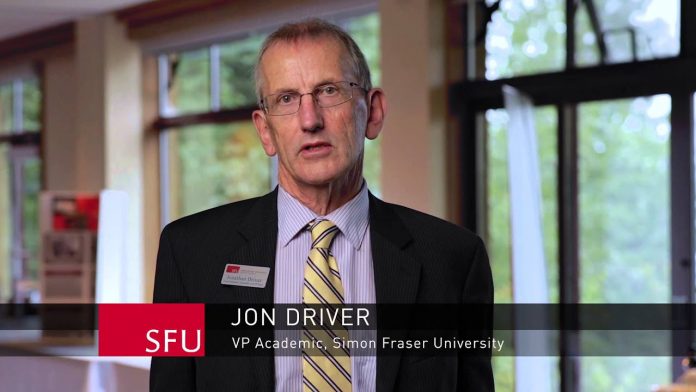
The process to determine SFU’s next Vice-President Academic (VPA) and Provost is gearing up in preparation for the end of current VPA Professor Jonathan Driver’s term on August 20, 2020. 

The VPA provides leadership for academic initiatives at SFU such as student experience, curriculum quality, engagement, and faculty and staff. 

Driver has served as SFU’s VPA from 2008–2016, and has been holding the position on a pro tem (for the time being) basis since the beginning of the 2019 academic school year. He joined SFU faculty in the Department of Archaeology in 1982.

Consultations with university community to shape VPA requirements

In an email interview with The Peak, Secretary to the Vice-President, Academic and Provost Search Committee Kera McArthur wrote that “the recruitment process [for a new VPA] began in the fall” with the formation of a search committee as per policy GP 29 Search Committees for Vice-Presidents and Associate Vice-Presidents.

“As the search for the new Vice-President Academic gets going, which is really going to happen during this term, one of the requirements of that search is that the search committee consult broadly with the university community about the challenges and the opportunities that the next Vice-President Academic will face,” said Driver in an interview with The Peak.

McArthur remarked that the feedback provided during the consultations will be used to create a Position Description and Candidate Profile, documents that will guide the search committee as they “conduct interviews, review references and undertake any other necessary steps to evaluate candidates.”

“We are expecting to conclude the search by late spring, 2020,” wrote McArthur.

Current VPA weighs in on past accomplishments 

When asked about current areas of focus for the VPA’s office for the past few years, Driver pointed to SFU’s Academic Plan, which outlines the focus of the office in five-year intervals. Driver noted that many aspects of the current academic plan are working to enhance the student experience at SFU.

“You could look, for example, at the development of the Sexual Violence and Misconduct Prevention, Education, and Support policy and the development of the office that supports that policy,” offered Driver as an example. “You can particularly look at the work that’s being done around student health and wellness and especially around mental health,” he added, noting the release of the My SSP app which provides mental health support services to students.

Driver noted additional VPA initiatives, such as the development of a more integrated approach between online and in-person education at SFU, a focus on reconciliation and support for Indigenous students, and work on equity, inclusion, and diversity for all students on campus.

Future challenges of the position

In respect to some of the challenges the VPA’s office has faced the past few years, Driver stated that “the biggest challenge, really, is how do you create change? How do you build new services for students while working within a budget that puts limits on what we can do?”

For the next VPA’s term, Driver predicted three main challenges that the office would face.

“I would say that the first challenge is going to be balancing the affordability of education against increased demand for resources,” said Driver. He listed examples such as demands for smaller class sizes, greater support for mental health and wellness on campus, and creating more welcoming spaces on campus for students.

The second main challenge, according to Driver, will be how to create a campus community that is more inclusive of a diverse student population.

The third challenge the future VPA would face, as Driver identified it, is how to close the gap between SFU’s reported international reputation and the actual quality of teaching and research that occurs at the university, as reported by more objective figures.

“I think there’s some work to be done around ensuring that the great work that gets done here is better recognized and communicated to the outside world and that, in particular, the research achievements of our faculty members, the high-quality teaching that goes on here, and the achievements of our students after they leave the university need to be highlighted,” said Driver.

“We need to be more than just ranked as Canada’s #1 comprehensive university.”

Driver acknowledged that, while these were the three main challenges he had identified for the new VPA, he was certain that the search committee’s consultations with the university community would yield a much broader and more comprehensive list of challenges and opportunities for the new VPA to address.

Canadians, overseas wars are too heavy for your jokes

1
Make peace not memes. Stock courtesy of Rockstar Games

By: Madeleine Chan, Staff Writer

Don’t get me wrong. I like memes just as much as the next Gen Z/Millennial youngling. Two identical Spider-Men pointing to each other? That’s my shit. Joking about SFU’s lack of adequate response to snow? Chef’s kiss. But when I see memes that joke about WWIII, I am appalled. Not simply because of the serious possibility of a war happening in the Middle East, but because of the enormous amount of privilege that creating and sharing these images demonstrates.

Recent conflicts between the United States and Iran have sparked a flurry of #WWIII content across the internet. There are constant tweets joking about being drafted into war. Meanwhile on Facebook, SFU’s own Dank Memes Gang have posted multiple memes about student conscription. These images fly in the face of the real human costs of war around the world, while at the same time flippantly flaunting the fact that conscription hasn’t been a part of Canada’s military agenda in generations. 

This country has had the luxury of not being an active target in recent wars. Canadian civilians can watch newsworthy aerial highlights of dropped bombs safely behind their screens, without having to experience or even witness the micro-level human carnage on the ground. How can people joke about a war whose effects would most likely never touch their lives? War has not been seen inside Canada’s borders in ages. There have been no bombs, no wartime human rights violations, and no propagandist racial prejudices abroad against Canadians or Canadian culture. 

This isn’t to say that people in the west have not been affected by overseas conflicts, though. Tragically, the Ukraine International Airlines flight 752 was recently shot down in the midst of tensions between the US and Iran, killing 176 people — including 63 Canadians. But how dare some sit comfortably in the west, jokingly positioning themselves as the major victims in this situation, when in reality it is people in the Middle East who have suffered for decades under the United States’ endless imperial conquests masquerading as proactive security? 

I understand the desire to joke about frankly terrifying concepts in a seemingly non-consequential way. However, when we joke about being conscripted to go kill the people who will be affected by the horrors of war, we show just how rich in safety we are. To have the privilege to poke fun at this topic when we sit secure and safe in our homes with no fear of danger is dangerous in itself, as it breeds apathy towards the real atrocities that our neighbour to the south is committing — again. 

I implore everyone who creates or shares these kinds of memes to think more deeply about jokes made about war. We should be looking for solutions and advocating for peace, not lounging in our existential self-entitlement. Save the memes for something that doesn’t put petty displays of privilege above those who actually are under threat of dying.


We have to pay better attention to who and what has access to our data

0
What has your smartphone been telling third parties about you today? Photo: Zeh Daruwalla/The Peak

By: Connor Stephenson, SFU Student

Few of us, if any, read user agreements prior to entering personal information or allowing applications to track our location. This is incredibly convenient for data corporations. The legal requirements for your explicit consent are camouflaged in microscopic print that seems to go on for pages and pages. As such, we are basically signing away our privacy rights, all to access the latest trend in smartphone applications.

A recent New York Times op-ed outlined how location tracking services embedded in smartphone apps are being archived and disseminated by data corporations. The thought of this occurring without users’ knowledge is both unsettling and enigmatic. An investigation led to the revelation that millions of Americans are having their locations tracked through their smartphones. And since the practice is legal in the U.S., the applied uses of location data are endless. Although the article is focused on the U.S. population, the same deceptive methods are carried out in Canada, as well. 

A 2018 report by The CBC names major Canadian telecoms complicit in the mining and selling of users’ location data. Any time you allow an app to use your location data, you are essentially “consenting” to having your location data collected and stored. Even if you don’t want your data distributed, once consent is given, these companies are legally permitted to obtain user locations — among other personal information — and sell that information to third parties.  

Although the laws in Canada and the U.S. demand different levels of oversight, the telecommunication companies operating in Canada are doing just enough to remain barely legal. The Office of the Privacy Commissioner of Canada says that “meaningful consent” must be obtained prior to gathering personal data. However, even if individuals do consent, are they aware of what they are consenting to?

Some of us here at SFU might be indifferent about this issue, saying, “Who cares if our locations are being perpetually tracked?” and “who cares what companies have access to this information?” It seems that we care about consent only when it is convenient, or when the potential for misuse is directly perceptible in our everyday lives. 

These data corporations are betting on us being too lazy to investigate exactly what we are consenting to. However, our growing reliance on technology and the rate at which it is being developed and distributed continues to blur the lines of cyber ethics. This makes government oversight over these companies increasingly difficult to legislate and enforce, thus delegating the task of trying to interpret “meaningful consent” onto the user.   

Aside from reading the entirety of the user agreement — which I don’t expect anyone is going to do — there are a few relatively easy ways of lessening the likelihood that your location will be tracked. Start by limiting the number of applications that operate using location services. Turn off location services for programs that are still able to operate without them. 

Even taking these precautions, there is evidence that your location is still tracked, notwithstanding users’ explicit instructions not to. There’s no reason why we should make this any easier on data miners. Educate yourself on what your phone is doing behind the scenes and protect yourself — and your location — from prying eyes.


The Hollyburn Peak trail is your next winter wonderland adventure

0
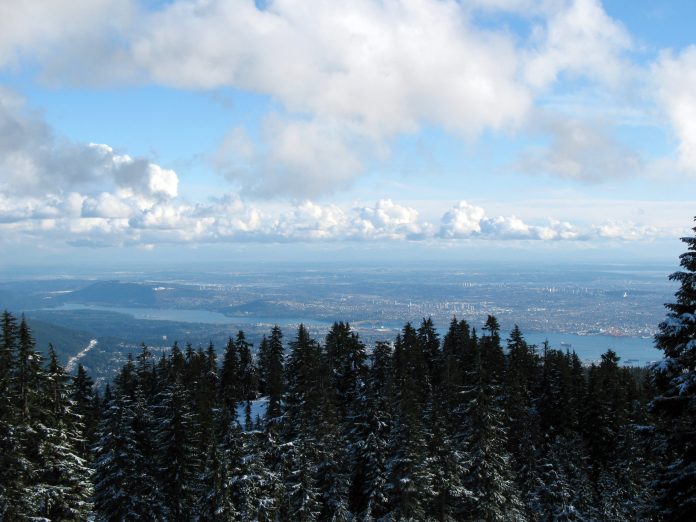
The view of Vancouver from the Hollyburn Peak. — Photo credit / Vancouver Trails

By: Kim Regala, Staff Writer

As an avid hiker, the hardest part about transitioning to the colder seasons is saying goodbye to those beautiful summer trails that I’d venture off to on a weekly basis. While there are plenty of winter trails around, I never found them to be as enjoyable as I would have in the summer. However, my perspective on winter hikes took a 180 degree turn after experiencing the Hollyburn Peak trail.

This three-hour hike is located at the Cypress Provincial Park, to the left of the Nordic Cafe and ski and snowshoe rentals. Starting off with fairly level terrain, the gradual inclination of the hike commences a couple of minutes after passing by the power lines. From here is where the real uphill climb begins, as the trail only gets significantly steeper the further in you go. There’s no way to sugarcoat the fact that, for the most part, you will probably find yourself catching your breath and taking more breaks than you would have thought —— I know I sure did. With an elevation gain of 415 m in a span just of 3.5 km, there’s no doubt that this trail is a real cardio workout. However, the hard work definitely pays off as soon as you overcome the final trek up to the peak.

Though it was mostly foggy for the duration of my hike, the clouds eventually cleared up once I reached the top of the mountain, revealing an incredible panoramic perspective of Vancouver’s landscape. High altitudes are known for having thin air, but it was definitely the view from the peak that took my breath away. From the viewpoint, you can see the vast, snow-covered mountain ranges that surround Hollyburn Mountain, with Grouse Mountain off to the right and the Lions far into the distance. There were no benches to sit on, and the sub-zero temperatures had me shaking, but it was certainly worth it to spend a few extra moments taking in the awe-inspiring view.

Based on my experience, I’m not surprised that the Hollyburn Peak trail is recognized as one of the most popular trails in Vancouver. But before you decide to venture off into this winter wonderland, make sure to bring the proper gear and equipment. As always, water and food are essential to every hike. Proper hiking shoes are an absolute must, as well as spikes or snowshoes, which can be rented at the Cypress Bowl. While walking sticks are optional, they were very helpful in overcoming the steepest uphill climbs. Most importantly, bring a buddy to keep you company and to share the view with on this beautiful three-hour trek.

Fossil fuel divestment is painful but necessary for universities

0
F— off capitalism, you’re ruining my Earth. Photo: Jp Valery/Unsplash

Editor’s Note: This piece has been updated to clarify SFU’s actions in reducing the carbon footprint of its portfolio.

By: Nicole Magas, Opinions Editor

For the second winter in a row, I am staring out of my window in Burnaby at more than a foot of snow, unable to get to school. It’s -4 degrees outside — warm compared to the last couple of days — and the snow is predicted to start again. For our relatively mild climate on the west coast, seeing this much snow back-to-back for two winter seasons is unusual, to say the least. 

It’s hard to deny that weather patterns are changing, following our growing climate crisis. It’s likewise getting harder to deny that serious organizational and institutional changes need to be implemented with rapid urgency in order to prevent the crisis from getting any worse.

The topic of university divestment from fossil fuels is blowing up on campuses across Canada in these early days of 2020. The CBC reports that at the end of last year, tenured professor Gregory Mikkelson, formerly of McGill University, tendered his resignation following the university Board’s third decision against full fossil fuel divestment. January 10 saw the end of a near five-day student hunger strike at UBC, after the administration issued a promise to commit to a plan for full divestment. Meanwhile, at SFU, full divestment from fossil fuels appears to be off the table — for now — though the Board of Governors “passed a motion to increase the University’s commitment to reduce the carbon footprint of the public equity portion of the investment portfolio to 45% below the baseline measurement, by 2025.”

Fossil fuel divestment represents one of a growing number of ways in which grassroots campaigns of ordinary people are demanding structural change to address the climate crisis. By making investment in fossil fuel or carbon emission-heavy financial portfolios socially unacceptable, the idea is to starve offending companies and industries of investment capital. However, as McGill University notes in their decision not to divest, this may also leave large institutions scrambling for “clean” portfolios that also yield profitable returns. 

In context, it’s important to remember that the climate crisis arose from and affects complex networks of historical, social, and environmental factors. As such, it is inseparable from our economic activities and social institutions. In order to address the crisis in any meaningful way, we need to be willing and able to not only critically assess all the deeply imbedded moving parts of the issue, but to also begin to dismantle the systems that perpetuate the crisis and hinder its solutions. This includes a willingness to examine the machinations of our current economic system to honestly assess whether the benefits of increasing capital accumulation are worth the cost of a potentially inhospitable planet in the not so distant future. 

Yes, university divestment from fossil fuels may come at a financial cost to institutions. But this is only the case if we continue to collectively agree to the immutable supremacy of capitalism over all aspects of our lives. Could we not envision a future in which we are both freed from fossil fuel dependency and have a retooled economic system that isn’t predicated on the harmful exploitation of human and non-human resources in order function?

In our capacity as social animals, human beings are capable of some truly marvelous feats of imagination, organization, and advancement. Our social and economic institutions didn’t spring from a beautiful accident of chemistry and physics, as did our planet. We have the power to course correct through actions like divestment activism, and we have the power to dream up new ways of existing without reliance on fossil fuels and the financial institutions that support them. What we can’t do is continue to pretend that capital is more important than the world we live on.

We can be volunteers or we can be victims. We can either choose how to recreate our world free of fossil fuels, or we can have the choice made for us.


Peak Sports Mailbag: Hiking

0
Photo credit / All Trails

By: Dylan Webb, Sports Editor

Hello readers of The Peak sports section,

Our Peak Sports Mailbag topic this week is hiking and our host is The Peak’s Sports Editor and hiking aficionado, Dylan Webb. 

Thanks so much to all of our readers for submitting their hiking-related questions, and my apologies if your question didn’t make it into this week’s edition. Usually, the Mailbag host will only answer three questions. Don’t worry though, as all questions submitted count for an entry into the raffle draw whether or not they are addressed in the Mailbag. Now, onto the questions!

Question 1: What’s the most dangerous hike in Canada? – Gab

Somehow, the Grouse Grind has consistently been ranked one of the most dangerous hikes in Canada, and even the world! I think this is an absurd conflation of difficulty with danger, and that a lot of the danger of hiking comes with lack of preparation. Based on this, I’ll have to go with the Canol Heritage Trail in the Northwest Territories. I chose this hike given that it’s firmly embedded in grizzly bear country, it takes 22 days to complete, and it requires multiple major river crossings. Numerous pre-arranged food drops are required to complete it as well. 

Question 2: Do you have any tips/advice for hiking with dogs? – Jen 

Answer: This topic is wildly debated amongst the hiking community, with some valuable perspectives on all sides of the discussion. The primary point of contention is the on-leash vs. off-leash debate. While I was an off-leash hiking proponent early in my hiking career due to the freedom and excitement it allows for our canine companions, I’ve definitely changed my position on this as I’ve moved on to undertake more significant hikes that take us deep into the wilderness. 

While off-leash hiking may be suitable in a particular set of circumstances that includes a high level of obedience on behalf of the dog(s) and a hiking trail that is not significantly populated by wildlife or other hikers, I’m now a strong proponent of on-leash hiking. 

After traversing many trails with my pooch friend, I’ve come to realize that dogs can gain just as much enjoyment hiking on-leash, without many of the dangers, such as wildlife and steep slopes, associated with off-leash hiking. If you keep your dog on-leash, the dangers associated with hiking are greatly reduced, if not eliminated. And don’t forget, dogs get hungry and thirsty too, especially when they’re exerting themselves, so bring some snacks and water for yourself and your dog friend. 

Question 3: I live in Pitt Meadows and commute to SFU. What are some of the best hikes closer to where I live? – Sam

Answer: There are two hiking locations I’d like to highlight here. I say hiking locations, not hikes, because the two areas I note here contain multiple hikes of varying difficulty. The first is the Widgeon Valley National Wildlife area that includes the Widgeon Falls and Widgeon Lake hikes. These hikes are awesome because of the abundance of wildlife, and the fact that both hikes also require a short, enjoyable canoe ride. The Widgeon Falls hike is best defined as an easy hike, as it takes only a couple hours round trip. 

On the other hand, the Widgeon Lake hike is best described as extremely difficult. You must adhere to a very tight schedule and be in extremely good physical condition to complete the Widgeon Lake hike in one day, but I’d definitely recommend making it an overnight camping trip so you can enjoy the journey without rushing. 

The second is Pinecone Burke Provincial Park. There is an enormous variety of possible hiking routes contained in this park, with the Coquitlam Lake Viewpoint hike being my personal favorite for its unique blend of epic views, moderate difficulty, and reasonable travel time (three to four hours round trip). 

If you would like to participate in future editions of the Peak Sports Mailbag and be entered in a raffle for an end-of-semester prize, here’s what you can send to [email protected]

  • Sports-related questions that our weekly host will answer
  • Weekly theme ideas to guide our questions

Or: sign up to host the Mailbag (and get paid)!

Thanks to all of you SFU sports fans for blowing up my inbox!

The next original Mailbag theme is: kyudo

The kyudo Mailbag host is: Nicole Magas

Send in your questions to [email protected]

What Grinds Our Gears: UBC students are spoiled for bus choice while SFU only gets four routes

0
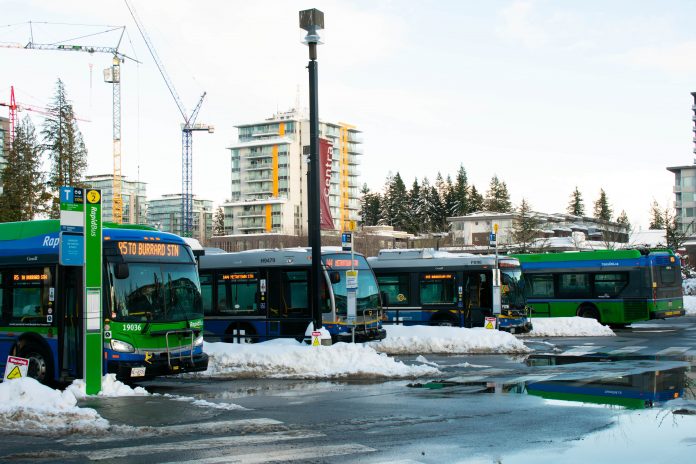
There aren’t many direct options for students needing to transit up the mountain. Photo: Maxwell Gawlick / The Peak

By: Meera Eragoda, Staff Writer

It seems from most places in Vancouver it’s possible to catch a direct bus to UBC. The same cannot be said about SFU, and that must be because all of TransLink’s executives graduated from UBC. How else do you explain UBC’s current 15 bus routes to SFU’s four? You can’t tell me there’s no bias in service.

I understand this may be a niche concern, but there are at least a few East Vancouver folk who aren’t in the Renfrew-Hastings area who should be able to relate. To get to SFU, I currently take the 22, then the SkyTrain — and then depending on timing — get off at the appropriate station for the 143, 144, or the 145. Meanwhile, my roommate has the option of taking either the 25 or the 33 directly to UBC from our place. Only one of us has to take three different modes of transportation to get to class. Spoiler: it’s me. 

Look, I understand we’re a commuter campus, so some bus hopping is always going to be expected. We’re also smaller than UBC. But given that UBC is getting a whole SkyTrain extension to themselves, shouldn’t it be time for TransLink to do more than just throw us an R5-shaped bone in hopes that we wouldn’t notice that it’s the exact same bus as the 95? Sure, the service is a little more frequent, but how exactly does this increase the service area going to SFU?

If SFU has approximately 60% of the student body that UBC does, shouldn’t we at least have 60% of the number of bus routes they do? (That would be nine for anyone wondering about the math.)

Spartacus is more than just your average bookstore

0
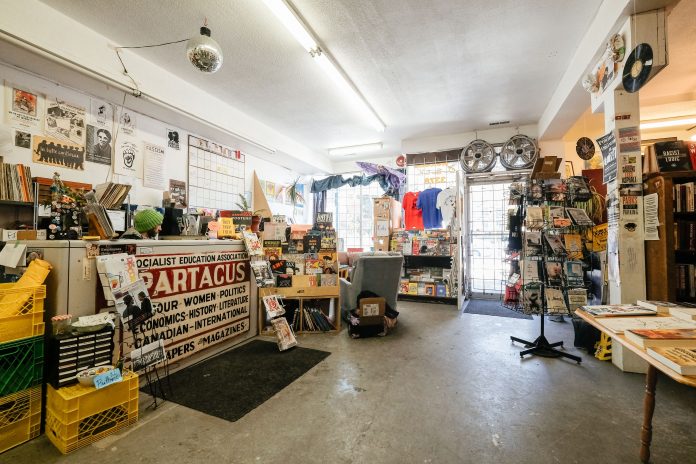
Photo: Chris Ho / The Peak

by Meera Eragoda, Staff Writer

Tucked into a corner on Findlay Street off Commercial Drive lies an unobtrusive bookstore which has its roots in SFU. Spartacus Books is a breath of fresh, radical air in a suffocatingly capitalist world. It’s a non-profit, entirely volunteer-run bookstore and resource center that strives to be as inclusive and accessible as possible.

Spartacus Books got its start in 1972 as a booktable at SFU, moving to a storefront on the Downtown Eastside in 1973. It has faced more than its fair share of adversity, from a fire that destroyed everything to a renoviction as a result of increasing gentrification. For over 45 years, it has preserved and rebuilt, showcasing the power of working as a collective. Spartacus operates under an anti-oppressive, anti-colonial, and anti-capitalist framework to reject hierarchies and binaries. This unites people through the spirit of struggle, as they believe all oppressions are linked. 

Photo: Chris Ho / The Peak

The store itself is fairly small, but can hold gatherings of up to 30 people. During my last visit, an accordion group of about 12 people were using the space to practice. It is packed with adult and children’s books, magazines, pins, patches, comics, and other merch featuring anarchist, Indigenous, queer, feminist, Black, and immigrant content — and more. 

Everywhere you turn, posters such as “Sex Work is Real Work”, “A Riot is the Language of the Unheard”, and “Smash Fascism” greet you. There is a cozy corner of the store where anyone is welcome to free coffee, tea, and whatever other goodies await. A couch featuring a colourful throw, along with other seating, gives the space a home-y feel where anyone can play board games, read, peruse zines, play an instrument, or just hang out.

Alexander Daughtry, the longest-standing member of the collective, joined in 1976. He first discovered Spartacus while it was a booktable at SFU. When The Peak asked what inspired him to join, he said, “I loved that it was doing an important function of getting all this information to people who it would not otherwise be available, but I also loved that it was non-sectarian, and was a working group of anarchists, Maoists, social democrats who could all work together which was unusual in the 1970s.”

As to why he’s stayed so long, he says, “I think we still have a very important function worth continuing especially as bookstores are all disappearing.”

Photo: Chris Ho / The Peak

Spartacus is more than just a bookstore. It is a safe space for community gathering and organization. They hold free events such as movie screenings, craft nights, jam sessions, and book clubs. I’m told by collective member, Alexander Kirby, that the Spartacus Book Club will be restarting on January 30 at 6:30 p.m. with Capitalism Realism by Mark Fisher (a short 90-pager), and that more details will be published on their Facebook page shortly.

Staying true to SFU’s roots involves helping radical, inclusive spaces both on and off campus flourish. As Spartacus’ inception can be traced back to SFU, I would encourage anyone curious about inclusive social change, alternative worlds based on unity, or challenging the status quo, to pop by this oasis. 

Spartacus Books can be found at 3378 Findlay St, Vancouver, BC and is open from 10 a.m.–8:30 p.m. on weekdays, and 11 a.m.–7 p.m. on weekends.