Home Blog Page 461

Long Story Short: a train ride taught me to slow down

0
Illustrated by Tiffany Chan

By: Kim Regala, Staff Writer

It’s a Monday evening and I’m two hours into my four-hour class — my professor’s constant lecturing entering one ear and right away coming out the other. I feel my stomach gurgling and I realize that I hadn’t had a single meal at all that day. I mean, how could I have managed? There was no way I could fit in time for food when I’d gotten caught up in a last-minute club meeting right after my nine-to-five shift, where I was so busy that I forgot to take my lunch break. But the next thing I know, I’ve sprung completely out of my seat. Without a single warning to my friends, nor the professor, I walked right out of the classroom and headed straight to the SkyTrain station. I remember the train ride so vividly, as I sat on the corner furthest from the other passengers, sealing my eyes shut as to not let any tears fall down.

I think that the hardest part about being burned out is acknowledging that you are, in fact, experiencing it. But there I was, on the verge of a mental breakdown due to all the stress that I could no longer cope with, and I knew it was about time I admitted to myself that I was in fact in this very state of burnout.

My grandfather used to tell me I had a tendency to always be in a rush. Though I knew I had a habit of walking too fast sometimes, I knew that what he was really trying to say was that I needed to slow down in chasing too many goals all at once. But with my fourth year starting up, it was difficult not to feel the pressure of looking as if I — for lack of a better term — had my shit together. It didn’t help that everyone else around me looked as if they had their lives figured out, whereas I was only in the beginning stages of that. And so, I did what any student in their quarter-life crisis would do. I took on as much work as I could fit into my weekly schedule, thinking that if I kept myself busy enough, I too would come off as perfectly put-together.

First, I decided to take on a full course load at school. “But everyone else takes four or five classes too — surely, I can be more productive than that,” I thought. And so, I accepted more hours and responsibilities at work too. Feeling like that still wasn’t enough, I was determined to contribute a lot more for The Peak. Finally, when a mutual friend reached out asking if I was interested in becoming the Social Media Director of their club, I was so thrilled with the opportunity that I had no hesitation to say yes. Despite my friends and family warning me that I was putting too much on my plate, I carried on with this busy schedule, pushing the thought in my head that if I wasn’t doing all of these things, then I surely wasn’t doing enough.

This period of hustling worked well for me in the beginning. I had the kind of motivation that only seemed to grow overtime; my weekly checklists were always completed and I kept my calendar updated at all times. Most importantly, I enjoyed my classes, work, and all extracurricular activities, even with the long hours and hard work they took out of me. However, as time went on, I began to lose this drive. Coming home from a long day every single day had me feeling physically exhausted. Sooner or later, the checklists remained unchecked and my once productive days were replaced with lazy ones due to my lack of energy to keep up with any work.

Eventually, physical exhaustion wasn’t the only thing that weighed me down; I began to feel it mentally too. I’d be sitting in lectures, and despite how interested I was in the topic, I’d be so mentally drained that none of the information would register in my head. At any time of the day, regardless of what I was doing, I would worry about whether or not I had enough time for X, Y and Z. When my mental calculations told me that there was no way I could fit all of my work within that week, I would try to rationalize how I would complete everything on my to-do list. “Maybe if I just write my paper while I’m in this Marketing meeting?” “If I finish my food in five minutes, I could spend the rest of my lunch break studying for that midterm I completely forgot about!” I became less focused on each task, only delivering half as much effort as I would have had I been given more time to get things done.

At this point, my busy schedule was the only thing that occupied my thoughts and without realizing it, I had completely pushed aside everything else that wasn’t work-related. It didn’t occur to me that I hadn’t seen my friends for a long time or even asked to see how they were doing. My guitar remained unplayed, collecting dust in the corner of my room, while my camera was tucked away in my closet, unused since the summer. It was nearing the end of the year now, and even though I had the most frantic semester of my whole life, I felt like I hadn’t accomplished anything at all.

A few months down the road, I still look back at that night on the train. I wanted it to take me home, but at that moment, I no longer knew where home was. It took me a long time to accept that I had lost parts of myself while pushing myself, and even longer to overcome the challenges of picking myself back up again. While I’d like to say that I’m fully better now, the reality of it is that the road to recovery is a long one. I’ve learned to slow down, yet every once in a while, I still slip up and have my rough days. Recently, however, I’m starting to enjoy my train rides. I look up every once in a while to admire the view, assuring myself that no matter where it takes me, I can always find my way back.

Monday Music: NeW YEaR neW mE

0
"Monday Music" in giant yellow block letters with a red background
Monday Music: your weekly themed playlist. Image courtesy of The Peak.

By: Juztin Bello, Copy Editor

Yes, I know. You’ve heard this cliche before. Once the calendar rolls over onto that fresh January 1, all that can be heard is a resounding chorus of people renouncing their past identities and bringing to life refreshing new idealized versions of themselves. 

If you’re one of these people looking to ring in the new year with a new identity and/or new outlook on life to bring with you into 2020, a great way to start is by getting inspired by some new music. Will your 2020-self be better at self-care? Become more adventurous? Think more positively? The possibilities are endless, so here are three songs to get you started on your new year’s reinvention. 


“I Don’t Miss You At All” — FINNEAS 

Break-ups? Easy. Getting over a crush? No sweat. The emotional turmoil of loneliness? Never heard of her. With the inspiration from this track by artist FINNEAS, your 2020-self will be free from the baggage of the past and able to take on any heartbreak that may come your way — with a little convincing, of course. In “I Don’t Miss You At All,” FINNEAS says “But now our song is coming on, and now I wanna crash the car — but I won’t,” which details the very realistic struggle of trying to convince yourself that you’re over someone while reflecting on the things that remind you of them. Let this song be an anthem for the new 2020 version of you that actually gets over that certain someone — no matter how much self-convincing it takes. 

“Shrink ◐” — HONNE

Admittedly, maybe you didn’t prioritize self-care in 2019. Fear not, because with the influence from this song by British electronic-soul duo HONNE, you’ll be thinking a lot more about the proper care and attention you need this year. Off of their album Love Me ◑ / Love Me Not ◐ the song “Shrink ◐” describes the feeling of lost sanity and the acknowledgement that help is needed. The chorus, “You’d better book me a shrink for 2020, ‘cause by that time I’m gonna be crazy,” demonstrates the necessity of self-acknowledgement. Other lyrics in the song such as “I did not plan for this, they don’t teach you this in school” and “I need to take some time to deal with my anxiety” also address the importance of taking responsibility in caring for yourself, which is exactly what 2020-you will be doing.


“Don’t Bring Me Down” — PREP 

Was 2019 not your year? Found yourself negatively impacted by other people’s actions? Want your 2020 to be a little more positive? Well, “Don’t Bring Me Down” by PREP is the perfect anthem for the happy-go lucky 2020 you deserve. From their four-track album Cold Fire this London-based band provides listeners with a song that inspires a sense of optimism. The lyrics “Don’t bring me down (bring me down) I got no time for that other shit now” perfectly dismisses other people’s negativity and pushes listeners to not put up with other people’s nonsense. As if the lyrics weren’t enough to inspire your new outlook, the song itself has an upbeat and catchy vibe that can ensure that the 2020-you won’t be brought down by anything.

Political Corner: India’s Citizenship Amendment Bill is a horrific case of Islamophobia

0
Protests against the controversial bill have resulted in bans on public gatherings. Photo: PTI

By: Lubaba Mahmud, Staff Writer

Under Prime Minister Modi’s leadership, the Hindu nationalist group Bharatiya Janata Party (BJP) has undergone a tremendous effort to institutionalise the persecution of Muslims in India. Further fulfilling this agenda, the Citizenship Amendment Bill (CAB) was passed on December 11, 2019. The CAB revises part of the Indian Citizenship law, which previously prohibited all illegal migrants fleeing persecution from becoming Indian citizens. 

With the changes passed in the bill however, non-Muslim illegal immigrants from Pakistan, Bangladesh, and Afghanistan will be eligible for citizenship by naturalisation. The bill specifically pertains to individuals of select religious minorities Hindu, Sikh, Buddhist, Jain, Parsi, and Christian. If they have lived in India for at least six years, they may now apply for Indian citizenship. This bill relies on stereotypes and religious discrimination as a precondition for citizenship. It is outrageous and should not be tolerated in any modern, democratic society.

This law is regarded by many to be unconstitutional, as secularism has always been considered to be a core tenet of the Indian Constitution. The government claims that the amendment will protect religious minorities, and, according to an address in parliament, that Muslims “have not been persecuted on the basis of religion.” This statement is grossly Islamophobic as it implies that Muslims are always the oppressors. Their claim also overlooks Muslim minorities, such as the Ahmadis from Pakistan and Rohingyas from Myanmar, who have historically been victims of discrimination on religious grounds.

BJP’s Hindu nationalist agenda is clearly clashing with fundamental human rights. Modi’s India is increasingly being compared to Nazi Germany, which begs the question: have we really learned nothing from history? 

Subsequently, nationwide protests have erupted in India in response to this highly controversial law. Some protest signs were seen to compare Modi with Hitler, and a German exchange student was ordered to leave India after he joined the protest with a “we have been there” sign. Many unarmed protesters have faced police brutality and hundreds have been arrested. Consequently, the government has prohibited more than four people at a time from congregating in selected areas across the country, and suspended internet service in 73 districts. 

It is particularly alarming when any form of discrimination becomes legal. The Indian government is seeking to exclude select minorities through CAB, so that violence against them becomes justified in an incredibly crude way. In short, what we’re witnessing is the blatant disregard of secularism in the modern world.


Album Reviews: Ngan’s Venus and KAYTRANADA’s BUBBA

0

By Kitty Cheung, Peak Associate

Venus by Ngan

Venus is a groovy neo-soul EP coming from New York singer-songwriter Ngan. After a hiatus from longer projects, Ngan released this second EP following 2014’s Smell the Roses and my oh my, am I glad she’s back. Ngan is smooth, graceful, poetic; this artist is a divine healer and I feel blessed just listening to her satin voice. Throughout Venus, her gorgeous vocals are accompanied by smooth R&B production. “Lonely” is a dangerous sex jam glowing with feminine energy. The verses are dripping with desire and longing. And I hate to spoil, but this EP ends with a bang. While the rest of the five-track ensemble delivers soothingly chill vibes, Venus closes off with “Cherry,” an upbeat love-bop full of sugary metaphors. Every now and again I come across music that speaks directly to my soul. It’s the kind of music where each time I listen, I can’t help but vibe along, especially with the vibrating bass line of “Twilight” featuring Luxiid. If you want to let yourself be carried away by the groovin’, Venus is five tracks of heavenly energy. 


BUBBA by KAYTRANADA

KAYTRANADA, a Montréal-raised producer, has come out with 17 tracks of vibey beats with BUBBA. Collaborating with artists ranging from Kali Uchis to Mick Jenkins, each beat and melody within BUBBA is pulsating and dynamic. My favourite track off the album is “What You Need” with Charlotte Day Wilson. Her soulful voice is backed by vibey and high-tempo production, like R&B meets 80’s synth pop. “Culture” with Teedra Moses also has a pleasant resonance to it. KAYTRANADA complements Moses’s deep, romantic vocals with sounds that are both sudden and lingering. Whether you’re feeling like some high-energy dancing or chill listening, this LP is versatile enough to cater to both the fervour of the club and the intimacy of headphones.

What Grinds Our Gears: How holiday gifting has turned into a capitalist chore

0
A bank balance isn’t an indicator of love. Illustration: Michelle Chiang/The peak

By: Madeleine Chan, Staff Writer

I’ve noticed something alarming this past holiday season. People rushed to get last minute gifts. They didn’t know what to buy, and just settled for the most convenient item. Wash, rinse, repeat. It’s a loop where folks hurried to fulfill an annual commercial obligation.

Why is this the new norm? The holidays should be a time of winter cheer, spending time with loved ones, and relaxing before the start of a new year — not a time of sadness, spending, and stress. 

Instead of giving gifts maybe we should give time to our loved ones, and not just for one week of the year, either. Why do people think that spending money shows more care than spending time? Overall, the latter is way better because it builds relationships and doesn’t rely on the ability to buy a “good” gift. And I’m not just saying this because I’m a broke university student (though still relevant), I just think that we shouldn’t have to spend money to show that we appreciate someone.

I know that not everyone practices this kind of retail affection. Some people do prioritize enjoying their loved ones’ company over giving hollow gifts. But when I see that Canadians have a $643 holiday gifting average, it seems that most people fall victim to pacifying the needs of capitalism rather than actually trying to support the ones they love.

In the end, love shouldn’t be found in compulsory gift exchanges. In this new year, let your presence be your present.


If the rain isn’t paying tuition, it needs to stay out of SFU classrooms

0
Students shouldn’t have to fight for dry spaces at their university. Illustration: Kitty Cheung/The Peak

By: Encina Roh, Peak Associate

As if the bitter cold, the constant rain, and the brutalist architecture of SFU Burnaby could not dampen (ha) the mood more, students are finding themselves standing off against yet another increasingly prominent enemy to public morale: leaking. 

In the AQ. In bathrooms. In classrooms. In all the areas where umbrellas or hoods are (sometimes surprisingly) needed. When strolling on campus, it’s hard to ignore that the school grounds are littered with yellow “caution” signs and half-full red pails of leaky water. There are substantial puddles on the supposedly rain-protected areas between the Maggie Benston Centre and the West Mall Centre, sitting like land mines for students not wearing heavy duty rain boots. The inconvenience of these puddles is made worse by the sheer number of fenced-off construction areas that decrease available paths, forcing students to step in the clumpy mud water if they want to make it to class on time. 

Reddit user u/veraesia recently shared that during a final, a wall started to leak, causing “most of the left side” of the classroom to be soaked. While u/veraesia escaped relatively unscathed, with the exception of a wet backpack, it is implied that other students were not so lucky. It is pure poetic justice that SFU has a misery-inducing, prison-resembling reputation.

As a commuter to SFU, getting to school dry is already a pretty impossible task between October and May. But now, staying dry in classes is a whole new quest to tackle as well? Three (and counting) years of relentless construction, of putting up with the deafening sounds of shouting, hammers, and drills during classes and exams, of dealing with increasing tuition costs, and all we get is a school that leaks even more. 

Everywhere. 

While I understand that some leaking during the winter is inevitable given the age of the buildings and the sheer amount of rain on the mountain, is it really fair for students to choose between finishing their finals or waddling out to change their clothes? The unending construction may be a testament to SFU’s dedication to improving the educational environment for its students, but the seemingly unstoppable leaking frustrates this ambition. 


Back to Ballet: Rekindling a love for dance

0
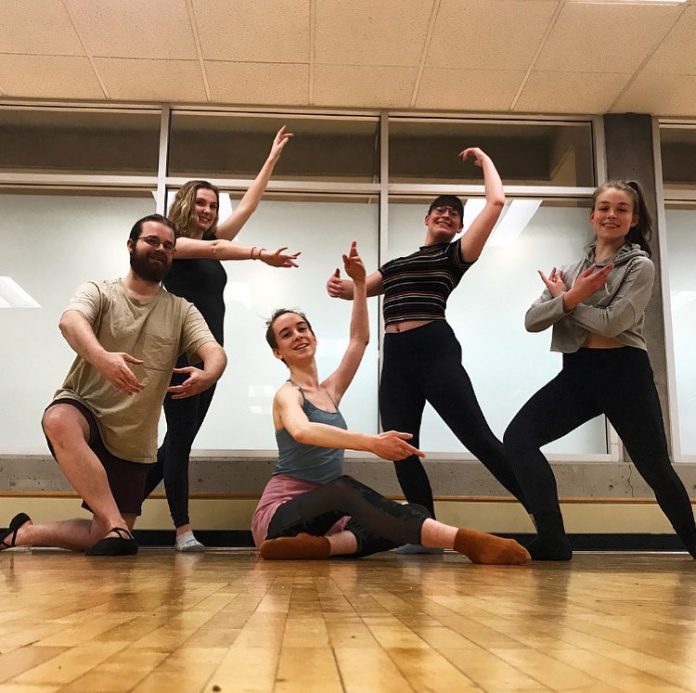
Five of SFU’s ballerinas in studio. — Photo credit / SFU Ballet Facebook page

By: Navya Malik, SFU Student

In my opinion, ballet is one of the most beautiful forms of dance. Within the dance community, and even outside of it, the grace and refinement of this style of dance is widely known. Because of this, I was always fascinated by the beautiful ballerinas, their graceful legs, and their rigid techniques. I wanted to take part in ballet, to put on the pointed shoes and tutu and perform pirouettes across the stage, as far back as I can remember. 

The beauty of ballet comes in many different forms. For us students, SFU Recreation offers two different ballet classes: Back to Ballet and Intermediate Ballet. Now, you might think that, because of the names, both the classes are meant for those that are already ballerinas and just wish to polish their skills further. Trust me though, don’t get intimidated. The Back to Ballet class is definitely organized so that beginners can benefit and learn from it just as much as experienced dancers. The price of the program, just $60 for an entire semester of weekly classes, is also tailored for students. The classes take place exclusively on the Burnaby Campus at the Fitness Studio. 

As a former student of Back to Ballet, I can say with confidence that the instructor, Natasha Chichkine, is super friendly, knows her techniques really well, and creates a learning environment in which everyone feels totally comfortable and has fun. While beginners can use the class to jump right into a new style of dance, it is also very beneficial for those who wish to re-establish their ballet skills after taking a break. 

One of my former teammates, Kayiu, who has been doing ballet since she was five years old, feels that Back to Ballet gave her a chance to “continue dancing” at a “convenient, reasonable price.”

The class is not only great for learning ballet, though, as it is also a perfect setting to make new friends within the university community. On this note, Kayiu mentioned this while sharing her experiences in Back to Ballet, stating that, “Back to Ballet helped me form long lasting friendships.” Meeting people that share a similar interest can help foster new relationships and social groups. 

Some of the most memorable experiences for Kayui at Back to Ballet were the moments she shared with the instructor, Natasha. For Kayui, Natasha not only helped her improve her techniques, but also made her “aware of other options for ballet programs off campus.” Kayui felt Natasha’s coaching really empowered her to feel that she could take her passion to the next level.

All in all, the class is designed to be fun and loose with little pressure to perform. It is based on engagement with your movements, the music, each other, and, as Kayui put it, the “freedom to express through dance.” At the end of each class, Natasha always makes sure to take a moment of gratitude for participants to thank each other for coming to share in their passion for dance. This wraps up the class in a perfect way that keeps participants motivated to keep building their skills and learn more.

Back to Ballet is open to all current SFU students. Check out their Facebook page for class times and dates. If you love dancing, or just have an appreciation for it and want to get moving, this program is for you. 

Dinner with a View gives the rich a place to burn their money — and little else

0
The rich have literally moved into a bubble with this controversial pop-up. Illustration: Tiffany Chan/The Peak

By: Kim Regala, Staff Writer

A new pop-up restaurant opens on January 15 in Vancouver that advertises a novel perspective on dining. Organizers of the event call it “Dinner with a View.” For one hour and 45 minutes (and a $200 reservation fee), guests can sit in a plastic bubble located outdoors and indulge in a three-course meal that costs a staggering $110. It boasts a spectacular view of the Vancouver skyline and Lion’s Gate Bridge. What it doesn’t show, however, is how this pricy “experiential” dining hammers in yet another wedge between Vancouver’s rich and the poor, in order to maintain the facade of an extravagant urban lifestyle that only a few people can attain.

Dinner with a View doesn’t explicitly advertise “rich people only” as a requirement, but it’s clear that the restaurant only caters to the upper class — those fortunate enough to be able to spend hundreds of dollars for a single dinner. The pop-up venue is intended to be a limited time, one-of-a-kind dining experience, for consumers in such metropolitan locales as Toronto, Montreal, and now Vancouver. Dinner with a View emphasizes the potential social media recognition its guests can gain from the event. However, promoting the event this way centers it in a socially detached splinter of reality that normalizes temporary “experiences” without acknowledging the disparity and inequality around them.

While the wealthy absolutely have the right to spoil themselves with lavish experiences, it’s worth keeping in mind that Metro Vancouver is already in the grip of economic equality. Regardless of the event’s intention, sequestering the rich in their own bubbles of privilege creates further divides within the region, where accessibility to the venue — and by extension the luxurious Vancouver life — is dependent on the increasingly difficult ability to afford it. 

The pop-up fine-dining chain first faced controversy when it opened in Toronto last April. The event was held near an area where many people who were homeless had settled for shelter. Upon learning that their tent encampment had been expelled prior to this event, several members of the community gathered in front of the temporary venue to express their concerns, calling their protest, “Dinner with a View . . . of the rich.” Hosting Dinner with a View in this particular location was especially upsetting for anti-poverty advocates, who have long demanded the construction of shelters in the area. 

Dinner with a View isn’t the first time that extravagant endeavours have been prioritized in Vancouver over the interests of the most vulnerable in the community. The city faced similar concerns a decade ago with preparations for the Winter Olympics; street youth were pushed to more dangerous areas of the Downtown Eastside to make room for the occasion. Similarly, neighbourhoods like Chinatown that are filled with so much cultural and community significance are now under threat by urban development. Dinner with a View represents yet another form of gentrification in Vancouver — one that doesn’t even stay long enough to contribute to the city that hosts it.

Events like Dinner with a View put wealthy affairs on a high pedestal, disregarding Vancouver’s growing homeless population in favour of cultivating a false perception of luxurious living in the city. Before Vancouver residents decide to spend hundreds of dollars on this trendy pop-up, perhaps they should try a few unique local restaurants and support the businesses and people who are already in their community.

“Death of the author” doesn’t negate the need for critical readings and re-readings

0
The Harry Potter series deeply impacted an entire generation. Photo: Chris Ho/The Peak

By: Gabrielle McLaren, Editor-in-Chief

When I was in fourth grade I had to do a presentation on “my hero,” which is a pretty standard assignment for a kid’s first foray into PowerPoint. I picked J.K. Rowling, who was my absolute favourite author. Later, when professors first noticed that I was a strong and avid writer, the greatest compliment they could give me was throwing her name in my general direction. 

If I had one of Rowling’s time-traveling time turners in hand, I would go back and tell fourth grade me two things:

  1. You’re gay (this matters in general, but for this story in particular), and 
  2. Heroes fall. Yours in particular is going to disappoint you. First as an artist, by money-grabbing at franchise expansions and adding unnecessary yet unforgettable (and unforgivable) canon about how wizards shit. Then, and more importantly, as a person. 

I don’t know how I’d explain to my younger self how Twitter works, or how to break down the legal court case that Rowling was commenting on — one in which she chose to support a woman who was terminated for tweeting transphobic comments. I encourage readers to do their own research on Maya Forstater, the woman in question, her history, and the human rights case that ensued. Then, scroll through Twitter to see the absolutely heartbreaking messages left to Rowling by trans fans who had previously found solace in her books. 

To be clear, this isn’t the first time trans, queer, and other marginalized Harry Potter fans have pointed out gaps and failings in Rowling’s politics. I’ll be honest, I didn’t want to believe the first few online discussions I stumbled upon about Rowling’s transphobia — and that’s my own fault as a cisgender woman, for not listening to trans folks’ concerns more attentively. 

The truth is, being critical would have been much harder than clinging to a favourite book series, a gateway and foundation for many of my friendships, and a comforting cast of characters, storylines, and quotes. When Rowling first discussed how her depiction of werewolves had metaphoric links to the stigma around AIDS, it gave me something to cling to when I still had questions about what my queer identity meant about my life and the way the world would see me. More generally, the Harry Potter series preached values of equality, tolerance, and peace, which I do think heavily shaped me as a young reader. But my experience doesn’t negate the hurt Rowling inflicted elsewhere. 

Going forward, I’m going to think twice about following and supporting Rowling’s newest creative projects and works, or buying new merchandise that Rowling might get royalties for. But that’s not enough. It’s my responsibility as someone who was influenced by Rowling’s work and who enjoys the world she created to poke at it and look for the cracks that I’ve seen in my old hero. 

It’s my job to listen when, for example, Indigenous people call out Rowling for cultural appropriation and imperial ideologies, or worry when fans point out that the speech of Rowling’s “happily enslaved and happy to serve” house elves presents as an imitation of African American slave dialects. I have to think about what gendered or colonial ideologies I may have passively absorbed elsewhere in her work. If I reread my favourite scene from Prisoner of Azkaban on a bad day, I have to use what I know now — as a more mature and critical adult and as someone who’s seen disappointing sides of Rowling — to worry about what ideologies may have bled into her work and influenced me. 

It is too easy to simply declare the death of the author and pretend that Harry Potter hasn’t profoundly shaped generations of young readers who were hoping that Hogwarts would always welcome them home. 


SFU Hockey looks to extend its winning streak as the calendar turns to 2020

1
Patrick Zubick, pictured here, has three wins and one shutout in his first year with the Clan. - Photo credit / SFU Hockey

By: Michael Lenko, Peak Associate

As the second half of their season opens up, the SFU Hockey team will look to build momentum from a two-game sweep of the Selkirk Saints as they strive to attain their pre-season goal: a British Columbia Intercollegiate Hockey League (BCIHL) championship. The first half of the season was mediocre for the Clan, as the team posted a 6-5-0-2 record that has them sitting in third place in the league standings. As the playoff race heats up, the Clan will, at least, be looking to catch the Vancouver Island University Mariners for second place. This would ensure they will have at least one series of playoff hockey at the Bill Copeland Sports Centre in 2020. 

To climb into second place in the BCIHL standings, the Clan will have to continue to rely on their top two lines to maintain their elite offensive output. The current top five point scorers for the Clan play on either of the top two lines and have accounted for 26 of the 45 goals the team has scored so far this season. Mitch Ledyard tops the Clan in goals midway through the season with seven, and fourth year forward Mac Colasimone holds the team lead in points with 17.

The Clan has also benefited from strong play in net this season, having allowed the second fewest goals in the league, behind only the undefeated, league-leading Trinity Western University Spartans. Andrew Henderson leads the team in save percentage and goals against average, and is tied for the team lead in wins with Patrick Zubick. Henderson’s strong play also has him ranked second in the entire league in both save percentage and goals-against average.

With all of these positive individual achievements so far, the Clan is likely disappointed to be sitting in third place in the BCIHL standings at the halfway mark of the season. The loss of two overtime games, and a couple of close games against the Vancouver Island University Mariners, have made the difference between second and third place for the Clan thus far. 

To improve upon their mediocre first half, the Clan will primarily look to add more secondary scoring. Second year forward Cole Plotnikoff will look to shake off a slow first half in point production to return to the near point per game pace he set in his freshman season. Another returning forward poised for a strong second half is second year player Arjun Badh. He has already surpassed his point total from last season, and will continue to be relied on for depth scoring. Another player poised for a second half breakout is freshman forward Takato Cox

In his first year on the team, Cox has provided a valuable offensive threat despite his depth role in the Clan forward group. According to Director of Player Experience and Education Ryan Sandrin, consistency will also be a key factor if the team is to find more success in the second half. “We need to play a full sixty, strengthen on-ice communication, and not get complacent with our systems and execution,” he said when asked by The Peak about possible areas of improvement for the second half. 

The Clan will also have two incoming players make their BCIHL debuts this coming semester. Forwards Jacob Lacasse and Mateo Coltellaro will be joining the Clan for the playoff push. Lacasse brings a wealth of junior A and B experience to the team, and can hopefully add toughness and grit to the bottom six of the forward group. Coltellaro brings three years of Junior experience to the team, and is known for having a hard shot that should bring more depth scoring to the lineup.

As winter shifts to spring and the BCIHL playoff drive heats up, look for the Clan to continue playing to their strengths while making some minor adjustments to their forward group. The team begins its pursuit of a home playoff series at the Bill Copeland Sports Centre, and, ultimately, a BCIHL Championship, this Friday, January 10, at home against the UVIC Vikes. Puck drop is 7 p.m.