Home Blog Page 440

Pixar’s latest film Onward holds a strong message about sibling love and personal growth

0
Courtesy of Disney

by Kim Regala, Staff Writer

On his sixteenth birthday, shy and unconfident Ian Lightfoot (voiced by Tom Holland) receives a gift that gives him the magical ability to bring his deceased father back to life for a day. Determined to do so, Ian casts the spell, but only succeeds at restoring half of his dad’s body. With his bold and adventurous brother Barley (voiced by Chris Pratt) keeping him company, the two must embark on the journey of a lifetime to bring back the rest of their dad with only 24 hours on the clock.

This is Onward, Pixar’s latest addition to their collection of tear-inducing films. Despite being a children’s movie, the film manages to capture a strong message regarding the changes in our technology-infused world. All the while, it maintains the same sentiments of family love and personal growth — a few staples in Pixar’s works that leave us in awe every time.

Courtesy of Disney

The story is set in a mythical world filled with magic. Mythical creatures, from centaurs to manticores, wandered all around with powerful capabilities  — that is, until technology came into the picture and its efficiency replaced casting fire spells with flicking on light bulbs instead. While plenty of films explore the impact of technological advancements, Onward manages to do so in a way that is both lighthearted and impactful. Its likeable characters offer a sense of humour that make for an enjoyable viewing. All the while, the changes from these technological advancements are well played out and reflected onto the characters and their own surroundings.

Courtesy of Disney

While the message regarding technology is strong, perhaps the strongest sentiment in the film is its take on brotherly love and personal growth. The film revolves around Ian’s quest to bring his father — and all of his parts — back to life. The whole time, the story draws us towards Ian’s desire to have the bonding moments that he never got to experience with his father. However, through the journey, we witness the brothers’ relationship blossom as they face various challenges and obstacles. This becomes the main narrative of the film, as we watch the two grow closer from their experiences together. Speaking as someone with a sibling, I definitely resonated with many of the scenes where Ian and Barley created their own bonding moments.

Ian’s personal growth is also a captivating narrative, and one that appears subtly throughout the film. In the beginning, he is perceived as the weaker and less capable sibling, even by his mother. His older brother Barley, on the other hand, comes off as courageous and tough. As the film progresses, however, we are able to recognize the dynamic of these two characters and how they have managed to evolve both together and on their own.

Courtesy of Disney

While I don’t want to spoil the end, I can say that I felt quite teary-eyed at the film’s final moments. It truly holds a strong sentiment towards the value and importance of family, sibling love, and personal growth, and will likely leave you shedding a tear or two yourself. 

With the recent closure of theatres across Canada, you can watch Onward on Disney+ starting April 3, 2020. 

Courtesy of Disney

Extreme Ironing: household chores gone wild

0
Many extreme ironing competitions include a rocky, water, and forest section. — Photo: Thefactsite

By: Ahmed Ali, Peak Associate

I, like many of my fellow students, dislike any kind of activity that can even remotely be defined as chores. Having said that, it’s a little ironic that I now find myself engrossed in extreme ironing: the only sport (sorry, extreme sport) in which people iron clothes, competitively, in all kinds of unconventional locations. From mountain tops to the sides of cliffs, to highways, forests, and underwater locations, extreme ironing is driven by the extremity of its fields of play. Some extreme ironing competitions have even taken place during go-kart races or skydiving

The sport can be played either solo or in groups and the requirements to participate in extreme ironing are to have “a full-sized board, a real iron, a garment larger than a tea towel, and footage of the extreme ironing experience.” Winners of Extreme Ironing competitions are judged on the quality of their ironing job on a given garment, the swiftness of completion, as well as on the perceived extremity of the location the garment was ironed in. 

Extreme ironing had a humble origin, and there are multiple conflicting claims to its origin. The earliest claim comes from 1980 when Tony Hiam, while living in England, was inspired by his brother-in-law, who ironed his clothes even when camping in a tent. Hiam’s response, in an effort to point out the absurdity of his in-law’s efforts to maintain a crisp shirt even while camping, was to start ironing in all kinds of even more unusual places, like mountain-lookouts, crowded airport departure lounges, and on top of telephone kiosks. Hiam and other pioneers, such as Phil Shaw, kept this absurd commitment to completing their chores in extreme places well into the 90s, during which the activity started to catch on and inspire international tours. In turn, this dispersion of videos of extreme ironing in its infancy inspired multiple documentaries from British media and National Geographic, which thrust the sport into further international prominence. It’s kind of funny that, in his quest to poke fun at unnecessary ironing, Thiam ended up turning it into a popular sport. Now, the renown of Extreme Ironing has even spawned and inspired many other sports, such as extreme cello playing and extreme vacuuming.

Thanks to extreme ironing, I now enjoy watching chores being completed, though I still am personally opposed to having to do any myself. Maybe it’s something about other people risking their lives to do something so mundane that makes it intriguing. Or maybe, I’m just looking for another thing to distract me while I procrastinate on my ever-growing list of chores. 

CONFESSIONALS: I finally found myself, and everything I found horrified me

0
Illustration of a closed envelope, with the text, “Confessionals”
ILLUSTRATION: Marissa Ouyang /The Peak

By: Zach Siddiqui, Humour Editor

With my $40 trip to Greece abruptly cancelled, I wasn’t going to give up on self-discovery. And that, really, was my downfall.

Ever since my brief stint as a volleyball player in middle school, I’ve felt a pull towards . . . ascertaining who I am, if you will. Mapping my mental expanses. How to put it in a way you’d understand . . . I needed to find myself. And I was sure as hell going to do it. 

I was so excited to meet myself. We would take pictures together, and travel together, and memorize my social insurance number together. You know, all those things they say are better to do with a friend. Of course to the outside world it would look like I was doing them by myself. But I and I would know. 

And if I wasn’t going to get to find myself in Greece, I was just going to have to find me here at home. 

Stupid, I was, invoking the magic of a binding vow like that. Enchantment like that, it settles over your residence, over your bones.

In the end, I came across it on a Tuesday, gently wedged between my washroom mirror and my turbulent-at-best sense of self.

It stared at me like I was nothing.

I’d found myself. 

Wretched, the other “me” was. In these eldritch conditions I could see past veneers to the truest quality of this counterpart. Thousands of terrible eyes like voids — wait, I think most of those are just pores — self-sabotage scrawled across skin, no sense of timeliness to speak of. All these things radiated through its body like light. No: this creature has never known light.

I fled into the darkness of my refrigerator, to no avail.

From then on the apparition emerged in all sorts of places. On Wednesday I found myself buzzing and suckling from an empty San Pellegrino. I looked at myself, and I saw things, terrible things: I saw that I complain about no one texting me first as a defense mechanism to avoid acknowledging that I’m the one who doesn’t text anyone first.

Thursday came and I manifested under my desk. Fleetingly I registered a cozy sweater, the kind you get at Value Village, and a fresh obsession with the #quarantinecouture hashtag. Looking down on myself,  I found that I vocalize criticism of power structures not to pose actual opposition but to absolve myself of responsibility for my complacency within those power structures.

Just this morning I found myself shuffling around on my dining room table, all pretense of subtle haunting dropped. Upon my table I discovered it as it stress-snacked and recoiled, discovered that fact that when I say “self-care,” I mean “I guess my roommate can pay my credit card bill this month.” Ghastly, truly ghastly.

Tomorrow I will likely find myself at the bottom of a wine glass, and I’ll realize that my next flaw to unpack is my chronic oversharing problem. But, you might be thinking, if you already know what’s wrong with you, why wait until tomorrow to deal with it?

Because, little classmates, I know now that confronting your problems head-on is the darkest art of all. Better by far to swim in the light of bliss, unaware of your own identity, believing you’ve never done wrong at all.

Animal Crossing: New Horizons is a nostalgic and escapist treat

0
My character from Animal Crossing enjoying a nice needed break on the beach. Courtesy of Nintendo

by Madeleine Chan, Staff Writer

The return of Animal Crossing has finally come, and it was well worth the wait. The cute and colourful life-simulator is taking us to new horizons with this fourth installment in the beloved series from Nintendo.

Years before this game was even announced, I had been eagerly awaiting its arrival — even more so recently, wanting to quell my quarantine worries. This series was a pivotal part of my childhood and I was hankering for some of that good nostalgia to remedy my existential fears. And boy did it deliver.

I love that all the same essential game mechanics and quirks are still there like fishing, hitting rocks for bells (the game’s main currency), and picking fruit. Though, what makes this game so smart is the inclusion of many new and fresh features. Notable ones include a highly malleable landscape, an achievement menu, DIY crafting, and greater avatar customizability. These only serve to add to and expand previous iterations’ genius features, not to take away from them. 

Courtesy of Nintendo

I am, however, a bit mixed on the achievement menu because it is tied to the new Nook Miles currency system. This system essentially rewards players for continuing to play the game by completing tasks like planting trees and visiting others’ islands. But, it also feels like it borders on the game mechanics from those mobile “freemium” games that entice you to keep playing everyday by rewarding you with digital capital. Tom Nook’s capitalist tendencies have almost gone too far this time. 

Something that I am also not too fond of is the heavy use and reliance on your character’s phone for essential game progression. I sit in front of my Switch for hours on end to be able to escape the numbing and vortex-like qualities of social media, not replicate it. But for real, considering the “island getaway” theme, I would expect the place to be a little less digitally connected. A simple menu to house these features like previous games have, I think, would have sufficed. 

Courtesy of Nintendo

However, what it suffers from in trying to be too modern, it makes up in sheer serotonin. The simple atmospheric lushness that the relaxing music, tingly sound effects, and crisp, colourful visuals provide is enough to erase those concerns completely. I think that my boomer-like apprehension towards modern technology is simply out of my desire to go back to a world where we have no cares or concerns, where we roam free in construction-free landscapes, and lounge by a campfire at the seaside to be calmed by the consonant curl of the waves. A world, in fact, that is reproduced exactly in this game. Oh, how I wish I could simply gather things like fish and fruit and sell them to be able to pay off a mortgage.

Anyway, another great new aspect that has me hooked is the additions to the multiplayer function. Previous versions of the game allowed villagers to visit each other’s islands, but now up to eight people can be on one island at once, making for an amazing alternative to an in-person social gathering. There’s also the addition of same-console multiplayer, meaning you and your family can enjoy duking it out for the daily money rock. Being stuck in your house never seemed so fun, huh?

Whether you think Tom Nook is a money-hungry capitalist, a benevolent socialist, or some other horrid hybrid entirely, this game really is worth the money. Take a break from your life’s troubles and go on a trip with this simple, yet endlessly entertaining experience.

Animal Crossing: New Horizons is available now in stores or digitally on the Nintendo eShop.

Courtesy of Nintendo

Preserving routines can help students avoid the pitfalls of self-isolation

0
Transitioning to online classes is rough, but it doesn’t have to be. Photo: Chris Ho/The Peak

By: Harvin Bhathal, News Writer

The outbreak of COVID-19 is a troubling time for all of us, filled with more questions than there are answers. However, the transition to online classes during this pandemic is not permission to transition into a state of disarray. It’s more important than ever for students to maintain the routines they already have in place, or create new ones if they haven’t already. We have to ask, how do we not let this situation overwhelm us? How do students balance the fear (deserved and undeserved) and potential danger of a global pandemic with the existing stress of their final exams and projects?

I have to believe that routines are the answer. Routines have always helped provide me with the structure I need to balance life’s responsibilities. I’m sure I’m not the only one, either. In an educational environment, routines can help students to maintain focus and persevere through years of hard work that changes semester to semester. 

Over the years, students come to be conditioned to view the physical space of classrooms as a place for working hard — or at least a place nearly exclusive for learning. Adjusting to the transition to working from home when the work/home divide is no longer available for the foreseeable future is difficult. When we’re home, our brains tend to be at ease. Priorities change, evolving to fit the needs of an entirely different type of space. 

While I’ve had my fair share of struggles adapting to this new situation, I have found a strategy that works for me — creating metaphorical distinctions in my home life that parallel my school life of just a couple weeks ago. Students should do all that they can to likewise mimic their previous schedules to keep their mood up or losing the motivation to finish the semester.

To start with, designating an area of your home as a work space will go a long way. We all have different living situations and this may be easier to do in some homes than others, but dedicate a space to working, whether it’s a desk, your dinner table, a comfortable spot on a couch, or on the patio. If you work well around others, then this is much easier, but if the distractions are too much, try to create a space just for yourself, and let others know when you need time to concentrate. For those who work better alone and are struggling to do so at home, try using headphones or earplugs to create the school environment in your head. 

Keeping formal work times is also important. Follow the routines that were already in place before we all had to start working from home. If a lecture or tutorial began at a certain time, such as in the morning, keep “attending” it — block out that same amount of time at home to work on something from that class. Morning classes are the bane of our existence, but configuring your daily life at home to continue following that schedule will help you maintain discipline. So get out of bed for that 8:30 a.m. class, just as you normally would.

Likewise, be disciplined by working hard during the scheduled hours of lecture and tutorial. Put your phone on silent and stay in that mental space for as long as class usually lasts. Follow along and take notes in online classes, participate and do your part to facilitate learning in others as well. 

Without the cushion that routines can provide, there is a serious chance that online classes, social distancing, and in some cases, extreme self-isolation will worsen the bad habits students may already have. If we don’t put the effort in to set some form of routine during this difficult time, the last few weeks of this semester are going to be rough.


Research Roundup: March 2020

0
SFU researchers are involved in developing a Coronavirus testing kit

By: Paige Riding, News Writer

SFU researchers have been contributing to the research efforts related to the COVID-19 virus. The researchers mentioned in this piece responded to a funding opportunity announced by the Canadian Institutes of Health Research (CIHR) earlier this year. The opportunity originally provided 47 grants and $52.6 million in total investments. As of March 19, Canada’s Minister of Health, Patty Hajdu, announced a further $25 million allocated to research on the virus (enough for 49 more grants, for a total of 96 grants). This funding is a portion of the Canadian government’s $275 million allocated funds to coronavirus research.

SFU researchers are developing COVID-19 testing kits

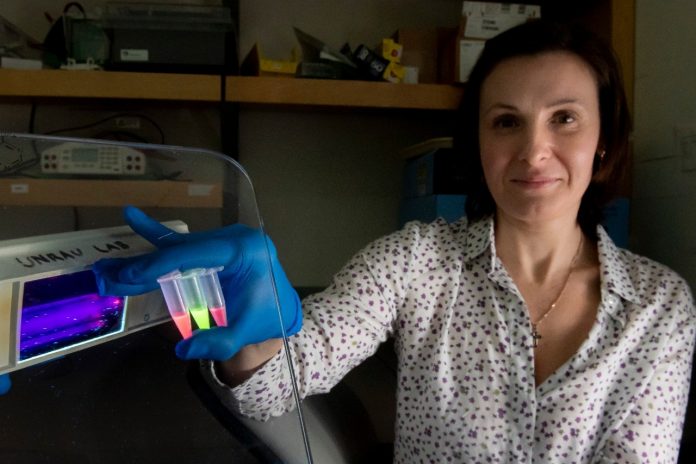
One would not think to thank a “mango” for helping to cure the worldwide pandemic that is ongoing. However, SFU researchers have been using Ribonucleic Acid (RNA) imaging technology, nicknamed Mango for its colour, to aid in the effort of developing testing kits for COVID-19. Dr. Lena Dolgosheina and microbiology/biochemistry professor Peter Unrau head a small group of researchers looking at RNA molecules within a living cell to better detect viruses.

On SFU’s website, Unrau explained, “We are using the Mango system as a catalyst, to allow us to not only extend fundamental research questions but also to detect pathogens like the coronavirus, faster and more efficiently.” 

With their grant from the Canadian government, the research team is developing a testing tool known as “Mango NABSA (nucleic acid sequence-based amplification),” according to SFU News. These tools may be used to test for things such as the coronavirus. 

“Mango technology is state of the art and the development of effective cures for cancer and other diseases demand better imaging methodologies to rapidly learn how cells work in detail,” said Unrau. 

New study examines the impact of COVID-19 on gender

SFU health sciences researcher Julia Smith is leading an international team in researching gender-related effects of COVID-19 and other diseases. Their efforts focus on gaps in preparation and response as it relates to gender around the world. The team is also developing an online Gender Toolkit to encourage consideration of gender issues during policy development and preparation.

According to SFU’s website, the team, which includes members from the United States, Australia, the United Kingdom, and Hong Kong, will provide recommendations for policy makers in the midst of the pandemic. They will examine data on infections and mortalities to assist responses for the public. 

Smith noted, “Our findings will contribute to the global response of COVID-19 through strengthening understanding of how individuals and communities understand and react to the disease.”

“The sex and gendered dynamics of the COVID-19 outbreak so far are anecdotal, but the consequences of sidelining these can limit equitable, effective responses in affected regions, as well as global prevention and preparedness efforts.”


SFSS to offer $30,000 emergency bursary fund

0
The SFSS will be offering emergency financial aid to students

By: Gurpreet Kambo, News Editor

According to a post by current Simon Fraser Student Society (SFSS) President Giovanni HoSang on his Facebook page on Wednesday March 25, the SFSS will be distributing an emergency bursary to students who are affected by the COVID-19 pandemic. 

As stated on the post, the Executive Committee of the SFSS, which consists of the president and vice-presidents, passed a motion mandating the Executive Director of the SFSS, Sylvia Ceacero, to distribute $30,000 of emergency funding “through the most effective means, to assist students dealing with emergencies.”

In response to a question on Facebook about where this money was coming from, HoSang responded that the SFSS is in a “healthy financial position,” and linked to the minutes from a Board of Directors meeting from January 8 that had a financial report from the Vice-President Finance. That report states that as of October 31, which is halfway through the fiscal year, the SFSS had a surplus of $164,000.

Further details will be forthcoming, and this post will be updated accordingly.

Changes to undergraduate withdrawal deadlines and grading practices for the Spring 2020 semester

0

By: Harvin Bhathal, News Writer

Due to the COVID-19 pandemic SFU will be proceeding with an optional pass/fail grading format for the spring 2020 semester. 

Further, SFU has extended the deadline for undergraduate students to withdraw from courses to April 9. This would still have a “W” notation on the students’ record.

At the end of the semester, students will have the choice to either accept the grade given in that class, or opt for a “P” (for pass) instead. All students with a “D” grade or higher are eligible to opt for a ‘P’ instead of the standard letter grade. Students can decide which option they would like to pick for each course individually. 

“P” grades will still count towards total credits earned. For enrollment in future courses, “P” grades will fulfill the minimum grade for a prerequisite to a course.

For students that fail a course in the Spring 2020 semester, SFU has allowed for the grade to not count towards their GPA for the current semester. Jonathan C. Driver, Vice-President Academic and Provost pro tem shared the news with students in an email.

“We recognize that you will need to consider carefully what option you will choose for each course you are currently enrolled in. You may choose a “P” grade for as few or as many courses as you wish,” Driver stated.

“In the next several days we will prepare FAQs and other resources to help guide your decision-making. Please be patient with us while we put these resources together — you can expect an update from us with details early next week, including information about how to access advising regarding your individual circumstances,” he added.

In an email interview with The Peak, SFU student senator Jennifer Chou said, “I feel like it’s a step in the right direction. It shows that SFU is taking students’ concerns seriously and doing everything possible to make everyone’s lives easier. I really appreciate the fact that students are given the option to choose what they feel is best for their specific situation.”

The changes to grading procedures were a source of much discussion on Facebook and other social media channels in the preceding weeks. A petition, signed by over 5,000 students, was created on Change.org by student senator Colin Fowler. It urged SFU to change to the pass/fail format, or to implement a grade freeze. 

Over 5,000 students offered their support for the petition, citing changes brought on by the pandemic to their situations, such as having to consider how to pay their bills or take care of their children, as reasons to sign. However, others felt as if doing so would waste the work they put in to maintain a high GPA, especially for students who plan to attend graduate school’s where acceptance is GPA-based.

On Facebook, SFU student Travis McLellan was one of many students who pushed for the grading change.

“I feel that this allows those who are struggling with [their situations], the ability to mitigate some of the stress associated with maintaining grades, while also allowing those who have worked hard during the semester to maintain or increase their GPA [ . . . ] and be rewarded for their effort,” said McLellan.


If you’re in need of a new song to love, “Everything” by Royal Oak is everything you need!

0
SFU’s own Myles Philpott jamming out on the drums Courtesy of The Permanent Rain Press

by Rebeka Roga, SFU Student

With two nation-wide tours behind them, two albums, an EP, and several singles on Spotify, Royal Oak is a very impressive group. The accomplished band released their anticipated new single “Everything” on February 29, 2020. Having heard of this band recently, I was eager for this single to drop and had been replaying their other tracks, such as “Tell Me” and “Mistakes” in excitement. An element I loved in those two songs was how they combined synth with conventional rock elements, so I was thrilled hearing this same technique in “Everything.”

Listening to “Everything” for the first time, I found a familiar feeling in the intro. It was reminiscent of their song “When We Fall,” in that both songs take about 10 seconds in the beginning, playing a single note before dropping the beat, creating the same serious feeling. 

But one of the best parts of the song has to be the drums, courtesy of SFU’s own Myles Philpott. He knows exactly when it is his time to shine in this single, and when to hold back. This draws more attention to the drums when Philpott is really jamming out, and draws attention to the deep meaning of the song in it’s more serious moments. 

The lyrics begin with “Do you ever feel like you’re moving too fast, did you get away?” and immediately, the emotion that was built up by the long intro hits. Those lyrics and others such as “stand still at a slow-motion car crash” really paint a picture of yearning for something inside the heart, and also made me realize how Royal Oak uses imagery so brilliantly in their music.  

Leading up to the pre-chorus, every line repeats “Did you get away, did you get away?” which builds a very poignant feeling, but it gets soothed by the energy of the synth in the chorus. 

At this point, I was still curious as to why the song is titled “Everything” and why the lyrics seem so full of regret — that is, until the second verse started. Lead singer Austin Ledyard sings “Now and then I think of everything I once knew, watch it disappear . . . I never thought I would begin to feel everything, feel everything” which made it click, and I was blown away at the power this track has to get someone in their feelings. 

Courtesy of The Permanent Rain Press

The rest of the song increases in energy through a quicker baseline and killer electric guitar. The excitement of the final portion of the song offers a hand to hold to surmount any heartache stirred up by the beginning. 

“Everything” has since become my favourite song by Royal Oak, the heart-felt lyrics and dynamic instrumentation packed into this song have really stuck with me. The strong vocals and catchy baseline of this single reflect how Royal Oak unwaveringly delivers exciting music that simultaneously feels passionate and energetic. 

Connect with Royal Oak: Website | Instagram | Twitter | Facebook

Courtesy of The Permanent Rain Press

Andrew Wiggins: a budding, yet enigmatic, star

0
Wiggins drains a three from beyond the arc. — Photo: CBC

By: Nathan Washington, SFU Student

If I had to use one word to describe the career of Andrew Wiggins so far, it would be enigmatic. Wiggin’s NBA tenure has brought him extraordinary success, tempered by constant, sometimes illegitimate, criticism. The 25-year-old Vaughan, Ontario native was the most highly touted Canadian basketball prospect ever. Because of the high expectations set for him at such an early age, his play in the NBA, while impressive, has not satisfied the contingent of fans that believe he is a bust. I think this is unfair criticism to heap onto a player that is only 25 and is just starting to come into his own with the Golden State Warriors.

Wiggins has been an elite player for his entire career. Coming out of high school, he was the first Canadian ever to be named the Gatorade National Player of the Year in the United States. This accolade brought him to one of college basketball’s most storied programs — the University of Kansas — where, in his one season, he achieved All-Big 12 First Team and Big 12 Freshman of the Year honors. This made Wiggins one of the top prospects for the 2014 NBA Draft. Wiggins became the second Canadian in NBA history to be chosen first overall in the draft when he was selected by the Cleveland Cavaliers. Despite being drafted by Cleveland, Wiggins’ career really started in Minnesota when he was sent to the Timberwolves as a part of a trade package for Kevin Love. His tenure with the Timberwolves began with great success, as he averaged 16.9 points, 2.1 assists, and 4.6 rebounds per game in his first season to become the only Canadian to win NBA Rookie of the Year. It was this unbelievable performance early in his career that contributed to the unreasonable expectations that many fans had for him. 

From there, things got more difficult for Wiggins. The following season, the Timberwolves had their own first overall pick that they used to select elite big man Karl-Anthony Towns. This led the Timberwolves to centre their offensive system around Towns, which forced Wiggins to create offense more independently in the face of elite perimeter defenders — a difficult task for any young player. For most young players, there is a developmental expectation for their first few seasons before they are expected to come into full form as a player. However, because of Wiggins’ early success and his rare combination of length, athleticism, and pure scoring ability, many critics did not give him this benefit. Though Wiggins had a career average of 19.7 points per game in his five-and-a-half seasons with the Timberwolves, he sometimes struggled to find consistency with his shot, which led many critics to label him as under-fulfilled. However, when a trade on February 6, 2020 sent Wiggins to the Golden State Warriors, he began to show that a change of scenery may have been all he needed to silence those doubters. 

Despite a non-linear trajectory in the early years of his career, Andrew Wiggins is an elite NBA player and deserves to be viewed as such. Critics that deride such a young player for not meeting unreasonably high expectations need to remember that he is still just 25 years old. Even though the early years of his career have not been perfect, I’m willing to bet that Wiggins eventually blossoms into the superstar that people thought he would be in his first year in the league.