Home Blog Page 436

Monday Music: Songs about animal adventures

1
"Monday Music" in giant yellow block letters with a red background
Monday Music: your weekly themed playlist. Image courtesy of The Peak.

By: Meera Eragoda, Arts & Culture Editor

All of the Monday Music for the Summer 2020 semester is now be available on The Peak’s Spotify Playlist, Monday Music Summer 2020. Don’t forget to follow thepeaksfu on Spotify to listen more easily!

Sometimes it feels as if most of the songs out there are about love, heartbreak, or relationships in general. So often songs are trying to capture a specific experience or feeling. Now don’t get me wrong — I do love songs like this. But occasionally it feels refreshing to stumble across a song that is a little quirky and reflects more of a traditional story format. Bonus if they happen to be about adventures of real or fantastical critters. If you’re also a fan of fantasy or of anthropomorphized animals, look no further than these songs to take you along on an adventure.


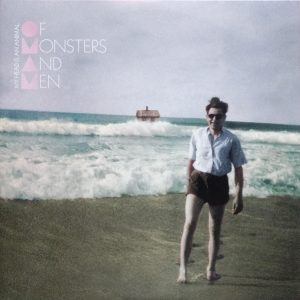
“Dirty Paws” — Of Monsters and Men

Image courtesy of Universal Republic Records.

This is a classic. Of Monsters and Men (OMAM) is an Icelandic indie/folk/pop band whose songs generally have lyrics that are anything but predictable — and “Dirty Paws” is no different. This song tells a story of a war between the birds and the bees. The lyrics, “The bees had declared a war, the sky wasn’t big enough for them all. The birds they got help from below, from dirty paws and the creatures of snow” literally sets out the premise. Many people believe that this song is about WWII, but OMAM have never confirmed or denied this, so feel free to interpret it literally or allegorically. I would also recommend watching the music video of this (and all OMAM videos if I’m being honest). It’s essentially a horned sasquatch striding through the snow, and who doesn’t need that in their life?


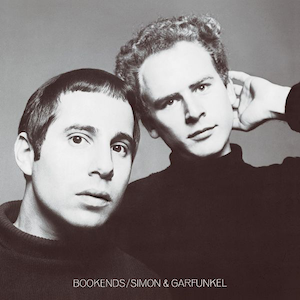
Sparrow” — Simon and Garfunkel

Image courtesy of Columbia Records.

I’ve recently dug deep into the Simon and Garfunkel catalogue and discovered that they have many songs that don’t get the credit they deserve. Of course, their most popular songs such as “Mrs. Robinson” and “The Sound of Silence” are great, but even their lesser-known songs confirm that this folk-rock duo was definitely talented. “Sparrow” is a sad song about a sparrow who’s journeyed far and is in desperate need of food and rest. The lyrics, “Who will love a little sparrow?” are answered with callous no’s by an oak tree and a swan. The story of the sparrow doesn’t have a happy ending, but the song is beautiful and eventually the earth comes through, though only after the sparrow passes away. Hopefully a song to listen to remember to take care of all the critters roaming the earth.


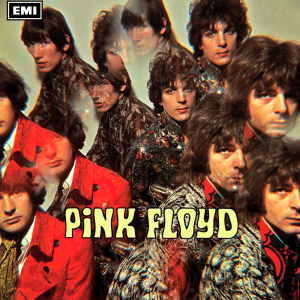
The Gnome” — Pink Floyd

Image courtesy of Sony Music Entertainment.

Speaking of lesser-known works of famous musicians, I think this falls in that category. This Pink Floyd song about “a gnome named Grimble Crumble” who “wore a scarlet tunic, a blue green hood, it looked quite good” is, to me, the perfect level of quirk. “The Gnome” is a delight of a song about the simple life of a simple gnome. Does it sound like a song that may have been written while taking a “trip”? Maybe.


At the Zoo” — Simon and Garfunkel

Image courtesy of Columbia Records.

According to the character, Rob, from High Fidelity, you should never include more than one song from the same artist on a playlist, but what can I say? I’m a rulebreaker, I guess? Listen to this if you want an absolutely slanderous account of various animals at a zoo. I say this because the lyrics include the line, “The elephants are kindly but they’re dumb,” which could not be more preposterous — to be clear, because they’re smart, not because they’re mean. But still listen, because this song attributes various traits to different animals in a hilarious way.

SFU professor leads research project on global coordination in response to COVID-19 pandemic

0
Photo courtesy of Simon Fraser University

Written by: Michelle Young, Staff Writer

SFU health sciences professor Dr. Kelley Lee and her team are looking at the measures taken by countries in response to COVID-19. Dr. Lee’s team, which is based in Vancouver, Hong Kong, Sydney, and Washington, D.C., was granted $500,000 in funding from the Canadian Institutes of Health Research (CIHR). According to a media release from SFU’s University Communications, her team is working alongside the World Health Organization (WHO) and other public health organizations. 

Dr. Lee and her team will assess whether the current measures being taken are effective, compare data from past outbreaks, and determine how to improve current measures for COVID-19 and future pandemics.

“If you have a coordinated effort both within countries and then across countries, internationally, then the outbreak response is far more effective⁠—in fact, it’s critical,” Dr. Lee said in a phone interview with The Peak. 

She elaborated on why having a globally coordinated response is crucial to battling a pandemic. 

“You think about yourself [and you’re] following public health advice: you’re washing your hands, you’re keeping your distance, and so on. But your neighbour or your colleagues at work don’t do that, then you have a problem because then the outbreak’s gonna spread regardless of what you do [ . . . ] Internationally, if countries don’t follow the scientific evidence and your country does, you’re still at risk because it’s not a coordinated effort.”

One of the team’s key goals is to determine why countries are not following the WHO’s recommendations. 

While Canada has been both praised and critiqued for their response to COVID-19, Dr. Lee noted, “We’re not completely perfect, of course, [but] no country is going to get a grade A+, I think maybe Canada at the moment is at a B-.”

 The COVID-19 pandemic serves as an “incredible lesson in the interconnectedness of our lives [and] in our world,” Dr. Lee said, in discussing the importance of citizens doing their part by listening to public health officials. She added that while many have focused on the globalization of the economy, there hasn’t been enough investment into public health institutions and urges us to consider the institutions that “keep our lives on track.”

Dr. Lee noted that she hopes to contribute to the global effort in fighting COVID-19 and ensure that the response to a global pandemic can be improved next time. 

Your weekly SFU horoscopes: May 18-24

0
An illustration of a girl with long flowing hair. Astrological signs and stars shine around her.
ILLUSTRATION: Marissa Ouyang / The Peak

Written by Paige Riding, News Writer

Aries: Is that special someone (who isn’t actually that special, but you’re acting like they are) not responding again? They say you either get bitter or you get better. So, how will you handle it? Perhaps a revisit to that diary from your youth. You can write your frustrations in right after your recollection of a field trip to Science World.

Taurus: If you keep counting all the magnets on your fridge like that, your eyes will burst out of your head. Take some time to count all the rotten fruit you have left in there, too. At least then you’re being mindful of something deeper.

Gemini: If you’re bummed that weddings keep being postponed, just think of all the divorces that may be avoided in the future. You’re the last person who should complain about people changing their minds about big life decisions, anyway. 

Cancer: Keep waiting around for signs to get moving, and the thing you’re chasing will move on without you. Take a breath and get on with it like the rest of us. Then you can keep coming back to this one accomplishment in your mind for months to come. Business as usual.

Leo: Have you heard? Stephanie Meyer is releasing a new book in the Twilight series. It’s the same story, just from the perspective of Edward. I figured you might care because you also love retelling stories with a new main character — in your case, yourself.

Virgo: You can keep cleaning and cleaning everything around you. It won’t clean up your greatest flaw: that previous obsession with the Percy Jackson or Harry Potter series that still lives on your bookshelf. And if you think you’ve moved on from living in imaginary worlds, you’re sorely mistaken.

Libra: Not sure if you knew, but the average length of a shower is 8.2 minutes. Keep that in mind each time you check that “read: 13w ago” under your message to that person that said they were just going to shower.

Scorpio: As the idiom goes, you just need to bite the bullet. No, not that one. That one has too many carbohydrates. THAT one doesn’t have enough protein. No, no, that one tastes expired . . . Well, as per usual, you’ll figure out this problem with a different idiom. Try your favourite: hitting the sack. Sure beats facing your problem.

Sagittarius: You’re like a cowbell in a song. Some love you, some really love you, and some wish you didn’t exist. The main thing to remember this week is that one way or another, you distract from the autotune, therefore serving a purpose higher than your metallic self. So keep being loud and obnoxious, I guess.

Capricorn: Grimes and Elon Musk put as much effort into naming their child, X Æ A-12, as you did writing that paper last semester. Sure, it was a unique perspective, but no one knew what the fuck you were talking about. Did you even know what you were talking about?

Aquarius: At this point, you should make like Uniqlo and charge extra to those who don’t fit your obnoxious standards. Hemming pants is one thing; ghosting someone who couldn’t be bothered to keep trying after the first three texts you ignored is another.

Pisces: With scorpions replacing tarantulas in Animal Crossing: New Horizons, you have the opportunity to increase your museum’s collection. At the same time, keep in mind that these bugs are just as dangerous, and it is much too easy to hurt you (it’s happened before).

SFSS report reveals favoured route for the anticipated Burnaby Mountain Gondola Transit project

0
Translink’s 2018 Feasibility Study recommended a three-cable gondola for Burnaby Mountain, similar to the Peak 2 Peak gondola. Photo courtesy of Whistler Blackcomb.

Written by: Paige Riding, News Writer

The Simon Fraser Student Society (SFSS) released a report detailing the feedback they received from the Burnaby community on Translink’s Burnaby Mountain Gondola Transit (BMGT) project. 

In late January, the SFSS held an open house on the project, which saw over 700 participants containing students and SFU community members. The session that ran on Burnaby Campus from January 21 and 22 gave the SFU community an opportunity to learn about the project and provide their input.

Previous VP University Relations Shina Kaur elaborated on the open house in an email interview with The Peak.

We had the 3 route options on large easels and had student volunteers from the University and Academic Affairs committee converse with the folks at the open house,” wrote Kaur.

Kaur noted that a majority of people — an impressive 84% — preferred the first route out of the three. The first route would take six minutes, quicker than both Route 2 (ten minutes) and Route 3 (15 minutes). It would not make any stops between the SkyTrain and SFU, unlike the other options. 

“Most people didn’t know the current status of the gondola so they were appreciative that this open house was put on to tackle misinformation and provide an update. We also had a feedback board where people left sticky notes with their preferences and reasoning which were shared in the report,” wrote Kaur. 

According to Kaur, TransLink reacted positively to the Gondola Open House Feedback Report. 

“TransLink is hoping to use the open house as an anchor for the public consultations they will host sometime in the summer. The more folks that come out to support Route 1 in those TransLink consultations, the better! We need to come together and show TransLink the collective SFU community support for Route 1 so we can get this route built.”

On their website, TransLink notes that the gondola would be the best transportation method to connect Burnaby Mountain to the SkyTrain station, stating that the gondola “would provide fast, frequent, and reliable service, improving connectivity for the campus and broader community.”

TransLink asks for public feedback as the project progresses. As the website states: “Public engagement is a key component of rapid transit planning. We value your feedback and want to know what you think.” 

Those wanting to provide feedback or are interested in the project are encouraged to go to TransLink’s website for updates or to email them at [email protected]

Vancouver’s Homelessness Crisis 101

1
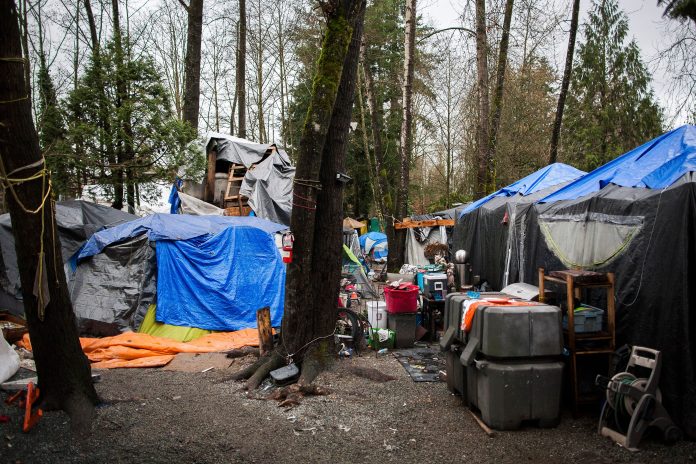
Photo: Rafal Gerszak / The Globe and Mail

By: Victoria Lopatka, Peak Associate

Last winter I was on the 95 B-Line heading through the Downtown Eastside (DTES) reviewing cue cards for an upcoming midterm. Upon entering the bus, soaked from the rain, I spotted a free seat, and headed towards it. Mere inches from the seat, I realized why it remained vacant: a homeless man was seated beside it. He was weighed down with what I imagined were all his earthly belongings – a plastic trash bag and a raggedy backpack – looking and smelling like he hadn’t showered in weeks. He twitched and fidgeted, muttering gibberish to himself. I hesitated, but then decided to sit down so I wouldn’t draw attention to myself or possibly hurt this man’s feelings. 

I pulled out my cue cards. As I was flipping through them, I reached a term I wasn’t completely familiar with and paused, wanting to remember the term before flipping the card over. I hadn’t noticed the man watching me until he spoke up — and correctly defined the term. I stared at him. He had already turned his body away from me and was staring straight ahead. I flipped the card: he was correct. I continued studying, feeling him watching me once again. Every time I hesitated; he would softly define the term. 

Finally, I turned to him: “You know a lot about Criminology, huh?” His eyes lit up and he almost bashfully explained that he had studied Criminology, too, but it must’ve been about ten years ago, or more. There was an unspoken “and now I’m homeless.”

Chapter One: Vancouver’s History with Homelessness

I turn back to my cue cards, flipping to the next one: why does Vancouver have a homelessness crisis? When did it begin?

I’m sure many Vancouverites have these questions, too. Vancouver began experiencing a homelessness crisis in the mid-1980s. Prior to the 1980s, the federal government invested generously in the Canadian Mortgage and Housing Corporation (CMHC), which served to ensure there was adequate affordable housing in the city. However, a funding cut after the 1980s led to a decrease in CMHC capabilities: this decreased social programs, and an eventual increase in housing prices. Around this time, the federal government transferred responsibility of homelessness to the provincial governments. By 1999, there were around 600 people experiencing homelessness, with numbers increasing everyday as lower-income groups were no longer able to afford housing in Vancouver. By 2002, the number of people experiencing homelessness had nearly doubled: 1,121. By 2005, it nearly doubled again reaching 2,174. The city’s overall population had only grown by about 30,000 in that time.

That cue card returns to the deck, and I turn over a new prompt: who’s to blame for the current homelessness crisis? 

Well, it depends who you’re asking. Metro Vancouver mayors point the finger at the provincial government, specifically premier Christy Clark, saying the province isn’t supporting municipalities adequately. “We were very successful for three years in bringing the street homeless population down,” said Gregor Robertson, mayor of Vancouver from 2008-2018, “In 2011, things turned, and Christy Clark became the premier of BC There was no commitment to solving homelessness here in the province.”

Chapter Two: Just Build More Houses

Fast-forward to the 2018 annual homeless count, where 2,181 Vancouverites were identified as experiencing homelessness. In response to these statistics, the city built about 600 temporary modular homes. City Councillor Christine Boyle hoped that this would lead to a reduction in the 2019 homeless count. Did this happen? 

“Despite the housing of hundreds of people in modular housing over the past year, the number of homeless Vancouverites has increased yet again, hitting a record high, according to [ . . . ] this year’s count,” The Vancouver Sun reported. Despite these numbers, city officials stress that the effect of the new temporary modular houses should not be disregarded; BC Housing Minster Selina Robinson saying, “This year’s count shows a seven per cent decrease in street homelessness [homeless individuals living on the street, versus in shelters or other temporary housing] in the city — an indication that our strong actions and partnerships with local governments are starting to make a difference.” Others, like Councillor Jean Swanson, call it “horrendous”, seeing the numbers increase.

New card: So, why didn’t the numbers decrease? Simple math would suggest that housing hundreds of homeless individuals would lead to a decrease in the subsequent homeless count, but this did not occur. I would like to draw your attention to two points outlined in the Vancouver Homeless Count 2019 report: “44% of survey respondents had been homeless for less than one year” and “eighty percent (80%) of survey respondents reported already living in Vancouver when they became homeless.” If this is accurate, then building more housing is not the sole answer: we must also address underlying pathways into homelessness. This trend was also seen in the previous homeless count report. It has been suggested that the underlying causes of homelessness, such as high housing costs, job loss, and youths aging out of foster care, are causing Vancouverites to become homeless at a faster rate than they can be housed, causing a near-constant stream of newly homeless Vancouverites.

A few cards are easy to flip through: How many people in Vancouver identify as homeless today? The 2019 homeless count recorded 2,223 homeless individuals in Vancouver, BC.

Other cards are much harder to answer concretely: Who are they? What do they look like? Let’s go back to the guy on the bus . . . what do you imagine that he looks like? Does he fit your stereotypes of homeless people? What do you think about when we discuss “homelessness”? Do you see a person of colour, or someone of Aboriginal descent? Do you picture a drug user? A criminal? A sex worker? A schizophrenic? Someone with bipolar disorder?  Maybe you align with presumption of guilt: homeless people are lazy, unmotivated, have made bad life choices, do drugs, and are aggressively mentally ill. On the other hand, maybe you align more with Innocent until proven guilty: as with everyone else, our homeless neighbours are innocent until proven guilty. Guilty for what? What if they’re not guilty at all?  

Chapter Three: “Where Did THEY Come From?”

I can’t write an article on the homeless crisis in Vancouver and not touch on the concepts – and misconceptions – that inevitably get thrown into conversations on the topic: migration, climate, mental illness and substance abuse, and income. It’s easy to hear or read somewhere that homeless people migrate to Vancouver due to the mild climate here, and through repetition in conversation and other mechanics, this becomes a deeply-held and shared belief among Vancouverites – but is it true?

I flip over the upper-most cue card in the stack: do homeless people migrate to Vancouver? Well, it once again depends who you consult. Mayor of Victoria, Lisa Helps, and Kerry Jang, a Vancouver psychiatrist specializing in homelessness both dismiss the idea. “How do they afford to come?” Jang says. Others, though, say homeless people migrate to Vancouver and Victoria for good weather, better shelter, or to connect with friends and family. Dennis Palubeski, a homeless man who moved from Ontario to Victoria says, “Victoria is Mecca. If you are going to be homeless, this is it [ . . . ] you can’t go hungry here.” The majority (80%) of respondents in the recent homeless count said they had been living in Vancouver for more than a year, with 15% saying they had lived here all their lives. Only 14% of those surveyed had arrived in Vancouver under 6 months ago. When asked where they had lived previous to Vancouver, 16% had lived elsewhere in Metro Vancouver and 31% elsewhere in British Columbia. The majority (81%) had had a home of their own in Vancouver before becoming homeless. 

Though still debated, the very possibility of homeless migration raises an uncomfortable issue that cannot be ignored: if Vancouver focuses efforts on homelessness services and housing, will that, in turn, attract a brand-new tide of homeless people searching for help? This reportedly occurred in Medicine Hat: when the small community managed to house the majority of their homeless, new individuals experiencing homelessness came to Medicine Hat specifically because they knew they would quickly be given a place to stay.

The next card is related: True or false? – Vancouver’s mild climate draws homeless populations here. If those experiencing homeless are actually migrating, why would they come to Vancouver? The mild weather, many say. In reality, homelessness-oriented organizations in Vancouver report that many citizens experiencing homelessness are “scared of getting sick or dying” in the cold winter weather, with temperatures dipping to -10 Celsius. In response to a cold snap in January 2020, a City of Vancouver spokeswoman said, “This extremely cold weather facing Vancouver is especially dangerous for people sleeping outside, and we are urging everyone to come inside to the safety of the warming centres and extreme weather response shelters.” Whether or not homeless people are migrating to Vancouver, its climate is clearly less mild than many believe.

Chapter Four: Psychos, Junkies, and Tweakers

Fill-in-the-blank: ________ people living in the DTES suffer with mental illnesses and substance abuse issues
a) All
b) Most
c) A portion of
d) None of the

I shift my deck away from my man beside me, hoping he won’t see the prompt and get offended. Mental illness and substance abuse in the Downtown Eastside are other hot-debated topics for Vancouverites; people love to chime in about overdoses they’ve witnessed, needles they’ve nearly stepped on, and the screeching crackheads disrupting their commute to work. Do all, or most, of Vancouver’s homeless have mental health issues? Should we stop giving spare change to those experiencing homelessness because they’ll only use the money to get high? I choose to explore these prompts with, once again, help from the annual homeless count report. If you selected a) or b), above, you’re incorrect. The correct answer is c): 44% of respondents indicated that they had a mental health issue. When asked about substance use, “31% of survey respondents reported no addiction, 22% reported an addiction to one substance, and 45% reported an addiction to two or more substances… Just like in the general population, only a percentage of those who are experiencing homelessness deal with addictions,” Homeless Hub reports. Of those who reported addictions, the substances mentioned include nicotine, opioids, methamphetamine, alcohol, marijuana, and cocaine, three of which are legal for adults and enjoy widespread use in the general population.

I flip over the mental health cards, and am prompted with: what happened to the patients at Riverview Hospital when it shut down? Riverview Hospital, a Canadian mental health facility, closed down in 2012. I remember reading an article years ago (so long ago that it was impossible to find and cite) that described the closing of the facility, and how unfortunate it was that most of the patients ended up in the Downtown Eastside. 

The article described a process of patients being processed out of the facility, passed on to other un-prepared facilities, being provided prescriptions, and released rapidly, where they ended up in the Downtown Eastside. I assumed this was true, and this became a well-held belief in my mind that I could throw into conversations to sound knowledgeable. Some still insist today that Riverview’s former patients are now residents of the Downtown Eastside, having been unable to thrive outside of the mental facility. Marina Morrow, an associate professor with SFU’s Faculty of Health Sciences, who conducted a small-scale study following some of Riverview’s patients after the facility closed, disagrees with this concept. “I don’t think any of the tracking studies show that has been true,” she says. “People have been very well cared for since they left. It’s a very systematic plan. All of them have been transferred to other care facilities where they have a very high level of care. None of them are being transferred directly to the community.” Victoria-based forensic psychiatrist Shabehram Lohrasbe expresses concern, though, saying: “We dump these people on the streets, but even if they’re provided housing, they’re still very vulnerable to predators particularly within the drug trade. So the constant battle is not only to keep them on their prescribed medications, but to keep them away from drugs.”

Chapter Five: Just Go Get a Job 

True or False: homeless people are lazy. 

False. In the recent homeless count, only 9% reported having no source of income. A third of the respondents indicated that they had multiple income sources at one time, including panhandling, vending, part-time or casual employment, binning/bottle-collection, etc. Does that sound lazy? In order to survive, those experiencing homelessness are constantly having to provide the necessities of life for themselves and many are already employed, possibly with multiple jobs that still fail to adequately provide for their needs. Others may be unable to get a job due to a lack of permanent address, transportation barriers, or mental health struggles. It is not as simple as “just go and get a job.”

Chapter Six: A Note on COVID-19 and Homelessness 

How can you self-quarantine when you have no home? How can you wash your hands when you don’t have reliable access to warm water? How can you practice social distancing when you sleep in a crowded shelter, two feet from another person? 

By mid-March, a CCAP release urged the government and public stakeholders to turn their attention to the homeless populations in Vancouver, who may be particularly vulnerable to the virus due to old age, underlying health conditions, and a lack of sanitizing and hygiene supplies. The Canadian Alliance to End Homelessness recommends the opening of more emergency shelters to allow homeless Vancouverites the space to practice social distancing, in addition to providing shelter workers with adequate supplies, such as COVID-19 tests and protective equipment.

In acknowledgement of the heightened risk of a COVID-19 outbreak in the DTES, the federal government set aside ten million dollars to “reduce the impacts of coronavirus on Vancouver’s homeless population,” reported by CTV News on April 4, 2020.  “If somebody comes to our shelter with COVID-19 symptoms, agonizingly, at the moment we have nowhere to send them, nowhere to redirect them,” said Jeremy Hunka of Union Gospel Mission, a “Christ-centered” Canadian charity that seeks to provide relief to those experiencing homelessness, poverty, and addiction. “That’s not the ideal solution and we just need to get everything set up faster and we hope this $10 million makes a difference there.”

As April continued, concerns about the residents of the DTES rose as two COVID-19 cases were reported in Vancouver shelters and tests in the United States found asymptomatic outbreaks amongst American homeless populations. Global News reported on April 20 2020 that health workers in Boston had tested over 350 residents in a local homelessness shelter and were shocked that 140 tested positive, but were asymptomatic. These surprising results increase the urgency for more emergency housing to allow homeless Vancouverites to social distance and, if necessary, quarantine.

On April 23, 2020, the Government of BC announced that local hotels, empty due to travel restrictions, would be turned into temporary housing for homeless citizens living in Vancouver’s Oppenheimer Park, Topaz Park, and Victoria’s Pandora Avenue. Staff in these temporary housing locations will have experience assisting those with addictions and mental illness struggles. Shane Simpson, minister of social development and poverty reduction, noted that this move is necessary to promote physical distancing among homeless populations. 

At the time of writing this article, the most recent update has been published by the Times Colonist, saying “B.C. Housing has been transitioning about 15 to 20 people a day from the camps to 324 rooms at five hotels in the city. As of [May 3 2020], 90 people had been moved indoors,” — “the city” referenced in this quote being Victoria, BC. Thus far, there have been no updates on the progress of moving homeless citizens in Vancouver, BC. 

Chapter Seven: Humanizing the Homeless

Only one card remains in the stack: how can we solve Vancouver’s homelessness crisis?

Homeless Hub outlines ways homelessness can be addressed, including robust prevention strategies, emergency responses, housing/accommodation, and supports, such as rent supplements, employment training, health care, mental health and addiction assistance, and recreational and social activities. Metro Vancouver also has an official Homelessness Strategy, which outlines steps of prevention, emergency, intervention, and permanent responses, including a description of the pathways into homelessness, the types of homelessness, and the pathways out of homelessness. The Tyee has multiple articles outlining suggestions to end and help homelessness, including authorizing tent cities in lieu of criminalizing people experiencing homelessness, as well as appointing a Homelessness Czar, who would be responsible for uniting efforts between government and non-governmental organizations. It is important to note that preventing homelessness is easier than just reversing it once it has occurred.

Bonus card: What about for individuals, like you and me? I glance at the homeless man next to me on the bus. I challenge you — you, the person reading this right now — to begin assessing your own beliefs about those experiencing homelessness.  Where do they come from: statistics or stereotypes? If we don’t work to shift our beliefs now and see the homeless as the people they are — people like you and me  — the crisis will only grow.

Long Story Short: Drinking water doesn’t hydrate your skin

0
Illustration: Maple Sukontassukkul

By: Michelle Young, Staff Writer

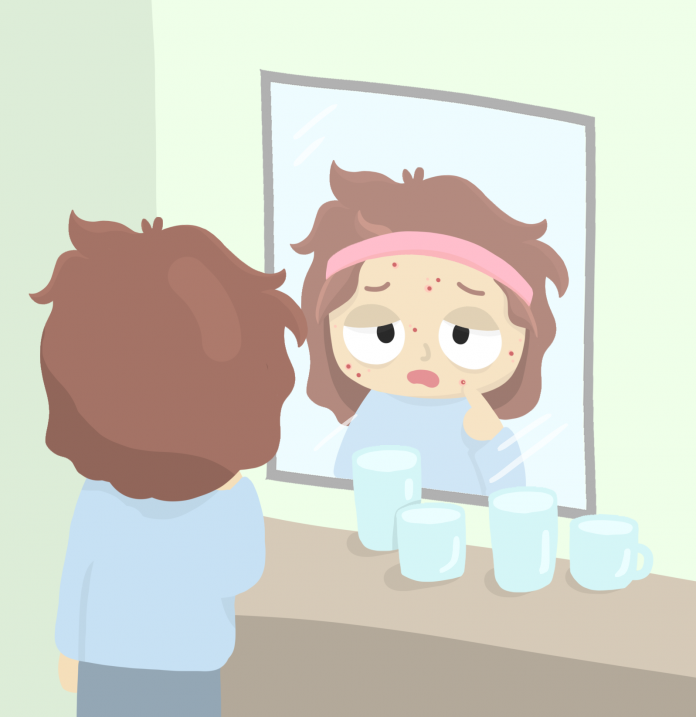
I start and end my days with my skincare routine. It’s the part of the day where I can indulge in some time to take care of myself. Gently cleansing and moisturizing my face seems simple — it is the basis of any skincare routine. And yet, it has taken me years to refine these two simple steps. At some point during my teen years, I realized that skincare is necessary to my health. After all, the skin is our largest organ. However, as I began my skincare journey, I found that navigating the world of skincare is pretty daunting. 

There’s an endless amount of skincare products on the market, and I had no idea where to start. Of course, the internet helped expand my knowledge, but ultimately, I just tried out whatever products were recommended to me. As I tried to dive into the world of skincare, I always saw “just drink water, it’ll clear your skin.”

The idea of drinking water to achieve clear skin sounds simple: water flushes out our toxins, so tackling skin problems from the inside first sounds like it would work. I felt plagued battling against rosacea and dry, sensitive, acne-prone skin. So, for a solid year, I drank only water and a few homemade fruit smoothies no juices, pop, milk, or coffee. Along with that, I tested out different products and began a collection of cleansers, toners, serums, and moisturizers. 

Over the past few years, it has become trendy to flaunt skincare routines and cosmetic collections on social media. Many products have aesthetically pleasing packaging, and coupled with the rise of self-care, the skincare community, which here refers to beauty influencers and skincare social media accounts, has exploded. Along with the skincare community came beauty influencers and skincare threads. On Twitter and Instagram, they contain “need to know tips” to glow up your skincare game. Here, again, many of these threads emphasized the need to drink water for clear skin. 

I discovered that drinking water does not hydrate or clear skin — unless you’re already dehydrated. In healthy individuals, studies have concluded that there isn’t enough evidence to support this. Of course, drinking water is necessary to our overall bodily health, but if you’re already drinking it, drinking more will likely not clear it. I had to learn this the hard way, but this realization about drinking water taught me a few things about the way I took care of myself, and about the skincare community.

There were many other myths like that in the skincare community. Perhaps it was due to my own foolishness and desperation to take care of my skin, but I ended up trying a lot of things that may have damaged it long-term. The skincare community is filled with misconceptions, like “tea tree oil will cure acne,” when in reality, essential oils irritate the skin and haven’t proven to be as effective as topical medications. I didn’t know that when I rushed to change my skincare routine to cater to products filled with tea tree oil. 

I went through every step necessary to ensure my skin was clean: I frequently changed my pillowcases, never touched my face, and always looked for the “non-comedogenic” label, which ensures products don’t contain any ingredients that will block pores. Still, my skin tone was steadily becoming more uneven. Since I was doing seemingly everything right, I couldn’t understand why it was so difficult to achieve the clearness shown on social media. I genuinely believed that if I simply followed online tips and tried out new products, my skin would clear up. However, I often didn’t consider my skin’s unique conditions — its rosacea, eczema and overall sensitivity. 

After years of trial and error, I’ve become extremely skeptical of anything posted on skincare threads or internet articles filled with skincare remedies, and I should have been from the beginning. For me, the overall skincare community became toxic. It seemed like it was about the extravagance of the products, the length of the skincare routine and that the ingredients in the cosmetics didn’t even matter, as long as the skin was clear. I stumbled through fragranced products, natural masks, and obscure concoctions to achieve the spotless, glowing skin framed on social media. Perhaps I made my skin more sensitized in the process. Even if I had done everything right, there’s no guarantee I would have cleared my skin. 

Now, my daily routine is stripped to the basics again: cleanser, toner, moisturizer, sunscreen. The products I use aren’t too fancy, but they’re definitely fragrance-free, alcohol-free, and free of any other irritating or sensitizing ingredients.

I learned that I needed to take care of my skin in the way that suited me, and it took me too long to do so. I learned that even if my skin isn’t perfect at least I could sleep at night knowing it was healthy. No matter the desperation to achieve clear skin, skincare products should be tried out slowly — and no matter how many people tell me to “drink water,” at least I know it’s likely a myth. 


Pickling, AKA time travelling self-care in a jar

0
Photo: Plucky Pickle

By: Plucky Pickle, SFU Student

Pickles are my favourite form of self-care. Here’s why: sometimes I have a hard time looking after my body. Especially when I’m juggling school, work, and social activities, healthy eating often falls by the wayside. Who has time to cook an entire meal three times a day anyway? Not me. Especially not during the school year. 

Photo: Plucky Pickle

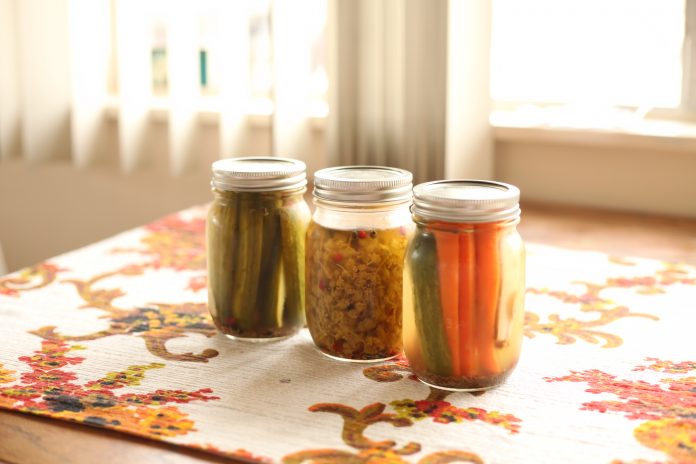
Enter, the Quick Pickle™: a quick and easy way to spice up any meal, and a great way to sneak some veg into your diet. I love making pickles because they’re super quick, cheap as heck, hard to fuck up, and they last forever. I will literally slap a pickle onto anything: sandwiches, burrito bowls, nachos, you name it. Pickles transform my mediocre student cooking into something elevated. I am also a fan of the 1 a.m. existential crisis pickle, standing in the kitchen in your underwear straight out the jar style. Something about that sweet and salty crunch just makes things better.


Google “Quick Pickle,” and you will find dozens of easy pickling recipes. To be honest though, they all say about the same thing so I will distill them in the sidebar for you.


Ingredients:

1 500ml Mason Jar

½ cup Vinegar 

½ cup Water

1 cup Vegetable (literally any will do)

1 tsp – 1 tbsp Sugar

1 tsp – 1 tbsp Salt

1-3 tbsp Spices 

Instructions:

Clean the mason jars thoroughly. You want to be able to keep these bad boys in the fridge for a couple of weeks so make sure those jars are clean, clean, clean. Add spices and vegetables to the jar. Heat a ratio of 1:1 water to vinegar on the stove, then right before it boils, pour mixture over your vegetables until completely covered. Allow your vegetables to cool to room temperature. Pop your pickles in the fridge and refrigerate. Wait a minimum of three hours, then enjoy!

Photo: Plucky Pickle

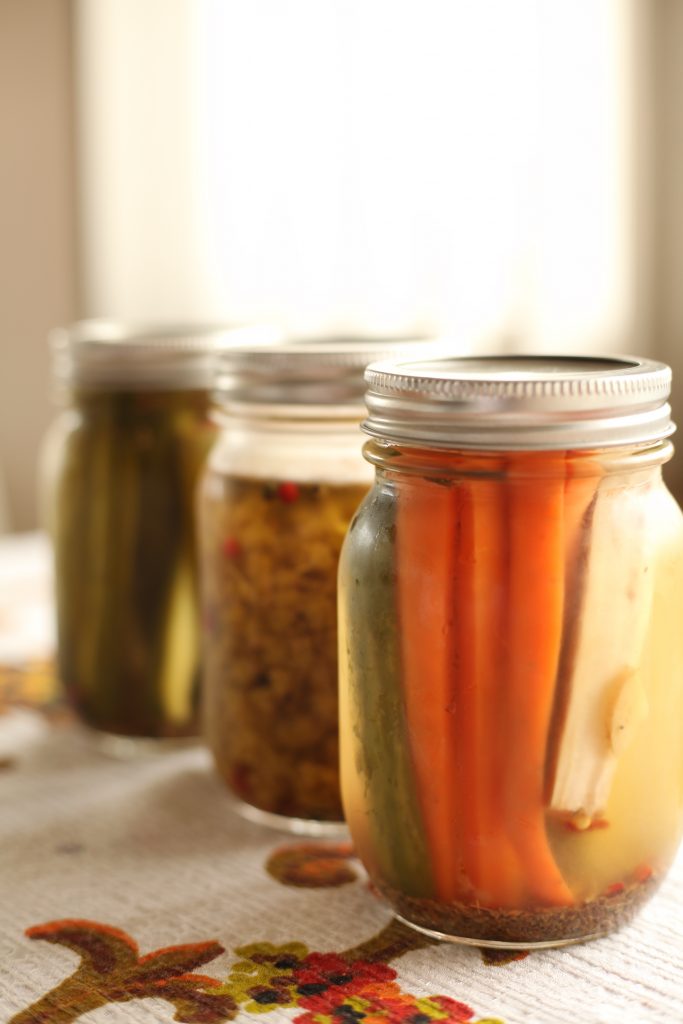
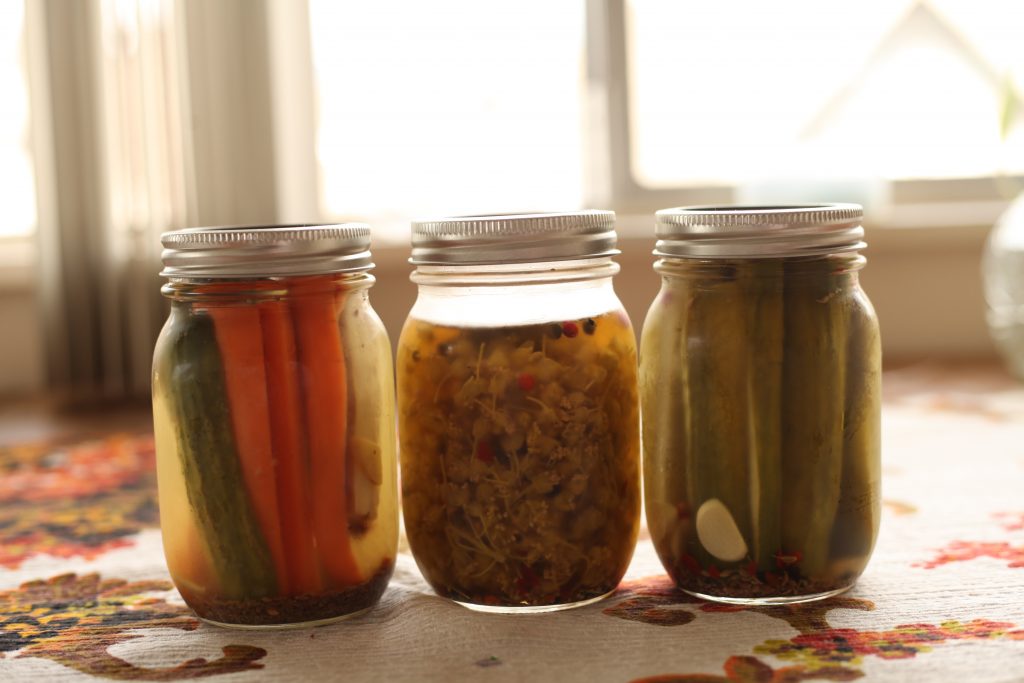
You can Quick Pickle™ almost anything, so be creative. Here are a few tips: try carrots, beets, onions, garlic, jalapeños, cucumbers, tomatoes, or eggplants. Match your vinegar to your vegetable: basically, the most flavourful vinegars should go with a more flavourful vegetable. Vegetables with a delicate flavour (like cucumbers) pair better with white vinegar. You can add sugar, or salt, or both, but neither are necessary. Try to use whole spices that are not ground up, such as: peppercorn, dill seeds, hot pepper flakes, mustard seed, and celery seed. A little bit of garlic goes a long way. For some quick recipe ideas, I especially like to use pickled carrot spears as a garnish in Bloody Marys, and pickled onions on avocado toast, tacos, or in grilled cheese. Lastly, all the food bloggers say these pickles last up to two weeks, but if you wash your jars real good, I swear you can have pickles for months. Shh, don’t tell them I told you.

Anyway, I’m serious about this self care thing. Making a batch of pickles is like writing a love letter to yourself. Procrastinating school work? Get off your phone and go to the store. Pick out some fun veggies. Add spices and vinegar and then pop them in the fridge. It’s literally that easy. Now you have a delicious treat waiting for you in the fridge that will last a whole month. They’re like a gift from your past self to your future self. How’s that for time-travelling self care? 

Quick Pickles™ are also great if you’re trying to impress someone. Aside from that good old fashioned mason jar steeze, they are also apparently very trendy.

So, go live your #cottagecore dreams and impress someone with your sexy Quick Pickle™ skills. Or even better go impress yourself. There’s nothing like a little time traveling self-care in the face of the unknown. 


How TikTok helped me cope with social isolation

1
Image courtesy of TikTok.

By: Dhruv Taware, Peak Associate

The idea of social isolation was not something I was scared of. If anything, I had always thought being an introvert during these times was going to make isolating an easy job for me. I didn’t have to bother going out and being around people, all I had to do was be in the comfort of my own home which was a piece of cake. 

Or so I thought. 

After the first week or two, things were not as amazing as I imagined they would be. I found out how important it was for me to be around people, even if it was just commuting, attending classes, studying in the library, or eating outside. Being in isolation was not the same as being on your own and introverts do draw energy from others — we just need more time to recharge. Living on campus didn’t make dealing with the social distancing restrictions any easier, either. As people moved out and the gym closed down, the campus was left with a weird sense of emptiness, and I was pretty much left to my room.

During these times, I unexpectedly found solace in TikTok. I never got to enjoy Vine during its peak, so TikTok piqued my interest. Pretty soon, I found myself spending hours on the app browsing through all kinds of videos. I was surprised to find a lot of wholesome, informative, and niche content. From quarantine pranks on your family — which weirdly made me feel less homesick — to just plain goofy and cringe videos which had me laughing my ass off, the entertainment was ideal. As I ventured deeper into the platform, there was much more to it than just funny videos. The food videos introduced me to some amazing local joints and regional cuisines which I cannot wait to try. I learned about a semi-professional football club in England, Walton and Hersham FC, owned and operated by 19 and 20 year olds. I discovered new forms of entertainment to keep me engaged, such as a really nice podcast from Perth called The Jamo and Dylan Show.

Apart from just enjoying the content on the TikTok, I have also learned many new things. I’ve improved my dancing skills and learned how to do the foot shuffle, discovered new music from artists such as Two Door Cinema Club, Roddy Rich, and Molchat Doma, and received book suggestions such as Catch 22. Additionally, a chiropractor on TikTok taught me how to improve my posture and get rid of carpal tunnel.

I was always under the assumption that being alone was supposed to be effortless for introverts. But I was wrong. At the end of the day, it is people who will get you through these tough times, even if it’s the people on a social media platform. TikTok has served as a pretty effective coping mechanism for me during these times. There are some major problems with the platform mainly with regards to censorship and negative content, which is unfortunate as they overshadow the positive content the app has to offer, and could be solved if moderated better.

All in all, I have been exercising more, feeling more occupied and feeling more positive on this app compared to any other. If you are able to weed out the negative content, this is an app I would recommend to keep yourself occupied during social distancing restrictions.

Some of my favourite TikToks:

https://www.tiktok.com/@nopainmoregains/video/6823143616030969094 

https://www.tiktok.com/@jaekicho/video/6814261154613906694 

https://www.tiktok.com/@owenluebbers/video/6822310340118842629 

https://www.tiktok.com/@kxrea/video/6823079028778355973

https://www.tiktok.com/@martinbandz/video/6821990241520438533 

https://www.tiktok.com/@yoitzalexhickey/video/6811668039054970118 

TikTok is available for download on Apple and Android app stores.

Vancouver residents protest COVID-19 regulations with #EndtheLockdown

1
Photo: Nick Procaylo / PNG, via the Vancouver Sun

Written by: Paige Riding, News Writer

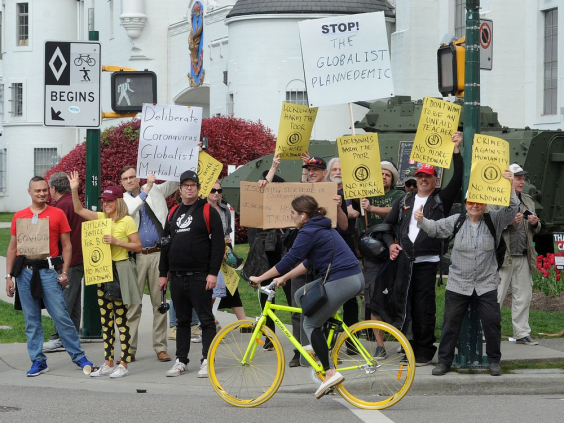
“Make Orwell Fiction Again,” read a tweet under the #EndtheLockdown hashtag on Twitter, a trend created by individuals protesting the current government orders regarding COVID-19. 

In the Vancouver area beginning in April 2020, participants gathered and rallied against the pandemic countermeasures around the city, claiming that the measures will devastate the economy and cause more harm than good. On multiple occasions in the past month, Vancouverites took to the streets with posters and chants. 

The protestors took to social media platforms, using the #EndtheLockdown hashtag to speak against the COVID-19 procedures currently in place across Canada.

“If residents are concerned tell them to stay at home, stay 2m from people, and be sure to wear a mask. Whatever becomes of the COVID-19 it will be remembered that there were at least a few brave people in Vancouver willing to stand up to medical tyranny. #EndtheLockdown,” wrote a Tweet from @AlexanderTheNo7.

On May 3, a group of around 100 individuals including children joined together to march the streets, beginning at Science World and walking to the Costco on Expo Boulevard. 

“Wake up!” chanted the crowd. Another video of this day’s protest showed the crowd saying  “Trudeau has got to go!” along with other group chants.

“Open the schools. I want to see my friends to hug them and play,” read the sign held by a child amid the group.

Interestingly, many members of the group wore cloth masks over their noses and mouths. 

Laura-Lynn Tyler Thompson, a candidate for the People’s Party of Canada in the 2019 elections, posted a video to her YouTube account of her interviewing protestors outside of Science World.

When asked why the individual, named Greg, showed up, they responded, “I’m here for every Canadian to try to protect their sovereignty, whether they understand it or not.

“It’s not just what’s happening in the immediate,” the protester continued. “The immediate you can sort of justify or have reason with, but it’s where that leads you to that you really need to understand. So what’s going on in this country? Well, financially, they’re destroying the value of our currency [ . . . ] When your savings are destroyed, you’ll realize what’s actually being done here. 

“We have a right to our rights,” said a second interviewee, also named Greg. “Let’s do some deep dives on where the real research is coming from. Find out for yourselves what’s really going on.”

The Vancouver Police Department will continue to monitor the protests of these groups and their gatherings will not be stopped as long as they remain peaceful.

Six Quick & Easy Breads To Cuddle For Your Touch Starvation

0

Written by Devana Petrovic, Staff Writer

Let’s be real here: you’re lonely. You’re isolated, and you’re starved . . . touch-starved, to be exact. You’ve resorted to all kinds of desperate measures to satisfy your need for human contact. But it’s OK now, because you’ve been saved.

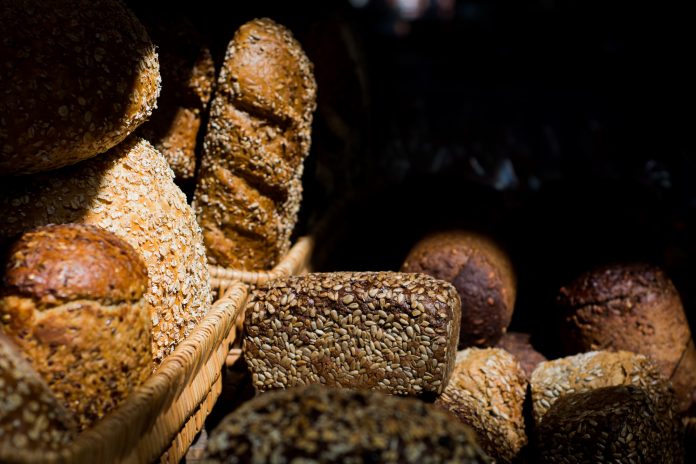
Kneading someone warm and soft to snuggle? Doughn’t worry. These six classic easy-bake breads are exactly what you need. After all, you don’t have to stand six feet apart from your sourdough. So forget fantasizing about cute cuddles from the only people you really see anymore: reality TV stars with garbage personalities. A nice loaf of fluffy goodness, fresh from the oven and wrapped in your arms, is the only thing you need that’s Too Hot to Handle.

Ba-guette Me The Hell Out Of Quarantine

A French classic, this carb-loaded delicacy is bread royalty. Don’t let this mysterious phallus fool you, because it is more than just misunderstood. This bread summons only the finest of partners: foie gras, pâté, brie cheese, and now, you. Cuddle this free-love bad boy at night to forget that your mundane, disappointing, and totally addictive Tinder dating life has finally crumbled away completely.

Rye Is Everything So Unbearable Right Now 

We’ve pulled this earthy staple from the depths of every expensive Gastown café. It’s generally unwanted, but regularly ordered by Thomas, who sits there in his flannel, Blundstones, and cuffed jeans engaged in “entrepreneurial” conversation. Now, this bread is your replacement Thomas. Glare at it from behind your laptop screen and it’ll feel exactly like your typical coffee shop experience: overcrowded and tiny communal tables. Because touching elbows with hateful strangers is a touch worth missing, too.

You Cia-batta Stay Home, So This Can End Already

Just stay home. Please. 

Sourdough for your Sour Mood Swings

The best loaf to guide you through your impulses to darkness. Frankly, a sourdough relationship is anything but sour, and this bread is at its most comforting when you squeeze a mustard smiley-face all over it, projecting your need for love and kindness. Firm and familiar, snuggling this bread will feel all the better when you develop a mutual understanding of one another. 

Existential Dread Focaccia

In your lowest quarantine moments, this greasy pillow of bread is there to hug your soul, to cradle your weeping, your gothic Mother Teresa. Focaccia is the ultimate replacement for your touch starvation. Once your oxytocin is activated by the embrace of existential dread, you’ll never need human contact again. 

Going Fucking Bananas Bread

Bad bananas? Make banana bread. Starting to feel like you’ve forgotten what it’s like to be loved? Make banana bread. Dwelling unhealthily on the inevitable reality of time? Maybe it’s time for another FaceTime call with a friend, but if you have some bananas lying around, a loaf of banana bread will do. Going Fucking Bananas Bread is loyal. It’s affectionate. Most importantly, it’s not obsessed with turnips. Truly the perfect cuddle-buddy.