Home Blog Page 430

There is no safe reopening without robust health order enforcement

0
It will be impossible to ensure that all reopened areas are complying with the BC public health orders. Photo: Maxwell Gawlick/The Peak

By: Manisha Sharma, SFU Student

As BC slowly reopens, many are keen to get back to the lives we had before the pandemic forced us into quarantine. Like coming out of hibernation, people are leaving their homes and are eager to get out and enjoy the sun, go out to eat, and socialize. But not so fast.

Although the provincial health authorities have determined that the spread of COVID-19 has slowed enough to begin reopening again with careful precautions, doing so largely depends on everyone in the community complying fully — and on their own. This is because government enforcement of the slow reopening rules is largely nonexistent. If we want to avoid a spike in cases and a second strict lockdown, then everyone needs to become familiar with and comply with public health guidelines. To do otherwise is to jeopardize all the hard-won gains we’ve already made in BC.  

BC is currently in Phase 2 of its reopening plan, which means businesses such as salons, recreational facilities, cafes, etc. are cautiously beginning to open again. As part of this, provincial health officer Dr. Bonnie Henry has issued a public health order to guide all businesses reopening during this phase that details precautions and mandatory requirements employers must meet. These guidelines include removing any health hazards from the place of business, for employees to wear proper protective equipment, and to maintain a clean workplace by regularly sanitizing and disinfecting surfaces.

Businesses found to be operating in conditions that may put staff or customers at risk of COVID-19 exposure may be issued a health order. Orders may include instructions for the business to destroy unsanitary items, ask employers/employees to wear protective equipment, or even to demand the business close down until further notice. 

But what is preventing businesses from going back to not following safety precautions when they are not being monitored? For that matter, who is to know that these guidelines are going to be followed to begin with? Failure to comply with the health order may result in businesses losing their licences, but this is only if they’re caught. The problem is that it’s unclear right now how the province intends to monitor and enforce its COVID-19 health order — other than random drop-in inspections under the Public Health Act.

Cracks in this system are already beginning to form. A friend of mine recently went to get her eyebrows done, and despite being told that all customers entering the store were required to wear a mask, which she did, the owner wasn’t even wearing a mask or gloves around customers and staff. 

According to the enforcement guidelines that were last updated March 31, police officers are not allowed to detain or issue fines for those not following guidelines put out by the BC government. Police officers can only act to help public health officers by warning and reminding people about the guidelines. This essentially leaves ensuring public health during reopening up to the honour system, and more alarmingly, with minimal difference from how health standards are upheld under normal conditions.

What this ultimately means is that it is up to us as individuals to act within and demand the safest possible environments as the economy reopens. Despite the lack of enforcement measures being taken by the government, there are some things we  can do. 

If you see a business not following the public health order, you can notify a health officer or WorkSafeBC. Most importantly, it is still within our power to take ownership over our own safety and by adhering to guidelines and safety regulations, and not patronizing establishments that do not comply. Finally, make sure that you familiarize yourself with changes as they occur, as the province continues to slowly reopen.


Helping our communities means buying local — especially during a pandemic

0
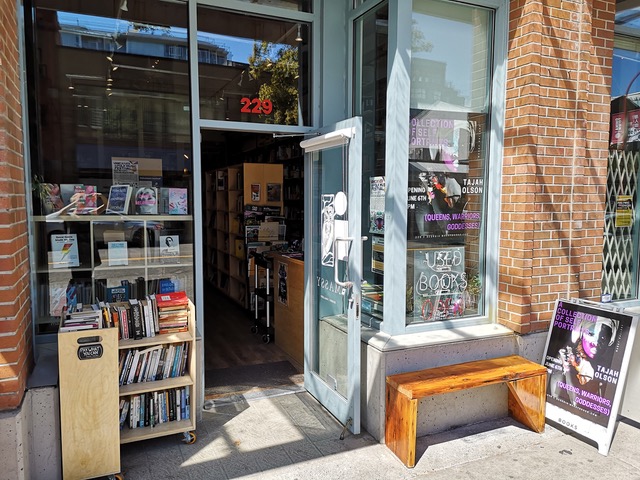
Supporting small shops helps keep our neighbourhoods thriving. Photo courtesy of Massy Books

By: Devana Petrovic, Staff Writer

Most people can probably agree that it’s been a heavy couple of months: social restrictions, event cancellations, and the overwhelming pressures that come with existing during a global pandemic. But even in these difficult times, it is important that we do not turn our backs on the community actors that are particularly struggling to uphold themselves — the family operated corner stores, the hidden gems of independent coffee shops, and any number of the beloved non-chain shops that don’t have the economic benefit of being loaded with crap-loads of investment capital. 

While there are several ways we can support our local businesses, such as prioritizing family-owned grocers for essential items, leaving generous tips at restaurants, and buying gift cards from temporarily closed stores, the important thing is that we make an effort to preserve our local economy. Without many of our small, local businesses we would lose much of our unique culture — not to mention increase the economic vulnerability of our communities. 

Local businesses characterize neighbourhoods, connect communities, and offer alternative services to large corporate entities. There are several products and services that we enjoy that are produced and operated locally — like breweries for example — which we may not even know supply an entire economic ecosystem in our communities. 

And then there’s the small, every day sort of establishments like our favourite bars and restaurants, local hair salons, and even the laundromat that are as much a part of our neighbourhoods as any house or apartment. Consider what the commercial landscape of your community would look like if these small, locally owned businesses were to disappear. 

Since our current state of crisis is compromising the viability of some of these businesses, we can help them out by steering our consumerist needs toward more locally owned businesses. Times are hard for everyone right now and we can only give what we can afford to give, but if we lose local small shops, it’s going to be the cold, corporate big box stores that take their place, and sanitize out even more of our local flair.

The good news is that many of our local stores are still open during the pandemic. The next time you go to buy a book off Amazon, consider taking your money to Massy Books instead. You can also choose to order takeout from locally adored restaurants like Simba’s Grill, which is available through several delivery services. Moreover, you can also do your online shopping via small business websites (a complete list is available on Small Business BC’s marketplace), and supporting funding initiatives when you can.

This pandemic may be limiting our ability to uplift our community in the same ways we would normally be able to, but that does not mean we shouldn’t do what we can to support the greater good of our economic and cultural climate. Buying from small businesses is an easy way to show support to our community and make a positive difference in the lives of our neighbours. We have the power and ability to help each other out in our communities; it can be as simple as making local choices. 


Where does your tuition actually go?

0
Photo: Experience Beedie

By: Madeleine Chan, Staff Writer

Ever wonder what those categories on your goSFU Account Activity actually mean? Vague names in the tuition breakdown like “Undergrad Tuition” and “UG Student Services Fee” making you want to break down? With the upcoming tuition deadline, I thought I would help you out and break down, as far as I can discern, some of the more unclear charges that may be listed on your Account Activity and explain what part of SFU they help to support. Maybe this will somehow help to justify that unreasonably large number you see on your statement, or maybe it won’t, either way I hope it brings some clarity to where your money is going. 


Undergrad Tuition: $192.03 (per unit), $826.62 (per International unit) and Graduate Tuition: $1,908.76 full time per term (Regular program)

Tuition that is collected from students is not clearly divided amongst SFU’s expenses, rather considered part of the pool of “revenue.” In 2019, 36% of SFU’s revenue was tuition. This, according to SFU’s budget, goes in their Operating Fund, which is used for “academic program delivery and administration of the university.” This fund is then divided up between SFU’s expenses, which, in 2019, is represented here:

  • 62%, Salaries and employee benefits
  • 21%, Supplies and services
  • 12%, Amortization, interest, and utilities
  • 5%, Scholarships and bursaries

In other words, this is a loose percentage of where tuition money goes, but it is essentially divided up between these four areas. 

Additionally, according to the 2020/21 budget, 25% of the recent 4% increase for international students is going “directly to student bursaries and support programs.”

UG Student Activity Fee: $137.14 (Full-time)

This fee is collected by the SFSS and goes towards these bodies:

  • $42.74, SFSS Membership Fee, this contributes to the operation of the SFSS as a whole, including the operation of Out On Campus (OOC) and the Women’s Centre
  • $5.00, Student Society Building Fund/Capital Levy
  • $0.25, SFSS Food Bank Program, provides students in a “state of need” with $25 food certificates up to three times a semester
  • $0.75, Accessibility Fund
  • $60.00, Build SFU Levy: this is what pays for the SUB and stadium
  • $3.00, Simon Fraser Public Interest Research Group (SFPIRG): this is a student-led and funded group on campus that advocates for social and environmental justice.
  • $4.90, Peak Publication Society (that’s us!): The Peak is SFU’s student-run newspaper that publishes a weekly paper for the student population.
  • $3.75, CJSF (Campus Community Radio Society): this is SFU’s non-commercial radio station that strives to be “an alternative to mainstream media.”
  • $2.50, World University Service of Canada (WUSC): this is a committee that runs the student refugee program at SFU, which sponsors students whose education has been “interrupted by conflict and persecution.”
  • $0.75, First Nations Student Association (FNSA): SFU’s “independent student-run organization for all self-identified Aboriginal, First NAtions, Inuit, Métis, and Status/Non-status students.”
  • $3.50, Embark Sustainability Society (ESS): a group on campus that works towards a sustainable future by supporting students through “grant, advocacy, and student-designed programming.”

Graduate Student Activity Fee: $70.44 (Full-time)

This fee is collected by the Graduate Student Society (GSS) and goes towards these bodies:

  • $54.29, GSS membership fee
  • $4.90, Peak Publication Society (that’s us!)
  • $3.00, Simon Fraser Public Interest Research Group (SFPIRG
  • $3.75, CJSF (Campus Community Radio Society)
  • $2.50, World University Service of Canada (WUSC)
  • $0.75, First Nations Student Association (FNSA)
  • $3.50, Embark Sustainability Society (ESS)

UG + Grad Student Services Fee: $47.10 (Full and part time)

A fee that goes towards all of SFU’s student services like academic advising, the Centre for Accessible Learning (CAL), and International Services for Students (ISS) — which are now available remotely. 

UG + Grad Rec & Athletic Fee: $78.47 (full-time), $39.24 (Part-time)

Not applicable for this semester, but this money would usually go towards your mandatory membership for the services of SFU Recreation and your membership to either the facilities of the Burnaby Campus, or select facilities in the City of Surrey or Vancouver.

U-Pass BC Fee Assessment: $170.00 (As of Fall 2020)

Not applicable for this semester, but this fee usually goes towards the four-month, universal transit pass that is subsidized by the student body and organized by TransLink and the Province of British Columbia.

UG Studentcare Health and Dental Insurance: $197.52 (Basic), $254.36 (Enhanced)

A mandatory once-per-year fee (if you don’t have coverage elsewhere) that goes towards the SFSS Studentcare Health and Dental insurance plan.

  • 62.75 Basic Health Coverage, covers prescription drugs, vaccinations, vision, travel, and a variety of health professionals up to a certain percent or dollar amount
  • 86.18, Enhanced Health coverage, covers up to two times more than basic
  • 134.77, Basic Dental Coverage, covers max of $600 annually
  • 168.18, Enhanced Dental Coverage, covers up to 1.2 times more than basic

Graduate Extended Health and Dental Plan: $460.48 (Full and part time)

A mandatory once-per-year fee (if you don’t have coverage elsewhere) that goes towards the GSS Studentcare Benefit Plan.

  • $194.42, Health Plan, covers prescription drugs, vaccinations, vision, travel, and a variety of health professionals up to a certain percent or dollar amount
  • $266.06, Dental Plan, covers up to $700 annually and 100% of basic, preventative, and wisdom teeth services

CDE Materials Fee: $40.00 (per class)

This supplementary fee for all Distance Education courses run by the Centre for Online and Distance Education (CODE) and cover their costs concerning the “overall production, assembly, and delivery of print-based and online materials and services” with examples like copyright, printing, and postage.

*These costs and applications are accurate as of the Summer 2020 term

Proctor software is more risk than benefit for students

1
Exams are stressful enough without computers spying on students. Illustration: Michelle Chiang/The Peak

By: Nicole Magas, Opinions Editor

Students in MATH 155 were shaken up recently when they received an email informing them that their remote exams would be monitored via proctor software. The news came with alarming suddenness, and although the email stipulated that they could drop the class if they wished to avoid this invasion of privacy, many students pointed out that the email was sent out after the time period to do so had already passed. 

This not only unfairly pigeonholes students into accepting software that is designed to monitor their microphones, webcams, and internet usage, but proctor software on the whole prioritizes a gross invasion of student privacy over more creative — and effective — methods of student assessment. The personal costs associated with using this software nowhere near estimate the benefits, and it should not be allowed in SFU classes.

Proctor software is essentially meant to emulate the experience of taking a timed exam in the presence of an instructor or alternate in-person proctor. Whereas in an in-person class the instructor and/or the class TAs would monitor students for signs of cheating, with proctor software, students are required to allow the software to record via their webcams, microphones, and monitor their internet activity. The program then assesses student behavior for signs of cheating, and passes its results, rather than the recordings themselves, onto the professor. This should raise red flags for a number of reasons.

Even though the data being recorded isn’t being reviewed directly by professors, it still has to sit somewhere while it is being assessed. This leaves it vulnerable to theft because, as we all know by now, there’s no amount of security that can 100% safeguard our data on the internet. That’s just not how it was designed. This issue of who would be ultimately responsible if there were to be a data breach — SFU or the software company — should also worry students as confused accountability makes it harder to achieve compensation for injury. 

The issue of security also raises the question of whether or not it is possible to completely “shut off” the software outside of an exam situation. Google and Facebook are notorious for using their technology networks to gather data on their users. What is stopping proctor software from operating quietly in the background on behalf of a third party, collecting data even when it is not actively in use?

And then there’s the issue of relying on AI to accurately assess human behaviour. How sensitive is the algorithm, and what happens if an honest student is accidentally caught “cheating?” Would the data then go to a human for review, and would that not itself be an invasion of privacy?

But perhaps the biggest problem with courses such as MATH 155 utilizing proctor software is that it’s not even that effective. In the recent Town Hall, Vice-President Academic and Provost pro tem Jonathan Driver admitted that it doesn’t do much to prevent cheating, and that the university prefers if other methods of assessment are used instead. 

And this just underscores what education innovators already know: the attempt to completely recreate the in-person learning environment in digital is built on the assumption that current methods of assessment are the best that we have. This just isn’t the case, and as our world increasingly relies on critical thinking, problem solving, and our interpersonal intelligence, testing “low-level skills” is a barebones way of judging whether or not students are being prepared for life outside of university.

In short, students are being asked to agree to give up their privacy — after the time to opt out has passed — in order to be assessed in an ineffectual, archaic, and anxiety-inducing manner, when other methods of assessment like open-book exams, collaborative work, or applied projects are much better at engaging with student learning. And they have every right to be angry about it.


Want to support the Black Lives Matter movement? Here’s how you can start

1
Photo: Wikimedia Commons

Compiled by: The Peak Publication Society

Please note that the sources listed below have been compiled by multiple individuals, and we do not take credit for writing them. 

  1. Petitions, petitions, petitions.


They are circling everywhere and almost impossible to miss on social media. Take 10 minutes out of your day to sign as many as possible, or better yet take more than 10 minutes. LIterally sign as many petitions as you possibly can. The more petitions you sign, the more that your voice is creating positive change. Once you sign those petitions, spread them like wildfire. Post them on your social media so your friends can see and sign them as well. After that, send emails out to government officials demanding change and justice. For a masterlist of petitions please go to https://blacklivesmatters.carrd.co/! This website was started and updated by @dehyedration. This is a Google Doc for BLM resources, compiled by Twitter user @ambivalacnt. For a Canadian masterlist please go to https://blacklivesmattercanada.carrd.co/, compiled by Instagram user @bellaminicucci.

2. Donate


Pretty much the same thing as the petitions. If you have the financial means to do so, please donate as much as you can. You can find donation links at https://linktr.ee/action.queerblm or https://blacklivesmatters.carrd.co/   

Don’t have the funds? There is a video on YouTube called “how to financially help BLM with NO MONEY/leaving your house” created by Zoe Amira featuring not only the amazing work of black artists all over the world, but has numerous ads. All of the ad revenue will be going to:

  • Brooklyn Bail Fund
  • Minnesota Freedom Fund
  • Atlanta Action Network
  • Columbus Freedom Fund
  • Louisville Community Bail Fund
  • Chicago Bond
  • Black Visions Collective
  • Richmond Community Bail Fund
  • The Bail Project inc. 
  • NW com bail fund
  • Philadelphia Bail Fund
  • The Korchhinski-Parquet family gofundme
  • Gerge Floyd’s Family gofundme
  • Blacklivesmatter.com
  • Reclaim the Block

Leave this video running in the background on half volume while you work and don’t skip any ads (you can turn off your computer audio but the video audio must be playing to generate ad revenue). It takes zero effort and will actively help. 

3. Openly educate yourself


Educate yourself on the issues around you and ask yourself questions. What can you do to support POC in your community? What are your local politicians’ policy on ending police brutality? Learn about how much of your city’s operational budget is spent on policing, and consider emailing your city elected officials to divest funds into prioritizing community-led initiatives or alternative sectors, like education and mental health services. This is an email template that you can use to email Vancouver city officials, where 21% of the total operational budget is spent on policing, or $315,278,281.00. 

How do you benefit from the oppression of POC in your community? How can you be actively anti-racist instead of simply “not racist”? Pick up a book  — some recommendations from The Peak include So You Want to Talk About Race by Ijeoma Oluo. Check out this list of free ebooks on racial justice! You can also watch a Netflix documentary (When They See Us or 13th is a good place to start). Here is a masterlist of resources to educate yourself. Asking yourself these hard questions and learning are key because the next step is to . . .

4. Openly educate those around you


Now is the time to sit down with your family and explain to them what is happening and how they can help. Being an ally means being comfortable with having difficult conversations with your peers rather than ignoring them, especially if you disagree with them.  Ask them the same hard questions that you had to ask yourself. Teach them to observe their own biases and to be actively anti-racist. As we stated above, this also means sharing resources all over your social media. Now is not the time to be caring about your Instagram aesthetic. 

5. Follow these organizations


@blklivesmatter

@colorofcchange

@naacp

@showingupforracialjustice

@civilrightsorg

@reclaimtheblock

@ethelsclub

@unitedwedream

6. Text these numbers


Text FLOYD to 55-156

Text JUSTICE to 66-8336

Test ENOUGH to 55-165

We want to make it clear that this list is the bare minimum. Don’t expect a pat on the back or congratulations for standing up for basic human rights. This is more than a social media craze; real lives that are at stake. Now is the time to be an ally  — and to continue to be an ally when the outrage ends. Be angry, continue to donate, continue to share, continue to educate yourself. To be silent is to be complicit. 

Looking for more? Check out these:

Local Petitions:

Black in BC Community Support COVID-19 Fund 

“The funds raised through this GoFundMe page will be distributed in one-time allotments of $150, to Black folks on a first-come, first-served basis. There is no expectation that the funds will be repaid, or that recipients will report back on how the money was spent.” 

Withdraw the Critical Infrastructure Defence Act 

“The Critical Infrastructure Defence Act will prevent grassroots protestors in the province from exercising their right to protest on Highways, Railroads, Pipelines, etc. by attaching a $25,000 fine or 6 months jail time. This could prevent citizens from protesting at legislatures or through picket lines. This bill is a direct attack against the Wet’suwet’en protestors and could interfere with Indigenous Peoples’ rights to hunt, fish or gather on traditional land.”


Local/Online Businesses:

Afrobiz 

This is a directory for Vancouver Black-owned businesses like media and restaurants.

Black-owned Etsy shops

This is a list of 100+ Black-owned businesses that will be updated frequently. 

Iron Dog Books

“Iron Dog Books is an Indigenous-owned bookshop and booktruck dedicated to bringing low cost reading to Tsleil-Waututh, Sḵwx̱wú7mesh and Musqueam territories (metro Vancouver).”


Local Places to Donate:

Black Lives Matter (Vancouver chapter)

“The Black Lives Matter Vancouver chapter is a cause that supports the organizing work of black folks and allies in undoing systemic racialized violence. Black Lives Matter is a cause cognizant of the ongoing struggles of all marginalized folks and we strive to honour that in the work we do. We centre the voices of Black folks as well as other folks of colour and hope to lift up those who are queer, women, trans, differently abled, poor or otherwise marginalized.”

Black Health Alliance

“The Black Health Alliance is a community-led registered charity working to improve the health and well-being of Black communities in Canada. Building on our track record as an effective mobilizer and champion, we continue to grow our movement for change. Driven by groundbreaking research, strong partnerships, and people, this movement continues to build innovative solutions to improve Black health and well-being, and mobilize people and financial resources to create lasting change in the lives of Black children, families and communities.”

Hogan’s Alley Society

The Hogan’s Alley Society (HAS) is a non-profit organization composed of civil rights activists, business professionals, community organizations, artists, writers and academics committed to daylighting the presence of Black history in Vancouver and throughout British Columbia. HAS adopts research driven approach to community development that seeks to preserve and promote the historical, cultural, societal and economic contributions made by Black Settlers and their descendants to Vancouver, Greater Vancouver, the Province of British Columbia, the Pacific Northwest and Canada.” 

Black Youth Helpline 

In response to a community-based project assignment at their school and supported by their courageous teacher, Black Youth in Winnipeg, Manitoba decided that their project would be to outreach into shopping malls and to the streets encouraging out of school youth to return to school. They developed a flyer called “Black Hand to Black Hand” and tirelessly distributed these to disconnected youth.”

Black Women Connect Vancouver 

“Black Women Connect Vancouver is a collective of women who come together to inspire, empower, leverage our strengths and embrace our diverse experiences. It’s a community where we can build meaningful relationships, and celebrate the beauty of black womanhood.”

If you have a business or charity you would like us to feature, email [email protected] the name of the place, what they do, and why they should be featured. 

 

Select Burnaby recreation facilities reopen with limited services

0
Photo courtesy of Simon Fraser University

Written by: Paige Riding, News Writer

In the midst of a pandemic, finding the time and place to exercise may prove difficult. Until recently, almost all recreation establishments in Burnaby were closed due to COVID-19 restrictions. The SFU fitness facilities have been closed since late March, and a recent update on their website notes that further information will be provided by June 15. 

SFU’s Recreation & Fitness Manager Nicholas Sirski spoke to The Peak over email about the current status of SFU’s recreational facilities.

“At this point, SFU Athletics & Recreation is working hard to determine how our programs, events, and facility operations will resume. For now, our facilities are closed and programs, events, and rentals remain suspended.

“In the meantime, we are happy to offer our Healthy At Home initiative [ . . . ] we are offering live classes, videos on-demand, as well as Instagram posts outlining workouts and exercises that you can do from home!”

As of a few weeks ago, the province lifted certain restrictions, including daytime use of parks. Starting on May 13, certain city-owned outdoor spaces reopened with restrictions to ensure social distancing. On the City of Burnaby’s website, advises against visiting popular spaces like hiking trails and parks during peak hours, and cautions that the failure to abide by guidelines posted at these sites may result in closures again.

Trails at Deer Lake Park are now “one-way only.” For Deer Lake and other similar outdoor spaces, Burnaby’s website noted that, “as parking is limited, we encourage you to visit your local, neighbourhood park instead of driving to this popular destination.”

Restricted to “casual play” only, basketball courts, sports fields, tennis, pickleball, and other sports courts will be available for single games. Some other outdoor city-owned areas like skate and bike parks will reopen.

Boat docks at Deer Lake and other spots are now open. The city’s website says “physical distancing must be observed, on and off the water.”

The Peak reached out to some recreational facilities around the Burnaby campus to learn about their proceedings during the pandemic. Many are looking to reopen in the upcoming weeks but are unable to provide statements at this time. As an alternative, many gyms like Survivor Fitness are delivering classes remotely.

Daniela Duva, an outdoor bootcamp instructor, explained Survivor Fitness’s methods. While outdoor classes will not resume yet, half-price courses delivered over Zoom are the current alternative. They are four days a week, mornings and evenings, focusing on different parts of the body throughout the week.

“They are pretty fun. [I] Have people aged between early 20’s all the way up to 92! I thought I wasn’t going to get that many but I have double the numbers right now which is good because I cut the price in half.” Duva noted that some SFU professors attend the classes, too.

QUIZ: Do you have a Snap Streak or do you respect yourself?

0
Photo courtesy of Johan Mouchet via Unsplash

Written by Zach Siddiqui, Humour Editor

  1. How old are you?

a) Baby

b) Bewildered

  1. How susceptible are you to peer pressure?

a) Shine bright like a diamond, shine bright like a diamond . . .

b) I communicate boundaries in a healthy way and arrive at mutually beneficial compromises

  1. Your first thought when someone doesn’t answer your text, call, or message right away?

a) “I guess this flame emoji is just the funeral pyre for this relationship, sorry for drowning what we had, I guess”

b) Thoughts are from Satan

  1. Would you say you read really deeply into your interactions with others?

a) I spent last Thursday looking for a floor-length black veil for my Bitmoji

b) I certainly don’t read The Peak very deeply, so . . . 

  1. You receive a Snapchat from your crush, but it’s 1 a.m. and you look like Wobbuffet! What do you do?

a) Shyly cover my phone camera and send a snap of pure darkness captioned with my flirtiest response: a coloured line drawn across the screen.

b) I am asleep and ignore it. If there’s one thing Wobbuffet’s good at, it’s blithely reflecting damage back at the offender.  

If you answered mostly “a”: you have a Snap Streak!

Congratulations! You have no faith in the permanency of relationships. Distrustful of the immaterial and emotional, you look to cuff your friends and lovers with the social obligation attached to the number on a screen. Enjoy.

If you answered mostly “b”: you respect yourself! (In theory.)

Congratulations! You can live your life without empty photos of your friends’ ceilings. Emotional independence is so key. The bad news? Well . . . maybe you don’t not respect yourself . . . but you might not really respect yourself yet either. I mean, respect is earned. And what have you really accomplished, besides abstain from one function of an app that still pulls in millions in revenue, with or without you? Chin up, though, and keep working at it.

“Don’t set yourself on fire to keep others warm,” man coos at decorative candles

0
Photo courtesy of Julie Ronberg via Unsplash

Written by Zach Siddiqui, Humour Editor

“People are always criticizing me for buying things I don’t need,” says Sean. “But it’s not about whether I need these candles; it’s about letting these candles know that they need themselves.”

Sean’s house is filled with candles in turquoise, rose gold, lavender, and more — candles which he never plans to light. With their waxy, aesthetic social circle growing more than ever thanks to free shipping and pandemic discounts, Sean recently felt compelled to remind them of his motto. It’s something he’s borrowed from his stint as a Superwholockian and teen-angst blogger in the early days of Tumblr: “Don’t set yourself on fire trying to keep others warm.”   

On Thursday, Sean invited The Peak to his home, where we saw his interactions with the candles firsthand. 

“Put yourself first,” Sean encouraged them. “Know your worth. Like you did back when I had to pay $276.00 for you.”

Sean has never lit a candle in his life. On his birthdays, he usually finds something else to blow before cutting the cake. All in all, he believes he has done a good job teaching the candles in his life how to love themselves. (Since that’s totally his job, obviously.)

Other self-love tips Sean gives his candles include making time to travel (fulfilled by Sean picking them up and moving them to different parts of the living room every couple of days) and getting in touch with their inner dialogues (he hasn’t heard them talk out loud in weeks!)

That evening, Sean lulled his decorative candles to sleep by reading aloud from his private Facebook album of vintage inspirational Picnik edits, retained from circa 2011.

Your weekly SFU horoscopes: June 1–7

0
An illustration of a girl with long flowing hair. Astrological signs and stars shine around her.
ILLUSTRATION: Marissa Ouyang / The Peak

Written by Paige Riding, News Writer

Aries: You’ve always been annoyed by unoriginal people. You’re just so sick of Instagram users screenshotting tweets and reposting them. Just like Twitter, you did it first. You are the first sign in the Zodiac, after all. It’s written in the stars and in your plans to lead the way.

Taurus: As a fixed sign, they say you don’t need to worry about your hardiness fading until hell freezes over. Too bad for you, hell is a wholesale establishment with free samples and soccer moms buying Nature Valley bars in bulk, and they just started selling Freezies again. 

Gemini: Talk is cheap, yet even with that Canadian Emergency Response Benefit, you still can’t afford it. Well, tough — you can’t keep blaming your lack of participation in the Canvas discussion on “feeling trapped in such a demanding relationship,” so make ends meet. Talk about how great someone else’s point was, reiterate what they said to sound like it’s a new idea, and move on.

Cancer: Don’t forget, you can’t be late to your Zoom lecture if you don’t show up. There are enough grey boxes with faceless names on there, anyway. You have more important callings this week — like finding yourself through revisiting your old Mii on your Wii.

Leo: You’re like the nose pads on a pair of glasses. You lift those around you up. You keep those around you steady. You’re an essential part of any friend group. But holy shit can you rub people the wrong way. It’ll take you a while to realize that it’s you causing all this irritation.

Virgo: So, how are you holding up without window shopping at any moment possible, only to stare at the prices of the items in the store and grimace? You can scroll through online stores, but that tactile feeling of overpriced, mass-produced articles of clothing just hits differently. Also that Zara model’s Photoshopped arm looks weird.

Libra: Whoever said the present is a gift clearly hasn’t seen your bright future. Times are hard right now, Libra. Once you can stop spending hundreds on eBooks and use that cash to create your own fox sanctuary solely to call yourself Foxy Mama, it’s over for everyone else. You’re just biding your time.

Scorpio: The next time someone tells you that you would look better if you smiled more, just perform an arm wringer move right then and there. Not only will that shut them right up, but it’ll also turn your frown right upside-down as you flip the person over your head and onto their back. Win-win.

Sagittarius: The grass may be greener on the other guy’s lawn, but the dandelions on yours are better for the bees. You don’t need those gentrified definitions of beauty, anyway. You’re messy and the important ones will love it.

Capricorn: You put the cap in Capricorn this week. You hear all this talk about being hard at work 24/7, but the only difficult task you’ll overcome is asking what to show to watch on social media while your pre-recorded lectures sit untouched.

Aquarius: You have nothing to complain about this week, Aquarius. Sure, your relationship with yourself may be unstable due to your fleeting urges to write a whole novel quickly followed by a suffocating sense of hopelessness. But you still share your sun sign with Harry Styles, so . . .

Pisces: You have this bad habit of absorbing the energies of everyone in the same room as you. Doesn’t that get exhausting? Try putting on a tinfoil hat. It’ll protect you from overwhelming mood swings and the 5G rays that cause COVID-19 according to my neighbour, Jim, on Facebook.


SFU grad’s business venture is a delightful culmination of chocolate and friendship

2
The bean-to-bar process is what makes Kasama Chocolate so unique. Courtesy of Kasama Chocolate.

By: Sara Wong, Peak Associate

Whether your online classes are stressing you out, your family is starting to irritate you, or your lack of seeing friends has got you in your feelings, there’s one guaranteed cure-all: chocolate. Science has shown that it helps improve our mood, and Kasama Chocolate is the best when it comes to doing just that!

OK, so the second part of my statement hasn’t been scientifically proven (yet), but Kasama’s chocolates are delicious. Kasama is a local small business that makes their chocolate from bean-to-bar, meaning they go through a long series of actions to produce chocolate straight from cacao beans. Comparatively, many chocolatiers skip the labour-intensive process in favour of couverture (pre-made chocolate).

Last year, BC Business published an article which showed that only a handful of chocolate companies in the province make bean-to-bar chocolate, making Kasama quite unique. The bean-to-bar technique allows for more control over the chocolate’s flavour and consistency, which is well worth the extra time it takes to produce. Trust me when I say you can taste the difference.

Kasama Chocolate was created in 2016, after Vincent Garcia, one of the four founders, discovered cacao trees on his family’s property in the Philippines the year before. Garcia and his friends/co-founders, Stefan Klopp, Dominik Voser, and Oliver Koth-Kappus⁠, continue to operate Kasama to this day. The name of their brand, as reported by Andrea Marván in Edible Vancouver, is a “Tagalog word that means collaboration, friendship, and camaraderie.” Kasama relates to Garcia, Klopp, Voser, and Koth-Kappus’ joint venture into entrepreneurship and embodies the community of East Vancouver artisans that they support and are a part of.  

For Garcia, a 2004 SFU School of Communication alum, starting a chocolate company with his best friends was a rather spontaneous decision. “Originally I wanted to pursue a career in advertising and hopefully land a gig at Strawberry Frog, CP&B, Wieden Kennedy, DDB, or Rethink — my favourite creative agencies at the time,” he told me via email. In other words, entrepreneurship was not something that Garcia considered.

However, life had different plans. “Things didn’t quite pan out as I had hoped. I was also a little too naïve and I had a limited network,” he admitted. “Luckily, I was able to do some creative freelance work for a couple of years that took me from Vancouver to Singapore and back. And it was during those years that I [ . . . ]  realized I could create my own opportunities.”

While studying at SFU, Garcia’s focus was on social communication and new media, something he believes has translated well into what he does at Kasama. “As a CMNS [sic] student you learn about big ideas like Marshall McLuhan’s ‘the medium is the message’ and study subjects like Semiotics — how meaning is created through the use of signs and symbols,” Garcia explained. “Little did I know, at the time, that I would be putting these concepts into practice 11 years later with chocolate acting as the medium and the Kasama brand acting as the sign and symbol,” he continued.

Although Kasama Chocolate can be found at select retailers, the majority of their business came from craft fairs, which have been cancelled and postponed indefinitely since COVID-19 hit. Yet, Garcia reported that “[they] were able to shapeshift and business online has been brisk.” 

Additionally, after a brief hiatus, Kasama has returned to various Vancouver Farmers Markets locations. “Our customers and wholesalers have [ . . . ] been supportive throughout the pandemic and we’re very grateful for that. We’re lucky that Vancouver has a very tight-knit food community and we hope that Kasama Chocolate will continue to be part of it for many years to come!” Garcia concluded.

I’ve also seen a major increase in show of support for local brands from Vancouver’s large community of foodies and consumers — something I hope will continue even after this pandemic is behind us. So in the interest of supporting small business, go ahead and grab yourself a delectable Kasama bar.

Below are my recommendations:

When school becomes overwhelming — 65% Agro Espresso will give you the strength to carry on.


When your family is driving you wild — 55% Goat’s Milk will channel your energy into tangy goodness.


When you miss your friends — 57% Earl Grey Tea will keep you in a sweet, reminiscent bubble.

Check out the Where to Buy tab on their website for more information.