Home Blog Page 414

It is not an insult to call people racist when they are being racist

0
The NDP leader’s comment was a far cry from the ways MPs have addressed each other in the past.

By: Nicole Magas, Opinions Editor, and Manisha Sharma, Peak Associate

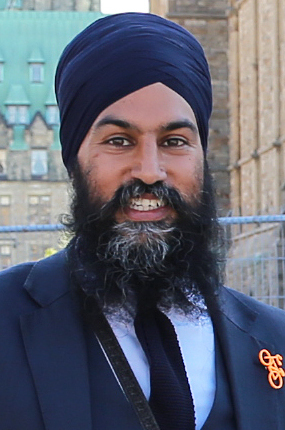
On June 17, the leader of the NDP party, Jagmeet Singh, was kicked out of Parliament over not apologizing for calling Alain Therrien, a Quebecois MP, a racist. The underlying reason for his expulsion was that his use of the word “racist” was considered “unparliamentary language,” and that he refused to apologize for saying it. 

It seems that those in Parliament would much rather dismiss racist ideologies and systems than acknowledge racism is still alive and well in Canadian politics. To them, the word “‘racist”’ is considered unparliamentary language when hurled at others. The obvious deficiency in this logic is that when Parliament punishes a member for calling another member racist, but does not punish members who are promoting racist policies or rhetoric, it endorses one behaviour over the other. The message that this sends to broader society is that it is more acceptable to be a racist than it is to “impolitely” point out when someone is being racist. We need to start normalizing the stigmatization of ideologies and actions that are obviously detrimental to society, rather than insisting on polite and silent complacence with their existence.  

What is interesting about this specific case is that MPs have a long history of using vulgar language in Parliament; insults much stronger than the word “racist” have been used several times to describe fellow MPs. Of course, these MPs, like Singh, have been asked to apologize for their unparliamentary behaviour. But more to the point, calling someone a racist shouldn’t be viewed as an insult as if born of personal disagreement or emotional tension. Rather, it should be viewed as a point of fact when people are behaving as racists.

If we were to stop pussy-footing around the feelings of racists and actually call them what they are, then perhaps we could introduce some real civility into our politics, and not just pay lip service in a way that allows some people to espouse views that negatively impact a significant portion of our population. I understand that if Singh were to have used actual derogatory language along with his remark that he would and should have been condemned. But he didn’t. He simply called out a racist for being racist. 

Systemic racism doesn’t require racists to accept that they are racist. By its nature, systemic racism operates invisibly as part of a broadly accepted system of beliefs and practices that ultimately harms certain people based on arbitrary physical characteristics. The panicked pearl-clutching at the idea that someone might call a racist a racist is absolutely a part of that harmful system. It’s a novel idea, but perhaps if Therrien doesn’t desire to be called a racist, he should stop acting in a way that is clearly racist — such as refusing to condemn systemic racism within the RCMP.

It is cowardly to punish those who are pointing out the truths of injustices in our system. What is so bad about Singh calling Therrien a racist for failing to accept and agree that change within the RCMP is necessary in order to prevent further discrimination and violence against racialized people? What’s more, why is the moral refusal to defer to the decorum of authority more socially unacceptable than actually being a racist? Sounds like Singh knows what he’s talking about. 

The first step in addressing systemic racism in government is acknowledging that it is still present and alive in our systems of government, and it is not okay that it exists there. The second step is to not be afraid to call out politicians for condoning racist or discriminatory policies. The third step, don’t kick out members of Parliament when they call others what they are — a racist.
 

It’s best to finish WQB courses as early as possible

0
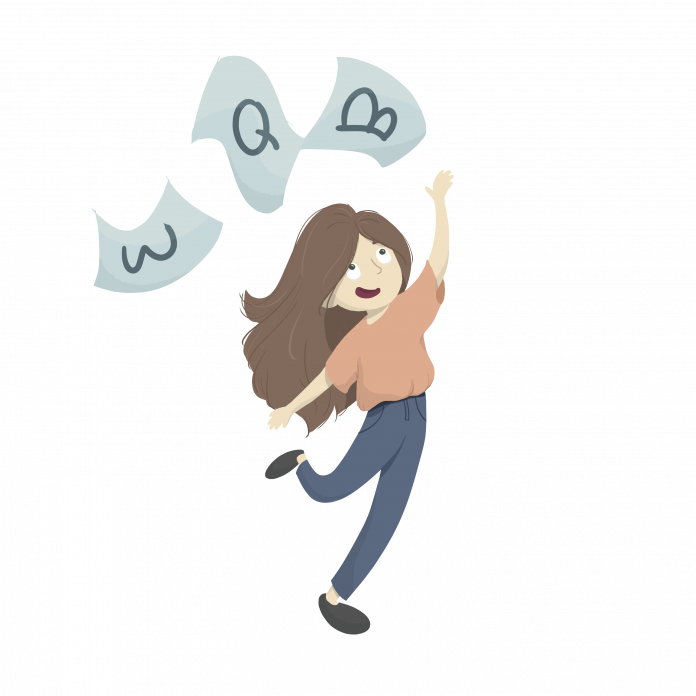
Get your WQBs done with early — you’ll be happier for it. Illustration by Maple Sukontasukkul/The Peak

By: Michelle Young, Staff Writer

Writing, breadth, and quantitative (WQB) requirements are sometimes pushed to the end of a student’s degree due to scheduling conflicts and looming dread. These courses can be intimidating because they force students to explore outside their departments, and will often require students to utilize skills in areas they haven’t yet refined — for instance, thesis and proposal writing skills in writing-intensive courses. However, completing these requirements first has some benefits over leaving them until the very end, and can be ultimately beneficial for students’ overall education. 

As mentioned, students are exposed to different departments and subject areas other than their primary field of study through these requirements. While this can be daunting, it can also be a boon for those who aren’t sure about their major, or have undeclared majors. Students can pursue and explore subjects that they may not know they are passionate about, earlier in their degree, thus saving them from a costly change in major or, worse yet, sticking to a comparatively undesirable major due to sunk cost. It will also ensure that such exploration will count towards the ultimate completion of a degree, as it’s fulfilling a requirement.

Doing this sort of exploration work is important because not every student knows what they are truly interested in studying when they first start post-secondary education. I completed my WQB requirements before transferring to SFU, taking psychology, biology, and history courses. I had always been fascinated with evolutionary biology before taking these courses, but my interest in pursuing biology stopped there. Taking a B-sci biology course showed me that I truly despise anything to do with heavy memorization or the human body at the cellular level. Considering that I wanted to go into marine biology in high school, I’m glad I took this course early because it killed my curiosity for any biology-related courses or career choices and showed me that there was nothing more I wanted to pursue than writing. 

Both instances — whether students find their passion with WQB courses or WQB courses point students toward their desired majors — allow for consideration of what students want to study and make the possibility of changing majors later on less likely. 

Another great benefit of completing WQB courses early is that it equips students with a range of basic skills to apply to whatever major they eventually end up committing to. Part of what it means to go to an “engaged university” is the ability to apply a broad range of knowledge into one’s field of study. The more experience students have with different ideas early on, the easier it is to make these sorts of connections. For example, quantitative courses can aid students who pursue statistics later on, or if the courses teeter on the analytical side, they can help with any kind of argumentative or logical aspect needed for critical thinking in the humanities. 

Finally, planning to take WQB courses earlier rather than later creates some wiggle room for students to be flexible if their schedule doesn’t go as planned. Some classes that are notorious for filling up quickly will force students to look for alternatives if they’re planning to graduate soon. There’s nothing worse than looking at your last year and worrying whether or not you’ll be able to beat the waitlist to get into courses that aren’t a part of your major.

Taking WQB requirements early can take a load off students’ chests and comes with a variety of benefits. It will allow them to explore different subjects early on, apply the knowledge and skills they’ve learned from these courses in their chosen majors, and provides students with flexibility later on into their degrees. 

So what are you waiting for? Have you finished your WQBs yet?


Black people are not your guinea pigs

2
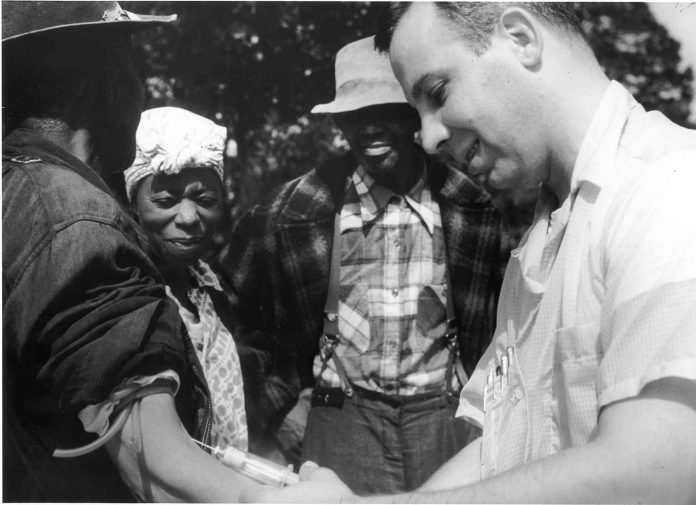
There are many examples of unethical medical experimentation, like Tuskegee pictured above, on Black bodies throughout history. Photo courtesy of National Archives Atlanta, GA, via Wikimedia Commons.

By: Idara L. Udonya, SFU student

All over the world researchers, epidemiologists, and other health experts are working around the clock on a vaccine for COVID-19. The race for a vaccine, however, presents some concern considering the histories of medicine in which Black bodies are undervalued and subjected to experimentation. In light of this, vaccine testing that is specifically targeted at Africans and Black bodies is particularly worrying. 

During an interview on French national television, Dr. Jean-Paul Mira, head of ICU services at the Cochin Hospital in Paris, and Dr. Camille Locht, research director for France’s National Institute of Health and Medical Research, made explicit mention to how the testing of a potential vaccine should be done in Africa. The vaccine in question is an existing treatment for tuberculosis. The doctors’ reasoning is that Africa lacks the infrastructure to effectively treat COVID-19 on its own, and therefore trials should be done there. Mira likened the trials to AIDS studies performed on prostitutes because they are “highly exposed and they don’t protect themselves.” Not only is this argument incredibly reductive in its colonial assumptions that the entire continent of Africa is defined by poor public health and poverty, but it ignores the real impacts COVID-19 is having on other global populations. 

At the time of writing, the World Health Organization estimates infections for the Americas at over 7.3 million, and Europe at over 3 million. Africa on the other hand doesn’t even top 600,000 cases. Yet no one is suggesting that vaccine tests be performed in the Americas just because US Americans have poor public health compliance and corrupt, incompitent leadership. Why are some health experts pushing for vaccine testing to be focused in Africa?

Medical advancement has a storied history in Black pain. A systemic disregard for Black lives and a desensitization to Black suffering has existed for hundreds of years and has worked to maintain the state of Black undervaluation. Notable examples of this included the Tuskegee syphilis study, where 600 Black American men were subject to uninformed testing of a new syphilis drug and prevented from receiving treatment for the actual disease, even after an effective treatment was discovered. Another is the AZT HIV/Aids transmission preventative drug testing in Zimbabwe in 1994 where infected women were not properly informed about the experiment, and some were given placebos which led to the transition of the virus to 1,000 babies. Illegal meningitis treatments were performed in Nigeria, where testing was done without governmental approval and led to many child deaths, blindness, and brain damage. These are only a few examples out of a plethora where medicine, through experimentation on Black peoples, acts as a form of science racism. 

The idea that Black bodies are tougher and able to withstand experimentation is racist and incorrect, and has been disproven multiple times. Yet many medical personnel still hold onto it, thus engaging in racist assumptions that deny the humanity of Black people. As a result, Black lives are seen as expendable in the service of medicine, causing an internalisation of anti-Blackness, which alongside other discriminatory practices, blocks access to efficient medical care resulting in an increase in health issues. 

And direct medical racism isn’t the only way that anti-Blackness harms the health of Black people. Systematic poverty due to a history of racist policies keeps Black people in highly polluted areas with little to no infrastructure. Distrust in the systems of the oppressors translates into distrust of the entire medical system, leading Black people to seek care less frequently — if they even have the resources to access care in the first place.

COVID-19 is a global problem that demands global solutions. But the medical community cannot be allowed to exploit Black bodies in order to get there. Black people are as deserving of care as any other race — medical ethics need not be applied to only white bodies. Black health matters; it always has, and it always should.


Cancel culture gives voice and power to those who need it most

0
Public figures are accountable to their audiences for their behaviour. Illustration by: Tiffany Chan/The Peak

By: Kelly Chia, Features Editor

There’s no question that the internet has brought us intimately close with many of our favourite artists and content creators. Unfortunately, this also means that we now have a front-row seat to all of their flaws and problematic worldviews. In response to some very public comments made by public figures in recent years, so-called “cancel culture” has arisen as a community-driven means of unseating creators from their public platforms, revoking their celebrity status, and in some cases, punishing them financially. In general, cancel cultures aims to force public figures to acknowledge the mistakes they’ve made.

Cancel culture has the potential to be disastrous for those in the public eye by encouraging people to stop supporting them when their words or actions harm other people. While the intent isn’t always necessarily to end careers, it’s often used to impose consequences on problematic creators who otherwise would continue to benefit from positions of influence — and from those positions, disseminate hurtful worldviews. This can take the form of demanding a creator be taken off of their platforms, be dropped by publishers, or a call for fans to stop supporting problematic creators. 

These call-to-actions make cancel culture a very potent but also necessary tool for socially conscious consumers, especially since an absence of consequences for harmful behaviour signals a societal acceptance and tacit agreement with said behaviour.  

Recently, Harper’s Magazine published an open letter decrying cancel culture. The letter, signed by several high-profile creators and academics, takes issue with how morally absolute cancel culture is. Cancel culture labels content either problematic or not problematic, with no room for nuance or personal growth. According to the signatories, the consequences are too heavy compared to the mistakes an individual has made, and are more limiting than they are good. 

People make mistakes, and it is understandable when they are made in ignorance. But if creators have hurt people with their mistakes, they must also own up and properly make amends. They have to show a willingness to learn from the voices of those they’ve hurt. If they don’t, if they continue to be hurtful to people who have called them out multiple times — such as signatory J.K. Rowling has done — then they deserve to be abandoned by their fans, and to have their influence diminished. 

Harper’s’ letter minimizes the people who have been hurt when it says that these are just clumsy mistakes that don’t deserve the consequences that cancel culture imposes. They point to examples like researchers being fired for sharing certain academic papers as a reason why society should be more lenient with problematic viewpoints. 

I’m not saying that we should always operate on a black and white morality scale of mob rule. Some people such as researchers do occasionally have to take risks with their work. Think of what happened at SFU in the late 60s when the conservative administration fired professors and broke up an entire department over fears of openly Marxist views and research. Cancel culture should only be deployed when words or actions of public figures are consistently and unapologetically made at the expense of marginalized communities. If it hurts those communities, then those communities deserve to speak up about it and demand that creators do better. 

Content creators today have so much potential to influence their audience into believing that they do no wrong. If content creators are racist, homophobic, or have otherwise been hurtful to minority groups, their audiences deserve to be able to turn their backs and wallets away from them. Some content creators may grow out of this behaviour with or without listening to their audience’s concerns. However, by collectively taking action against areas where the content creators themselves will feel the effects — as cancel culture does — it allows those who were wronged an avenue for justice where they are so often powerless to enact change in other ways.

Ultimately, cancel culture doesn’t always seek a punishment, but rather a forced recognition: if you have hurt people with your actions, what will you do next? Will you ignore their hurt, or will you apologize and do better for yourself, your work, and your audience? 


Think twice about taking a gap year during the COVID-19 pandemic

0
Ditching school in a pandemic won’t give students a dream vacation. Illustrated by Alex Vanderput/The Peak

By: Nathan Tok, Peak Associate

I am going to just straight up say it at the start: unless you have a well-thought-out, rock-solid plan, it is probably not a good idea to take a gap year from school just because of remote learning.

What does one do in a gap year, anyway? Gap years are usually about taking a break from formal academic work and trying to better ourselves in some other regard outside of school opportunities. This includes travelling, volunteering, or working. But taking a gap year to avoid the pain of remote learning during the pandemic is only going to waste students’ time and provide no additional benefit. 

None of the reasons one might usually have for taking a gap year are great options during a pandemic. Consider travelling for world experience, for example. It’s still a bad idea to travel right now even if non-essential or vacation travel was “socially acceptable” as some countries still struggle to get viral case numbers down. Not to mention the difficulties and restrictions visitors might have when visiting another country, such as quarantine periods and different ideas about pandemic safety. So any kind of “find yourself” situation isn’t going to be a fun or feasible way to spend a gap year.

These difficulties apply to overseas working or volunteering too. Sure, students might be able to find one or two opportunities, but is it wise or fair to people living in those areas to accept an outsider into their community during a pandemic? Besides that, unless you work in essential services, working nowadays is a lot like school: remote, if at all. Students won’t be able to easily make those all-important workplace connections and truly take advantage of the experience in an industry or job over Zoom. You might as well stay in school at that point.

It might be tempting to leave school temporarily to wait the pandemic out, but consider this:  we are already used to school. In difficult times, doing something we are already mostly used to doing is going to be much easier than starting something brand new — especially in an environment of lean opportunities. 

Of course, if you feel inspired to do something new, just learn a new skill at home. If you need some time to yourself to relax, please go for it.Continuing to work on their minds, interests, and skills during the pandemic are probably the best things students can do for themselves when confined to their homes. But we don’t need to take a year off school to do that. Just because school is harder remotely doesn’t mean we need to throw the towel in altogether. 

So although remote schooling is not the greatest experience a student could have, the alternatives we could potentially do in a gap year probably aren’t better, if they are even possible at all. We need to dig deep and find those reserves to keep working on ourselves and on the goals we’ve already committed to, in order to be ready for when the world finally reopens.


Student boosts house party’s cred by changing COVID-19’s Facebook status to “going”

0
Photo courtesy of Chris A. Tweten via Unsplash

Written by Zach Siddiqui, Humour Editor

PORT MOODY, BC — In hopes of drawing an upper-class crowd to her illicit house party, a student at SFU logged into her Facebook event and switched COVID-19’s status from “invited” to “going.”

“It’s really important that people know exactly who’s gonna be there,” Zella Fische, third year economics, explained about her soiree. “Because right now, it just doesn’t seem like they’re aware.” 

Managing an effective guest list is critical for any Facebook event if you don’t want your party to be filled with losers, preps, and no-shows, Fische says, as most people — such as herself — frequently check the list of confirmed attendees for updates. She did not respond to questions about whether low attendance at her last three house parties might have had more to do with people frequently checking Dr. Bonnie Henry’s COVID-19 announcements for updates.

According to Fische, one of the biggest stresses of hosting an event, especially her latest one, has always been the need to put words in her friends’ mouths and lie about how close they all are. In the last two years, she has committed over 300 different people to events they’ve barely even heard of, such as “grade 8 reunion <3,” “going away bash!!!!!! EDIT: where is evry1”  and, most recently, “2020.”

Fische brushed off questions about social distancing measures at her party, scheduled for July 31, claiming that the gulfs of emotional distance made by her friends waiting until the night before to RSVP and mostly disappoint her would be enough. 

COVID-19 did not respond to requests for interviews by the publication deadline, nor was Fische able to stalk the virus’s location through Snap Maps to demand an honest answer. However, sources close to COVID-19 have affectionately called the pandemic as a “engaged citizen of the world” and fully expect an appearance.

Fische and her friends are not the first people to employ the invite-status change strategy. The United States of America’s international relations strategy has been founded on it for years, most recently seen with Congress’s latest attempt to switch Canada’s status to “going” for the “border reopening plan” event.

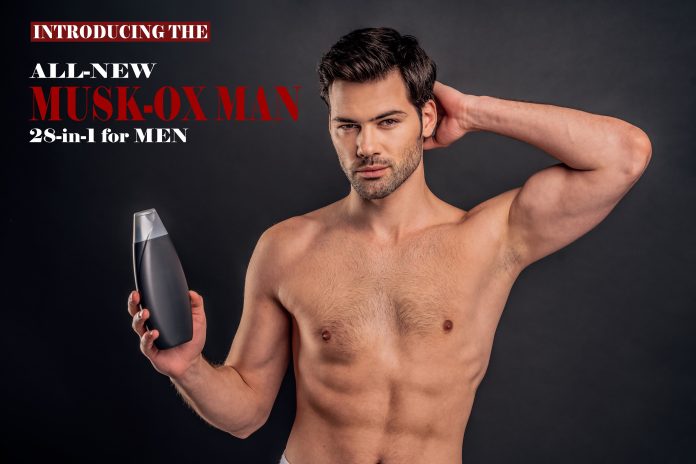
Introducing the ALL-NEW Musk-Ox Man 28-in-1 for Men

0
PHOTO EDIT: Maxwell Gawlick / The Peak

Written by Paige Riding, News Writer

Gentlemen . . . are you intimidated by having four products lining the side of your shower? Do your moustache hairs shiver at the thought of lavender? Have the “For Men” labels on products failed to coddle your fragile masculinity enough?

Well, we’ve got the solution for you! 

Introducing the Musk-Ox Man 28-in-1 Product For Men. That’s right: this product eliminates the need for all those emasculating tubes and bottles cramping the soap scum-filled counter of your sink. Now, you’ll have more room for what’s really important: your beard hairs, the empty beer cans you detonated, and your two-year-old loofah.

The Musk-Ox Man 28-in-1 is a shampoo, conditioner, body wash, toothpaste, eyeglass cleaner, drain cleaner, windshield washer fluid, laundry detergent, energy drink, and more! But the real benefits are more than just skin deep, fellas. It’s an instant testosterone booster. If you use this product during your camping trips and a bear has the unfortunate fate of crossing you, your campsite would be better off helping the bear. That’s how tough you’ll feel.

It’ll give you the confidence you need to play the devil’s advocate during conversations with your female friends. You’ll feel so manly that the basic rights of any other gender will become trivial to you. There’s a reason the wage gap exists. It’s to reward the hard work of men like you. You’re a bro. And you smell like it.

When going to a party that you apparently shouldn’t be at, the Musk-Ox Man 28-in-1 Product For Men will pump you up enough for you to touch the lower backs of every single woman you pass. Social cues, not to mention social distancing, never sat right with you. Your hair, teeth, and armpits will all smell like a manly pine forest mixed with titanium. Everyone around you will know you for the rough-’n-tough stocky jock you are.

Those “you up?” texts will practically write themselves when you use the Musk-Ox Man 28-in-1. And your hand will smell so fresh that when you hold your anaconda for a pleasantly surprising pic to that hot babe, she’ll basically be able to smell you from where she is and she’ll call an Uber right to you. Nothing gets the ladies like Musk-Ox Man, you hefty hunk of a hard-as-nails ham.

Call 1-888-800-8135 for your free sample of the Musk-Ox Man 28-in-1 for men. Never again will the patriarchy be challenged with big, badass, bulletproof buff buds like you bustling about. Careful not to break your phone with that ridiculously strong python grip when you call now!

Staying organized during remote learning

0
Illustration: Sabrina Kedzior / The Peak

By: Michelle Young, Staff Writer

Figure out when you’re most productive 

I know that every article about working or studying from home insists that waking up early is the embodiment of productivity. However, not everyone will be able to wake up at dawn feeling refreshed and rested. For some people, working in the morning is a good way to start their day. But for others, working in the afternoon or nighttime just makes sense. Figuring out when you’re most motivated to work will be beneficial to you in the long run, and figuring this out will take a little bit of trial and error. 

Essentially, try working right when you wake up, and then in the evening or in the afternoon gauge when you have the most energy to get work done. Whether you’ve eaten right before can also play a role in whether you feel energized or unmotivated. Try to study and do the majority of your work in the timeframe when you feel the most productive, and leave the bulk of the TV binging for when you feel less motivated. 


Plan to-do lists, deadlines, and schedules

Once you’ve discovered the best time to get things done, it becomes much easier to plan around it. You don’t have to keep a strict hourly schedule, though breaking up your tasks over the span of a week or two can help you improve your study habits. 

Take note of deadlines and make a schedule of how you’ll accomplish tasks on time. Make a to-do list of things you want to achieve each day, and take advantage of when you’re most productive to do those activities. It’s also helpful to finish homework one to two days before it’s due to avoid last-minute scrambling in case you face a roadblock. 

When you plan your to-do lists, plan them around concrete goals instead of time. For example, instead of planning to do “an hour” of studying, focus on studying a particular chapter. Rather than spending “half an hour” on your essay, go for a word count. After a while, you’ll be able to gauge how much time certain tasks take you, but using concrete goals will help you stay more productive and organized because you’ve accomplished something by the time you’ve finished a task. 


Managing time and work spaces

Digitally, close all school or work-related tabs and documents during your break. This also means closing all social media or personal tabs (except for maybe a music tab) when working. Keep any references you need in a comprehensive document that you can open later. This can aid in staying focused when you’re working, or help relax during breaks. 

Physically, try to separate your workspace from your recreation space. I placed my desk diagonal from my bed on the other side of the room to separate these two places as much as possible. When I’m just watching TV or movies on my laptop, I’ll sometimes move over to my bed. If you don’t have a desk or you have a smaller room — try to do your work anywhere other than your bed. This is because of how we associate spaces and what we do in those spaces

Separate your time as well — taking breaks is also necessary as studies show that learning is more efficient when spread over blocks of time. Try not to engage with anything work or school related when you’re eating or taking breaks. Not only is it important to know when you’re most productive, but it’s also important to set boundaries of when you’re going to start and stop working or studying. For instance, try not to respond to all your emails right before sleeping. 


Presentation and clean spaces

No, you don’t need to “dress as if you’re going to work.” Dress comfortably. It’s a waste to wash your nice clothes when you’re just staying home and it’ll wear them down unnecessarily. What I’ve found to be important, though, is keeping up with hygiene. Your comfy clothes should be clean, and showering regularly can help you feel more rejuvenated and motivated. 

Regardless of where you’re working, a clean (and nice-smelling) space will help you focus on work and studying. Perhaps it’s just me, but taking the time to clean can also be a nice break from school-related work because it’s productive, but not particularly mentally draining. 

Cluttered space, no matter how much you insist doesn’t bother you — will take a mental toll on focus and productivity. Keep surfaces like desks and countertops tidy, wiped down, and dusted. You can try to use spaces like under the desk and under the bed to limit the amount of objects that are visible to the eye. Rearrange things if you want to! Open windows for fresh air to keep your space from being too stuffy. 

Too Spirited for the 2020 Queer Arts Festival

0
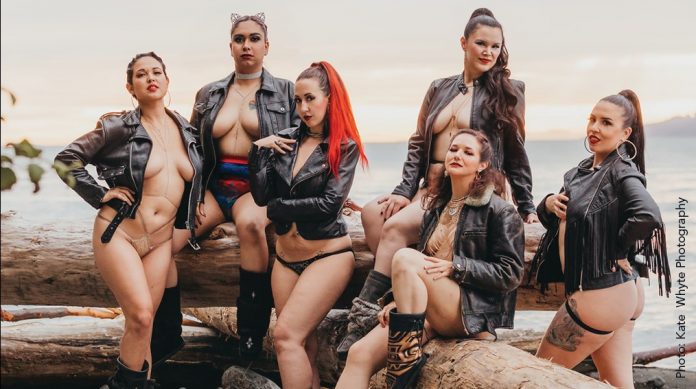
Burlesque group, Virago Nation, showcases Indigenous resilience and power at QAF 2020. Courtesy of Kate Whyte Photography

By: Kelly Chia, Features Editor

Too Spirited, an Indigenous burlesque show performed for the Queer Arts Festival, was an amazing reminder of why burlesque is so invigorating to watch: it’s all about getting on stage to take ownership of your body, turning vulnerability into confidence. Sparkle Plenty, the emcee, guided viewers through numbers performed by the all-Indigenous group, Virago Nation. Too Spirited was streamed on Queer Arts Festival, with an interactive chat on the side to cheer the performers throughout their numbers. The attendees were enthusiastic and matched Sparkle’s upbeat energy.  

While Sparkle Plenty spoke, an ASL interpreter helped communicate her words. I don’t often see ASL interpreters at shows which made me really appreciate this attempt to be inclusive and  make burlesque more accessible. 

“Tonight, it’s about highlighting and celebrating our resilience. Our sexy, powerful resilience!” Sparkle Plenty began.”When we hear stories about Indigenous women in the media, the main stories that are being shared are of our suffering or being a caricature. We wanted to show that we’re more than this: that sexuality is fun, and most importantly, a healthy expression of ourselves!” While she spoke, Shane Sable, another performer, cheered in the live chat. Not only was it endearing to see performers support each other, but in this case, it helped the show reach beyond the screen. Sparkle Plenty’s words were powerful ones, and prepared me for the bombastic, beautiful displays of sexuality that I was about to witness. These acts also made me happy about having the option of tipping each performer. 

The first number was performed by RainbowGlitz, and Sparkle Plenty introduced her performance as commentary on tradition through a colonial lens, and true tradition that embraces being naked. RainbowGlitz entered the stage in a crow costume, shuffling to an insistent drum beat. Then, hiding behind a stage prop, she dropped the crow head and reappeared in heels to the tune of Demi Lovato’s “Sorry Not Sorry.” She proceeded to strut and writhe on stage, a complete 180 to the first half of the performance. By the time she left the stage, she was confidently exposing her breasts. Admittedly, not hearing the audience’s cheers after each performance was unusual, but I could hear the other performers encourage the stage performer which felt heartwarming.

Next, Sparkle Plenty performed in a long coral number, slowly stripping her gloves with a brilliant and sassy smile. What I loved about Sparkle Plenty’s performance was that she stripped her hair extensions, and was handed a second ponytail by a person off stage, proceeding to dance wildly with her hair extensions. Her glee was contagious, and I found myself beaming as I watched her. She later said in an exasperated tone, “The moral of the story is, ‘pin your damn wig in’.”

What really made a lasting impression was the third number, performed by Lynx Chase. The song in the background was considerably slower, which showed off Lynx’s control as a pole dancer. I watched in awe as she wound down the pole, seemingly glued to it by her waist and thighs. Every movement seemed smooth and intentional, and I was absolutely mesmerized. In addition, I was struck by Sparkle Plenty’s comments after Lynx’s performance, “Pole dancing has become more popular in the mainstream, and we’re seeing people try to brand it as ‘sexy fitness.’ Never forget that strip culture was birthed by black strippers and sex workers, show your fucking gratitude!”

The show was filled with incredible performances and commentary, with a notable theme of 70s style costuming. Watching the performers embrace their body unabashedly served — as burlesque often does — as a wonderful reminder for me to be more kind to my own. I highly recommend checking out the video recording here if you’re looking for a fun way to spend your night and to support some gorgeous and talented Indigenous babes. Queer Arts Festival will also be streaming the show for a second time on July 26, and will be offering a variety of other events until the festival closes on July 26.

Contemporary dance festival Dancing on the Edge features two world-premiere pieces through Edge Six

0
Edge Six showcased the choreography talents of Josh Martin (Brimming - top) and Rachel Meyer (Excerpts of a Work-in-Progess - below). Courtesy of Dancing on the Edge Festival

By: Devana Petrovic, Staff Writer

Known as one of the Lower Mainland’s oldest contemporary dance festivals, Dancing on the Edge (DOTE) did not let a global pandemic stop them from running their 32nd year of annual performances. Expectedly, this year’s festival ran almost entirely virtually — with the exception of a minimal amount of performances — and still included a diverse selection of works, artists, and (synchronous) viewing times. As a retired classical and contemporary dancer myself, I very willingly sat through almost 20 minutes of DOTE’s combination of works, Edge Six

DOTE offered events of different lengths and ticket prices, some of which (like the event I attended), only required a five-dollar reservation fee and were otherwise entirely by donation. However, in-person events at venues naturally called for ticket purchasing, which were a little pricier. Since all virtual performances were filmed from the venues themselves with full stage setups and professional lighting, I would say that a five-dollar fee was a relatively fair price, especially considering the importance of supporting local artists at this time. 

Edge Six was streamed on YouTube on two separate dates and included Rachel Meyer’s, Excerpts of a Work-in-Progress, and Josh Martin’s (Company 605), Brimming (also a work-in-development). I attended the first night of Edge Six, which was also coincidentally the world premiere of both pieces. 

The event started with Meyer’s (choreographer) Excerpts of a Work-in-Progress, featuring performers Josh Martin, Stéphanie Cyr, and Brandon Lee Alley. The piece was accurately described as “a work-in-progress,” clocking in at around five minutes in length. It appeared to be more of a montage of experimental movement combinations, and since there was little to no explanation from Meyer, that’s likely what it actually was. Although the choreography was excellent, to those unfamiliar with contemporary dance, it could potentially be difficult to understand and fully appreciate as it wasn’t fully developed (e.g. a specific stage setup, storyline, etc). From my interpretation, Meyer’s choreography experimented with levels of movement, limb placement in correlation to the floor, and flow. 

On the contrary, Josh Martin’s Brimming was a more polished and developed work of art. Around 15 minutes in length, it made up most of Edge Six. The self-performed solo work “investigat[ed] the body as a container” and centred on ideas of entrapment where the “performer [is] trapped inside their own body.” The piece included a full stage setup, with a container-resembling space, dark lighting, and only a chair as a prop. As described by the artist,the dance is a meeting of both the seen and unseen [ . . . ] [the piece] explores this shape we are in, how it holds us, and what might eventually spill out of one’s self when the walls begin to bend.” The choreography consisted almost entirely of animated movements — almost robotic, and recognizably depicted the artistic themes of being trapped. Martin’s execution and acting of how such themes manifest physically and psychologically were brilliant and spot-on; I was particularly impressed by the choreographer’s utilization of space within the boundaries of the confined setup and how Martin’s movements captured the complicated relationship between a dancer and their space. An emotional, engaging, and breathtaking work from start to finish. 

It’s safe to say that experiencing dance through a screen is not nearly the same experience. Inevitably, there were aspects that felt like they would have been more impactful in-person. Either way, I am really proud to see the dance community persevering in these hard times to continue to deliver events like this one, that contribute to the artistry and culture of the Lower Mainland.